
Last updated November 18, 2026
 Metal roofing
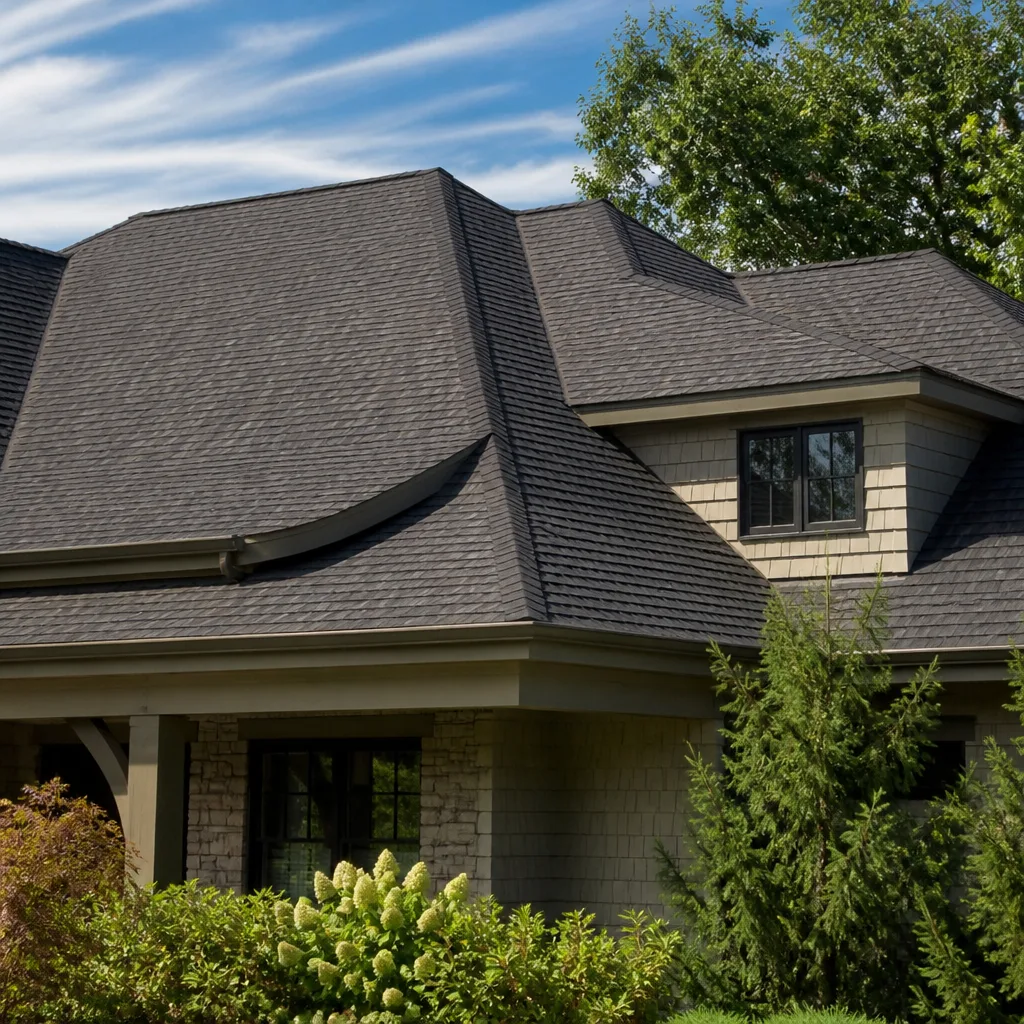 Architectural shingles
 Tile roofing
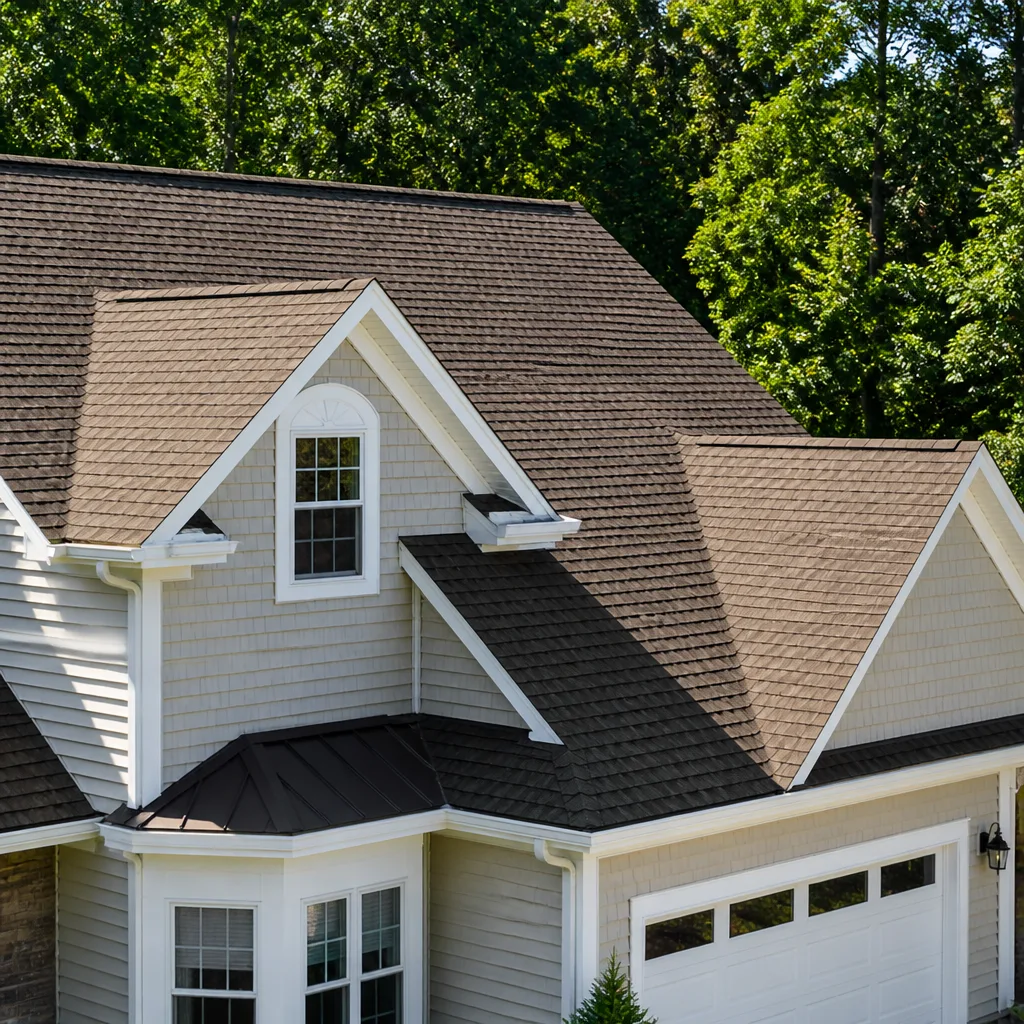 GAF
 Owens Corning
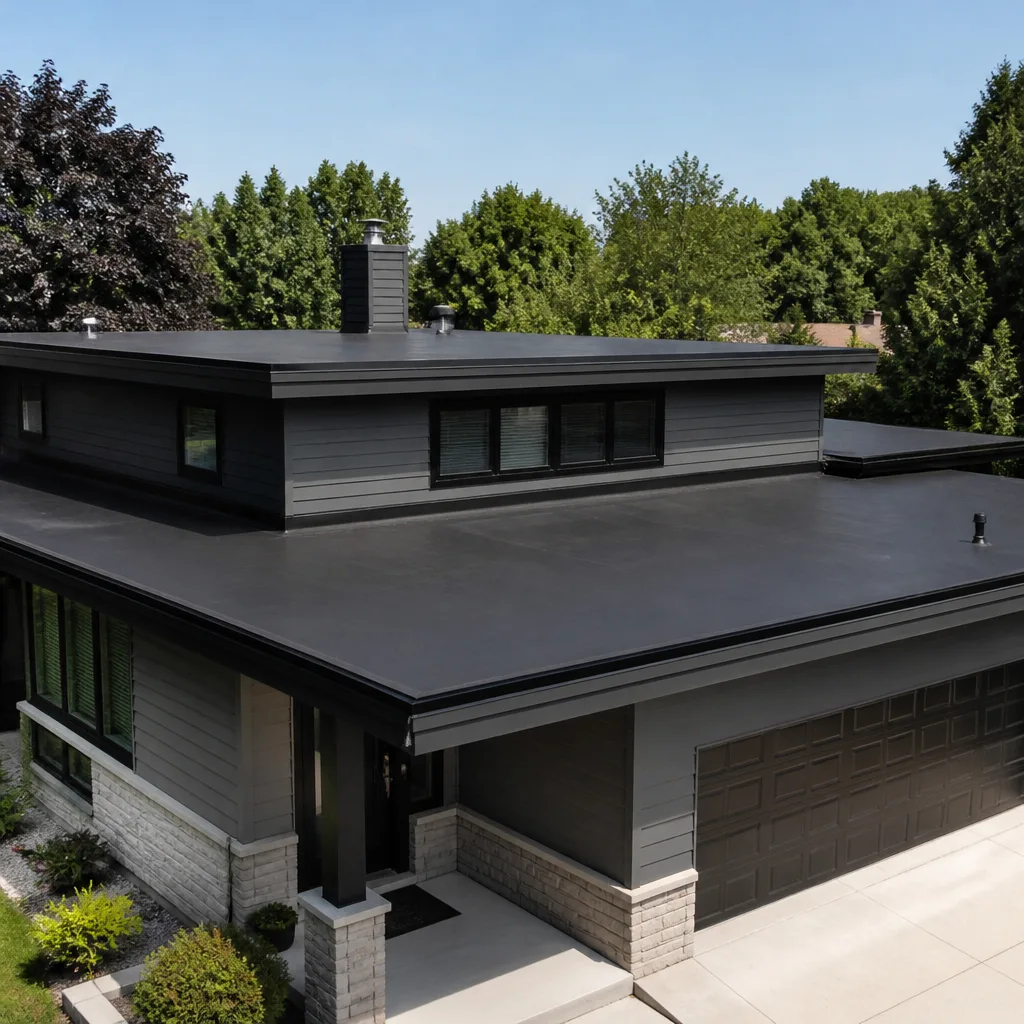 Flat & low-slope
Free roof inspection with deck photos before we talk money - GAF and Owens Corning certified installation
Roofing Emergency Preparedness Guide for Enterprise Homes
Enterprise sits in one of the driest metro areas in the country, which is exactly why so few homeowners here are ready for rain. When monsoon cells stack up over the Spring Mountains and push east across the valley, they can drop more rain in ninety minutes than Enterprise sees in most of a normal year. Roofs built for sun take that water hard, and the difference between “my roof is leaking” and “a licensed contractor is on the phone” is the interval that decides how much you end up paying. This guide covers the contacts, materials, insurance distinctions, and post-storm habits that turn an emergency into a manageable event.
Quick Answer
Roofing emergency preparedness in Enterprise means three things done before storm season: a saved contact list (your roofer, your insurer’s claim line, Clark County’s permit office), an on-hand emergency kit (tarps, fasteners, heavy plastic, a camera), and a documented inspection record of your roof’s current condition. Homes that have these in place recover from monsoon damage faster and file stronger insurance claims than homes that scramble after the leak starts.
Styles & brands we work with
- Architectural shingles
- Metal roofing
- Tile roofing
- GAF
- Owens Corning
- Flat & low-slope
Table of Contents
- Why Enterprise Roofs Fail Fast in Monsoon Season
- The Emergency Contact Protocol: Gather It Before You Need It
- What Your Policy Covers: Sudden vs. Gradual Damage
- How to Document Storm Damage in Real Time
- Emergency Tarping on Enterprise Roof Profiles
- Clark County Permits and the Emergency Repair Timeline
- Red Flags of Post-Storm Contractor Solicitation
- Building Your Storm-Ready Roofing Kit
Why Enterprise Roofs Fail Fast in Monsoon Season
Enterprise roofs spend roughly 300 days a year baking at summer temperatures that routinely cross 105°F. That heat cycle does quiet, cumulative work on your roofing materials: asphalt shingles dry out and lose their flexibility, sealant strips soften and re-bond until they stop sealing, and the mastic around vents and pipe boots cracks. When the first real monsoon cell hits, those tiny gaps act like a sieve. Water doesn’t need a hole in your roof; it needs a path, and by August of most years the sun has already made several.
Enterprise’s typical profile makes this worse. A lot of the housing stock in neighborhoods like Silverado Ranch, Southern Highlands, and Mountain’s Edge dates from the 1990s and 2000s building booms, which means original roofs are now 20 to 30 years old – right at the end of an asphalt shingle’s useful life even before the climate gets factored in. Newer subdivisions near Blue Diamond Road often use low-slope or flat profiles behind parapet walls, where ponding is a real risk during a hard rain. We regularly see leaks at the same failure points across these neighborhoods: cracked pipe boots, lifted ridge caps, and step flashing where a roofline meets a stucco wall.
None of that means your roof will fail this season. It means the advance warning is free, and there’s no reason to skip it.
The Emergency Contact Protocol: Gather It Before You Need It
The single most useful thing you can do this month is build a simple contact sheet – one page, printed, taped inside a kitchen cabinet – and fill in the numbers and reference information you’ll want at 9 p.m. on a night when water is coming through a ceiling. During an actual emergency you will be too busy to look things up calmly, and a saved list pays off immediately.
Here’s what belongs on the sheet:
- Your roofer’s direct line. Not the 800 number from a door hanger, but a company you’ve vetted, whose license you’ve checked, and who answers live. Ridgeline Roofing Co. answers the phone 24/7, including during storms – no voicemail trees.
- Your roofing contractor’s Nevada State Contractors Board license number. Write it down. If a contractor can’t give you a license number, that’s your answer before the emergency even starts.
- Your homeowner’s insurance claim line and your policy number, not just the 800 number on the website. Insurers route claims fastest through the claims department line.
- Clark County Department of Building & Fire Prevention contact information. Emergency repair permits in Enterprise are issued through the county, not the city, since Enterprise is an unincorporated community.
- A trusted second opinion. Some companies, including ours, offer a free second opinion on any written estimate – good to know in advance if a storm-chasing contractor hands you a terrifying number the day after a big rain.
- The name and policy number of your insurance agent, if you have one. Agents are useful intermediaries when a claim decision drags.
Fill this out once. Store it in your phone and on paper. Then you’re never the homeowner standing in a hallway guessing who to call.
What Your Policy Covers: Sudden vs. Gradual Damage
Here’s the distinction that decides most Enterprise roofing claims, and it’s the one homeowners most often don’t know until their claim is denied: most policies cover sudden and accidental water damage but exclude gradual deterioration and maintenance failures. A monsoon cell cracks a shingle and water gets in that night – that’s sudden and typically covered. A crack that’s been growing for six years and finally leaks during a storm – the insurer will argue that’s gradual damage and often deny the claim.
The practical takeaway is that your inspection record is your insurance case. If you can produce a dated inspection report showing your roof in good condition eight months before a storm, the insurer has a much harder time arguing the damage was pre-existing. If you can’t, you’re relying on the adjuster’s judgment.
Where this gets specific to Enterprise:
- Wind-uplift damage is generally covered and often the easiest claim to document – lifted or torn shingles show up clearly in photos.
- Hail damage in the Las Vegas Valley is rare but does happen; when it does, dents and bruises on shingles are usually covered, though adjusters will look for a pattern matching the reported storm date.
- Interior water damage from a covered roof event is usually covered as a consequence, but the scope often excludes long-term rot or mold that predates the storm.
- Cosmetic damage – a few missing shingles that don’t actually leak – may not clear your deductible, so do the math before filing.
Read your declarations page now, not after the storm. If the language feels unclear, call your agent and ask specifically what “sudden and accidental” excludes.
How to Document Storm Damage in Real Time
The photo sequence matters more than you’d think because adjusters are trained to look for specific things: consistent timestamps, a clear chronological narrative, and interior water evidence that ties to exterior damage. A single blurry cellphone shot of a wet ceiling won’t tell them much. A structured sequence will.
Here’s the order that works:
- Photograph the interior first. Get the water stain, the ceiling sag, the drips in the bucket. Timestamp it. Interior evidence establishes that damage occurred and when.
- Photograph the exterior – each damaged area separately, from a safe vantage point on the ground or from a window. Never climb onto a wet roof. A ladder next to a wall is as far up as you should go.
- Photograph the wider context – the street, the neighbors’ roofs, and anything that shows the storm event itself (downed branches, debris in the yard). This ties the damage to the reported weather.
- Log it in writing. A simple notebook works: date, time, what you saw, what you did. “Tuesday 8:45 p.m. – noticed drip in master bedroom ceiling, approximately 12 inches across. Placed bucket. Called roofer at 8:52 p.m.” The adjuster reads this and it promotes the file.
- Save the roofer’s written findings. Any inspection after the storm should include a written summary and photos taken from the actual roof. Insurers weigh contractor documentation heavily.
Keep everything in one folder – digital photos in a dated folder, written log with pages numbered. Insurers rarely deny claims when the file is organized.
Emergency Tarping on Enterprise Roof Profiles
Emergency tarping is a genuine temporary mitigation, and it can mean the difference between wet drywall and a wet slab. It’s also where homeowners get hurt and where insurance claims get complicated. A few things to understand before you touch anything:
Flat or low-slope roofs – common in Enterprise’s newer subdivisions – accept tarps well if the tarp is weighted, not nailed, and if the weight is distributed against wind (sandbags at the corners, not one brick in the middle). The problem with flat roofs is ponding: water pools on top of the tarp and the weight can pull a corner free. Overlap the tarp well past the damaged area, run it up and over the parapet wall if there is one, and weight every sagging point.
Pitched roofs with asphalt shingles are trickier. A tarp laid directly on shingles will abrade the granular surface over a few days and can void your claim if the insurer decides you caused additional damage. Tarps on pitched roofs should be laid over the ridge and down both sides, secured at eave level – never driven through the shingles, which creates new penetrations. If the damage is high on the pitch or near the ridge, call a professional.
The safety caveat is not a hedge: roofing tarps involve heights, wet surfaces, and in a monsoon scenario, active lightning. Wet asphalt shingles are genuinely slippery, and about one in three roofing injuries happens during storm-mitigation work, not during construction. If you can’t safely reach the damaged area from a ladder on the ground, don’t try. Call us or any licensed contractor and stay inside.
If your insurance carrier offers emergency mitigation as part of the claim, use it. The cost is typically applied to your claim, and professional tarping holds up much better than a homeowner’s improvised version.
Clark County Permits and the Emergency Repair Timeline
Enterprise is an unincorporated community within Clark County, not the City of Las Vegas, which matters for permits. Repair permits go through the county’s building department, and the process is typically faster than a full re-roof permit – but it still needs to happen. Skipping the permit is the kind of shortcut that looks fine until you try to sell the house or file an insurance claim on the repaired area.
The typical sequence for an emergency repair:
- Inspection and documentation – usually same-day contact with a licensed roofer, with photos and a written summary.
- Emergency mitigation – tarping, boarding, or interior water removal while the claim is opened.
- Permit application – pulled by the contractor, typically within one to three business days for a straightforward repair, sometimes longer for structural work.
- Repair – scheduled once the permit is in hand and the insurance estimate has been reviewed.
- Final inspection – county inspector signs off, and the permit closes.
Permitted work protects you in three ways: it makes your insurer happy, it protects your resale value, and it gives you a paper trail if something goes wrong later. Any reputable contractor in Enterprise will pull the permit themselves and mention it in the estimate without being asked.
Red Flags of Post-Storm Contractor Solicitation
Within 24 to 72 hours of a significant storm in Enterprise, out-of-state trucks appear in neighborhoods across the valley. Some are legitimate. Many are not. The pitch is usually polished and the price is usually compelling, which is exactly the point.
Here’s the storm-chaser pattern to recognize:
- “We just did a roof on your street – we can give you a great deal if you sign today.” Legitimate contractors don’t need you to sign before you’ve had time to think. Ours don’t, and neither should any other.
- “Your insurance will cover everything, so don’t worry about the price.” Real contractors give you a written, itemized estimate and don’t pretend your coverage is unlimited.
- No local license number, or a license from another state. Nevada requires licensing through the state contractors board. Ask for it.
- Cash discount, no paperwork. Walk away. A square deal has a paper trail.
- A scary pitch in the driveway describing damage you haven’t seen, with a price that expires at the end of the visit.
- No physical address or phone number, or a phone number that routes to voicemail after hours. The legitimate version of this is a company you can call at night and reach a live person, in town, who can come back and fix their work if something goes wrong. We hire local crews and have been in business for 42 years; we plan to be here in another 42. Storm chasers don’t.
- Pressure to file an insurance claim on damage they haven’t shown you. A real inspection includes photos taken from your actual roof, not a pitch on the driveway.
If a contractor passes the license check, gives you a written estimate, and lets you sleep on it – you’re probably fine. If any of those fails, they aren’t the one.
Building Your Storm-Ready Roofing Kit
An emergency roofing kit isn’t a survivalist thing; it’s about having the basic supplies on hand so you’re not driving to a hardware store at 10 p.m. while water runs down your hallway. Store it wherever you keep your ladder, and check it once each spring.
What goes in it:
- Heavy plastic sheeting or a canvas tarp – one large enough to cover 10 to 20 square feet of roof, at minimum
- Sandbags or other weights – for flat-roof tarping; at least four
- Exterior-grade screws and neoprene washers – for emergency patches, but note: don’t drive these through shingles yourself; that’s a professional call
- A bucket or two – sounds obvious, you’ll want them
- A camera or your phone – for the documentation sequence above
- A printed contact sheet – the one from the section above
- A notebook and pen – for the damage log
What does NOT go in it: caulk, sealant sprays, and “roof patch” tapes sold at hardware stores. These rarely hold, and they can interfere with proper repair later. Save your money and call a roofer you’ve vetted.
Pair the kit with a checkup. An $89 seasonal tune-up once a year, before the monsoon window, gets you a photo-documented inspection and small fixes (pipe boot resealing, ridge cap reinforcement) that dramatically reduce your storm risk. It’s a whole lot cheaper than the repair that follows a failed pipe boot.
Common Mistakes to Avoid
- Waiting until the first storm to research contractors. In Enterprise, storm-chasing trucks arrive within 48 hours and the good local contractors fill their schedules fast. Vetting a contractor in the calm weeks before monsoon season means you skip the scramble entirely.
- Skipping the pre-season inspection. Many roof failures we see in Enterprise would have been flagged months earlier by a good photo-documented inspection. The $89 tune-up is a small fraction of the cost of the interior water repair.
- Climbing on a wet roof to tarp it yourself. Wet asphalt shingles, monsoon lightning, and 20-year-old roofing are a bad combination. This is the mistake that sends homeowners to urgent care every monsoon.
- Filing a claim on cosmetic damage. A few missing granules are not a claim – they’re a maintenance item. Filing a small claim can cost you more in future premiums than the repair would have cost in cash.
- Skipping the insurance claim documentation process. Adjusters read chronology. A photo sequence and written log are the difference between a smooth claim and an argument.
- Paying for work before the permit is pulled. Any contractor who wants payment before the Clark County permit is filed is a contractor you shouldn’t hire.
- Choosing the cheapest bid. The lowest number in Enterprise is often a handshake price that grows once the work starts. A written, itemized estimate with a fixed price and the local manufacturer lines – IKO, CertainTeed, GAF, Owens Corning, Tamko, Boral, Atlas – is the one you want to compare against.
See the difference
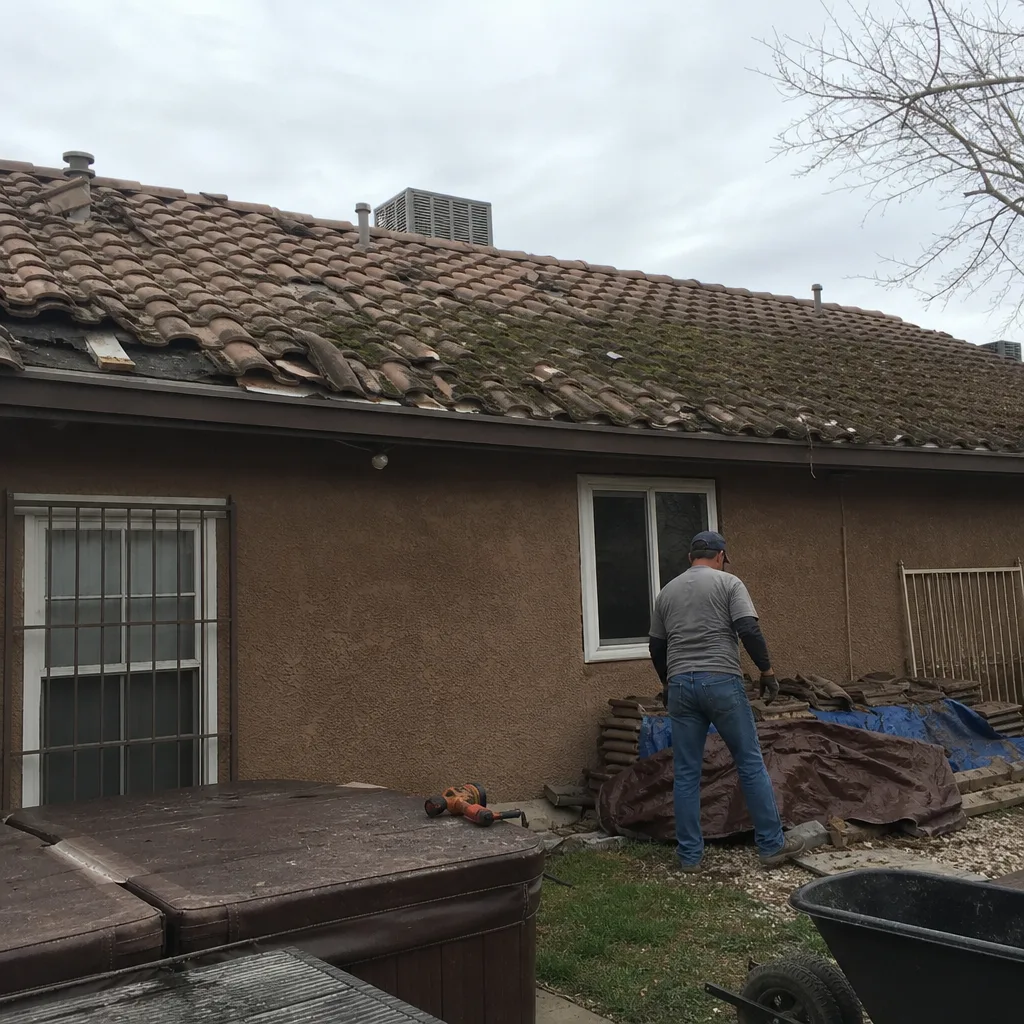 Before
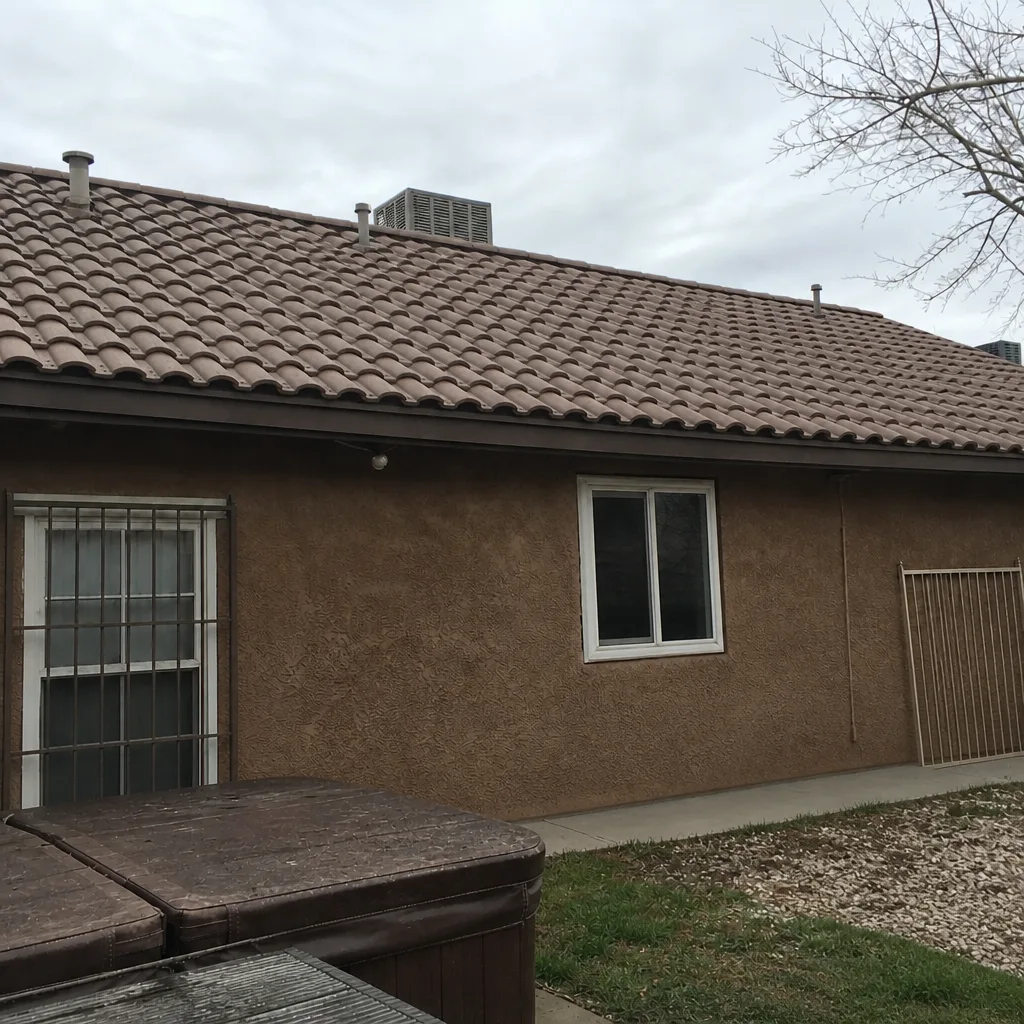 After
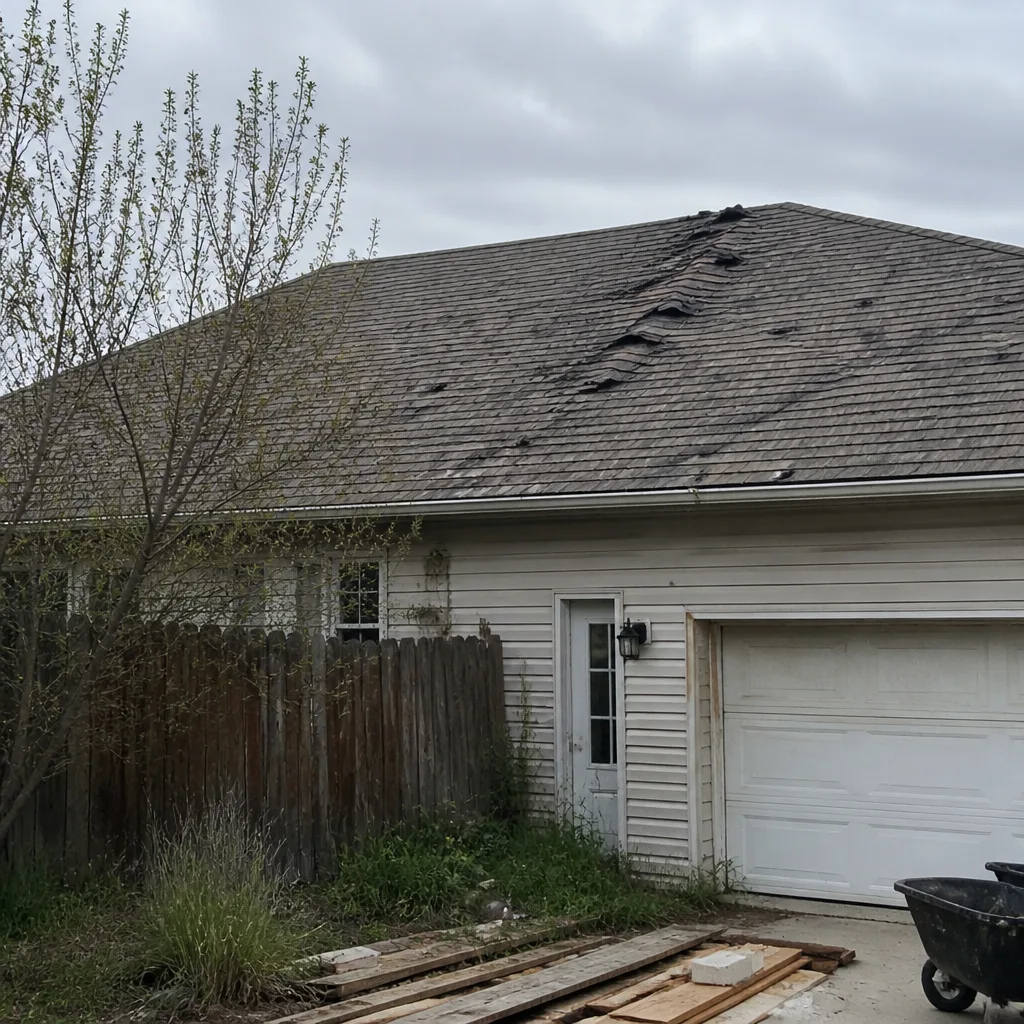 Before
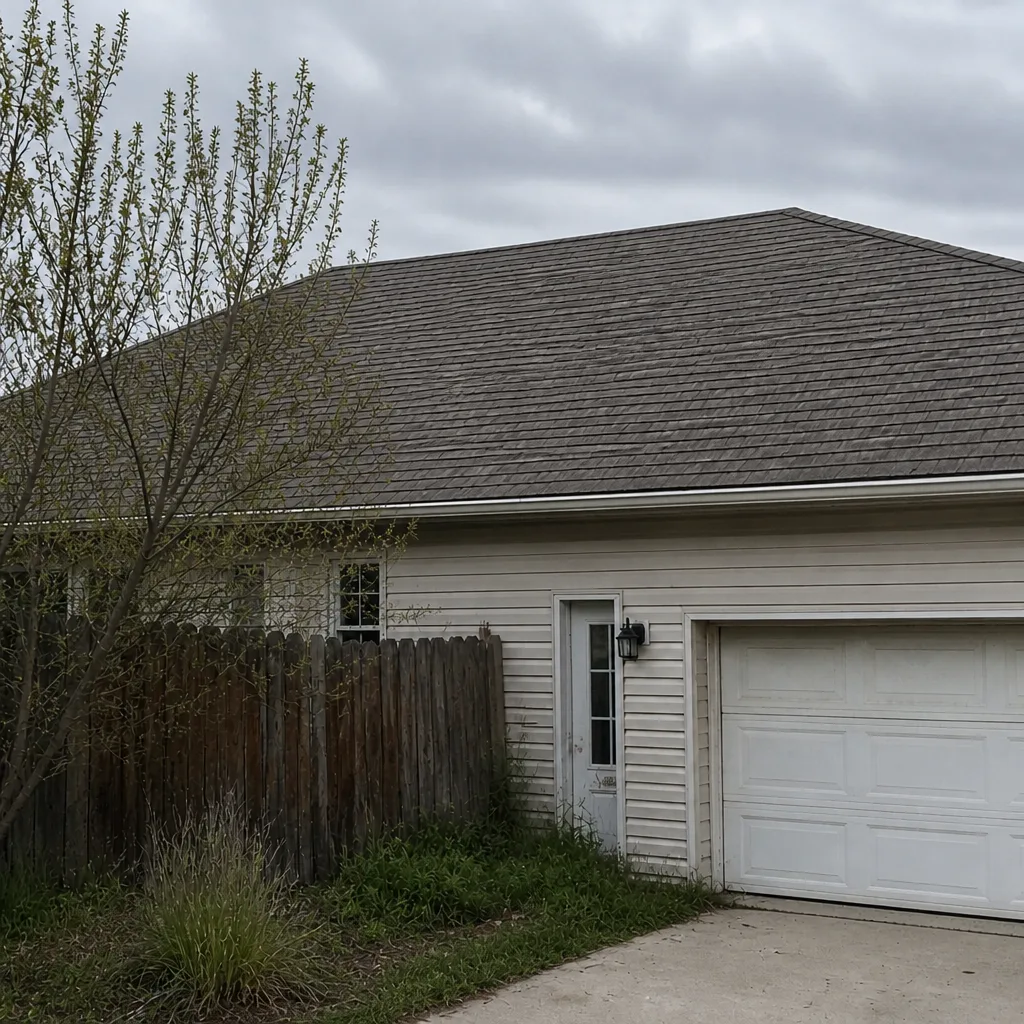 After
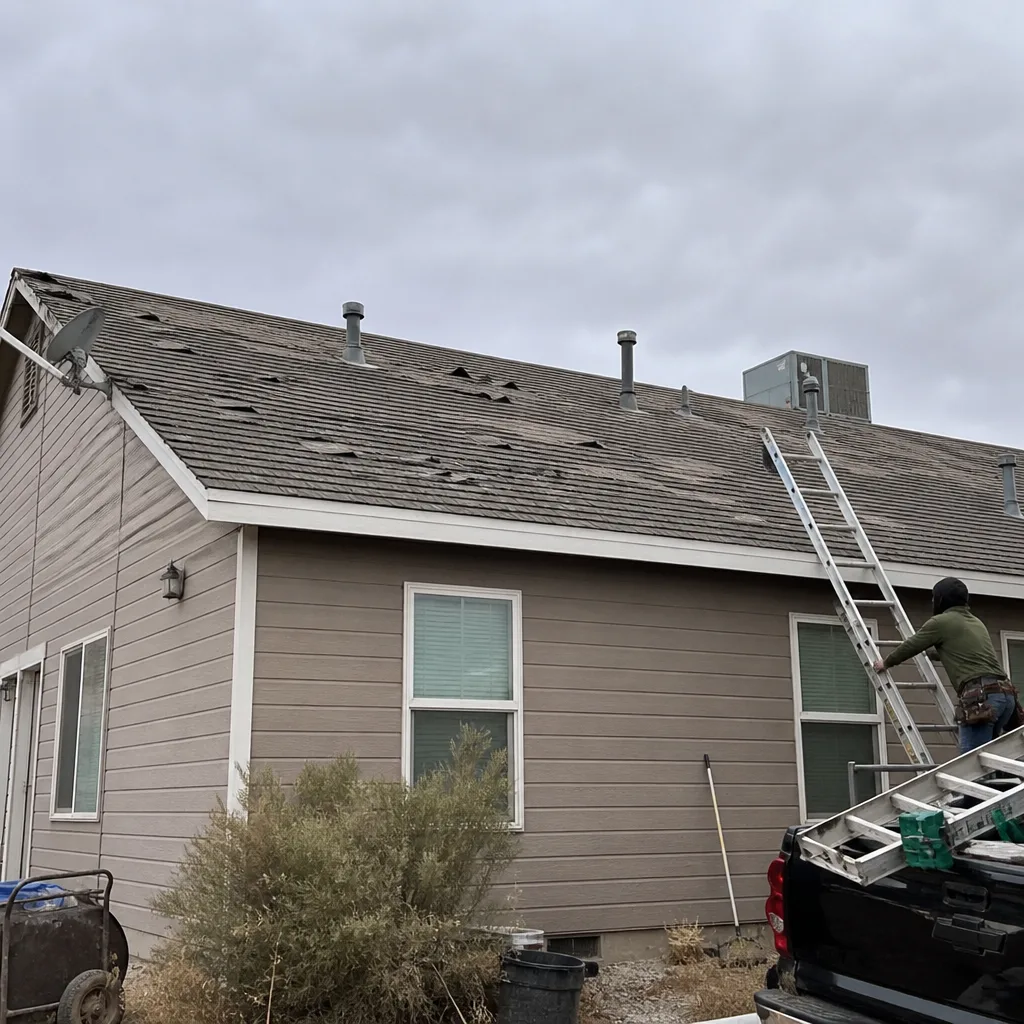 Before
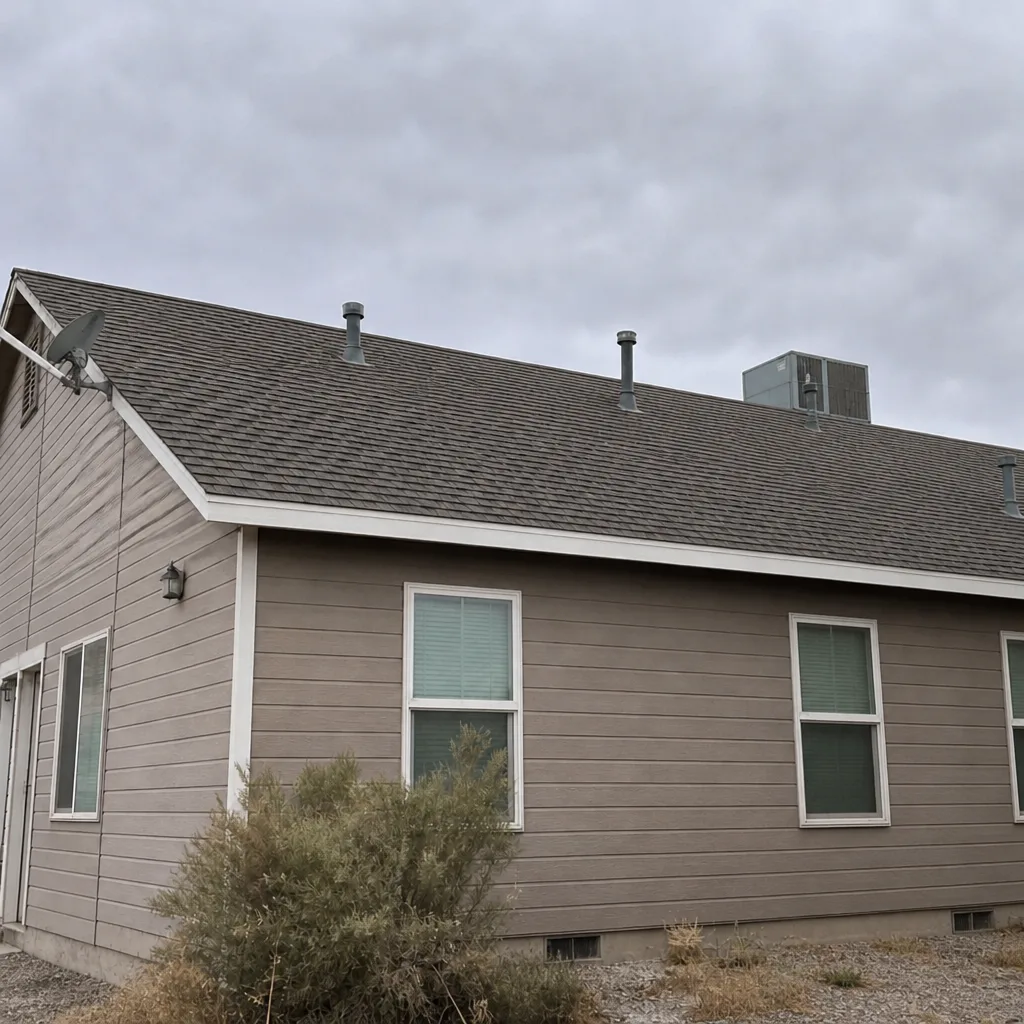 After
When to Call a Professional
Call a professional – don’t wait – if any of the following is true: water is actively coming through a ceiling or running down a wall; a section of shingles or fascia is lifted, torn, or missing; you see daylight through the roof deck; the ridge line looks sagged; a tree limb is on or through the roof surface; or you can’t tell what’s damaged because you can’t safely reach it. Each of those is a call, not a “wait and see.” If your roof is 20 or more years old and it’s just begun to leak during a storm, that’s also a call – the leak is probably a symptom of something the roof has needed for a while.
Ridgeline Roofing Co. Enterprise offers free estimates in Enterprise – call (844) 228-4119 any hour, any day, and a live person will pick up. Technicians are background-checked and in uniform, and every inspection is documented with photos from your actual roof. If we can’t make it right, we’ll tell you; if we do the work, the 90-Day Done Right Promise is in writing. For a deeper look at our repair work, see Roof Repair in Enterprise.
Frequently Asked Questions
Yes, in most standard policies, if the damage is sudden and accidental – meaning it happened during or shortly after a specific storm event, not from a crack that’s been growing for years. The claim is strongest when you can produce pre-storm inspection records and post-storm documentation. Call (844) 228-4119 for a free inspection if you’re not sure whether the damage is storm-related or age-related.
Most emergency repairs in Enterprise fall in the $350 to $1,800 range for straightforward damage – tarping, patching, replacing pipe boots, and resealing flashing. If structural repair is needed or multiple areas are damaged, the price climbs. A written, itemized estimate is the only number to trust. Call (844) 228-4119 for a free estimate; the price on the estimate is the price on the invoice.
Most emergency repairs that don’t involve structural work are scheduled within a few days of the storm and completed in a single visit. Structural repairs or full replacements typically take one to three weeks from permit to final inspection. We don’t promise same-day service on planned repairs – nobody does it right in a day. Call (844) 228-4119 for a realistic timeline on your specific roof.
Tarping is a temporary mitigation, not a repair, and doing it yourself on a wet pitched roof is genuinely dangerous. If you can safely reach the damaged area from the ground with a ladder – and it’s a flat roof – you can tarp it as temporary cover. For anything on a pitch, or anything within reach of lightning during a monsoon, call a professional. Call (844) 228-4119 and we’ll tarp it safely.
Yes. Any repair we do in Enterprise is permitted through Clark County Department of Building & Fire Prevention, and the permit is pulled before work starts. The final inspection and the signed permit close the job properly. Call (844) 228-4119 for a free estimate – permit is written into the quote, not billed as an extra.
Get a bucket under the drip, photograph the interior damage with a timestamp, move valuables and electronics out of the affected room, and call your roofer or (844) 228-4119. Don’t climb onto the roof. Don’t try to patch it with caulk. Keep the log going – the whole 30-minute sequence is your insurance documentation.
The Bottom Line
Enterprise roofing emergencies are almost always the same story with a different ending, depending on preparation. The homeowners who recover fastest are the ones who had a vetted contractor’s number saved, an inspection record on file, a basic kit in the garage, and the sudden-vs-gradual insurance distinction already understood before the storm hit. The homeowners who lose a week and a lot of money are the ones meeting a storm-chaser in their driveway on day two. Enterprise gets plenty of notice between storms – use it. If you want to see the broader scope of what we do here, start at the Ridgeline Roofing Co. Enterprise home, and when you’re ready to plan a replacement, look at Roof Replacement & Installation in Enterprise. For low-slope, tile, metal, or other non-standard profiles, see our Specialty Roofing in Enterprise page.
Ready When You Are
Call (844) 228-4119 for a free estimate, any hour of the day. A live person picks up, including nights, weekends, and the middle of a storm. We’ll get eyes on your roof, document what’s there with photos taken from your actual roof, and give you a written, itemized estimate with no surprises. If we do the work, it’s covered by the 90-Day Done Right Promise, in writing, no arguing. Done right – and if it’s not, we make it right.
Written by the team at Ridgeline Roofing Co. Enterprise.