
Last updated November 18, 2026
 Metal roofing
 Architectural shingles
 Tile roofing
 GAF
 Owens Corning
 Flat & low-slope
Free roof inspection with deck photos before we talk money - GAF and Owens Corning certified installation
Seasonal Roofing Care for Enterprise: Year-Round Homeowner’s Guide
Most year-round roofing guides are written for climates with snow. Enterprise doesn’t play by that calendar. Our roof killer isn’t a blizzard – it’s 115°F attic temperatures in July followed by a 40°F temperature swing when a monsoon thunderstorm rolls through, flexing seams and sealants in ways a Minnesota homeowner would never understand. Enterprise has four distinct roof-stress periods rather than four traditional seasons, and knowing them is what separates a proactive maintenance plan from a reactive repair bill. This guide walks you through each one, month by month, from pre-monsoon prep to spring thermal cycling, so you can stop chasing leaks and start staying ahead of them.
Quick Answer
Seasonal roof care in Enterprise means watching four stress periods, not four seasons: pre-monsoon heat loading in May and June, wind-and-rain exposure from July through September, mild-winter UV fatigue and sealant contraction from December through February, and spring thermal cycling in March and April. The two windows that matter most for scheduling work are late spring (before monsoon opens) and late fall (October through November, before holiday contractor backlogs fill up). Inspect twice a year, clean drainage before July, and check pipe boots and skylight seals every fall.
Styles & brands we work with
- Architectural shingles
- Metal roofing
- Tile roofing
- GAF
- Owens Corning
- Flat & low-slope
Table of Contents
- Why Enterprise Roofs Age Differently
- May – June: Pre-Monsoon Prep for Flashings and Drainage
- July – September: Monsoon Wind and Rain Exposure
- October – November: The Post-Monsoon Inspection Window
- December – February: Winter Sealant Contraction Failures
- March – April: Thermal Cycling and Deferred Damage
- Common Mistakes to Avoid
- When to Call a Professional
Why Enterprise Roofs Age Differently
Enterprise sits in the Mojave at roughly 2,200 feet, close enough to the mountains that afternoon thunderstorms in July and August can drop half an inch of rain in twenty minutes. That water lands on shingles and sealants that have spent three months baking at surface temperatures well above 150°F. The shock is mechanical: materials expand in the afternoon heat and contract hard when the rain-cooled air drops twenty or forty degrees in under an hour. Asphalt shingles handle that cycling better than most people think, but the sealants, pipe boots, and edge metals take the brunt. A properly installed roof repair in Enterprise often comes down to those transition points rather than the field of shingles itself.
Homes in established Enterprise neighborhoods – think the older tracts off Mountains Edge, Silverado Ranch, and the neighborhoods near Green Valley – have roofs that have been through fifteen or twenty of these cycles already. Meanwhile the newer builds out toward the southwest are hitting their first decade of real thermal demand. Both groups need the same discipline: know the calendar, inspect on schedule, fix small stuff before monsoon season.
The prize piece of context most national guides miss: in Enterprise, UV degradation is continuous year-round. Mild winter days hit the 60s and shingles never really get a “rest.” There’s no freeze-thaw cycle doing damage, but there’s also no recovery season. The roof is working every month of the year.
May – June: Pre-Monsoon Prep for Flashings and Drainage
This is the single most important window on the Enterprise roofing calendar. Monsoon season typically opens in early July, and every flashing, penetration, and drainage path that isn’t sealed before then will be tested by wind-driven rain at forty miles per hour. May and June are hot and dry, which means roofers can work safely and sealants cure fast. That’s a scheduling advantage worth using.
What to check and address before July:
- Pipe boots and vent flashing. The rubber collar on a pipe boot cracks in the UV. Once it splits, water wicks under the shingle course directly at the deck. If the boot looks chalky or has visible cracks, replace it now rather than after the first storm.
- Low-slope drainage on patios and flat sections. Scuppers, scuppers drains, and low-slope sections in Enterprise homes – especially around covered patios and additions – collect dust and debris through the dry season. Clear them before they clog in a monsoon downpour.
- Chimney and skylight flashing. Check for lifted counter-flashing, cracked sealant beads, and rusted step flashing. Sealant beads that were fine in March are often cracked by June.
- Gutter attachment and slope. Sagging gutters hold water and back it up under the drip edge during heavy rain. Check attachment points from the ground with binoculars; a roofer can verify the pitch from the roof.
- Loose shingle tabs. Adhesive strips let go over a summer or two. Any lifted tab is a wind-catch waiting to happen in a monsoon gust.
If you want a professional set of eyes on those systems before July, this is the time of year we recommend a full photo-documented inspection. Our technicians have up to 10 years of experience and take photos from the actual roof, not a scary speech in the driveway.
July – September: Monsoon Wind and Rain Exposure
Monsoon season is where improperly sealed roof edges and improperly set fasteners announce themselves. Wind-driven rain doesn’t fall straight down; it drives horizontally at ridge lines, rake edges, and gable-end walls. In Enterprise, wind gusts during a monsoon cell can reach 50 miles per hour, and that’s the delivery mechanism for water intrusion that shows up weeks later as a stain on a bedroom ceiling.
The problem with waiting for that stain is that by the time interior water appears, the damage behind the drywall and deck has been quietly growing. The better approach is post-storm inspection – what your roofer looks for is often stuff a homeowner would never notice from the ground:
- Curled or lifted rake-edge shingles. Wind drives under them and peels them back. You may see the lift from a ladder with a careful look; the roofer sees the water path from up top.
- Ridge cap separation. Ridge caps are the most wind-exposed pieces of a roof. A monsoon gust can lift the downwind edge of a ridge cap without full removal.
- Granule loss along wind-facing slopes. Aggressive rain strips granules from the field of the shingle, especially on the south-and-west facing slopes. Look for a sandpile in the gutter.
- Drip-edge rust or staining. Fresh rust tells you water is running where it shouldn’t.
- Circular water marks on the deck in the attic. A flashlight trip into the attic after a storm is cheap. If you see dark rings or damp wood, call.
We install roofing systems from Atlas, Tamko, and GAF, and one thing all three lines agree on: the edge and ridge are where wind does its work. Those are the pieces worth inspecting after every major storm in Enterprise.
October – November: The Post-Monsoon Inspection Window
Once monsoon season closes, Enterprise roofers get busy – then get busier. October and November are the best window of the year for discretionary repair work, and every year we see homeowners wait until December and pay for it in scheduling delays. Contractor backlogs build through the holidays and don’t clear until spring. If you have a leak you’ve been meaning to fix, an aging section of shingle, or an inspection you’ve postponed, October is the month.
Priority items for the post-monsoon inspection:
- Walk the perimeter and check for gutter overflow evidence. Streaks down the fascia mean the gutter couldn’t keep up during the heaviest monsoon rain.
- Inspect for shingle damage from the summer. Granule loss, cracked sealant strips, and lifted tabs are all “summer stories” that need a closer look.
- Check attic ventilation and insulation. Attic heat damage contributes to premature aging of the roof deck. Proper intake-and-exhaust balance extends roof life by years in Enterprise’s climate.
- Check skylight and pipe boot flashing again. The summer flexed everything; fall is when you replace the parts that didn’t survive the test.
- Schedule any discretionary replacement or repair now. Roofing projects planned for October or November in Enterprise can usually be scheduled and completed before the holiday season. The same project in December waits.
This is also the ideal time for the seasonal tune-up we offer – the fall window is when a thorough inspection catches small issues early, before winter sealant contraction turns them into leaks.
December – February: Winter Sealant Contraction Failures
Enterprise winters are mild by any standard, but mild isn’t the same as harmless. Daytime temperatures in the 50s and 60s, dropping into the high 30s or low 40s overnight, is enough to send sealants and gaskets through a contraction-expansion cycle every single day. The material most affected is the elastomeric sealant used around pipe boots, skylight curbs, and small penetrations.
What to look for in winter:
- Cracked sealant beads around pipe boots and vents. Once the bead pulls away from the flashing or the shingle, water runs through the gap and straight into the attic. If you see black cracks in the sealant, it’s already failed.
- Skylight gaskets that have gone stiff. Old gaskets contract in the cold and open a small gap that leaks during the next rain event. That’s fine for a week; not fine for a season.
- Clean, tight visible seams at roof-to-wall transitions. These are the pieces that see the most motion. If the metal is separated from the wall, water gets in.
- Ice and dew on fascia. Not a roof-penetration risk by itself, but persistent moisture at fascia tells you water is pooling somewhere it shouldn’t.
The upside of mild Enterprise winters is that a roofer can work comfortably through most of them. A failed pipe boot or a skylight leak can be fixed in February as easily as in April. The important thing is to identify the failure before spring rains arrive and turn a small repair into a bigger problem. Our roof repair in Enterprise bookings from January through March are full of exactly this kind of small sealant failure that could have been caught in November.
March – April: Thermal Cycling and Deferred Damage
Spring in Enterprise is the season of thermal cycling – wide day-to-night temperature swings that stress the whole system. But the bigger story is that spring is when deferred summer damage announces itself. Here’s what that means: a shingle that lost adhesive grip in July, or a pipe boot that cracked in the cold of January, doesn’t usually leak immediately. It takes a driven rain or a hard spring wind to convert the physical damage into an actual leak. Spring storms are the messenger.
What to check in March and April:
- Walk the attic with a flashlight after the first spring rain. Look for damp spots on the deck and rafters. It’s the cheapest early-warning system a homeowner has.
- Inspect exterior walls and ceilings for new stains. A brown ring on the ceiling is water that has been traveling a while; it’s not a fresh problem.
- Check every roof penetration. Pipe boots, vents, skylights, chimney flashing – all of them. Spring is when the deferred failures show.
- Check gutters and downspouts for granule accumulation. Heavy granule loss in spring means the shingle field is aging faster than you thought.
- Check ridge and hip shingles for lifting. Spring wind is a good test of adhesive strips that let go over the winter.
This is also the season to get a full inspection on the calendar. If you’re planning a roof replacement within the next two or three years, spring picks up what fall missed. A documented inspection now gives you a realistic picture of how many seasons the current roof really has left.
Common Mistakes to Avoid
- Waiting for a ceiling stain before you call. By the time water finds its way inside, the deck and insulation have often been wet for weeks. Interior leaks are the last chapter of a story that started on the roof.
- Skipping the pre-monsoon check because “it hasn’t leaked yet.” The whole point of May and June work is that it’s cheap and safe. The same sealant repair in the middle of a July thunderstorm is neither.
- Doing fall repairs in December. Contractor backlogs peak through the holidays. The single biggest schedule advantage in Enterprise roofing is getting discretionary work done in October.
- Trusting a handyman to flash a skylight. Sealant around a skylight is one of the highest-stress joints on the entire roof. Small mistakes there become slow, persistent leaks, and they’re hard to diagnose later.
- Letting a storm chaser write you a same-week replacement quote. Out-of-town crews arrive after every major storm in Enterprise. They’re gone before the next one. The contractor worth keeping is the one that will still be here in ten years.
- Ignoring attic ventilation. Poor ventilation accelerates shingle aging in our climate. Roofs are often replaced five years earlier than they needed to be because the attic never got air.
- Assuming “mild winter” means “no winter damage.” The daily expansion-contraction cycle on sealants is real in Enterprise, and it shows up in the spring as leaks around pipe boots and skylights.
When to Call a Professional
Some roof work is genuinely DIY-friendly: cleaning gutters, clearing debris from valleys and low-slope sections, and checking the attic after a storm with a flashlight. But the moment you need to walk the roof, especially on steep pitches, or work with sealants, flashing, and penetrations, call a professional. The risk of a fall is real, and a poor flashing repair is worse than no repair at all because it fails slowly and quietly. Call us if you see any of the following: a stain on a ceiling or wall, granules accumulating in gutters by the handful, a visible crack at a pipe boot or skylight, or a storm that lifted shingles or deposited debris on the roof. Ridgeline Roofing Co. Enterprise offers free estimates in Enterprise – call (844) 228-4119. We’re licensed and insured, and a live person answers every call.
See the difference
 Before
 After
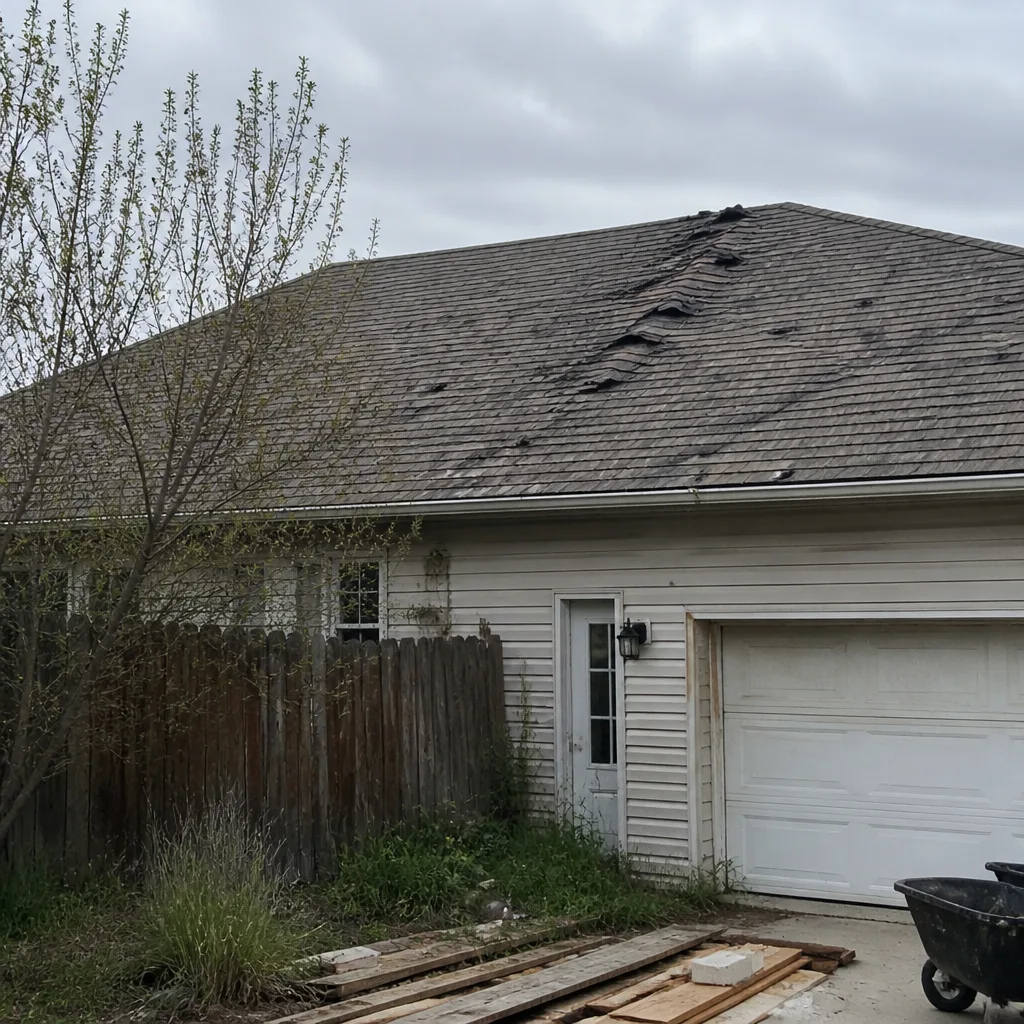 Before
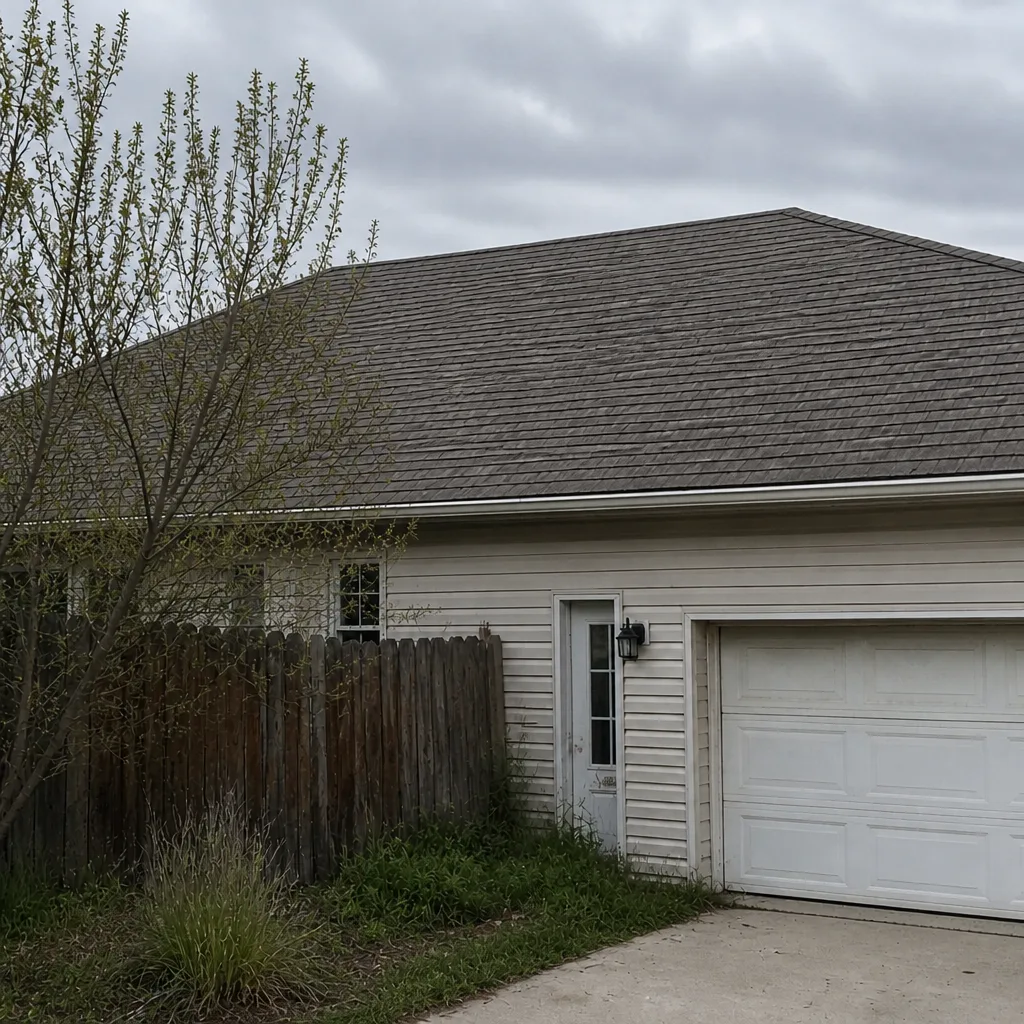 After
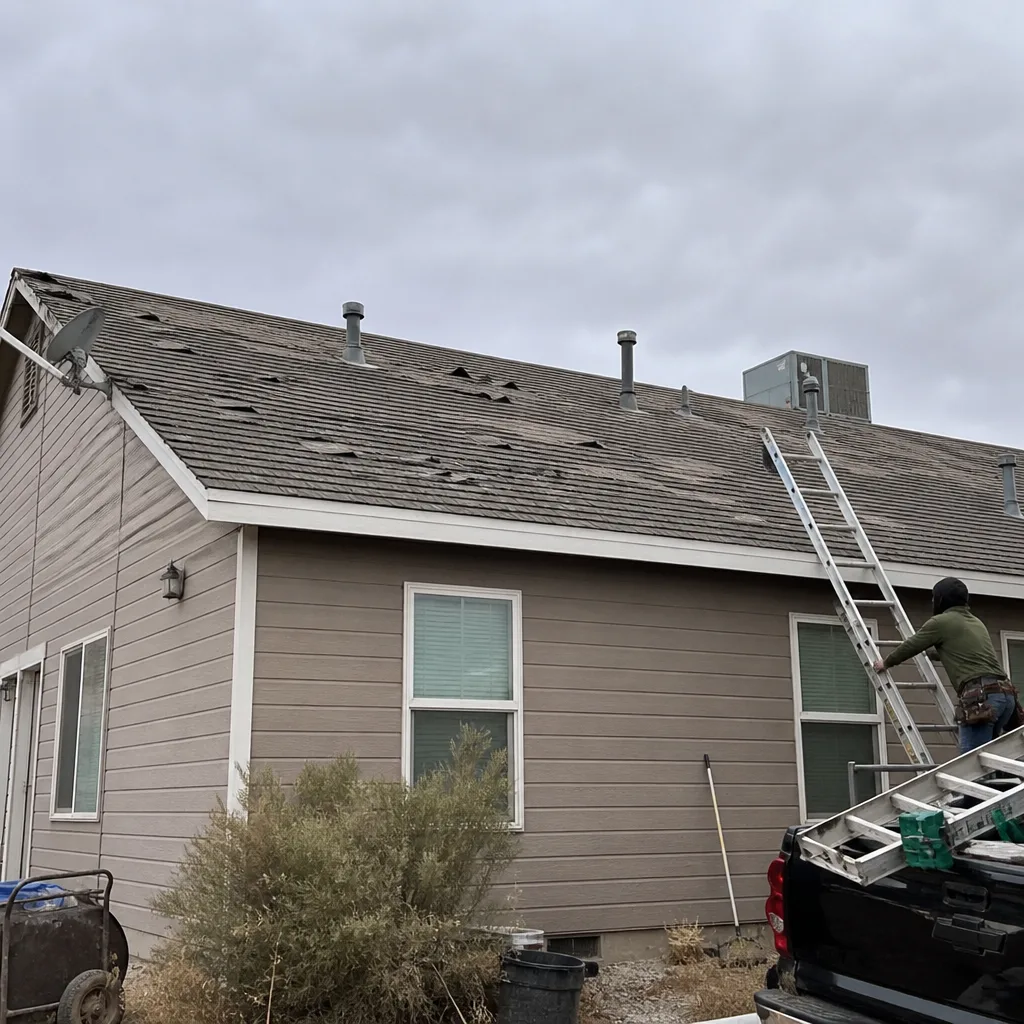 Before
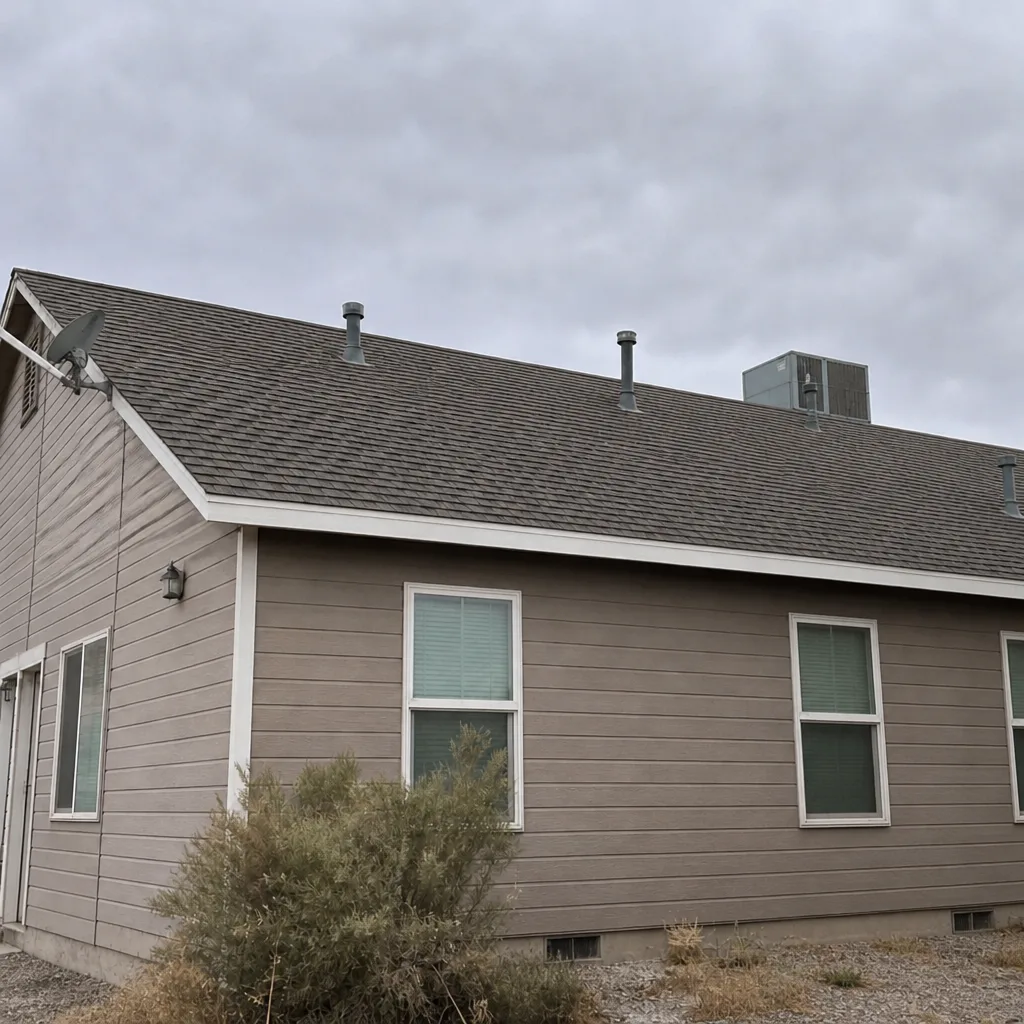 After
Frequently Asked Questions
Twice a year is the baseline, with a quick post-storm check in between. The two anchor inspections should happen in late spring (May or early June, before monsoon season) and late fall (October or November, after monsoon closes). Homeowners with roofs over fifteen years old, or with skylights and multiple penetrations, should add an inspection in March when thermal cycling is at its peak. Call (844) 228-4119 to schedule – estimates are free.
Yes, because of how the rain arrives, not how much falls. Enterprise averages just a handful of inches of rain a year, but during the July-September monsoon season it can come down in sudden bursts driven at 40-plus miles per hour. Wind-driven rain tests flashings, edge metals, and sealants in ways straight-down rain never touches. A roof that stays dry all winter can still leak in July.
October and November are the best months for discretionary roof work, followed by April and May. Both windows avoid the contractor backlogs that build through the holidays and the peak monsoon season when the area’s roofers are busy handling storm damage. If your roof is a replacement waiting to happen, the smart move is to schedule in fall rather than wait until spring.
Absolutely. A failed pipe boot is one of the most common causes of interior water damage in Enterprise. A pipe boot seal is a small rubber collar that cracks from UV exposure and sealant contraction, and once it opens a gap, water runs down the pipe and into the attic insulation. From there it travels until it finds a way through the ceiling. Replacement is a small repair – catching it early is the whole game.
The distinction matters for insurance claims and repair decisions. Storm damage usually leaves visible evidence: lifted or missing shingles, fresh granule loss on a wind-facing slope, or impact marks from hail or debris. Age-related damage tends to be broader – widespread granule loss, curling shingles, cracks in sealant around penetrations. A documented inspection with photos helps establish which one you’re looking at. Call us for a free second opinion on any written estimate.
Ongoing maintenance is inexpensive compared with reactive repair. Gutter cleaning and low-slope drainage clearing are typically DIY, and an inspection is free with us. Targeted sealant repairs and pipe boot replacements are small jobs. The bigger items – replacement or major repair – depend on roof size, pitch, and material; we’ll give a written line-item quote and answer honestly whether the work needs to happen this year or can wait. No-hassle upfront pricing means the number on the estimate is the number on the invoice. Call (844) 228-4119 for a free estimate.
The Bottom Line
Enterprise’s roof calendar has four stress periods, not four seasons: pre-monsoon heat loading in May and June, monsoon wind-and-rain exposure from July through September, mild-winter sealant contraction from December through February, and spring thermal cycling in March and April. The two windows that matter most for scheduling work are late spring and late fall. Inspect twice a year, clean gutters and low-slope drainage before July, check pipe boots and skylights every fall, and don’t wait for a ceiling stain to confirm what the roof already knows. Getting the job done once and done right beats paying twice.
Ridgeline Roofing Co. has been doing exactly this for local roofs since 1984, and we’re still here because we stand behind every job with the written 90-Day Done Right Promise. Background-checked, uniformed technicians, photo-documented inspections, and a live person on the phone 24 hours a day, seven days a week. Whether you’re planning a scheduled inspection, a maintenance repair, or a full roof replacement & installation in Enterprise, we’d like to be the call you make. You can also explore specialty roofing in Enterprise for tile, metal, and flat-system questions, or start at the Ridgeline Roofing Co. Enterprise home. For a free second opinion on any written estimate, or to schedule a seasonal tune-up or inspection, call us at (844) 228-4119. The price we quote is the price you pay – a square deal, and if it isn’t right, we make it right.
Written by the team at Ridgeline Roofing Co. Enterprise.