
Last updated November 18, 2026
 Metal roofing
 Architectural shingles
 Tile roofing
 GAF
 Owens Corning
 Flat & low-slope
Free roof inspection with deck photos before we talk money - GAF and Owens Corning certified installation
Roofing Warning Signs: An Enterprise Homeowner’s Reference Guide
By the time a water stain appears on your ceiling, the roof has typically been leaking for weeks and the decking has already begun to soften. The signs that actually matter are the ones you can read from your driveway two seasons before that stain shows up. We’ve walked thousands of roofs around Enterprise, and the houses that avoid big repair bills are rarely the ones with the newest shingles. They’re the ones where somebody noticed a change early. This guide covers the early signals: granule patterns, flashing streaks, attic clues, and the flat-roof warnings that are specific to how homes here are built. You’ll learn what to watch from the ground and when a small sign is a call-now situation.
Quick Answer
Roof warning signs worth acting on include bald patches of missing granules, rust streaks below flashing, dark staining around pipe boots and vents, lifted or cracked sealant, and water rings or blistering on flat roofs. Inside the attic, condensation marks and compressed insulation are often the first real evidence. If you can see any of these from the ground or the attic hatch, get a photo-documented inspection before the next monsoon season. Anything that involves active water entry, sagging, or exposed decking is a call-now situation.
Styles & brands we work with
- Architectural shingles
- Metal roofing
- Tile roofing
- GAF
- Owens Corning
- Flat & low-slope
Table of Contents
- Reading Granule Loss From the Ground
- Flashing Rust, Penetration Staining, and Lifted Sealant
- Attic Early-Warning Signs Most Homeowners Miss
- Flat and Low-Slope Roof Warnings in Enterprise
- What the Ground Around Your House Is Telling You
- Monitor or Call Now: A Plain-Language Triage
- What to Photograph Before You Call Anyone
- Common Mistakes to Avoid
Reading Granule Loss From the Ground
Asphalt shingles are coated in mineral granules that shield the asphalt underneath from sun. In Enterprise, with our high-altitude UV and 300-plus days of sun a year, that coating works hard. Granule loss is normal and gradual. The pattern of the loss is what tells you whether you’re looking at ordinary age or something that needs attention.
Here’s what we mean by pattern. Uniform, even thinning across a south-facing slope is normal wear on an older roof. Shingles that have lost granules in patches – or along the bottom edge of each course where the color looks chalky and raw – are usually UV-brittle. You can test from the ground without climbing: stand at the base of a downspout after a dry, windy week and look at what has washed down. A small amount of grit in the splash block is normal. A visible accumulation of loose granules in the gutter valley, or gray silt staining the concrete below the downspout, points to a roof that’s shedding faster than it should.
Three ground-level checks we recommend:
- Color check. Compare a shaded north slope to the sun-exposed south slope. A noticeable difference means one side has aged faster, which is common here and worth noting for a future partial repair.
- Texture check with binoculars. From the driveway, look for shingles that have curled edges or lost their pebbled surface. Bald shingles absorb heat and fail faster.
- Gutter check. Scoop a handful of gutter debris. Heavy grit with few leaves means the roof is shedding.
None of this means replace the roof tomorrow. It means you now have a baseline to compare against next spring. If the pattern has visibly changed, that’s when a professional inspection earns its keep. Our Roof Repair in Enterprise team can tell you in a single visit whether it’s age or premature failure.
Flashing Rust, Penetration Staining, and Lifted Sealant
Most leaks don’t start in the middle of a shingle field. They start where the roof meets something else: a chimney, a vent pipe, a valley, a wall. That’s where flashing lives, and flashing is where we find the earliest visible warning signs on Enterprise homes.
What to look for from the ground:
- Orange or brown rust streaks running down from a chimney or vent. Rust on the flashing itself is a slow failure. Rust staining on the shingles below it means water has already been moving.
- Dark staining around pipe boots. The rubber collar on a plumbing vent boot cracks in our sun within a decade. A dark ring or a split collar is a small repair that becomes a rotted deck board if ignored.
- Lifted or cracked sealant. Sealant at valleys and edges shrinks and pulls away. From the ground it looks like a thin dark gap or a line of peeling caulk. That gap is where wind-driven rain gets in.
- Missing or lifted step flashing along a sidewall. Look for a gap in the metal line where the roof meets the wall.
In photos, these signs can look worse than they are or better than they are – a rust streak on a photo could be old and dry, or two days fresh. That’s why we document every inspection with photos taken from the actual roof, so you’re comparing the same angle over time instead of guessing. If you want a second set of eyes on a flashing concern, our roof repair team will put it in writing before anyone touches a shingle.
Attic Early-Warning Signs Most Homeowners Miss
Your attic is the best diagnostic room in the house, and most homeowners haven’t looked inside it in years. Long before a ceiling stain appears, the attic shows you exactly where water is getting in. In our experience walking attics across Enterprise, these three signs come up again and again.
- Condensation and frost marks. Look at the underside of the roof deck for white or dark rings, especially near nails. These are condensation marks, and they tell you the roof is staying wet longer than it should.
- Compressed or matted insulation. Insulation that has flattened along the eaves or under a vent usually means moisture has been sitting on it. It also means you’re losing heat control, which shortens the roof’s life from underneath.
- Rafter staining. Dark streaks running down a rafter, or water lines across the underside of deck boards, are direct evidence of past or active leaks. Even a dry, brown stain is worth a note.
Here’s the practical point: a ceiling stain is the last sign to appear, not the first. The attic sign usually shows up a season or two earlier. Take a flashlight up there once a year, ideally in late spring before the summer storms, and photograph what you find. It costs nothing and gives a professional something real to work from.
Flat and Low-Slope Roof Warnings in Enterprise
Flat and low-slope roofs are common on additions, porches, and some of the older commercial-adjacent homes around Enterprise. They fail differently from pitched roofs, and the warning signs are different too.
- Standing-water ghost rings. After a storm, look at the flat roof from a window or ladder. A dark outline or a ring of debris where water pooled is a ghost ring – it means that spot holds water long after the rain stops. Repeated pooling at the same spot is the number one warning sign we see.
- Membrane blistering. Raised, soft-feeling bubbles in the roofing membrane mean trapped moisture or air. From the ground they look like small tents or lumps along the surface.
- Edge-metal separation. The metal drip edge and coping at the perimeter pull away, leaving gaps where water blows in. Look for a visible gap between the metal and the roof surface, or screws backing out.
Flat roofs also hide their failures better than shingles, which is why a photo-documented inspection from your actual roof matters here more than anywhere. If you’ve seen a ghost ring or a blister, our specialty roofing in Enterprise team handles low-slope work and can tell you whether it’s a patch or a re-cover.
What the Ground Around Your House Is Telling You
Some of the best warning signs aren’t on the roof at all. The ground around your house records what the roof is doing. Walk the perimeter once a month and look for these:
- Stained siding or fascia. Water that runs off a failing section leaves a vertical streak on the fascia board or siding below it.
- Rusty nails or screws in the fascia. Backed-out or rusted fasteners along the roofline mean movement or moisture.
- Green growth in one spot. Moss or dark algae concentrated on one slope often points to a roof that stays damp – usually from poor drainage or debris backing up.
- Cracked or settled driveways and walkways. If your foundation is settling, the roof and gutters take the brunt. Look for a gap opening between the gutter and the fascia.
- Gutter overflow in dry weather. If water spills over the gutter when it hasn’t rained, something’s off with pitch or blockage.
These clues matter because they let you build a timeline. A stain that appears this spring but wasn’t there in the fall tells you something changed over winter. That timeline is exactly what a good inspector wants to see. A Ridgeline Roofing Co. Enterprise home inspection is built around documenting that timeline, not giving you a speech in the driveway.
Monitor or Call Now: A Plain-Language Triage
Not every warning sign is an emergency, and treating them all that way burns money. Here’s how we’d sort them if it were our own house.
Monitor these with a photo log and re-check in a few weeks:
- Even, gradual granule loss on an older south-facing slope.
- A single dry rust stain below a vent with no active drip.
- Minor algae or moss on one shaded slope.
- A small, dry attic stain with no active water.
Call now for these – they escalate:
- Any active drip, or a ceiling stain that grows after rain.
- Sagging along a roofline, or a roofline that no longer looks straight.
- Visible exposed decking, missing shingles, or a hole.
- Standing water on a flat roof that doesn’t drain within a day.
- Lifted flashing or an open gap between roof and wall.
When in doubt, the safe answer is a call, not a ladder. High-tension springs, steep slopes, and edge work are dangerous, and we don’t recommend any homeowner climb up to “check.” Our technicians are background-checked and arrive in uniform, and our phones are answered by a live person around the clock, so a storm-time question doesn’t land in a voicemail tree. That matters when water is coming in at 11 p.m.
What to Photograph Before You Call Anyone
Great photos get you a straighter answer and a more accurate estimate on the first call. Here’s what we ask Enterprise homeowners to capture from the ground, no climbing required:
- A wide shot of each roof slope from the corner of the yard.
- A close-up of any rust streak, dark ring, or lifted sealant – zoom in from a distance rather than climbing.
- A shot of the gutter after a dry, windy week showing any grit at the bottom.
- A photo of the ground below each downspout after a storm.
- One attic photo of any stain, condensation ring, or compressed insulation, with a flashlight aimed to the side so the texture shows.
Those five photos are worth more than any description. When you bring them to us, we compare them against what we see on the actual roof. Because we install products from GAF, CertainTeed, Tamko, and other leading lines, we can also tell you what specific failure looks like on each material – a detail that generic advice won’t give you. And every job we do is backed by our 90-Day Done Right Promise: the price we quote is the price you pay, and if it isn’t right, we make it right.
Common Mistakes to Avoid
- Waiting for the ceiling stain. By the time it’s visible inside, the leak is weeks old and decking may already be soft. The attic sign shows up a season earlier – check it first.
- Judging a roof from the lawn alone. Ground views miss flashing, boots, and flat-roof seams. Use the ground and the attic together, then get an inspection.
- Letting a roofer climb your roof with no photos. If a contractor won’t show you what they saw, you can’t compare estimates or track the damage over time. Insist on photo documentation from the actual roof.
- Treating a flat-roof whistle or ghost ring as cosmetic. Pooling that repeats in the same spot is the warning sign we see most on Enterprise flat roofs, and it leads to membrane failure.
- Climbing up to “take a look” on a steep slope. A fall from a roofline is a serious injury. The safest and most accurate inspection is a trained professional’s, so let us do the climbing.
- Ignoring granules in the gutter because the roof is “new-ish.” Premature granule loss can mean uneven UV exposure or a material problem. Photograph it and compare against last year’s pattern.
- Assuming a slow drip can wait until spring. In Enterprise, one monsoon season of slow water finds the drywall and framing. A small repair this month beats a deck replacement next year.
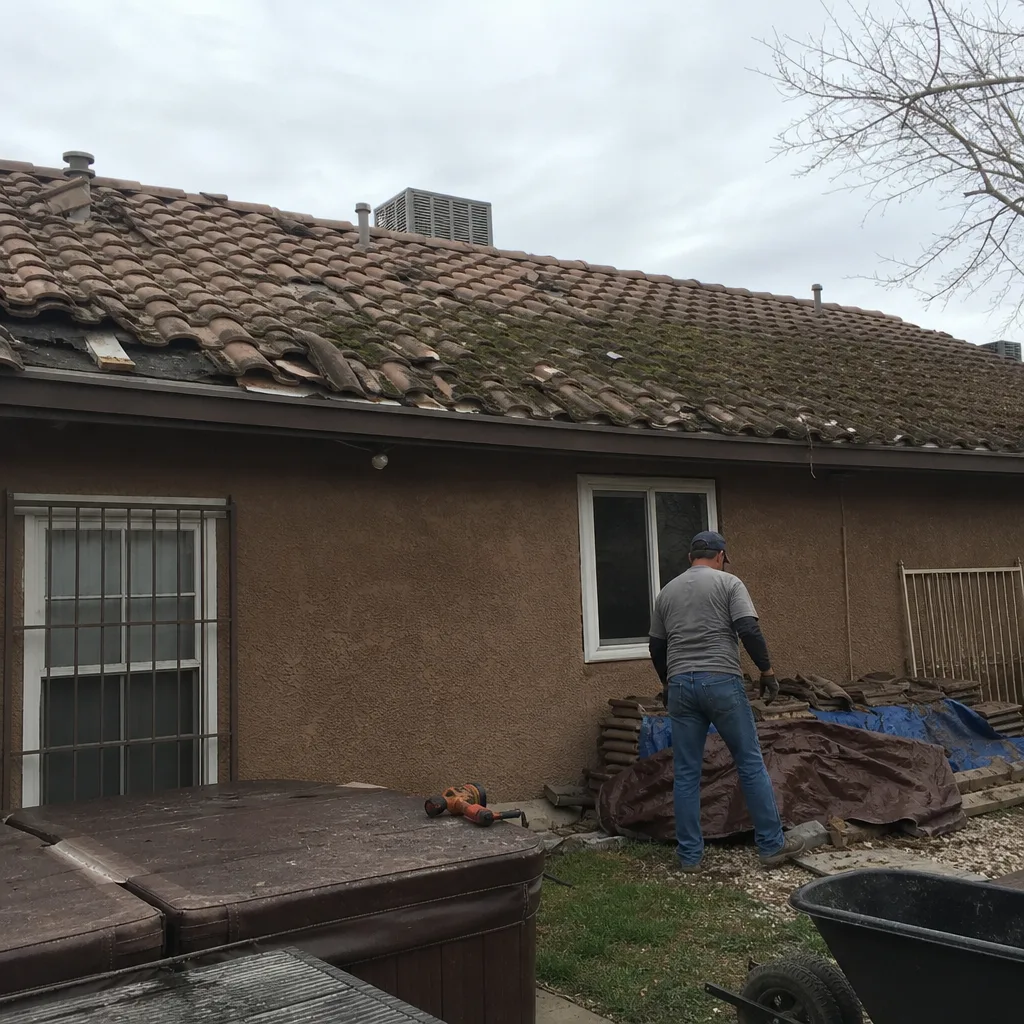
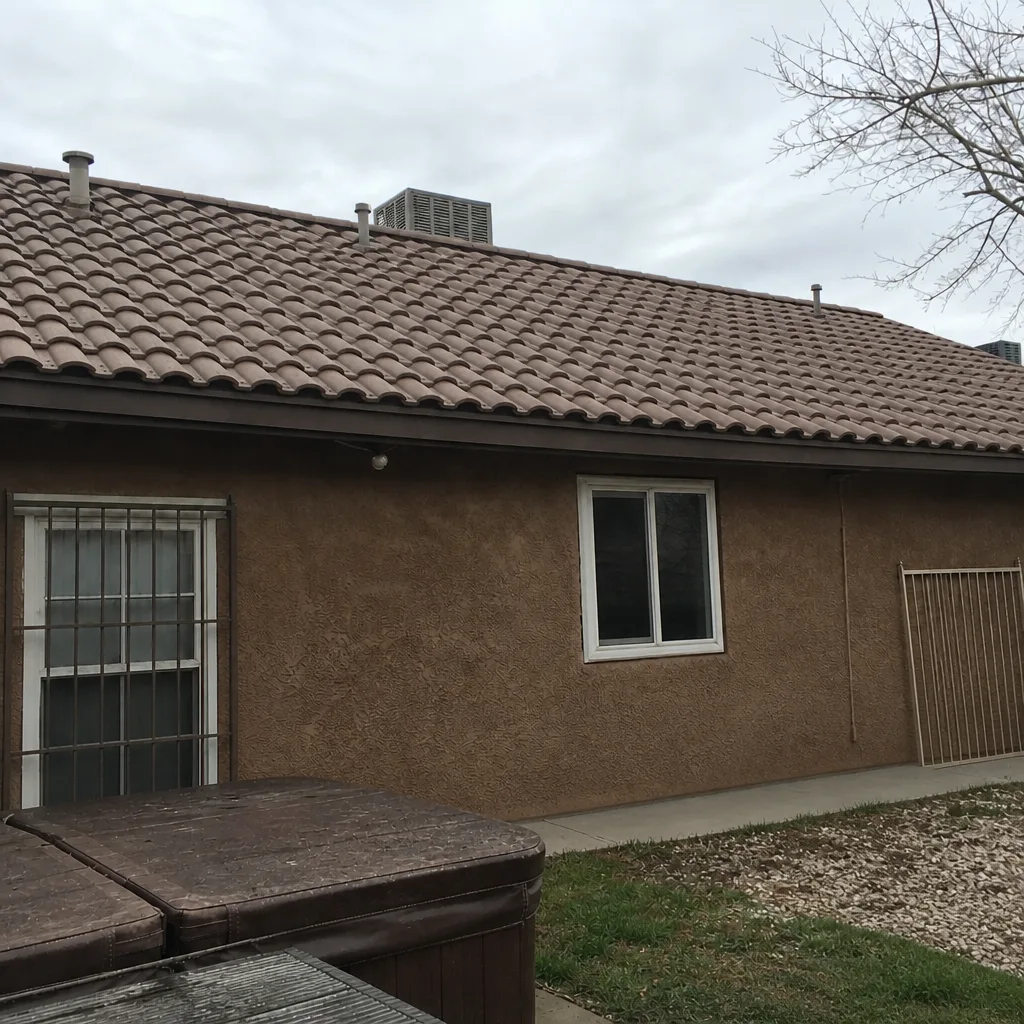
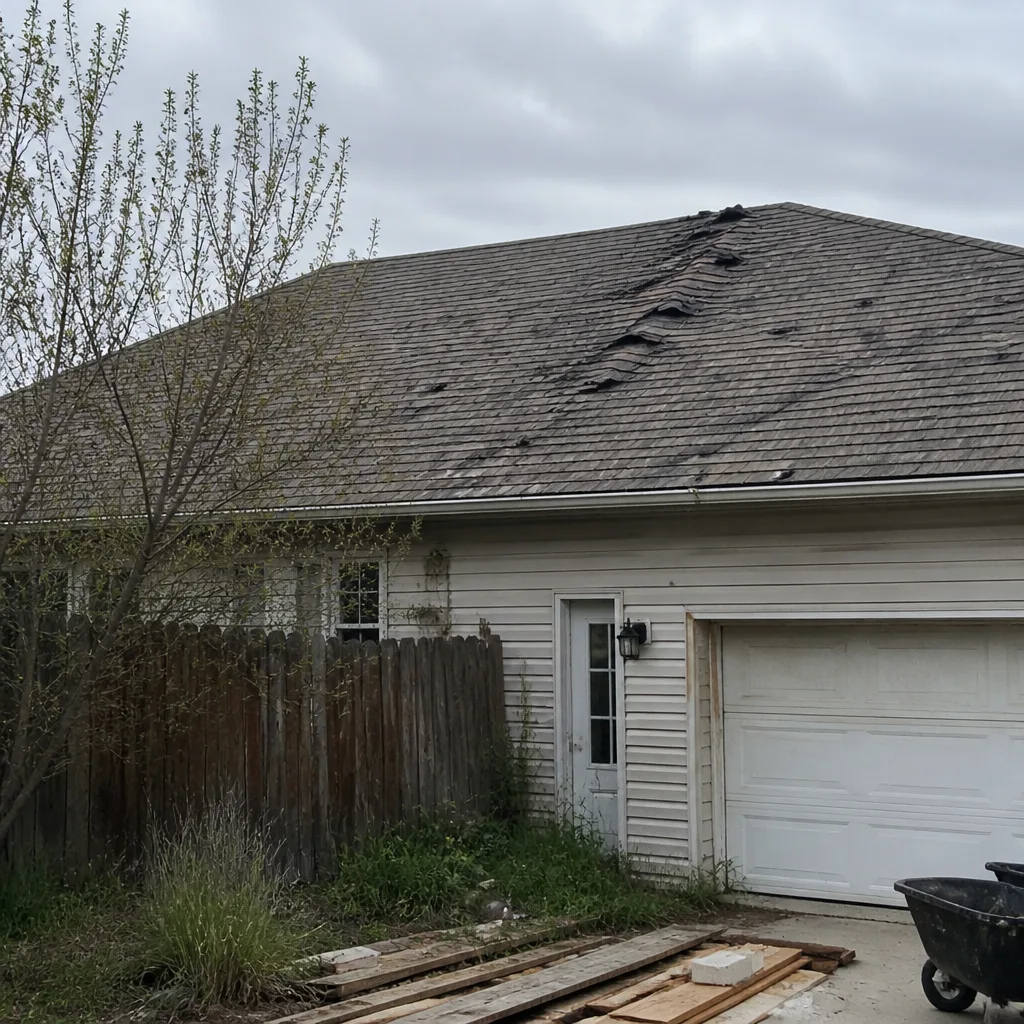
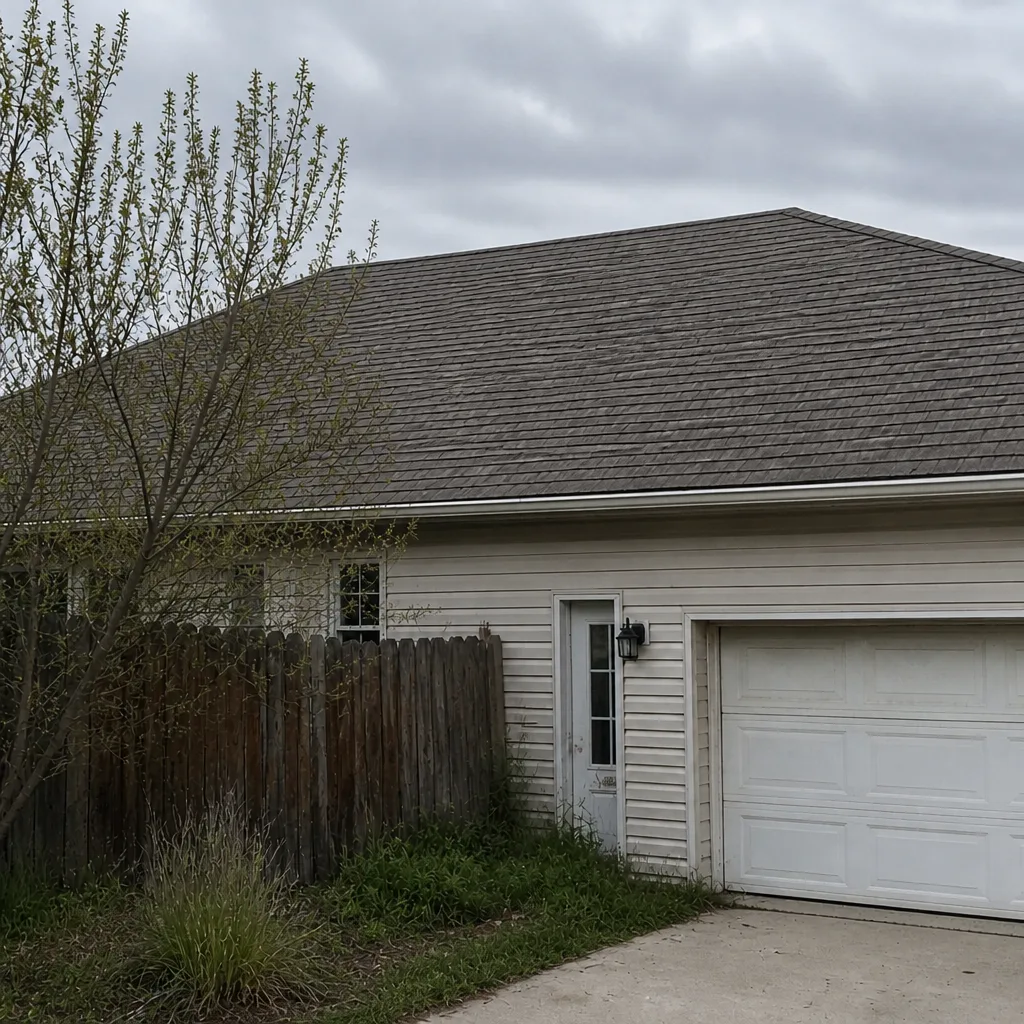
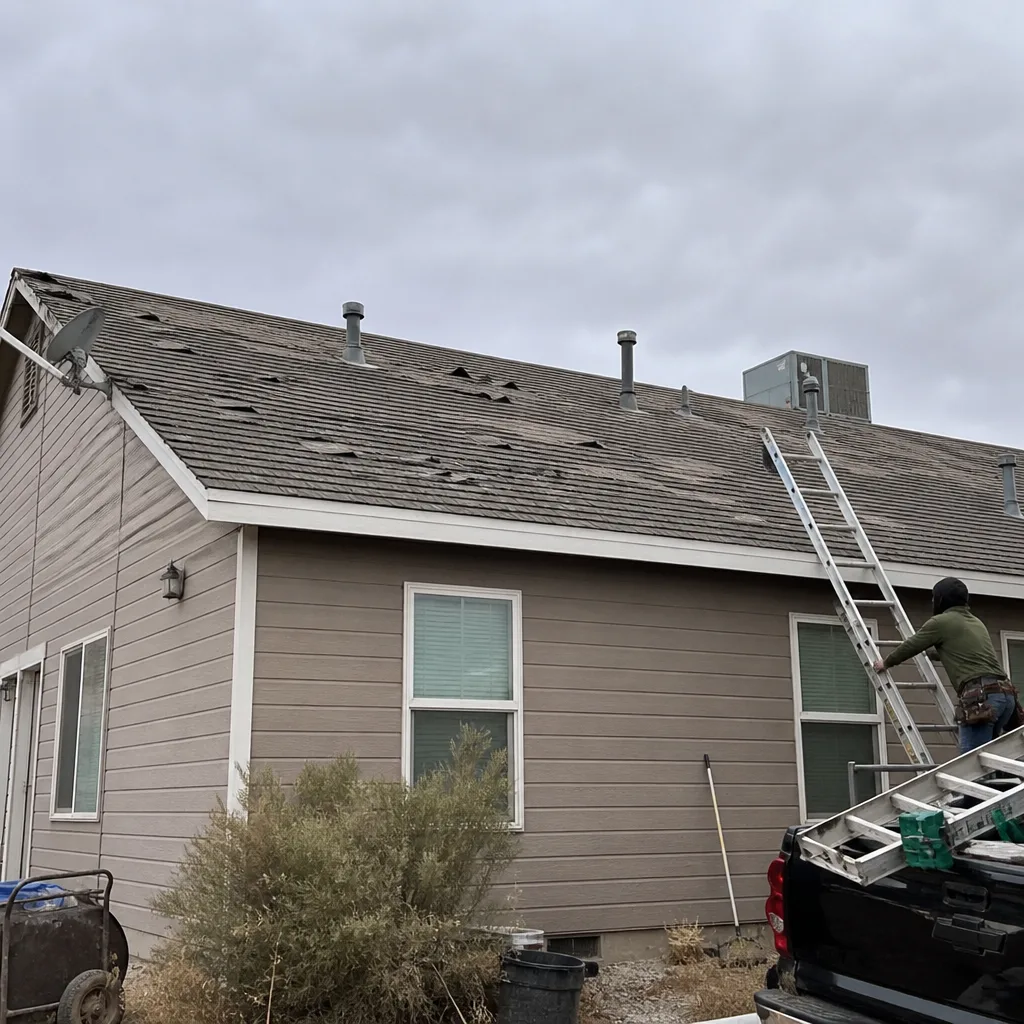
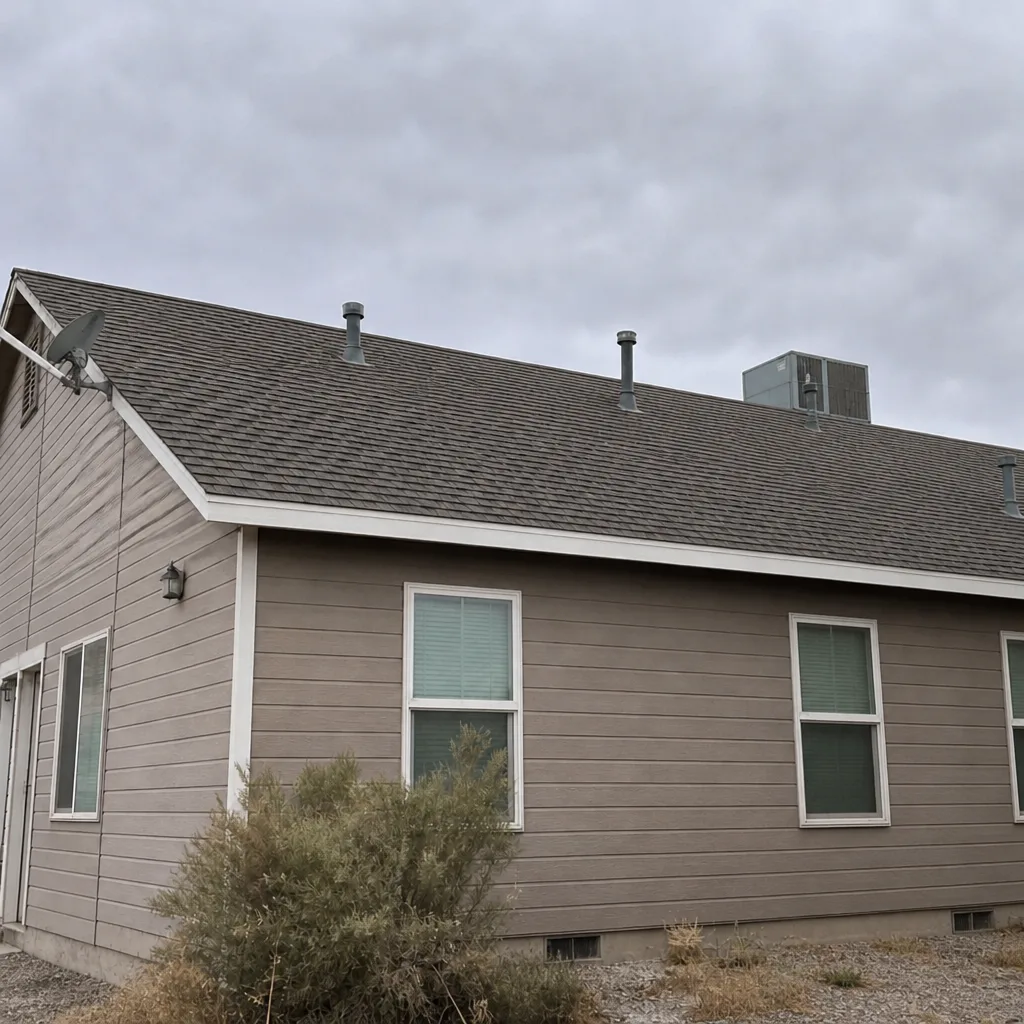
See the difference
 Before
 After
 Before
 After
 Before
 After
When to Call a Professional
If you’ve found active water, sagging, a growing ceiling stain, exposed decking, or standing water on a flat roof, call a professional now rather than monitor it. A background-checked tech will come out, photograph the roof from the actual surface, and give you a written report before anyone proposes work. We handle everything from a single boot replacement to a full replacement, and we pull permits where required. Our estimates are free and the price you’re quoted is the price on the invoice – no change orders, no surprises. Ridgeline Roofing Co. Enterprise offers free estimates in Enterprise – call (844) 228-4119.
Frequently Asked Questions
The earliest signs are usually granule loss visible in the gutter, rust streaks below flashing, dark staining around pipe boots, and attic condensation marks or rafter staining. A ceiling stain is typically the last sign to appear, not the first. If you can see any of these from the ground or the attic hatch, a photo-documented inspection is the right next step. Call (844) 228-4119 for a free estimate.
Most single-spot repairs in the Enterprise area run in the low-to-mid hundreds of dollars, and larger flashing or flat-roof repairs cost more depending on the deck condition. Because we quote upfront and in writing, the number on the estimate is the number on the invoice. Call (844) 228-4119 for an exact quote – estimates are free.
Not necessarily. Even, gradual granule loss on an older roof is normal wear, while patchy loss or heavy grit in the gutter can signal premature UV failure. The color comparison between a shaded and sun-exposed slope is usually the tell. An inspection will tell you whether it’s age or a repair. Call (844) 228-4119 to schedule one.
Standing-water ghost rings, soft membrane blisters, and edge-metal separation are the flat-roof signs we see most here. Repeated pooling in the same spot is the one to take seriously, because it leads to membrane failure. Our specialty roofing team in Enterprise handles low-slope work and can tell you whether it’s a patch or a re-cover.
No, we don’t recommend it, especially on steep slopes or near the edge. High-tension springs, exposed edges, and steep pitches make roof-climbing genuinely dangerous, and the photos you can take from the ground and the attic are usually enough to start a conversation. Let a trained pro do the climbing. Call (844) 228-4119 and we’ll take it from there.
Once a year, ideally in late spring before the summer monsoon, plus after any significant storm. Our Roof Replacement & Installation in Enterprise team can also let you know what an inspection should cover based on your roof type and material. Call (844) 228-4119 to set up a free estimate.
The Bottom Line
The signs that save you money are the ones you catch early: granule patterns in the gutter, rust streaks below flashing, attic condensation and rafter stains, and ghost rings on flat roofs. None of them require you to climb a ladder. Watch the ground and the attic, take a few photos, and you’ll know when a change has happened. The warning signs that are active – water, sagging, exposed decking – mean a call now. The rest are worth a photo log and a free inspection. Do it once and done right, and you won’t revisit it next spring.
Ready to put a trained eye on it? Call (844) 228-4119 to schedule a free estimate, with a live person answering around the clock and photos from your actual roof.
Written by the team at Ridgeline Roofing Co. Enterprise.