
Last updated November 18, 2026
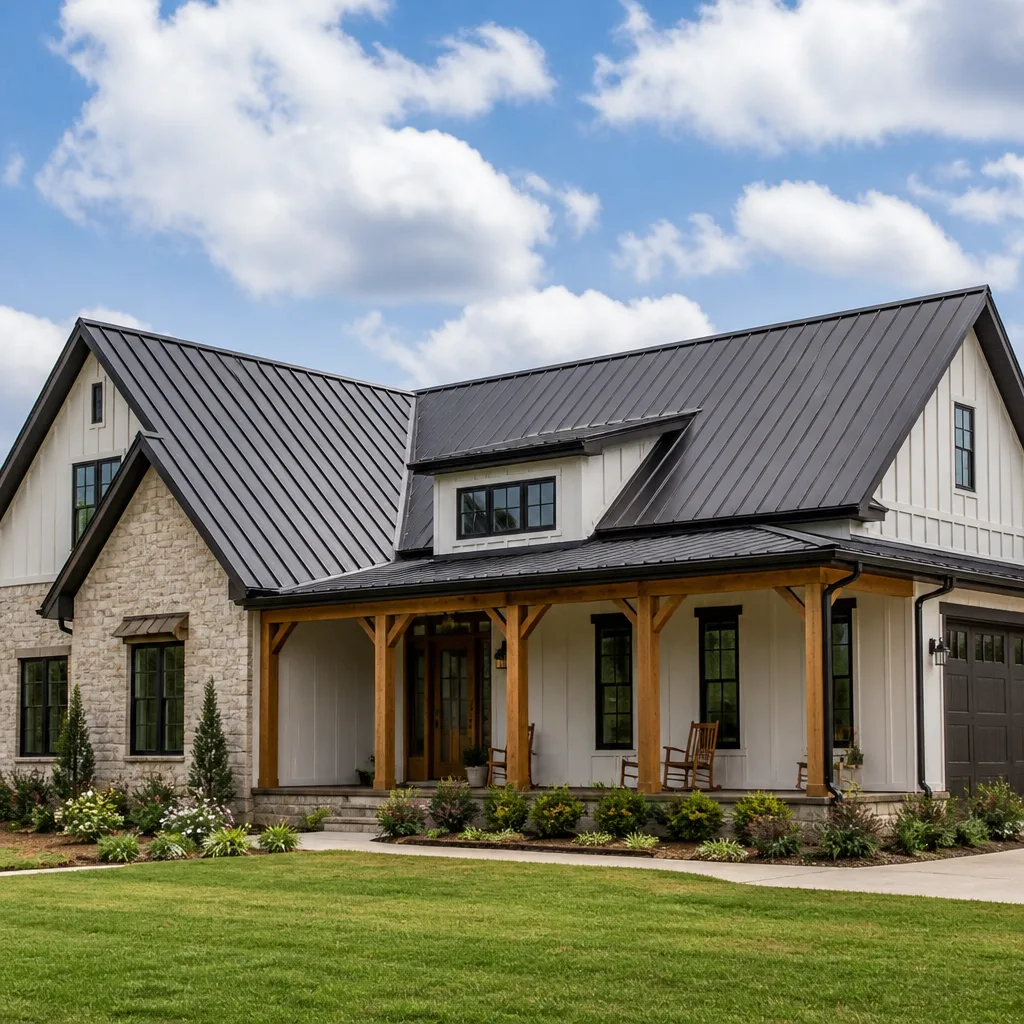 Metal roofing
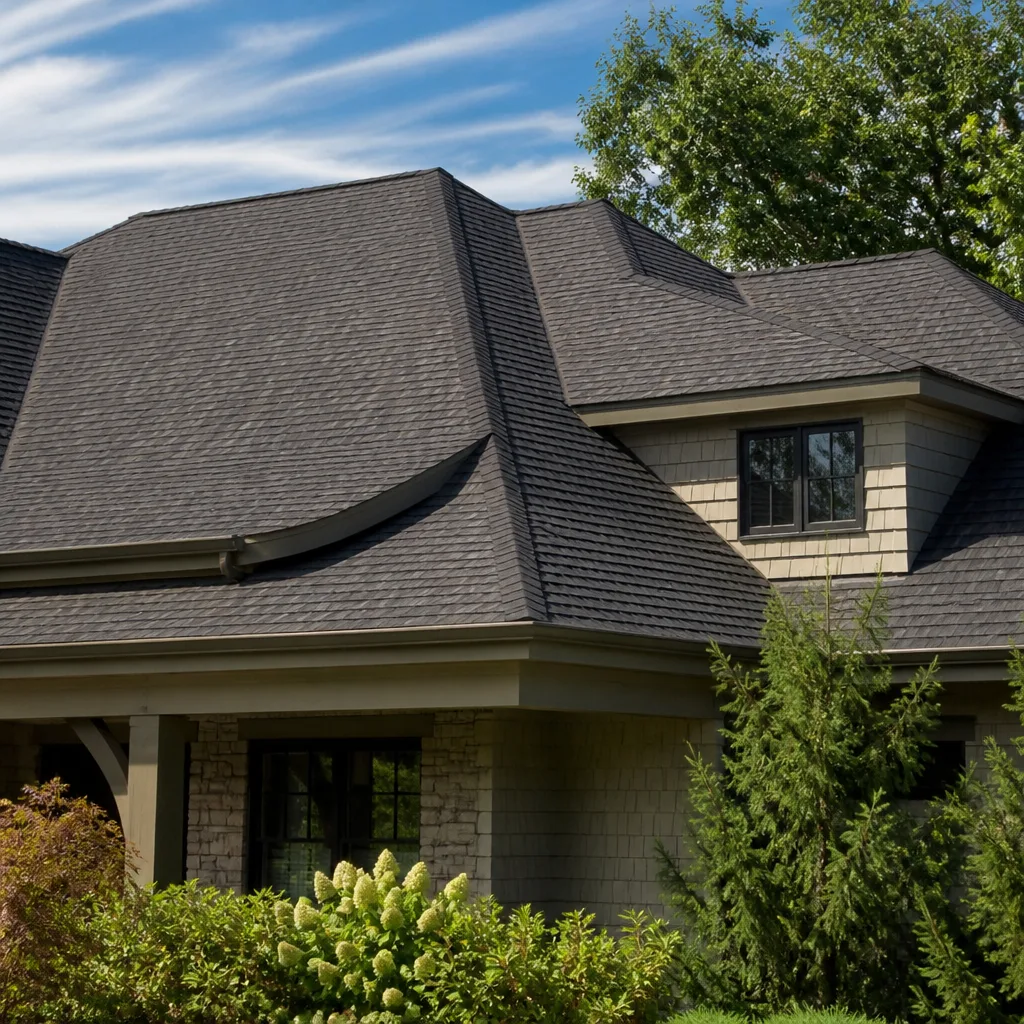 Architectural shingles
 Tile roofing
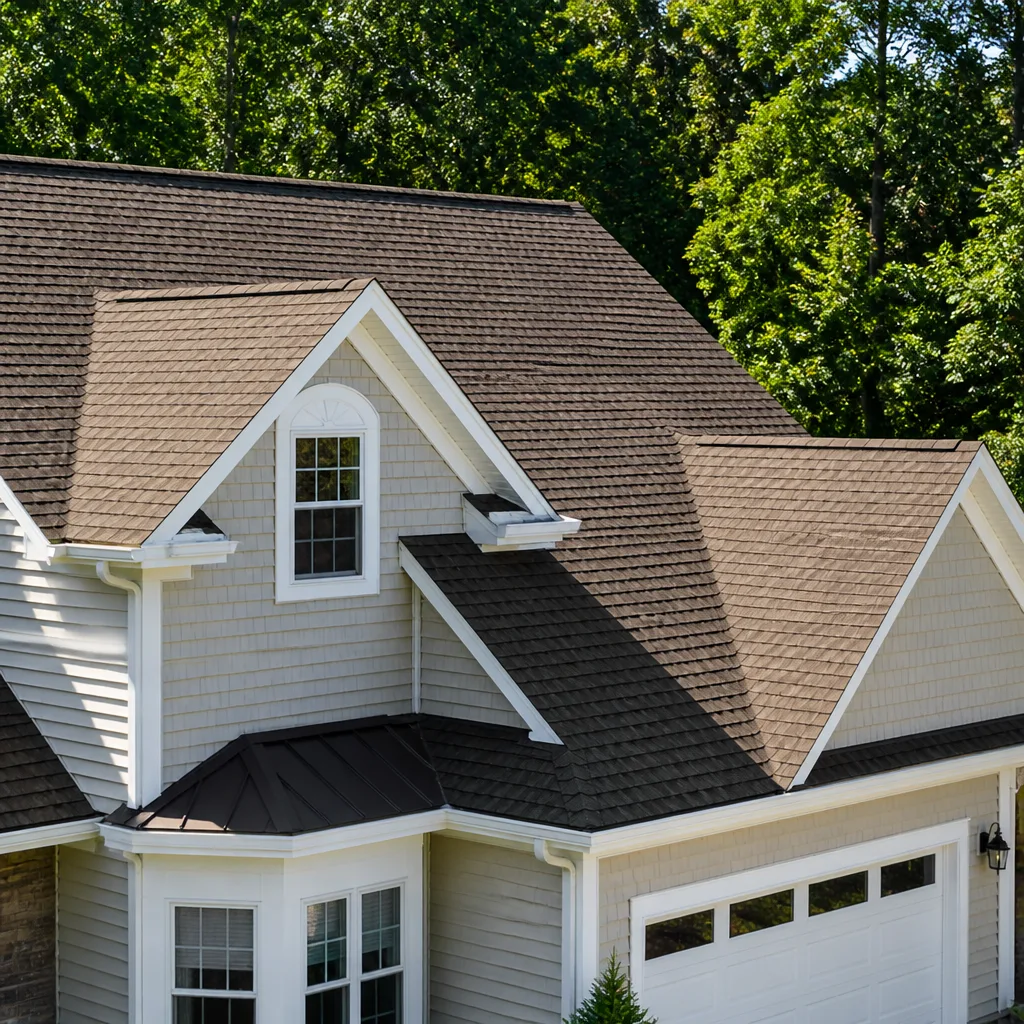 GAF
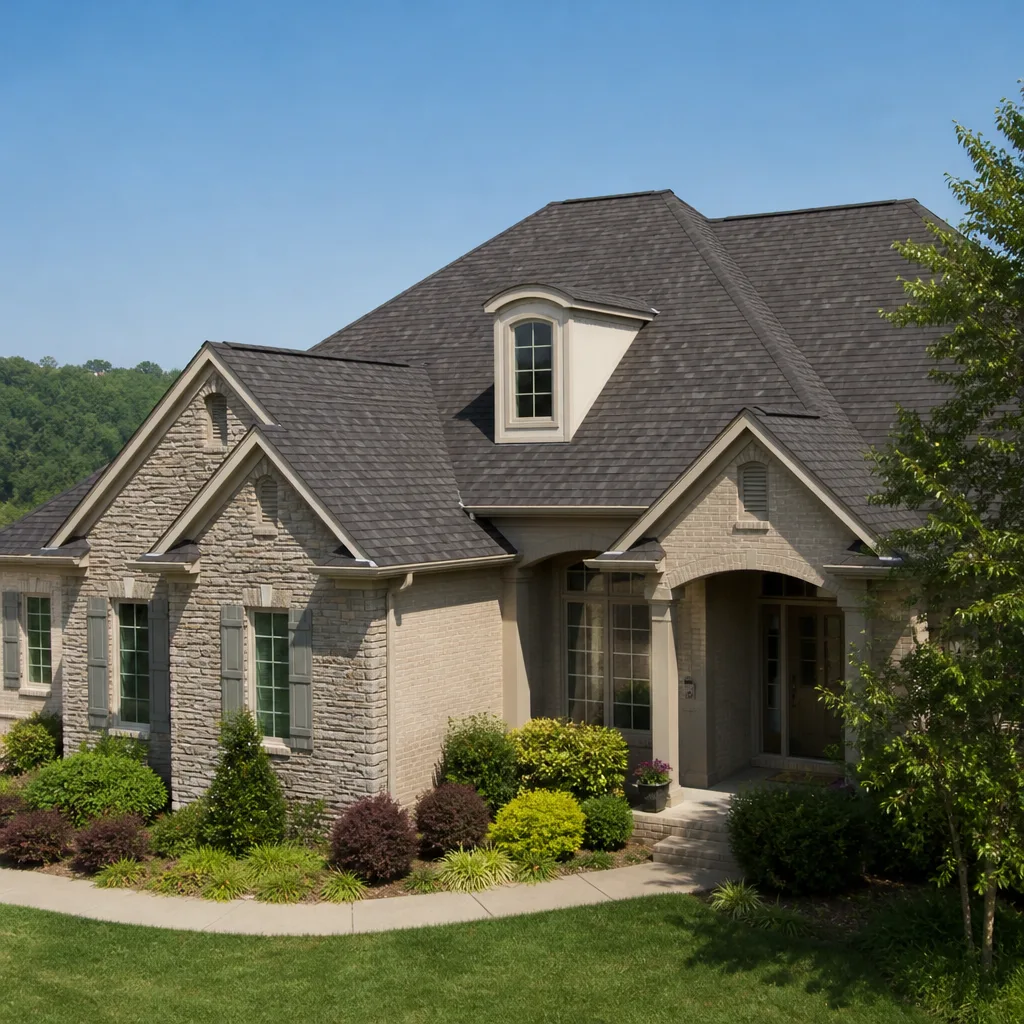 Owens Corning
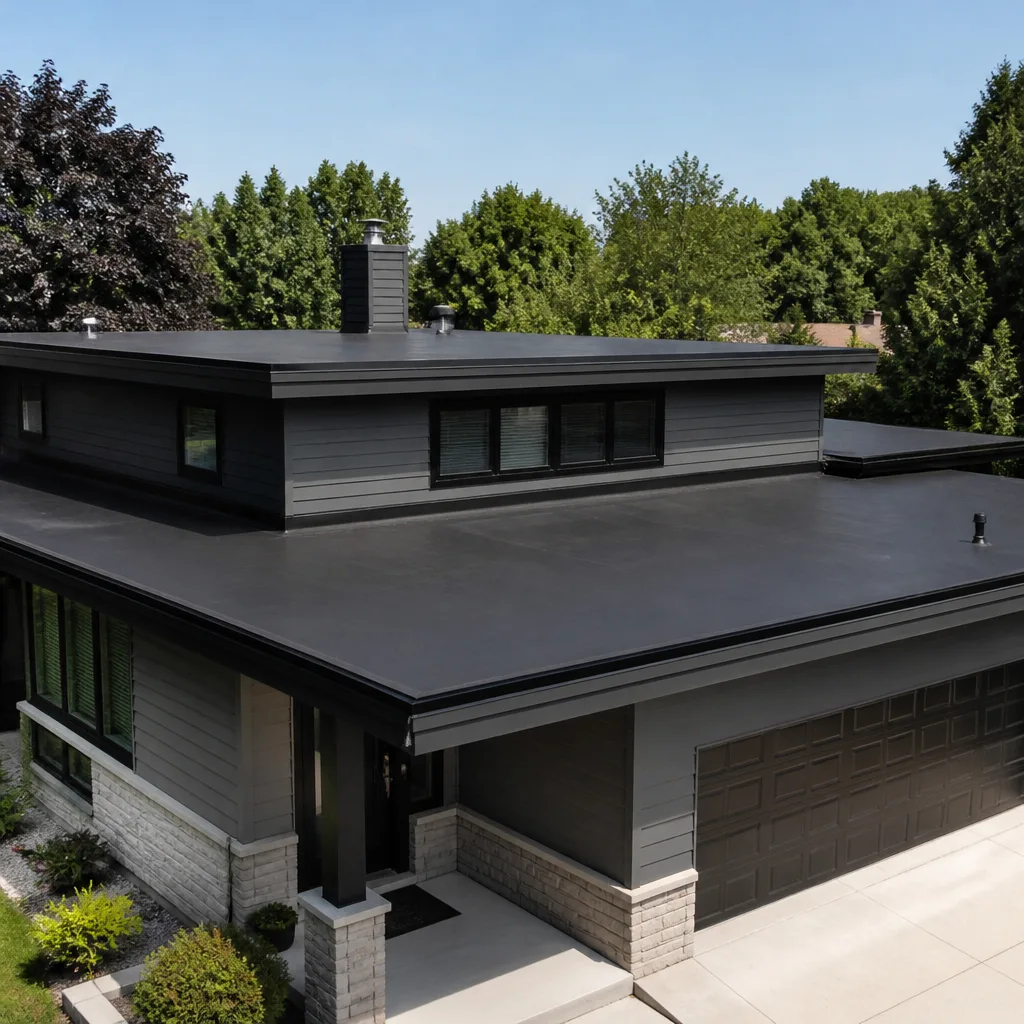 Flat & low-slope
Free roof inspection with deck photos before we talk money - GAF and Owens Corning certified installation
DIY vs Professional Roofing: The Enterprise Homeowner’s Decision Guide
Nevada’s worker heat protection standards exist for a reason. An Enterprise roof at 10 a.m. in July reaches surface temperatures above 160°F, and two of the most common DIY roofing injuries in Clark County are heat-related, not fall-related. That single fact reframes the DIY-versus-hire question most homeowners ask. This guide covers what Nevada code and Clark County permits actually require, how a self-installed roof can void your insurance, what the honest all-in cost comparison looks like once you count permits and tools, and which jobs around an Enterprise home are genuinely safe to do yourself. If you plan to stay in your house another twenty years, the decision matters more than the price tag.
Quick Answer
For most Enterprise homeowners, professional roofing is the safer and often cheaper long-term choice: any full re-roof or structural repair requires a Clark County permit pulled by a licensed C-15 contractor, and an unpermitted roof can void your homeowner’s insurance. Genuine DIY territory is limited to maintenance – gutter cleaning, minor sealant touch-ups, and ground-level inspections. On a desert roof where surface temperatures climb past 160°F, the physical risk of solo work rarely justifies the savings.
Styles & brands we work with
- Architectural shingles
- Metal roofing
- Tile roofing
- GAF
- Owens Corning
- Flat & low-slope
Table of Contents
- What Nevada Code and Clark County Permits Actually Require
- How a DIY Re-Roof Affects Your Homeowner’s Insurance
- The Honest Cost Comparison: DIY vs. Contractor
- What’s Genuinely Safe to Do Yourself in Enterprise
- Where Amateur Work Creates Liability
- The Safety Reality of Enterprise Summer Roofing
- Questions to Ask Before You Hire Anyone
What Nevada Code and Clark County Permits Actually Require
Nevada law draws a clear line between roofing maintenance and roofing work that requires a licensed contractor. Routine maintenance – cleaning debris, resealing a flashing detail, replacing a few loose shingles with matching material – a homeowner can legally do on their own property. Anything that changes the roof’s structural covering, including a full re-roof, a tear-off and replacement, or repairs to underlayment and decking, requires a permit through Clark County, and that permit has to be pulled by a licensed C-15 roofing contractor.
The logic behind the rule is straightforward. A C-15 license requires proof of insurance, passing trade exams, and accountability to the Nevada State Contractors Board. When work goes wrong, there’s a licensing body that can act. When a homeowner pulls a permit as an owner-builder, they take on the role of the contractor, including the liability.
What this means in practical terms for an Enterprise homeowner:
- Maintenance without permit: gutter cleaning, minor sealant repair, replacing a handful of damaged shingles, tightening loose fasteners.
- Permit required: full tear-off and replacement, structural repairs, flat roof re-coating above a certain scope, and any work that touches more than 100 square feet of roofing surface in most cases.
- Licensed contractor required: everything in the permit column, without exception.
In our experience, the permit question is where DIY plans fall apart first. By the time a homeowner learns they need a permit, they’ve often already scheduled the work with family help and a rented dumpster. The project either stalls or proceeds unpermitted, and both outcomes cost more than starting with a licensed quote.
How a DIY Re-Roof Affects Your Homeowner’s Insurance
This is the piece most Enterprise homeowners never hear until it’s too late. When you re-roof your own home and skip the permit, or perform work that doesn’t meet code, your homeowner’s insurance policy may decline to cover future roof-related claims. The policy language varies by carrier, but the pattern is consistent across the industry: insurers require that modifications to the structure be permitted and inspected by the local authority having jurisdiction. When they aren’t, the carrier can treat the roof as an unapproved alteration.
Consider what that actually means. A hail event in the eastern Las Vegas Valley damages your unpermitted roof. You file a claim. The adjuster inspects, sees no permit record at Clark County, and asks for documentation. If the roof was installed without inspection, the carrier can deny the claim for the roof portion, or in some cases flag the entire policy for review. The savings from DIY evaporate in a single denied claim.
Two other insurance wrinkles worth knowing:
- Age of roof matters. Many carriers won’t write or renew a policy on a roof older than 15 to 20 years. A documented, permitted, professionally installed roof with manufacturer materials (we install GAF and CertainTeed systems) has a clear age record the underwriter can verify.
- Workmanship defects are not covered. Standard homeowner’s policies cover storm damage, not installation defects. A wind-lifted shingle row from a bad DIY fastening job is your problem, not the carrier’s. A written workmanship guarantee from the installer shifts that risk back to the contractor.
Before any roofing decision, call your insurance agent and ask two questions: does my policy require a permit for any roof work, and how will coverage respond if I install the roof myself? The answer will usually settle the question.
The Honest Cost Comparison: DIY vs. Contractor
Homeowners comparing DIY vs professional roofing in Enterprise NV often compare the price of shingles at a big-box store against a contractor’s bid. That’s not the real comparison. A fair number includes materials, tools, permits, inspections, disposal, and the value of the labor – even if that labor is your own, because time and risk are real costs.
Here’s what a typical 2,000-square-foot roof replacement in the Enterprise area looks like when both paths are counted honestly:
- DIY materials (asphalt shingle, comparable grade): $6,000 – $9,500 for shingles, underlayment, flashing, ridge vent, nails, and ice-and-water shield where required.
- DIY tools and rentals: $400 – $1,200 for a nail gun rental, dumpster, ladder stabilizer, harness, and safety gear. Some items are reusable; most are not.
- DIY permit complications: a homeowner-pulled permit typically means owner-builder status, with inspection responsibility and no recourse if the final inspection fails.
- DIY disposal: $500 – $900 for tear-off removal and dump fees, done by hand without a crew.
- Contractor all-in: a licensed professional bid includes labor, materials, permit, inspection, disposal, and a written workmanship guarantee. Upfront pricing means the number on the estimate is the number on the invoice.
The gap between a well-bid professional job and the real DIY cost is usually narrower than homeowners expect. Once you add tools, disposal, permits, and the risk of a single mistake (a missed flashing detail that leaks into a bedroom ceiling six months later), the professional path often wins on the math.
Call (844) 228-4119 to schedule a free estimate and see the actual line items on your roof. A written bid gives you a real number to compare.
What’s Genuinely Safe to Do Yourself in Enterprise
There’s real value in basic roof maintenance, and some of it is fully appropriate for a homeowner. Here’s the line we draw for our own customers in Enterprise, and we’ll be direct about the fact that some of these tasks assume you’re comfortable on a ladder.
- Gutter cleaning. Twice a year, more if you have mature trees. Remove debris by hand or with a garden hose from the ground; never reach past arm’s length from a ladder.
- Ground-level inspection. Walk the perimeter with binoculars after any storm. Look for lifted or missing shingles, granules in the gutters, and discoloration around vents and flashing. Photograph anything that concerns you.
- Minor sealant touch-ups on ground-reachable flashing. A dab of roof-grade sealant around a vent boot at the edge of a one-story roof is fine. Anything requiring stepping onto the roof plane is not.
- Debris clearing after wind. A broom from a stable ladder can clear leaves or palm fronds from the lower edge without walking the roof.
- Documentation. Take dated photos of the roof condition each season. This helps with insurance claims and tracks any changes.
What’s not on that list: walking the roof plane on a hot day, replacing more than a couple of shingles, working on valleys or ridge caps, or anything above a one-story pitch. In our experience, these tasks are where homeowners get hurt or create a defect that costs more to fix than the original repair.
Where Amateur Work Creates Liability
The tasks above are maintenance. The tasks below are where DIY goes from “risky” to “liable.” Understanding the difference is what separates a smart homeowner from one who has to sell the house with a disclosed roof defect.
Four specific areas of liability for Enterprise homeowners:
- Valleys and penetrations. A valley detail executed wrong leaks slowly for months before showing up inside. By the time you see the stain, the decking is often compromised. This is one area where we always recommend a licensed roofer, even for a small repair.
- Flashing around chimneys and skylights. Every roof penetration is a future leak point. Properly flashing a chimney requires knowing the geometry of the masonry, the siding type, and the local wind profile.
- Ridge caps and hips. These are the most wind-exposed parts of a roof. Improperly fastened ridge caps are the first thing to blow off in a monsoon-season microburst, and the failure cascades down the field shingles.
- Decking underlayment transitions. Underlayment laps must follow manufacturer spec and local code. A single reversed lap creates a path for wind-driven rain to enter the roof system.
The point is not to scare you off the ladder. It’s that the financial consequence of a bad flashing detail is not a $200 fix – it’s a $2,800 repair plus interior drywall, paint, and possibly mold remediation. Jobs that touch these critical areas belong with a licensed roofer.
The Safety Reality of Enterprise Summer Roofing
Heat is the under-discussed hazard on an Enterprise roof. Falls get the headlines, but in Clark County, a significant share of roofing injuries are heat-related: heat exhaustion, heat stroke, and the material-handling mistakes that happen when a person’s coordination and judgment start to slip. Experienced crews manage this with scheduling, hydration, and habit. A solo homeowner typically doesn’t.
What the trade actually looks like in practice, and why:
- Crews start at dawn. Material staging, tear-off, and the bulk of the work happen between sunup and late morning when surface temperatures are under 130°F. Anything after 11 a.m. in July is done at a slower pace with more breaks.
- Materials are staged cooler. Asphalt shingles get soft and slick when hot; a bundle warmed to 160°F handles differently from one at 90°F. Professional crews time the delivery so bundles sit in shade or on the western side before installation.
- Hydration is scheduled, not reactive. Crews drink before thirst hits, take shade breaks on the clock, and rotate tasks. A homeowner working alone often skips all of this because the goal is to finish.
- Amateur execution on hot roof surfaces is where mistakes compound. A slipped shingle, a missed nail, a foot through the decking – each is more likely when the worker is hot, tired, and racing the afternoon.
We schedule our own crews around the heat for the same reason. The work is not done faster by pushing through the peak of the day; it’s done faster by starting earlier, working smarter, and having enough crew to alternate tasks. A solo homeowner on a desert roof in July can’t replicate any of that.
Questions to Ask Before You Hire Anyone
If you’ve decided to hire a professional for a job beyond basic maintenance, the next question is which professional. Enterprise has no shortage of roofing companies; the differences between them are not visible in a bid comparison. Here are the questions that separate a contractor you’ll never need to call twice from one you’ll be chasing after the season changes.
- “Are you licensed and insured?” Ask for the license number and the certificate of insurance. Verify both against the Nevada State Contractors Board and your carrier.
- “Do you pull the permit?” The answer should always be yes, on a job that requires one. If a contractor suggests skipping the permit to save money, walk away.
- “What does your workmanship guarantee say in writing?” Ask to see the language. A written guarantee that says done right, and if it’s not, we make it right is worth more than a verbal promise.
- “Can I see photos from my actual roof?” A proper inspection uses photos taken from your roof, not a scary speech in the driveway.
- “Which manufacturers are you authorized to install?” A roofer authorized by multiple manufacturers can offer you material options rather than pushing one brand.
- “What’s the phone situation at 2 a.m.?” If a storm hits and a tree limb punctures the roof at midnight, who picks up? Companies with live person answering around the clock get the call resolved. Companies with a voicemail tree get a callback sometime Tuesday.
- “Is the price on the bid the price on the invoice?” Upfront, no-surprise pricing is the mark of a contractor who knows the work.
For broader context on local roofing services, see our main Roof Repair in Enterprise page, or read more on Roof Replacement & Installation in Enterprise.
Common Mistakes to Avoid
- Skipping the permit to save the fee. A homeowner-pulled permit that fails final inspection can cost more in repairs and disclosure headaches than the permit saved. Enterprise homeowners selling their house often discover this at the point of a home inspection.
- Buying the cheapest shingles available. Low-end shingles in a desert climate with intense UV exposure can chalk and crack years earlier than spec-grade materials from manufacturers like GAF, CertainTeed, or Owens Corning.
- Working the roof during the heat of the day. A 10 a.m. July start on an Enterprise roof puts your first hour at over 160°F surface temperature. Heat-related injuries are the most common DIY roofing issue in Clark County, not falls.
- Not documenting pre-existing damage with dated photos. When the insurance adjuster arrives after a monsoon-season roof leak, the “before” photos are the difference between a paid claim and a denied one.
- Hiring the first bidder after a storm. Storm-chasing outfits pass through the Las Vegas Valley after every major weather event. Verify the license, the local address history, and the written workmanship guarantee before signing.
- Assuming the contractor’s insurance covers your roof. Ask for the certificate of insurance and verify the general liability limit. Skimping on this step puts you on the hook for a worker’s injury on your property.
- Treating the roof as a finished product. A roof is a 20-to-30-year system that needs annual inspection, seasonal debris clearing, and prompt attention to any small leak. Deferred maintenance is the reason most Enterprise roofs fail before their rated lifespan.
See the difference
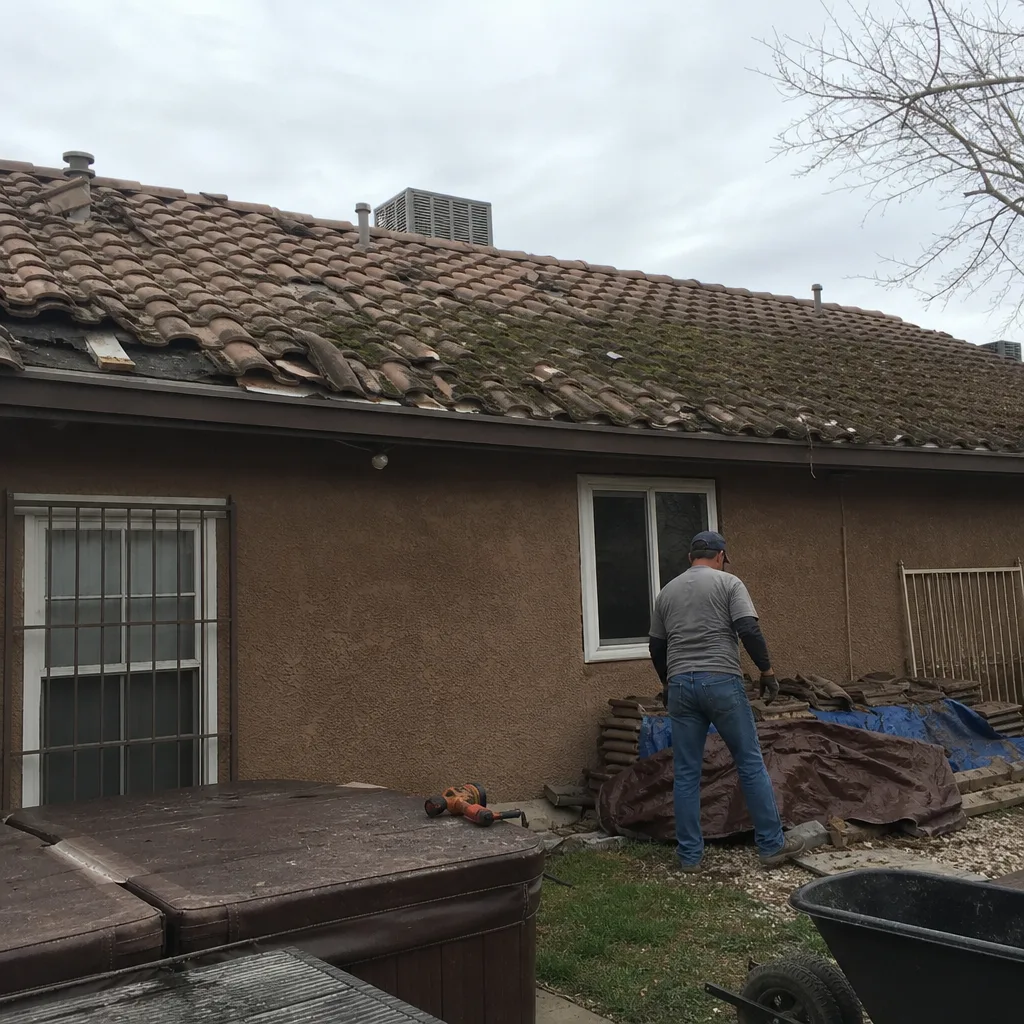 Before
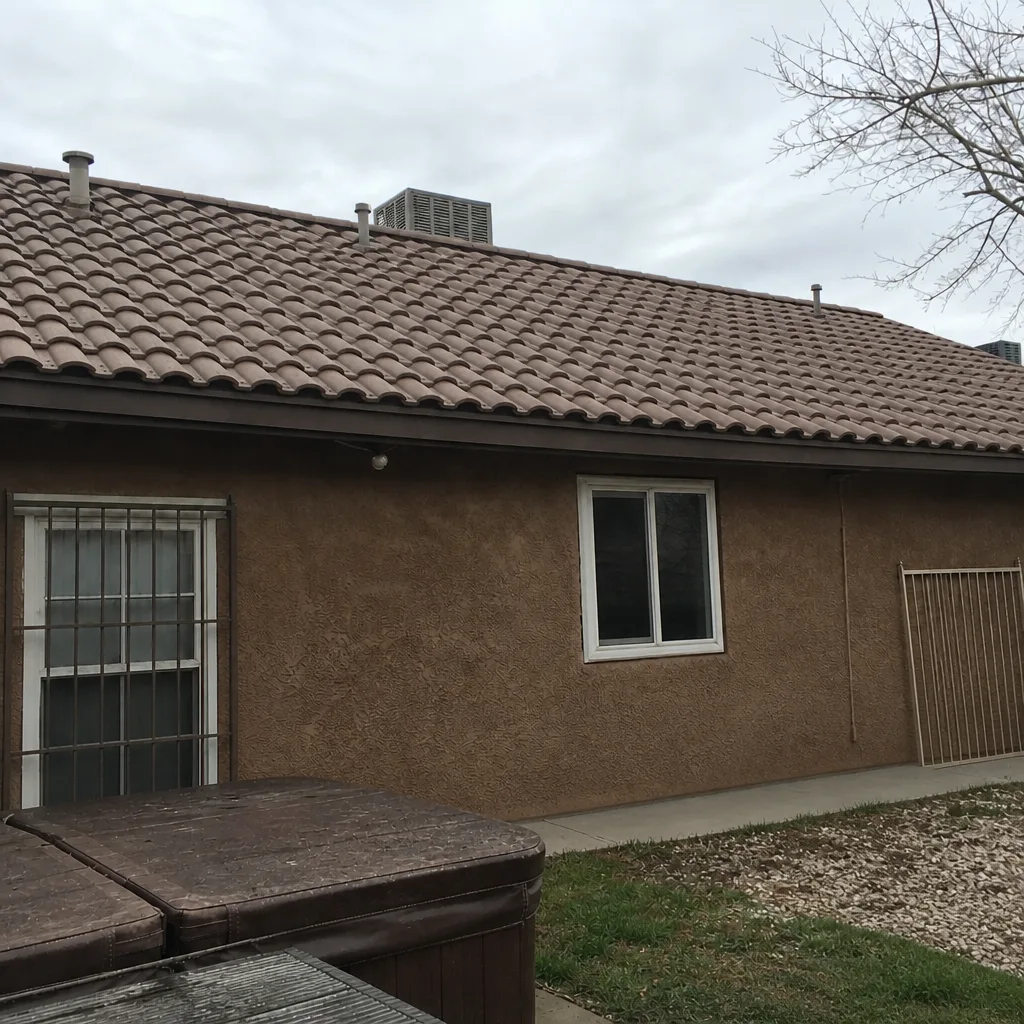 After
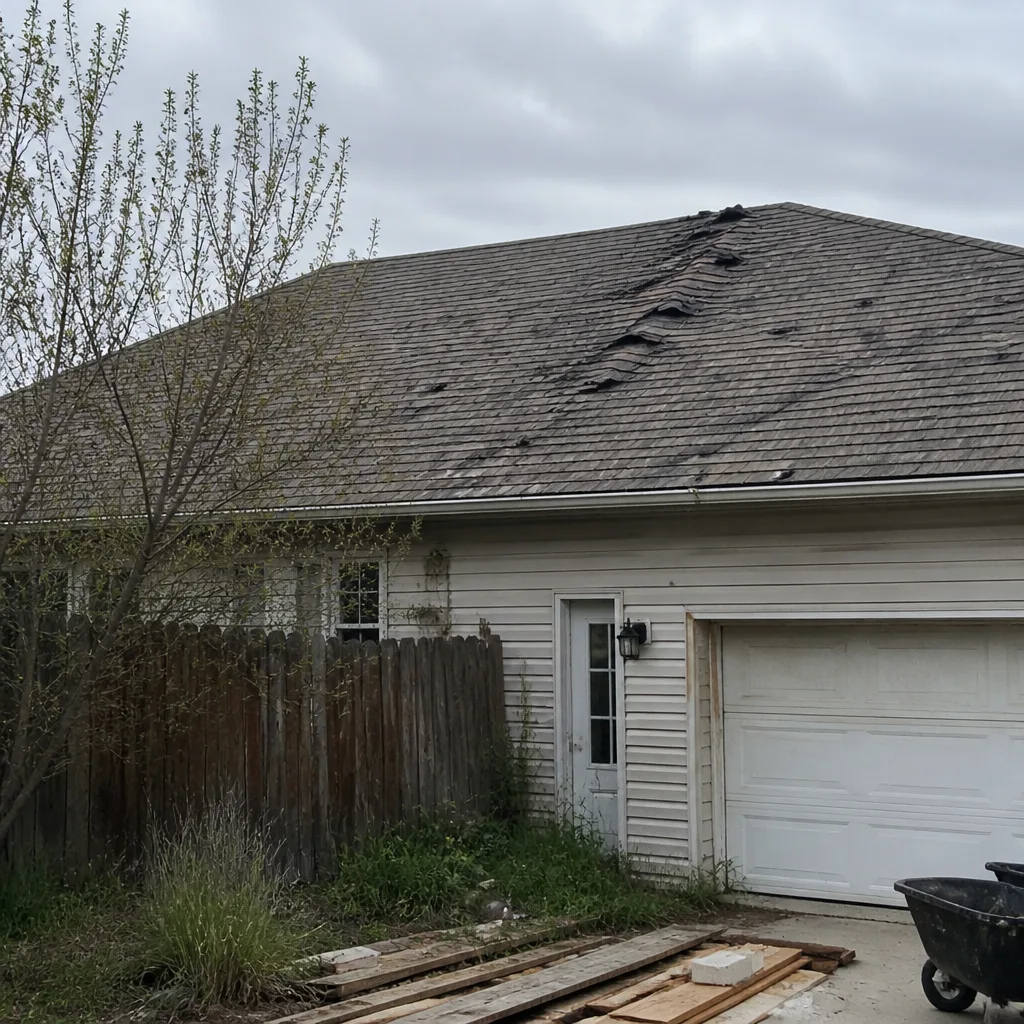 Before
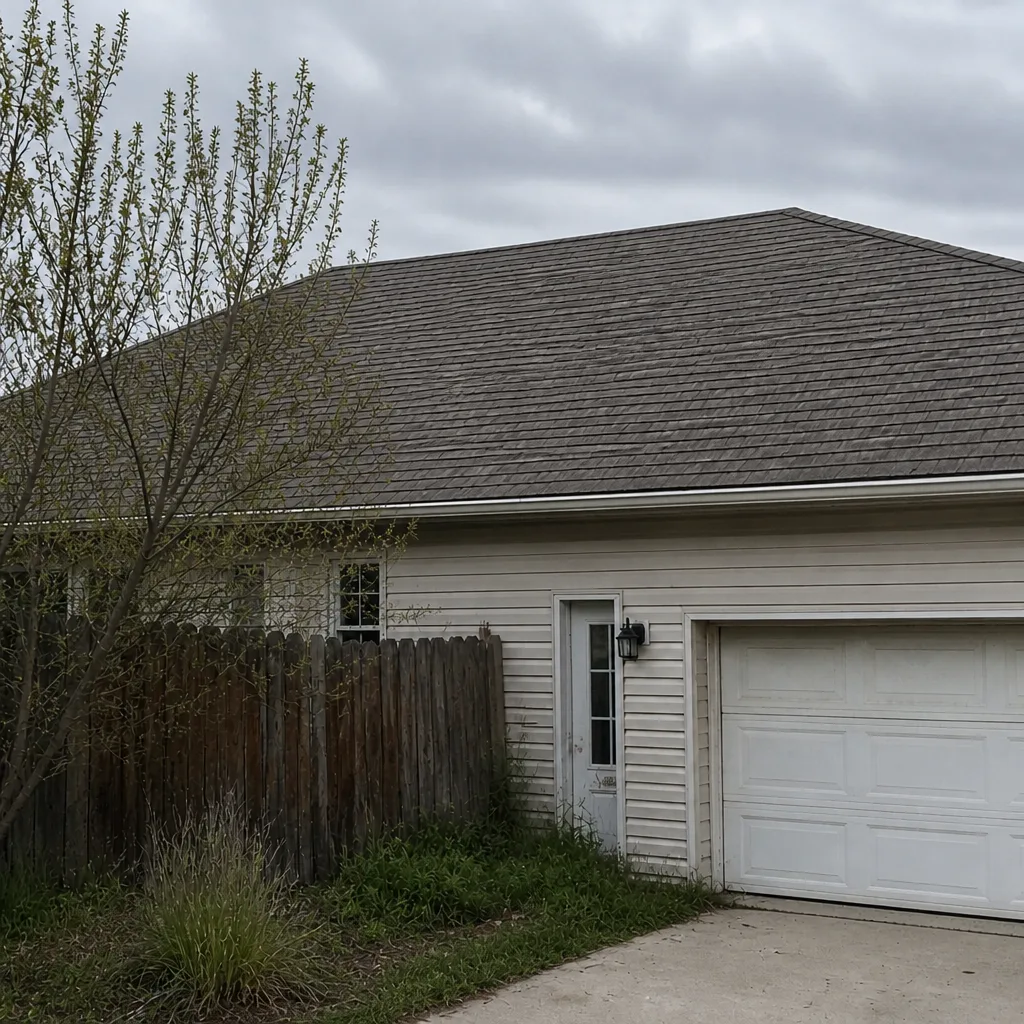 After
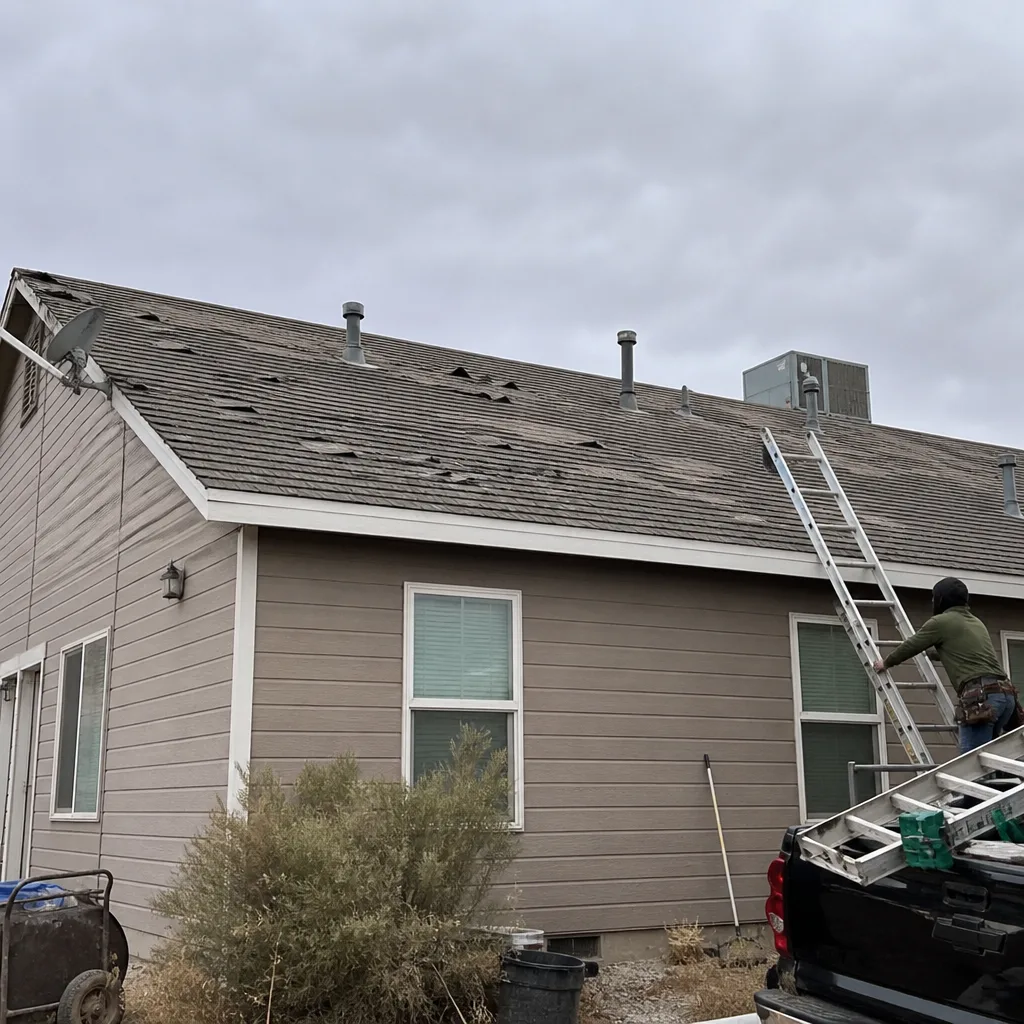 Before
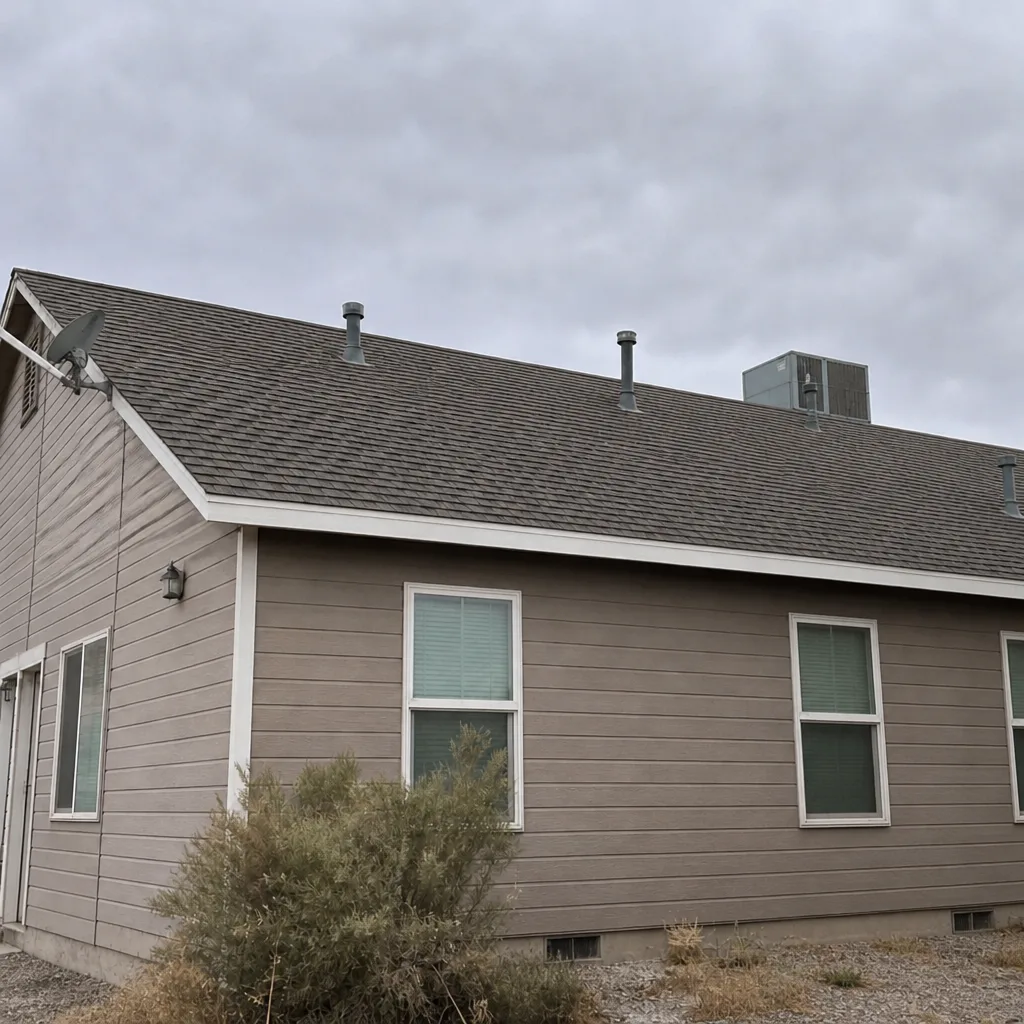 After
When to Call a Professional
The threshold for hiring a professional roofer is lower than most homeowners assume. If you’re considering any of the following, call us first: any leak into the interior of the home, a roof older than 15 years that’s never been professionally inspected, visible sagging or soft spots, missing or lifted shingles in more than a three-foot area, or any work requiring stepping onto the roof plane. Storm damage of any kind belongs with a professional who can document the inspection for your insurance claim. Specialty systems – tile, flat roof, and metal – require specific certifications and tools that a homeowner cannot reasonably acquire. Ridgeline Roofing Co. Enterprise offers free estimates in Enterprise – call (844) 228-4119.
Frequently Asked Questions
A full re-roof in Enterprise requires a Clark County permit, and that permit must be pulled by a licensed C-15 roofing contractor. A homeowner can complete routine maintenance without a permit, but a tear-off and replacement, or any structural repair, is not legal to self-perform on the permit side. Call (844) 228-4119 for a free estimate on what a permitted re-roof looks like for your home.
Most homeowner’s insurance policies require that roofing work be permitted and inspected by Clark County, and an unpermitted self-installation can void coverage for future roof-related claims. The specific policy language varies by carrier, so the right move is to call your agent before you decide. Call us at (844) 228-4119 if you want a licensed inspection for a second opinion on an existing DIY roof.
Most roof replacements in Enterprise fall in the $10,000 – $22,000 range depending on square footage, roof pitch, number of penetrations, and material grade. A written line-item estimate gives you the real number for your roof. Call (844) 228-4119 – estimates are free.
A typical single-family roof replacement takes one to three days once materials are staged and permits are pulled, with larger or more complex roofs running up to five days. Scheduling in summer often starts at dawn to avoid afternoon heat. To get a timeline for your specific home, call (844) 228-4119.
Walking the roof plane in Enterprise in summer is genuinely risky – surface temperatures can exceed 160°F and the two most common roofing injuries here are heat-related. A ground-level inspection with binoculars gives you most of the information you need; anything from the roof plane itself should be handled by a trained technician. Call (844) 228-4119 to schedule a photo-documented professional inspection.
A small repair of a handful of shingles typically does not require a Clark County permit, but the repair must match the existing material spec and not involve decking or underlayment replacement. Anything beyond that enters permit territory. Our Ridgeline Roofing Co. Enterprise home page has more on what falls on each side of that line, or call (844) 228-4119 to talk it through.
The Bottom Line
The DIY-versus-professional roofing question in Enterprise is not primarily about the sticker price. It’s about permit compliance, insurance coverage, safety on a desert roof in 100°F heat, and whether the finished job will hold up through a decade of monsoon seasons and summer UV exposure. Routine maintenance – gutter cleaning, ground-level inspection, minor sealant touch-ups – is fair game for a homeowner. Anything involving the roof plane, permits, critical flashing details, or full coverage belongs with a licensed C-15 contractor. If you’re considering a specialty system, see Specialty Roofing in Enterprise. The right call is the one that gets the roof done once and done right.
Call (844) 228-4119 to schedule your free estimate from Ridgeline Roofing Co. Enterprise. The phones are answered by a live person around the clock, the inspection is photo-documented from your actual roof, and every job is backed by our written 90-Day Done Right Promise – done right, and if it’s not, we make it right.
Written by the team at Ridgeline Roofing Co. Enterprise.