
Last updated November 18, 2026
 Metal roofing
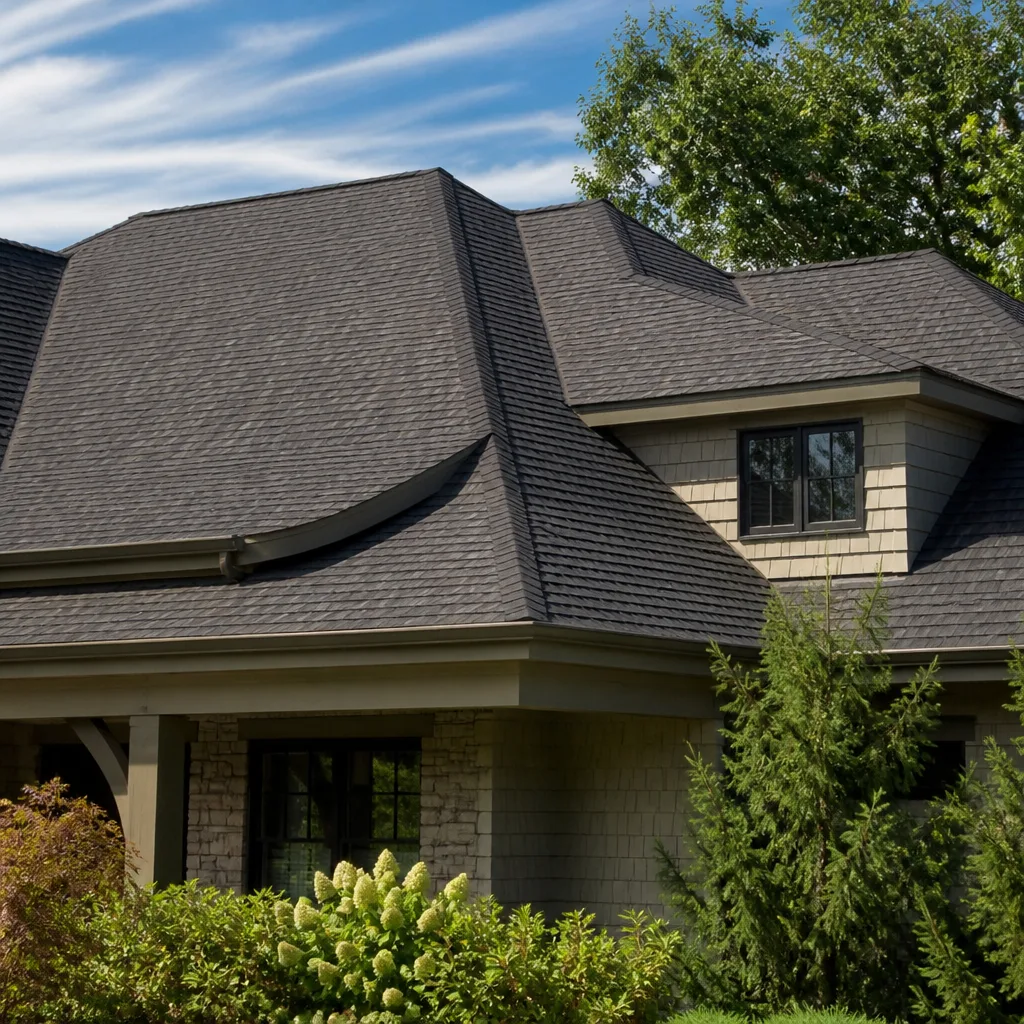 Architectural shingles
 Tile roofing
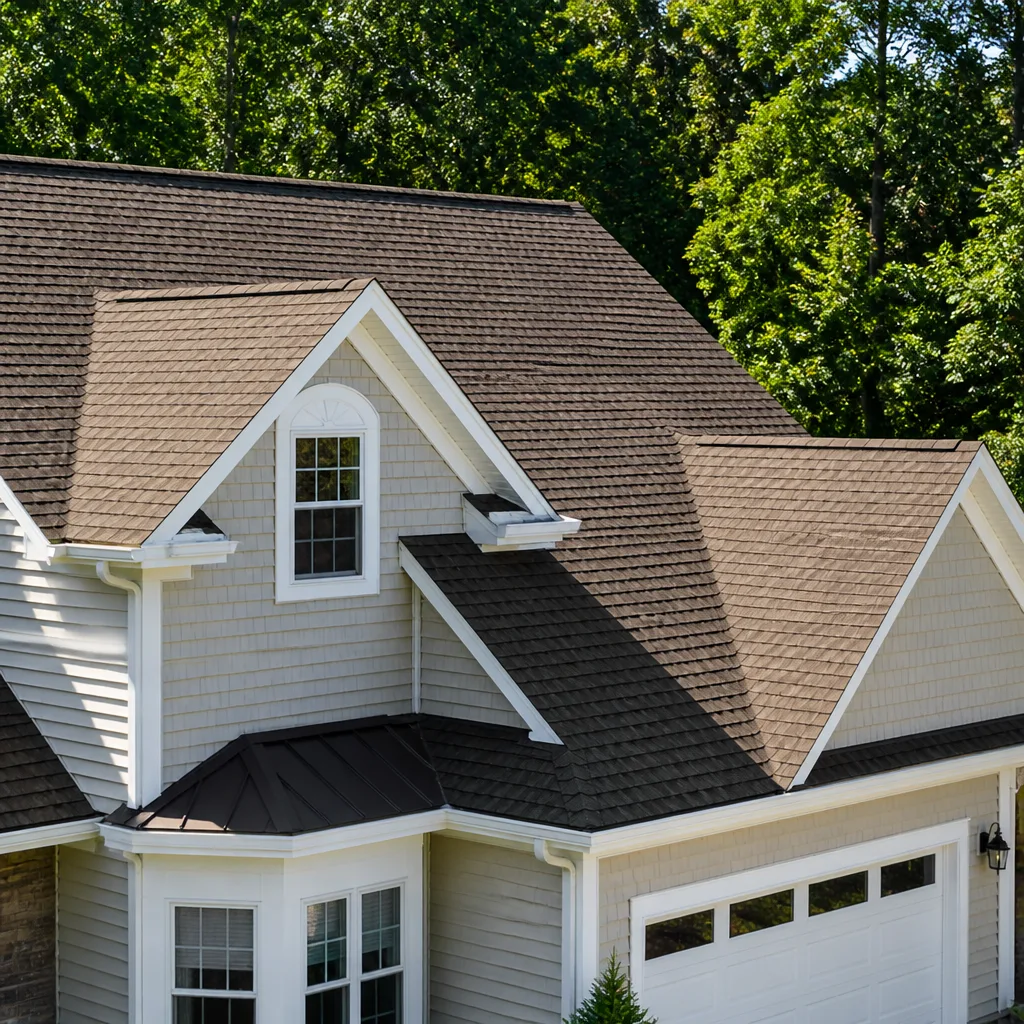 GAF
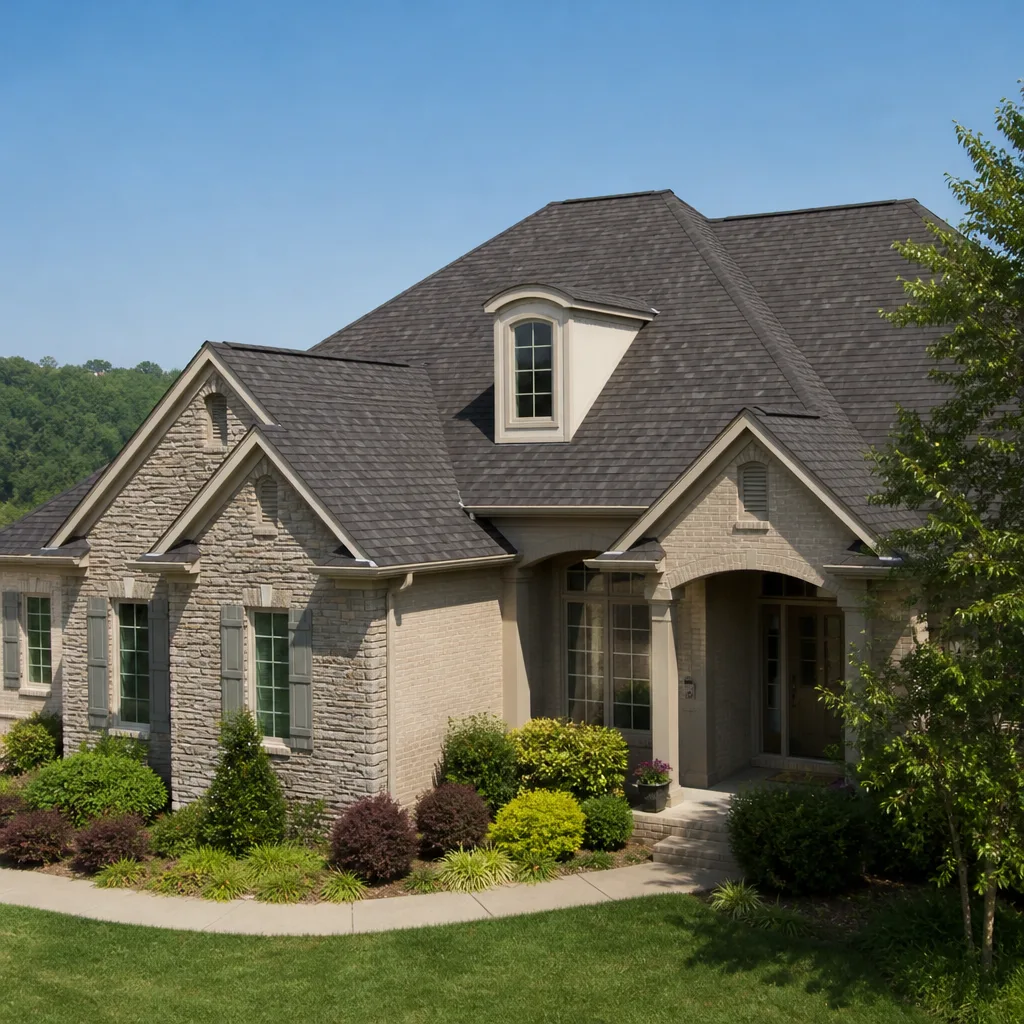 Owens Corning
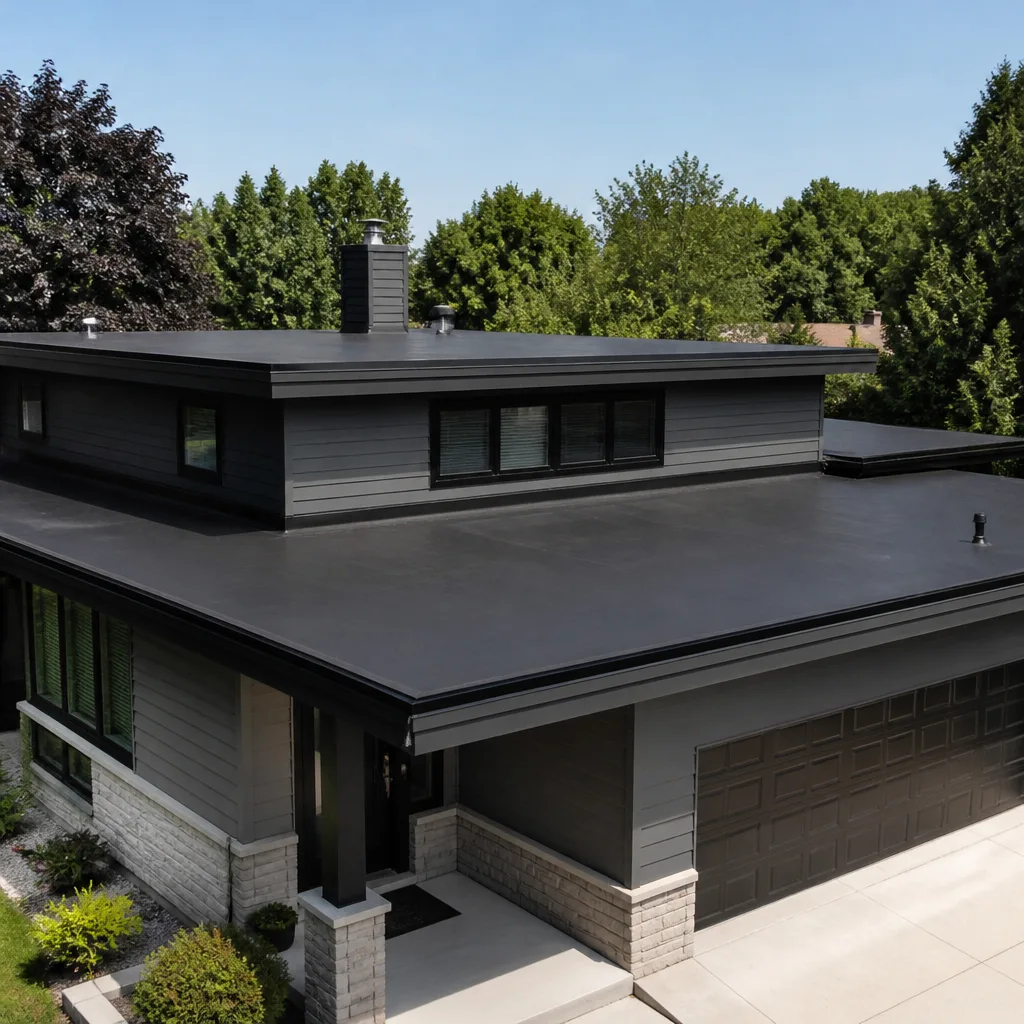 Flat & low-slope
Free roof inspection with deck photos before we talk money - GAF and Owens Corning certified installation
DIY vs Professional Specialty Roofing: What’s Safe to Do Yourself
Walking across a concrete tile roof to “just check on it” is the leading cause of cracked tiles on residential roofs – more tile gets broken by homeowner inspections than by hail. That single fact trips up more Enterprise homeowners than any other. You head up with good intentions, a pair of sneakers, and a flashlight, and you come down with three fractures in a field of tile that was fine yesterday. What follows is a plain look at which specialty roofing tasks you can honestly do yourself, which ones void your material warranty, and where the liability starts to outweigh any savings. We’ve climbed enough of these roofs in and around Enterprise to know exactly where that line sits.
Quick Answer
You can safely check your attic from the inside, look at your roof from the ground with binoculars, clean your gutters where they meet the lower roofline, and take dated photos of any problem you see. Everything that involves walking the roof itself – especially tile, metal, or foam systems – belongs to a trained professional, because the surface is fragile, the heat is dangerous, and the work voids manufacturer warranties and can jeopardize your insurance the moment an unlicensed person touches it.
Styles & brands we work with
- Architectural shingles
- Metal roofing
- Tile roofing
- GAF
- Owens Corning
- Flat & low-slope
Table of Contents
- What voids your roofing warranty (and it isn’t the weather)
- Why tile and metal behave nothing like shingle underfoot
- The Enterprise heat problem: 160°F and rising
- Clark County permits and the dollar threshold that catches homeowners
- The insurance gap nobody warns you about
- The genuinely safe DIY tasks, step by step
- Foam roofing: the specialty system worth leaving alone
- How to document a problem so a pro can price it right
What Voids Your Roofing Warranty (and It Isn’t the Weather)
Manufacturer warranties on specialty roofing – the tile systems, the standing-seam metal, the spray foam – are written with a sharp eye on who performs the work. Most of them state plainly that coverage is void when repairs or alterations are made by anyone other than a licensed, approved contractor. That means the moment a homeowner, a handyman, or a neighbor with a ladder goes up and resets a tile or seals a flashing, the material warranty on that section can be gone. Permanently.
This is where the DIY calculus changes. On a basic asphalt shingle roof, an unapproved repair is a risk. On a specialty system it’s often a forfeiture, and the forfeiture can cover more than the piece you touched. Here’s what commonly disappears:
- Material defect coverage on any section an unapproved person worked on, and sometimes on the whole roof if the manufacturer decides the system was compromised.
- Labor and workmanship coverage, which most reputable installers warrant separately – and which depends on their own approved procedures being followed.
- Wind and uplift ratings on metal systems, because proper fastener patterns and clip placement are part of the certification. One wrong screw can undercut a wind rating that mattered to your insurer.
- Foam system warranties, which are unusually strict about recoating schedules and repairs done outside the approved installer network.
We install products from GAF, CertainTeed, Owens Corning, IKO and others, and every one of those manufacturers expects the work to be done by someone who knows the system. If you’re weighing whether to touch it yourself, the honest answer on tile, metal, and foam is no – check our guide to Specialty Roofing in Enterprise for what proper service looks like on these systems.
Why Tile and Metal Behave Nothing Like Shingle Underfoot
People who’ve spent years on asphalt shingle roofs assume a roof is a roof. It isn’t. Shingle gives a little. It grips under a rubber sole. It telegraphs where the framing is. Tile and metal do none of that, and that difference is exactly where homeowners get hurt.
Concrete tile is brittle along its edges and along the channels where tiles overlap. Step on the wrong spot and you don’t get a soft creak – you get a crack, or you get a tile that shifts and lets water in behind it for the next eighteen months until a ceiling stain shows up. Metal is a different hazard entirely. Standing-seam panels are slick even when dry, and the fasteners and raised seams are trip points. Walk a metal roof in the wrong shoes and you’ll learn quickly how little traction there is.
Compare that to a standard shingle roof, where an experienced person can feel the structure through their feet. Specialty surfaces hide the structure. You can’t feel the difference between a solid rafter and a thin deck through a metal panel. That’s why our technicians treat every specialty roof as a two-person, harnessed, careful job – and why we’d tell our own family to stay off the tile.
The Enterprise Heat Problem: 160°F and Rising
Enterprise summers are their own category of hazard. On a July afternoon, the surface temperature of a dark metal roof commonly climbs past 160°F. Concrete tile gets close behind it. That’s hot enough to cause contact burns through thin clothing or a bare hand, and hot enough that grip and judgment both suffer. Shingle roofs get warm, but they don’t turn into a hotplate the way metal and tile do under the Southern Nevada sun.
Add the timing problem. The cool parts of the day – early morning, evening – are when the roof is safest to walk, but they’re also when morning dew or an evening sprinkle can leave a metal surface slick enough to send you sliding. There’s a narrow safe window, and it takes local experience to know it. We schedule specialty roof work in Enterprise around that window, not against it. It’s one of those details that doesn’t show up in a manufacturer’s manual.
If a storm has left debris on your roof or you suspect a leak after monsoon season, resist the urge to go look. Call us – a live person answers our phones around the clock, and a photo-documented inspection from a Roof Repair in Enterprise crew will tell you more than your own eyes from ten feet up.
Clark County Permits and the Dollar Threshold That Catches Homeowners
Here’s a part of DIY roofing nobody mentions at the hardware store: Clark County requires a permit for roofing work above a specific dollar threshold, and that requirement applies regardless of who does the work. Whether a licensed contractor or a homeowner swinging a hammer, once the repair crosses that valuation line, the permit is required, the inspections are required, and the work is subject to code review.
Homeowners who skip the permit often find out too late – at resale, at an insurance claim, or when the county flags unpermitted work during an inspection. The consequences range from a stop-work order to having to open up finished work for inspection. We pull the permits and pass the inspections on every job we take on, and we’ll show you the paperwork. It’s part of what “done right” actually means.
If you’re planning a repair and aren’t sure whether it crosses the threshold, that’s a question worth asking before anyone climbs up – including us. Call and we’ll walk you through it honestly, whether or not the job turns out to be ours.
The Insurance Gap Nobody Warns You About
Homeowner’s insurance policies frequently include clauses that condition coverage on work being performed by a licensed professional. When unlicensed work is documented – and after any claim, adjusters do ask – the insurer can deny the claim or reduce the payout. Roofing material warranties have parallel clauses. The result is a quiet double exposure: a repair you did yourself to save a few hundred dollars can cost you a five-figure claim down the road.
This is the core of the DIY-versus-professional question on specialty roofing. It was never really about whether you’re handy. Plenty of homeowners are. It’s about who’s on the hook when something fails. A licensed, insured contractor carries that liability. When you do it yourself, you do. And on a tile or metal system, the failure mode is usually invisible – a hairline crack, a shifted panel, a fastener working loose – until it’s caused real damage inside the house.
Our answer to the question of whether to hire out: for specialty systems, yes. For the safe tasks below, no – you’re the right person for those, and we’d rather you do them well than skip them.
The Genuinely Safe DIY Tasks, Step by Step
You can do real, useful work on your own roof without ever leaving the ground or the attic floor. These four tasks catch most problems early and give a professional everything they need to quote accurately.
- Do an interior attic check. On a sunny day, step into the attic with a flashlight. Look at the underside of the roof deck for dark stains, water marks, light coming through, or sagging. Look at the insulation for dampness. Note the date and what you saw. This is the single most useful thing a homeowner can do, and it’s completely safe.
- Walk the yard with binoculars. From the ground, scan the roof for missing or cracked tiles, lifted shingles, dented metal panels, loose flashing, or granules collecting at the bottom of downspouts. Binoculars let you see detail without climbing. Take photos from the same spots each time so you can compare season to season.
- Clean the gutters along the lower roofline. Where your gutters meet a single-story section or a low porch roof, use a stable ladder on level ground with a spotter holding it, gloves on, and a bag for debris. Never reach out over the roof from a ladder. If the gutter requires you to lean or stretch, it’s not a safe DIY job.
- Photograph and date everything. Keep a folder of photos labeled with dates and what you observed. If a problem shows up later, that record tells a contractor exactly when it started and helps any insurance conversation go smoothly.
The moment a task requires you to stand on the roof itself – on tile, metal, or foam – stop and call. That’s the line.
Foam Roofing: The Specialty System Worth Leaving Alone
Spray polyurethane foam is common on flat and low-slope roofs around Enterprise, and it’s the specialty system with the least DIY tolerance built in. The foam layer is a protective coating over a structural substrate, and that coating needs to be recoated on a schedule to survive the ultraviolet load here. A homeowner touching a worn spot with a can of sealant usually makes it worse – the wrong coating over the wrong substrate traps moisture and hides the failure from the next inspection.
Foam also fails in ways you can’t see from the surface. Blisters, trapped moisture, and delamination all develop underneath, and the only reliable way to find them is a proper inspection with moisture readings. When a foam roof gets a walkover from someone who isn’t trained, the foot traffic alone can bruise the coating and start the next failure. We’ll inspect foam roofs carefully and tell you honestly whether recoating or repair is the right move. Call us and we’ll take a look.
How to Document a Problem So a Pro Can Price It Right
Half the value of a good inspection is the photos and the notes that come with it. You can help a contractor price your job accurately before anyone climbs up, which saves everyone time and keeps the estimate honest.
- Photograph from the ground, in good light, from multiple angles – straight on, at an angle, and close through binoculars if you have them.
- Note the location in plain language – “north slope above the garage,” “the flat section behind the kitchen,” “the seam along the porch roof.”
- Record what you saw and when – “first noticed a brown stain on the ceiling on the 14th, after the rain on the 12th.”
- Note any interior symptoms – stains, dripping, musty smells, paint bubbling, or daylight in the attic.
- Keep every written estimate you receive, so you can compare line items rather than totals.
If you already have an estimate from another roofer, we’ll give you a free second opinion on it – a written review of what’s being proposed, what’s being left out, and whether the price is fair. That’s one of our standing offers, and it’s free.
Common Mistakes to Avoid
- Walking a tile roof to “just check on it.” This is the number-one cause of cracked tile in Enterprise. The tiles crack along the channels, water gets behind them, and the damage doesn’t show up inside for months.
- Assuming any roofer can handle specialty systems. Tile, metal, and foam each need specific training and manufacturer approval. A roofer who mostly does shingle work isn’t automatically qualified on your tile roof.
- Using a handyman for a quick fix. A handyman can’t pull permits, can’t maintain your material warranty, and the work may void your insurance coverage. The “quick fix” can cost far more than the repair would have.
- Skipping the permit because “it’s just a small repair.” Clark County’s threshold catches more repairs than homeowners expect, and unpermitted work surfaces at resale and at claim time.
- Sealing a foam roof without the right coating. The wrong product traps moisture and hides the real problem from the next inspection. Foam needs the right recoating schedule, not a tube of caulk.
- Climbing up in the heat of the day. Metal and tile surfaces in an Enterprise summer can hit 160°F+, hot enough to burn through clothing. The safe window is early morning or evening, and even then, a specialty roof isn’t a do-it-yourself surface.
- Ignoring a small interior stain. A brown spot on the ceiling is usually the visible tip of a problem that started weeks ago. Check the attic and call before the next rain.
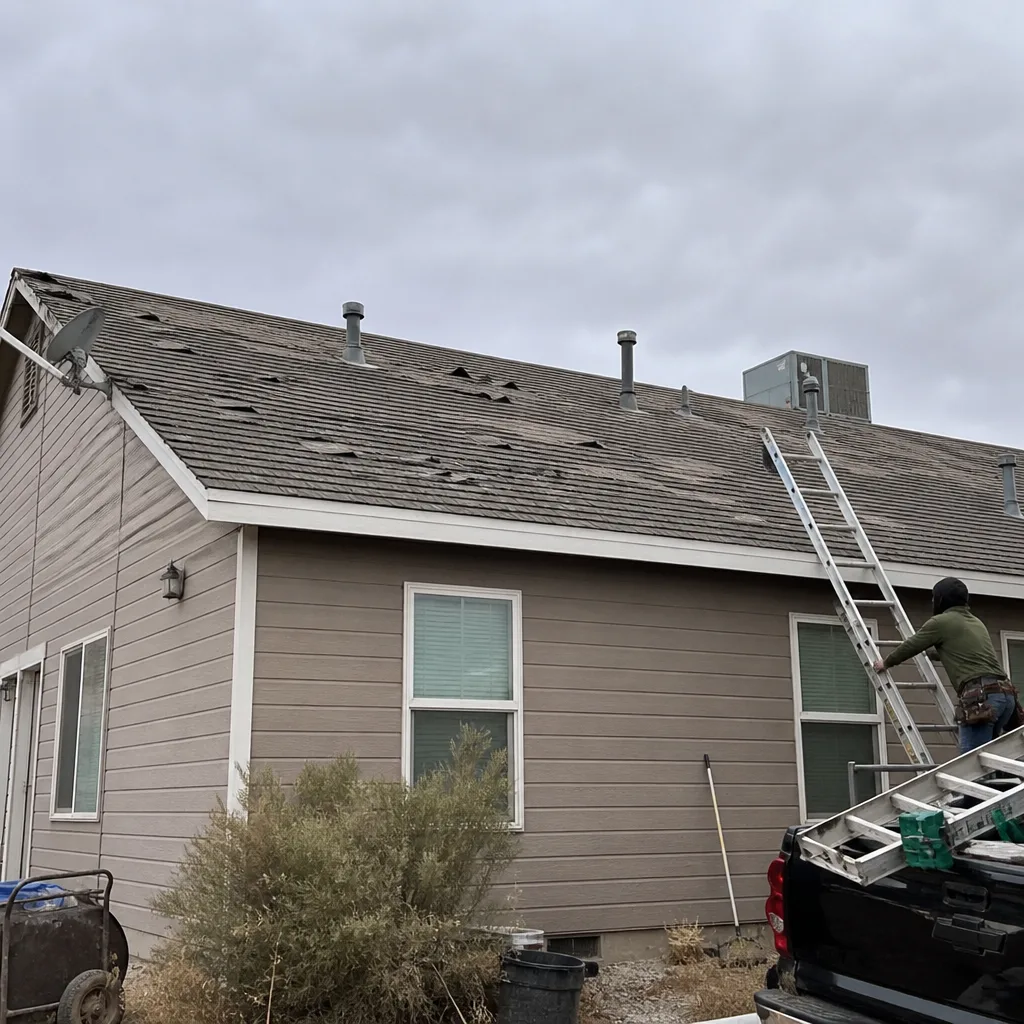
See the difference
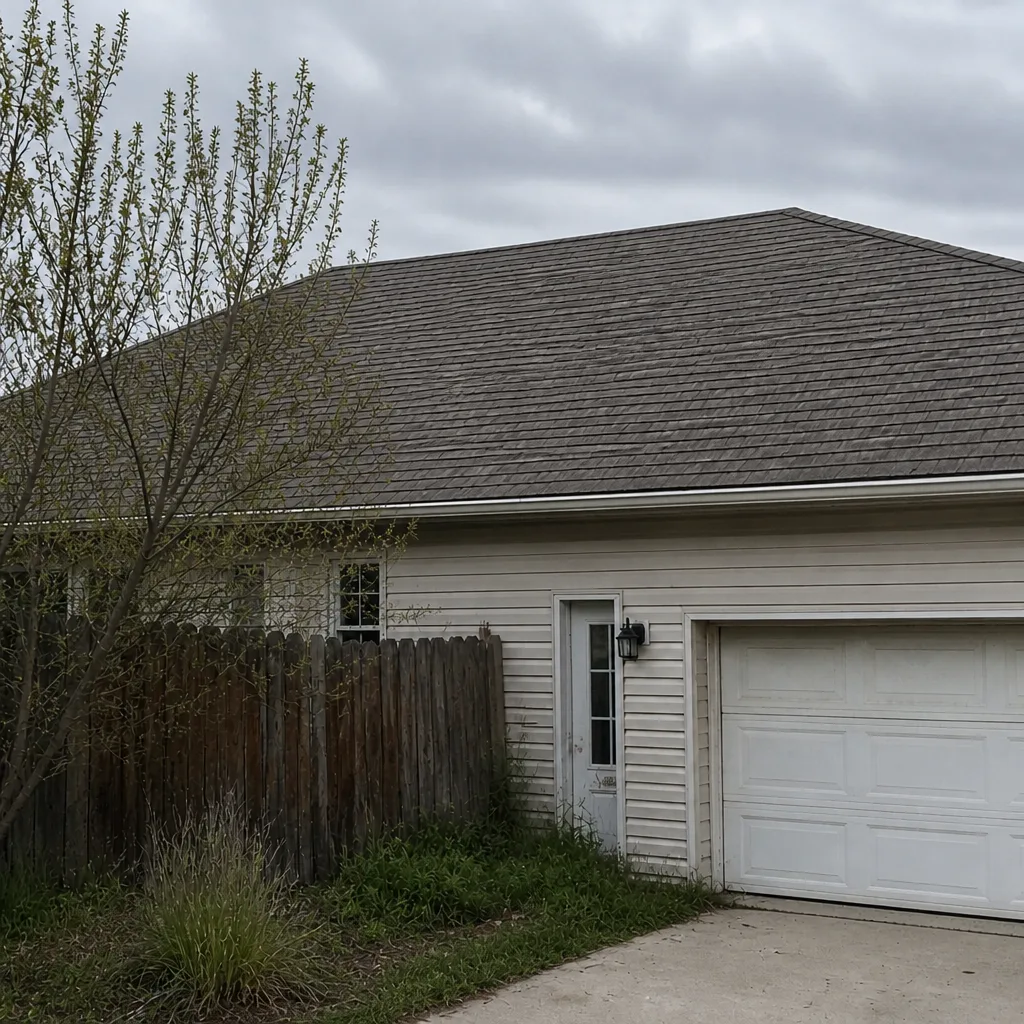
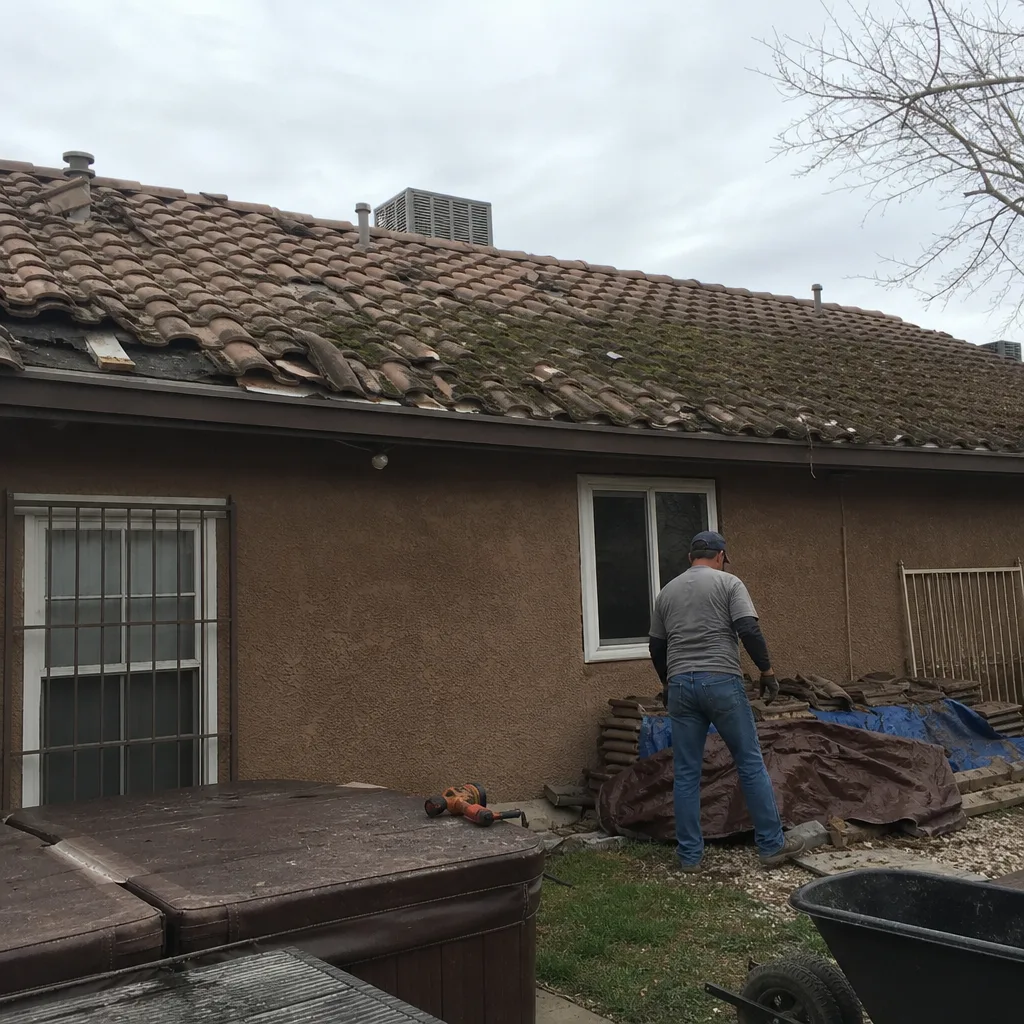 Before
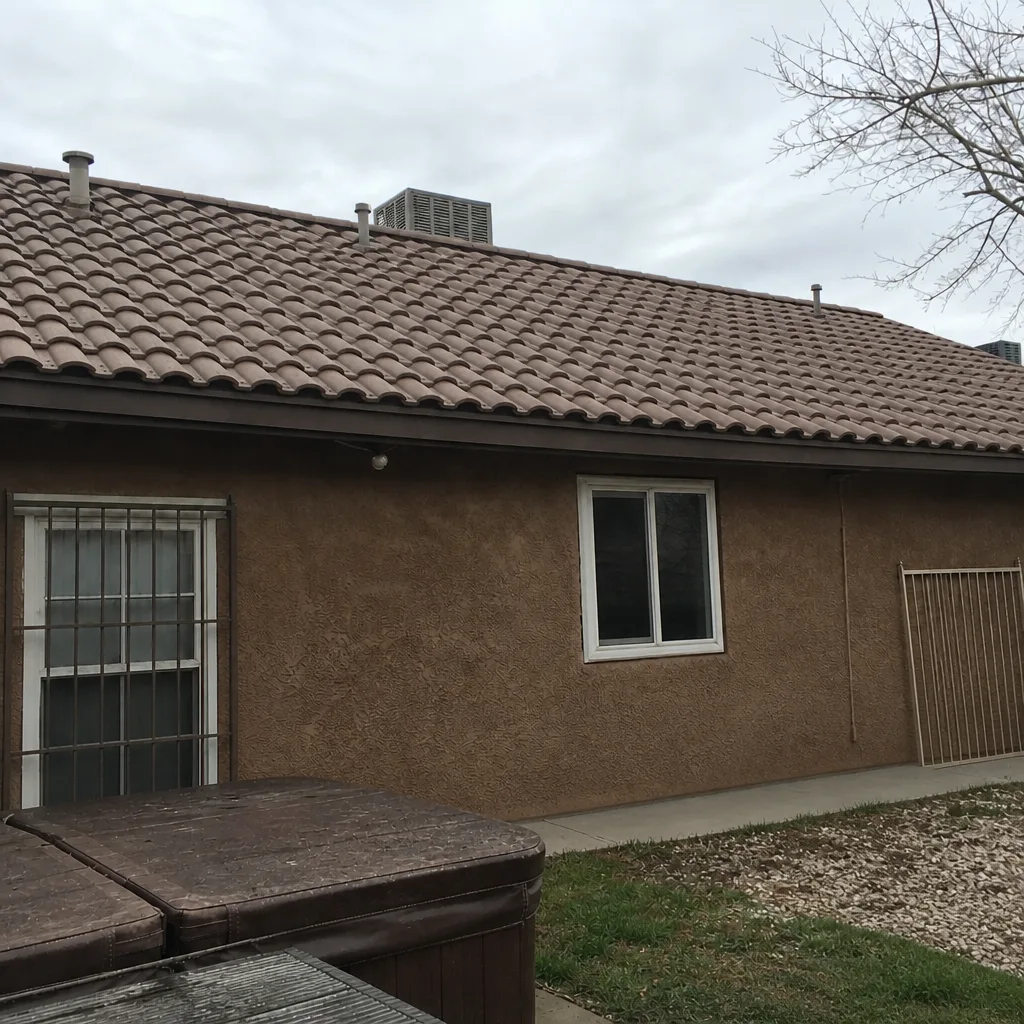 After
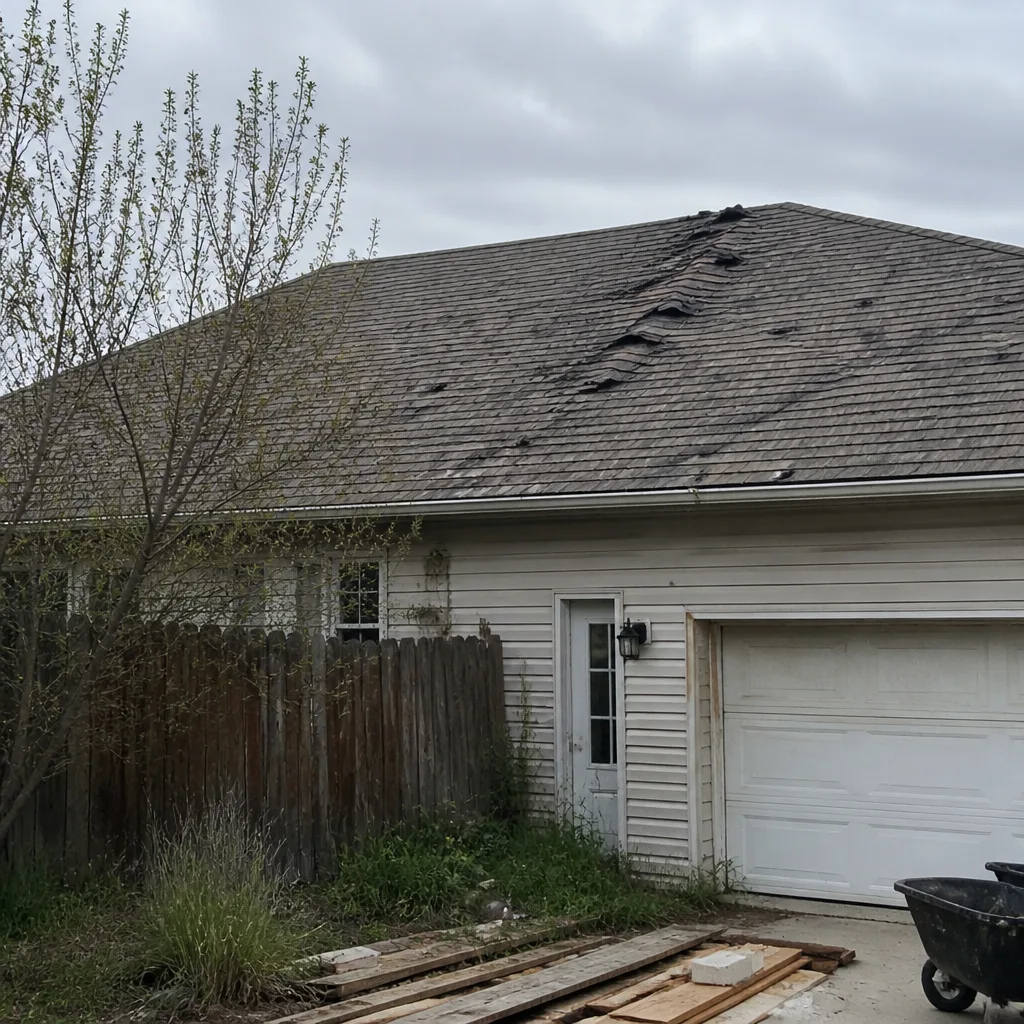 Before
 After
 Before
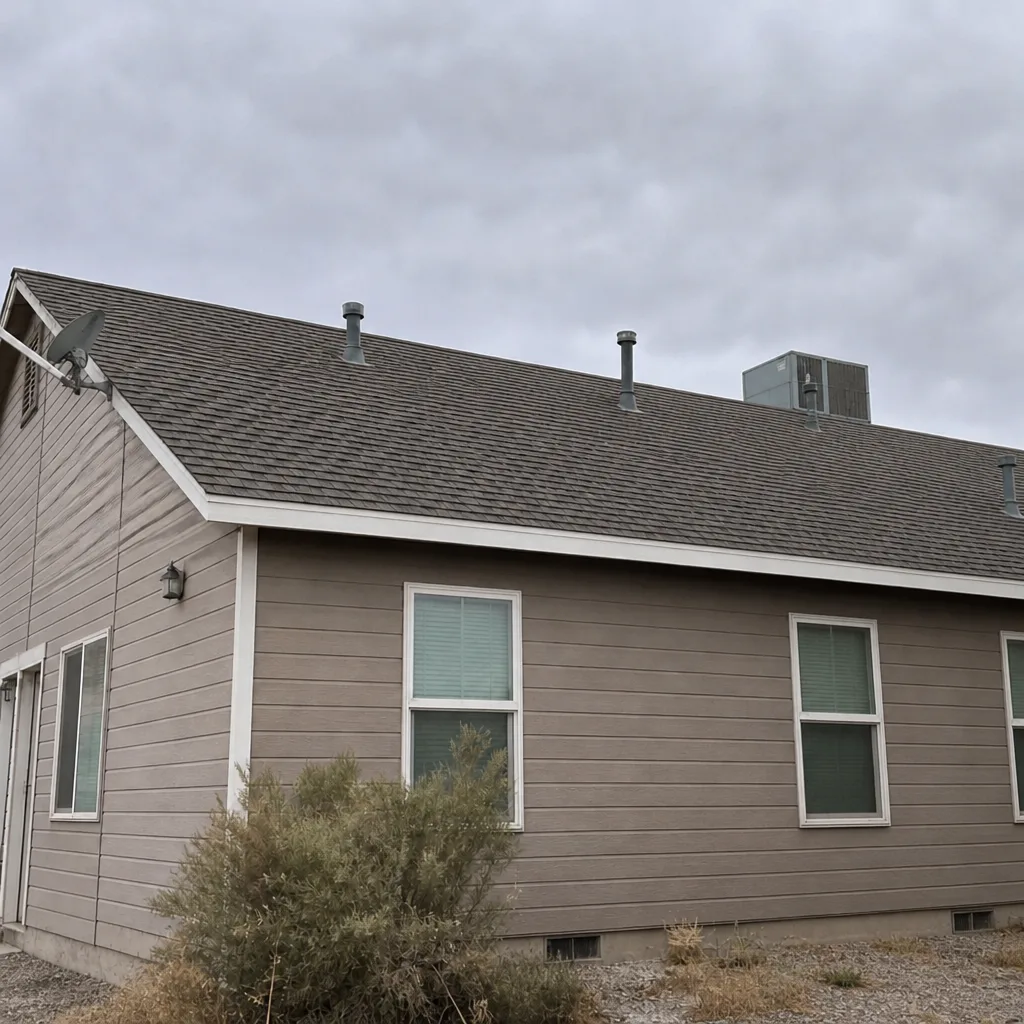 After
When to Call a Professional
Call a professional the moment a task requires you to stand on a tile, metal, or foam roof; when you see a crack, a shifted panel, a loose flashing, or a water stain; when a repair might cross the Clark County permit threshold; or when you have any doubt at all about what you’re looking at. Those are the situations where experience and liability protection matter. Ridgeline Roofing Co. Enterprise offers free estimates in Enterprise – call (844) 228-4119. A live person answers, day or night, and our technicians arrive in uniform, background-checked, and ready to document what they find with photos from your actual roof.
Frequently Asked Questions
No – repairing a single cracked tile often means lifting and resetting tiles around it, which cracks more and voids the manufacturer warranty on the section you touch. It also exposes you to the fall and burn hazards of standing on tile in Enterprise heat. Call (844) 228-4119 for a free estimate on the repair.
Usually yes. Most tile, metal, and foam manufacturer warranties state that coverage is void when work is performed by anyone other than a licensed, approved contractor. That means material coverage on that section can be gone permanently, and sometimes more than the section you worked on. Call us and we’ll review your warranty with you for free.
Yes, where the gutters meet a single-story section or a low roofline and you can work from a stable ladder on level ground with a spotter. Don’t clean gutters that require you to lean over the roof or stretch out from a ladder. Call us with any question about a tricky section.
Clark County requires a permit for roofing work above a specific valuation threshold, and that applies whether a contractor or a homeowner does the work. The consequences of skipping it show up at resale or at claim time. Call (844) 228-4119 and we’ll walk you through what applies to your job.
From the ground with binoculars, and from inside the attic with a flashlight. Both are completely safe and catch most problems early. Photograph what you see, note the dates, and call a professional if anything looks off. Free estimates in Enterprise.
Often not. Many homeowner policies include clauses that can deny or reduce a claim when unlicensed work is documented, and roofing material warranties have similar clauses. A licensed, insured contractor carries that liability for you. Call (844) 228-4119 to schedule a free, photo-documented inspection.
The Bottom Line
Specialty roofing isn’t really a test of whether you’re handy. It’s a question of liability, warranty voidance, and the specific risks of tile, metal, and foam surfaces that don’t behave anything like a shingle roof underfoot. Your safe DIY work is simple: interior attic checks, ground-level binocular inspections, cautious gutter cleaning on low sections, and dated documentation. Everything that involves walking a specialty roof belongs to a professional – the material warranty, your insurance coverage, and your physical safety all depend on it. Call (844) 228-4119 for a free estimate and a proper look at your roof; a live person answers any time, and we’ll tell you honestly what needs doing.
Written by the team at Ridgeline Roofing Co. Enterprise.