
Last updated November 18, 2026
 Architectural shingles
 Metal roofing
 Tile roofing
 GAF
 Owens Corning
 Flat & low-slope
Free roof inspection with deck photos before we talk money - GAF and Owens Corning certified installation
Emergency & Storm Damage Troubleshooting: Common Problems and How to Fix Them
A blue tarp on the roof feels like a solution. It’s actually step one of a process that has six more steps before the roof is right again, and skipping any of them is how a temporary fix becomes a permanent problem. After a storm in Enterprise, homeowners tend to face the same five or six issues in predictable patterns. Once you know which pattern you’re looking at, you know what needs to happen next. This guide walks through each problem as a decision tree, so you can identify what’s happening on your roof before anyone arrives on site. It’s written for the homeowner who plans to stay put and wants the job done once.
Quick Answer
After a storm damages your roof, the correct order of operations is: document everything with photos before touching anything, tarp only to stop active water intrusion, call your insurer to open a claim, then have a licensed roofer inspect from the roof surface itself. Most “emergencies” are one of six recognizable problems: missing shingles, active leaks, granule loss, gutter overflow, flashing failure, or hidden decking damage. Each has its own troubleshooting path, and none of them require you to get on the roof yourself.
Styles & brands we work with
- Architectural shingles
- Metal roofing
- Tile roofing
- GAF
- Owens Corning
- Flat & low-slope
Table of Contents
- How Do You Tell Missing Shingles From Structural Decking Damage?
- Troubleshooting Water Intrusion: Mapping Stains to Roof Entry Points
- What Temporary Tarping Can and Cannot Protect
- The Documentation Sequence: What Photos to Take, in What Order
- When a Cosmetic Problem Is Actually Structural
- Gutter and Downspout Problems After a Storm
- Flashing Failures: The Quiet Storm Damage Most Homeowners Miss
- Common Mistakes to Avoid
How Do You Tell Missing Shingles From Structural Decking Damage?
The short answer: you don’t climb up and look. You read the symptoms from the ground and from inside the attic, because structural decking damage announces itself in ways a missing shingle never does. Missing shingles are a surface problem. Decking damage is a framing problem, and the two look completely different from safe vantage points.
Missing shingles, from the ground, appear as dark patches where the roof color shifts. The tabs are gone, the underlayment or deck may be visible, and the surrounding field of shingles is intact. That’s cosmetic until water gets underneath. In our experience across Enterprise, a few missing shingles after a wind event are common on north and west-facing slopes, where the prevailing gusts catch the tab edges first.
Structural decking damage shows different signs:
- Sagging between rafters visible from the street as a wavy roofline. Straight lines that suddenly dip are a red flag.
- Soft spots you feel if you press the ceiling from inside, though never press hard enough to crack drywall.
- Daylight in the attic where there should be none, especially near the ridge or the eaves.
- Brown rings on attic roof sheathing, which indicate water has been sitting long enough to stain the wood.
- Popped or backed-out nails inside the attic, a sign the decking has flexed or shifted.
If you’re seeing any of the second list, treat it as structural until a professional says otherwise. The distinction matters for insurance, too: insurers treat cosmetic shingle loss and decking damage under different coverage lines, and documenting which one you have shapes the claim. A roof inspection from the surface itself, with photos, is the only way to know for certain. That’s the purpose of a roof repair visit in Enterprise after a storm: confirm scope before anyone commits to a fix.
Troubleshooting Water Intrusion: Mapping Stains to Roof Entry Points
Here’s the counterintuitive part of leak troubleshooting: the stain on your ceiling is almost never directly below the hole in the roof. Water travels along the slope of the roof, down rafters, and across sheathing before it finds a low point to drip through. The stain marks where water exited, not where it entered. Reading the stain correctly is the whole skill.
Mapping a stain to its likely entry point follows a predictable path:
- Find the highest point of the stain. That’s usually where the water first pooled and began to soak through the drywall.
- Trace uphill. From that high point, follow the roofline up and back. Entry points are usually higher and slightly offset from the stain, following the direction of the roof slope and prevailing wind.
- Check the common failure zones. Roof penetrations (vents, chimneys, skylights), valley flashings, and the bottom edges of walls where they meet the roof are responsible for most leaks. A stain near an interior wall corner often traces to the flashing at the wall-roof intersection.
- Look for stain patterns, not just stains. A circular ring suggests slow, ongoing seepage. A streak running down a wall suggests water tracking along a rafter. A fresh water mark after a heavy rain confirms the entry is nearby.
- Check the attic. Water stains on the roof sheathing inside the attic are the most reliable map you’ll get. They show you exactly where the water is traveling.
In Enterprise, the most common water intrusion we see after a storm comes from wind-driven rain pushing under flashing that was never sealed properly, or from ice-dam-style backups at the eaves during a cold snap, which is rarer but still happens. You don’t need to repair it yourself. You need to know which zone to point your roofer toward. A full Ridgeline Roofing Co. Enterprise home visit with photo documentation is how you confirm it.
What Temporary Tarping Can and Cannot Protect
A tarp is not a repair. It’s a raincoat, and a raincoat doesn’t fix a broken arm. Understanding what a properly installed tarp can and cannot do is the difference between protecting your home and creating a second problem.
What tarping can do:
- Stop active water intrusion through a damaged section of roof during an ongoing storm or before a scheduled repair.
- Prevent further water damage to interior ceilings, insulation, and framing while you wait for a repair.
- Preserve evidence of storm damage for the insurance adjuster, since a tarp protects the damaged area from further deterioration.
What tarping cannot do, and where it creates problems:
- It doesn’t seal. Rain can still get under the tarp edges if it’s not fastened with proper battens and weights.
- It can trap moisture. A poorly installed tarp that doesn’t allow drainage can hold water against the roof, accelerating rot in the decking it was meant to protect.
- It can funnel water. A tarp that slopes the wrong way can channel water toward a wall or penetration rather than away from it, causing interior damage where there was none.
- It can cause wind damage to the adjacent roof area if the fasteners or weights used to hold it down pull at shingles or fascia.
The most common mistake we see in Enterprise is the homeowner-installed tarp that wasn’t fastened properly and either blew off in the next gust or funneled water into a new spot. A tarping job from a professional crew uses battens, proper weighting, and a slope that sheds water away from the structure. In our experience, the safest hands-off rule is this: if water is actively coming into the house, call for professional tarping rather than attempting it yourself.
The Documentation Sequence: What Photos to Take, in What Order
Insurance adjusters look for specific angles, in a specific order, when they open a storm damage claim. If your photos don’t capture the right sequence, the adjuster has to make a second trip or denies the claim as unverifiable. Document in the right order and you make their job easy, which tends to make your claim smoother. The sequence is:
- Establish the scene with wide shots. Take photos of each roof slope from the ground, including the whole structure and adjacent context. This tells the adjuster where the damage sits on the property.
- Move to close-ups of visible damage. Photograph each area of missing shingles, granule loss, or obvious damage individually. Include a landmark (a vent, a chimney) in each frame to orient the adjuster.
- Document the damage in relation to the storm. Photograph fallen branches, debris on the ground, or displaced objects that show what the storm did and where it hit.
- Capture interior water damage. Photograph each stain or water mark on ceilings, walls, and in the attic, with a wide shot of the room and a close shot of the stain.
- Photograph the attic and eaves if it’s safe to do so, showing any daylight, moisture, or damage to the sheathing from inside.
- Photograph any temporary repairs you’ve made, including tarps and their placement.
Do not delete any photos, even the bad ones. Adjusters sometimes need the blurry or awkward shots to verify a detail. Keep the originals and make copies. This is also why a professional photo document matters: the same set of photos an adjuster needs, taken from the actual roof surface by a trained technician, is exactly what our team captures on every inspection. It’s the same standard we’d want for work on our own mother’s roof.
When a Cosmetic Problem Is Actually Structural
Some of the most expensive roof problems look cosmetic at first glance. A few missing shingles are cosmetic. A few missing shingles with a sagging line behind them are structural. The indicators to watch for sit in the gaps:
- Sagging rooflines. Any dip or wave visible from the street means the decking has lost structural support somewhere.
- Soft spots under the roof surface. These read as springy or spongy underfoot if you can see them from inside or from the eaves.
- Squeaks and creaks that weren’t there before. New sounds from the attic or eaves after a storm suggest movement in the decking or framing.
- Diagonal cracks in the ceiling drywall. These often follow rafters that have shifted, which means the roof has moved.
- Chimney separation. A gap between the chimney and the roof surface, or a chimney that seems to lean, means the roof or flashing has shifted.
- Granule loss in concentrated patches. Granule loss across the whole field is normal aging. Concentrated loss in a strip or patch often means hail damage, and hail damage can lift shingles enough to expose the deck.
A structural problem that goes undiagnosed through a winter becomes a spring replacement. In Enterprise we see this pattern every year after a particularly heavy early-season storm: a shingle loss that could have been a repair becomes a decking and insulation repair because the damage sat through a second rain event. Don’t assume cosmetic until someone has looked from the surface. A roof replacement is not always the answer, and often the right answer is a targeted repair, but the determination has to be made from the actual roof, not the driveway.
Gutter and Downspout Problems After a Storm
Gutters are the roof’s drainage system, and when they fail after a storm, the failure shows up somewhere else. Overflow at the gutter sends water under the shingles at the eaves, which is why so many “roof leaks” after a storm trace back to a clogged or damaged gutter rather than a damaged shingle.
What to check after a storm:
- Sagging gutters. If the gutter line is no longer straight, it’s holding water rather than draining it. That’s a clue to debris or damage to the hangers.
- Water stains below the gutter line on the fascia or siding. These indicate water is tracking behind the gutter instead of into it.
- Disconnected downspouts or splash blocks moved out of place, sending water against the foundation.
- Debris visible at the roof edge after a storm, which means the gutters are likely filled with the same debris.
- Standing water in the gutter itself, which means it isn’t pitched correctly or is clogged.
Cleaning and re-aiming a gutter is a straightforward job for a professional, and doing it now prevents the eaves damage that shows up in the next storm. In our experience, the Enterprise homeowners who get through storm season without interior water damage are the ones who have their gutters checked and cleaned after every big weather event, not just once a year. Proper specialty roofing and gutter work from a trained crew catches this in a single visit.
Flashing Failures: The Quiet Storm Damage Most Homeowners Miss
Flashing is the metal that seals the joints where the roof meets a wall, a chimney, a vent, or a valley. It’s the most common point of entry for water and the least visible damage after a storm. When flashing fails, you usually don’t see it from the ground. You see it as a stain on a ceiling weeks later.
Common flashing problems after a storm include:
- Lifted flashing at the chimney from wind, exposing the gap between the chimney and the roof deck.
- Failed sealant at wall-roof intersections where wind-driven rain has worked under the flashing and lifted the sealant.
- Damaged valley flashing where debris (branches, leaves) has punctured the metal or torn it loose.
- Displaced step flashing where wind has lifted the metal that protects the wall-roof joint.
The troubleshooting move for flashing is simple: check the seams, valleys, and penetrations first when you have water intrusion. In our experience, most “mystery leaks” in Enterprise trace back to a flashing joint that worked loose in a wind event. Proper flashing repair is a professional job, because the metal has to be re-seated and re-sealed so it survives the next storm, not just the next rain. A background-checked, uniformed technician will find the cause in a photo-documented inspection rather than guessing from the driveway.
Common Mistakes to Avoid
- Climbing on the roof yourself. After a storm, wet shingles and loose granules make the surface treacherous. A fall from a two-story roof is a serious injury. Read from the ground and the attic instead.
- Signing with the first storm-chaser who knocks. The contractor who arrives in an out-of-town truck and offers to fix it that day doesn’t plan to be here next spring when something fails. In Enterprise, this pattern shows up every storm season. Ask where the company will be in three months.
- Skipping photos before repairs. Once the tarp is up and the debris is cleared, you’ve lost the evidence your insurer needs. Take the documentation sequence first, then repair.
- Assuming a missing shingle is the whole problem. Missing shingles are often a sign that the decking or the underlayment underneath has been compromised. Don’t stop at the surface.
- Tarping without proper weighing and pitching. A loose tarp flaps in the wind and can cause more damage than the storm did. Tarp properly or don’t tarp.
- Ignoring a ceiling stain because it’s “just a small one.” A stain means water got in. Where there’s a small stain today, there’s rot tomorrow. Get it mapped to its entry point.
- Waiting until the next storm to act. Storm damage compounds. A shingle loss repaired this week is a repair; the same loss left through a second rain is a decking replacement.
See the difference
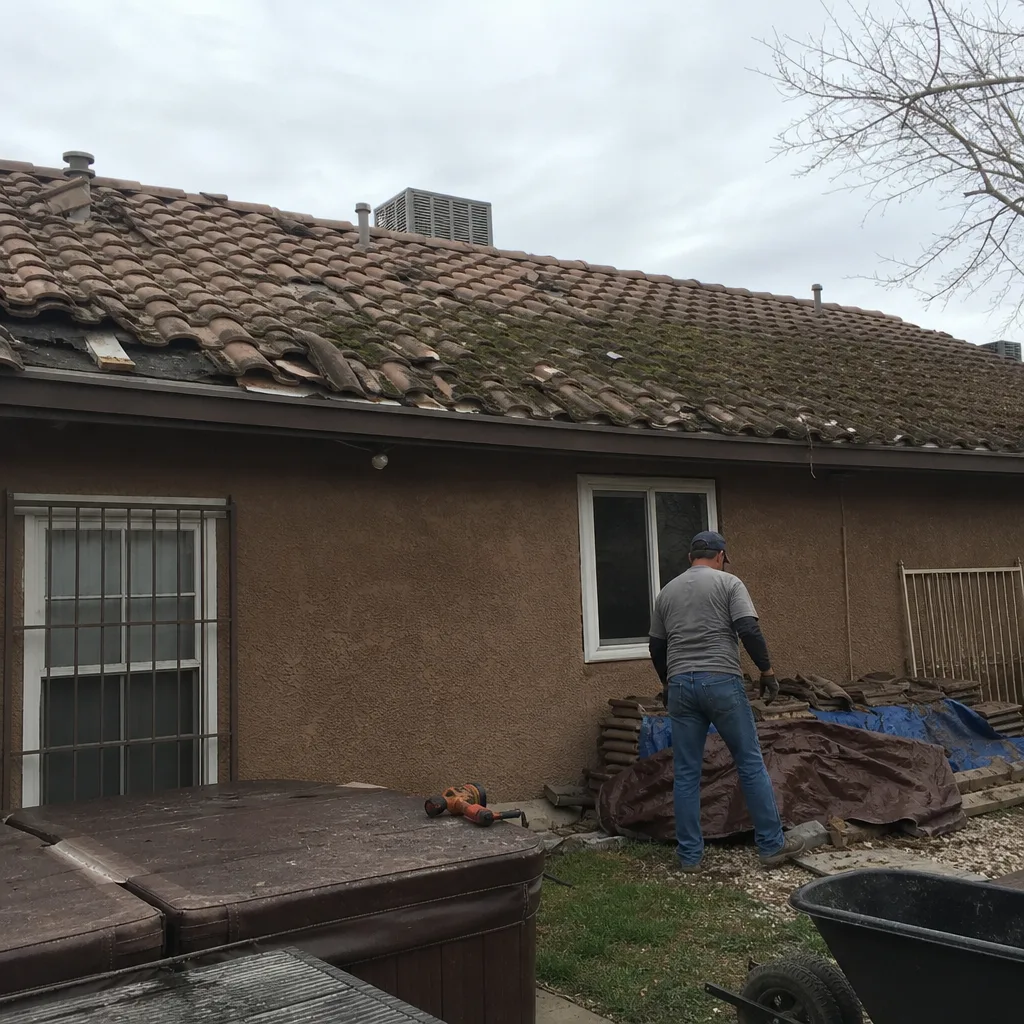 Before
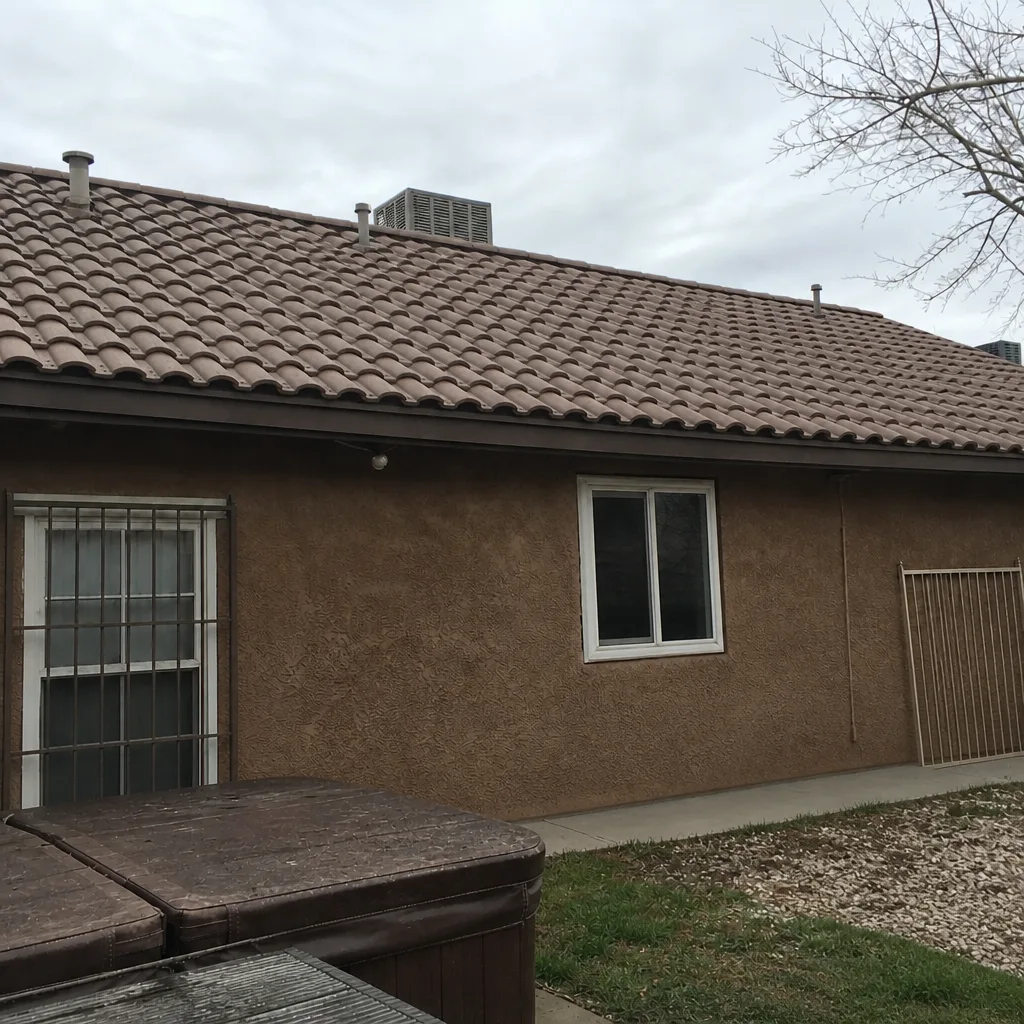 After
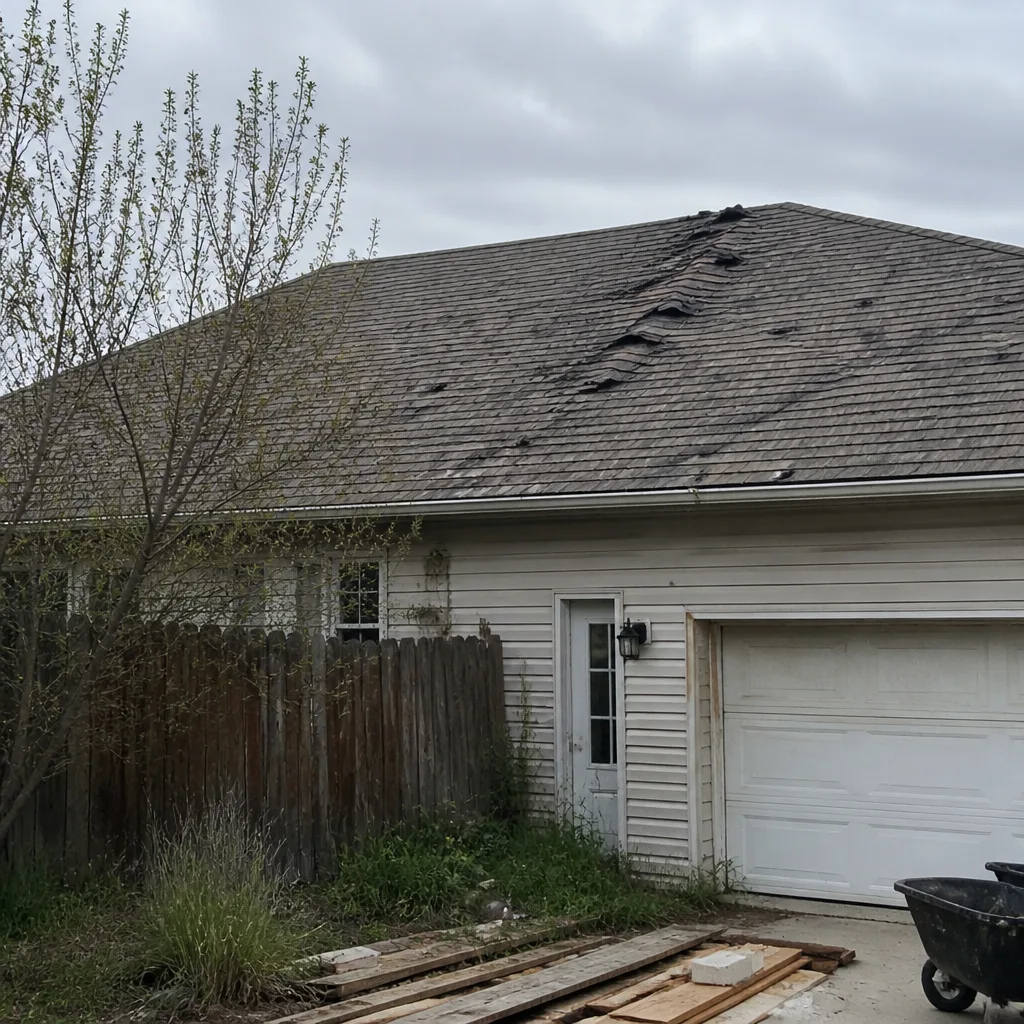 Before
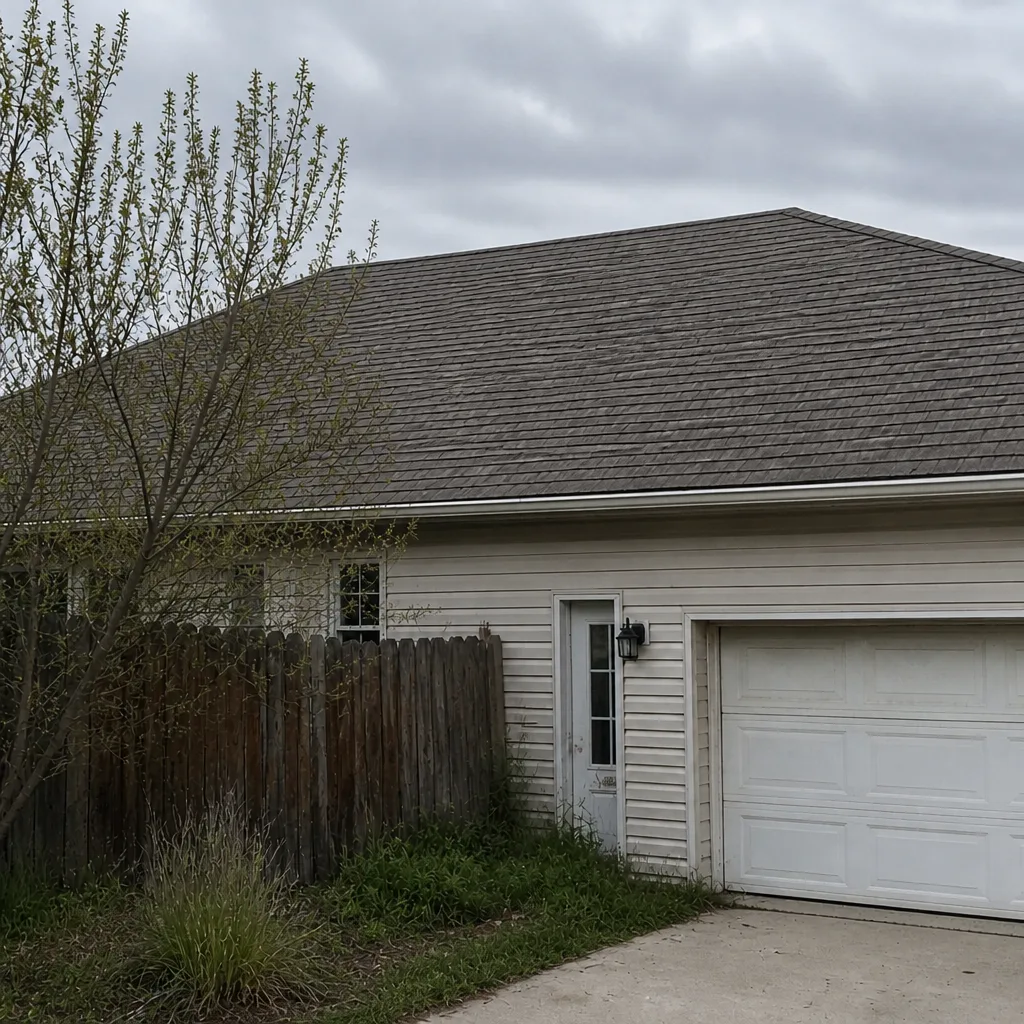 After
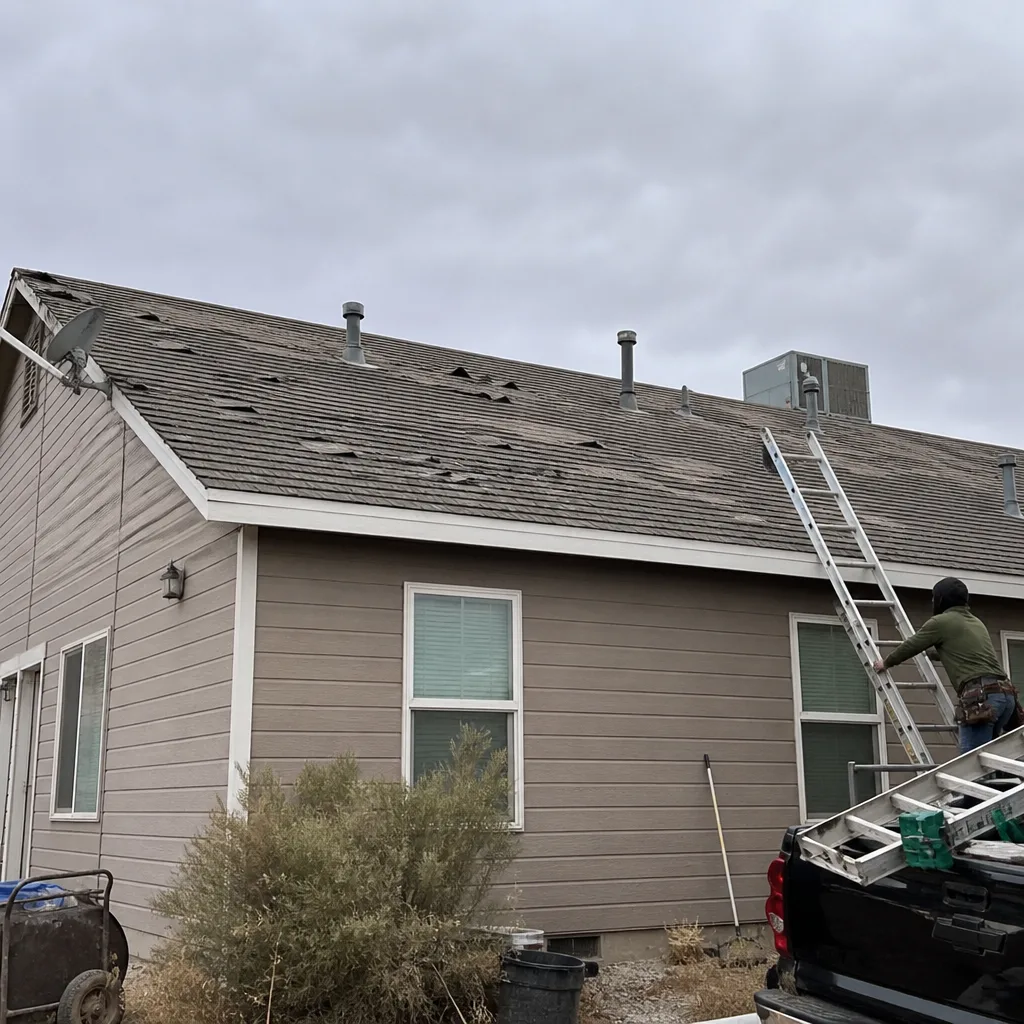 Before
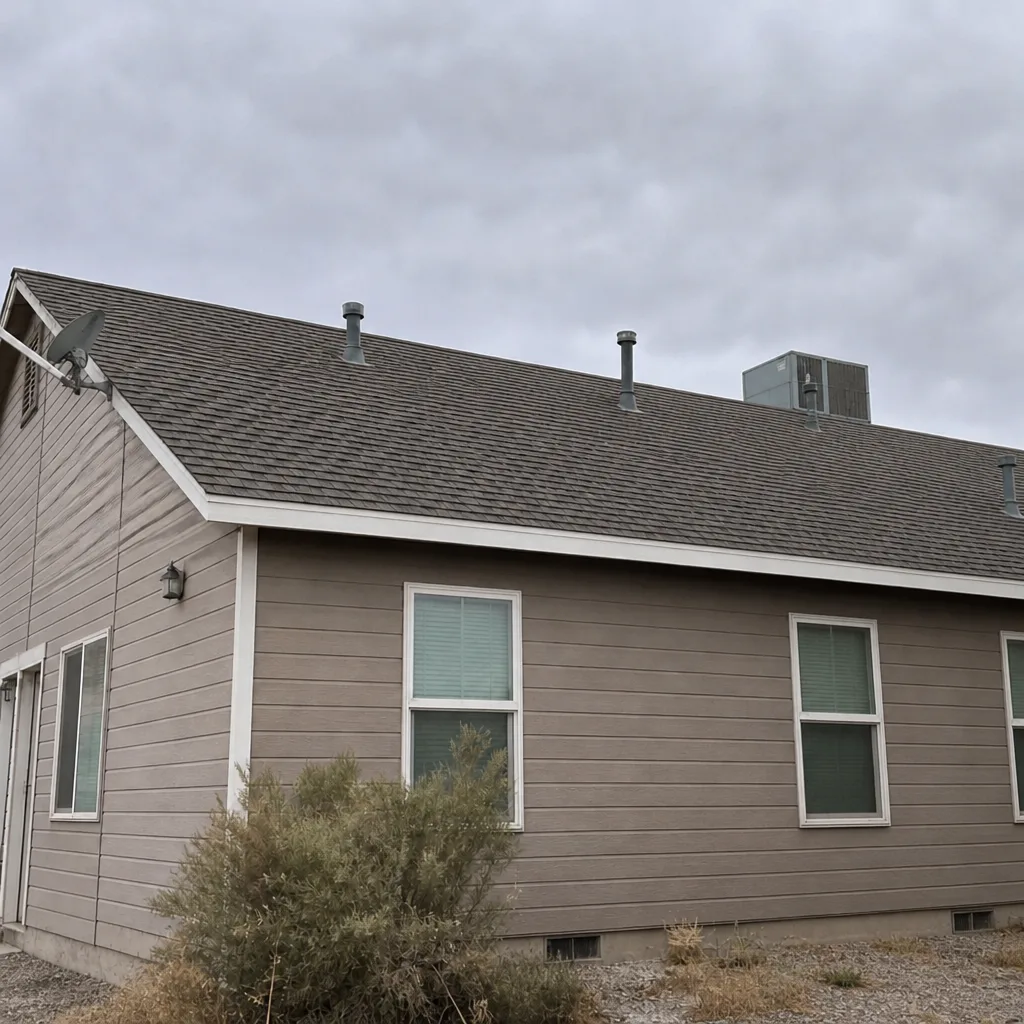 After
When to Call a Professional
Call a professional if water is actively entering the house, if you see sagging or daylight in the attic, if the damage involves a chimney or skylight penetration, if your insurance adjuster needs surface photos, or if the damage is more than a handful of missing shingles. Also call if you’re simply not sure what you’re looking at. The most expensive mistake in storm recovery is waiting for a small problem to confirm itself as a big one.
Ridgeline Roofing Co. Enterprise offers free estimates in Enterprise. Call (844) 228-4119. A live person answers every call, 24 hours a day, seven days a week, including nights, weekends, and the middle of a storm. There’s no voicemail tree and no callback window. Every inspection is photo-documented from the actual roof surface, and every job is backed by our written 90-Day Done Right Promise: if it isn’t right, we come back and make it right, no arguing, no paperwork. Most jobs are completed in a single visit.
Frequently Asked Questions
Take photos first, before you touch anything: wide shots of each roof slope, then close-ups of visible damage, then interior stains and any attic evidence. Then call your insurer to open a claim, then call a professional roofer for a surface inspection. Don’t climb onto the roof yourself; wet shingles after a storm are a fall hazard. If water is actively entering the house, get a professional tarp up first and document as you go.
It’s an emergency if water is actively entering the house, if you can see daylight in the attic, if a section of roof has visibly sagged or collapsed, or if a tree or limb is resting on the structure. Anything else is urgent but not an emergency, and can wait for a documented inspection. The line is “active water intrusion” versus “visible damage without water coming in.”
Most homeowner policies cover storm damage to the roof, but the adjuster’s determination depends on the photos you submit, the damage pattern, and the age and condition of the roof. Your job is to document thoroughly and photograph the roof from the surface with an inspector who knows what the adjuster needs. We provide the photo set as part of every inspection, which takes the guesswork out of the claim.
Yes, if it’s installed poorly. A tarp that isn’t properly weighed and pitched can flap in the wind, pull at adjacent shingles, or funnel water toward a wall or penetration rather than away from the structure. A professional tarping job uses battens and proper weighting to shed water away from the roof. If you’re putting up a tarp yourself, make certain it slopes to drain away from the house.
The determination depends on whether the decking and underlayment are intact underneath the damaged shingles, how much of the roof field is affected, and the age of the roof. A few missing shingles on an otherwise sound roof is a repair. Widespread granule loss, multiple penetrations, sagging, or decking damage changes the recommendation. That call has to be made from the actual roof surface, not the driveway, and it should come with a written line-item quote before any work begins.
Yes. A live person answers our phones 24 hours a day, seven days a week, including nights, weekends, and during a storm. We’re a local company, founded in 1984, with local crews, and we’re here year-round, not just storm season. Every estimate is free and every job comes with our written 90-Day Done Right Promise. Call (844) 228-4119 to schedule your inspection.
The Bottom Line
Storm recovery is a sequence, not a scramble. Document first, map the problem to its source, and match the fix to the actual damage. Most post-storm problems fall into six predictable categories: missing shingles, water intrusion, gutter overflow, flashing failure, cosmetic-vs-structural confusion, and damage that hides until a second storm. Knowing which one you’re looking at means the roofer and the adjuster both get what they need, and you don’t pay twice for the same fix. In Enterprise, the homeowners who come through storm season with the fewest problems are the ones who act on the first sign. If your roof is showing any of the symptoms above, call for a free estimate, and let a trained eye confirm what you’re looking at before anything is fixed.
If you’re in Enterprise and your roof took a hit, call Ridgeline Roofing Co. Enterprise at (844) 228-4119 for a free estimate and a photo-documented inspection. Technicians are background-checked and arrive in uniform. We install products from GAF, CertainTeed, and Owens Corning, and the price on the estimate is the price on the invoice. We’ll be there when we say, and we stand behind the work: Done right, and if it isn’t, we make it right.
Written by the team at Ridgeline Roofing Co. Enterprise.