
Last updated November 18, 2026
 Architectural shingles
 Metal roofing
 Tile roofing
 GAF
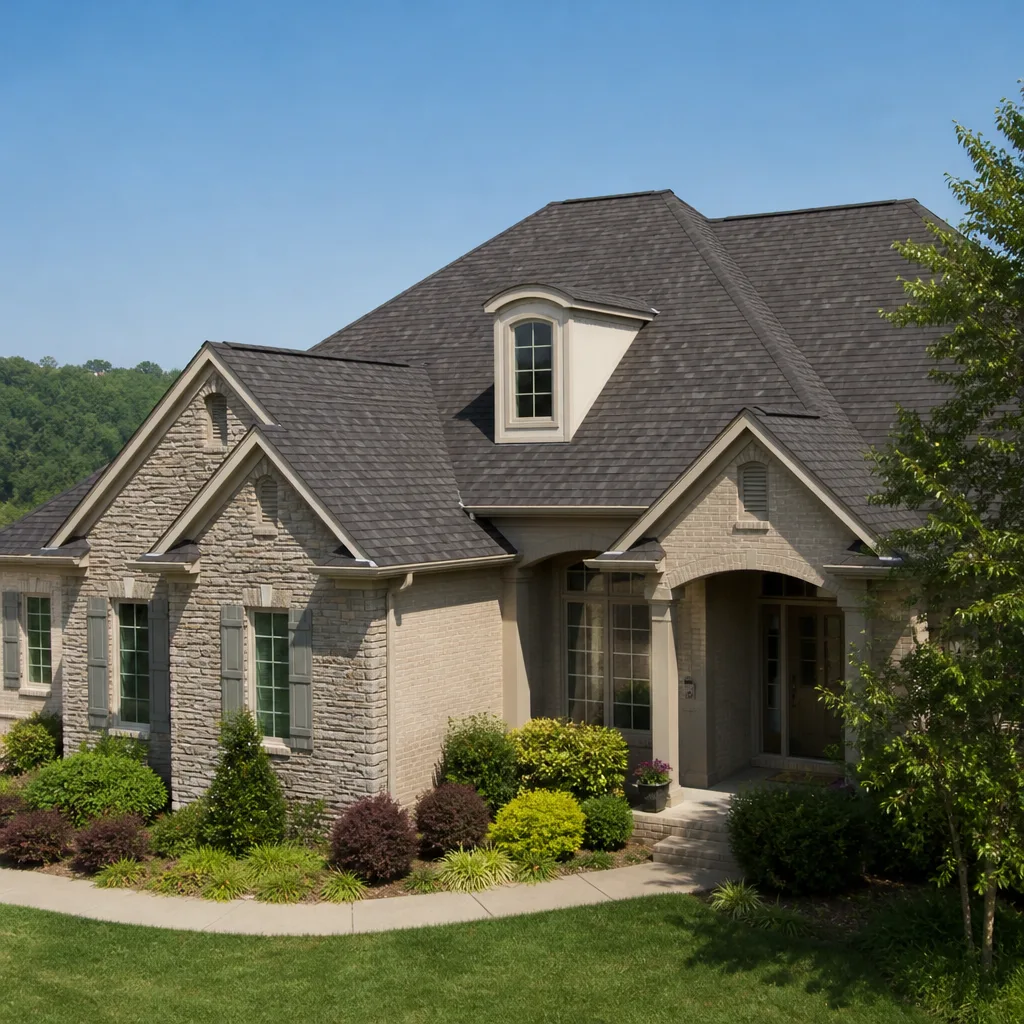 Owens Corning
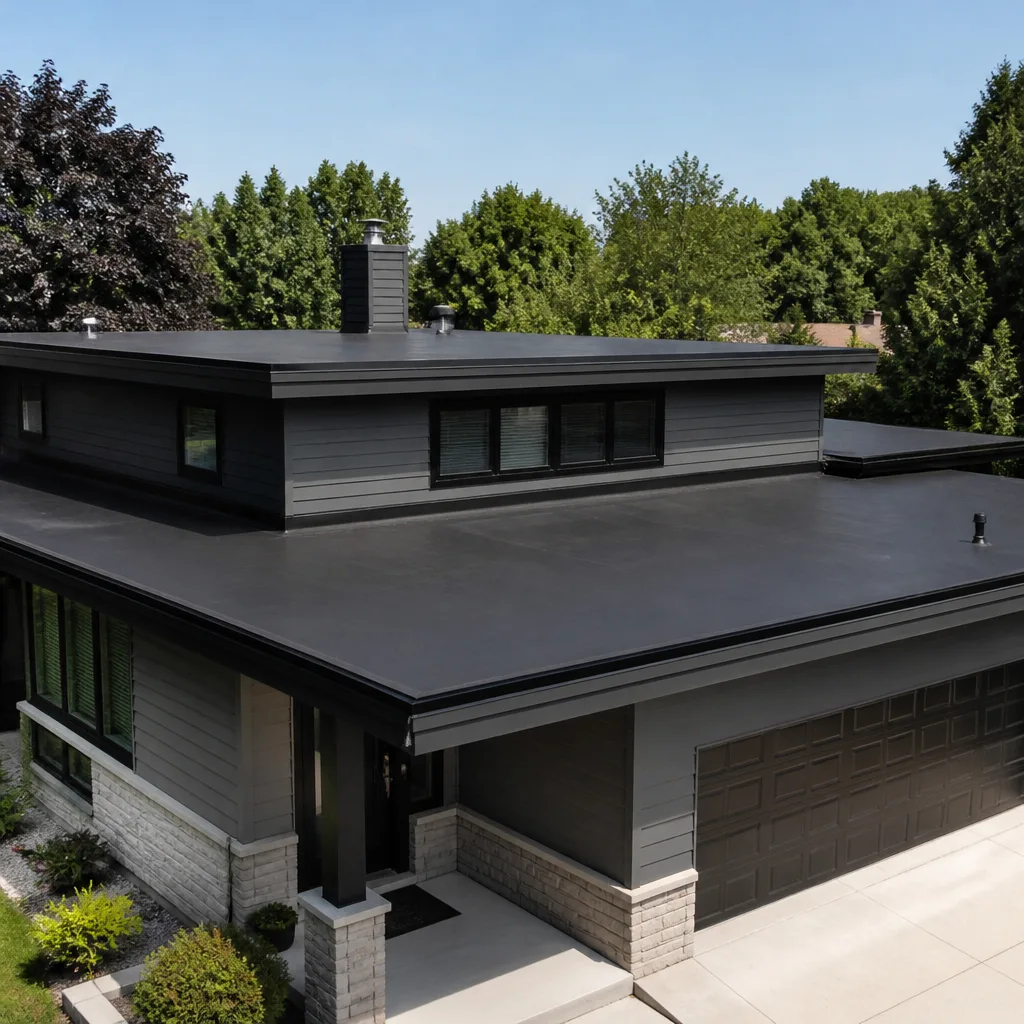 Flat & low-slope
Free roof inspection with deck photos before we talk money - GAF and Owens Corning certified installation
DIY vs Professional Roof Repair: What’s Safe to Do Yourself
Roofing caulk is the most common repair a homeowner applies, and professional inspectors list it among the top five causes of accelerated flashing failure. The reason is simple: the wrong product traps moisture behind a joint instead of sealing it out, and the damage hides until the sheathing gives. Most of us who have worked on roofs in Enterprise have pulled up a bead of hardware-store caulk and found rot underneath. This guide draws an honest line between the repairs a careful homeowner can handle and the ones where a small mistake turns a three-hundred-dollar fix into a six-thousand-dollar replacement. The question isn’t whether you can climb a ladder. It’s what it costs to be wrong.
Quick Answer
You can safely handle gutter cleaning, tightening exposed fasteners on a metal roof, and replacing an isolated shingle on a low-pitch section, all from the ground or a stable ladder with no walking on the roof. Flashing, valley work, structural decking, and anything on tile always require a licensed contractor, because the failure mode is hidden water damage, a voided manufacturer warranty, or an insurance denial. If the roof is steeper than a 6/12 pitch or you can’t see the problem from a ladder, call a professional.
Styles & brands we work with
- Architectural shingles
- Metal roofing
- Tile roofing
- GAF
- Owens Corning
- Flat & low-slope
Table of Contents
- The decision matrix: four factors that settle the question
- The repairs a careful homeowner can genuinely do
- The repairs that always require a licensed contractor
- Why the Enterprise climate changes the equation
- How a DIY repair affects your insurance claim
- What a written workmanship guarantee looks like
- Common mistakes to avoid
- When to call a professional
The Decision Matrix: Four Factors That Settle the Question
Before you touch the roof, answer four questions. Any single “no” moves the job to a professional.
- What is the repair type? Surface issues like a lifted shingle edge or a clogged downspout are manageable. Anything that involves water traveling under a layer of the roof is not.
- What is the roof pitch? Roofs under a 6/12 pitch (six inches of rise per twelve inches of run, roughly 26 degrees) can be walked with care. Above that, a slip is not a bruise; it’s a fall from height.
- What is the material? Asphalt shingle and exposed-fastener metal panels are forgiving. Clay and concrete tile, slate, and standing-seam metal are not. A single misstep on Boral clay tile in Enterprise can crack a piece you can’t match from a current run.
- Is the roof under warranty? Most GAF, CertainTeed, and Owens Corning manufacturer warranties void coverage when a non-certified party performs work on the covered assembly. Check the paperwork before you climb.
A roof that fails all four checks is a professional job, full stop. A roof that fails only one might still be a professional job, depending on how much you have to lose. The matrix exists so you can see the trade-off honestly before you commit.
The Repairs a Careful Homeowner Can Genuinely Do
Some repairs reward a patient homeowner, especially if the work stays within arm’s reach of a ladder or the ground. These do.
- Gutter cleaning and downspout clearing. Remove debris each spring and fall, and after any wind event with visible leaf fall. Clogged gutters are the leading cause of fascia rot, and the fix costs a Saturday, not a contractor.
- Tightening exposed fasteners on metal panels. On a low-pitch metal roof, the hex screws backed by a rubber washer work loose over time. Snug them with a screwdriver or nut driver, do not over-torque them, and replace any washer that has dried and cracked. This is one of the least risky repairs you can make, and one of the most valuable.
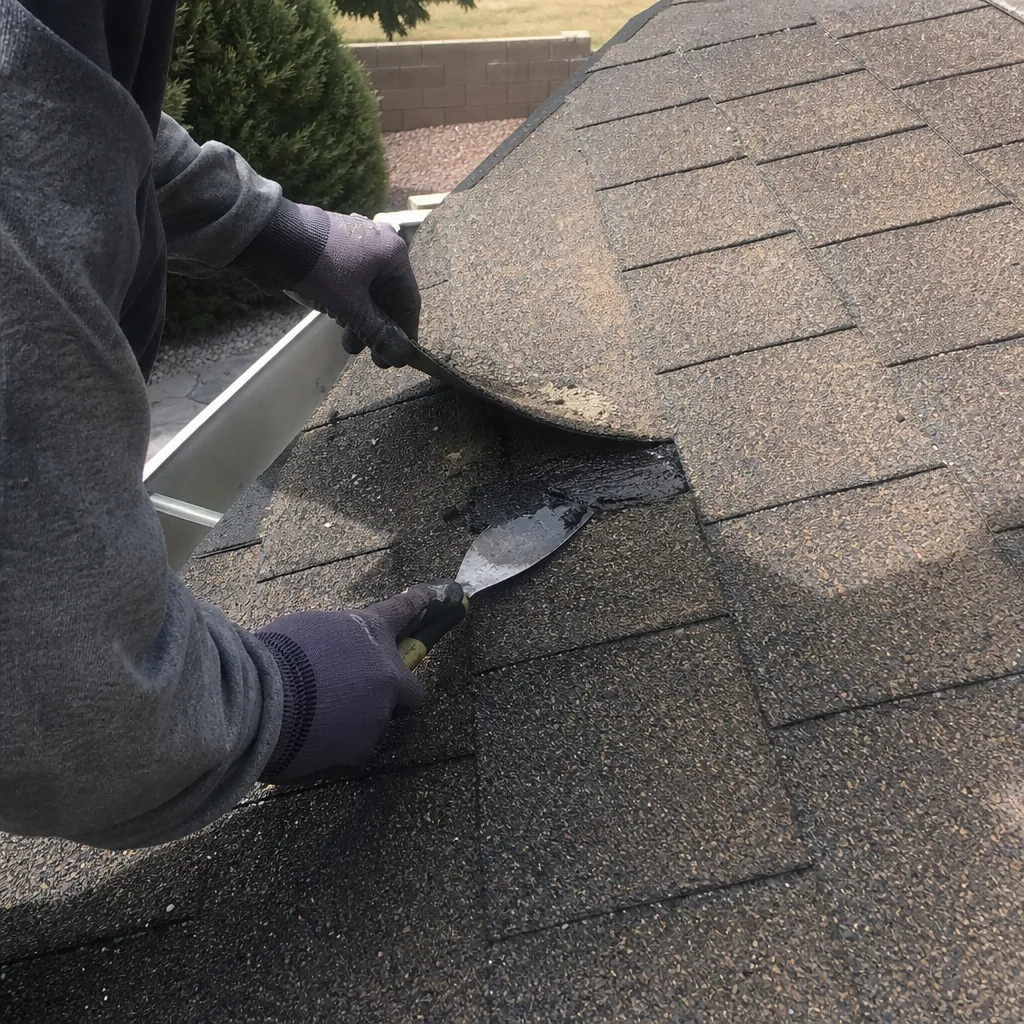
- Replacing an isolated shingle on a low-pitch section. If a single tab has lifted or torn and the surrounding shingles are sound, a matching replacement shingle set in roofing cement with the nail heads covered will hold. Match the color and profile as closely as you can; mis-matched shingles are cosmetic, not structural.
- Clearing debris and checking flashings from the ground. A visual inspection with binoculars from the driveway catches more than you’d think. Look for lifted shingle edges, dark streaks under a valley, or daylight through the decking at the eaves.
If the roof pitch is 6/12 or steeper, or the shingles are older than fifteen years old and brittle, even these repairs are better handled by a technician with fall protection and a proper harness. Our technicians have up to 10 years of experience with roofs of every pitch and material, and they document every inspection with photos taken from your actual roof, not a scary speech in the driveway.
The Repairs That Always Require a Licensed Contractor
There are four categories of work where the cost of being wrong is high enough to remove any question about doing it yourself.
- Flashing work. Flashing at chimney, skylight, and wall junctions directs water away from vulnerable joints. Getting the step flashing, counter-flashing, and sealant order wrong traps moisture behind the joint. The damage shows up months later as stained ceiling drywall, rotted fascia, and mold in the attic.
- Valley work. A valley is the “V” where two roof planes meet, and it carries more water than any other part of the roof. A valley that drains to the wrong side of the detail can erode the sheathing below within a single wet season. This is a licensed contractor job, always.
- Structural decking. If the sheathing under the shingles is soft, sagging, or spongy, the problem is no longer cosmetic. Replacing decking is a structural repair, and it requires permits and an inspection.
- Anything on tile. Clay and concrete tile, especially Boral tile commonly installed on Enterprise homes, breaks. Walking a tile roof without proper foot traffic mats and a trained technique cracks the tile, and the crack is invisible until the underlayment fails. Tile work always requires a trained professional.
For a roof that’s showing its age in more than one place, it’s worth understanding what a Roof Replacement & Installation in Enterprise involves before the repairs pile up. Sometimes the honest answer is that you’re patching a roof that’s already past the point of patching.
Why the Enterprise Climate Changes the Equation
Enterprise sees summer heat that bakes asphalt shingles brittle and a monsoon season that dumps a large share of the year’s rain in a handful of violent storms. Both facts raise the stakes on a DIY repair.
In July and August, shingle tabs softened by afternoon sun will tear if you walk on them. In our experience, the damage from a single careless walk across a 110-degree shingle roof can outlast the repair you went up to make. And when a monsoon cell parks over the valley and an inch of rain falls in an hour, every square foot of roof is tested at once. A repair that would have held for months on a gentle English drizzle can fail on the first storm that follows a sloppy flashing patch here.
The neighborhood specifics matter, too. Roofs near the foothills of Frenchman Mountain and along the eastern edge of Enterprise see more wind-driven rain than roofs closer to the airport, because the terrain funnels weather off the mountain. Those roofs need more attention at ridge caps and gable ends. Same for the older neighborhoods off Windmill Parkway and Sunset Road, where original vents and flashing details were installed to a standard that predates current code. A repair on those roofs often needs a permit, and pulling it is not optional.
How a DIY Repair Affects Your Insurance Claim
Here is the fact most homeowners don’t hear until it’s too late: a poorly executed DIY repair can damage or sink a legitimate insurance claim.
Insurance adjusters distinguish between damage caused by a covered peril (hail, wind, a falling limb) and damage caused by poor workmanship or deferred maintenance. If a water intrusion follows a repair you made two years ago, the adjuster will very likely classify the resulting damage as “faulty workmanship” or “improper maintenance,” and those are almost universally excluded. The claim you’d have filed for the original damage may not survive once the repair history is in the file.
In Enterprise, hail claims are the most common claim type, and the inspectors who assess them want to see an intact roof system with manufacturer-approved materials. A patched section that no longer matches the original GAF or Owens Corning assembly can short-circuit the adjuster’s ability to attribute the damage to the storm rather than to the patch. Keep receipts and photos if you do the repair yourself, and keep them in the same envelope as your policy paperwork. Then let a licensed contractor handle the assessment if the claim is substantial.
If your repair is part of a larger storm response, our Roof Repair in Enterprise service is built for exactly this situation, from the claim documentation to the finished work.
What a Written Workmanship Guarantee Looks Like
A handshake and a verbal “we’ll take care of you” are worth what they cost. A written guarantee is a document with a name, a term, and a remedy.
Here is what to look for.
- Named term. The guarantee should state a specific coverage period in writing. Ours is the 90-Day Done Right Promise, a written workmanship guarantee that lives in the file, not in a conversation.
- Named remedy. What happens if the work fails? The document should say plainly that the contractor returns and fixes it at no additional charge. Anything vaguer is an invitation to argue.
- What’s covered and what isn’t. A real guarantee is specific. It should list what counts as a callback (leak at the repaired area, loose fasteners, water intrusion at a sealed joint) and what doesn’t (damage from a falling tree, new storm damage).
- No paperwork runaround. The terms should be short enough to read in two minutes on the kitchen table. If the guarantee requires you to remember to request warranty registration within a window you weren’t told about, it’s worth less than the paper it’s printed on.
A manufacturer’s material warranty is a separate document from the workmanship guarantee. The material warranty covers the shingles, the underlayment, and the accessories as supplied by GAF, CertainTeed, Owens Corning, or whichever line the job uses. The workmanship guarantee covers how those materials were put on the roof. Both matter, and a real contractor will show you both before the work begins. Our Roof Repair in Enterprise team hands over both documents before a single shingle is lifted.
Common Mistakes to Avoid
- Caulking a joint instead of repairing the flashing. Caulk is a temporary patch, and the wrong product traps moisture behind the joint. Inspectors see this on Enterprise roofs year after year, and the repair costs three times what the flashing replacement would have cost.
- Walking a hot shingle roof in July. Softened tabs tear under a single footstep. Wait for a cool, overcast morning, or don’t walk it at all.
- Power-washing a shingle roof. The high-pressure spray strips granules, and once the granules are gone the shingle’s UV protection is gone with them. A gentle garden-hose rinse from the ground is the most aggressive cleaning a shingle roof should ever get.
- Mixing shingle brands on a repair. Topping a GAF roof with an IKO shingle voids the manufacturer warranty on the field shingles. Match the brand, the profile, and if possible the production lot.
- Ignoring a small ceiling stain. A drywall stain that appears after a monsoon storm almost always means a flashing failure has been leaking for weeks. The stain is the last symptom, not the first.
- Filing an insurance claim before you know the cause. A claim filed for damage caused by faulty workmanship can be denied, and the denial stays on the record. Get a professional assessment first.
- Skipping the permit on a structural repair. Enterprise building code requires a permit for any repair that involves decking, and inspectors do catch unpermitted work during a real estate sale.
When to Call a Professional
Call a licensed contractor when the repair touches flashing, valleys, structural decking, or tile; when the roof pitch climbs above a 6/12; when the roof is older than fifteen years old; when the problem shows up as a ceiling stain, a sagging roofline, or a granule accumulation in the gutters; or when you’re not sure whether a repair you made is holding. A professional roof inspection in Enterprise takes about an hour and produces photos from your actual roof, which is the only way to know what’s really going on up there.
Ridgeline Roofing Co. Enterprise offers free estimates in Enterprise, and we’ll give you a written second opinion on any estimate you already have, at no charge. Call (844) 228-4119 for a free estimate. We answer live, around the clock.
If your situation turns out to be a specialty roof, from tile to standing seam, our Specialty Roofing in Enterprise team handles materials that most repair crews won’t touch.
See the difference
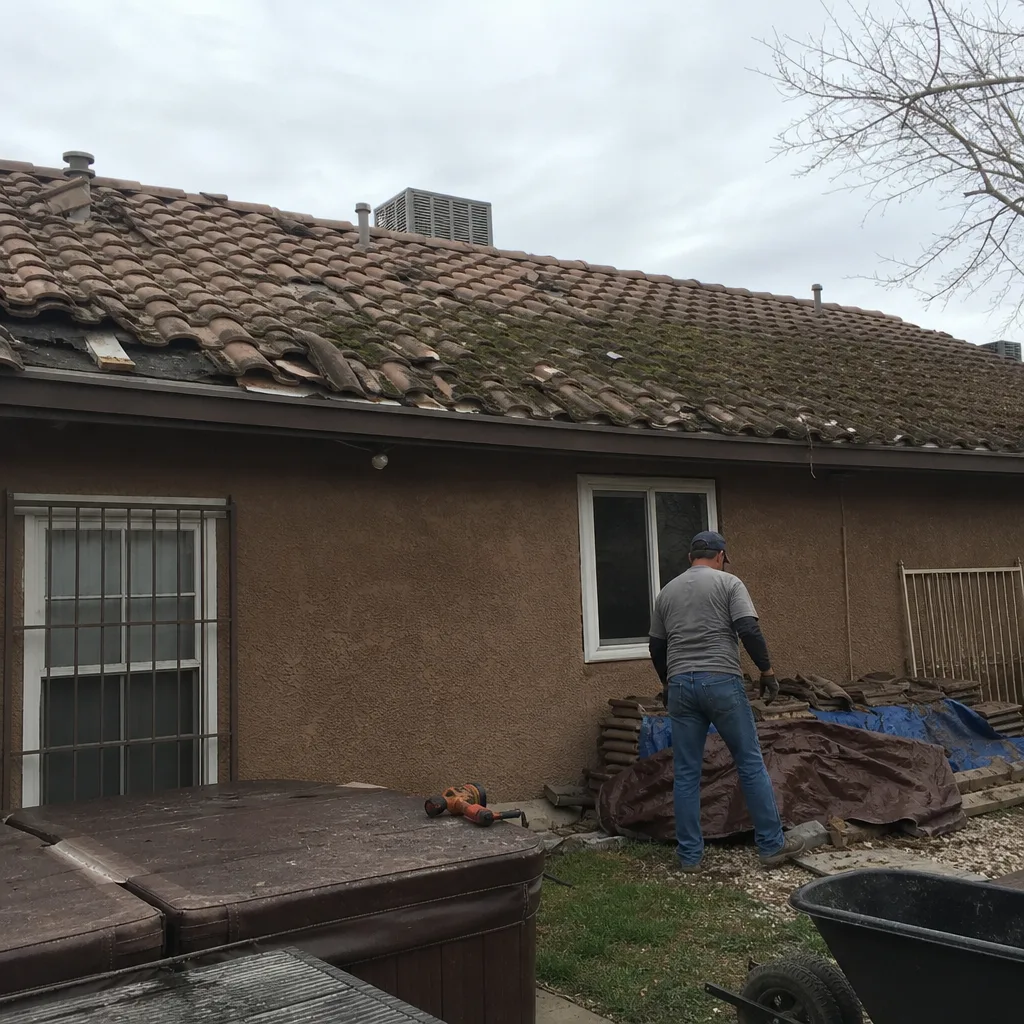 Before
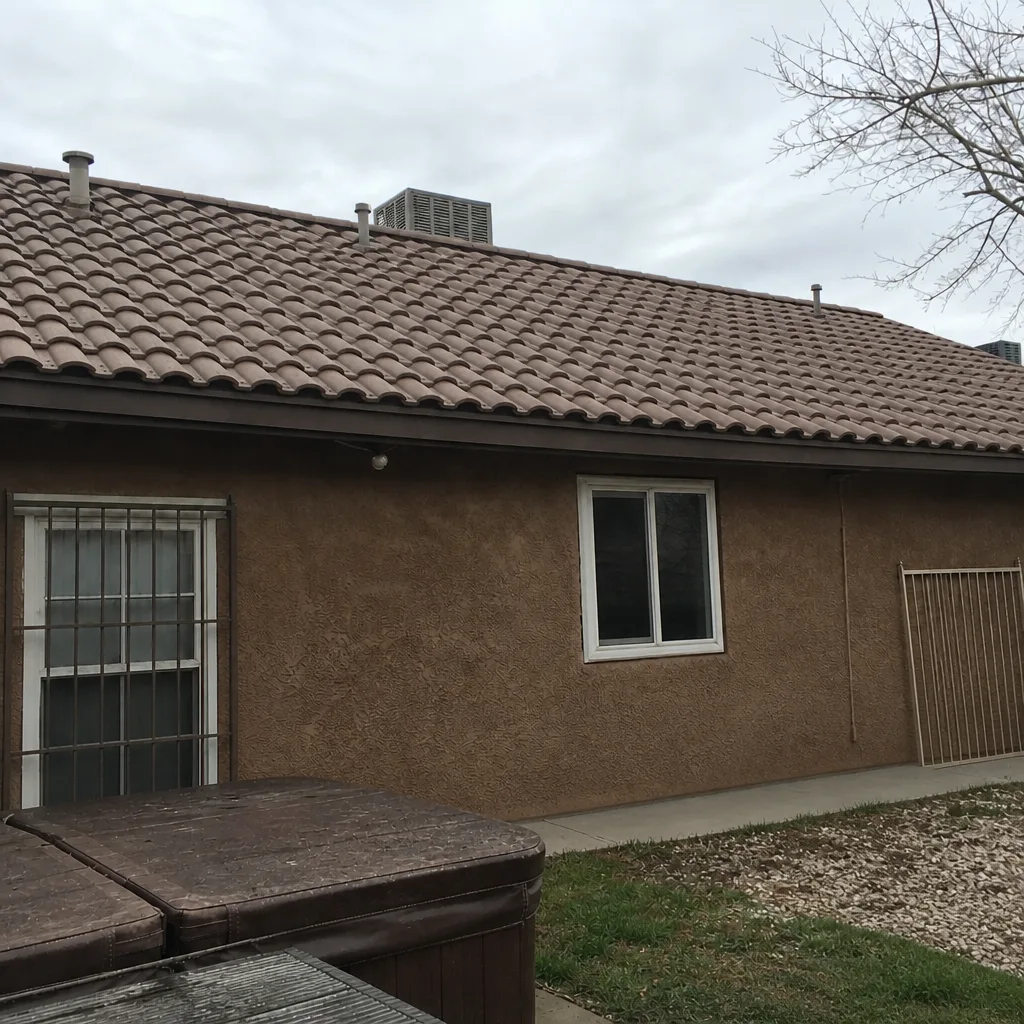 After
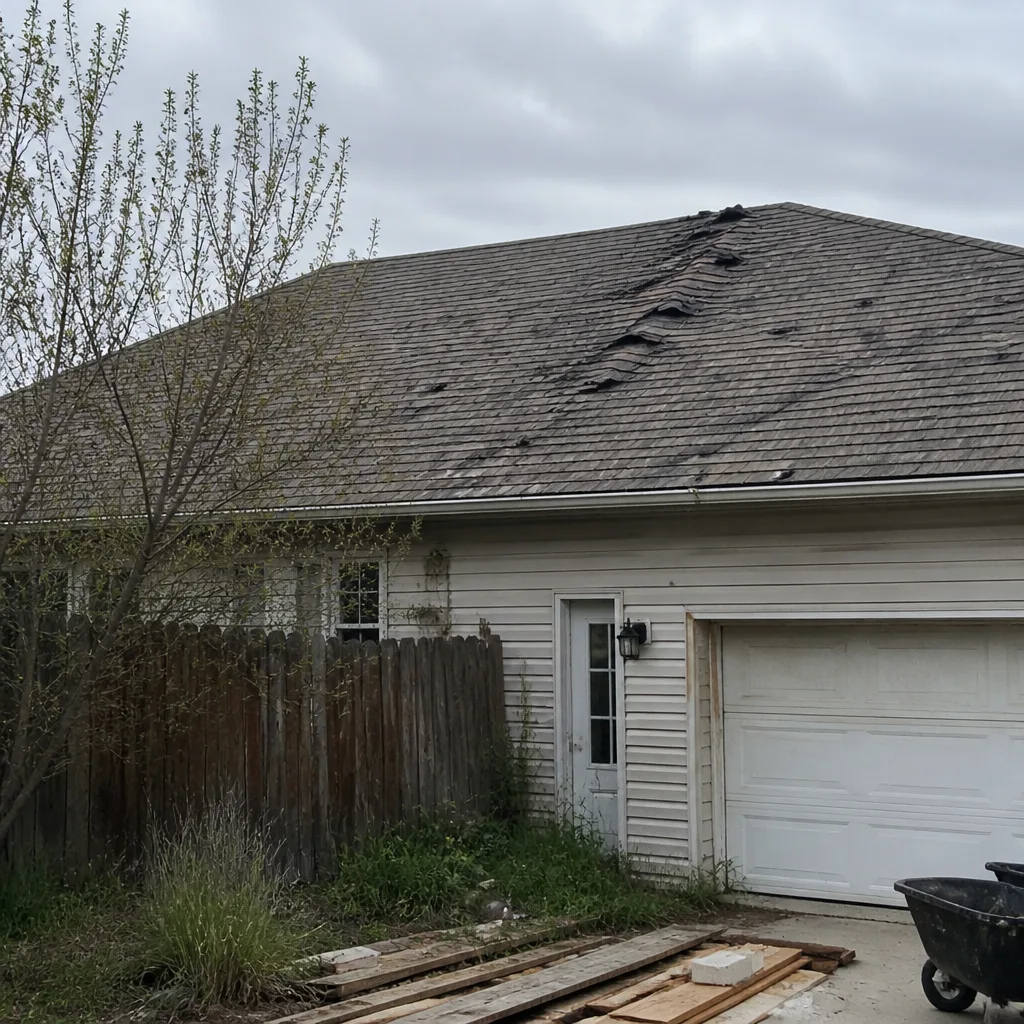 Before
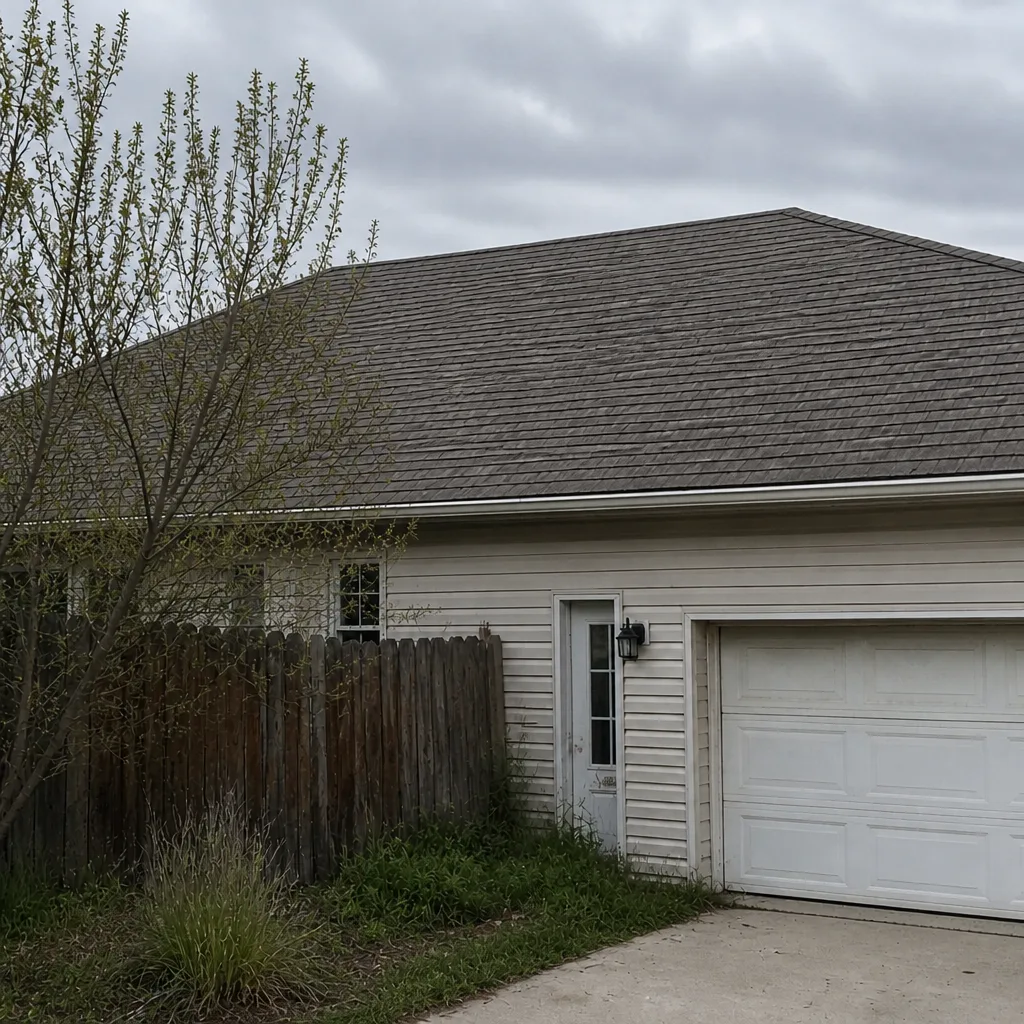 After
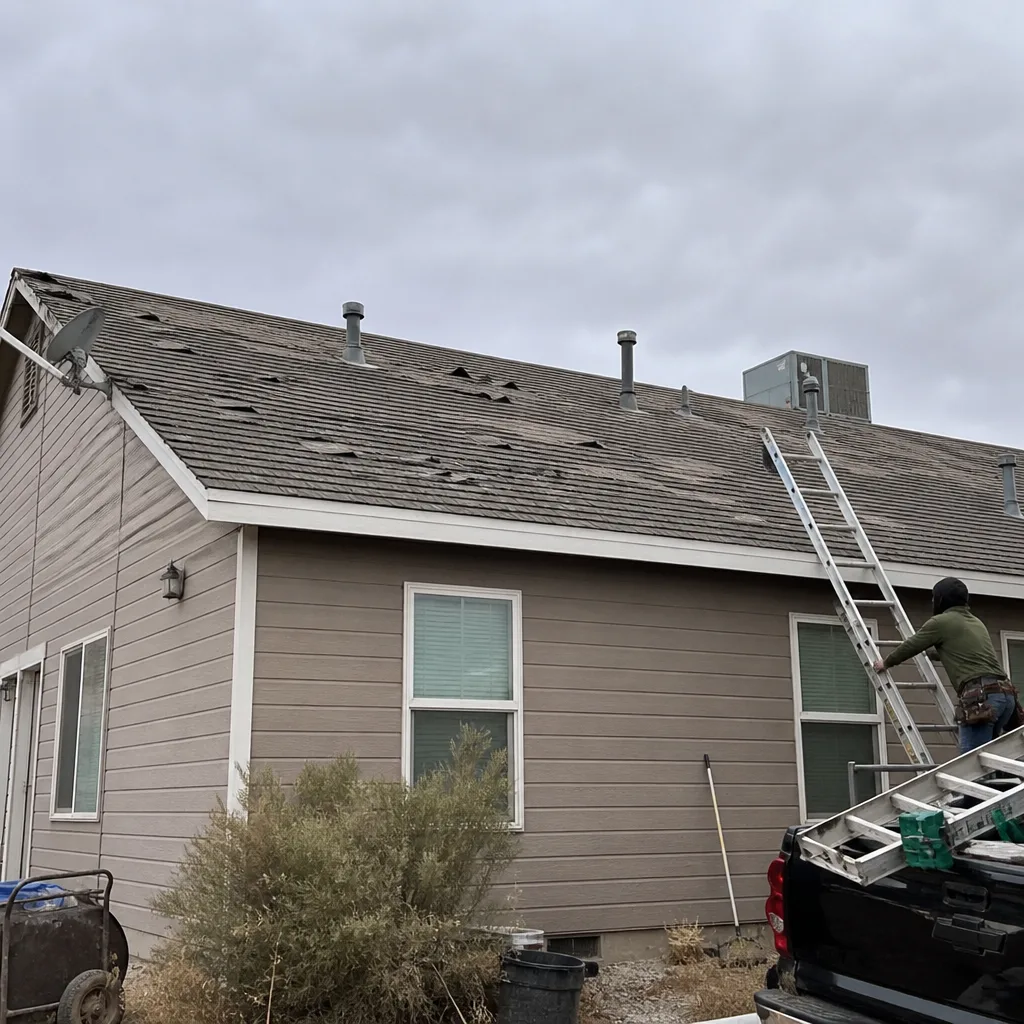 Before
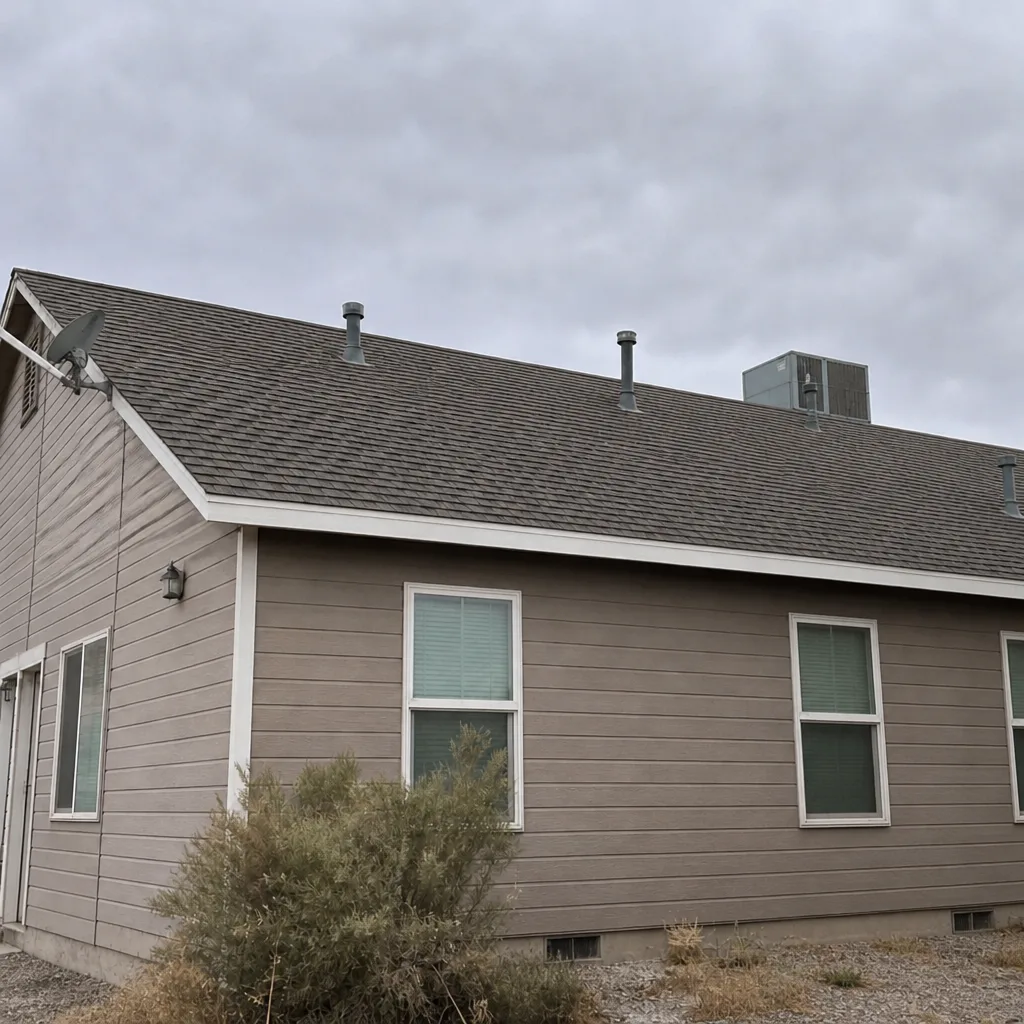 After
Frequently Asked Questions
You can apply caulk to a small, isolated joint where the flashing is intact and the failure is only the sealant, but not as a fix for a leaking flashing. Caulk on a wet or dirty surface traps moisture and accelerates the underlying failure. If the joint has opened more than a quarter-inch, or if water has been entering for more than one storm, it’s a flashing repair and needs a licensed contractor. Call (844) 228-4119 for a free estimate before you buy a tube.
Yes, for cosmetic repairs, you can work on your own home without a contractor license, but a permit is required for structural work such as decking replacement. A licensed roofing contractor has to pull the permit and is inspected by the city. Work that involves decking, a full tear-off, or any structural change requires an inspection before it’s covered, and unpermitted work can complicate a future sale.
Usually, yes, if the repair touches the covered assembly on a manufacturer-warrantied roof. GAF, CertainTeed, and Owens Corning all condition their material warranties on installation by an authorized contractor using approved materials, so any third-party repair in the covered area can void the field warranty. Read the warranty card before you pick up a tool, and if it’s a full GAF or Owens Corning assembly, leave the repair to a certified installer.
Most single-area roof repairs in Enterprise run from about three hundred to twelve hundred dollars, depending on the material, the pitch, and whether flashing is involved. A tile repair tends to run higher than asphalt shingle because matching and resetting a Boral clay tile is a more careful trade than replacing a shingle. A full ridge-to-eave tear-off is a different number entirely, and it’s worth getting a free written estimate before you decide between repair and replacement. Call (844) 228-4119 and we’ll quote it in writing with no surprises.
If the repair involves the decking, sheathing, or any structural component, yes, a permit and an inspection are required. Surface repairs that don’t disturb the structure, such as replacing a shingle or resealing a vent, generally don’t require a permit. The safe rule: if the repair involves pulling up more than a couple of shingles to see what’s underneath, get a licensed contractor involved and let them pull the permit.
Most single-area repairs are finished in a single visit, often within a few hours. A flashing replacement takes about half a day. A full roof replacement is a different project entirely and is scheduled rather than squeezed in. Ridgeline Roofing Co. Enterprise gives you a written time estimate before we start, and the number on the estimate is the number on the invoice.
The Bottom Line
You can clean your gutters, tighten metal fasteners, and replace a single shingle on a low-pitch roof. You can’t safely handle flashing, valleys, structural decking, or tile, and the cost of trying is high: voided warranties, denied insurance claims, and small leaks that compound into structural repair. Every repair comes down to a single question. What is the actual cost of being wrong? When the answer is more than the repair, call a professional. Ridgeline Roofing Co. Enterprise stands behind every job with the 90-Day Done Right Promise, a written guarantee with no paperwork and no arguing. We’ll be there when we say.
If you’re weighing a repair against a larger project, start with our Ridgeline Roofing Co. Enterprise home page and see what fits. For a free written estimate in Enterprise, call (844) 228-4119. The phones are answered live, around the clock, and the estimate is free.
Written by the team at Ridgeline Roofing Co. Enterprise.