
Last updated November 18, 2026
 Architectural shingles
 Metal roofing
 Tile roofing
 GAF
 Owens Corning
 Flat & low-slope
Free roof inspection with deck photos before we talk money - GAF and Owens Corning certified installation
How Long Does Emergency & Storm Damage Take? Timelines and What to Expect
Homeowners who expect a storm repair to take three days and end up waiting three weeks aren’t being misled. They’re just not accounting for the variables that happen between “we’ll get you scheduled” and “the permit is closed.” In our experience across Enterprise, the actual installation of a storm-damaged roof often takes a single day. The weeks live somewhere else entirely: in material availability, adjuster scheduling, and the hidden damage that only reveals itself once the shingles are off and the decking is exposed. This guide breaks down the real timeline from the first call to the final inspection, names the three variables that stretch it, and shows you how to get ahead of each one.
Quick Answer
A typical storm damage roof repair takes two to six weeks from the first call to the closed permit. The tear-off and installation itself usually happens in one to three days; the rest of the clock is assessment, insurance coordination, material ordering, and permitting. Simple repairs like a few lifted shingles or a punctured vent boot can wrap in under a week, while full replacements with discovered decking damage or a disputed claim can run eight weeks or more.
Styles & brands we work with
- Architectural shingles
- Metal roofing
- Tile roofing
- GAF
- Owens Corning
- Flat & low-slope
Table of Contents
- The Five Phases of a Storm Repair, Start to Finish
- How Southern Nevada’s Post-Storm Demand Surge Affects Your Schedule
- Why Decking Replacement Discovered at Tear-Off Extends Timelines
- Permitting for Roof Repair in Unincorporated Clark County
- How Photo-Documented Inspections Compress Insurance Approval
- What Each Phase Adds to the Clock
- Common Mistakes to Avoid
- Frequently Asked Questions
The Five Phases of a Storm Repair, Start to Finish
Every storm repair moves through the same five phases. What varies is how long each one takes, and which one becomes the bottleneck. Here’s the honest breakdown of what each phase involves and roughly how much calendar time it adds.
- Assessment (1 to 3 days). Someone gets on the roof, photographs the damage, and writes a scope. In Enterprise, monsoon wind and July heat cycling through the summer stress older three-tab shingles first, so the inspection needs to cover the whole field, not just the visible tear. A photo-documented inspection produces a report an adjuster can actually use.
- Insurance coordination (3 days to 3 weeks). The claim gets filed, the adjuster schedules a visit, and the scope is negotiated. This is the phase with the widest range. A clean claim with a thorough inspection report moves in days; a disputed scope with no photos can drag past three weeks.
- Material ordering (2 days to 2 weeks). Standard architectural shingles in common colors from Atlas or GAF are usually available locally. Specialty profiles, unusual colors, or a shortage during a regional demand surge can push this out.
- Installation (1 to 3 days). Most residential tear-offs and re-roofs complete in one to three days, weather permitting. Single-visit completion is common for straightforward repairs.
- Inspection and permit close-out (3 days to 2 weeks). The city or county inspects, the permit is closed, and the job is officially done. The work is finished; the paperwork follows.
The key insight: the phase homeowners focus on (installation) is usually the shortest. The phases that stretch are the invisible ones. If you want to move faster, you move faster in assessment and insurance coordination, not by pushing the crew to work later. For a closer look at how we handle the repair side, see our Roof Repair in Enterprise page.
How Southern Nevada’s Post-Storm Demand Surge Affects Your Schedule
After a major storm rolls through Southern Nevada, demand for roofing crews spikes within hours. The same wind event that lifted shingles off a thousand roofs across Enterprise and the surrounding valley sends a thousand homeowners to their phones at once. What that feels like from the homeowner’s side is not obvious until you’re in it.
Here’s what we’ve seen happen in the days after a significant monsoon or winter wind event:
- Scheduling calendars fill in a single day. A crew that could start Tuesday now books into the following week or the one after. This isn’t a stall tactic; it’s arithmetic.
- Material stock tightens. Common shingle colors move first. If your color isn’t on a local shelf, you wait for a restock, and restocks lag storm recovery by days.
- Adjuster availability stretches. Every insurer’s local adjuster pool gets hit at once, and inspection appointments push out to one to two weeks out.
- Out-of-area contractors arrive. Storm-chasing outfits show up offering fast starts, no local permit history, and a phone number that stops working by spring. This is the moment to ask who will actually be here in three years when something needs a second look.
The practical move is to get on the assessment calendar before the surge peaks, not after. A company that answers the phone with a live person at 2 a.m. on the night of the storm gets you a documented inspection days before a company whose voicemail tree opens the next morning. In Enterprise, where summer monsoon cells can hit hard and move fast, that gap matters. Our Ridgeline Roofing Co. Enterprise home page explains how we staff for exactly that.
Why Decking Replacement Discovered at Tear-Off Extends Timelines
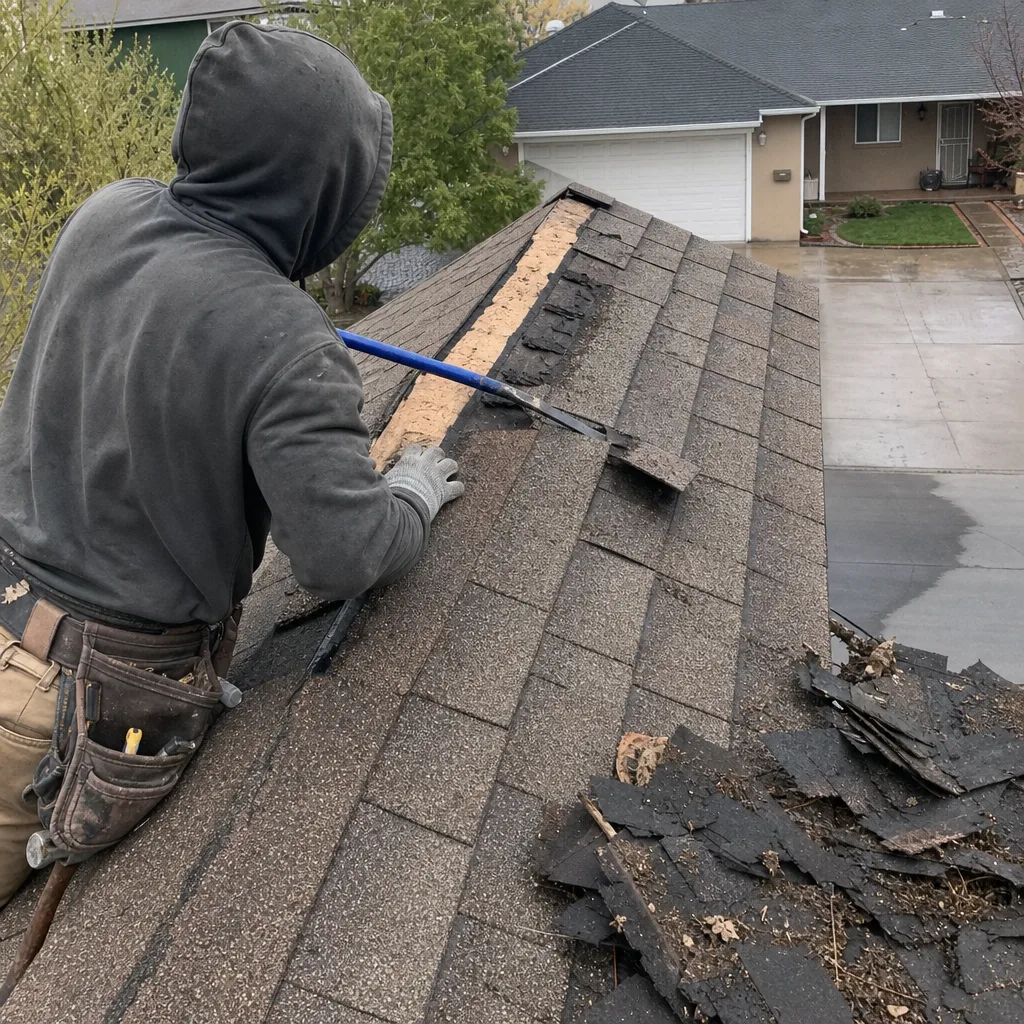
This is the single most common timeline extension in storm repair, and the one no one can see from the ground. The shingles come off, and underneath is rotted, delaminated, or storm-saturated decking that has to be replaced before anything goes back down. It’s not a surprise because someone cut a corner during the original inspection; it’s a surprise because you cannot fully judge decking condition until you’re looking at it.
What decking replacement adds to the clock:
- Extra material order (2 to 5 days). Sheathing panels come in standard dimensions and usually restock locally, but not always same-day.
- Additional insurance paperwork (3 days to 1 week). The adjuster supplements the original scope. If the initial inspection was thorough and documented, the supplement moves quickly; if it was vague, this is where a claim stalls.
- Extended installation (1 to 2 extra days). Replacing sheathing and re-nailing add labor hours to the job.
How to get ahead of it: ask for a photo-documented inspection that shows the current decking wherever it’s exposed, and ask specifically whether the inspection report flags areas of prior patching or water staining. A good report can’t see through shingles, but it can flag the signs that predict decking trouble. In Enterprise, where homes built in the 1990s and earlier are common in many neighborhoods, decking condition is a real consideration. If the repair becomes a full re-roof, our Roof Replacement & Installation in Enterprise page covers that path.
Permitting for Roof Repair in Unincorporated Clark County
Roofing permits in unincorporated Clark County, which covers much of the Enterprise area, follow a process that adds time the same way insurance coordination does: it’s necessary, it’s invisible, and it can’t be skipped. In our experience, here’s what the permitting phase adds to the clock.
- Application (1 to 2 days). Permit filed with scope, scope of work, contractor licensure, and sometimes product approvals for manufacturer warranties to hold.
- Review (a few days to roughly two weeks). Straightforward residential re-roofs usually clear plan review in under two weeks; anything with structural questions takes longer.
- Inspection (3 to 7 days after installation). The inspector signs off once the installation is complete, and the permit closes.
Two things homeowners often don’t know. First, permits pulled by the contractor, not the homeowner, are the norm and are part of what the company’s estimate should include. Second, a permit that was never pulled on a prior roof can complicate the current one, which is one reason we recommend pulling permit history before starting. The number that matters on the estimate is the number on the invoice; permits should be in the quote with no surprises, and the work should be inspected and the permit closed. That’s part of what “done right” means. For specialty profiles, including those from Boral and Tamko, see our Specialty Roofing in Enterprise page.
How Photo-Documented Inspections Compress Insurance Approval
Insurance claims move as fast as the evidence behind them. An adjuster who receives a thorough inspection report with dated photos, dimensions, damage notes, and clear scope has almost everything they need to approve; an adjuster who receives “some shingles are damaged” has to schedule a second look. Photos taken from the actual roof, not from the driveway, cut days to weeks from the approval phase.
What a photo-documented inspection should include:
- Whole-roof coverage. Every roof plane photographed, not just the visible damage.
- Close-ups of damage with context. A photo of a missing shingle means little without the surrounding field showing how widespread the failure is.
- Details on components. Flashing, vents, pipe boots, chimney transitions, and, critically for Enterprise, the drip edges and fascia that take the worst of monsoon wind.
- Dated, labeled files. Adjusters can match these against the claim without back and forth.
If you’re filing a claim after a storm in Enterprise and you want a head start, the right first call is to the company that will send someone out with a camera and leave you with a report you can hand to your insurer. Timelines get shorter when the inspection happens fast and the evidence is complete. That’s what our technicians do, and it’s how we try to earn the second call when it’s time to schedule.
What Each Phase Adds to the Clock
Here’s the phase-by-phase summary in the form most homeowners want: a rough number of days added at each step. These assume a typical residential storm repair in Enterprise and a claim that goes smoothly; a disputed claim or major decking work can push any of these up.
- Assessment: 1 to 3 days
- Insurance coordination: 3 days to 3 weeks
- Material ordering (standard shingles): 2 days to 2 weeks
- Installation: 1 to 3 days
- Permitting (unincorporated Clark County): roughly one to two weeks, overlapping with scheduling
- Final inspection and permit close-out: 3 days to 2 weeks
Two to six weeks total is realistic for most storm repairs. Where the clock runs long, it’s almost always insurance coordination plus the decking surprise. If you want a free second opinion on a written estimate before you commit, we’ll do it. Call (844) 228-4119.
Common Mistakes to Avoid
- Hiring the first storm-chaser who knocks. Out-of-area crews show up after every major Southern Nevada wind event, offer a fast start, and disappear before the season is out. Ask whether the company has a local reputation that will still be reachable when the 90-day mark hits.
- Accepting a verbal estimate. A number on the phone is not a number on the invoice. Ask for a written, line-item estimate that includes permits, materials, and cleanup, and that will not change once work starts.
- Filing a claim without photos. An adjuster who has to make a second trip because the first inspection was thin will add a week or more. Insist on a photo-documented inspection report before the claim goes in.
- Skipping the permit. Unpermitted roof work can complicate inspections, insurance, and resale down the road. Pulling the permit is the contractor’s job, so ask who is pulling it and whether the final inspection is included.
- Ignoring small damage until it grows. In Enterprise, a lifted shingle or a cracked vent boot can become a full decking replacement after the next monsoon. What looks like a $200 repair in April is often a $2,000 one by August.
- Scheduling at the peak of the surge. Waiting until the phone line is jammed and every crew is booked pushes you to the back of the calendar. Calling on day one, even at night, moves you to the front.
- Assuming installation day is the finish line. The job isn’t done until the permit is closed and the final inspection passes. Budget for that week of paperwork time in your head, not just in your calendar.
See the difference
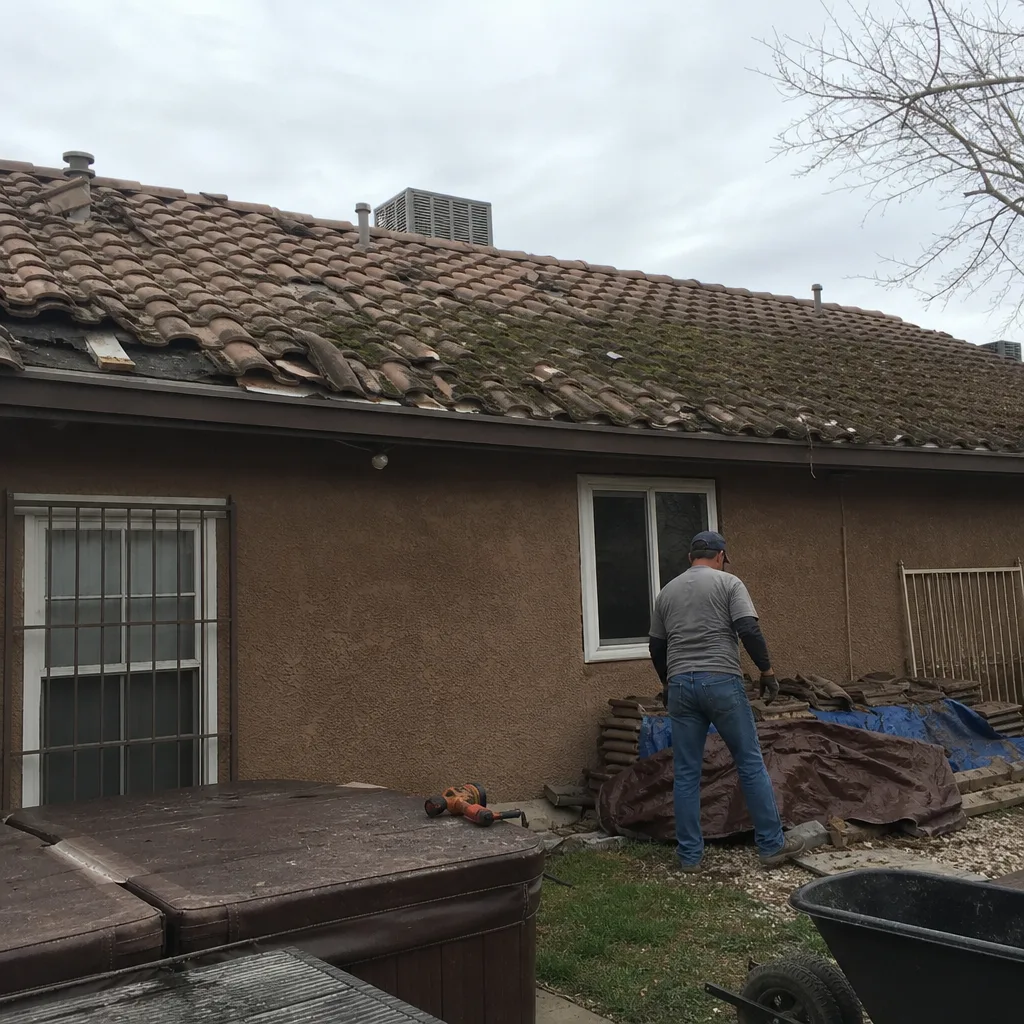 Before
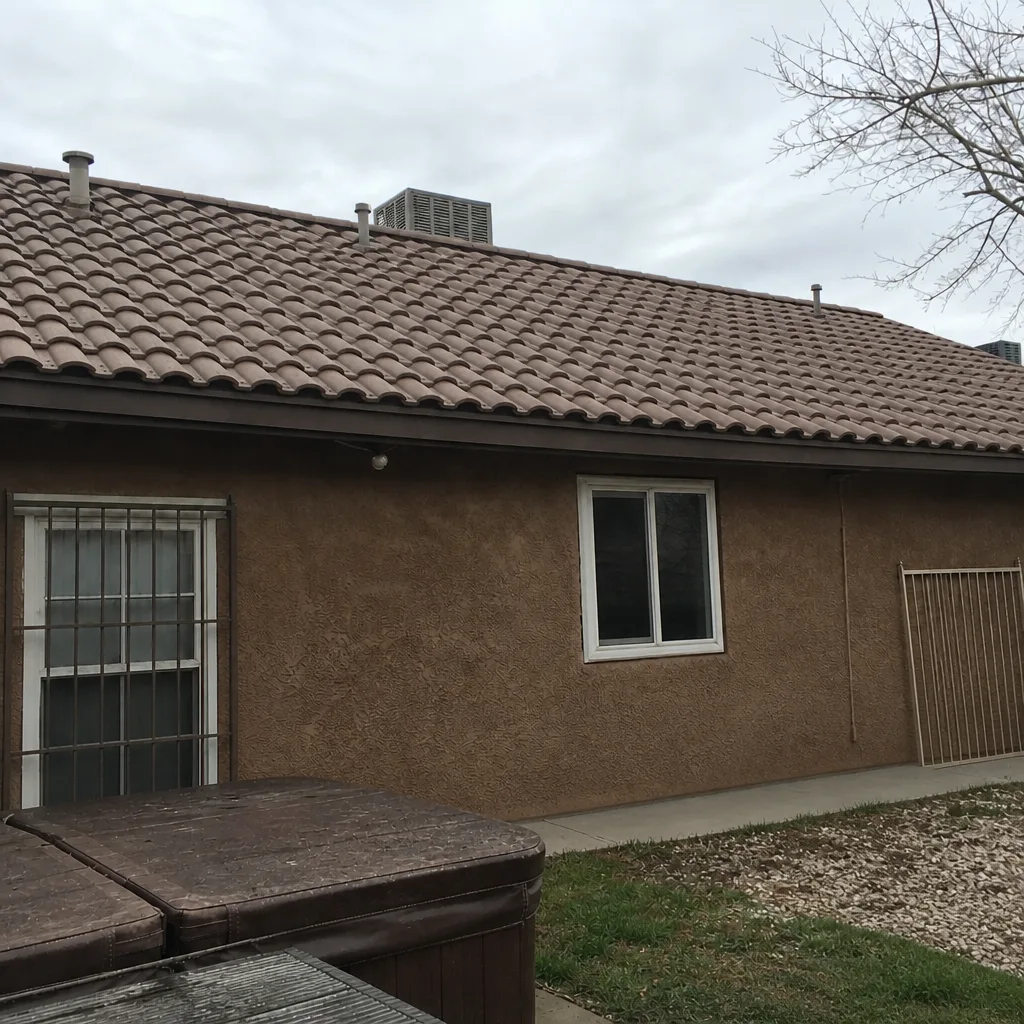 After
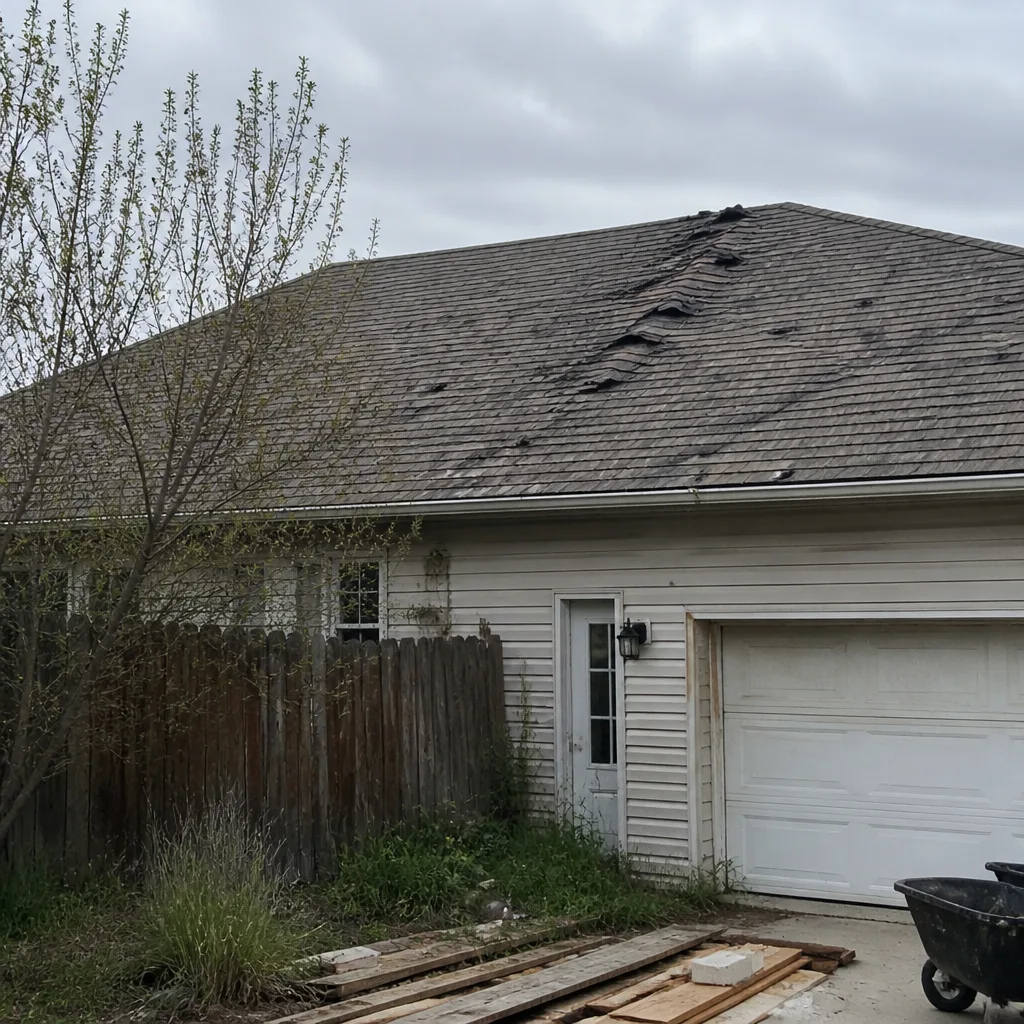 Before
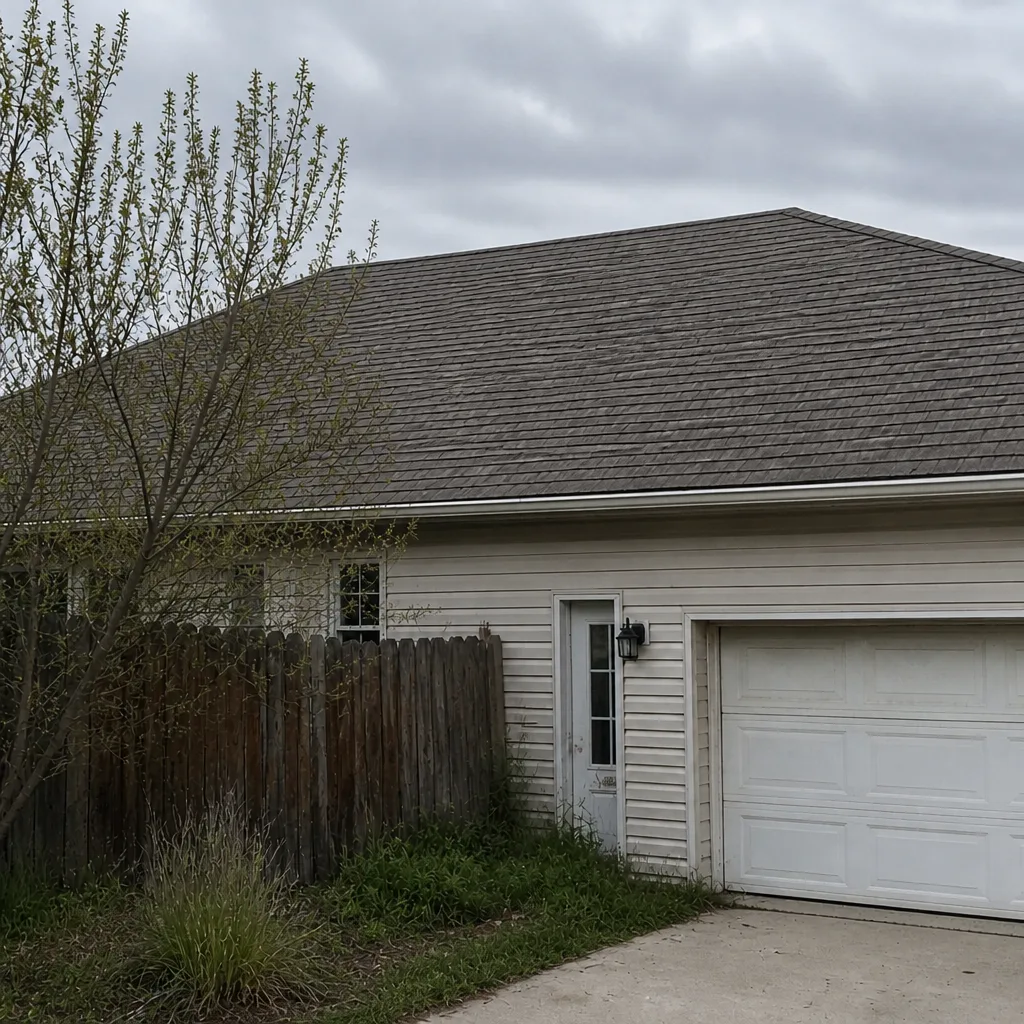 After
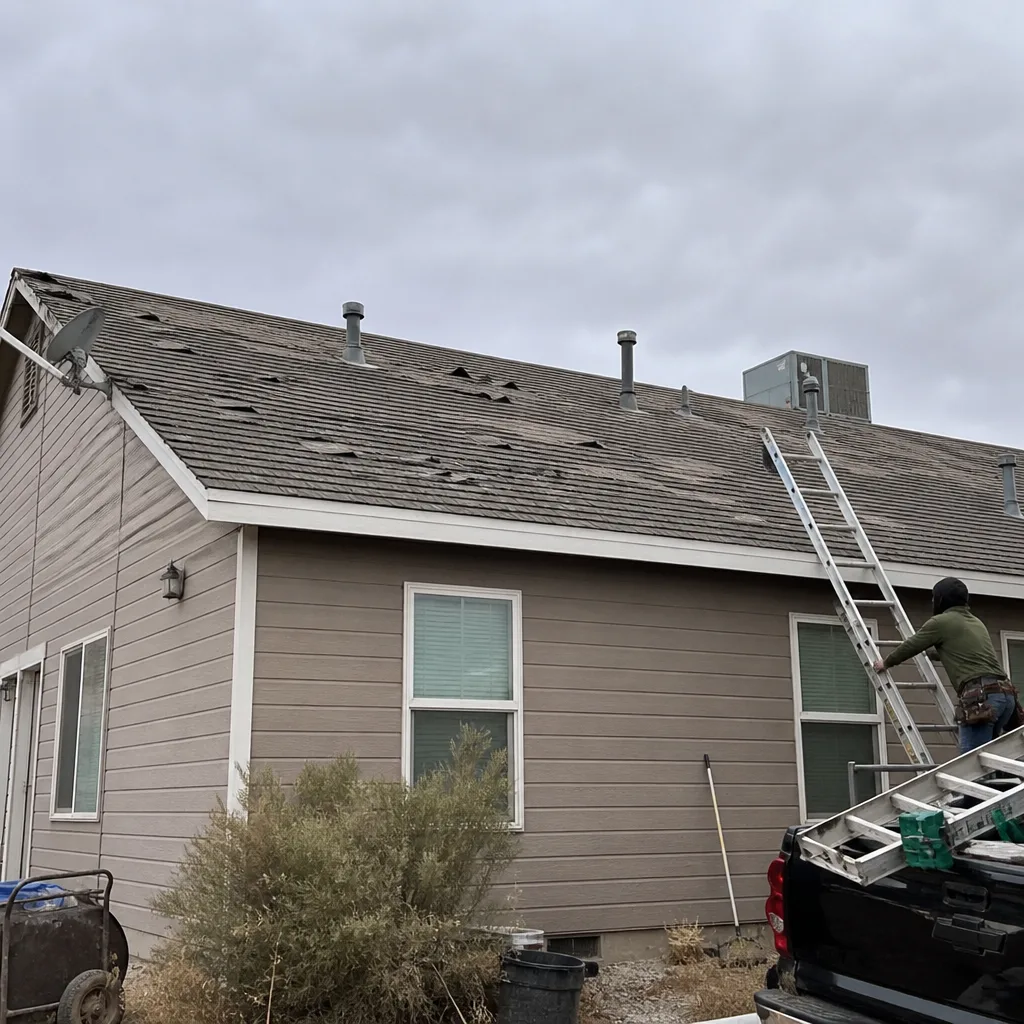 Before
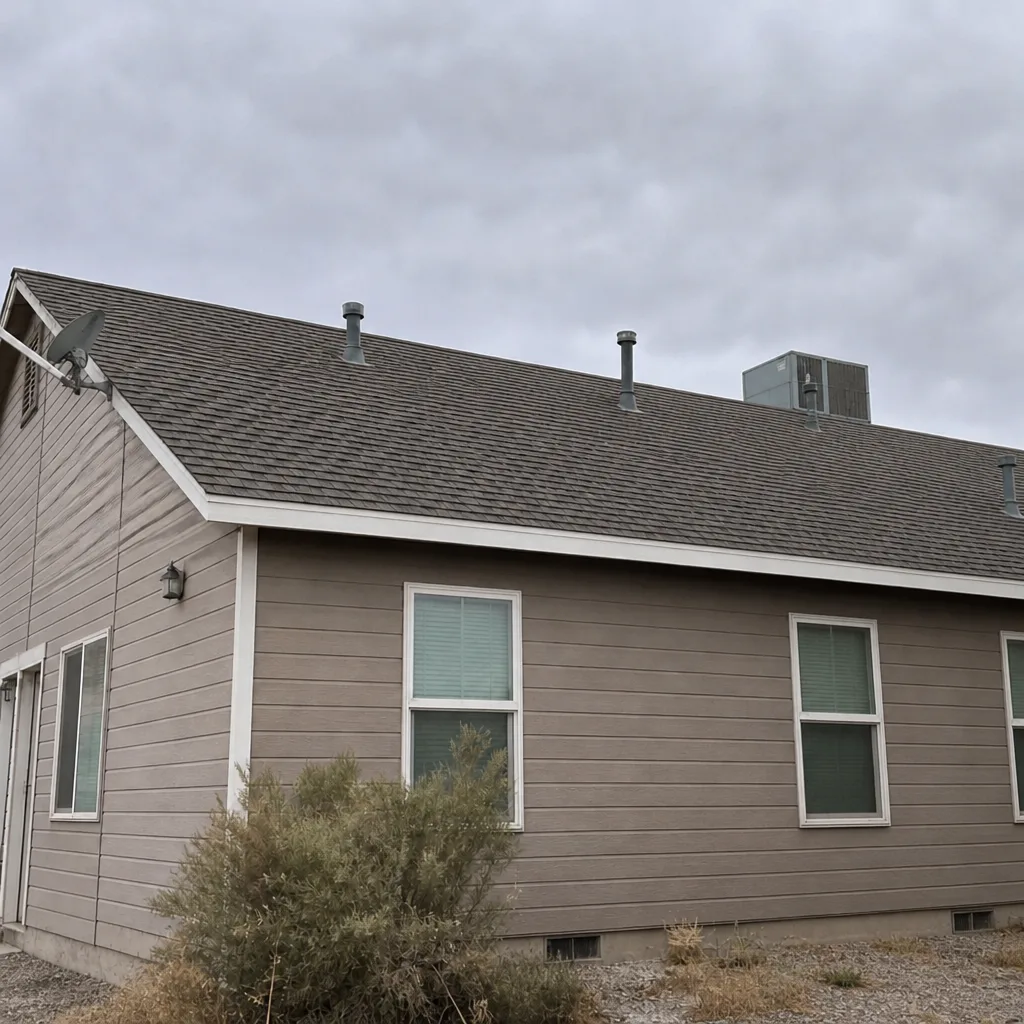 After
When to Call a Professional
Call a professional roofer when you see missing or lifted shingles, granules collecting in gutters, water staining on interior ceilings or exterior sheathing, daylight showing through attic decking, or any visible dent or puncture from wind-driven debris. After a big storm, call for an inspection even if you see nothing from the ground; damage on high slopes and at ridge lines is often invisible from below. Anything beyond a patch of a few shingles belongs in the hands of someone who will document what’s there and give you a written scope. Ridgeline Roofing Co. Enterprise offers free estimates in Enterprise. Call (844) 228-4119 for a free estimate, and a live person will answer, day or night.
Frequently Asked Questions
Most storm damage roof repairs in Enterprise take two to six weeks from the first call to the closed permit. The installation itself is usually one to three days; the remainder is assessment, insurance coordination, material ordering, and permitting. Call (844) 228-4119 for a free estimate on your specific repair.
Small repairs, such as a handful of lifted shingles or a vent boot replacement, can often be completed in a single visit. Larger repairs involving decking replacement, full re-roofing, or a pending insurance scope usually require more than one trip. We’ll tell you which category yours falls into before scheduling.
Not if the estimate was written properly. Our pricing is no-hassle and upfront: the number on the estimate is the number on the invoice, with no surprises. The one exception is hidden damage discovered at tear-off, which no one can see through shingles; if that happens, we document it and get your written approval before anything changes.
Yes. Permitting for roof repair in unincorporated Clark County is part of the job, and we handle the application, the inspection, and the close-out. A permit that isn’t pulled can complicate insurance and resale later, so it’s not a corner worth cutting.
Costs depend on the extent of damage, the roofing material, and whether insurance is involved. Small repairs are a fraction of the cost of a full re-roof, and the difference matters. For an exact figure, call (844) 228-4119 for a free estimate; estimates are free and the written scope includes every line item.
Yes. Every job we complete is backed by our written 90-Day Done Right Promise: if it is not right, we come back and make it right, with no arguing and no paperwork runaround. Materials come from authorized manufacturer lines including Atlas, Tamko, and GAF, so proper products and no substitutions.
Our technicians have up to 10 years of experience.
The Bottom Line
Storm repair timelines are shaped less by the crew than by the three variables homeowners rarely plan for: material availability, adjuster scheduling, and hidden damage at tear-off. Plan for two to six weeks, not three days. Your fastest moves are an early call for a documented inspection and a written, line-item estimate before anything is scheduled. A local company you can still reach in thirty months matters more than a fast start today. Call (844) 228-4119 for a free estimate, and we will be there when we say.
Written by the team at Ridgeline Roofing Co. Enterprise.