
Last updated November 18, 2026
 Architectural shingles
 Metal roofing
 Tile roofing
 GAF
 Owens Corning
 Flat & low-slope
Free roof inspection with deck photos before we talk money - GAF and Owens Corning certified installation
DIY vs Professional Gutters & Accessories: What’s Safe to Do Yourself
Cleaning out a gutter is DIY-able. Figuring out why that same section keeps pulling away from the fascia every spring is not – and confusing the two is how a $12 weekend job becomes a $3,000 soffit replacement. We’ve stood on enough Enterprise roofs to know the difference between a homeowner who clears debris twice a year and a homeowner who thinks clearing debris is the same thing as inspecting. It isn’t. This guide draws that line precisely: what you can safely handle from a ladder, what hides behind the fascia board where you can’t see it, and where a “quick fix” quietly voids a manufacturer warranty. Read it before you climb.
Quick Answer
Clearing leaves, flushing downspouts, and testing water flow are safe DIY tasks for a careful homeowner on a single-story home. Anything that involves the gutter’s attachment to the roof – slope, hanger spacing, fascia rot, or gutter guard installation – belongs to a professional, because the damage that matters is hidden behind the gutter, not inside it. In Enterprise, the dry climate makes gutters look fine from the ground long after the wood behind them has started to fail.
Styles & brands we work with
- Architectural shingles
- Metal roofing
- Tile roofing
- GAF
- Owens Corning
- Flat & low-slope
Table of Contents
- Where the Real DIY Line Falls
- What’s Genuinely Safe to Do Yourself
- What a Pro Sees That You Can’t From a Ladder
- Why Gutter Guards Are Almost Never a True DIY Job
- Ladder Safety Math for Enterprise Homes
- When a Quick DIY Fix Voids a Seamless Gutter Warranty
- Common Mistakes to Avoid
- When to Call a Professional
Where the Real DIY Line Falls
The line isn’t about skill. It’s about visibility. A homeowner on a ladder looking into a gutter trough can see leaves, granules, and maybe a shingle tab. What they cannot see is the back of the gutter where it meets the fascia board – and that gap is where the actual failure lives. In our experience across Enterprise, a gutter that “still works” from the ground is often a gutter that has already lost two hangers and is canting away from the roofline by a half inch you’ll never notice until the wood behind it softens.
Think of it this way: cleaning is maintenance, inspection is diagnostics. Cleaning removes what’s blocking the water. Inspection answers why the water is going where it shouldn’t. Those are different jobs, done by different tools, and only one of them can be done safely from a stepladder with a garden hose.
The practical split looks like this:
- Safe for a careful homeowner: removing debris, flushing downspouts, checking that water exits at the bottom, and noting where it pools in the yard.
- Not safe, and not useful without eyes on the wood: re-pitching a run, replacing hangers, sealing a joint at the fascia, diagnosing a persistent overflow, installing guards, or anything that requires lifting the gutter away from the roofline.
Most of the “DIY gutter repair” content online quietly conflates those two categories. We won’t. If you take one thing from this guide, take the split above – and call a pro the moment your job crosses into the second column.
What’s Genuinely Safe to Do Yourself
Here is the work we’d do on our own mother’s house, and the work we’d tell her to hand off. The safe list is real and useful – done twice a year in Enterprise (typically late spring after the pollen drops and again in late fall), it will meaningfully extend the life of your gutter system. The key is understanding what each task accomplishes and, just as importantly, what it doesn’t.
- Clear debris from the trough. Gloved hands or a plastic scoop, working from a stable ladder. Bag the debris; don’t drop it on the roof where it holds moisture against the shingles.
- Flush each downspout with a garden hose. Run water from the top and confirm it exits at ground level. If it backs up, you’ve found a clog worth addressing – not a reason to jam a plumber’s snake down from the top.
- Check flow direction at grade. Make sure the downspout discharge is directing water away from the foundation. This is the single highest-value gutter task a homeowner can do, and it requires no ladder at all.
- Note anything that looks off. A sag, a rust spot, a section that drips behind the gutter instead of out the front. Write it down. Photograph it from a safe spot. That list becomes the agenda for a professional inspection.
- Clear the strainer baskets at the top of downspouts. Cheap, fast, and prevents the most common clogs.
Notice what’s not on the list: anything involving sealant, fasteners, or lifting a gutter run. Those tasks require knowing what’s behind the gutter, and that’s a job for someone who gets on the roof with a camera and a probe.
What a Pro Sees That You Can’t From a Ladder
Picture the difference. A homeowner on a ladder sees the inside of the gutter. A trained technician on the roof, kneeling along the fascia, sees the outside of the problem – and what’s behind it. In Enterprise, where we go months with almost no rain and then a sudden monsoon pushes inches of water in an afternoon, the failure points that matter are almost always the hidden ones.
Here’s what we’re actually looking for when we walk an Enterprise roof:
- Wood rot behind the fascia board. If the fascia has gone soft where the gutter attaches, no amount of re-hanging fixes it – the hangers have nothing left to bite into. We probe the wood with a screwdriver; a homeowner on a ladder cannot safely do this.
- Improper slope. Gutters should pitch toward the downspout at roughly a quarter inch per ten feet. That’s a subtle tilt – visible from a distance only to someone who checks it. A homeowner re-hanging one hanger can silently reverse the slope on an entire run, and the water backs up at the far end where they aren’t looking.
- Hanger spacing. Hangers should be spaced no more than two feet apart in most residential systems. Storm damage, wind, and a homeowner adding weight with a “quick patch” can all mean a section has lost the spacing it needs – which shows up as sagging that only reveals itself under a heavy rain load.
- Fascia-to-soffit transition. This is where water gets in and where the damage hides. A gutter that drips behind the fascia during heavy flow tells us the transition has failed long before the homeowner sees a ceiling stain.
All of this is documented with photos when we perform roof repair in Enterprise, because a written record beats a scary speech in the driveway every time. If you’ve never had a professional walk your gutter line, the first inspection is usually the one that catches the $12 weekend job that was already on its way to $3,000.
Why Gutter Guards Are Almost Never a True DIY Job
Gutter guards are marketed as the ultimate homeowner project – snap on, clip in, done. We want to be honest with you: they aren’t. The problem isn’t the clipping; it’s the prep underneath. A guard installed on a gutter that has lost slope, has sagging hangers, or has fascia rot behind it will do nothing useful, and in many cases it will accelerate damage by trapping moisture against a surface that can’t drain.
Here’s what a proper guard install actually involves in Enterprise homes:
- Confirm the fascia and the run are structurally sound and correctly pitched.
- Reset any hangers that are loose or spaced beyond spec.
- Ensure the downspouts and the roof’s own drainage plan are compatible with the guard’s flow rate.
- Install the guard with manufacturer-approved fasteners and verify that the guard itself will not void the gutter’s warranty.
Step 4 is the one most DIY installs skip, and it’s the one that bites. If a clip-on guard secures to the gutter lip using a fastener that isn’t approved for the gutter system, the gutter’s own manufacturer warranty can be voided – which is exactly the kind of fine print we see homeowners discover only after a leak. Our technicians are authorized installers for IKO, Tamko, and a handful of other leading lines, precisely because warranty status is not something we will ever guess at.
One more thing. Guards work in some climates and tree profiles better than others. In Enterprise, the mix of dry wind, pollen, and occasional heavy monsoon flow changes what kind of guard makes sense. A guard that’s right for a pine-covered lot in the East won’t necessarily handle what our streets throw at it.
Ladder Safety Math for Enterprise Homes
Most of the DIY gutter injuries we hear about happen on the second story – not because the homeowner wasn’t careful, but because the wrong tool was on the truck. Here’s the math Enterprise homeowners should run before they climb:
- Single-story Enterprise homes (roughly 10-12 foot gutters): a step ladder with a stable base can work, but the ladder still needs to land on level ground and be positioned with a three-foot extension above the roofline. On the sloped driveways common to neighborhoods across Enterprise, leveling is the part that fails.
- Two-story Enterprise homes (roughly 18-22 foot gutters): a stepladder cannot safely reach this height, and leaning a straight ladder against a gutter run puts the entire weight of the ladder against a gutter that is only fastened to a fascia board. That is the exact load a gutter isn’t engineered for, and it’s how a section of gutter – and the person on the ladder – comes down.
- Roof access: if a task requires actually getting onto the roof, the risk profile changes entirely. Walking a pitched roof requires familiarity with the surface, the pitch, and the fall protection required; it is not a task to learn from a video.
We’re not trying to talk you out of the DIY tasks on the safe list. We are asking you to run the math first. If the number on your ladder is shorter than the number on your gutter, you don’t have a ladder problem – you have a two-person job, and the second person should be someone with training and a harness. Technicians on our team have up to 10 years of experience on Enterprise roofs, and the training to know when a 20-foot ladder isn’t the right answer.
When a Quick DIY Fix Voids a Seamless Gutter Warranty
Seamless gutters are sold with a warranty because they’re a single piece of formed metal, end to end – which is also the reason a homeowner fix can quietly cancel the coverage. The moment the sealing joint, the hanger, or the guard hardware deviates from what the manufacturer approves, the manufacturer has grounds to walk away from the warranty on that run. This is not a threat; it’s the plain language in the warranty document that most homeowners have never read.
The specific things we see void seamless gutter warranties in Enterprise homes:
- Non-approved sealant at the end caps and corners. A hardware-store caulk that isn’t rated for the metal or the temperature range can fail within one summer and take the joint with it.
- Improper hanger replacement. A hanger that’s shorter-than-spec, spaced wrong, or screwed into fascia that’s already softening will fail – and when it does, the manufacturer will ask what hardware was used.
- Unauthorized guard fasteners. Drill-point screws through the gutter lip are a common DIY shortcut. They’re also a common warranty denial.
- Re-pitching without documentation. If a future leak traces back to the slope and the gutter has been re-pitched by a homeowner without a record, the warranty conversation gets very uncomfortable.
This is where the difference between DIY and professional gets real. When we touch a gutter, the manufacturer knows who installed what – and the paperwork reflects it. That’s why specialty roofing work in Enterprise and our gutter line are both backed by the same 90-Day Done Right Promise: if it isn’t right, we come back and make it right, no arguing, no paperwork runaround. For more on what that promise covers, see our Ridgeline Roofing Co. Enterprise home page.
Common Mistakes to Avoid
- Treating a seasonal cleaning as an inspection. Twice-a-year debris removal is not a substitute for a professional eyes-on-the-fascia check – especially on Enterprise homes that have gone five or more years without one.
- Leaning a ladder against the gutter. The gutter is a water channel, not a structural member. Put the ladder against the fascia or the roof structure, never the gutter run.
- Adding hangers without addressing slope. A new hanger on an improperly pitched run makes the sag worse, not better, because the water now backs up to a new low point.
- Sealing a joint over wet wood. Sealant that goes on over a damp fascia board will fail within one cooling cycle. The wood needs to be replaced, not resealed.
- Installing guards over a failing system. A guard hides the problem and traps moisture. Fix the gutter first, then decide on a guard.
- Ignoring downspout drainage at grade. This is the single most common cause of foundation moisture in Enterprise homes we inspect, and it’s the cheapest fix on the list.
- Assuming the monsoon won’t find the flaw. Enterprise gets long dry stretches and sudden heavy rainfall. Every hidden flaw gets exposed the first time that shift happens.
When to Call a Professional
Call a professional the moment your project crosses from cleaning into diagnosing – a persistent leak behind the gutter, a run that pulls away from the fascia, a section that sags under load, or a guard you’re considering installing. Also call if your home is two stories, if you don’t have a stable ladder footing, or if you’ve never had the gutter system inspected. We’d add one more: call if you’re planning any roof work in the next twelve months, because the gutter is the best early-warning system a roof has, and we’d rather see it before the roof asks.
Ridgeline Roofing Co. Enterprise offers free estimates in Enterprise – call (844) 228-4119. You’ll reach a live person, day or night. Our technicians are background-checked, arrive in uniform, and photograph every inspection from your actual roof.
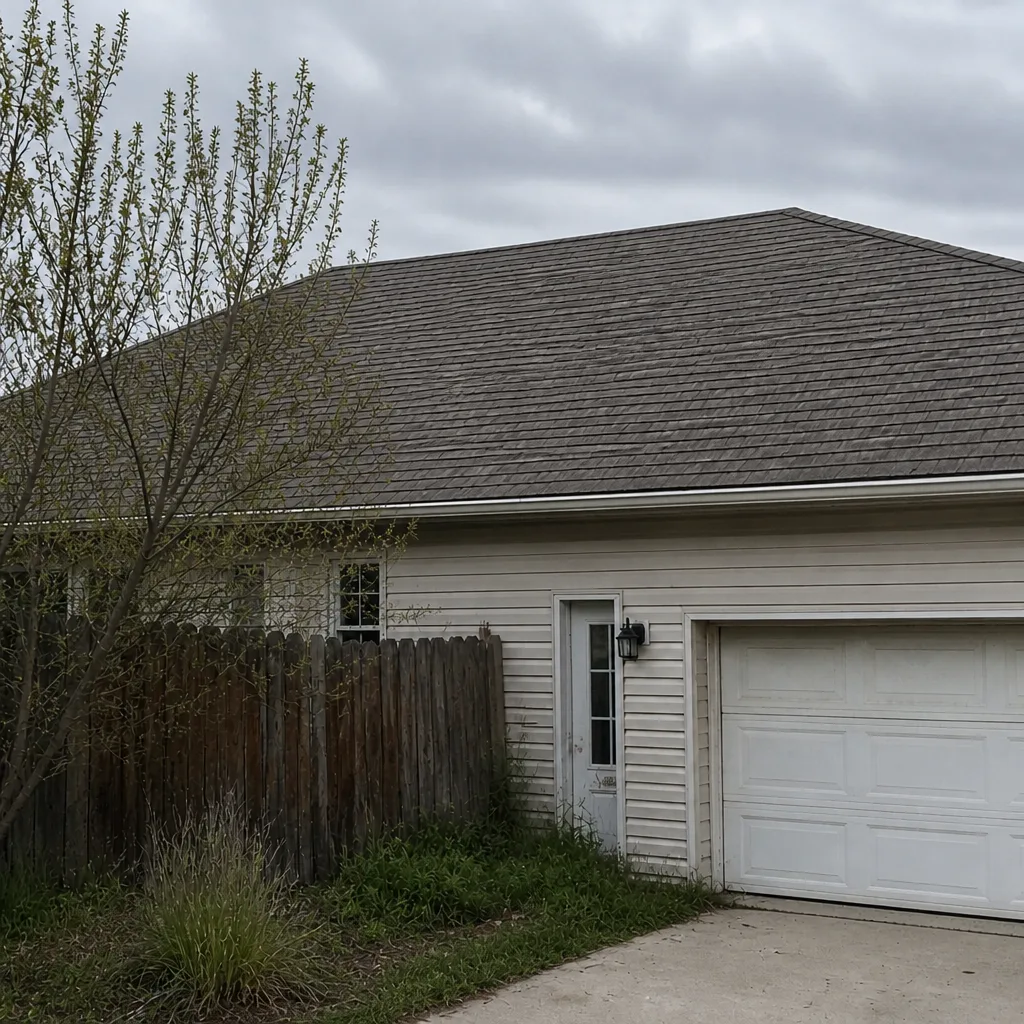
See the difference
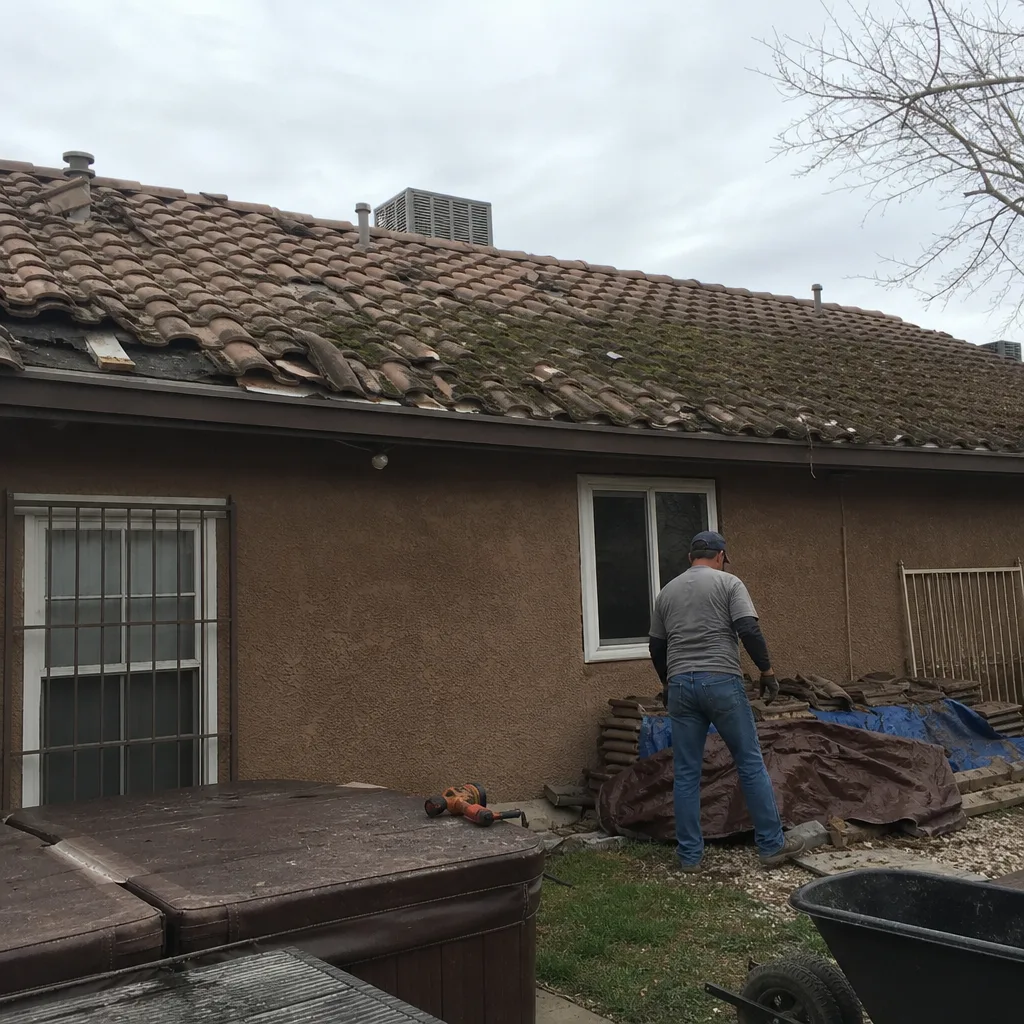 Before
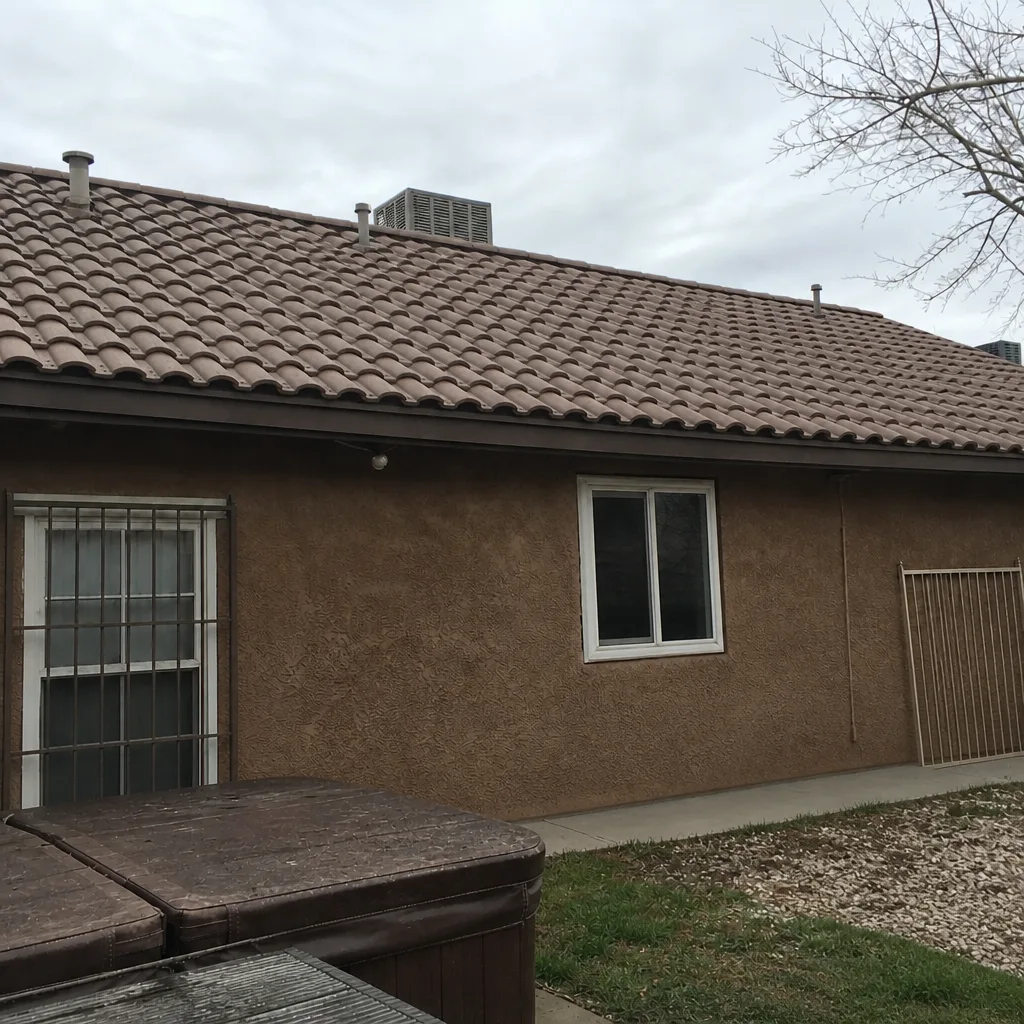 After
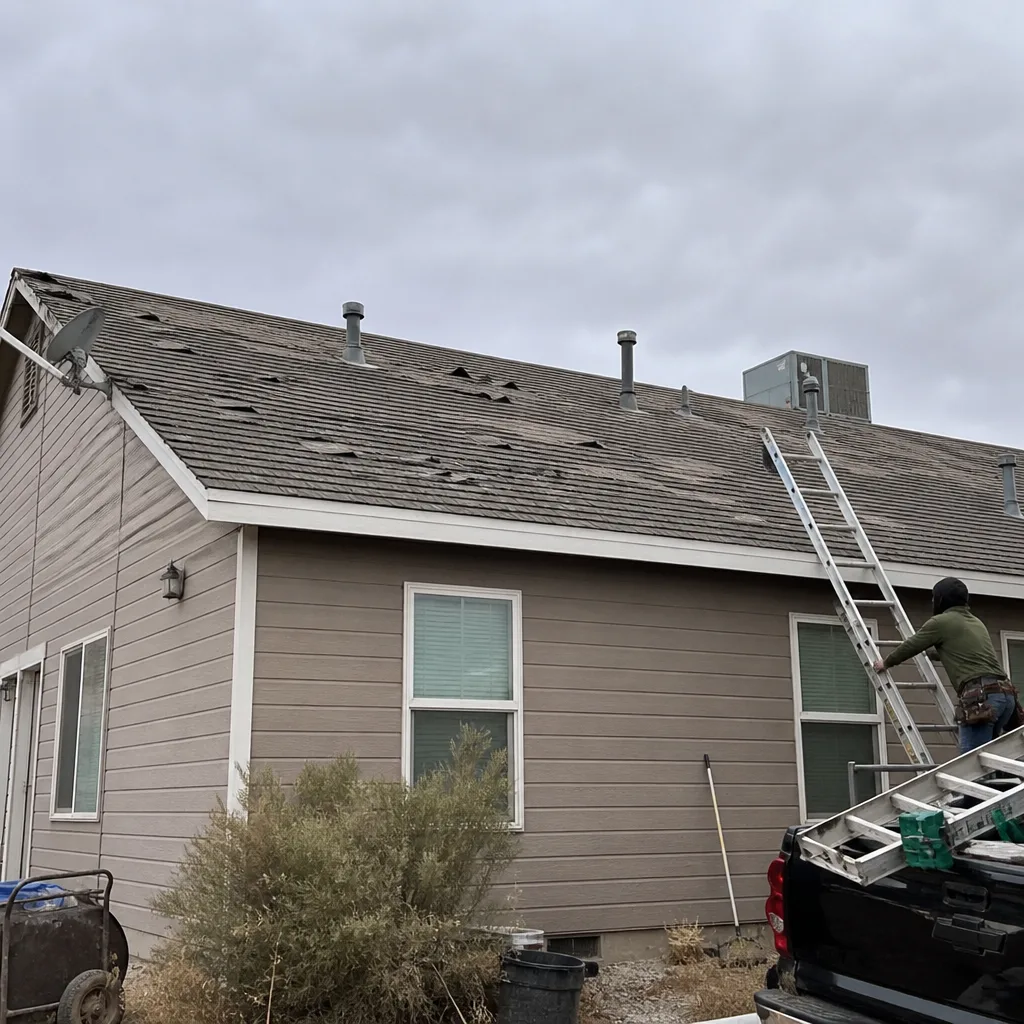
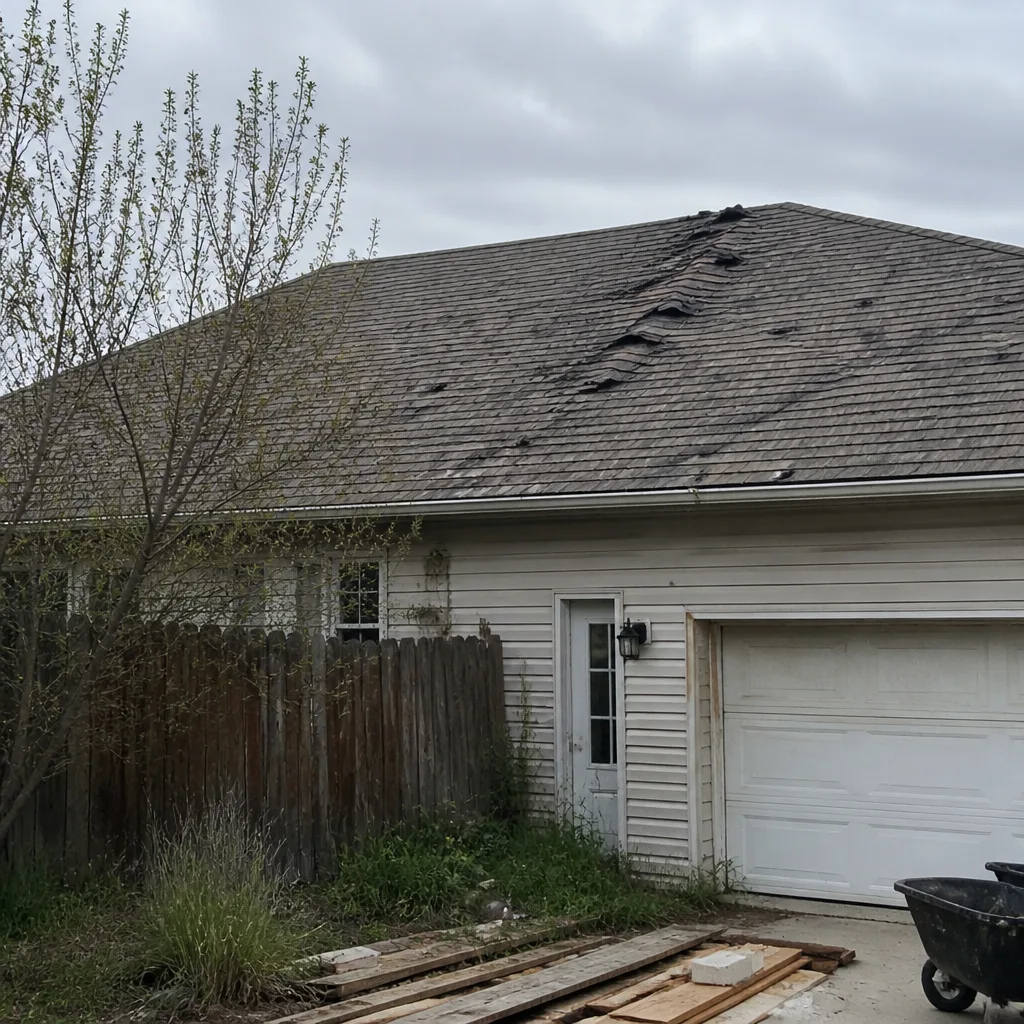 Before
 After
 Before
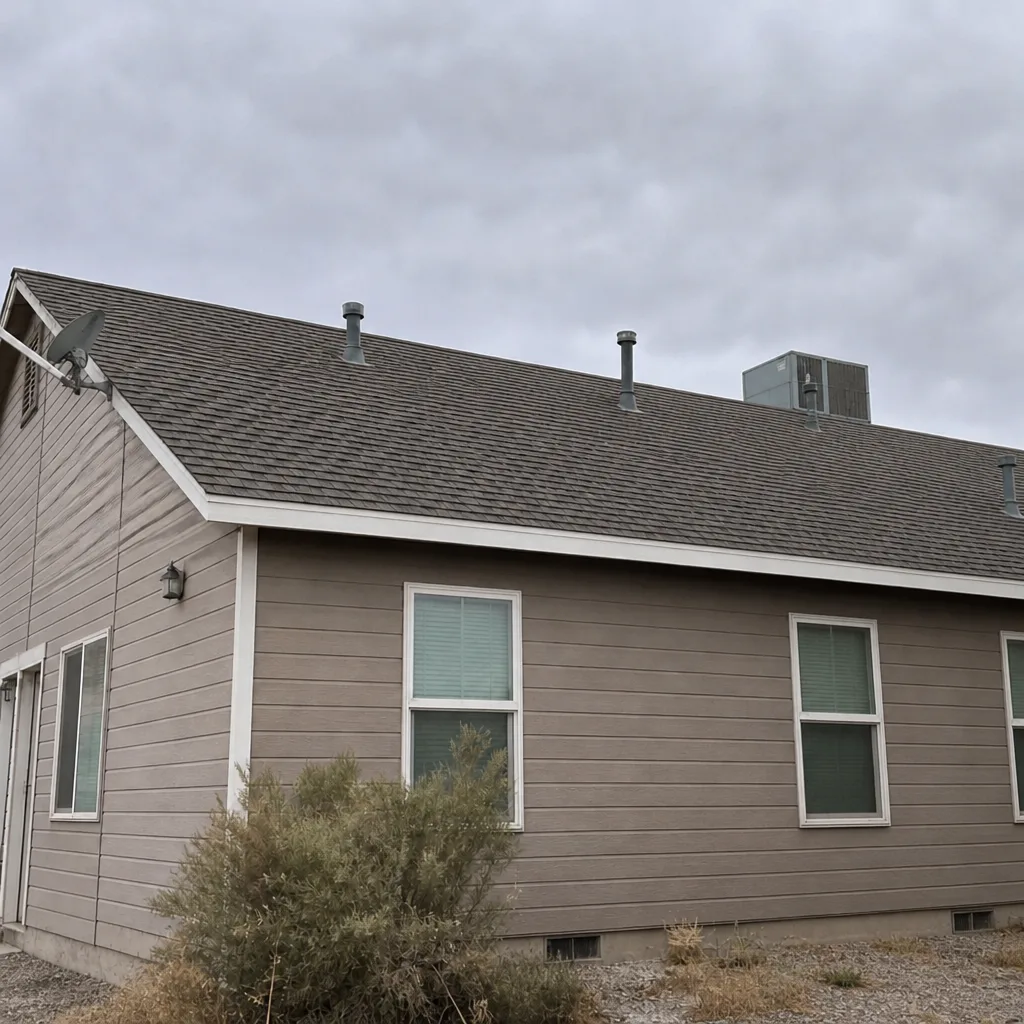 After
Frequently Asked Questions
Yes, for a careful homeowner on a single-story home with a stable ladder footing. Clearing debris, flushing downspouts, and checking grade-level drainage are all safe. The moment a task requires getting on the roof or lifting a gutter run, that’s the line – call a professional.
Only if the gutter system is already structurally sound and correctly pitched – which is rare on homes more than a few years old, and it’s the part a homeowner can’t see from a ladder. Improper guard installation can also void the gutter’s warranty. In our experience, guard installs go best when the gutter is inspected and reset first.
Twice a year is the standard recommendation, and in Enterprise that usually means late spring and late fall – timed to the pollen drop and to the end of the windy season. Homes with nearby trees may need a third cleaning. Cleaning and inspection are different tasks; the inspection is annual for most homes.
Direct access to the back of the gutter where it meets the fascia, probing for hidden wood rot, measurement of slope and hanger spacing, and photo documentation. Those are all things a homeowner on a ladder can’t safely or reliably complete – and they’re exactly the issues that cause the expensive failures.
It can. If the sealant, hanger, or guard fastener isn’t manufacturer-approved for the system, the warranty on that run may be denied. Before you touch a seamless gutter with a tube of caulk, confirm what the manufacturer approves – or have a professional do the repair with the right product.
Yes. Call (844) 228-4119 and we’ll schedule a free estimate with a live person on the phone – no voicemail tree, no callback window. We’ll walk the gutter line with you, document what we find, and give you a written number that doesn’t change once the work starts.
If the roof under your gutters is due for more than repair, our roof replacement and installation in Enterprise team handles the full scope and coordinates the gutters as part of the job. Our 90-Day Done Right Promise applies to both. And if you’re comparing written estimates, take us up on our free second opinion – we’ll give you an honest read, whether or not you hire us.
The Bottom Line
Cleaning is DIY. Inspecting is not. In Enterprise, the gutter that looks fine from the ground is often the one quietly failing behind the fascia – and the difference between a $12 weekend job and a $3,000 soffit replacement is whether someone who knows what to look for got eyes on the wood behind it. Stay on the safe list: clear the debris, flush the downspouts, check where water goes at grade. Call a professional the moment the job crosses into slope, hangers, guards, or warranty territory. Ridgeline Roofing Co. Enterprise has been standing behind local work since 1984, and we’ll be here next spring when the same section asks the same question.
Call (844) 228-4119 for your free estimate – the number on the estimate is the number on the invoice, and if it isn’t right, we make it right.
Written by the team at Ridgeline Roofing Co. Enterprise.