
Last updated November 18, 2026
 Metal roofing
 Architectural shingles
 Tile roofing
 GAF
 Owens Corning
 Flat & low-slope
Free roof inspection with deck photos before we talk money - GAF and Owens Corning certified installation
Specialty Roofing Maintenance Schedule: What to Do and When
The manufacturer warranty on most foam roofing systems requires a recoat within five to seven years. Most homeowners find out they missed it when they file a claim. That single fact tells you what’s wrong with every generic maintenance calendar you’ve ever seen: specialty roofs don’t fail on a fixed schedule. They fail when maintenance skips the two or three tasks that are uniquely critical to their material. Tile roofs lose their ponding checks. Metal roofs lose their fastener audits. Foam roofs lose their coating cycle. This guide lays out honest, separate calendars for each – tuned to the Enterprise, NV seasonal pattern, where the work that matters most happens before the July-August monsoon window, not in the fall like national checklists suggest.
Quick Answer
A specialty roof needs two inspections a year – one in April or May before the monsoon window and one in October after it – plus material-specific tasks: tile roofs need cracked-tile and ponding checks each spring, metal roofs need fastener and sealant audits each spring and fall, and foam or flat roofs need coating-thickness checks every two years and a full recoat every five to seven years. Gutter clearing and ground-level visual checks you can do yourself. Everything on the roof surface requires a contractor.
Styles & brands we work with
- Architectural shingles
- Metal roofing
- Tile roofing
- GAF
- Owens Corning
- Flat & low-slope
Table of Contents
- Why a Generic Maintenance Calendar Fails Specialty Roofs
- Tile Roof Maintenance: What to Do and When
- Metal Roof Maintenance: What to Do and When
- Foam and Flat Roof Maintenance: What to Do and When
- Enterprise’s Seasonal Pattern: Why April-May Beats Fall
- Warranty-Required vs. Advisory Tasks: Know the Difference
- What You Can Safely Do Yourself
- Your Maintenance Log: Documentation That Protects a Claim
Why a Generic Maintenance Calendar Fails Specialty Roofs
Most maintenance advice you’ll find online was written for asphalt shingle – the dominant roof in most of the country. It assumes a roof that ages the same way everywhere, sheds debris reasonably well, and fails predictably. A specialty roof doesn’t behave that way. A tile roof can look pristine from the ground while water ponds underneath a broken underlayment. A foam roof can look intact while the coating has thinned below the warranty threshold. A metal roof can look fine while the fasteners have backed out one by one.
The problem is that a single annual checklist makes every specialty roof owner miss the one task that actually protects their material. Same schedule, different materials, wrong timing for all of them. Ridgeline Roofing Co. has worked on Enterprise specialty roofs for years – clay tile, standing-seam metal, spray foam, modified bitumen – and the pattern we see is remarkably consistent. Homeowners who maintained their asphalt roof well bring the same habits to a specialty roof and assume the calendar transfers. It doesn’t.
Three things a specialty calendar must do
- Separate the tasks by material type. Tile, metal, and foam each have different failure modes and different inspection points.
- Match the timing to the local weather pattern. In Enterprise, the dry pre-monsoon window is when you inspect; the monsoon itself is when you don’t want to schedule anything on a roof.
- Distinguish warranty-required tasks from advisory ones. The distinction matters when a claim is on the line.
If your home has a specialty roof and you have never had it inspected by someone who works with that material, the first step is a proper inspection. Our specialty roofing services in Enterprise are built around that starting point: a photo-documented inspection of what the roof is actually doing, not a sales pitch about what it should be doing.
Tile Roof Maintenance: What to Do and When
Tile is the longest-lived roof material on most homes, and its reputation for low maintenance is earned – with one important caveat. The tile itself will outlive the homeowner. The underlayment beneath it will not. In Enterprise’s high-desert climate, the combination of intense summer UV and winter freeze-thaw cycling breaks down underlayment faster than the tile above it, and by year fifteen or twenty the underlayment is often past its service life even though the tile on top looks fine.
Spring (April-May, before monsoon)
- Walk the roof and check for cracked, slipped, or missing tiles – particularly along ridge lines and valleys where wind loading is highest.
- Check for ponding evidence: water staining, efflorescence, or biological growth in low-slope areas.
- Inspect flashings at chimneys, skylights, and wall intersections. This is where most tile roof leaks begin.
- Check the attic for signs of moisture after any significant rain.
Fall (October, after monsoon)
- Repeat the tile inspection after the storm season to catch damage from wind-driven rain.
- Clear debris from valleys and behind chimneys.
- Check gutters and downspouts after the storm season.
Customers in the older neighborhoods of Enterprise regularly ask us about tile underlayment. The honest answer is: if the roof is over fifteen years old and has never been re-underlaymented, it’s worth a close look. Cracked tiles are visible; underlayment failure is not. For a proper inspection of the underlayment layer, a contractor needs to lift a sample tile – that’s not something to attempt yourself.
Metal Roof Maintenance: What to Do and When
Metal roofs – standing seam, corrugated, and stone-coated steel – all share the same maintenance profile: the metal panels last decades, but the fasteners and sealant details are the wear parts. In Enterprise, the seasonal pattern is a hard freeze-thaw cycle in winter and unrelenting sun in summer, which together cycle exposed sealant and back out fasteners slowly. The panels don’t come loose – the screws do.
Spring (April-May)
- Walk the roof and check every exposed fastener for backing out or missing washers.
- Check all penetrations – vents, pipes, skylights – for sealant cracking or separation.
- Inspect panel seams and ridge caps for gaps.
- Check the panel coating for chalking or fading that might indicate UV breakdown.
Fall (October)
- Repeat the fastener check. This is the single most common source of metal roof leaks.
- Clear debris from gutters and valley areas.
- Check for tree branch contact after summer growth – limbs rubbing on metal will wear through the coating.
Some metal roof systems have specific fastener requirements from the manufacturer – CertainTeed and Owens Corning both offer metal systems with their own fastener and sealant specifications. If you’re not sure which system is on your roof, the paperwork should tell you, and we can identify it in an inspection. When we install or repair metal, we’re an authorized installer for those lines, which means we specify the correct fasteners rather than whatever’s on the truck. If you’re unsure what material you have, we can help with roof repair in Enterprise and identify the system while we’re there.
Foam and Flat Roof Maintenance: What to Do and When
Spray polyurethane foam (SPF) is where maintenance timing gets contractual. Nearly every SPF manufacturer warranty – and this is the fact competitors gloss over – requires a recoat on a defined schedule, typically every five to seven years depending on the coating system and the local climate. Miss that recoat and the warranty can be voided. On flat and low-slope modified bitumen or TPO, maintenance is about catching ponding and seam issues before they penetrate the membrane.
Every six months
- Check for ponding water on flat areas. In Enterprise, standing water from a monsoon storm should drain within 48 hours. If it doesn’t, the roof is out of slope or a drain is blocked.
- Inspect seams, patches, and flashings for lifting or cracking.
- Clear scuppers and drains of debris – critical during the July-August rainy season.
Every two years
- Measure coating thickness on SPF roofs. Coatings lose thickness slowly under UV exposure, and the warranty recoat is triggered by measurable wear, not by calendar alone.
- Inspect for blisters, cracks, or areas where the foam substrate has been exposed.
Every five to seven years
- Full recoat, per manufacturer specification. This is the task most homeowners miss. When they do, it’s usually when a claim gets denied.
When we work on foam in Enterprise, we photograph the coating thickness reading and include it in the report – so there’s a documented basis for whether a recoat is due. That’s the standard we’d want on our own mother’s roof.
Enterprise’s Seasonal Pattern: Why April-May Beats Fall
National maintenance guides tell you to inspect the roof in fall. In Enterprise, that advice is backwards. The reason is the monsoon.
Enterprise sits in the Mojave high desert, which means two distinct seasons that matter for a roof: a dry spring, and a wet late-summer monsoon window from roughly July through August. The roof’s critical function in Enterprise is shedding wind-driven rain during that window. If you wait until October to inspect, you’re checking the roof after the damage has already happened. The inspection should be a pre-monsoon one – in April or May, when a roofer can safely get on the surface, identify anything that will fail under weather, and schedule the repair before the storms arrive.
We’ve seen this pattern on Enterprise roofs for years. Every monsoon season, we respond to a wave of leaks on roofs that would have been fine with a spring inspection. The October inspection is still valuable – it catches what the monsoon did – but it’s the second inspection, not the first.
Enterprise inspection calendar
- April-May: Pre-monsoon inspection. Primary check, repairs scheduled and finished before July.
- July-August: Post-storm roof checks if any damage is suspected. Active work on the surface is limited during this window by weather.
- October: Post-monsoon inspection, catches storm damage and winterizes the roof.
- February-March: Quick visual check if we’ve had a hard freeze – freeze-thaw cycles can open sealant.
For a replacement or large installation, the same timing logic applies: spring and fall windows are the practical schedule. Our roof replacement and installation in Enterprise work is scheduled around these windows so the roof is ready before the storms, not patched after them.
Warranty-Required vs. Advisory Tasks: Know the Difference
One of the most useful distinctions we can give an Enterprise homeowner is the difference between maintenance the warranty requires and maintenance it merely recommends. When a claim gets denied, it is almost always denied on the required tasks – not the advisory ones.
Exact requirements vary by manufacturer, so check your paperwork. The general pattern across the major brands we install – CertainTeed, Owens Corning, IKO, Atlas – is consistent enough to describe:
Usually warranty-required
- Periodic inspection and documentation of the roof’s condition (the frequency varies by warranty).
- Recoating of foam roofing on the manufacturer’s schedule (usually five to seven years).
- Repair of damage from storm, debris, or tree contact within a defined window.
- No alterations, penetrations, or installations by unqualified parties on the roof surface.
Usually advisory
- Annual gutter cleaning.
- Clearing of tree branches near the roof.
- Removing debris from valleys after a wind event.
- Routine cosmetic cleaning (algae, moss, staining).
The reason to keep the two categories straight is simple: if a foam recoat is missed for two cycles and the coating fails, don’t expect to collect on the warranty. That’s a $2,000-$4,000 recoat that got deferred by mistake. The rule of thumb: if the manufacturer’s written warranty names a task and a frequency, treat it as mandatory. If it doesn’t, it’s good practice, not contract.
What You Can Safely Do Yourself
We want to be honest about this: the majority of specialty roof maintenance should be done by someone with training on that material, on the roof, with the right insurance. Tile is brittle under a boot, metal is slick when wet, and foam can be punctured by a careless step. But there are three things you can safely do from the ground, and doing them well extends the life of the roof.
- Clear gutters and downspouts. Twice a year – spring and after monsoon. Clogged gutters back water under the roof edge, which is a common source of fascia rot in Enterprise.
- Visual check from the ground. With binoculars, look for cracked or missing tiles, lifted metal panels, standing water on flat sections, or staining under eaves. Note the date and what you saw.
- Attic humidity and moisture check. Twice a year, look at the underside of the roof deck in the attic. Water stains, dark patches, or condensation on the deck (in winter) indicate a leak or a ventilation problem. If you see any, call us.
Two things not to do: don’t walk on a specialty roof, and don’t attempt to seal or patch it yourself. On tile, a single misplaced foot cracks a tile and breaks the weather seal; on metal, the wrong sealant can void a warranty; on foam, a DIY patch can cost you the recoat warranty if it’s not the manufacturer’s product and method. If you suspect a problem, call us at (844) 228-4119 for a free inspection.
Your Maintenance Log: Documentation That Protects a Claim
Most homeowners are diligent about maintaining the roof and careless about documenting it. That’s a problem when a claim is on the line. A maintenance log isn’t a diary – it’s evidence. If you ever make a warranty or insurance claim, the adjuster will ask what maintenance was performed and when. The homeowner who can produce dates, photos, and receipts wins more often than the homeowner who can only say “we always took care of it.”
What to keep
- Dates of every inspection – including the ones you did yourself from the ground.
- Photos – dated photos of the roof surface, taken from the ground or by the contractor.
- Contractor inspection reports – the written report from every professional inspection, with photos.
- Repair receipts – what was done, when, and by whom, with the invoice attached.
- Warranty paperwork – the original manufacturer warranty and all documentation of maintenance-relevant work.
- Recoat records for foam – date, coating product, and thickness reading.
When we inspect an Enterprise roof, the report includes dated photos taken from your actual roof – not stock images. That report goes into your maintenance record and, if a claim ever arises, becomes part of the documentation.
Common Mistakes to Avoid
- Using an asphalt shingle checklist on a specialty roof. Generic maintenance schedules miss the tile-specific (ponding, underlayment) and foam-specific (coating cycle) tasks that actually fail.
- Waiting for fall to inspect. In Enterprise, the pre-monsoon window (April-May) is the inspection that prevents damage, not the October one that discovers it.
- Missing the foam recoat. The single most expensive maintenance mistake we see on Enterprise flat and foam roofs – and it voids the warranty.
- Walking a specialty roof to “check on it.” Tile cracks, metal seals fail, foam punctures. A ground-level visual check is the limit of safe homeowner inspection.
- Assuming underlayment is fine because the tile looks fine. On a fifteen-year-old tile roof, the underlayment can be at end of life while the tile looks untouched.
- Skipping the log. An undocumented maintenance record weakens a warranty or insurance claim when it matters most.
- Hiring a storm-chaser for routine maintenance. A contractor who is out of town by next spring won’t be around to honor a workmanship guarantee when the monsoon finishes the job. Our Ridgeline Roofing Co. Enterprise home page explains why standing behind local work matters.
See the difference
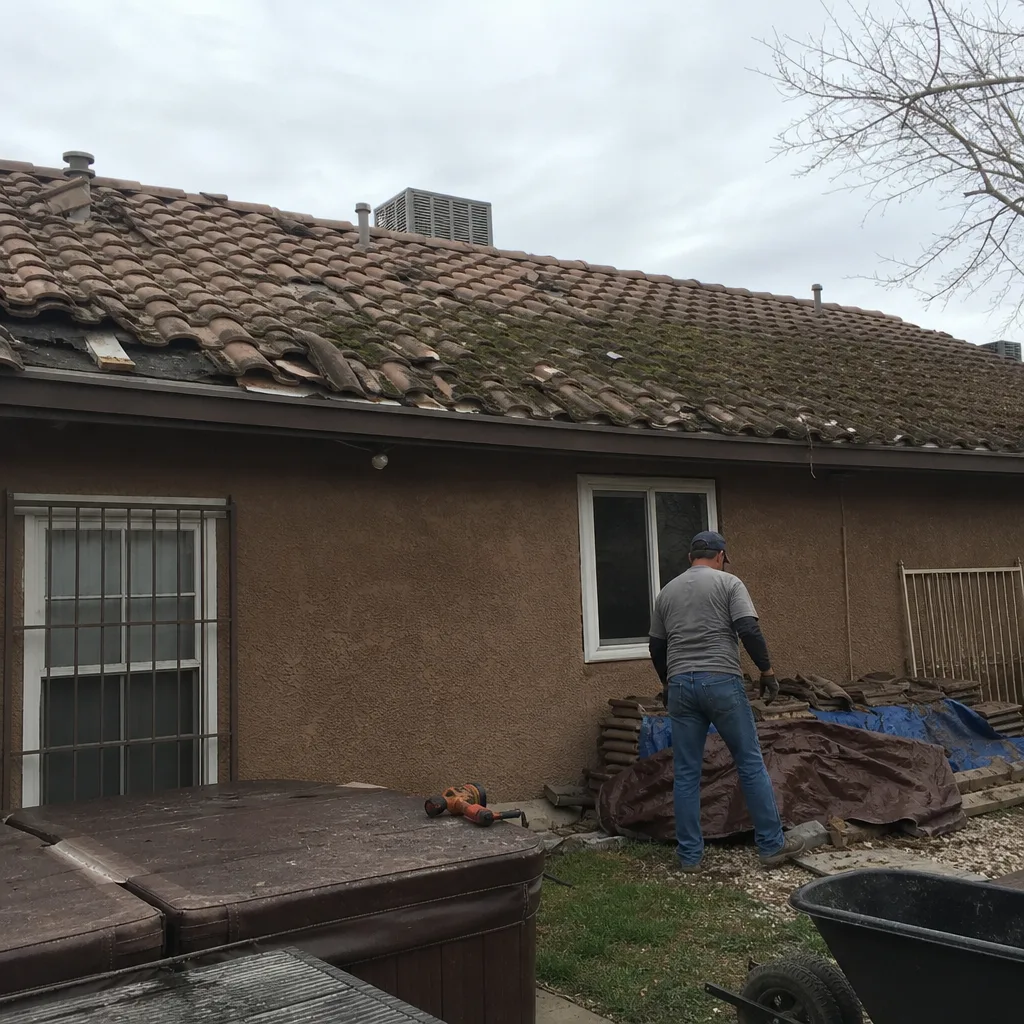 Before
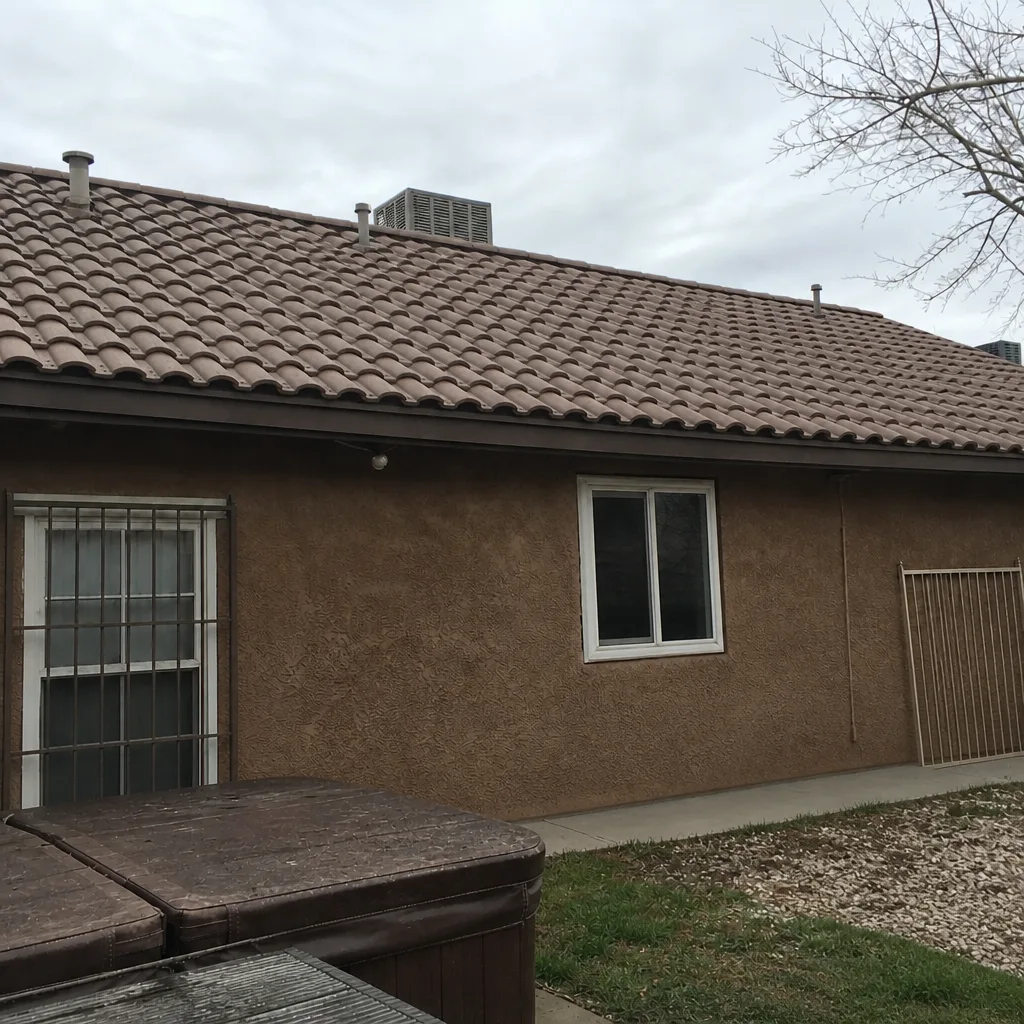 After
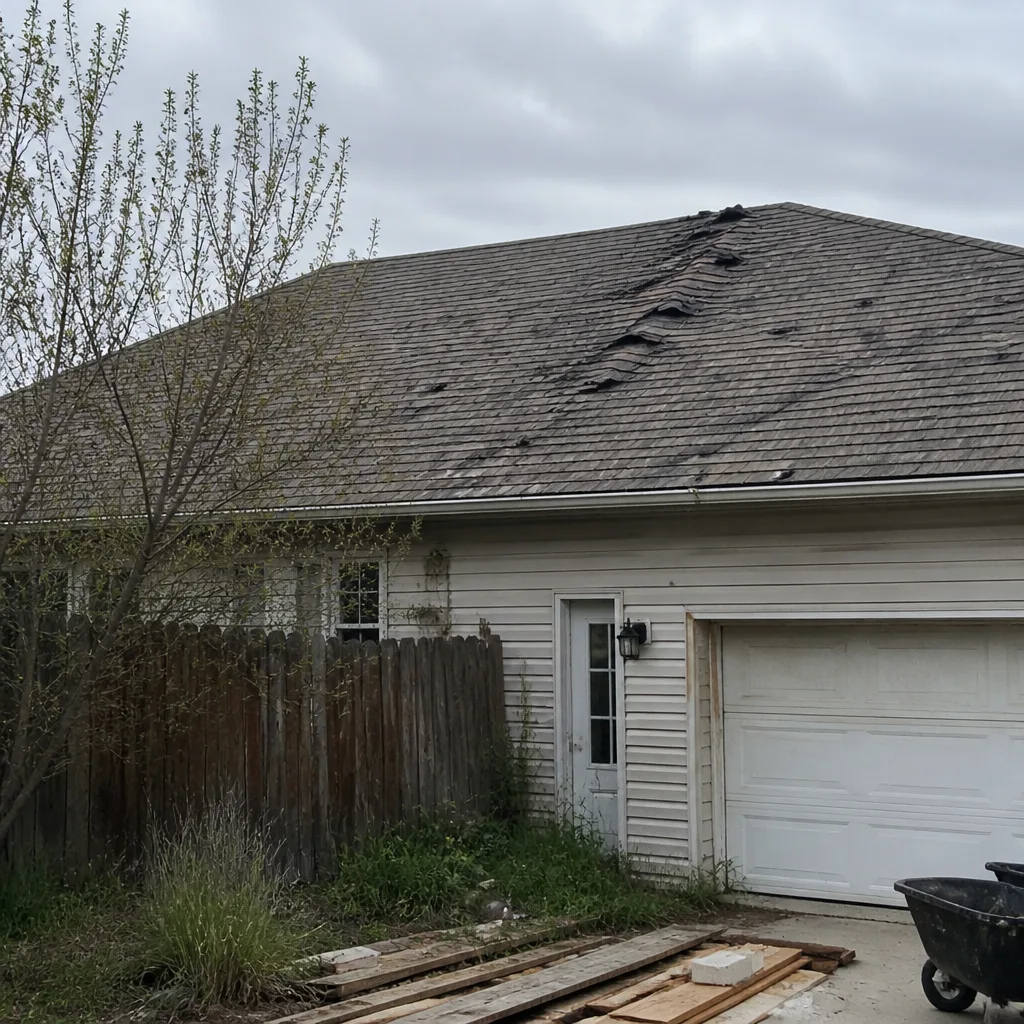 Before
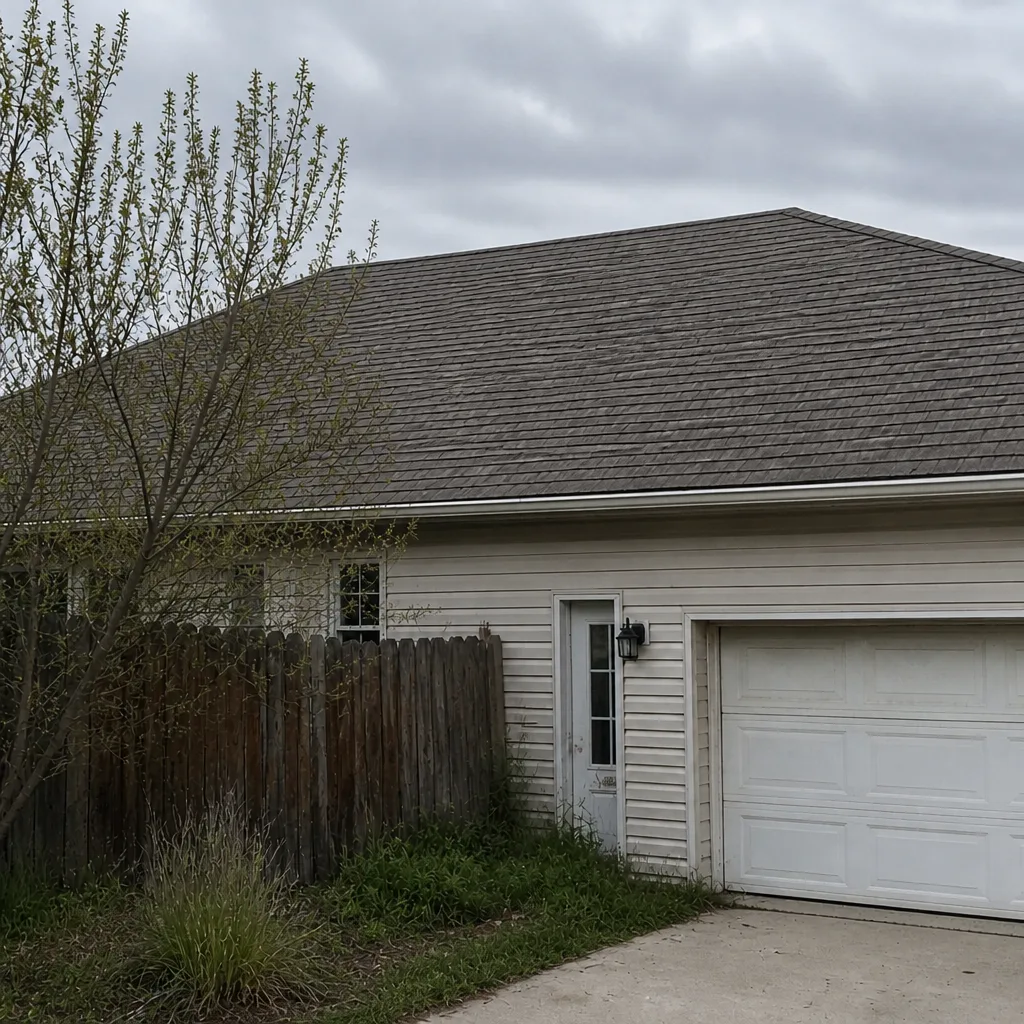 After
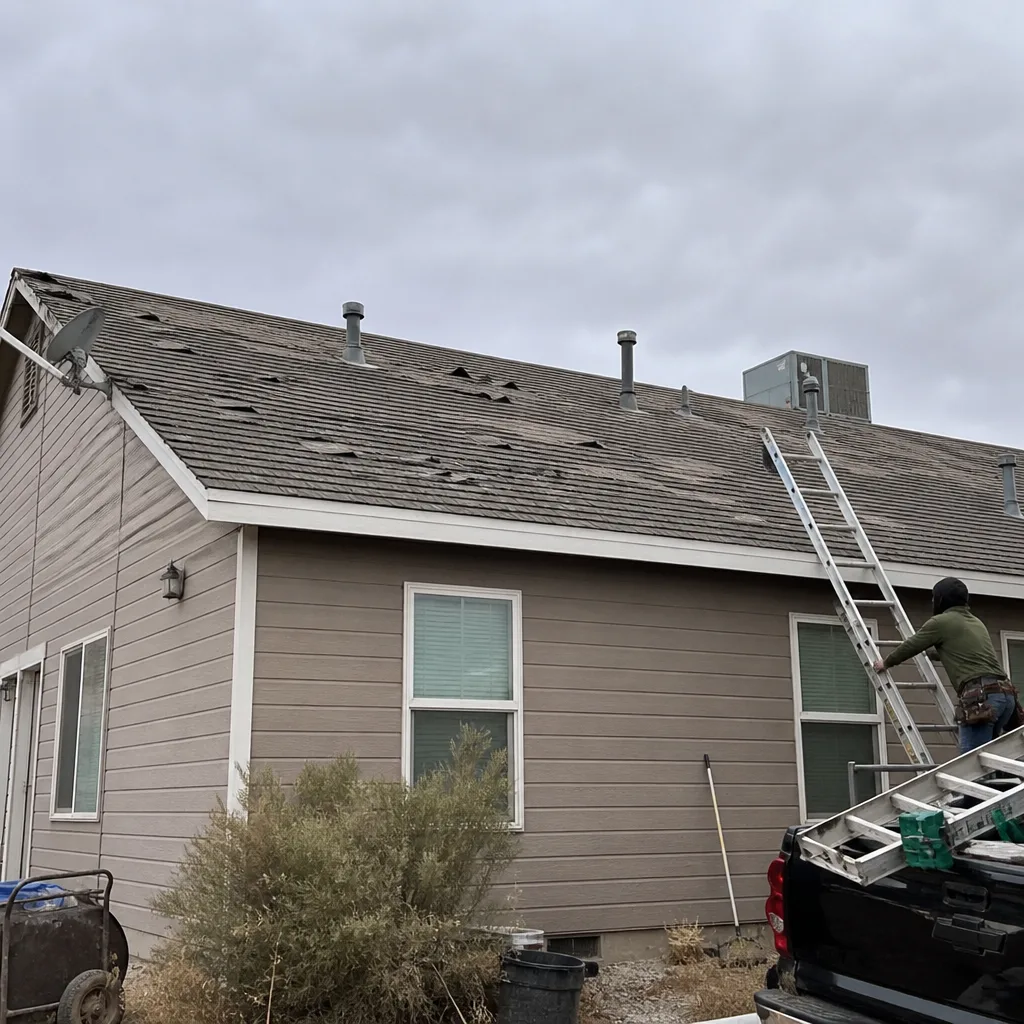 Before
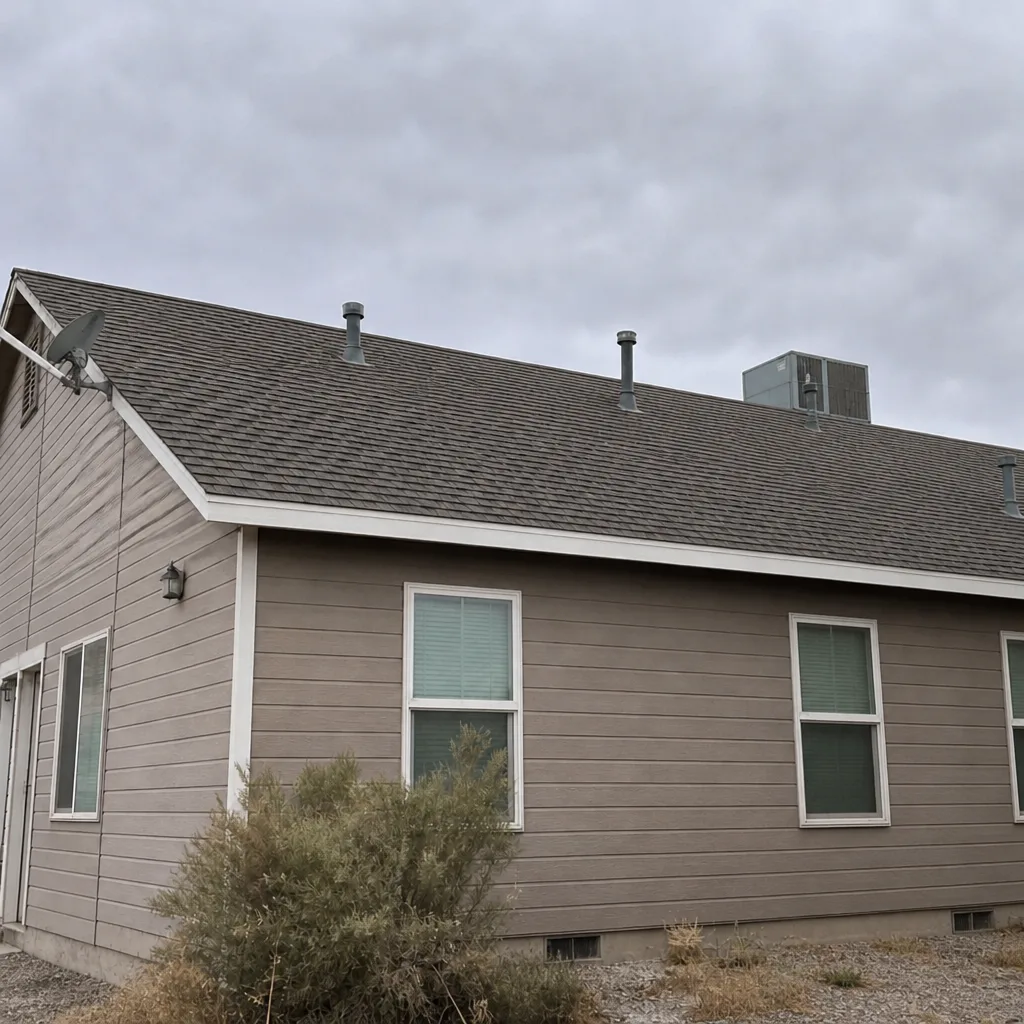 After
When to Call a Professional
Call a professional for anything on the roof surface – that’s the general rule. Specific triggers to call us: any visible damage from the ground (cracked or missing tiles, lifted metal panels, standing water); water stains in the attic or on the ceiling after any rain event; a foam roof whose last recoat is more than five years old; a tile roof over fifteen years old with no known underlayment history; and any warranty claim where the manufacturer requires an inspection. Don’t wait for damage to grow before monsoon season. Ridgeline Roofing Co. Enterprise offers free estimates in Enterprise – call (844) 228-4119 for a free inspection and a written report on what your roof actually needs.
Frequently Asked Questions
Twice a year – once in April or May before the monsoon window, and once in October after it. The spring inspection is the more important of the two in Enterprise, because it catches problems before the July-August storms arrive. Call (844) 228-4119 to schedule a free inspection.
In most cases, yes – the typical manufacturer warranty on spray foam roofing requires a recoat every five to seven years, and missing it can void the warranty. Check your paperwork for the exact requirement, and if it’s due, schedule it before another monsoon season passes. Call us for an inspection that documents the coating thickness.
No – you can do a ground-level visual check with binoculars, but the underlayment layer requires a contractor to lift a sample tile. Walking on a tile roof risks cracking it and breaking the weather seal. Call (844) 228-4119 for a proper inspection.
Skipping the fastener audit. Metal panels last for decades, but the fasteners and sealant details are the wear parts, and in Enterprise’s freeze-thaw cycles they back out slowly. A spring and fall fastener check catches the leak before it starts. Call us for a free inspection.
A routine inspection is typically free when scheduled through us. A foam recoat runs in the low thousands depending on square footage and coating system. Repairs vary with the material and scope. Call (844) 228-4119 for an estimate on any specific work – the number on the estimate is the number on the invoice.
It’s our written workmanship guarantee: if our work isn’t right, we come back and make it right, with no arguing and no paperwork runaround. It’s our standard on every job, including maintenance and inspections. Call (844) 228-4119 to schedule.
The Bottom Line
A specialty roof doesn’t fail on a calendar – it fails when its material-specific critical tasks get skipped. Tile needs ponding and underlayment checks each spring. Metal needs fastener and sealant audits each spring and fall. Foam needs a coating-thickness check every two years and a recoat every five to seven. All three need the pre-monsoon inspection in April or May, not the fall check every national guide recommends. And all three need documentation: dates, photos, and reports kept in a maintenance log that protects a warranty or insurance claim when it matters. The roof that gets maintained on its own material’s schedule is the roof that lasts.
If you’re not sure what schedule your specialty roof needs, or what material it is, a photo-documented inspection is the starting point. Call Ridgeline Roofing Co. Enterprise at (844) 228-4119 for a free estimate and a written report on what your roof actually needs.
Written by the team at Ridgeline Roofing Co. Enterprise.