
Last updated November 18, 2026
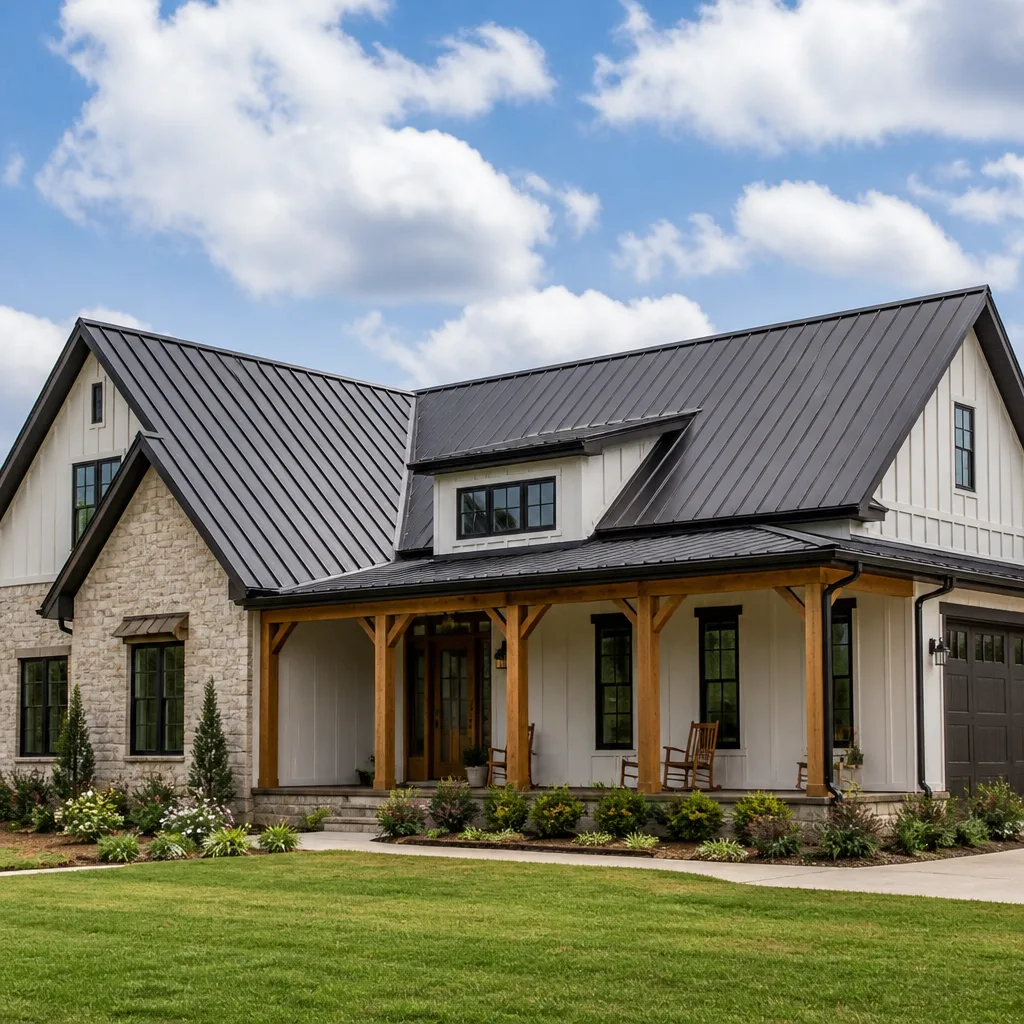 Metal roofing
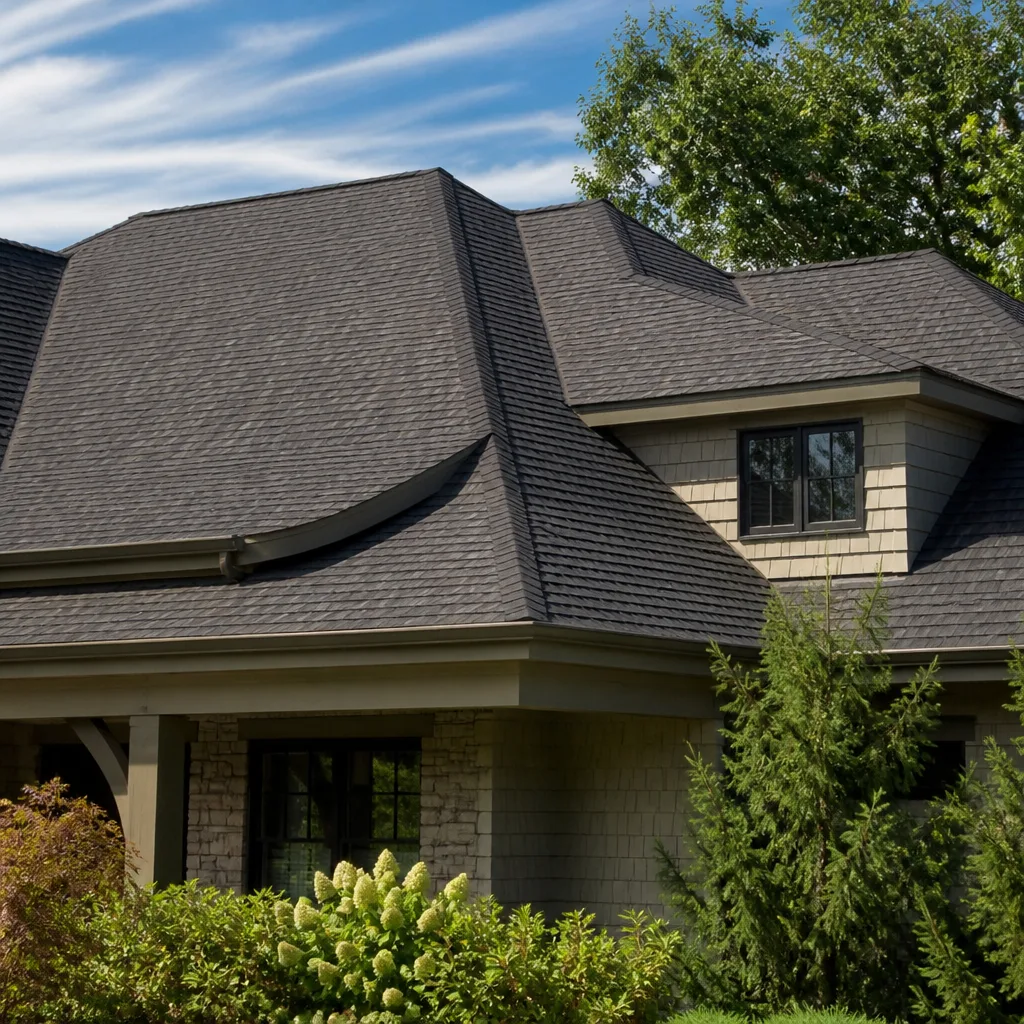 Architectural shingles
 Tile roofing
 GAF
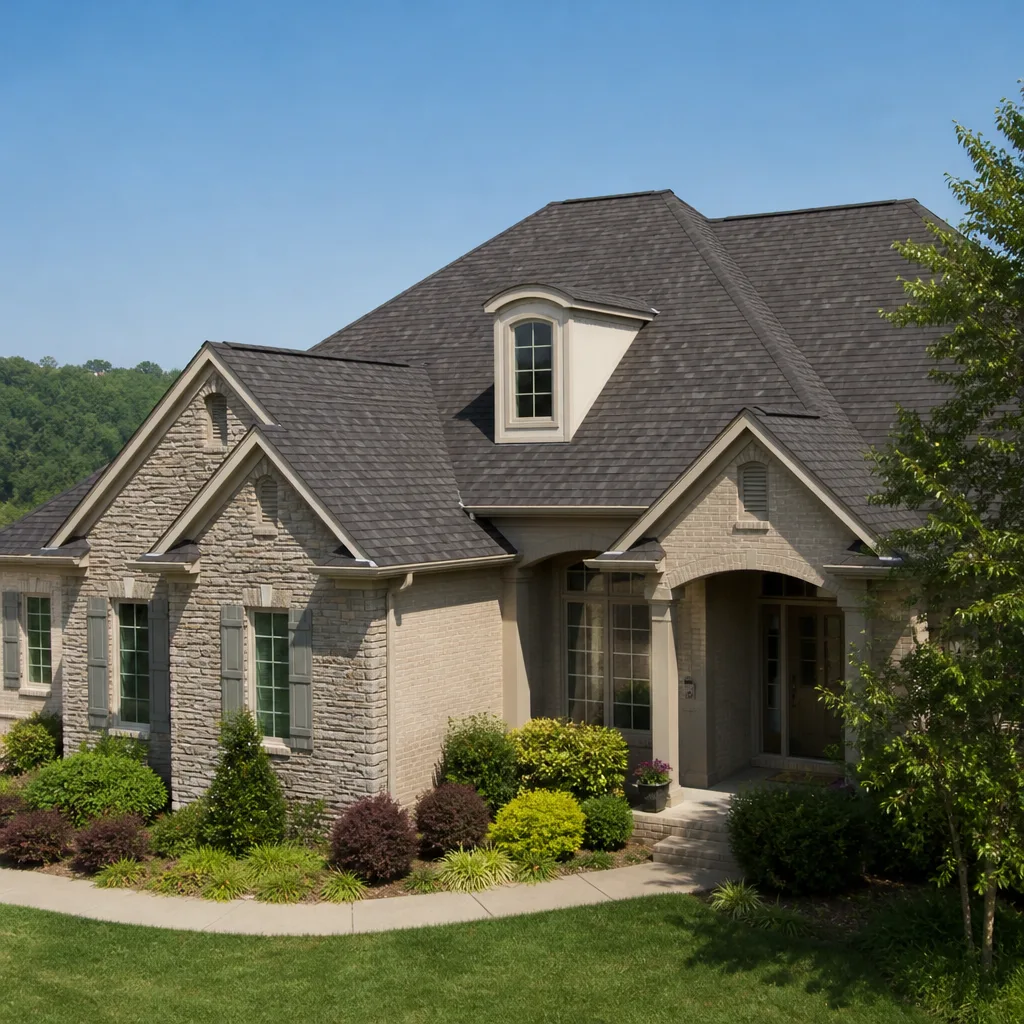 Owens Corning
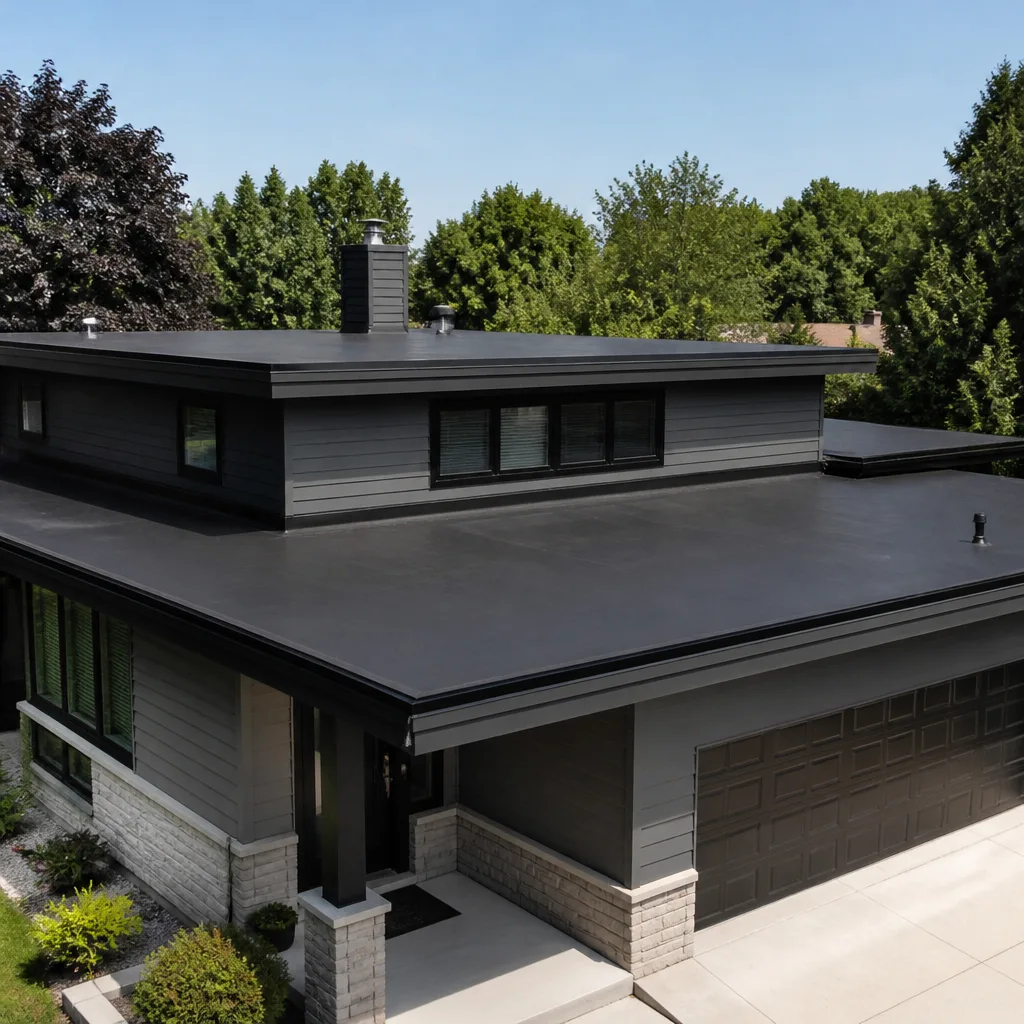 Flat & low-slope
Free roof inspection with deck photos before we talk money - GAF and Owens Corning certified installation
Choosing the Right Roofing Brand: A Buyer’s Guide for Enterprise
The brand name on the shingle wrapper matters less than the product line inside it. That’s the first thing we tell homeowners who ask which roofing brand is best, and it’s usually the last thing they expected to hear. A premium manufacturer’s entry-level shingle can lose granules faster in Enterprise’s high-desert UV than a mid-grade competitor’s product, and the difference shows up within three years. This guide covers what the manufacturer homepages don’t: how to read a product data sheet for the three metrics that predict performance here, why specific product lines differ even under the same brand, and how warranties are actually enforced.
Quick Answer
There’s no single best roofing brand for Enterprise, Nevada – there are best product lines for this climate, and they cross brand boundaries. Look for shingles rated Class 4 for impact, certified to a minimum 110 mph wind uplift (Clark County’s standard), and carrying a solar reflectance index high enough to qualify for cool-roof treatment. GAF, CertainTeed, Owens Corning, Tamko and Boral all make products that meet these marks, and all of them make entry-level products that don’t hold up as well in our UV environment.
Styles & brands we work with
- Architectural shingles
- Metal roofing
- Tile roofing
- GAF
- Owens Corning
- Flat & low-slope
Table of Contents
- Why the Product Line Matters More Than the Brand
- How to Read a Roofing Product Data Sheet
- The Three Metrics That Predict Performance in Enterprise
- How Manufacturer Warranties Are Structured vs. How They’re Enforced
- Brands for Flat and Low-Slope Roofs in Enterprise
- Why the Installer’s Certification Matters More Than the Brand
- How to Verify a Manufacturer Certification Before You Sign
Why the Product Line Matters More Than the Brand
Roofing manufacturers are not single-product companies. GAF makes the Timberline HDZ line and it also makes entry-level three-tab shingles sold under different names at big-box retailers. Owens Corning makes Duration and it makes less expensive products aimed at price-sensitive markets. The brand on the wrapper is shared. The performance chemistry underneath is not.
For Enterprise homeowners, the relevant question is not “which brand” but “which specific product line from that brand, installed by a contractor certified to install it.” A GAF Timberline HDZ and an Owens Corning Duration are both premium architectural shingles from highly regarded manufacturers. They are not equivalent products. They differ in mat construction, granule adhesion chemistry, sealant strip formulation and the wind-uplift ratings the manufacturer has certified for each. In our experience across Enterprise neighborhoods from Sunset Manor to the homes near the Las Vegas Motor Speedway, those differences show up in high-wind seasons and under the summer sun that bakes this valley at 110 degrees and above for weeks at a stretch.
What that means practically:
- Ask which product line your contractor is proposing – not just the manufacturer.
- Compare that specific line against competitors’ equivalents, not against the brand’s flagship.
- Request the product data sheet for the exact line, not a brochure.
- Confirm the line is actually available in the size and profile your roof needs. Substitutions mid-job are a red flag.
Ridgeline Roofing Co. installs products from seven manufacturer brands – GAF, CertainTeed, Owens Corning, IKO, Atlas, Tamko and Boral – which means we can actually compare the merit of specific lines rather than selling the one brand we carry. When a homeowner in Enterprise asks us which brand is best, the honest answer is that we recommend specific lines based on the roof, the exposure and the budget, and that recommendation crosses brand names frequently.
How to Read a Roofing Product Data Sheet
A product data sheet is the manufacturer’s technical disclosure of how a product performs under test conditions. It’s usually four to eight pages, and most of it is not worth your time. The sections that matter for an Enterprise roof are short.
- Find the “Codes and Approvals” or “Compliance” section. This is where the manufacturer lists independent test results – ASTM standards, UL classifications, Florida Building Code approvals, and state-level listings. If a product line doesn’t carry a Class 4 impact rating, you’ll know within the first minute.
- Locate the wind-uplift certification. Numbers are usually reported as UL 2218 for impact and ASTM D3161 or ASTM D7158 for wind. Look for the tested uplift rating in miles per hour. For Clark County, the minimum to target is 110 mph – and higher-rated products exist if you’re on an exposed ridge.
- Check the solar reflectance index (SRI) section. Cool-roof products list initial and three-year SRI values. Higher numbers mean lower attic heat load and, in many cases, access to utility rebate programs. This metric is buried in the “Energy” or “Sustainability” table.
- Read the warranty statement carefully. Not the marketing page – the warranty PDF. Covered items, exclusions, proration schedules and the specific installation conditions that must be met are all there.
- Confirm the product line is on the manufacturer’s list of approved products for the contractor’s certification tier. Most premium warranties require installation by a certified contractor – and not every certified contractor is certified for every line.
If a contractor won’t hand over the data sheet and warranty documents before you sign, that’s your answer. The manufacturer publishes these documents for free, and every authorized installer has them on file.
The Three Metrics That Predict Performance in Enterprise
Enterprise sits at roughly 2,500 feet in the Mojave Desert, with intense year-round UV, summer afternoons regularly exceeding 110 degrees, and winter wind events that can push 60 to 70 mph through the valley. The metrics that predict how a roof holds up in that environment are not the same as the metrics that predict performance in Seattle or Atlanta.
Class 4 impact rating. UL 2218 Class 4 is the top of four impact-resistance classes. It means the shingle survived a 2-inch steel ball dropped from 20 feet twice at the same spot without cracking through. Class 3 is a meaningful drop-off. Class 1 or an unrated product is a poor fit for a market where hail can hit hard in spring storms and where dropped tool impacts happen on every service visit. On a residential roof in Enterprise, Class 4 is the starting point, not an upgrade.
Wind uplift certification to at least 110 mph. Clark County’s exposure conditions drive this number, and a shingle rated to 90 mph will not perform at the same standard as one rated to 130. The uplift rating is determined by the manufacturer’s tested installation method – which means the rating is only valid if the installer follows that method exactly, including nail placement, pattern and sealant strip activation. This is where installer workmanship and product rating become inseparable.
Solar reflectance index (SRI). SRI is a compound measure of how well a surface reflects solar heat and re-emits what it absorbs. Initial ratings and three-year ratings are both published. Higher SRI means less heat absorbed into the attic, which translates to lower cooling costs and longer roof life. Some manufacturers offer cool-roof rated products in their premium lines; not all do. If your home is older and poorly insulated, the SRI difference is more than an energy-efficiency line item – it can be the difference between a 25-year roof and a 15-year roof.
None of these three metrics typically appears on a manufacturer’s website homepage. They live in the data sheets and the compliance documents. Reading them is the single most useful hour you’ll spend as a roofing buyer.
How Manufacturer Warranties Are Structured vs. How They’re Enforced
Manufacturer warranties are legally binding documents that specify exactly how, and under what conditions, a claim will be honored. Most of the pitfalls we see in Enterprise come down to three things: registration, installer certification and the definition of the covered defect.
Most manufacturer warranties carry a registration requirement – typically within 60 to 90 days of installation, and often only when the homeowner registers directly with the manufacturer. Miss that window and the warranty drops to a lower tier or is lost. The contractor is usually responsible for filing, but not always. Ask who files and get it in writing.
Every premium warranty we’ve read has an installer certification condition. The warranty covers labor and materials only if the roof was installed by a contractor certified at the appropriate tier. Non-certified installers void coverage. The homeowner often doesn’t learn this until a claim is filed – typically three to seven years in, when the failure becomes visible.
Claim denial exclusions include:
- Foot traffic damage or “mechanically damaged” shingles.
- Leaks from flashings, vents or penetrations, which are almost always excluded as workmanship issues.
- Consequential damages (interior water, drywall, flooring).
- Improper attic ventilation – and yes, they will check.
- Installation not following the manufacturer’s published specifications, including nail placement.
The practical lesson: the manufacturer warranty is not a substitute for a contractor’s workmanship warranty. They cover different failures. On any written quote, ask for both. Our 90-Day Done Right Promise is a workmanship guarantee in writing – if it’s not right, we come back and make it right, no arguing and no paperwork runaround. A manufacturer warranty doesn’t fix a leak. It replaces a product that failed. Both protections matter, and knowing which is which keeps you out of the gap where most claims end up denied.
Brands for Flat and Low-Slope Roofs in Enterprise
Enterprise has a significant inventory of homes and commercial buildings with low-slope or flat roof sections – patios, extended garages, room additions and many warehouse-converted buildings near the industrial corridor. The best product lines for those sections are entirely different from the best shingle products, and the brand comparison differs too.
The three material families worth comparing for low-slope in Enterprise are:
- TPO (thermoplastic polyolefin). Reflective white membrane, heat-welded seams, excellent UV durability. Manufacturers include Carlisle, Firestone and Mule-Hide. Performance is largely driven by seam quality and thickness (60 mil vs. 80 mil).
- Modified bitumen. A reinforced asphalt membrane, often installed with torch-down or self-adhered methods. Brands include Soprema, CertainTeed (Flintlastic) and GAF (Ruberoid). Best for roofs with complex details and moderate foot traffic.
- PVC (polyvinyl chloride). Similar performance envelope to TPO with different chemical resistance. Excellent in this climate, higher cost. Brands include Sika (Sarnafil) and Duro-Last.
What matters more than the brand in low-slope is the seam. A premium membrane from a major manufacturer will fail at a heat-welded seam before it fails in the field of the sheet. Ask your contractor how seams are tested – in our experience, the contractors who do this well test every seam with a probe or vacuum and are happy to say so. Heat-weld quality depends on weather conditions (temperature, humidity, wind) at installation, which is why low-slope work in Enterprise is typically scheduled for early morning during summer.
If you want a full breakdown of how these materials apply to your specific roof, our team can review your roof’s slope profile during a Specialty Roofing in Enterprise inspection and recommend accordingly. Photos taken from your actual roof are part of every inspection.
Why the Installer’s Certification Matters More Than the Brand
A manufacturer certification is not a marketing badge. It’s a tiered program that requires the contractor to carry specific insurance, keep trained installers on staff, attend manufacturer training, install to the manufacturer’s published specifications, and pass periodic quality reviews. The contractor’s tier determines the maximum warranty level available to you.
For example, GAF’s program tiers determine whether the homeowner qualifies for a Silver Pledge, Golden Pledge or 25-year limited warranty upgrade. CertainTeed has a similar structure with its SELECT ShingleMaster program. Owens Corning has Platinum Preferred. In each case, the highest warranty tier is available only when the installer holds the highest certification and files the correct documentation. The product line and the installer certification are both necessary. Neither alone is sufficient.
Workmanship certifications are the layer below. Most manufacturer programs include an inspection audit requirement – meaning the installation is checked against the manufacturer’s specifications by an independent third party on a percentage of jobs. The audit result affects the contractor’s continued certification. That’s the mechanism that keeps quality high within certified programs, and it’s why a certified installer’s work usually outperforms an uncertified installer using the same materials.
How to Verify a Manufacturer Certification Before You Sign
Verification is a five-minute exercise if your contractor is straightforward about it. If they aren’t, that’s information too.
- Ask for the contractor’s certification tier for each specific product line being proposed – not just “we’re certified with GAF.” Tier matters.
- Cross-check the contractor’s name on the manufacturer’s “find a contractor” tool on the manufacturer’s website. The listing will show certification level and status.
- Request the manufacturer’s warranty document for your exact product line and read the installer conditions section. Confirm your installer meets those conditions before signing.
- Ask for the name of the person who will file the warranty registration and the date it will be filed. Get it in writing on the contract.
- Confirm the certificate of insurance is current and covers the full job scope, including roofing-specific liability coverage.
Ridgeline Roofing Co. is an authorized installer of GAF, CertainTeed, Owens Corning, IKO, Atlas, Tamko and Boral – meaning we can install any one of these lines to the certification requirements for the manufacturer’s premium warranty tier, and we can match the product line to your roof rather than to whichever single brand we happen to carry.
For homeowners who are considering a full replacement rather than a repair, the same verification steps apply and the stakes are higher. Our Roof Replacement & Installation in Enterprise page walks through the replacement process in detail, and our Roof Repair in Enterprise page covers when a repair is the better call. Every job we do starts with a free written estimate, and the number on the estimate is the number on the invoice. That’s the square deal part of the promise.
If you’ve already received a written estimate from another contractor and want a second opinion, we offer that free on any written estimate – no strings, no upsell pitch, just an honest read of the numbers and the materials proposed. Call (844) 228-4119 and a live person will answer, day or night.
Common Mistakes to Avoid
- Comparing brands instead of product lines. A GAF Timberline HDZ is not comparable to a GAF entry-level product sold at the same retailer under a different name. Compare product line to product line, and don’t assume the brand on the wrapper means the same thing across products.
- Skipping the product data sheets. Most homeowners never ask, and contractors rarely offer. The three metrics that predict performance in Enterprise – Class 4 impact, 110+ mph wind uplift and SRI – are on those sheets, not on the manufacturer’s homepage.
- Missing the registration window. Manufacturer warranties typically require registration within 60 to 90 days of installation. If your contractor doesn’t file it, you may lose coverage without ever knowing. Get the filing commitment in writing.
- Assuming the manufacturer warranty covers leaks. It usually doesn’t. Workmanship leaks – at flashings, penetrations and seams – are typically excluded, which is why a workmanship guarantee from the contractor matters just as much as the manufacturer warranty.
- Comparing low-slope materials by brand only. In flat and low-slope systems the seam is what fails, not the membrane. Ask how seams are tested, and don’t skip that question even if the brand is a household name.
- Accepting a verbal “we’re certified with GAF” without the tier. Certification tier determines the maximum warranty level available to you. Get the tier in writing and cross-check it on the manufacturer’s find-a-contractor tool.
- Choosing the cheapest bid from a storm-chasing contractor. In Enterprise, we see this after every significant wind event. The contractor who installed the roof is not around a season later to honor a workmanship claim. It’s the single most expensive mistake homeowners make.
See the difference
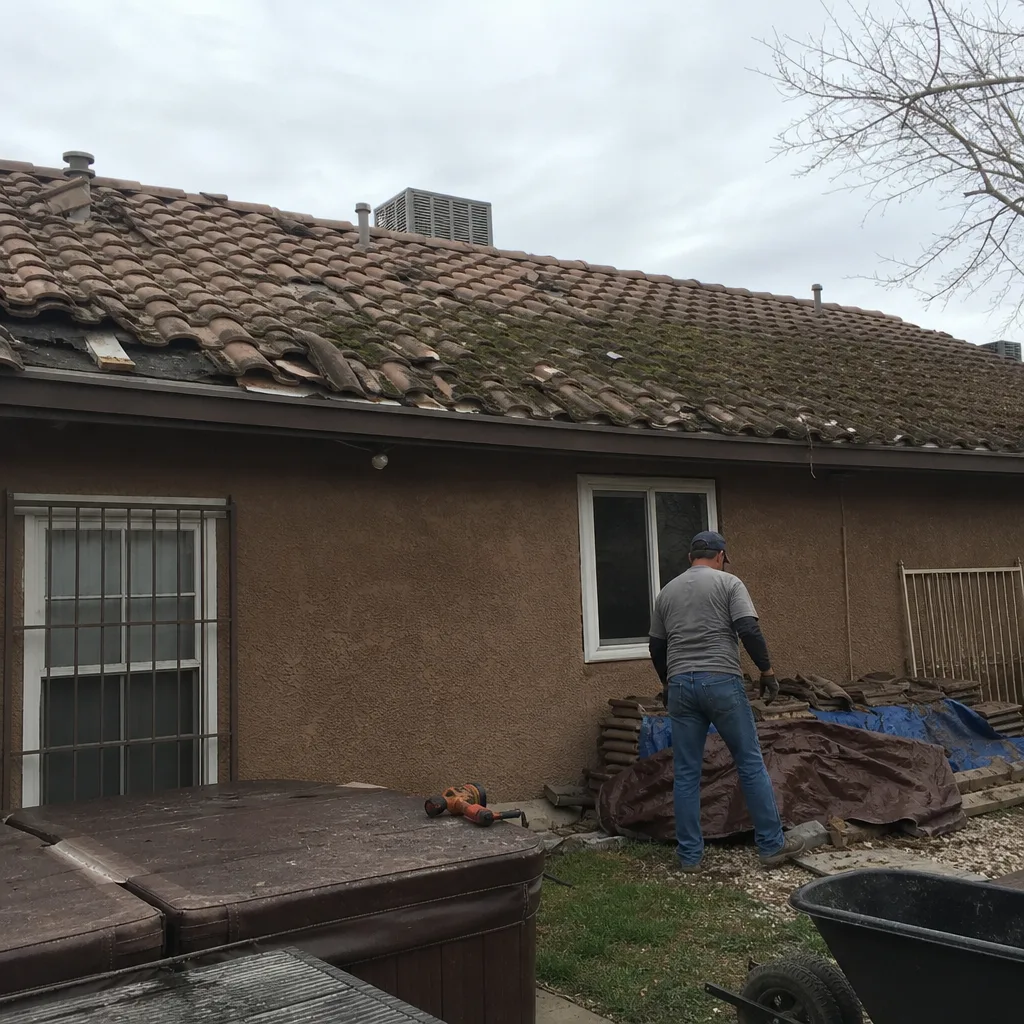 Before
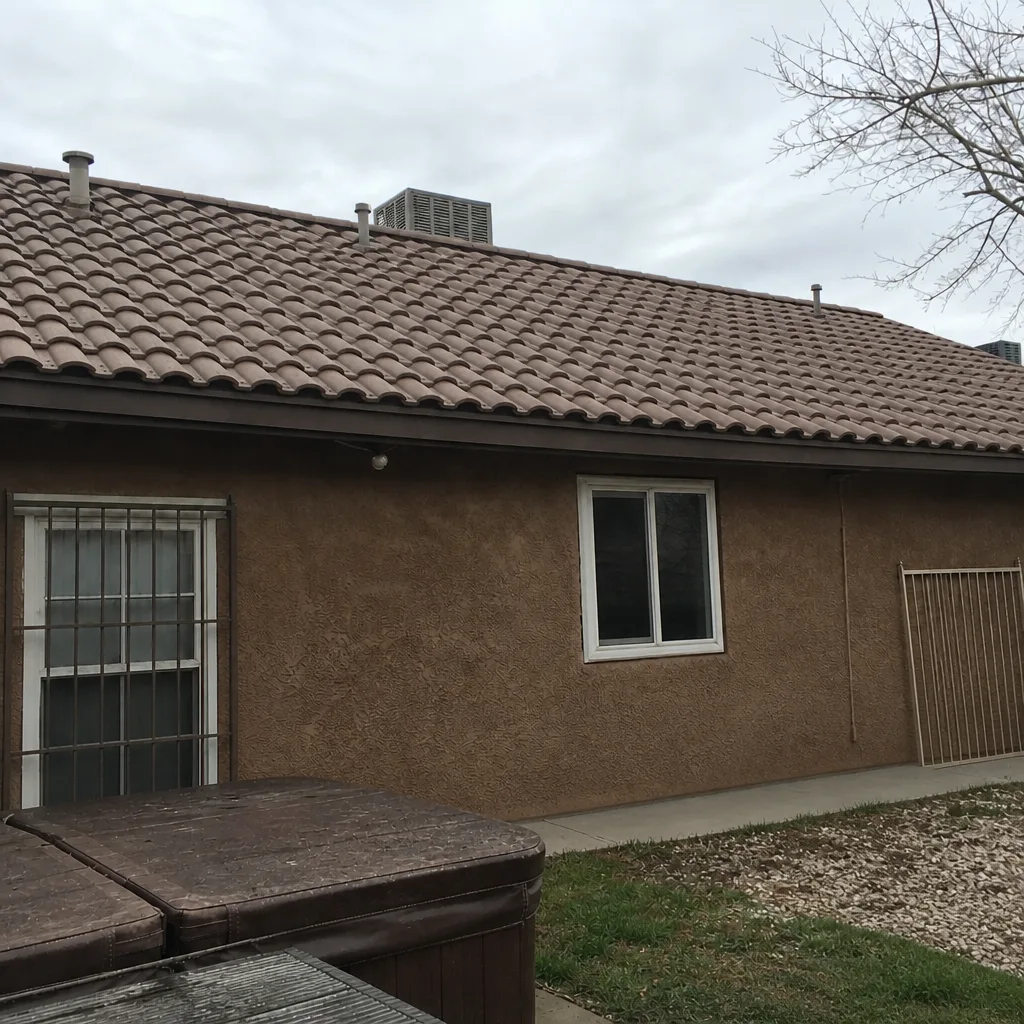 After
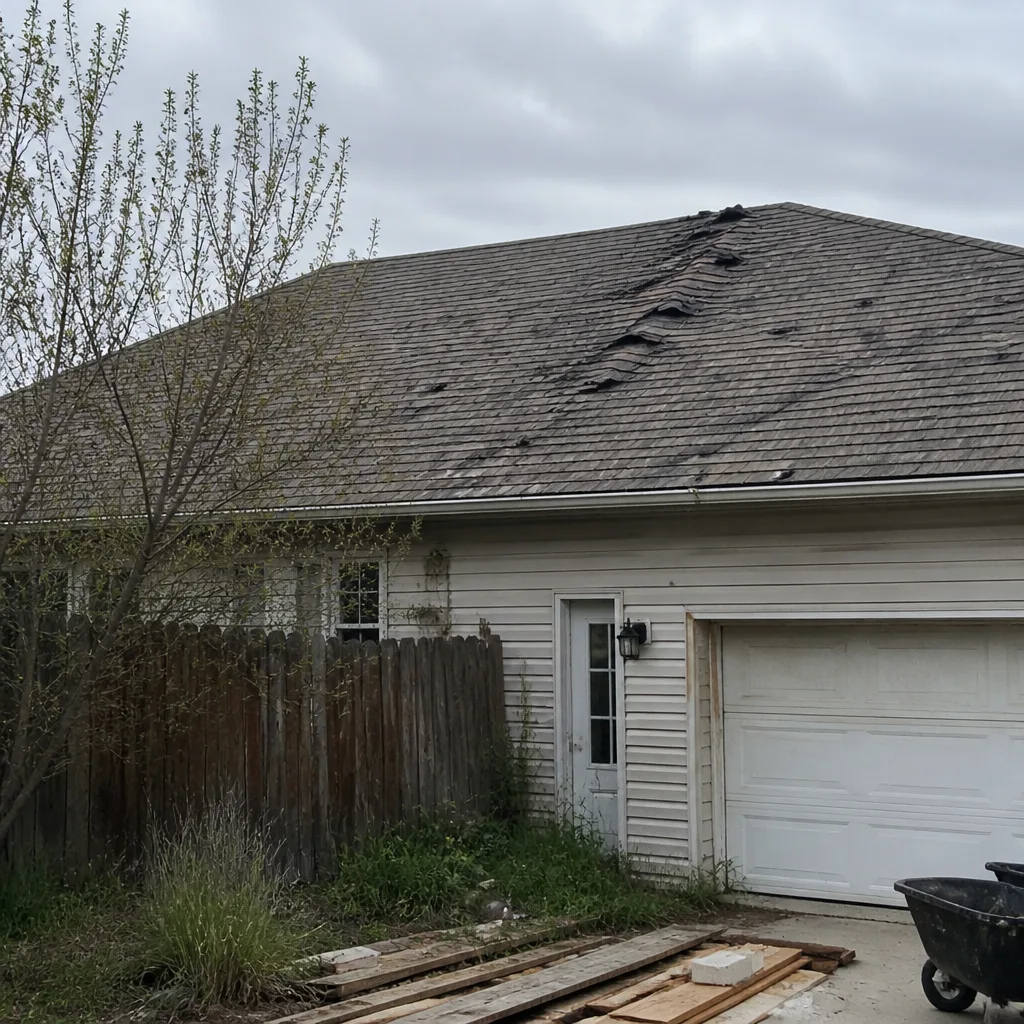 Before
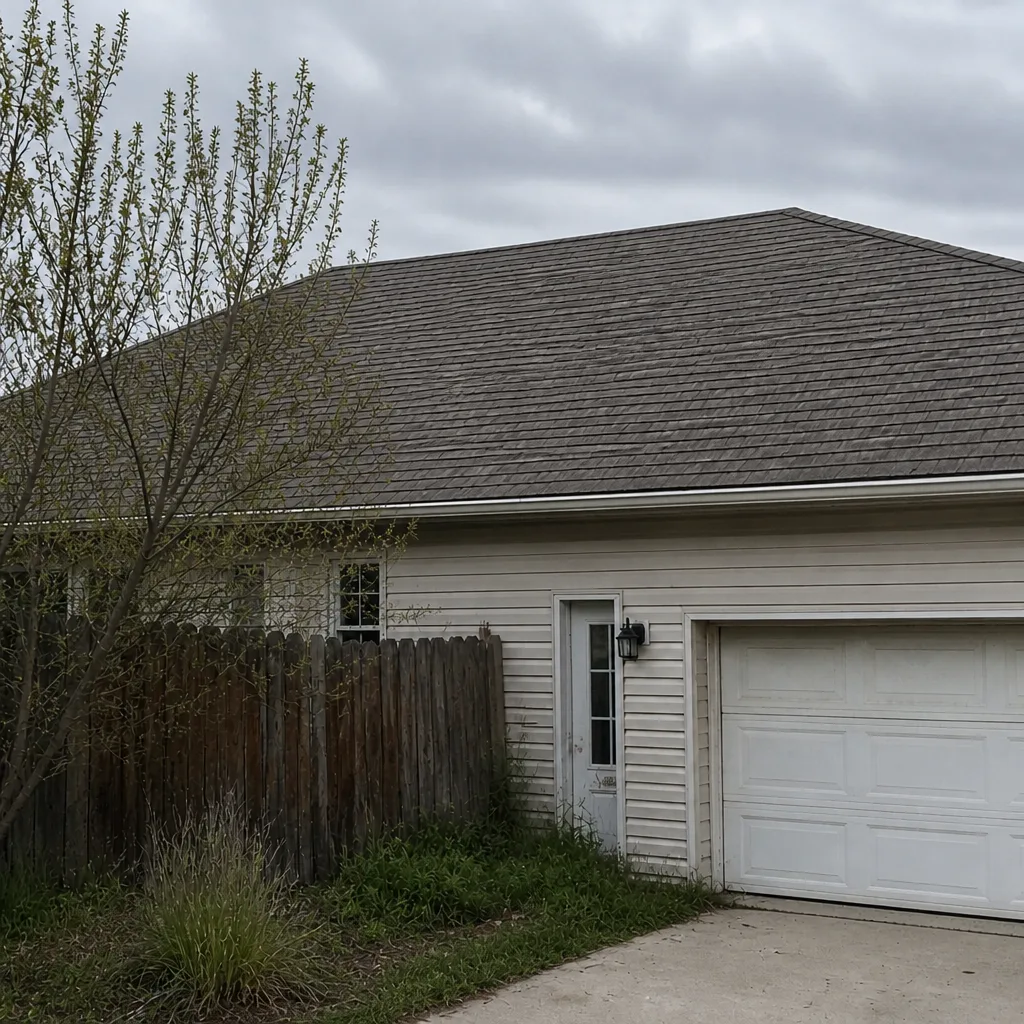 After
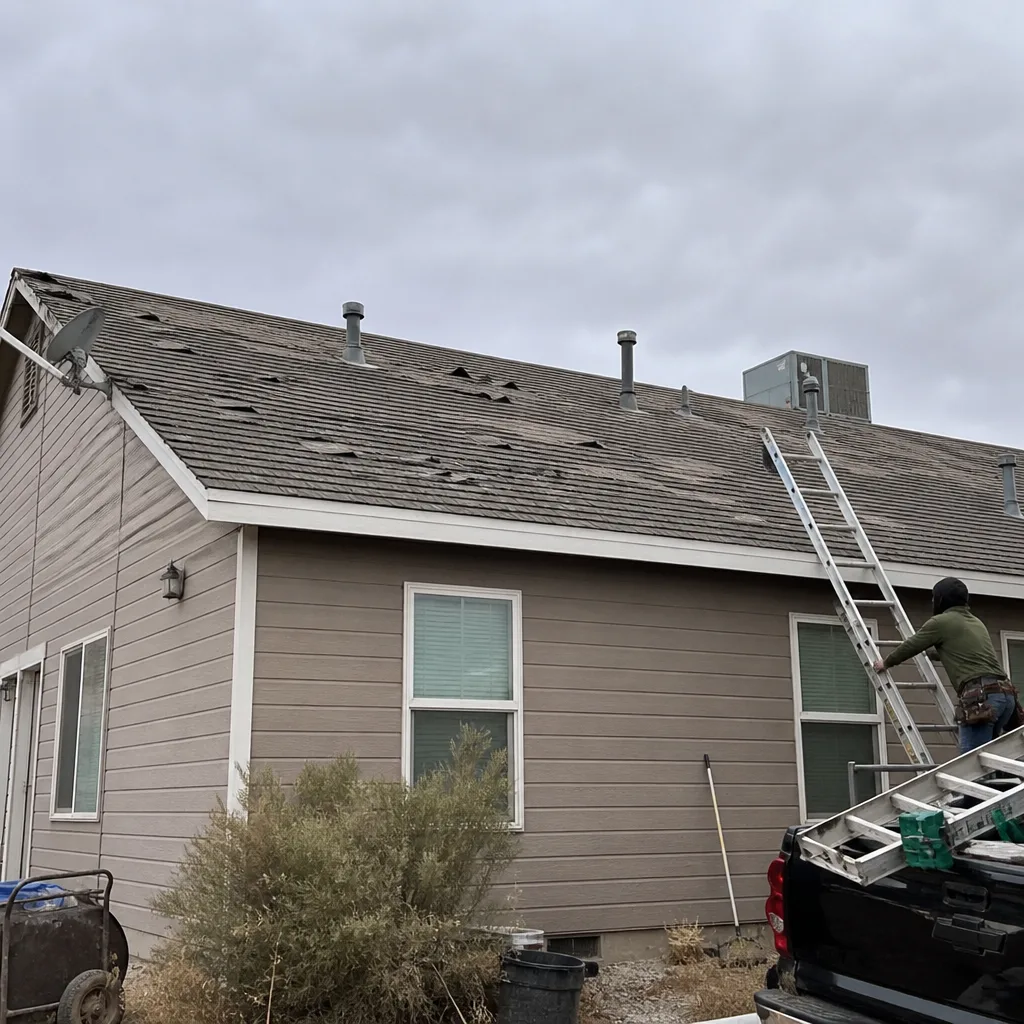 Before
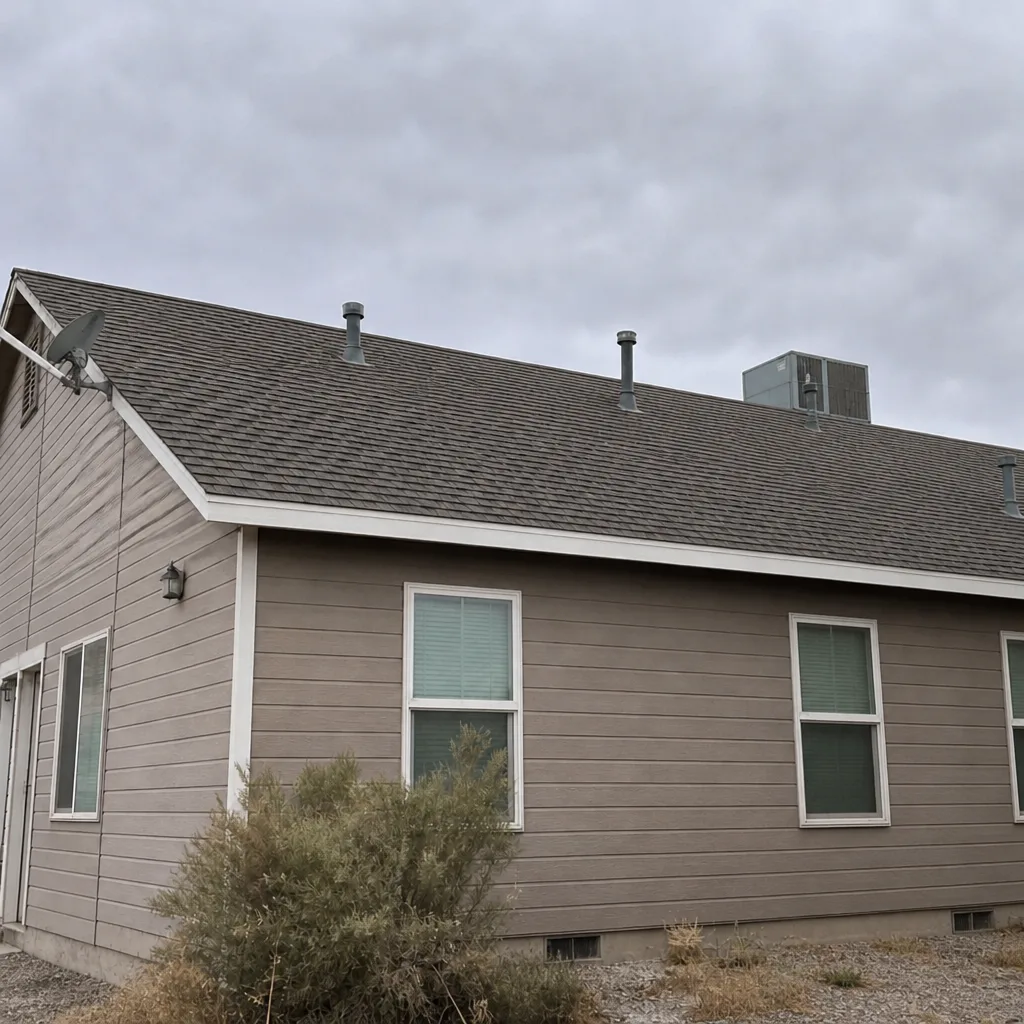 After
When to Call a Professional
Roof inspection and repair at height is genuinely dangerous work – falls remain the leading cause of death in residential construction, and the combination of steep slope, brittle shingle and summer heat in Enterprise makes DIY inspection a bad idea even on a “safe” pitch. Call a professional if you see granule accumulation in gutters or at downspouts (early sign of shingle wear), if a ceiling stain appears after a wind event, if any shingle is missing or lifted at a ridge, if the roof is more than 15 years old and has never been inspected, or if your home insurance carrier has requested a roof certification. Call immediately after any hail or wind event that leaves visible debris on the ground – damage often starts as a small lift that becomes a leak within one rain season.
Ridgeline Roofing Co. Enterprise offers free estimates in Enterprise – call (844) 228-4119. A live person answers, including nights, weekends and the middle of a storm. Our technicians are background-checked and arrive in uniform, and every inspection includes photos taken from your actual roof. Visit our Ridgeline Roofing Co. Enterprise home page for the full range of services, or call us directly and we’ll walk through what we’d recommend for your roof and why.
Frequently Asked Questions
There’s no single best roofing brand for Enterprise – the right answer is the specific product line that meets Class 4 impact resistance, at least 110 mph wind uplift for Clark County, and cool-roof SRI standards for this climate. GAF, CertainTeed, Owens Corning, Tamko and Boral all make product lines that meet those marks and all make entry-level products that fall short. Compare product lines, not brands, and ask for the data sheet for whichever line is being proposed. Call (844) 228-4119 for a free estimate and we’ll walk through the specific lines we’d recommend for your roof.
Neither is universally better – the specific product lines within each brand are what matter. A GAF Timberline HDZ and an Owens Corning Duration are not equivalent despite both brands being well-regarded. The right comparison is between the specific product lines being proposed for your roof, evaluated against the data sheet metrics that predict performance in Enterprise: impact rating, wind uplift certification and solar reflectance. Call (844) 228-4119 and we’ll help you compare the actual lines in play.
Manufacturer warranties usually don’t cover leaks from workmanship – they cover product defects. Leaks at flashings, vents and seams are typically excluded as installation issues. That’s why you need both a manufacturer warranty (covered by the manufacturer if installed by a certified contractor) and a workmanship guarantee from the contractor. Our 90-Day Done Right Promise is a written workmanship guarantee – if it’s not right, we come back and make it right, no arguing and no paperwork. Call (844) 228-4119 for a free estimate and we’ll show you both protections in writing.
TPO, modified bitumen and PVC are the three primary materials for flat and low-slope roofs in Enterprise, and the best choice depends on the roof’s slope, detail complexity and traffic. TPO is the most common residential recommendation for its UV durability and heat-welded seams. Modified bitumen works well for roofs with many penetrations. PVC is a premium option. In each case, the seam quality and heat-weld standard matter more than the brand. Call (844) 228-4119 for a free estimate on your low-slope section.
Ask for the contractor’s certification tier for the specific product line being proposed, then cross-check the contractor’s name on the manufacturer’s find-a-contractor tool on the manufacturer’s website. The listing will show certification level and status. Request the warranty document for your exact product line and read the installer conditions section before signing. Confirm who will file the warranty registration and when. Call (844) 228-4119 if you’d like a free second opinion on a written estimate you’ve already received.
Roof replacement costs in Enterprise depend on the roof size, the product line and the removal complexity – and any contractor who quotes a number without seeing the roof is guessing. What matters more than the number is commitment: the price we quote is the price you pay. Our estimates are written, itemized and fixed – no change orders built in, no mid-job surprises. Call (844) 228-4119 for a free estimate; a live person answers, including nights and weekends.
The Bottom Line
The brand on the wrapper is only half the decision. Choose the product line – and prove it’s the right line for Enterprise’s UV, wind and heat by reading the data sheet. Verify the installer’s certification tier on the manufacturer’s website before signing. Confirm the warranty registration will be filed within the manufacturer’s window and get that in writing. Ask how seams are tested on any low-slope section. Compare workmanship guarantees side by side, not just the manufacturer warranty. And remember that in a market where storm-chasing contractors disappear every spring, the crew that installed your roof has to still be here in thirty years – that’s the standard we hold ourselves to.
If you’ve got a written estimate in hand and want to know whether the materials proposed actually fit your roof, call (844) 228-4119. Free second opinion on any written estimate, free estimate on any new job, and a live person on the phone no matter what time you call.
Written by the team at Ridgeline Roofing Co. Enterprise.