
Last updated November 18, 2026
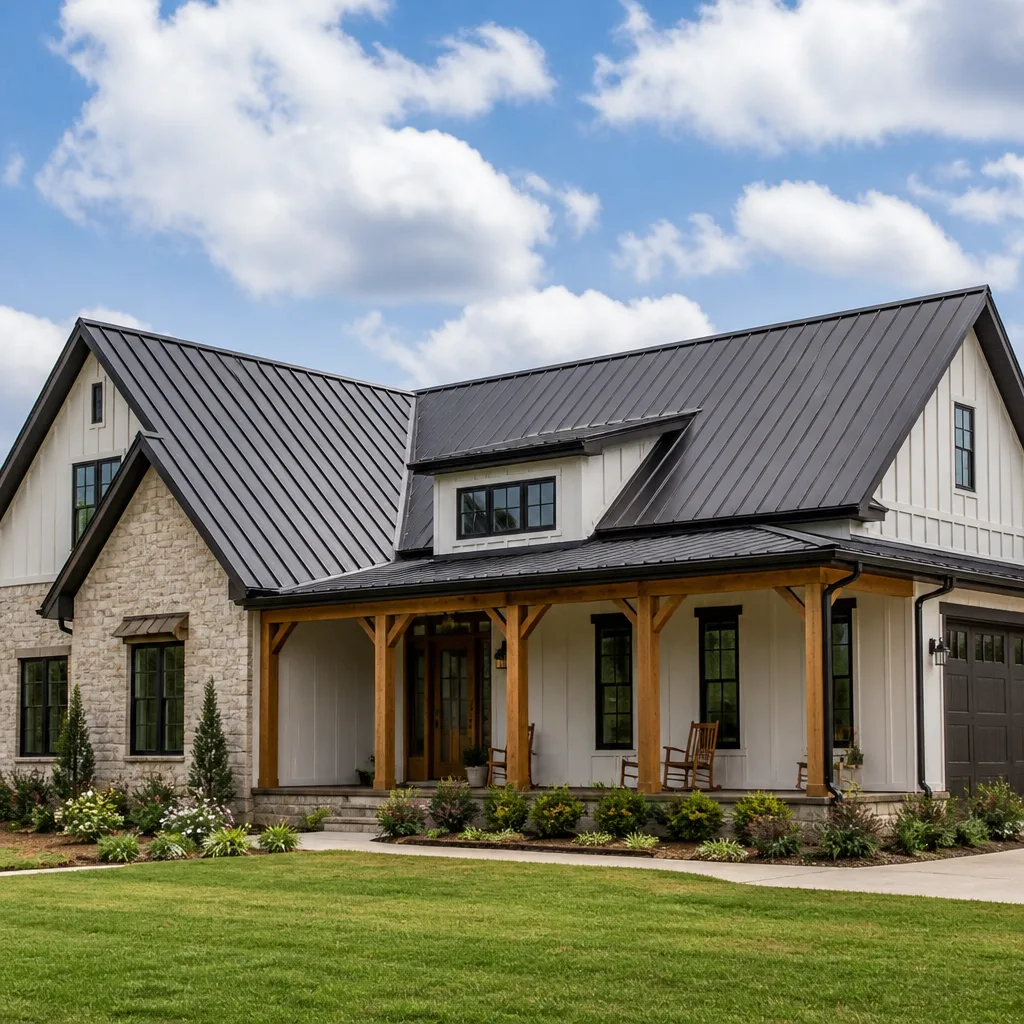 Metal roofing
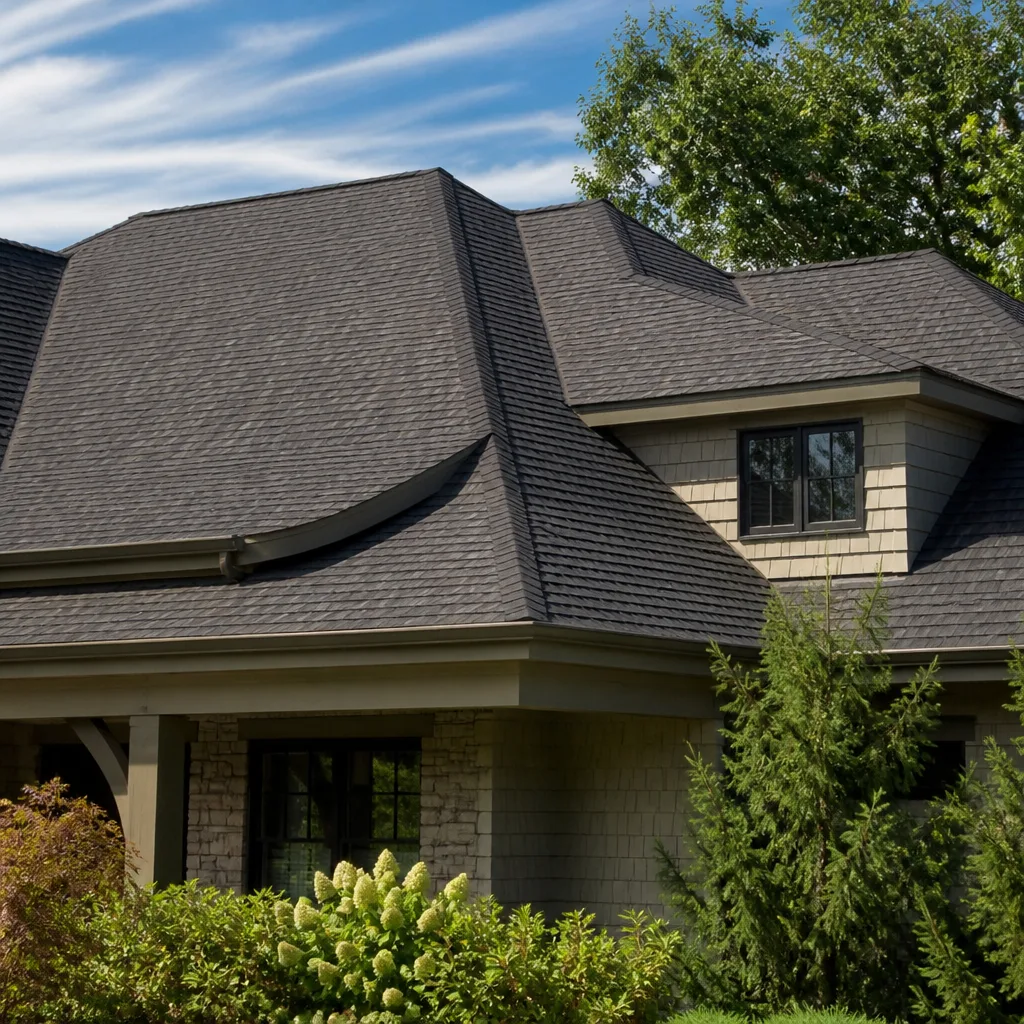 Architectural shingles
 Tile roofing
 GAF
 Owens Corning
 Flat & low-slope
Free roof inspection with deck photos before we talk money - GAF and Owens Corning certified installation
How Long Does Specialty Roofing Take? Timelines and What to Expect
A foam roofing job quoted for two days can legitimately run five. Not because anything went wrong, but because a proper coating application needs specific humidity and temperature windows that Enterprise summers make unpredictable. The same holds for tile, metal, and low-slope membrane systems, and it’s the part of scheduling most homeowners never hear about until the crew is already on the roof. In this guide we’ll walk through realistic day-ranges for each specialty roofing type, explain the material-specific holds that are legitimate reasons for a longer timeline, and show you how to tell a patient contractor from a stalling one.
Quick Answer
Specialty roofing installation typically takes 1 to 7 days depending on the system: low-slope TPO runs 1-3 days, standing-seam metal 2-4 days, SPF foam 2-5 days with coating cure holds, and tile 3-7 days based on square footage and pitch. The biggest variable isn’t crew size; it’s the mandatory curing, drying, and acclimation windows each material requires, plus any substrate problems discovered during tear-off.
Styles & brands we work with
- Architectural shingles
- Metal roofing
- Tile roofing
- GAF
- Owens Corning
- Flat & low-slope
Table of Contents
- Why Specialty Roofing Timelines Vary So Much
- Tile Roofing: 3-7 Days
- Standing-Seam Metal: 2-4 Days
- SPF Foam: 2-5 Days With Coating Cure Holds
- Low-Slope TPO: 1-3 Days
- The Substrate Inspection Phase
- What Photo Documentation Should Look Like
- Red Flags: When Fast Finish Means Cut Corners
- Common Mistakes to Avoid
- When to Call a Professional
- Frequently Asked Questions
Why Specialty Roofing Timelines Vary So Much
Two identically sized specialty roofs in Enterprise can differ by three days on the calendar, and the reason rarely has anything to do with how many workers showed up. Specialty systems are chemistry as much as carpentry. Adhesives need temperature within a specified band to bond. Foam coatings need relative humidity low enough to cure without blistering. Sealants need surface moisture below a threshold. When those conditions are outside the window, the correct decision is to wait, not to push through and hope.
Enterprise weather makes this pointed. Summer afternoons regularly push surface temperatures well above 90°F on a dark membrane or a sun-exposed foam deck. A crew applying a coating at noon in July is not doing you a favor; they’re setting up a recoat or a warranty denial later. Legitimate holds look like one to two extra mornings on the schedule.
Add three more variables and the picture fills in:
- Pitch and geometry. A steep tile plane slows setting and increases fall-protection setup. A flat low-slope field moves fast.
- Substrate condition. Rotted decking, a failed parapet wall, or saturated insulation removes a day or more from the schedule.
- Material acclimation. Some membranes and tiles want 24 hours on site to reach ambient temperature before installation.
If you want the full landscape of what a specialty system covers (foam, tile, metal, membrane), start with our Specialty Roofing in Enterprise page before diving into timeline details below.
Tile Roofing: 3-7 Days
Tile runs 3-7 days for a typical single-family home in Enterprise. The range is wide because tile is heavier and slower to set than asphalt shingles, and the two biggest levers are square footage and roof pitch.
Here’s how a proper tile job sequences across that window:
- Day 1: Tear-off and substrate inspection (underlayment removal, decking check, flashing review).
- Day 1-2: Underlayment installation. Tile underlayment is critical and often a full day by itself.
- Day 2-4: Setting the tile field, starting at the eave and working up, with consistent courses and proper overlap.
- Day 4-6: Ridge, hip, and valley detail work, which is slow, deliberate work even for experienced hands.
- Day 6-7: Flashing, penetration boots, final walkthrough, and cleanup.
A steep pitch (8/12 or greater) adds a day to tile because every plane requires additional staging and safety rigging. A simple gable roof on a low pitch will land closer to the bottom of the range. Boral tile products are one of the lines we install, and heavier clay profiles demand more staging than concrete profiles of the same footprint.
Also expect a brief post-completion window for mortar and sealant cure before any walking on the finished surface. For full installation guidance including replacement scope, see Roof Replacement & Installation in Enterprise.
Standing-Seam Metal: 2-4 Days
Standing-seam metal is the fastest specialty system to install, at 2-4 days, but the speed is deceptive. The panels themselves go down quickly once they’re formed. The time is in the details before and after.
Panel fabrication often happens just before installation, either on-site roll-forming or at a shop, and that lead time sits outside the install window. Once panels are staged:
- Day 1: Tear-off, substrate inspection, underlayment, and eave/edge prep.
- Day 2: Panel setting, working upslope, with consistent clip spacing.
- Day 3: Seam crimping, ridge and hip caps, and most flashing work.
- Day 4: Penetrations, trim-out, and cleanup.
Standing seam is measured in concealed fasteners and thermal expansion gaps. Any installer who wants to rush crimping or skip seam engagement is trading a five-year roof for a twenty-year one. Metal roofs also want a modest temperature window on sealant and butyl closures, which matters in Enterprise in either extreme of July heat or January cold mornings.
SPF Foam: 2-5 Days With Coating Cure Holds
Sprayed polyurethane foam is where the honest conversation about specialized timelines has to happen. Foam jobs quoted for two days can run five, and it’s frequently not a mistake. The correct sequence with legitimate holds looks like this:
- Day 1: Tear-off, substrate inspection, and primer application where required.
- Day 1-2: Foam base passes, built up in lifts with curing between each pass.
- Day 2-3: Foam cure window before coating (typically 24 hours, longer if ambient is humid).
- Day 3-4: First coating pass, applied within a specific surface-temperature and humidity band.
- Day 4-5: Second coating pass and final cure hold.
The holds aren’t padding. Foam coating requires surface temperatures below 90°F and low relative humidity to cure without blistering, cracking, or losing adhesion. Both conditions are rare in Enterprise in July and August, where afternoon surface temperatures on a dark foam deck regularly hit 130°F or higher. The correct answer is early-morning application and a hold when the deck gets too hot. A crew that coats at noon in a July heat wave isn’t faster; they’re building a warranty claim into your roof.
We schedule foam work in Enterprise around forecast windows and we tell homeowners up front that a hold may push completion by a day or two. That’s the square deal on a foam roof.
Low-Slope TPO: 1-3 Days
Thermoplastic olefin membrane for flat or low-slope roofs is the fastest of the specialty systems, running 1-3 days for a typical residential flat roof section. A single flat roof under 20 squares often completes in one long day; more complex geometry or a mixed low-slope and pitch roof reaches the upper end.
TPO moves fast because seams are heat-welded, not adhered with solvent, and because the membrane comes in wide rolls that cover a lot of field per pass. The pace, though, hides the detail work that determines whether a TPO roof performs for twenty years or five:
- Proper termination in parapet walls and around penetrations.
- Correct welding temperature and probe testing on every seam.
- Tapered insulation for drainage, done before the membrane goes down.
- Edge metal and scupper detailing that actually drains.
Do not accept a one-day TPO quote on a complex roof. If a contractor promises finished by lunch on a roof with multiple levels or parapets, ask which seams they probe-test and when.
The Substrate Inspection Phase
Every specialty roof rests on the deck beneath it. Before any material goes down, the substrate gets torn back and inspected, and this is where timelines most often go sideways – legitimately. What a good inspection looks for:
- Rotted or delaminated roof decking (plywood or OSB that’s soft or separating).
- Failed parapet walls on flat roofs, where the top course has cracked or opened to water intrusion.
- Saturated insulation under a membrane, which feels heavy and spongy and must be replaced.
- Deteriorated flashing at chimneys, skylights, and wall intersections.
- Inadequate roof-to-wall connections on older stock.
When we find these during tear-off, the timeline extends. A rotted deck section can add a day of carpentry before the specialty material goes back down. A failed parapet wall on a low-slope roof can add two. These aren’t stalling tactics; they’re the difference between a roof resting on solid ground and a system that fails in year three from the failure beneath.
Substrate findings sometimes shift the scope of the job from repair to replacement. For the repair side of that decision, our Roof Repair in Enterprise page covers the trade-offs.
What Photo Documentation Should Look Like
A proper specialty roofing job is documented with photo records at every phase, and those photos are your proof of process and timeline. Here’s what a complete record includes:
- Pre-work roof photos. The condition of the existing roof, the observable problem areas, and the chimney and penetration details.
- Tear-off photos. The deck exposed and the substrate condition before any new material goes down.
- Materials staged on-site. Labels visible, so you can confirm the exact product line (GAF, CertainTeed, Owens Corning, IKO, Atlas, Tamko, or Boral, depending on system).
- Phase photos. Underlayment complete, field installed per section, flashing and detail work in progress.
- Completion photos. Full roof, all angles, plus any areas of concern documented with close-ups.
Why this matters for timeline honesty: if a contractor is claiming a five-day job finished in three, the photos reveal whether the coating got both passes, the foam got its cure hold, or the substrate inspection actually happened. Documentation is the audit trail. Any contractor who hesitates to hand over the photo record is telling you something.
Red Flags: When Fast Finish Means Cut Corners
A specialty roof that finishes suspiciously fast is the loudest warning sign in the trade. Here’s what to look for:
- Foam coated in a single afternoon under a July sun. A one-pass coating that didn’t wait for a second applied layer or a cure hold is a warranty claim waiting to happen.
- TPO finished in a day on a complex flat roof. Seams that weren’t probe-tested or terminations that are sloppy and quick are the usual culprit.
- Tile set without underlayment close-out photos. If you can’t see the underlayment phase, the underlying substrate was never properly assessed.
- Metal panels set with visible gaps. Rushed seam engagement or skipped coupling strips.
- No substrate inspection documented. A specialty roof installed over unknowns is a specialty roof scheduled for replacement.
The pattern is consistent: the contractor who skips the hold, skips the inspection, and finishes in half the expected time hasn’t saved you days. They’ve moved the failure out of their warranty window and into yours.
Common Mistakes to Avoid
- Choosing a bid by the shortest timeline. A five-day foam job quoted at two days is not a better deal; it’s a bid that skipped the hold. Do not put the fastest number at the top of the list. Put the most honest number there.
- Skipping the substrate inspection to protect a schedule. In older Enterprise neighborhoods, decking conditions are frequently worse than they look. Insist that the inspection is documented in photos before any specialty material goes down.
- Approving a foam coating schedule without questioning the temperature window. If a contract quotes foam work in mid-July in Enterprise without mentioning a temperature or humidity hold, ask what they do when the deck surface hits 130°F. The answer tells you everything.
- Assuming the timeline only counts days on the roof. Panel fabrication, material acclimation, and post-installation cure windows are real parts of the schedule. A two-day metal job with a three-day lead time is a five-day commitment.
- Letting a contractor talk you out of photo documentation. Photos are your record of what was done, when, and under what conditions. A legitimate contractor produces them without being asked.
- Paying a large deposit against a timeline you haven’t seen in writing. Ask for a written schedule with the material-specific holds noted. The deposit should follow the schedule, not precede it.
- Confusing a stalling contractor with a patient one. A legitimate hold has a reason: coating cure, foam dry, panel fabrication, substrate repair. A stalling contractor has none. If you can’t get a clear reason, you have an answer.
When to Call a Professional
Call a professional if your specialty roof shows any of these: a foam coating that’s blistering, cracking, or lifting at the edges; a metal roof with visible gaps at the seams or panels lifting at the fasteners; a tile roof with broken, slipped, or ridge-cap tiles after a wind event; a low-slope roof with soft spots, ponding, or a parapet wall failing at the top course; or a leak you can’t trace from inside the house. On any specialty system, DIY repair is not a path to safety; foam chemistry, membrane welding, and metal seam work each require trained hands and the right equipment. Ridgeline Roofing Co. Enterprise offers free estimates in Enterprise. Call (844) 228-4119 and a live person picks up, day or night.
See the difference
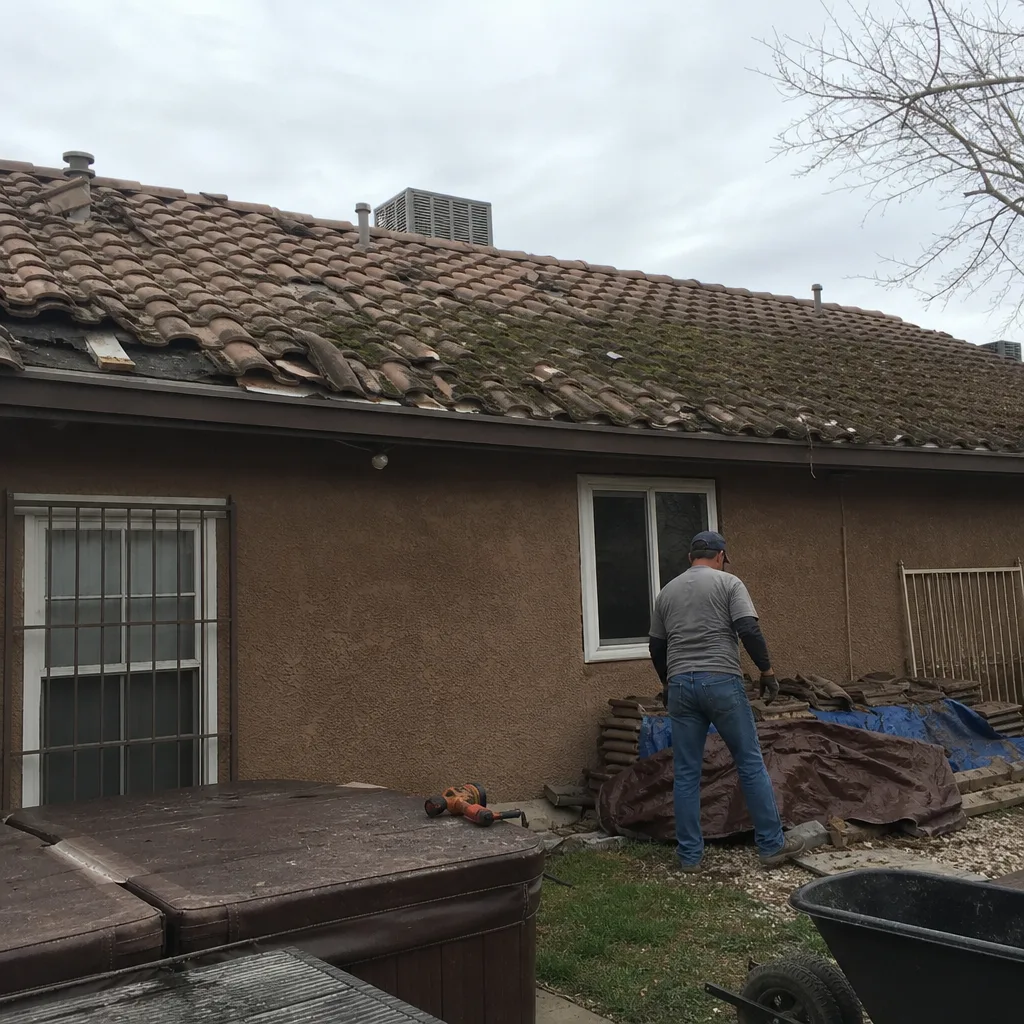 Before
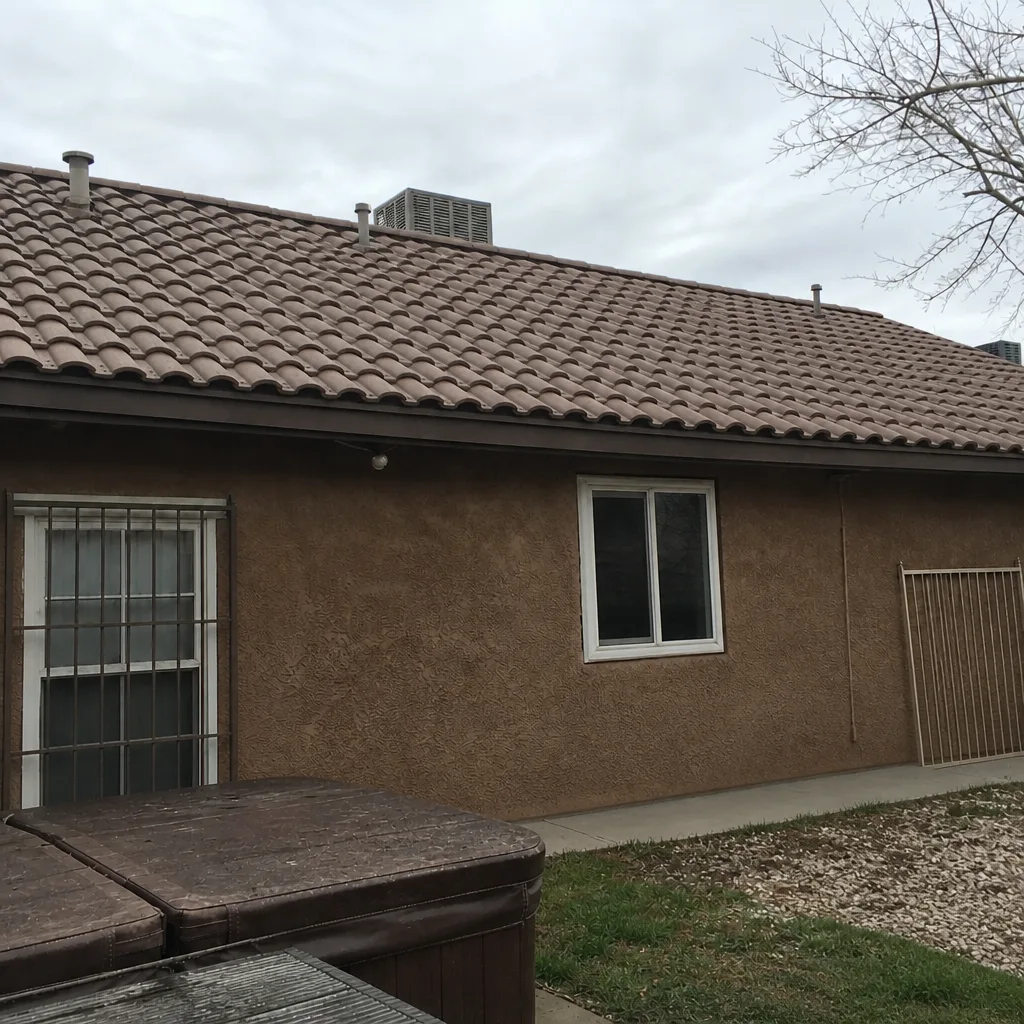 After
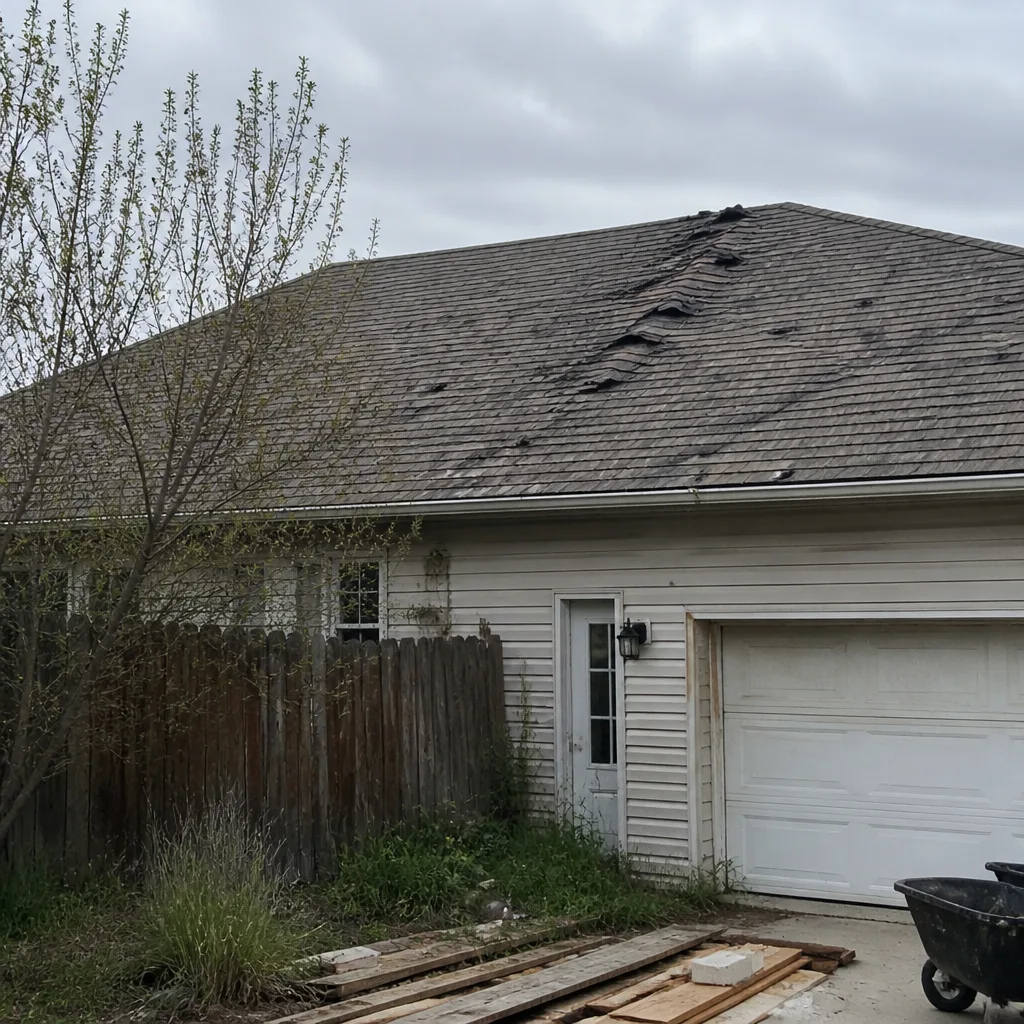 Before
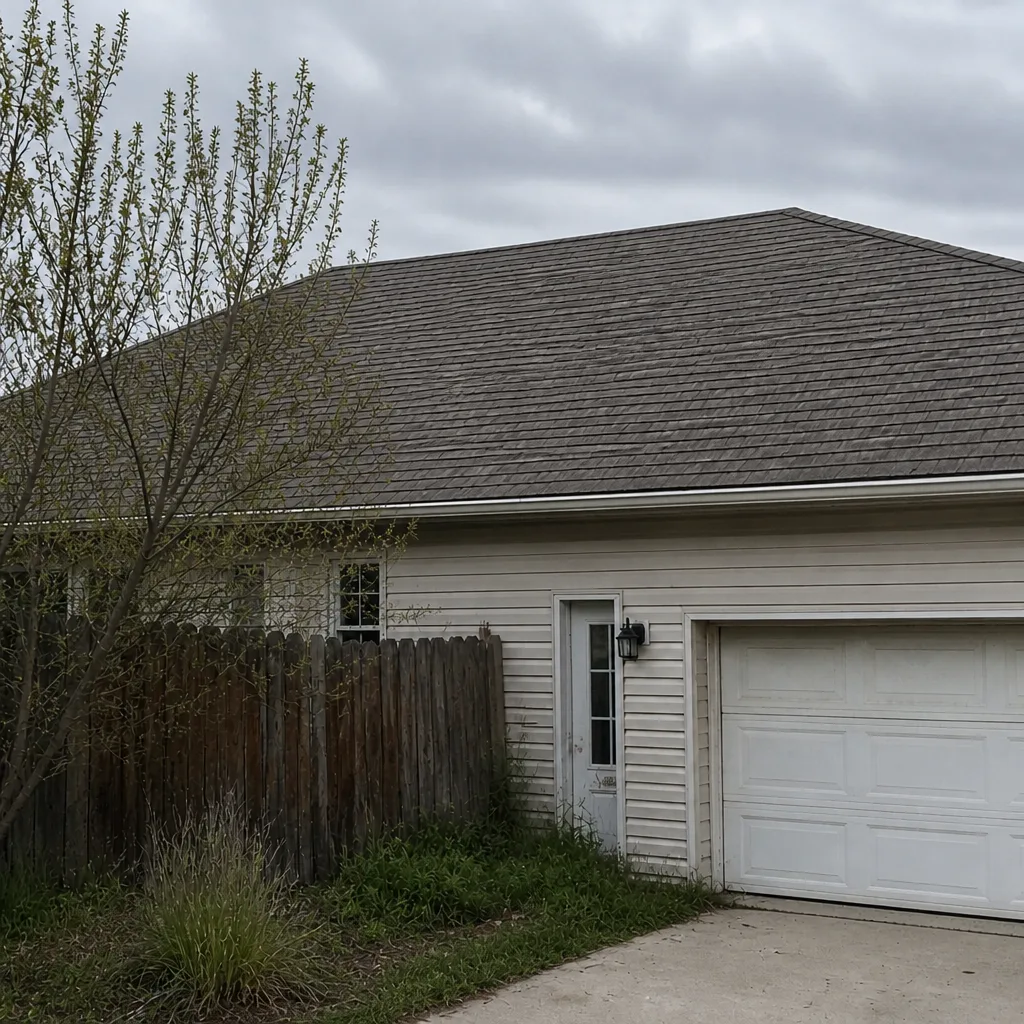 After
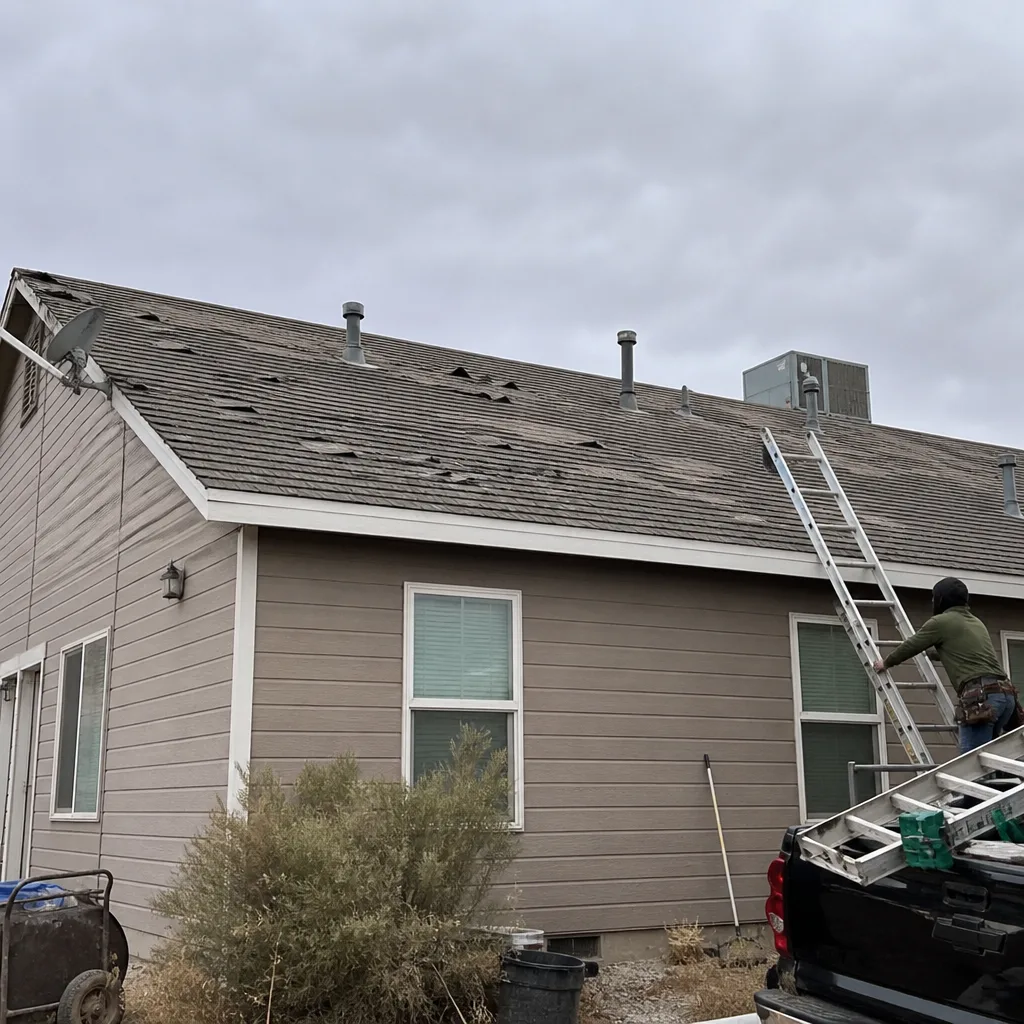 Before
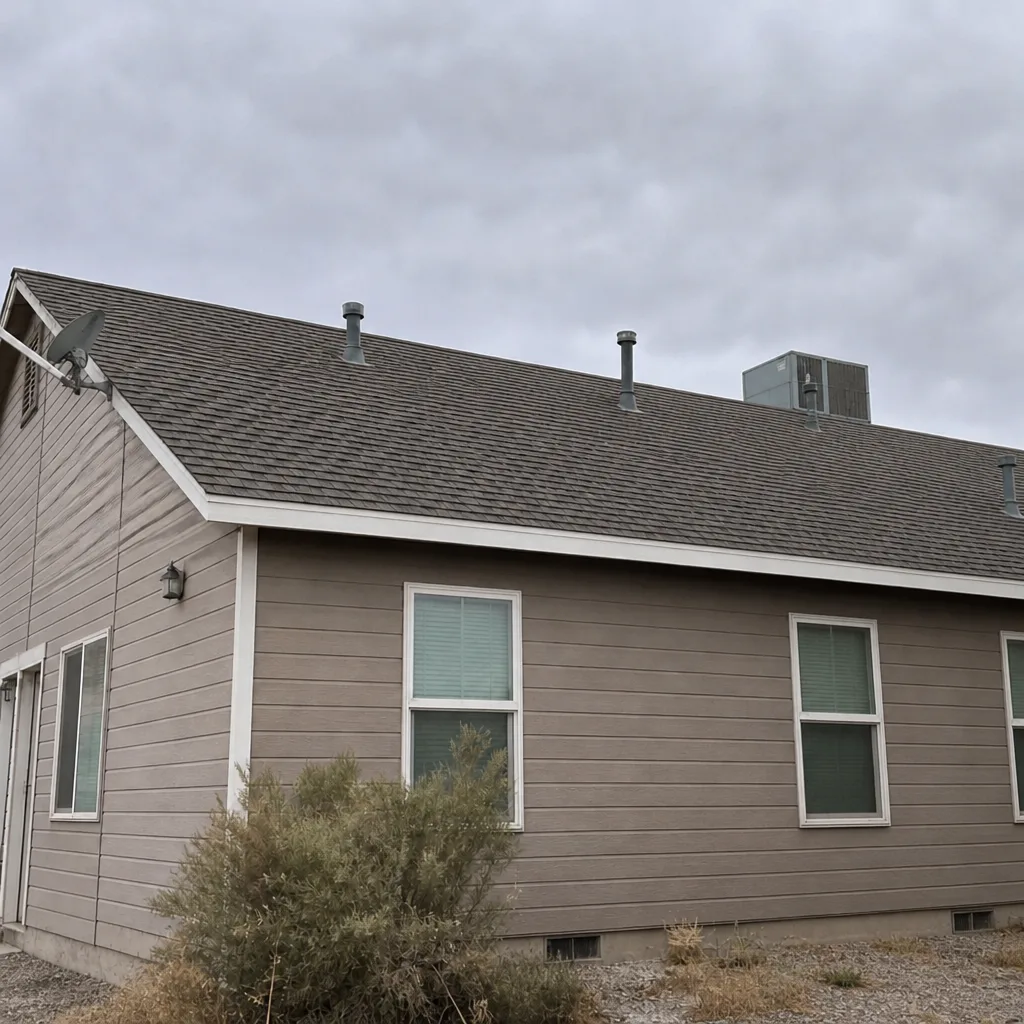 After
Key Takeaways
- Specialty timelines run 1-7 days by system: TPO 1-3, metal 2-4, foam 2-5 with cure holds, tile 3-7.
- Curing, drying, and acclimation windows are the real drivers, not crew size.
- Enterprise heat makes foam coating holds routine in summer.
- Substrate inspection findings are legitimate timeline extenders.
- A job that finishes surprisingly fast likely skipped a hold or an inspection.
Frequently Asked Questions
Specialty roofing installation takes 1-7 days depending on the system: low-slope TPO 1-3 days, standing-seam metal 2-4 days, SPF foam 2-5 days (with cure holds), and tile 3-7 days. Call (844) 228-4119 for a free estimate that includes a written timeline for your specific roof.
Foam coating requires surface temperatures below 90°F and low relative humidity to cure without blistering, and Enterprise summer afternoons regularly blow past both limits. The crew waits for an early-morning window or a cooler day, and the timeline extends. A contractor who coats a 130°F deck to keep the original schedule is setting up a warranty claim. Call us at (844) 228-4119 if you want a foam timeline built around the forecast, not against it.
The number on the estimate is the number on the invoice. If the substrate inspection reveals rotted decking, a failed parapet wall, or saturated insulation, we document the finding with photos and discuss any scope change with you before doing the work. No surprises, no change orders after the fact.
Yes. Permits are pulled for the specific specialty system in your project, and the job is inspected to the applicable code on completion. Ask any contractor whether they pull the permit in their own name; if the answer is anything other than yes, walk.
It’s a phase-by-phase photographic record: pre-work condition, exposed substrate, staged materials with labels visible, underlayment phase, field installation, and completion from every angle. Every inspection at Ridgeline Roofing Co. Enterprise is documented with photos taken on your actual roof. Call (844) 228-4119 to see the record before you commit.
A legitimate delay has a specific, material-based reason: a foam coating hold for temperature, a 24-hour foam cure, a manufactured panel lead time, or a documented substrate repair. A stalling contractor can’t tell you the reason, or the reason changes. Ask for it in writing. And if you’re on your second bid and still uncertain, our free second opinion on any written estimate is yours for the asking.
The Bottom Line
Specialty roofing timelines are driven by the material’s chemistry more than by how many people show up. Tile runs 3-7 days. Standing-seam metal runs 2-4. Foam runs 2-5 with legitimate coating cure holds. Low-slope TPO runs 1-3. If a contractor quotes you less, ask them what they intend to skip. The holds, the substrate inspection, and the photo record are the honest signs of a job done once – not a job done fast. Ridgeline Roofing Co. Enterprise backs every specialty roof with our written 90-Day Done Right Promise: if it’s not right, we come back and make it right. No arguing, no paperwork. All work is performed by background-checked, uniformed technicians, and our crews are authorized installers of systems from seven leading manufacturers including GAF, CertainTeed, and Owens Corning. We’ve served local homeowners since 1984, and we plan to be standing behind Enterprise roofs for a long time yet.
Ready to get a realistic schedule for your roof? Call (844) 228-4119 for a free estimate in Enterprise. A live person answers every call, 24/7. You can also start with our Ridgeline Roofing Co. Enterprise home page to see what we do across repair, replacement, and specialty systems.
Written by the team at Ridgeline Roofing Co. Enterprise.