
Last updated November 18, 2026
 Architectural shingles
 Metal roofing
 Tile roofing
 GAF
 Owens Corning
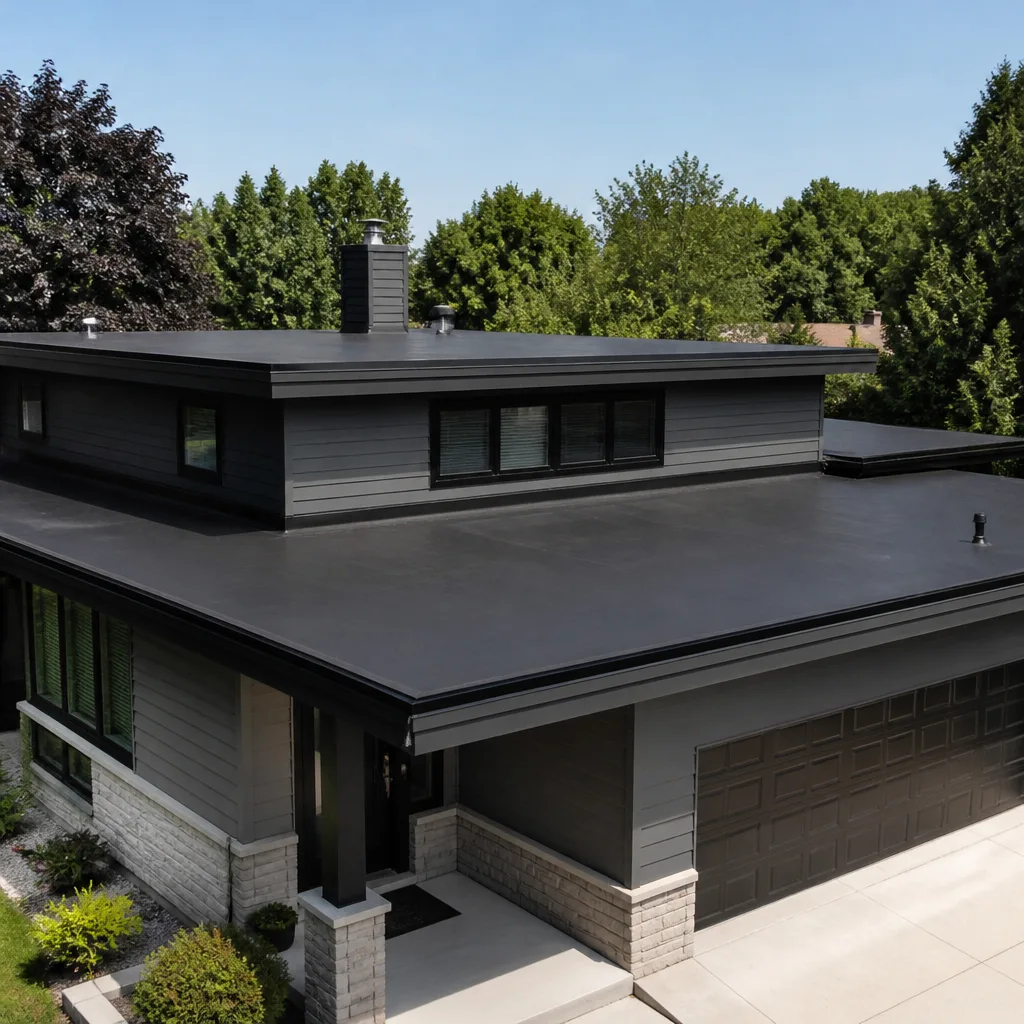 Flat & low-slope
Free roof inspection with deck photos before we talk money - GAF and Owens Corning certified installation
Roof Repair Maintenance Schedule: What to Do and When
A $75 biannual maintenance visit has a documented track record of deferring $4,000-to-$8,000 emergency repairs. The math isn’t complicated, but most homeowners never see the invoice they avoided. Here in Enterprise, the schedule that protects a roof isn’t built on generic spring-and-fall advice. It’s anchored to two hard dates the desert enforces every year: the June UV peak and the August monsoon. Miss either and you’ll meet the consequences at the worst possible time. This guide gives you a month-by-month calendar, shows which tasks are safe for you on a one-story home and which aren’t, and explains how to keep records that pay off at claim time.
Quick Answer
A homeowner roof maintenance schedule in Enterprise should center on two fixed calendar anchors: a May inspection before the June UV peak and heavy sun exposure, and a July drainage and flashing check before monsoon season delivers its afternoon storms. Everything else, from gutter clearing to attic checks, fits around those two windows. Skip them and the small failures the sun and rain create turn into emergency repairs.
Styles & brands we work with
- Architectural shingles
- Metal roofing
- Tile roofing
- GAF
- Owens Corning
- Flat & low-slope
Table of Contents
- Why an Enterprise Maintenance Schedule Looks Different
- The Month-by-Month Roof Maintenance Calendar
- What You Can Safely Do Yourself (and What You Can’t)
- Pre-Monsoon Drainage and Scupper Checks
- Cleaning or Repair? How to Tell What a Visit Uncovered
- How to Document Your Roof Year Over Year
- What a Professional Maintenance Visit Includes
- Common Mistakes to Avoid
- When to Call a Professional
Why an Enterprise Maintenance Schedule Looks Different
The generic four-season maintenance template you find on most roofing sites was written for a climate with a real winter and a gentle summer. Enterprise doesn’t follow that script. Our damaging weather arrives in two concentrated bursts. Through June, ultraviolet exposure is at its peak, and that sun bakes asphalt shingles, dries out sealant, and hardens flashing caulk until it cracks. Then in late July and August, monsoon moisture rolls in and does in two weeks what a wet climate does over a season.
Those two forces work together. The June sun leaves shingles brittle and sealants compromised. The August storms then find every gap the sun created. That’s why the majority of emergency repairs in this part of the valley trace back to one of those two windows. A roof that was fine in April is often the same roof that leaks on the first hard monsoon afternoon.
There’s a second reason the schedule matters here. More than the weather, what fails a lot of Enterprise roofs is deferred maintenance: a roof that got a cheap patch instead of a proper repair, or one that simply went five years without anyone looking. Our team has seen this across older and newer subdivisions alike. The fix is repetition, not intensity. Two thoughtful visits a year keep a roof ahead of both the sun and the rain.
If your home is due for a closer look, our roof repair in Enterprise team can walk the roof with you and put findings in writing.
The Month-by-Month Roof Maintenance Calendar
Think of this as a calendar you can pin to the fridge. The goal is to be done with each task before the hazard it addresses arrives, not after. Use the May and July entries as your two fixed points, and treat the rest as gentle reminders.
- January: Walk the perimeter from ground level and check for roof-to-wall gaps after any cold snap. Confirm attic ventilation is clear.
- February: Inspect gutters and downspouts for the winter debris that collected. Note any loose hangers.
- March: Do a ground-level visual check using binoculars. Photograph anything that looks worn.
- April: Confirm your May visit is booked. Look at flashing around skylights and pipes.
- May: The big one. Schedule a full pre-summer inspection and tune-up before the UV peak.
- June: Peak sun. Watch for curling or granule loss and note any interior ceiling stains.
- July: Pre-monsoon drainage sweep. Clear scuppers, clean low-slope drains, check roof edges.
- August: Monsoon. After any hard storm, do a careful interior check of ceilings and attic for leaks.
- September: Post-monsoon review. This is the ideal time to catch and repair storm damage.
- October: Clear any debris the monsoon left behind. Look at sealant around flashing.
- November: Book your end-of-year tune-up and confirm records are current.
- December: Low activity. Review the year’s photos and file anything insurance may want.
In our experience, the July drainage sweep matters far more than most people realize on low-slope and flat sections. A clogged scupper in August means standing water that has nowhere to go.
What You Can Safely Do Yourself (and What You Can’t)
Not every task needs a ladder, and not every task should involve one. Knowing the difference is the whole point. A homeowner on a one-story home can handle observation and clearing at ground level. Anything that puts you on the roof surface, near a high edge, or near electrical components belongs to a trained professional.
Safe for most homeowners:
- Ground-level visual inspections with binoculars and a phone camera
- Clearing debris from gutters and downspouts where you can do it safely from a stable ladder on level ground
- Checking the attic for daylight, water stains, or damp insulation
- Keeping a photo and paperwork log of the roof’s condition
Better left to a professional:
- Walking the roof surface, especially after UV has made shingles brittle
- Any work near flashing, skylights, or roof penetrations
- Anything involving height, steep pitch, or an unstable ladder position
- Working around electrical components mounted on the roof
There’s a warranty consideration too. Some work you do yourself can affect coverage, particularly if a leak is traced back to a tinkered-with area. A professional visit protects both your safety and your paper trail. Our repair team is background-checked and arrives in uniform, and our technicians document every inspection with photos taken from your actual roof.
Pre-Monsoon Drainage and Scupper Checks
Monsoon moisture doesn’t usually fail a roof all at once. It finds the places where water was already backing up. Scuppers and low-slope drainage are where that happens most. Before July, you want every path water takes to be clear.
- Look at the scuppers first. These are the openings that let water off a flat or low-slope section. Clear any debris, grit, or nesting material that has built up.
- Check the low-slope drains. Make sure strainers are in place and not clogged. A drain that can’t keep up becomes a pond.
- Check the roof edges and gutter line. Water backing up at the edge during a heavy storm often shows first as a stain at the wall base.
- Confirm downspouts run clear. Pour water through if you can do it safely and see that it exits at the ground.
- Photograph it all. A dated photo of clear drainage before the storm is your baseline if something fails.
Here’s the thing about flat and low-slope sections: they don’t fail dramatically. They fail slowly, through ponding that quietly works at seams and edges. Before the first real monsoon afternoon, you want a clear path so water drains off the roof as fast as the clouds deliver it. Proper drainage is part of what our technicians check on every seasonal visit.
Cleaning or Repair? How to Tell What a Visit Uncovered
A maintenance visit is supposed to end with two possible outcomes: cleaning and observation, or a documented repair need. Homeowners often can’t tell which they’re being told without some context, so here are the signals that push a visit from cleanup into repair territory. A trained eye looks for these, and so should you.
Signs of cleaning and routine upkeep:
- Debris, leaves, or grit that can be cleared
- Drainage that was blocked but is now clear
- Minor caulking refresh at flashing
Signs of a genuine repair need:
- Granule loss in patches, or shingles that are curling or lifting
- Cracked or dried flashing sealant around skylights and pipes
- Any daylight visible from inside the attic
- Soft spots, water staining, or damp insulation in the attic
- Lifted or torn shingles after a storm
A repair need after a maintenance visit is normal and expected on an older roof. What matters is that it’s caught before monsoon season rather than during it. If your visit turns up repair signals, our repair team can give you a written, line-item estimate so you know exactly what’s needed. And if the honest answer is that the roof is past patching, our replacement and installation in Enterprise team will tell you that too. We install materials from Owens Corning, IKO, and Atlas, and the price on the estimate is the price on the invoice.
How to Document Your Roof Year Over Year
The most underrated part of any maintenance schedule is the paperwork. Two things will eventually depend on it: an insurance claim and a resale disclosure. A roof with dated photos and inspection records is a far easier claim to settle and a far more convincing selling point than one maintained entirely from memory.
Build a simple file. It doesn’t need to be elaborate.
- Keep dated photos. Take a ground-level shot of each roof plane a few times a year, plus any photos a professional takes. Label them with the month and year.
- Save every written estimate and invoice. Note what was cleaned and what was repaired.
- Record interior findings. If you saw a stain, note when and where. If it grew, note that too.
- Keep a running repair log. A single sheet listing each repair, its date, and the materials used is enough.
- Store it where your family can find it. A claim or a sale is easier to handle when records aren’t lost.
When a claim is questioned or a buyer asks about the roof, you can point to a documented history rather than recall. Our inspections include photos taken from your actual roof for exactly this reason. It’s part of the same discipline that backs our home service work: the record keeps everyone honest.
What a Professional Maintenance Visit Includes
A proper seasonal tune-up is more than a quick look from the driveway. Here’s what our $89 seasonal tune-up covers, and why each step earns its place. Our technicians have up to 10 years of experience, and every visit is backed by our 90-Day Done Right Promise: if it’s not right, we come back and make it right, no arguing, no paperwork runaround.
- A full roof walk with photo documentation. We photograph the actual roof so you have a dated record.
- Drainage check. Scuppers, gutters, downspouts, and low-slope drains, cleared and confirmed flowing.
- Flashing and sealant review. Around skylights, pipes, and roof-to-wall junctions.
- Shingle and surface assessment. Curling, granule loss, lifting, and storm damage.
- Attic check where accessible. For daylight, staining, and damp insulation.
- A written report. What was cleaned, what may need repair, and photos to back it.
We schedule a tune-up in May ahead of the UV peak, and again in the fall after monsoon season. For specialty installations like tile or metal, our specialty roofing in Enterprise team can advise on any maintenance the material specifically needs. A live person answers every call, day or night, and free estimates come with no pressure.
Common Mistakes to Avoid
- Using the wrong calendar. Applying a spring-and-fall template written for a wet climate misses both the June UV peak and the August monsoon, the two windows that cause most Enterprise emergency repairs.
- Skipping the July drainage sweep. Clearing scuppers after the first storm has already ponded water is too late. Do it before monsoon season hits.
- Walking the roof yourself in summer. UV-aged shingles get brittle, and the surface gets brutally hot. A fall from that height is the injury this schedule is designed to prevent.
- Patching instead of repairing. A cheap patch that holds until the next storm usually fails during it. A proper repair caught in May is cheaper than an emergency in August.
- Keeping no records. Without dated photos and invoices, an insurance claim gets harder and a resale disclosure gets shakier.
- Ignoring attic signals. A water stain in the attic is a fact, not a cosmetic issue. Note it the day you see it.
- Waiting for a leak to book a visit. By the time water reaches the ceiling, the damage has been building for weeks or months.
When to Call a Professional
Some situations call for a phone call rather than a checklist. Call us when you see daylight through the attic roof deck, water stains that grow after a storm, or shingles that are lifting or missing. Call if a hard monsoon afternoon just passed and you’re not sure what it did. Call if your roof is past its expected service life and you want an honest opinion rather than a hard sell. And call if a visit turned up the kind of repair signals we outlined above. Ridgeline Roofing Co. Enterprise offers free estimates in Enterprise. Call (844) 228-4119 and a live person answers, night or day. We’d rather look at your roof now than meet it as an emergency in August.
See the difference
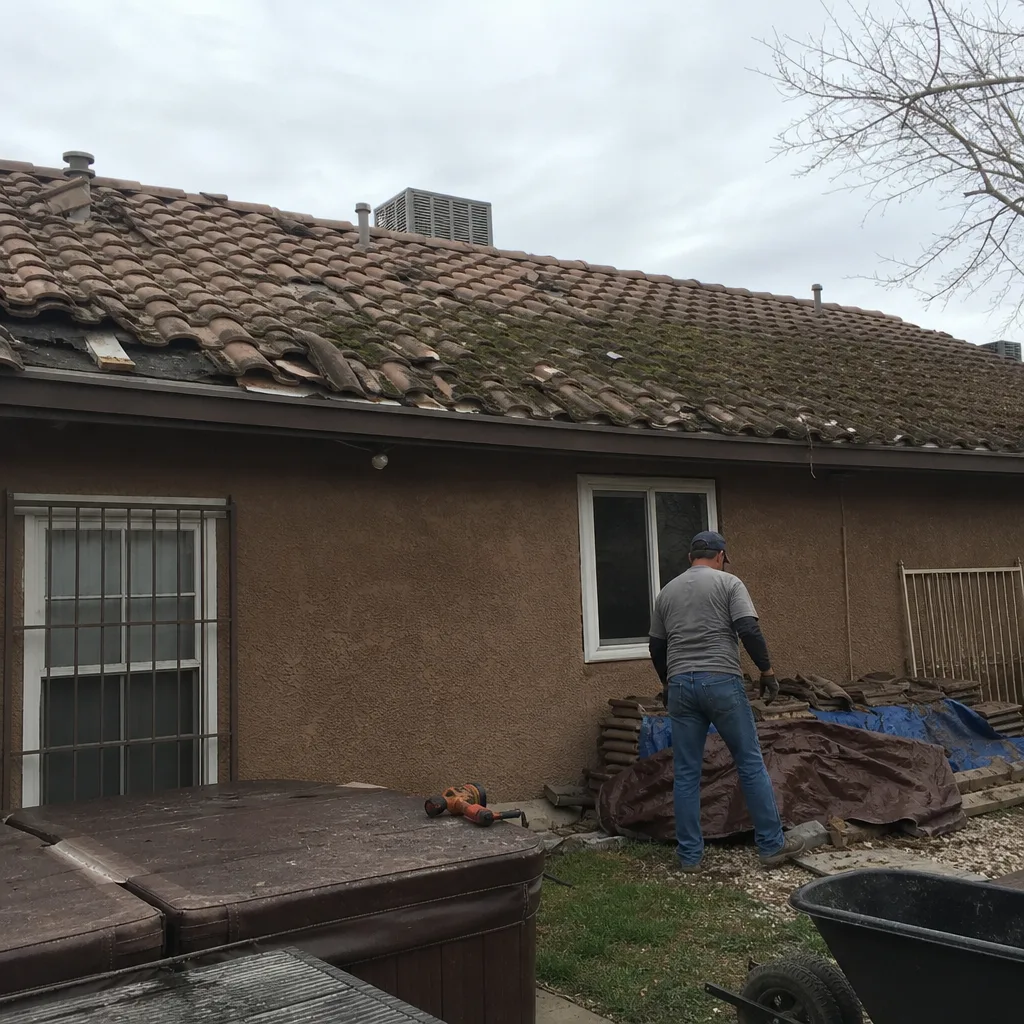 Before
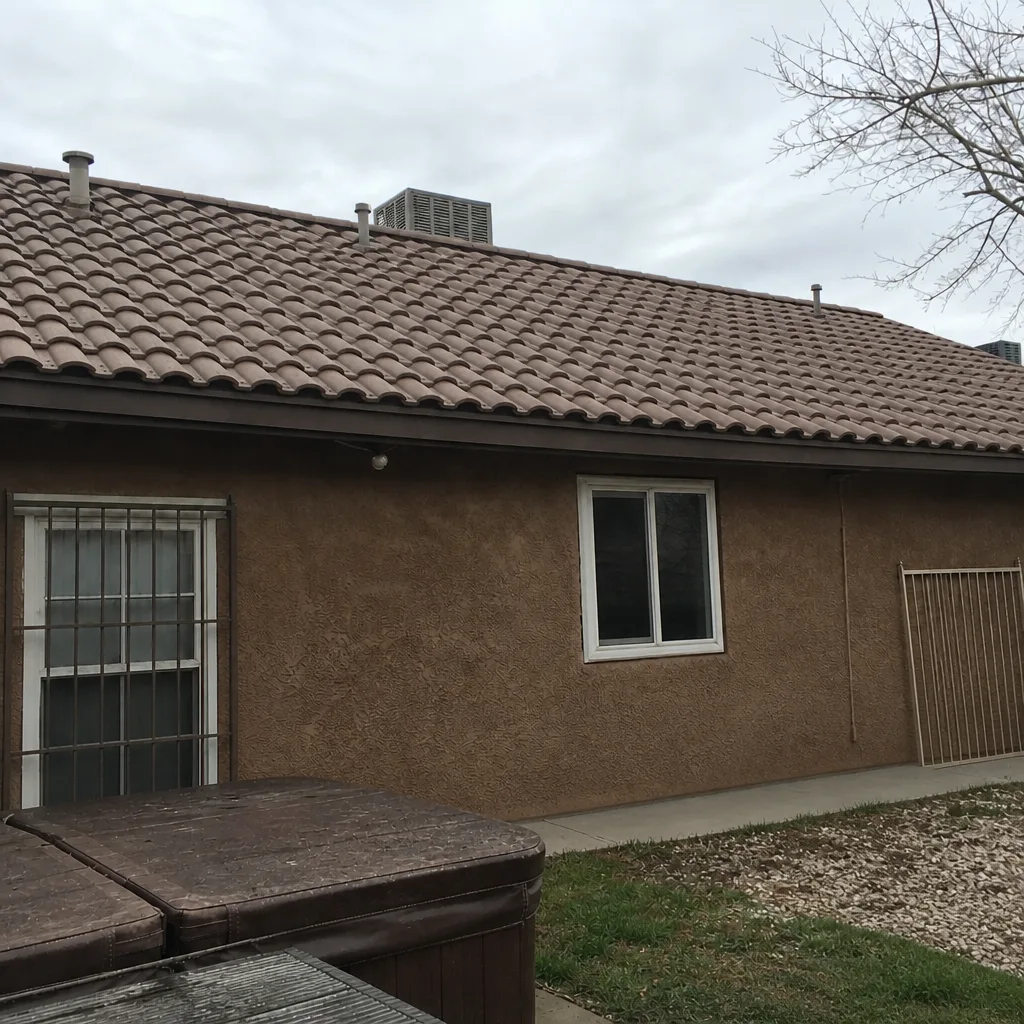 After
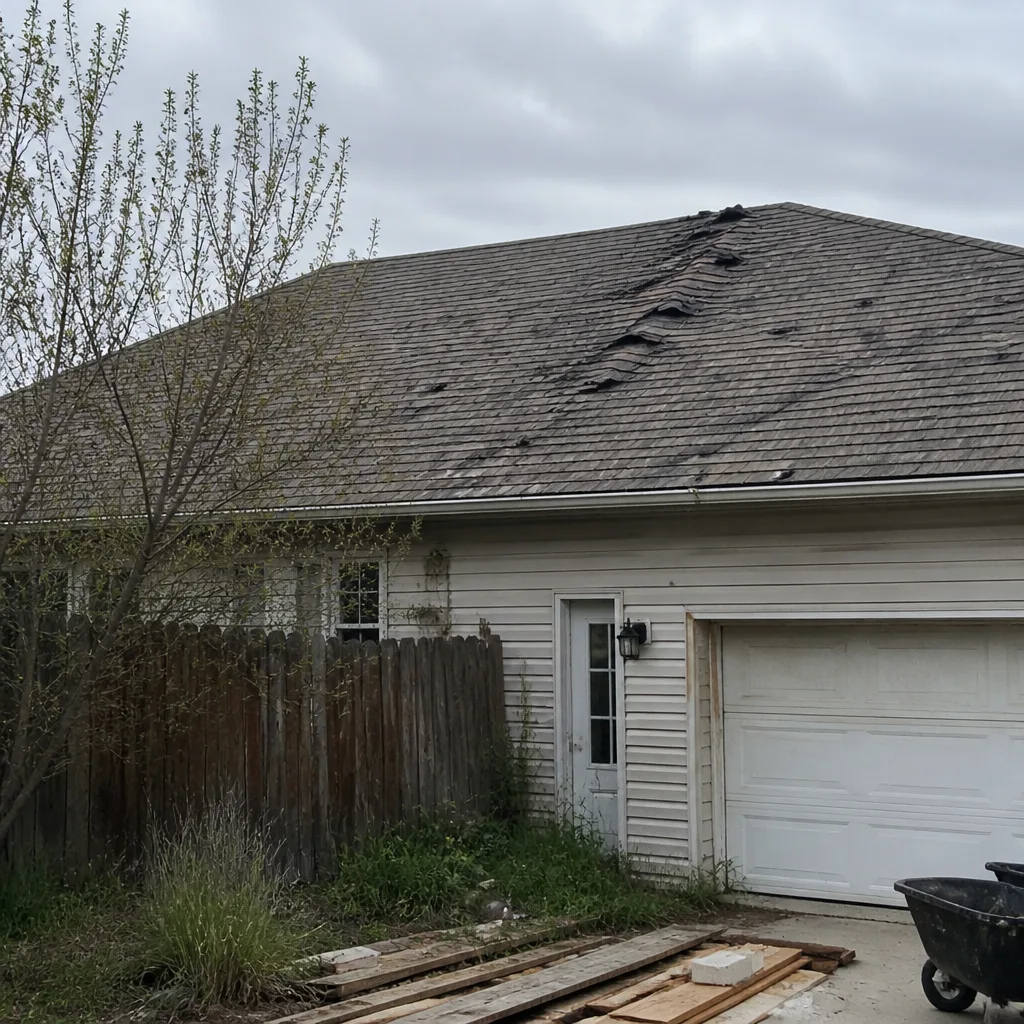 Before
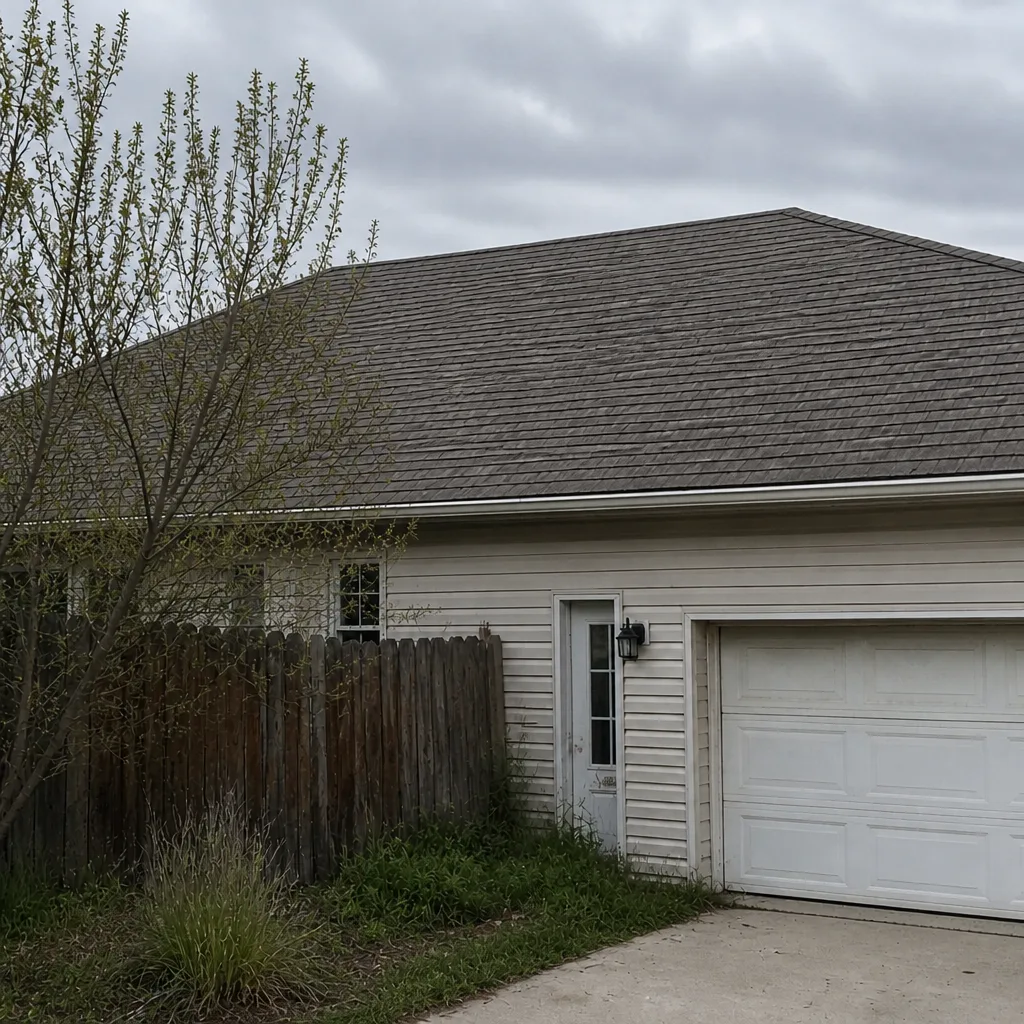 After
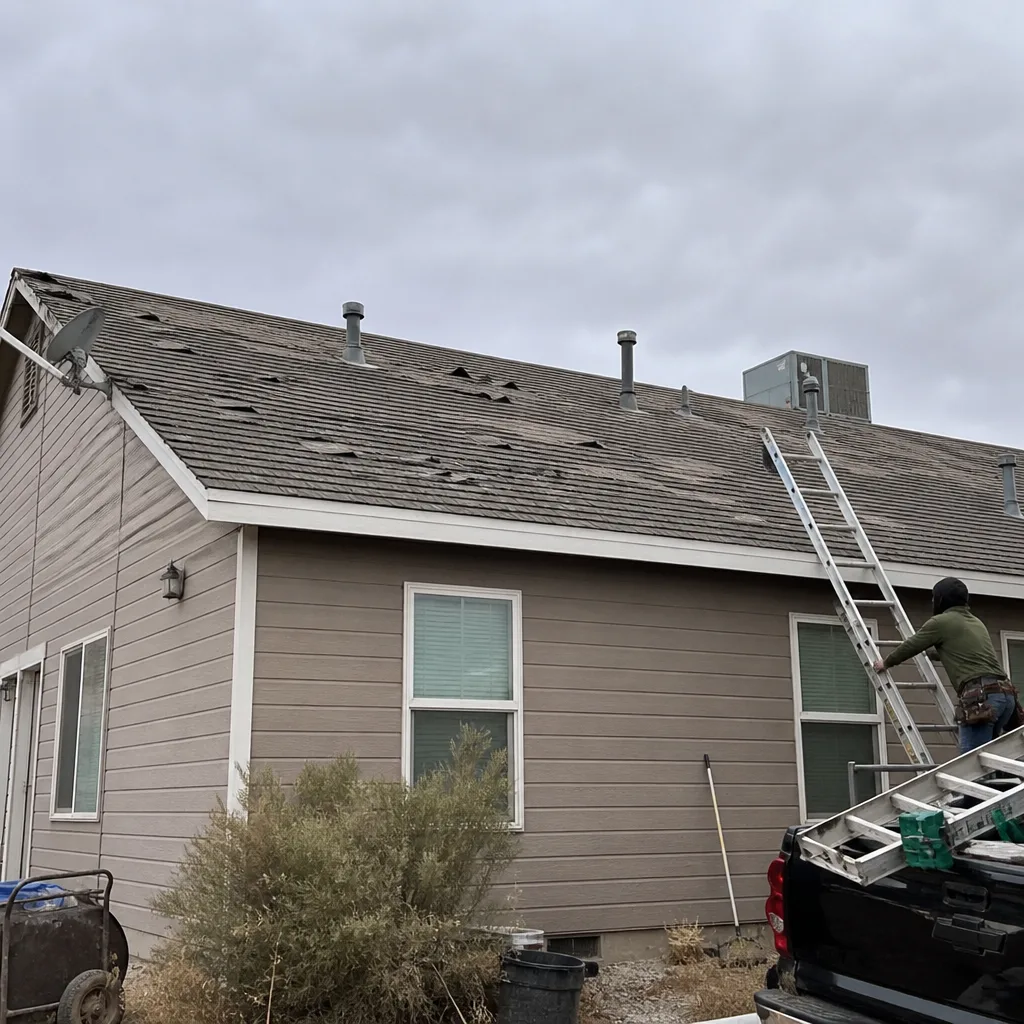 Before
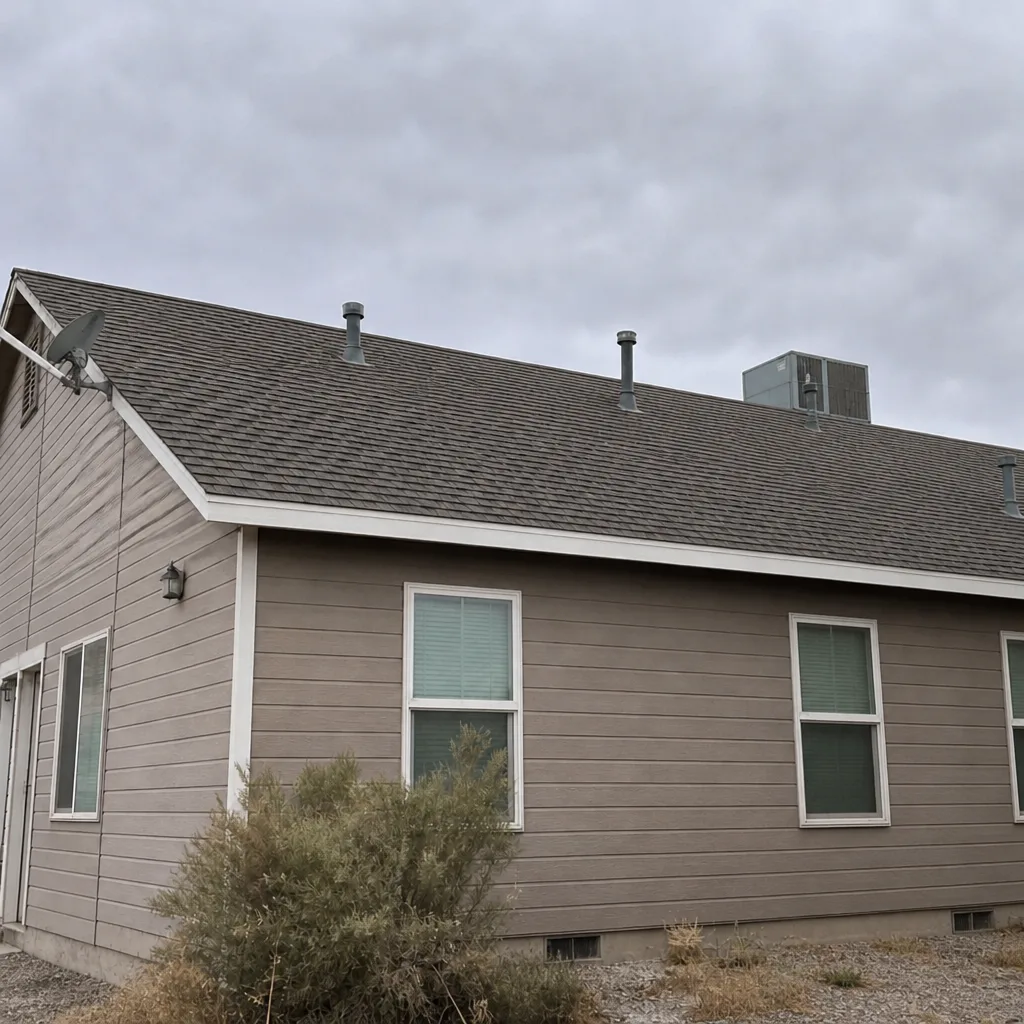 After
Frequently Asked Questions
Twice a year, anchored to the two threat windows: once in May before the June UV peak and once in July before monsoon season. That cadence catches the sun damage and drainage issues that cause most emergency repairs here before they turn into leaks.
You can clear gutters and do ground-level visual checks safely on a one-story home. Walking the roof surface, working near flashing or electrical components, or anything involving height and steep pitch is better left to a professional. Doing it yourself can also affect warranty coverage, so keep that in mind.
Cleaning addresses debris and blocked drainage. A repair need shows up as granule loss, curling or lifted shingles, cracked flashing sealant, daylight in the attic, or water staining. Those signals mean the roof needs more than a sweep. Call (844) 228-4119 for a free estimate if you’re seeing them.
Keep dated photos of each roof plane, every written estimate and invoice, a running repair log, and notes on any interior stains. That file makes a claim easier to settle and a resale disclosure stronger. Our inspections include photos from your actual roof to help you build it.
Our $89 seasonal tune-up covers a roof walk with photos, drainage clearing, flashing review, and a written report. It’s a small cost compared to the emergency repairs it helps prevent. Call (844) 228-4119 to schedule one.
No. Our pricing is no-hassle and upfront, and the number on the estimate is the number on the invoice. That’s part of a square deal, backed by our 90-Day Done Right Promise. Call (844) 228-4119 for a free, written estimate.
The Bottom Line
A roof lasts longest when you work the calendar, not the weather. In Enterprise, that calendar is fixed by two anchors: the May inspection before the June UV peak and the July drainage sweep before monsoon season. Handle the safe tasks yourself, leave the height and flashing work to a professional, and keep a dated record of everything. Our $89 seasonal tune-up and 90-Day Done Right Promise are built around exactly this rhythm. Call (844) 228-4119 for a free estimate, and let’s keep your roof ahead of the sun and the rain.
Written by the team at Ridgeline Roofing Co. Enterprise.