
Last updated November 18, 2026
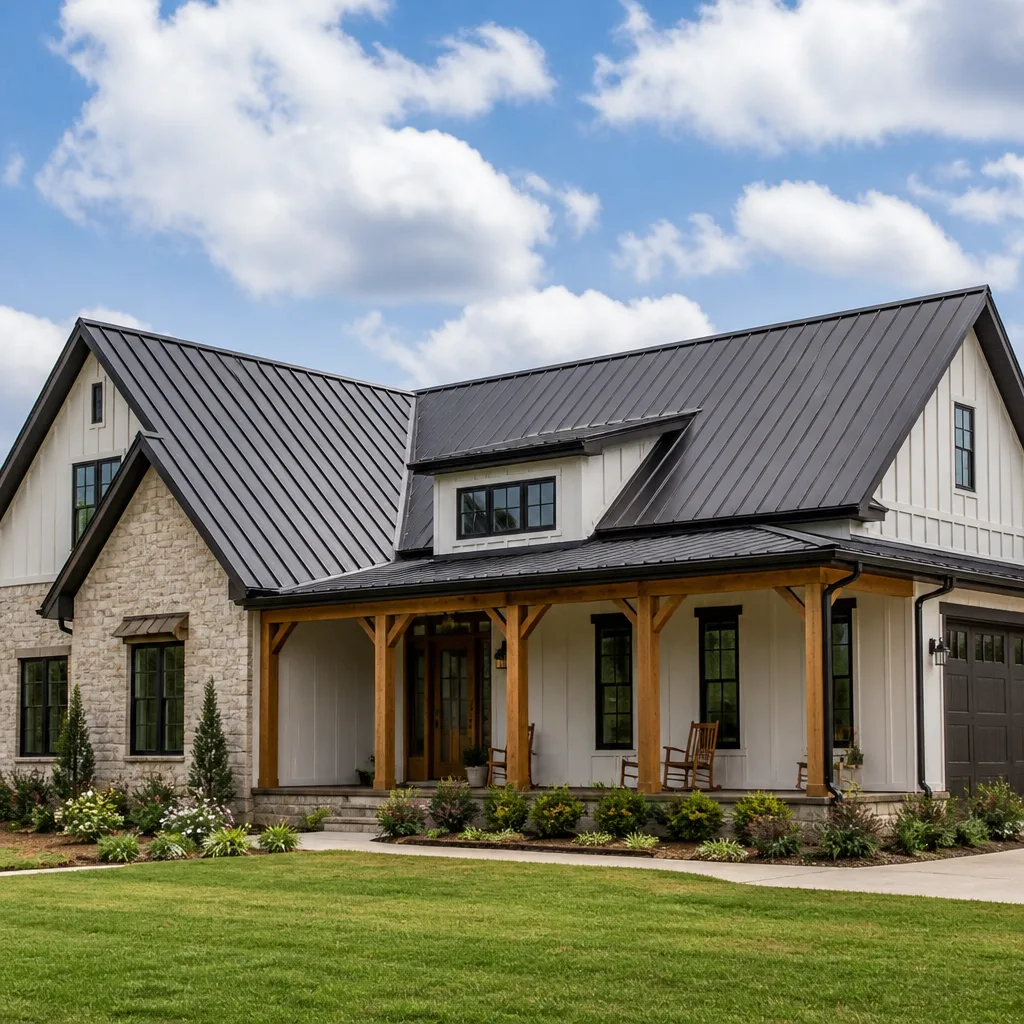 Metal roofing
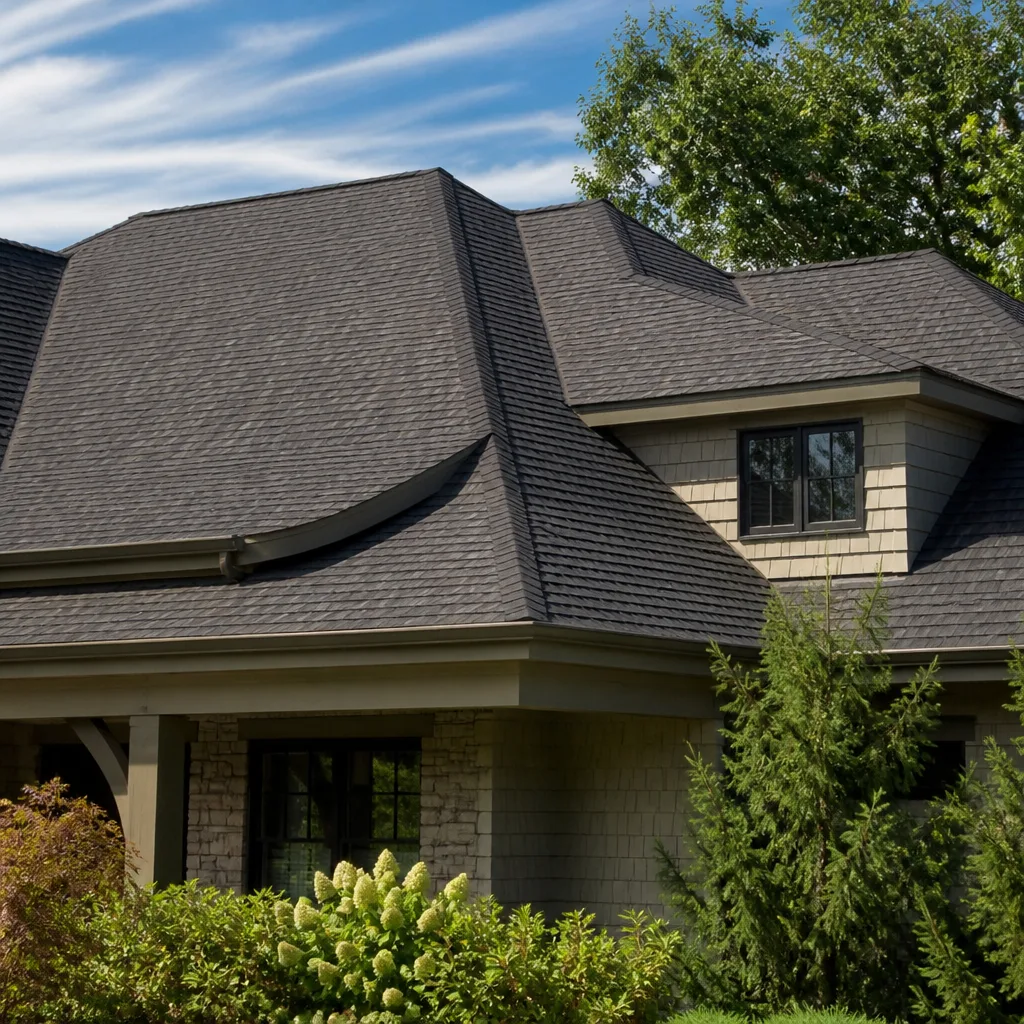 Architectural shingles
 Tile roofing
 GAF
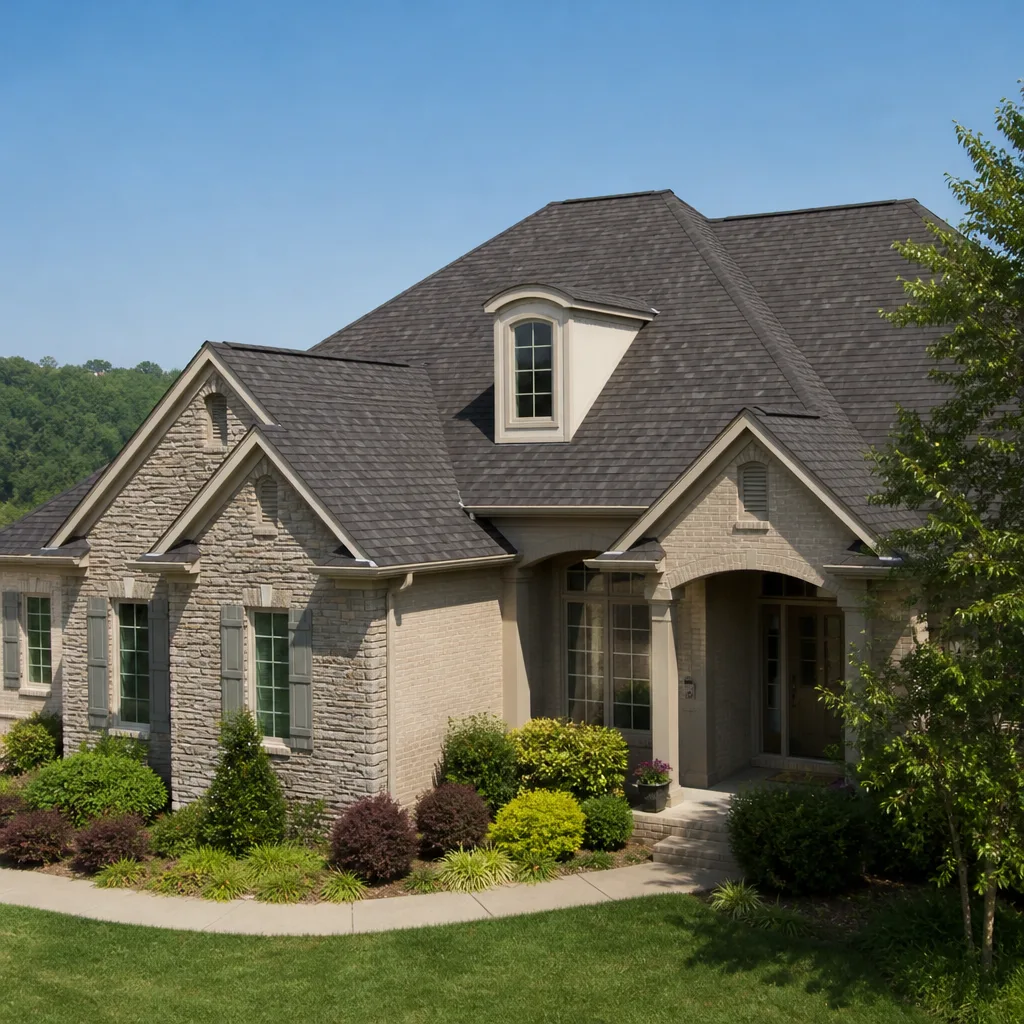 Owens Corning
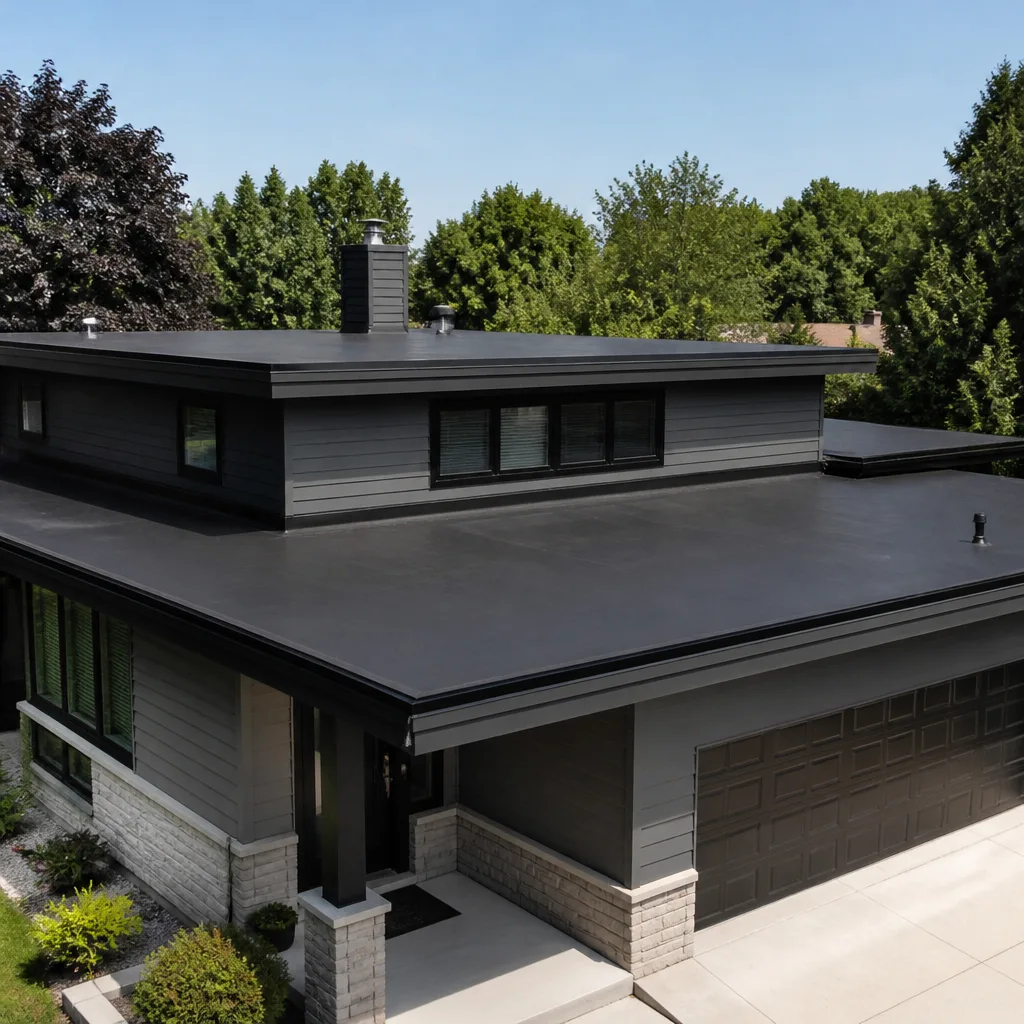 Flat & low-slope
Free roof inspection with deck photos before we talk money - GAF and Owens Corning certified installation
How to Hire a Roofing Contractor in Enterprise: A Step-by-Step Guide
Nevada’s contractor license database is public and takes 90 seconds to search, yet most homeowners who hire unlicensed roofers never check it. Usually it’s because the contractor handed them a business card that looked official, quoted a number that felt fair, and promised to start Monday. Here’s what we’ve learned from walking behind those jobs in Enterprise: the card was never the point. The license number, the contract language, and who actually climbs the ladder are the things that separate a contractor who’ll be here next spring from one who won’t. This guide walks you through the vetting process step by step, with the specific records to pull, the clauses to demand, and the questions most homeowners forget to ask until it’s too late.
Quick Answer
To hire a roofing contractor in Enterprise, NV, verify their Nevada C-15 roofing license through the Nevada State Contractors Board (NSCB) by license number, not by business name, then get a written contract that includes lien waivers, explicit warranty terms, photo documentation requirements, and a dispute resolution clause. Ask who will physically be on your roof, confirm they carry general liability insurance and workers’ compensation, and never sign a contract the same day a storm chaser knocks on your door. A licensed, insured, locally accountable roofer will hand over those documents without hesitation.
Styles & brands we work with
- Architectural shingles
- Metal roofing
- Tile roofing
- GAF
- Owens Corning
- Flat & low-slope
Table of Contents
- Step 1: Verify the Nevada C-15 License Yourself
- Step 2: Demand the Four Contract Clauses That Protect You
- Step 3: Why the Lowest Bid Is Quietly the Most Expensive
- Step 4: Ask Who Actually Goes on the Roof
- Step 5: Get a Written 90-Day Promise, Not a Handshake
- What Enterprise Weather Does to Roofs
- The Questions to Ask Before Anyone Climbs Up
- Common Mistakes to Avoid
- When to Call a Professional
Step 1: Verify the Nevada C-15 License Yourself
Nevada licenses roofers under a specific classification: C-15, which is residential and commercial roofing. That classification matters because a general contractor’s license or a handyman’s business license does not authorize roofing work in this state. When a storm rolls through Enterprise and a crew shows up with a magnetic sign on the truck and a folder of “certifications,” the only thing that counts is an active C-15 number. Here is the process, start to finish:
- Ask for the license number in writing. Not the company name, the number. It appears on the NSCB record and on any legitimate written estimate.
- Search the NSCB database directly. Go to the Nevada State Contractors Board website and use the license lookup by number. Confirm the classification reads C-15.
- Check the status. An active license differs from a suspended, expired, or revoked one. If the status isn’t active, stop.
- Confirm the qualifying individual. Every Nevada license names a qualifying party who passed the trade exam. That person is accountable for the work, so ask who it is and whether they’ll be involved in your project.
- Look at the complaint history. The database shows disciplinary actions. One old complaint tells you less than a pattern of them.
- Confirm liability insurance and workers’ compensation. The NSCB record lists coverage; ask for a current certificate of insurance naming you as certificate holder.
What a C-15 license does not cover is equally important. It doesn’t guarantee the roofer carries enough liability coverage for a full replacement, and it doesn’t protect you from poor workmanship. It proves the contractor is authorized, insured, and accountable to a state board. That’s the floor, not the ceiling. For the work itself, our roof repair in Enterprise team gets called out regularly to undo jobs that passed the license check but failed every other one.
Step 2: Demand the Four Contract Clauses That Protect You
Most disappearing-contractor stories in Enterprise don’t start with a bad license. They start with a contract the homeowner signed in the driveway that said nothing useful. Four clauses change that outcome, and a legitimate contractor will include them without complaint. These are the terms we build into every estimate, and any roofer who pushes back on them is telling you something.
- Lien waivers from every supplier and subcontractor. A supplier who hasn’t been paid can place a mechanic’s lien on your property even if you paid the contractor in full. Get conditional lien waivers as work progresses and a final unconditional waiver at completion, tied to your final payment. This single clause is the difference between a clean title and a legal fight.
- Written warranty terms with the duration spelled out. The manufacturer’s material warranty and the contractor’s workmanship warranty are two different documents. Get both in writing, with the workmanship period stated as a number of years and the exclusions listed. A promise that lives only in the sales conversation has no value once the truck leaves Enterprise.
- Photo-documentation requirements. The contract should state that the contractor will photograph the roof before, during, and after installation, and deliver those photos to you. This protects both sides: you get proof of what was under the shingles, and the contractor has a record if a dispute about existing damage comes up later.
- Dispute resolution language. Specify whether disputes go to mediation, arbitration, or court in Clark County, and include a notice-and-cure provision that requires the contractor to be told in writing and given a set window to fix the problem before either side escalates. That clause keeps small problems small.
Read the payment schedule too. A contractor asking for a large deposit up front in cash, before materials are ordered or permits pulled, is a pattern worth walking away from. Permits matter in Enterprise because inspections confirm the underlayment and flashing were installed to code, and no honest contractor skips that step to save a few dollars. When we quote a roof replacement and installation in Enterprise, the permit and inspection are line items, not afterthoughts.
Step 3: Why the Lowest Bid Is Quietly the Most Expensive
The lowest bid is almost never the cheapest roof. It’s the bid that cut the most corners you can’t see from the ground: thinner underlayment, fewer fasteners, skipped ice-and-water shield at the valleys, and a crew paid by the square who stays only long enough to get paid. When that work fails, the callback rate goes up and the warranty it was supposed to be covered by turns out to be verbal. Enterprise homeowners who take the low bid once tend to remember it for a decade, because a roof is one of the few purchases you can’t test-drive.
In our experience, the math runs roughly like this: a cheap bid saves you a modest percentage up front. A single failure within the first few years, whether it’s a leak at a penetration or flashing that wasn’t replaced, costs more than that savings to fix, and the original roofer is often out of state. The honest comparison isn’t bid versus bid. It’s bid versus bid plus the cost of enforcing a workmanship guarantee nobody’s on the hook for.
A real estimate should show line-item materials, the manufacturer line being installed, disposal, permit, and labor, with a stated total that matches the invoice. We install products from GAF, CertainTeed, and Owens Corning and quote the actual system being used, not a generic “architectural shingle” placeholder. When a contractor won’t itemize, you’re being asked to compare two numbers that don’t describe the same roof.
A short list of what a fair bid includes:
- Manufacturer line and product name, not a category
- Underlayment and flashing specifications
- Decking repair allowance, stated separately
- Disposal and dumpster costs
- Permit and inspection fees
- Workmanship warranty duration, in writing
- Payment schedule tied to milestones, not to a handshake
If a roofer in Enterprise can’t produce that list, the price advantage is being generated by omission. For specialty systems like tile or flat roof assemblies, the gap between a real bid and a cheap one widens fast, which is why our specialty roofing in Enterprise estimates are always itemized.
Step 4: Ask Who Actually Goes on the Roof
Ask any contractor a direct question: will the crew on my roof be your employees or a subcontractor, and who supervises the job? It’s not a trick question, and the answer tells you where accountability lives. Subcontracting is common and legal, but the homeowner deserves to know the name of the crew, whether their workers’ comp coverage is current, and who on site can answer for the installation. If the crew changes from job to job and supervision is a phone call from three towns over, the warranty is only as strong as the person who won’t be there.
We’ve seen callbacks in Enterprise where the damage traced back to a framing nail fired through flashing by a crew that was never told the details of the assembly. Proper installation is a sequence: decking checked, underlayment laid, flashing set, shingles aligned to the manufacturer’s nailing pattern, ridge vent finished. That sequence is a supervisory responsibility. When nobody’s on the roof with authority to stop a bad move, bad moves happen.
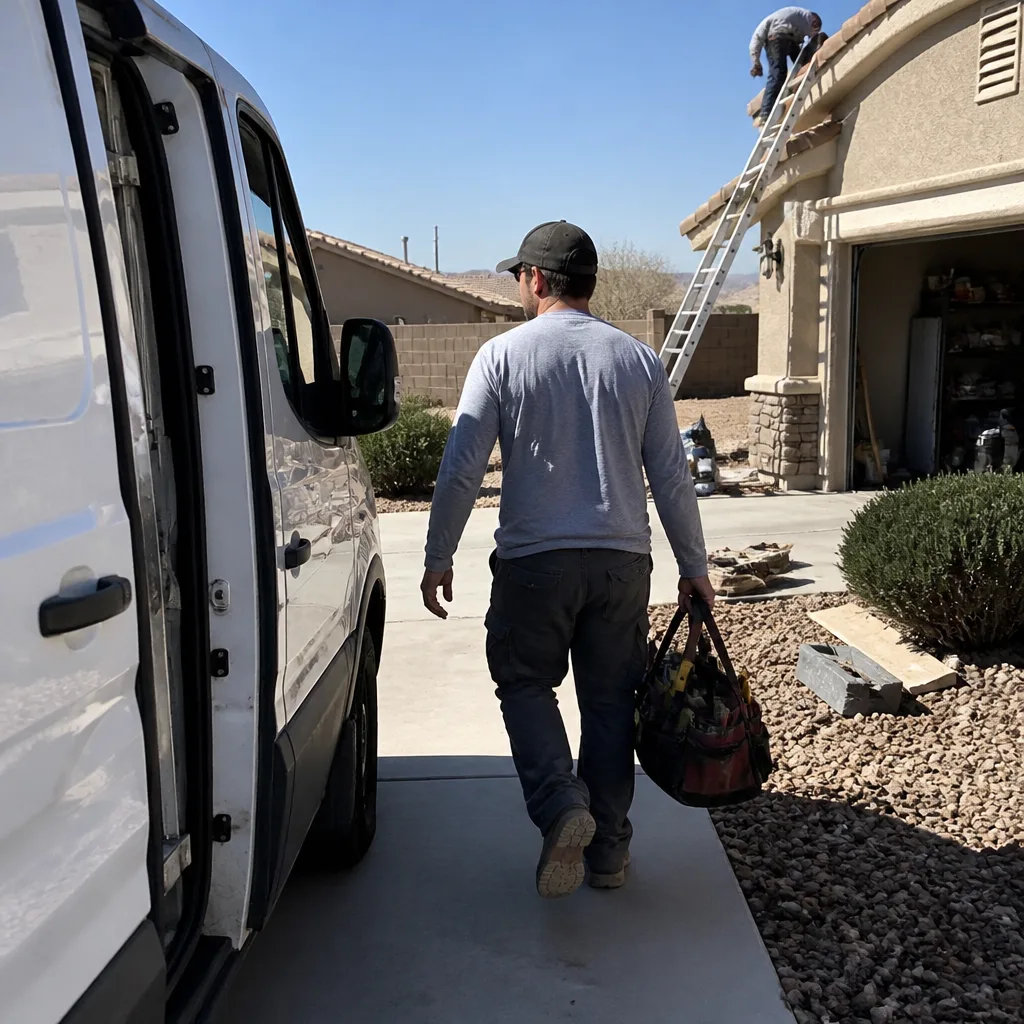
Background-checked, uniformed technicians are the standard we hold ourselves to on every job, because the people entering your property should be people you’d trust in your own mother’s house. Ask whether the contractor’s crews are background-checked and whether the same crew that starts your job finishes it. A contractor who can answer both without hedging is a contractor who plans to be in town when you call back.
Step 5: Get a Written 90-Day Promise, Not a Handshake
A written workmanship guarantee has a specific shape: a stated period, a process for reporting a problem, a response commitment, and a remedy. It lives on paper, signed, dated, and given to you before final payment. A verbal promise has none of that, and in Clark County small claims court, a verbal guarantee you cannot document is largely a conversation you had and nothing more. The court needs the document, not the memory.
Our version of this is the 90-Day Done Right Promise: if the work isn’t right within the defined window, we come back and make it right, no arguing and no runaround. The point isn’t to name a period and move on. It’s to put the same accountability you’d want from a handshake into a document that holds up when someone forgets the handshake. Look for these four elements in any workmanship warranty you’re offered:
- Coverage window. How long the workmanship warranty runs, stated in writing.
- What’s covered. Specifically the installation, not just the materials. Manufacturer warranties cover the shingles; only the contractor covers the labor.
- Response commitment. What happens after you report a problem and how quickly you’ll hear back.
- Remedy. Whether they repair, replace, or refund, and how disputes are resolved.
One more thing worth knowing: manufacturer warranty registration. Systems installed by an authorized contractor are eligible for stronger warranty terms than the same shingles installed by anyone with a truck. Ask whether the contractor is an authorized installer, and confirm the registration gets filed in your name after the job closes. The company you hire in Enterprise should be able to name the brands they’re authorized for, and we install under authorizations that include GAF and Owens Corning systems.
What Enterprise Weather Does to Roofs
Enterprise sits in the southern Nevada desert, and that means the roofing risks here differ from what homeowners read in national advice columns. Two things matter most. First, the summer heat: sustained temperatures that crack old asphalt shingles, dry out sealant at penetrations, and drive thermal expansion and contraction that works fasteners loose season after season. Second, the wind. Desert windstorms push grit and heat against the roof assembly and lift the edges of anything that wasn’t properly adhered, which is why edge metal and perimeter sealing deserve more scrutiny than they typically get. Monsoon rain in the summer often arrives fast and hard, and the leaks we see in Enterprise frequently show up at penetrations and valleys rather than across the field.
The makeup of the housing stock matters too. The neighborhoods south of the 215 and the established stretches around Enterprise and Silverado Ranch include a lot of homes built in the 1990s and early 2000s, which puts many original asphalt roofs at or past their useful life. When the sun has baked the granules away, a two-inch shingle lift at a valley isn’t a repair problem, it’s a replacement conversation. That’s one reason our technicians photograph what they actually see on the roof and walk you through the shots instead of handing you a scare speech in the driveway.
None of that means every Enterprise roof needs replacement every decade. It means the person assessing your roof should be able to explain what this climate is doing to it in specific terms. If the assessment is generic, the recommendation probably is too.
The Questions to Ask Before Anyone Climbs Up
Write these down and ask them in order. The answers, and how quickly they come, tell you more than any brochure.
- What is your Nevada C-15 license number? Then look it up. Don’t take a number that doesn’t match the database.
- Are you insured for general liability and workers’ comp, and can I see the certificates? If a worker is hurt on your roof without coverage, the exposure can follow you.
- Who will physically be on my roof, and will you supervise the job? Names, employees, and supervision responsibility.
- Which manufacturer lines do you install, and are you authorized for them? Vague answers mean generic materials and weaker warranty registration.
- What’s your workmanship warranty in writing, and what’s the process if I have a problem? Ask to see the document before you sign.
- Will you pull the permit and is the inspection included? In most cases the permit is a line item, not a favor.
- Is the price on the estimate the price on the invoice? A contractor with fixed pricing will say yes without hesitation.
If you’re comparing more than one estimate, ask each contractor for a free second opinion on the other’s written quote. A contractor who’s comfortable being compared to another document is a contractor who’s confident in the answer. That offer is standard with us, and it’s the kind of comparison that has saved Enterprise homeowners real money without ever pitching the cheapest bid.
Common Mistakes to Avoid
- Hiring from a business card instead of the license database. A card and a truck prove nothing. The NSCB record is the fact. Pull it before anyone climbs up.
- Signing the same day a storm chaser knocks. Storm-chasing crews follow severe weather into the valley, carry out-of-state plates, and write contracts designed to be hard to enforce once they’ve gone. Saying no to same-day pressure costs nothing.
- Accepting a verbal warranty. If the workmanship guarantee only exists in the sales speech, it can’t be enforced. Get it written and signed in Enterprise, in your name.
- Skipping the insurance certificates. Liability and workers’ comp coverage should be verified before work begins, not after an injury.
- Choosing the low bid without reading what it omits. Missing underlayment, flashing, or permits isn’t a discount. It’s a smaller scope dressed as a smaller price.
- Paying a large cash deposit up front. Payments tied to milestones protect you. A big cash deposit before materials arrive does not.
- Not asking who’s on the roof. Subcontracting is fine when the homeowner knows the crew and someone is supervising the assembly. It’s a problem when nobody can say who’s coming.
- Ignoring manufacturer warranty registration. The strongest warranty terms follow verified installation. Confirm it gets filed.
When to Call a Professional
Some roofing issues are safe to look at from the ground and nothing more. If you see missing or lifted shingles after a wind event, a stain spreading across a ceiling, daylight at a valley, or a persistent drip after rain, it’s time for an inspection. If an asphalt roof near you is approaching twenty years old and shedding granules into the gutters, get it looked at before the next monsoon season rather than after it. And if a contractor has offered to start work without pulling a permit, stop and have someone else look. Roof work means heights, electrical penetrations, and high-tension components on some assemblies, and it’s genuinely dangerous; a trained professional belongs on the roof, not a homeowner with a ladder.
Ridgeline Roofing Co. Enterprise offers free estimates in Enterprise with photo-documented inspections taken from your actual roof, upfront fixed pricing, and a live person answering the phone any hour of the day. Call (844) 228-4119 to schedule your free estimate.
See the difference
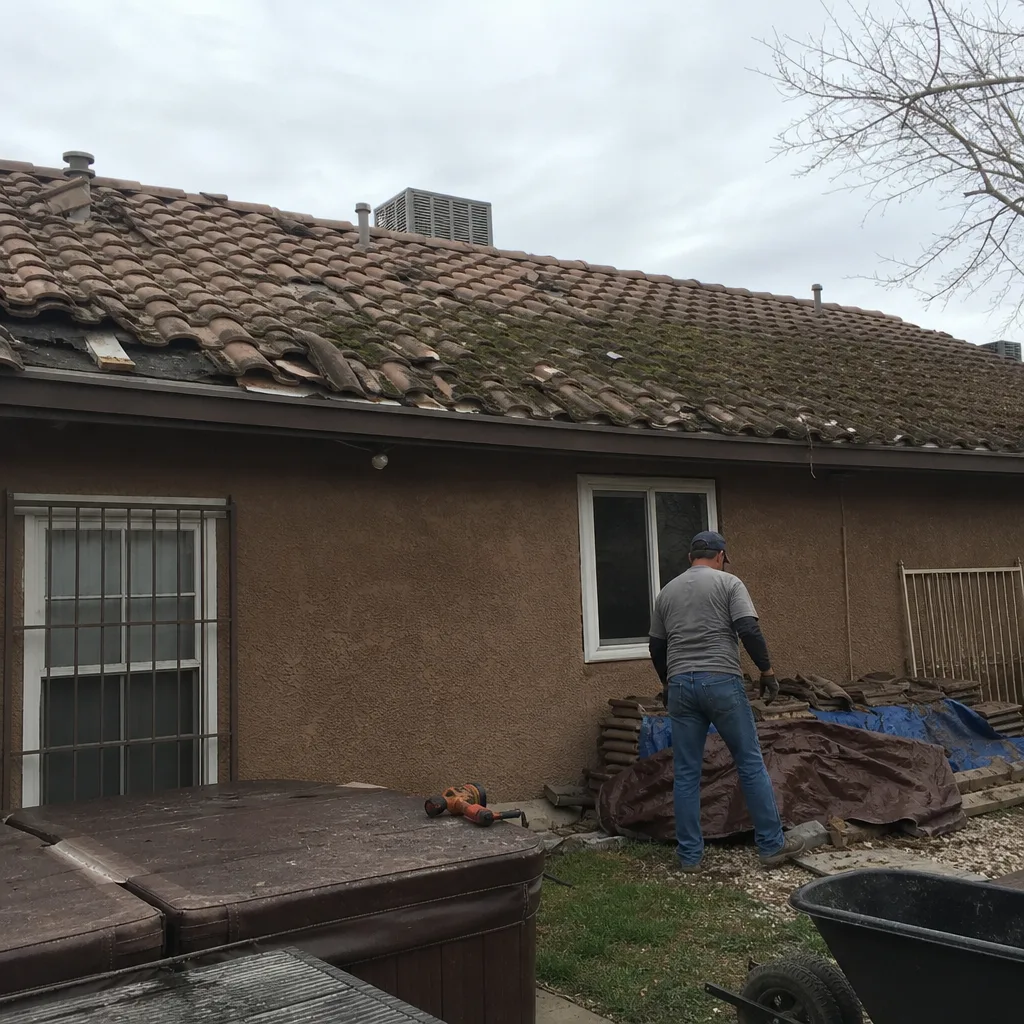 Before
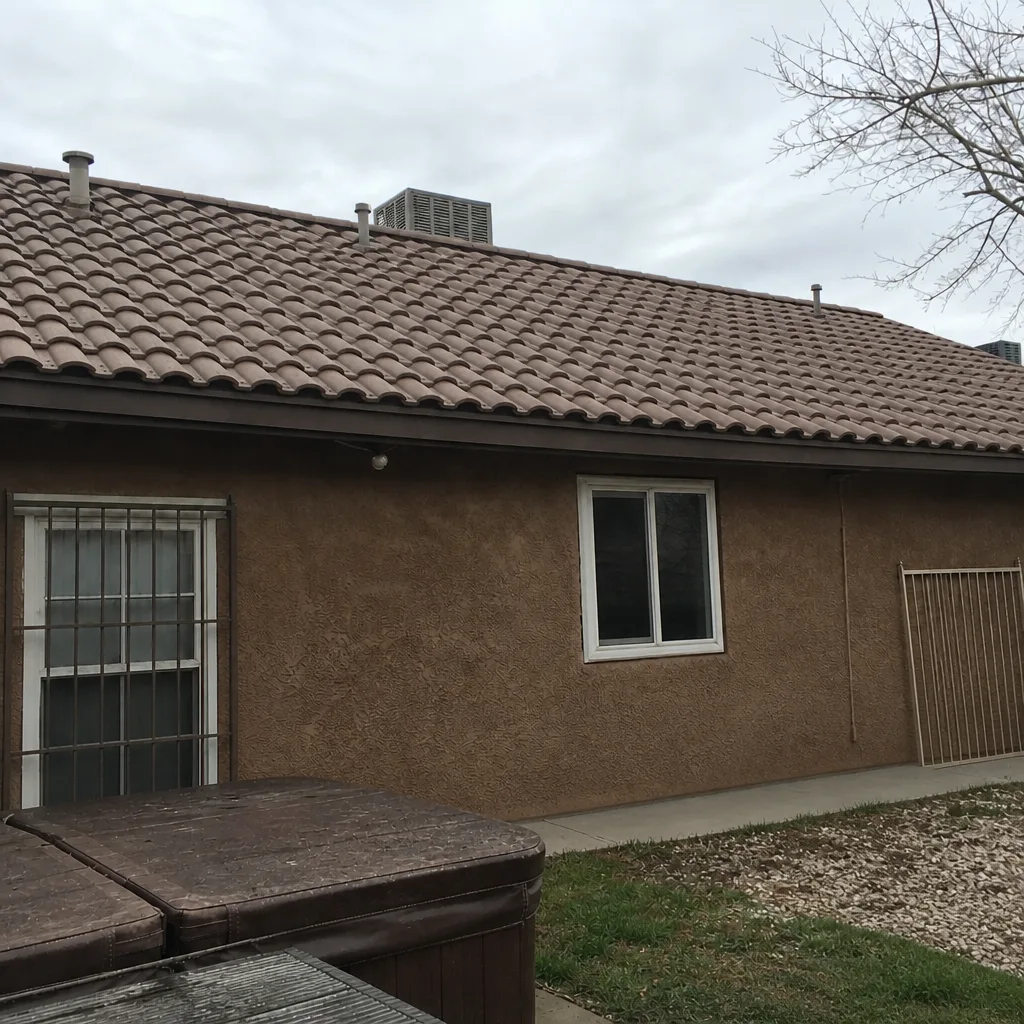 After
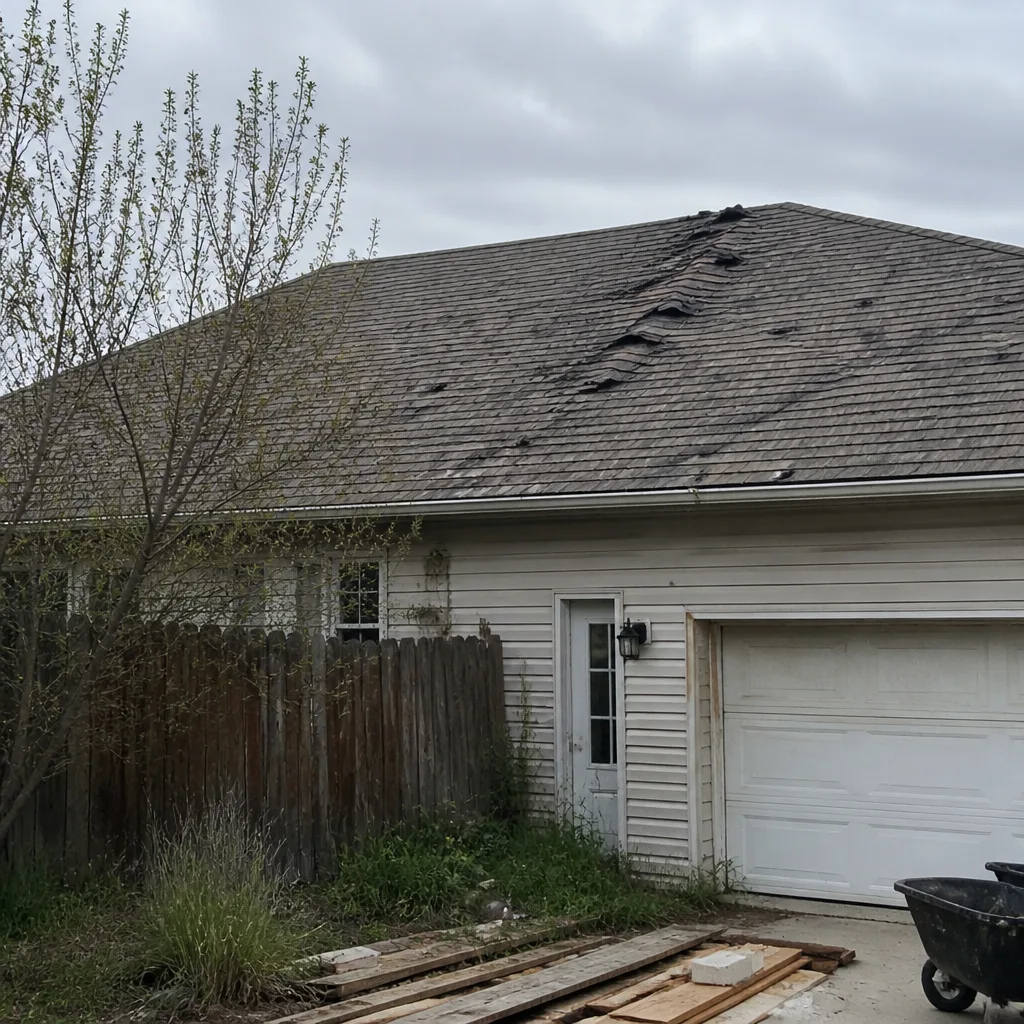 Before
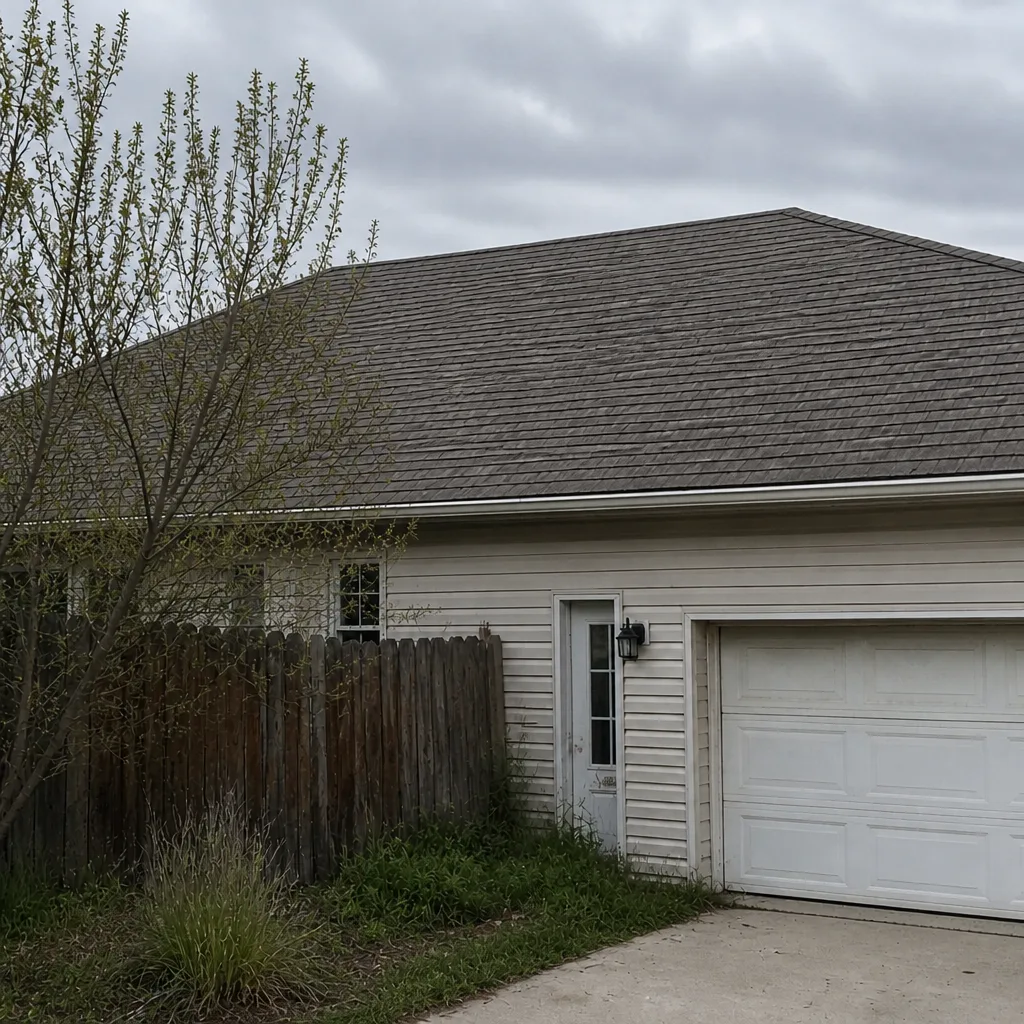 After
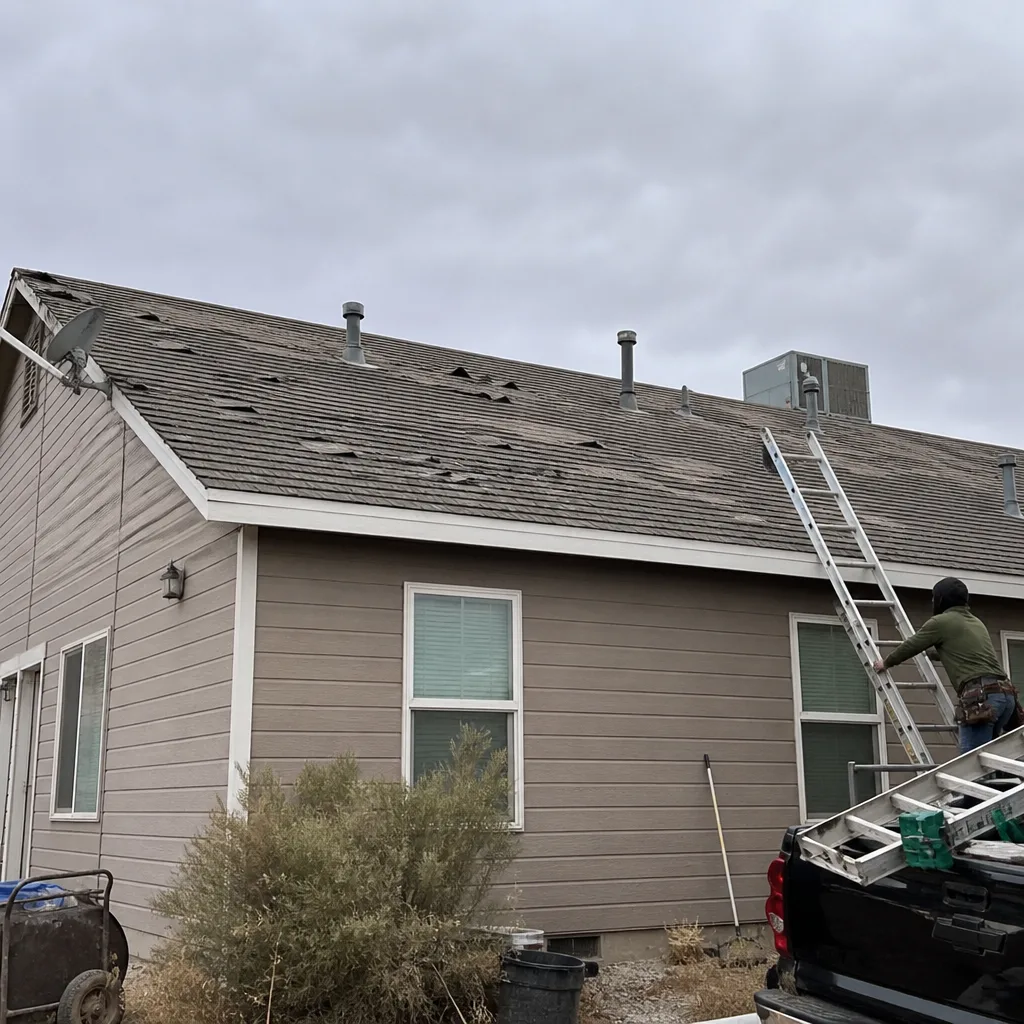 Before
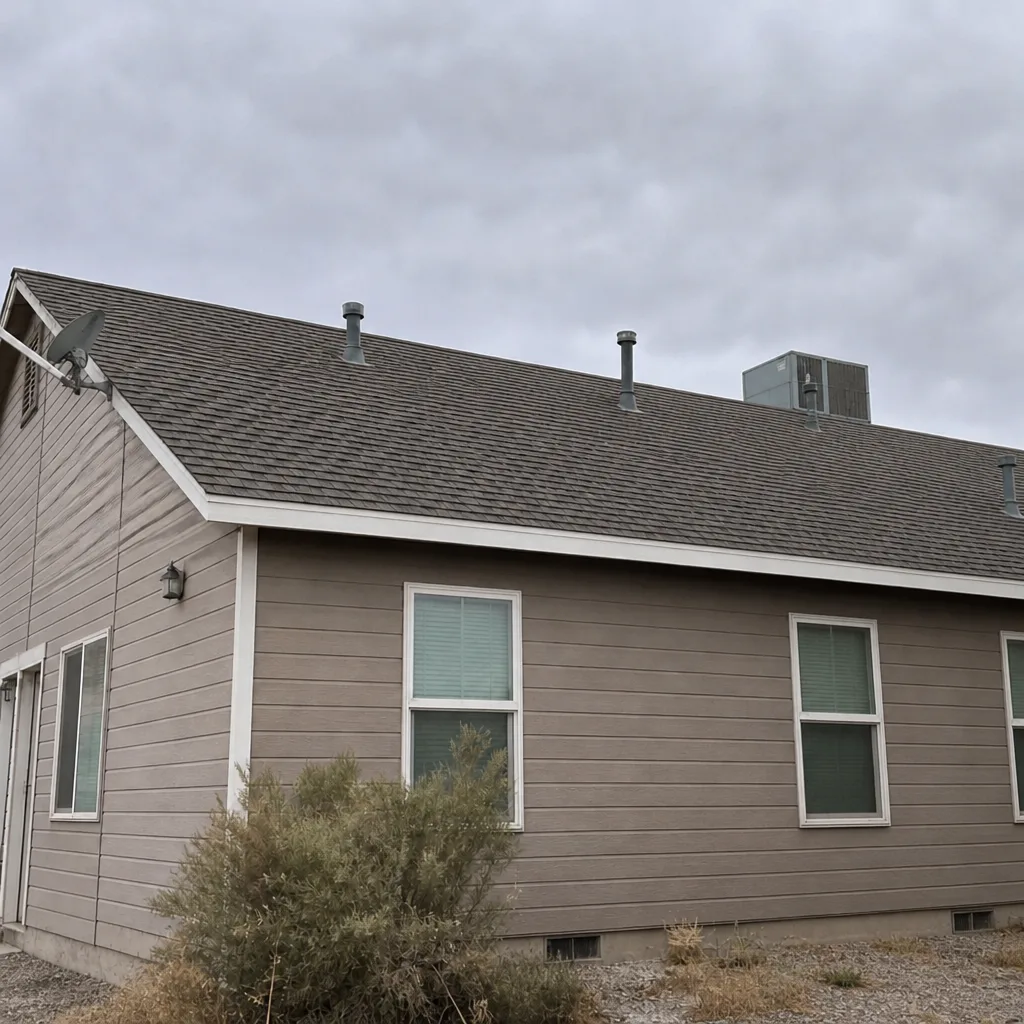 After
Frequently Asked Questions
Look up their license number on the Nevada State Contractors Board website and confirm an active C-15 classification. Ask for the number in writing, not the company name, and check the status, the qualifying individual, and any disciplinary history before you sign anything in Enterprise.
Roof replacement in Enterprise depends heavily on the roof size, pitch, material, and decking condition, so no honest contractor can quote it without seeing the roof. An itemized written estimate is the only way to compare bids fairly. Call (844) 228-4119 for a free estimate; the number on the estimate is the number on the invoice.
No. The lowest bid usually saves the most in places you can’t see, and the workmanship warranty that was supposed to cover the savings either doesn’t exist in writing or belongs to a contractor who has already left Enterprise. When a callback happens, the “cheapest” roof often turns out to be the most expensive one on the block.
It should state the coverage window, what’s covered (installation, not just materials), the response commitment after a problem is reported, and the remedy, whether that’s repair, replacement, or refund. Ours is the 90-Day Done Right Promise, in writing, with no arguing and no paperwork runaround.
A properly licensed contractor pulls the permit and includes the inspection in the estimate. If a roofer offers to skip it, they’re skipping the inspection that confirms the underlayment and flashing were installed to code. Ask for it to be a line item in the written quote.
Often, that’s exactly how the contracts are written: enforceable while the crew is in the state and difficult once they’ve moved on. Lien waivers, written warranty terms, dispute resolution language, and a photo-documentation requirement are the protections that change the outcome. A rooted contractor will hand over those documents before work begins.
Ask directly whether the crew is employees or subcontractors and who supervises the job. Background-checked, uniformed technicians are the standard we hold, because who physically goes on the roof matters as much as who signs the contract.
The Bottom Line
Hiring a roofing contractor in Enterprise comes down to three checks most homeowners skip: verifying the C-15 license in the NSCB database, demanding the four protective contract clauses in writing, and refusing the lowest bid without reading what it leaves out. A rooted contractor will answer those questions without hedging, pull the permit, document the roof in photos, and stand behind the workmanship with a signed promise. Storm chasers won’t. Whether you’re repairing a leak or planning a full replacement, the vetting process you run before anyone climbs on the roof is what determines whether the job gets done once. Start with the license number and go from there. Read more on our Ridgeline Roofing Co. Enterprise home page, then call (844) 228-4119 for a free estimate.
Written by the team at Ridgeline Roofing Co. Enterprise.