
Last updated November 18, 2026
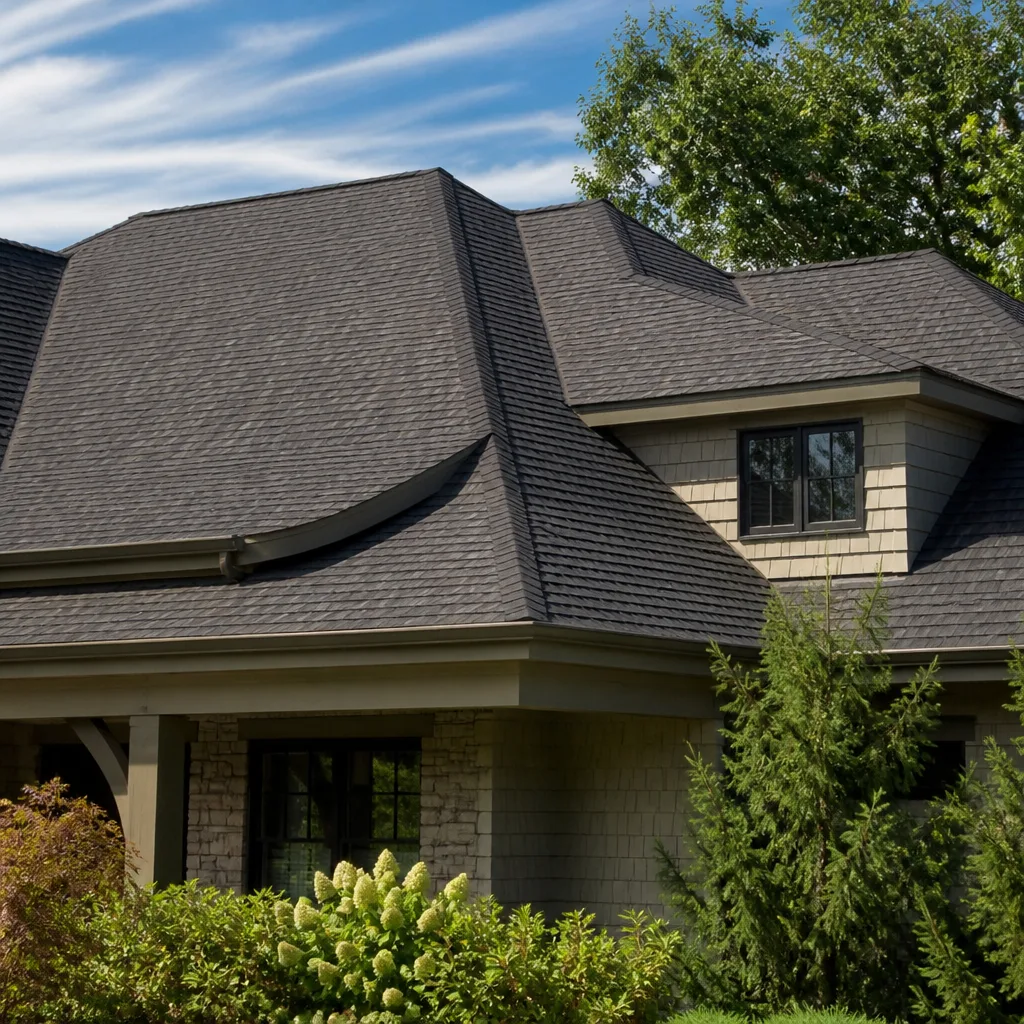 Architectural shingles
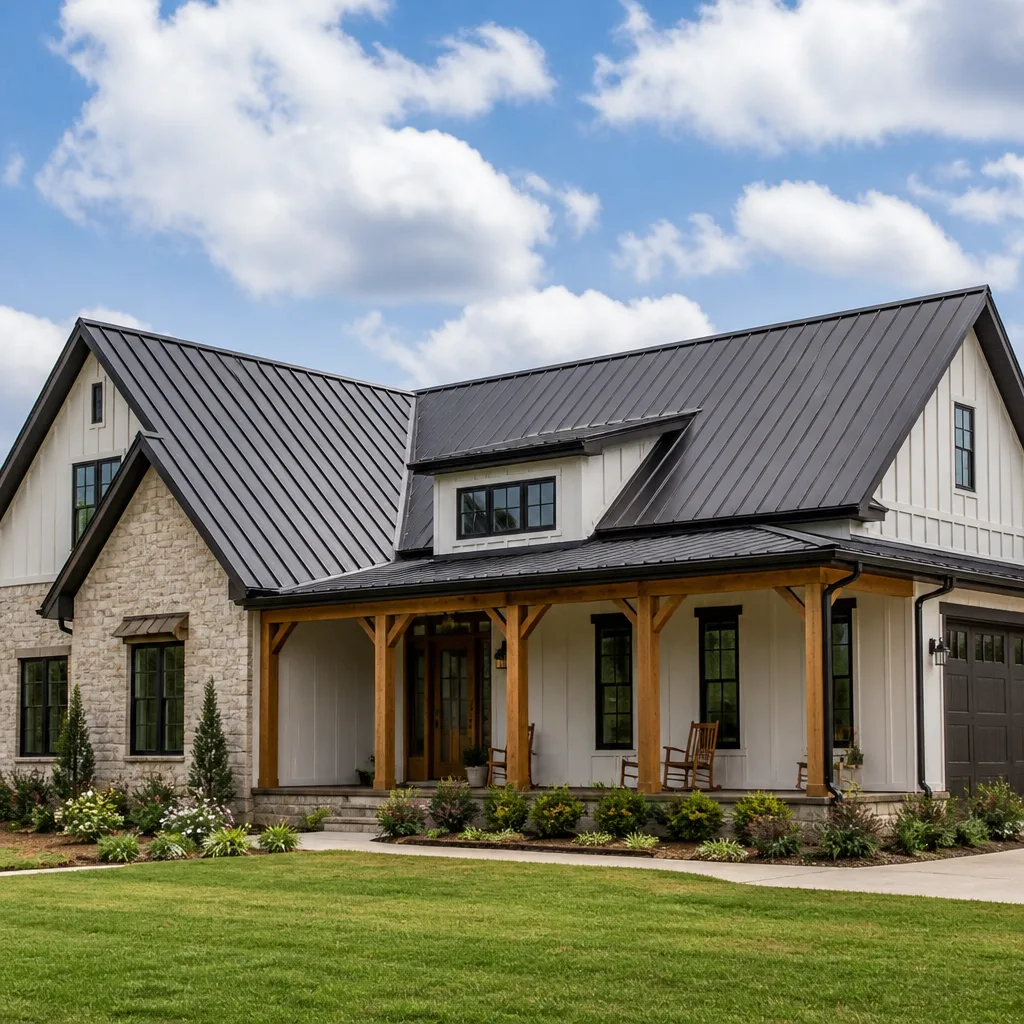 Metal roofing
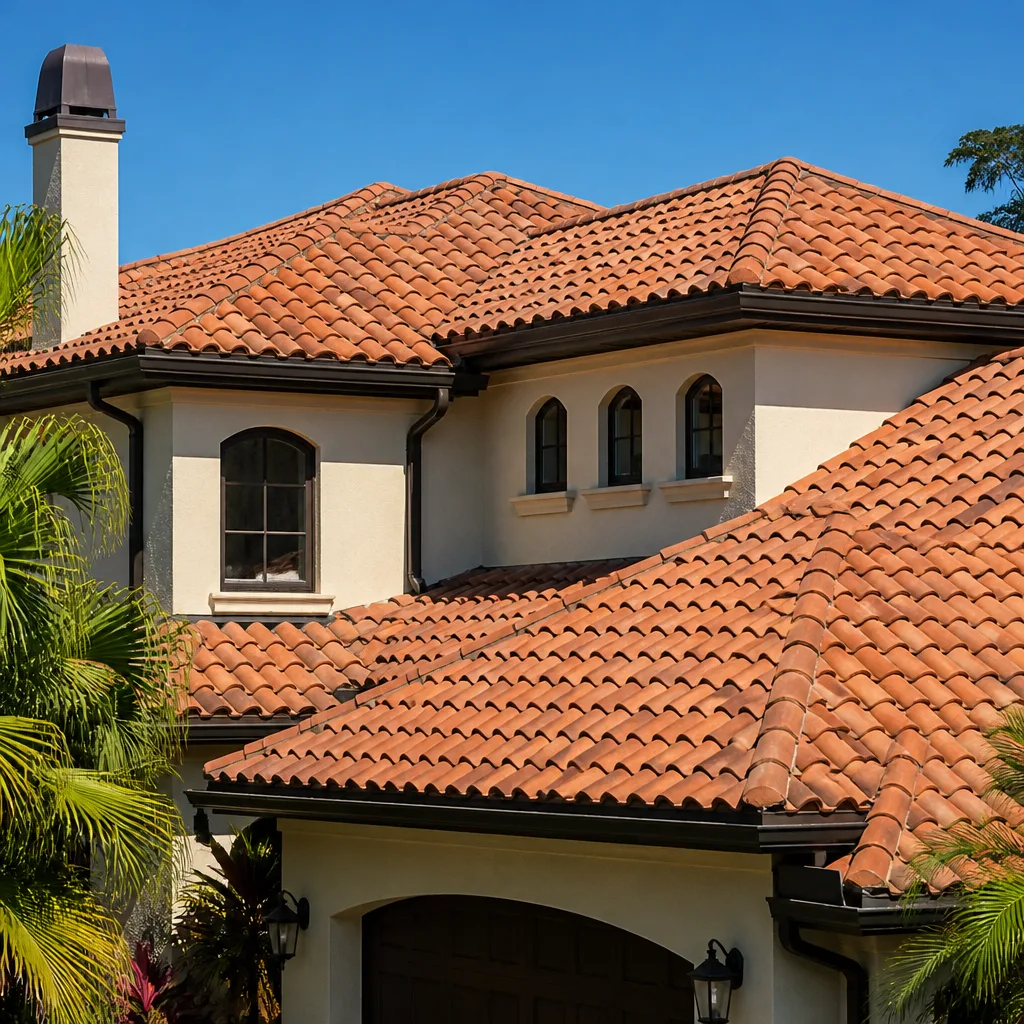 Tile roofing
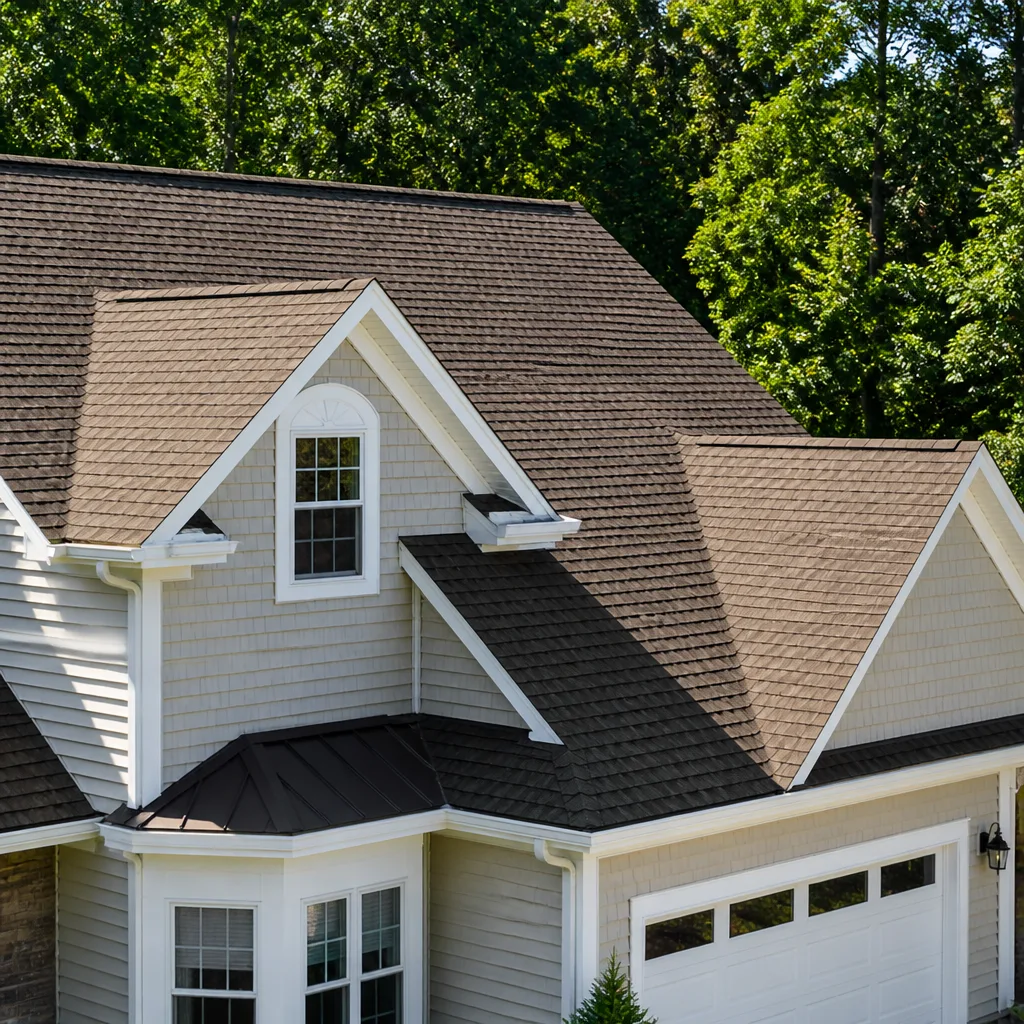 GAF
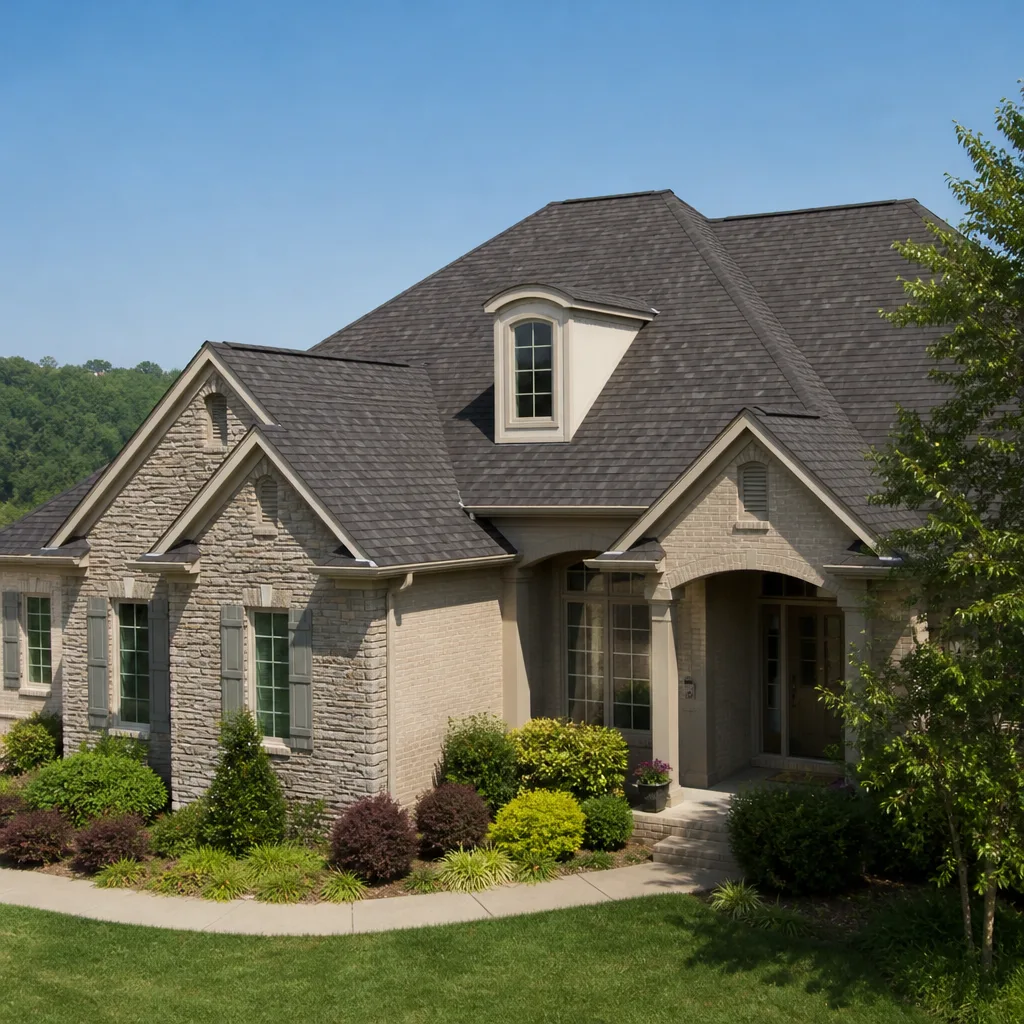 Owens Corning
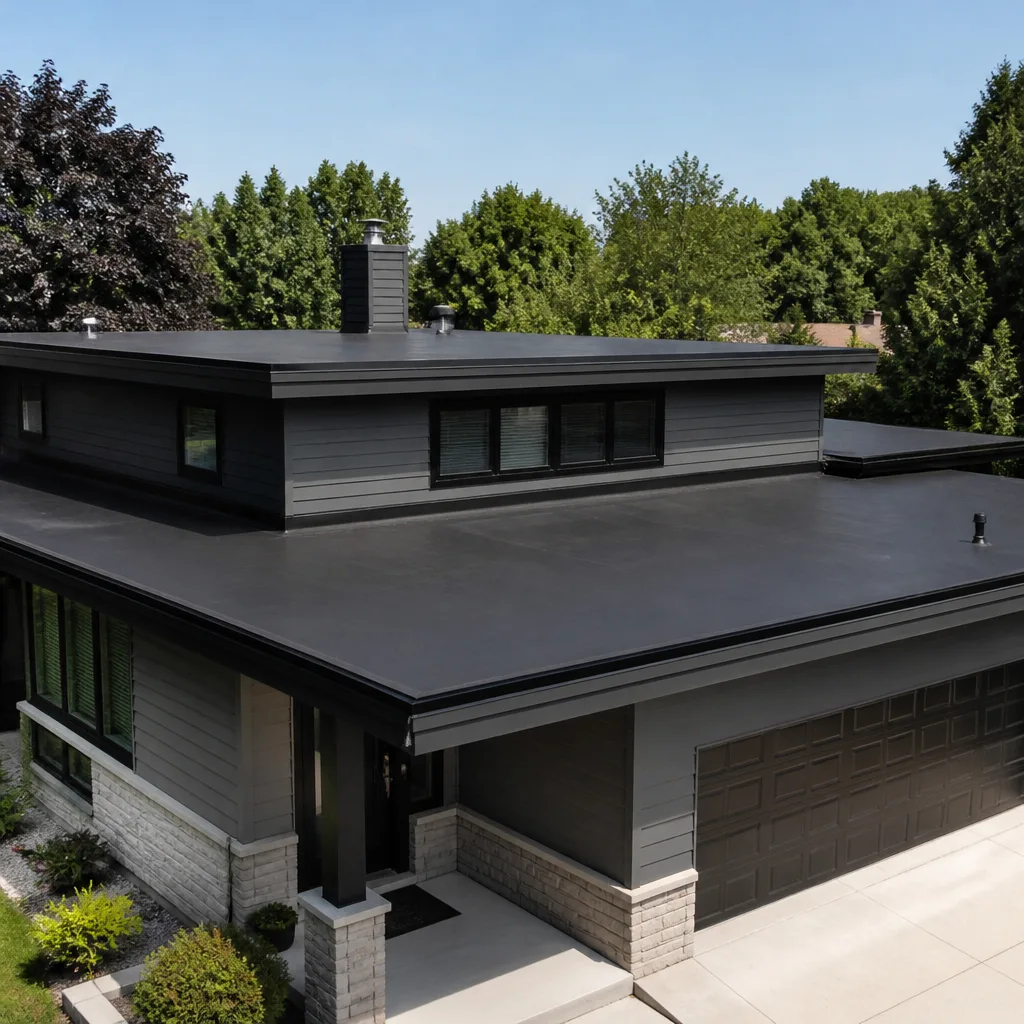 Flat & low-slope
Free roof inspection with deck photos before we talk money - GAF and Owens Corning certified installation
The Complete Roof Repair Guide for Enterprise Homeowners
Las Vegas metro roofs age roughly 30% faster than the national average. That is a striking number, and the reason matters more than the stat: summer surface temperatures here can spike well past 150°F while winter nights dip toward freezing, and that swing stresses roofing materials in a way most repair guides never address. Those guides are written for Seattle, for the Midwest, for places with steady moisture and mild summers. Enterprise is not that place. This guide covers how Mojave Desert conditions actually break down a roof, how to tell a cosmetic problem from a structural one, and how to vet a roofer before you sign anything.
Quick Answer
Roof repair in Enterprise, NV usually means addressing UV damage, monsoon-driven water intrusion, or thermal cycling before it reaches the deck. Most local repairs fall between $300 and $1,800 depending on scope, and the single biggest factor in whether you patch or replace is the condition of the wood underneath the shingles, not the shingles themselves. A photo-documented inspection from the roof surface, not the driveway, is the only reliable way to tell the difference.
Styles & brands we work with
- Architectural shingles
- Metal roofing
- Tile roofing
- GAF
- Owens Corning
- Flat & low-slope
Table of Contents
- How Enterprise’s Climate Ages Your Roof Differently
- How the Three Common Roofing Materials Fail in Enterprise
- Cosmetic Repairs vs. Structural Repairs
- What a Photo-Documented Inspection Reveals
- Patch Now or Replace Later: The Deck Condition Decision
- How to Vet a Local Roofer vs. a Storm-Chaser
- What Roof Repair Costs in Enterprise in 2026
- What a Proper Repair Looks Like, Step by Step
How Enterprise’s Climate Ages Your Roof Differently
Three forces work on every roof in Enterprise, and they don’t cooperate. UV radiation is the slow one. Monsoon rain is the sudden one. Thermal cycling is the one that does the most invisible damage.
Start with UV. The Las Vegas valley averages well over 290 sunny days a year and a UV index that regularly climbs past 10 in summer. Asphalt shingles are petroleum-based. Prolonged UV exposure breaks down the oils in the asphalt, which makes the shingle brittle, which means the next big temperature swing cracks it instead of flexing it. Granule loss on a south- or west-facing slope in Enterprise often runs two to three times faster than on the north slope of the same roof, and that’s not a defect in the shingles. It’s the sun doing what the sun does here.
Then there’s thermal cycling. A dark shingle on a July afternoon can hit 160°F or higher. By a January morning it may be sitting near 30°F. That’s a swing north of 130 degrees, repeated thousands of times over a roof’s life. Every material expands and contracts, but they don’t all do it at the same rate, and the fasteners, sealants, and flashing that hold the system together get worked loose a little more each season.
Monsoon season (typically July through September) delivers the sudden half. An inch of rain in twenty minutes on a roof whose sealant has already been stressed by heat doesn’t behave like an inch of gentle rain. It finds every lifting shingle, every dried-out pipe boot, every gap at the valley and forces its way in. In our experience, the calls that come in after the first big monsoon of the year almost always trace back to damage that started months earlier, in the heat.
How the Three Common Roofing Materials Fail in Enterprise
Most homes in Enterprise are roofed in one of three materials, and each fails on its own schedule. Knowing which one you have tells you what to watch for.
Asphalt Shingles
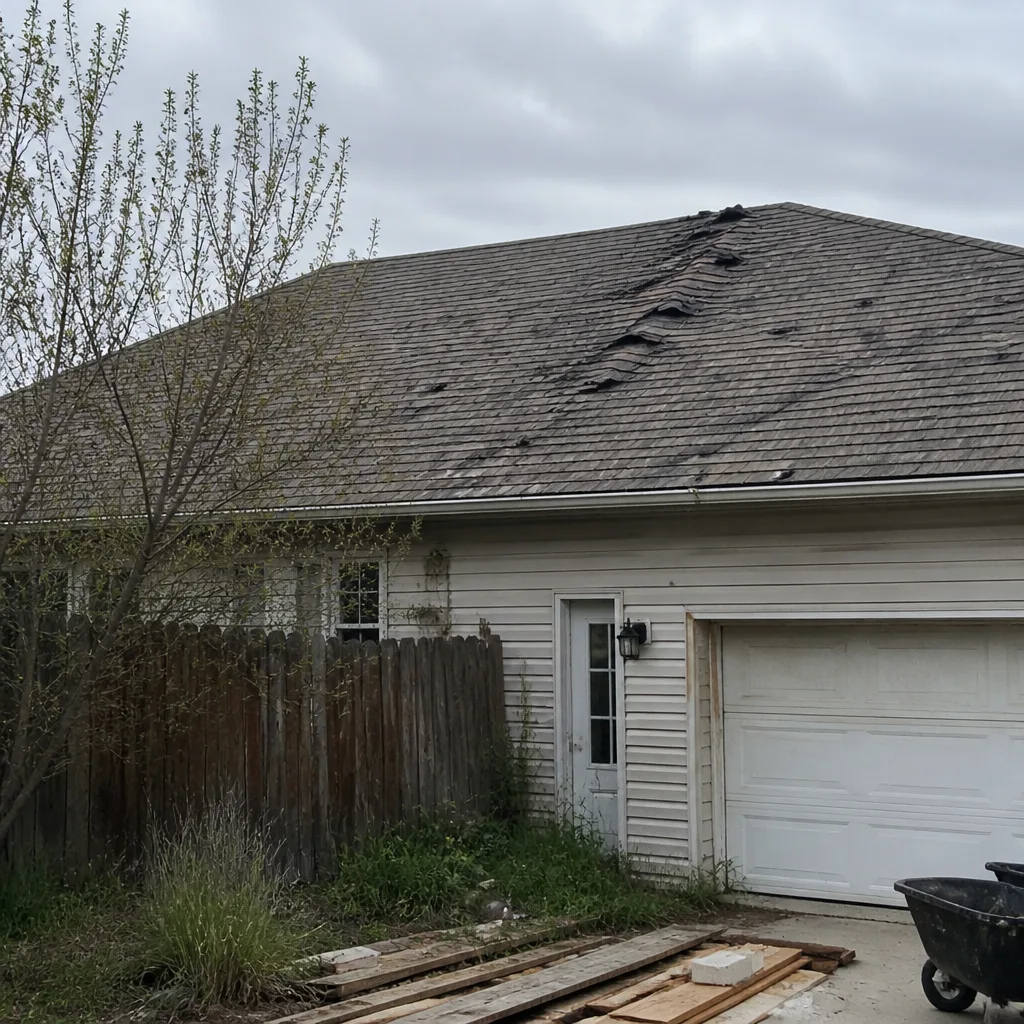
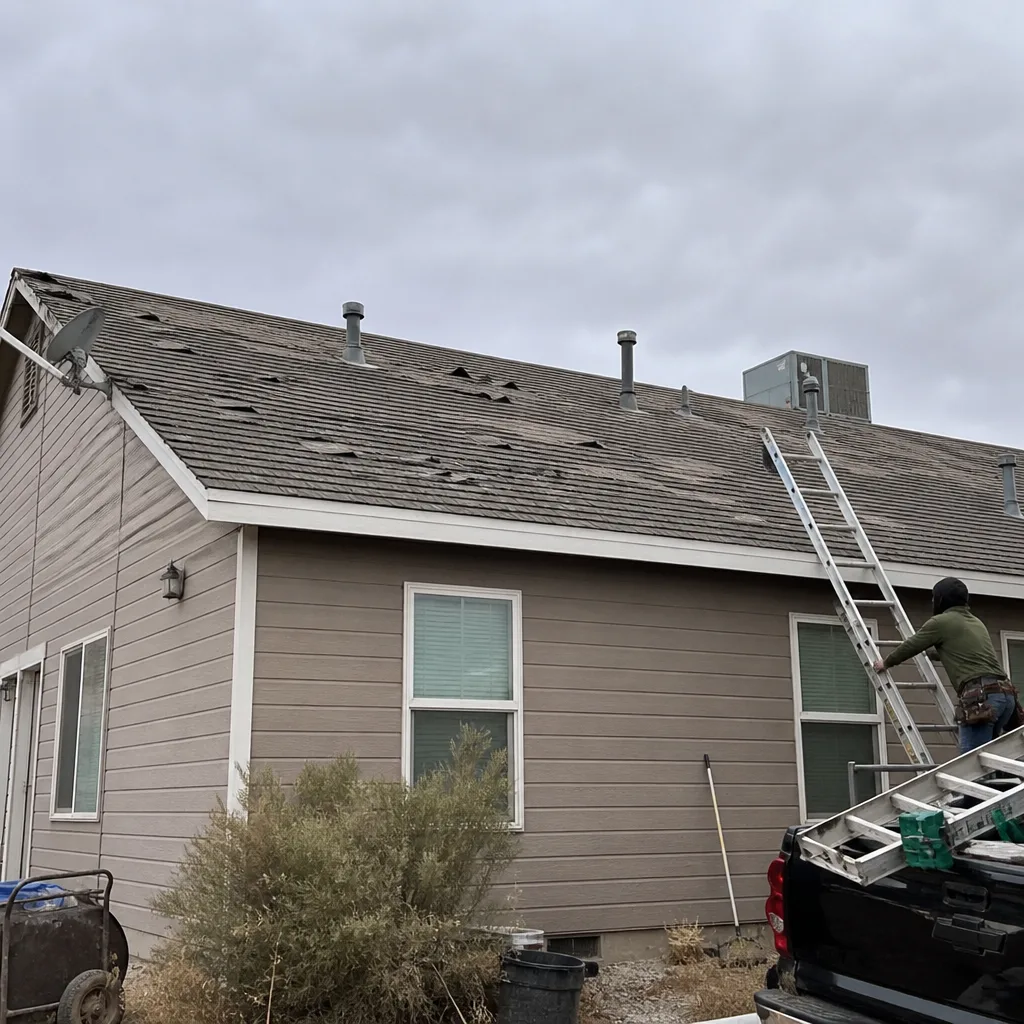
The most common roof in the valley, and the one most affected by UV. The failure sequence runs like this: granule loss first (you’ll see grit in the gutters), then curling or “cupping” at the edges, then brittleness that turns a small crack into a large one after a thermal cycle. A 25-year shingle in a mild climate is often a 15-to-18-year shingle here. On a south-facing slope in Enterprise with full afternoon sun, sometimes less.
Tile Roofs
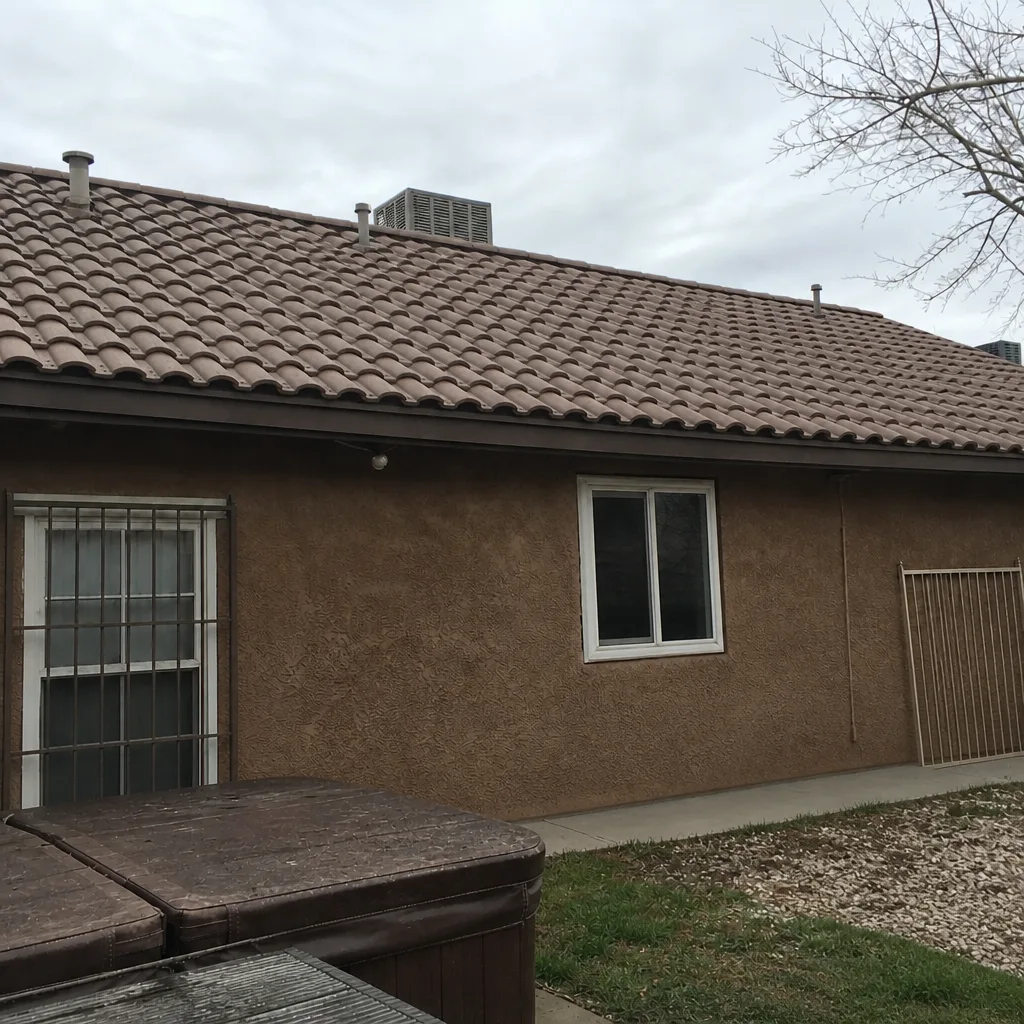
Tile is common on the stucco-and-tile homes throughout Enterprise, and homeowners often assume it’s permanent. It isn’t. The tile itself handles UV and heat well, but the underlayment beneath it is the real roof, and it takes the heat just like asphalt does. Underlayment that would last 30 years in a cooler climate often needs replacing in 15 to 20 in Enterprise. Tile also cracks under thermal stress and slips after wind events, and a slipped tile leaves the underlayment exposed to the sun. If your tile roof is more than 15 years old and you’re seeing leaks, the underlayment is usually the culprit, not the tile.
Metal Roofing
Metal performs well in the desert heat, but it moves. More than any other material, metal expands and contracts with temperature, and that movement works on every fastener and sealant joint. The common failure in Enterprise isn’t the panels themselves. It’s the fasteners backing out over time and the sealant at penetrations and panel ends drying out and cracking. Metal roofs here usually need re-sealing at penetrations every 8 to 12 years, not resurfacing.
Cosmetic Repairs vs. Structural Repairs
This is where a lot of money gets wasted in Enterprise, and it’s worth slowing down on. A cosmetic repair is a surface fix. A structural repair addresses something underneath that has failed or is failing. Misidentify the category and you either overpay for a replacement you didn’t need or patch a problem that comes back within the year.
Typically cosmetic:
- A missing or cracked shingle on an otherwise sound field
- Granule loss without curling or brittleness
- A single cracked tile with intact underlayment beneath it
- Dried sealant at a pipe boot or vent that hasn’t yet leaked
- Clogged or loose gutters
Typically structural:
- Soft or spongy decking underfoot (a roofer can find this from the roof; you can sometimes feel it in the attic)
- Daylight visible through the roof boards from inside the attic
- Water staining on rafters or sheathing, not just on the ceiling drywall
- Sagging along the roofline or a dip in the field
- Multiple leaks in different areas after a single monsoon
- Rotted fascia or soffit boards at the eaves
The tricky part is that a structural problem can look cosmetic from the ground. A small water stain on the ceiling in Enterprise often means the actual leak started several feet uphill, and the water has been traveling along a rafter for weeks. That’s why the inspection matters more than the visible symptom.
What a Photo-Documented Inspection Reveals
A walkthrough from the ground tells you almost nothing. You can see missing shingles, maybe, and you can see sagging if it’s severe. Everything else requires someone on the roof with a camera and a trained eye. A photo-documented inspection does three things a visual walkthrough can’t.
- It shows the actual condition of the field, the slopes, and the penetrations. Ground-level views miss granule loss on the back slope, lifted flashing at the chimney, and dried-out pipe boots entirely. Photos taken on the roof show each of these as they actually are.
- It distinguishes active leaks from old stains. A water stain on the deck can be years old. A wet spot is happening now. When we pull out a camera, we can photograph the difference between a stain that’s dried out and one that’s still reading wet, which changes the repair completely.
- It creates a record you can use to compare bids. When two contractors quote very different numbers for the same roof, the photos are how you find out who’s actually looking at the right thing. If one bid says “full replacement” with no photos and the other shows you four failed shingles on an otherwise sound roof, you have your answer.
When we inspect a roof in Enterprise, every finding is documented with photos taken from the roof itself, so you’re looking at your actual roof, not a picture from a sales brochure. The inspection is free, and there’s no obligation to move forward.
Patch Now or Replace Later: The Deck Condition Decision
This comes up on nearly every older roof in Enterprise, and the honest answer isn’t about shingle age. It’s about the deck.
The deck (also called the sheathing) is the wood panel layer nailed to the rafters, beneath the underlayment and shingles. If the deck is sound, a roof with failing shingles is often a candidate for a targeted repair or a partial replacement on the failing slope only. If the deck is soft, rotted, or has been letting water through for years, patching the surface just traps moisture in the wood and delays a bigger problem. In that case, the deck has to be addressed when the surface is, or the repair won’t hold.
Here’s the decision tree we walk homeowners through:
- Sound deck, localized damage: repair the affected area. A few hundred to low four figures. This is where “patch now, replace later” actually makes sense.
- Sound deck, widespread surface failure (more than 30% of the roof failing): replace now, because patch costs start to approach replacement costs and the patches won’t match the remaining slope’s short remaining life.
- Soft or rotted deck, any stretch: surface repair isn’t the right call. Decking has to be replaced as part of the work, and the honest next step is scoping the full replacement, because there’s usually more damage than the visible symptom.
- Active leak with visible attic staining: stop, get the inspection, and treat it as urgent. Water traveling in the wood reaches insulation, drywall, and framing before you see it on the ceiling.
The deck is the one thing that makes or breaks the math. Anyone quoting you a repair without having checked the deck from above is guessing.
How to Vet a Local Roofer vs. a Storm-Chaser
After a monsoon, the trucks show up. They’ve got out-of-state plates, they’ve got a card with a phone number and no address, and they’ll quote you a price on the spot that’s below every other bid. They’ll also be gone by the following spring, which is a problem, because that’s when the repair starts leaking again.
The difference between a local contractor and a storm-chaser is not subtle once you know what to look for. Ask these questions before you sign anything:
- Where is your business located, and can I visit? A local roofer has a verifiable address and a business you can walk into. A storm-chaser has a PO box, a hotel, and an answer about “corporate” when you ask.
- Are you licensed and insured in Nevada? Ask for the license number and verify it with the state contractor board. Liability and workers’ comp matter enormously if someone gets hurt on your roof.
- Will you put the written estimate in writing, line item by line item? A number scrawled on the back of a business card is not an estimate. It’s a handshake with a number on it, and it changes the moment the work starts.
- What’s your workmanship guarantee? Ask specifically what happens if the repair leaks in 60 days. A local contractor with a written guarantee will tell you without hesitating. A storm-chaser will tell you the warranty is with the manufacturer, which means it’s not with them.
- Who’s doing the work, and are they background-checked? On a home you’ve lived in for twenty years, you want to know who’s on your roof and around your property. Ask directly.
- How can I reach you after the job is done? If the only contact method is the same phone number they knocked on your door with, that’s a warning. A local contractor will have phones answered by a live person, and will still be answering them next year.
One more tell: a storm-chaser will pressure you to sign today, before the “price goes up.” A legitimate local contractor won’t. There’s no reason a repair scheduled next Tuesday costs more than one scheduled today. If you feel rushed, that’s information.
What Roof Repair Costs in Enterprise in 2026
Pricing in Enterprise runs in a recognizable range, and it’s worth going in with a sense of it. These are typical scopes and typical local numbers: the exact quote will still depend on roof pitch, height, material, and what the inspection finds. What matters is that the number on the estimate is the number on the invoice.
- Minor shingle repair (a handful of shingles, one area): $300 to $600
- Pipe boot or vent re-sealing: $150 to $400
- Flashing repair (chimney, skylight, valley): $400 to $900
- Single-slope partial replacement: $900 to $2,500
- Deck repair with sheathing replacement: $600 to $1,800 per affected area
- Monsoon-related leak repair (diagnosis plus repair): $400 to $1,200
- Tile underlayment replacement (whole roof): $9,000 to $16,000
- Full asphalt roof replacement, standard single-story home: $9,500 to $18,000
Those ranges are for standard scopes. A repair on a steep slope, a two-story roofline, or a specialty material will run higher, and a repair that turns into a deck replacement will run higher because decking is the line item that expands. The reason to get a photo-documented estimate before work starts is so the deck condition is known, and the price doesn’t change once the shingles are off.
What a Proper Repair Looks Like, Step by Step
Whether the repair is a pipe boot or a partial replacement, the sequence is the same, and knowing it helps you tell a careful job from a quick one.
- Photo-documented inspection of the roof surface and, where access allows, the attic. The diagnosis comes before the quote, not after.
- Written, line-item estimate. Each scope item priced, materials named. You should be able to see why the number is what it is.
- Scheduling that matches the weather. Roofing in Enterprise works around heat and wind. A repair scheduled for a 105°F afternoon gets scheduled for the morning instead. Materials and sealants behave differently in the heat, and a careful roofer plans for it.
- Repair of the affected area, with the deck checked as it’s exposed. If the shingles come off and the deck is soft beneath, you should be told before the work continues and given options. No surprise change orders after the fact.
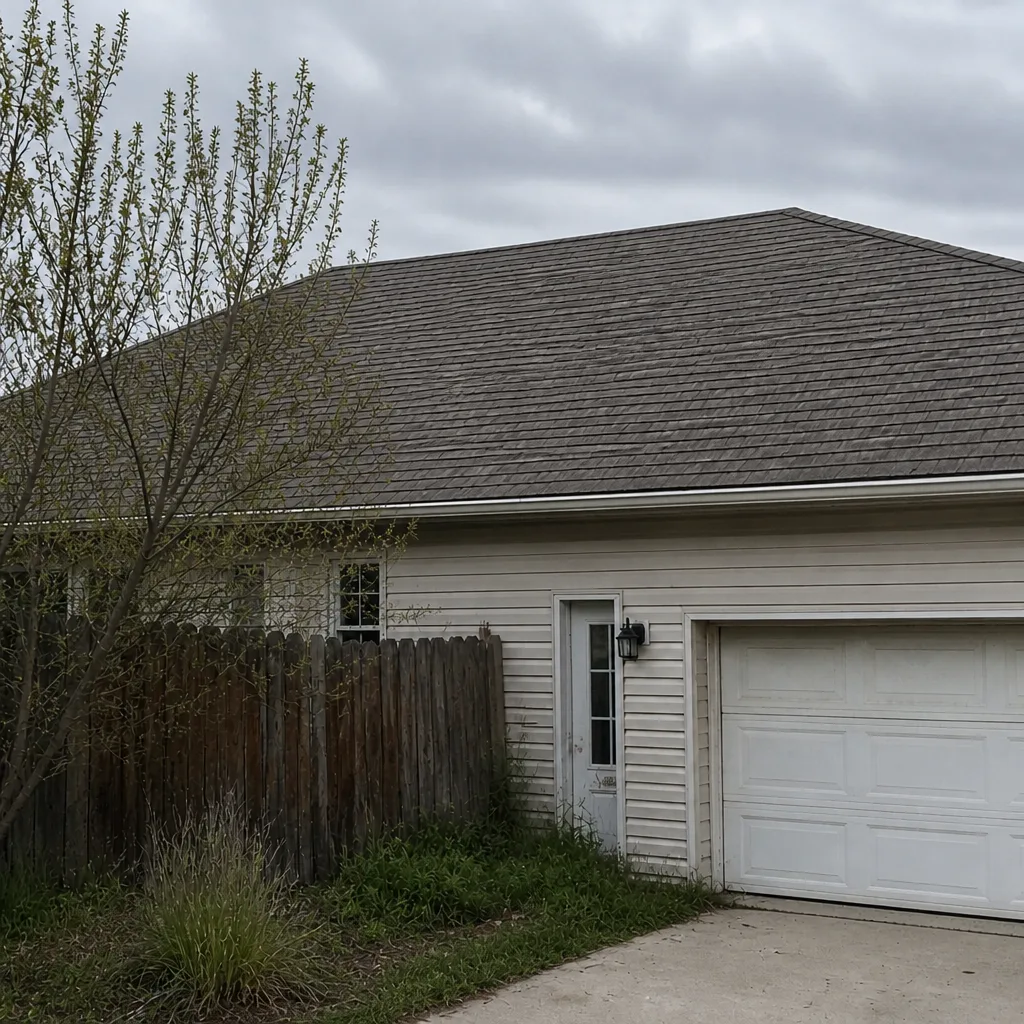
- Replacement of the underlayment and shingles on the affected area, matched to the existing roof as closely as the material allows. For seven manufacturer lines including Owens Corning, IKO, Atlas, and Tamko, we can usually match an existing roof to within a slight shade variation, which is normal and expected.
- Cleanup and a walkthrough. Nails swept up, gutters checked, and a photo walkthrough of everything that was done so you have a record.
- Written workmanship guarantee. What’s covered, for how long, and what happens if it fails. In writing, not verbal.
Common Mistakes to Avoid
- Hiring the first truck to arrive after a monsoon. The first one there is often the one that won’t be there next season. Slow down, ask the questions above, and get the license verified.
- Patching over a soft deck because the shingles “look fine.” The shingles are the least important part of the roof when there’s water getting underneath. If the deck is soft, patching is a delay, not a repair.
- Taking a verbal estimate and assuming it’s the price. In Enterprise, the sun and monsoon work on a roof fast. Once the shingles are up and the deck is exposed, the scope can grow, and a verbal quote has no protection. Get it in writing, line item, before you sign.
- Skipping the attic inspection. The most common monsoon-related leaks we find in Enterprise were visible in the attic months before they showed on the ceiling. If the inspector isn’t going in the attic, they’re missing the evidence.
- Assuming tile is permanent. The underlayment beneath tile is the load-bearing roof layer, and in Enterprise’s heat it often needs replacing years before the tile does. If your tile roof is 15+ years old and leaking, ask about underlayment, not tile.
- Scheduling work in the heat of the afternoon. Roofs in Enterprise get hot enough that shingles and sealants don’t install the way they should. A careful contractor will insist on morning work in summer, and that’s a good sign.
- Ignoring granule loss because there’s no leak yet. Grit in the gutter is the first stage of shingle failure, not a cosmetic issue. It’s the cheapest moment to address the roof, before the shingles curl and crack.
See the difference
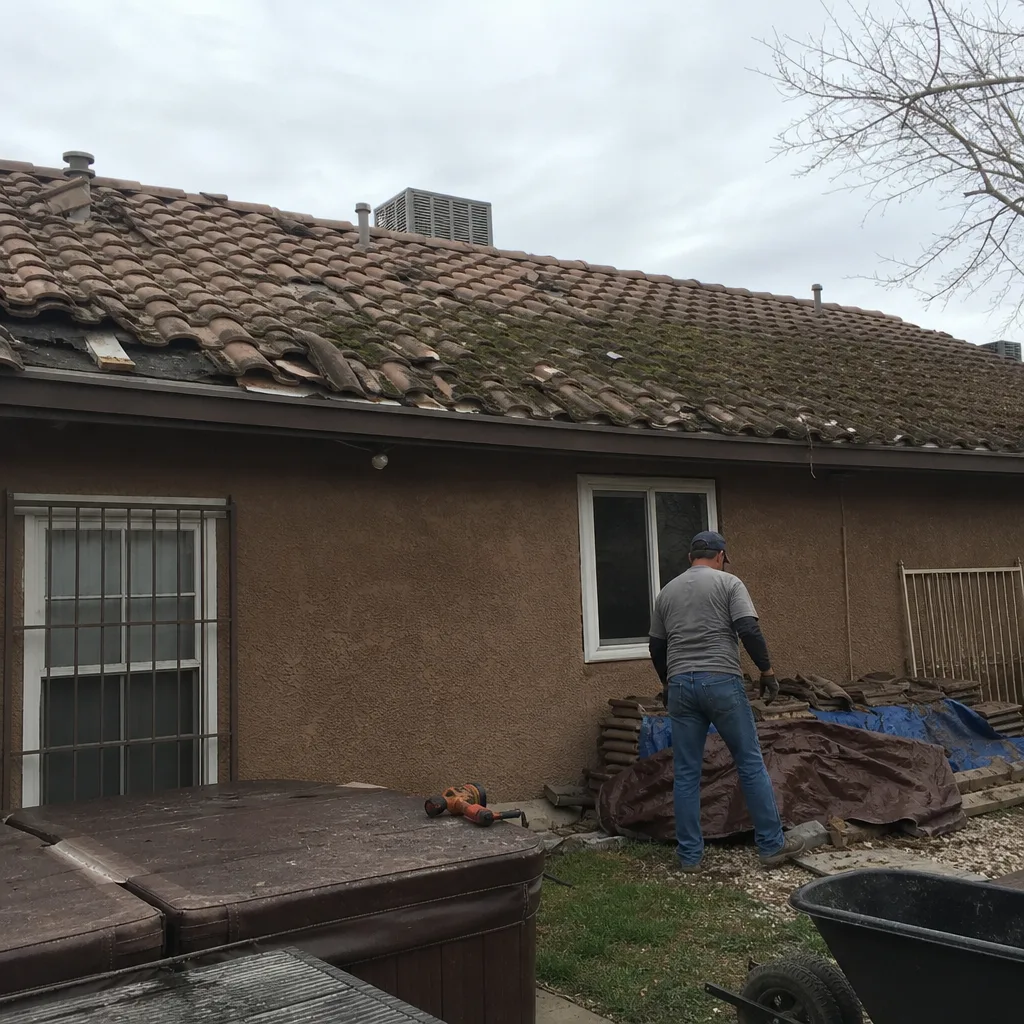 Before
 After
 Before
 After
 Before
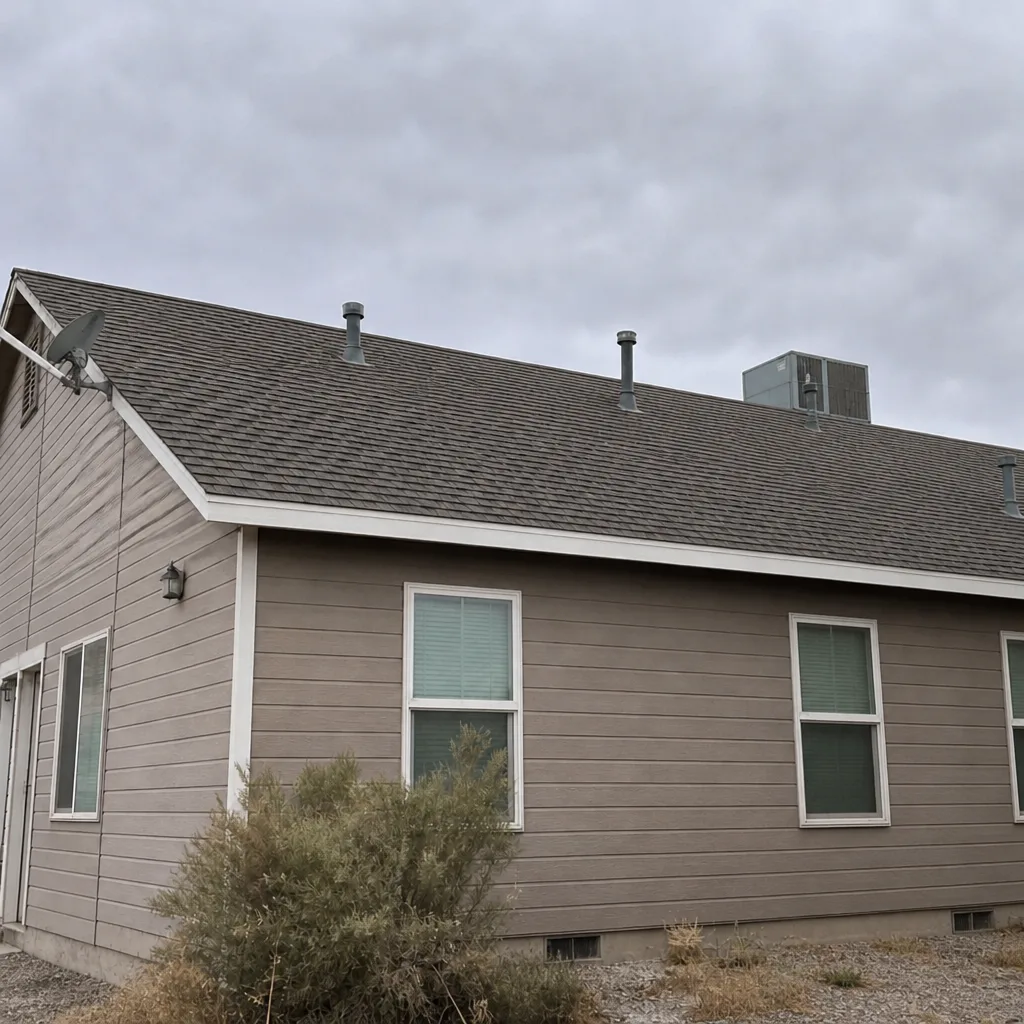 After
When to Call a Professional
Some roof issues are worth a look up the ladder. Most aren’t. Call a professional if you’re seeing any of the following: daylight in the attic, soft spots underfoot on the roof, multiple leaks after a monsoon, water staining on rafters, sagging along the roofline, or any repair that requires getting onto a roof taller than one story or steeper than a gentle slope. Roof work at height is genuinely dangerous, and the injury risk isn’t worth the savings, especially on a repair that involves sealants and fasteners done in the heat. Call us for the ones you can’t safely diagnose from the ground.
At Ridgeline Roofing Co. Enterprise, we offer free estimates in Enterprise. Call (844) 228-4119 to schedule yours. The number on the estimate is the number on the invoice, and the written workmanship guarantee goes with the job.
Frequently Asked Questions
Most roof repairs in Enterprise fall between $300 and $1,800. A single shingle repair or a re-sealed pipe boot usually runs $150 to $600, flashing repair runs $400 to $900, and a partial-slope replacement can run $900 to $2,500. Leak repair after a monsoon typically lands between $400 and $1,200 including diagnosis. Call (844) 228-4119 for an exact quote, since estimates are free and the price depends on what the inspection finds.
UV exposure and thermal cycling are the two main reasons. Enterprise sees over 290 sunny days a year with a UV index that regularly climbs past 10, and the surface temperature swing between summer afternoon and winter night can exceed 130°F. That combination breaks down asphalt shingles and stresses fasteners and sealants faster than a cooler, cloudier climate would, often taking 5 to 10 years off a shingle’s rated lifespan.
Not at Ridgeline Roofing Co. Enterprise. The written estimate is line item and the number on it is the number on the invoice. If the shingles come off and something unexpected turns up underneath, we stop, show you the photos, and talk through options before doing anything that changes the scope. No surprise change orders. Call (844) 228-4119 to get that estimate scheduled.
Most single-scope repairs in Enterprise are completed in one visit, typically a few hours to a full day. Partial-slope replacements and any repair involving deck replacement usually take one to three days depending on the size of the area and the weather. Monsoon repairs are scheduled around the rain, which may push a repair by a few days during July through September.
Tile holds up to UV and heat better than asphalt shingles, but the underlayment underneath it does not, and that’s the layer that actually keeps water out. In Enterprise, tile underlayment commonly needs replacement at 15 to 20 years, well before the tile itself does. So the honest answer is that both materials need attention in this climate, just on different layers. A photo-documented inspection will tell you which layer is failing on your roof.
Yes. A proper inspection is done on the roof surface, not from the ground, and we document every finding with photos taken on your actual roof so you can see what we’re seeing. The inspection is free and there’s no obligation to move forward. You’ll have photos and a written estimate before you make any decision. Call (844) 228-4119 to schedule.
The Bottom Line
Roof repair in Enterprise is not the same job it is anywhere else in the country, because UV, monsoon, and thermal cycling work on it in a specific way. The short version: shingle age alone shouldn’t decide patch or replace; deck condition should. Inspections should be photo-documented from the roof, not guessed from the driveway. Estimates should be line-item and written, and the quote should hold. And the person on your roof should be verifiable, local, background-checked, and reachable by a live person next year, not just this week. Get those things right and the repair gets done once, and stays done.
Related Resources
This guide is part of our Ridgeline Roofing Co. Enterprise home library. If you’re weighing a repair against a full replacement, see our Roof Repair in Enterprise page for the repair scopes we handle, or Roof Replacement & Installation in Enterprise for what a full replacement involves in this climate. For tile, metal, and other unusual roof types that come up throughout Enterprise, our Specialty Roofing in Enterprise page walks through how each material handles the desert. And if a monsoon has already done damage, see the emergency and storm damage resources on our home page. For questions that don’t fit any of these, call (844) 228-4119 and a live person will pick up.
Written by the team at Ridgeline Roofing Co. Enterprise.