
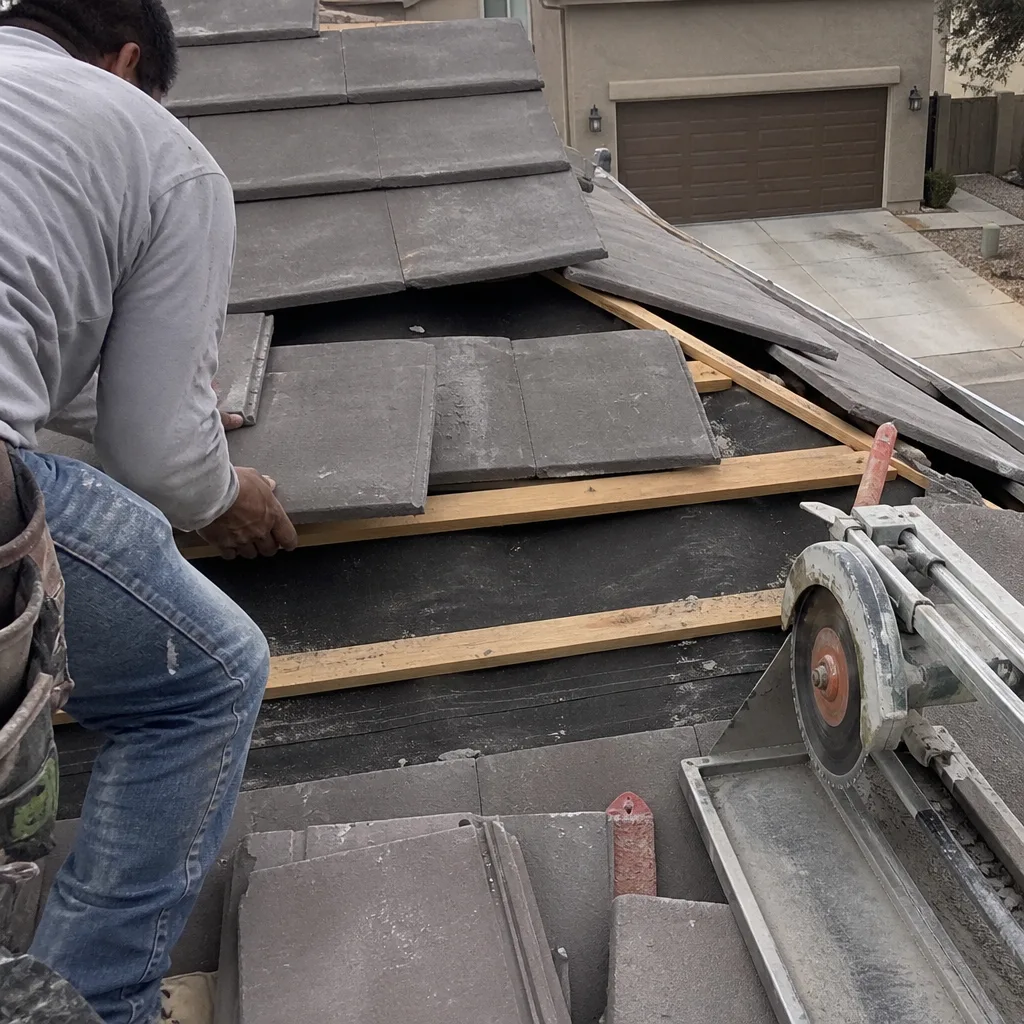
Last updated November 18, 2026
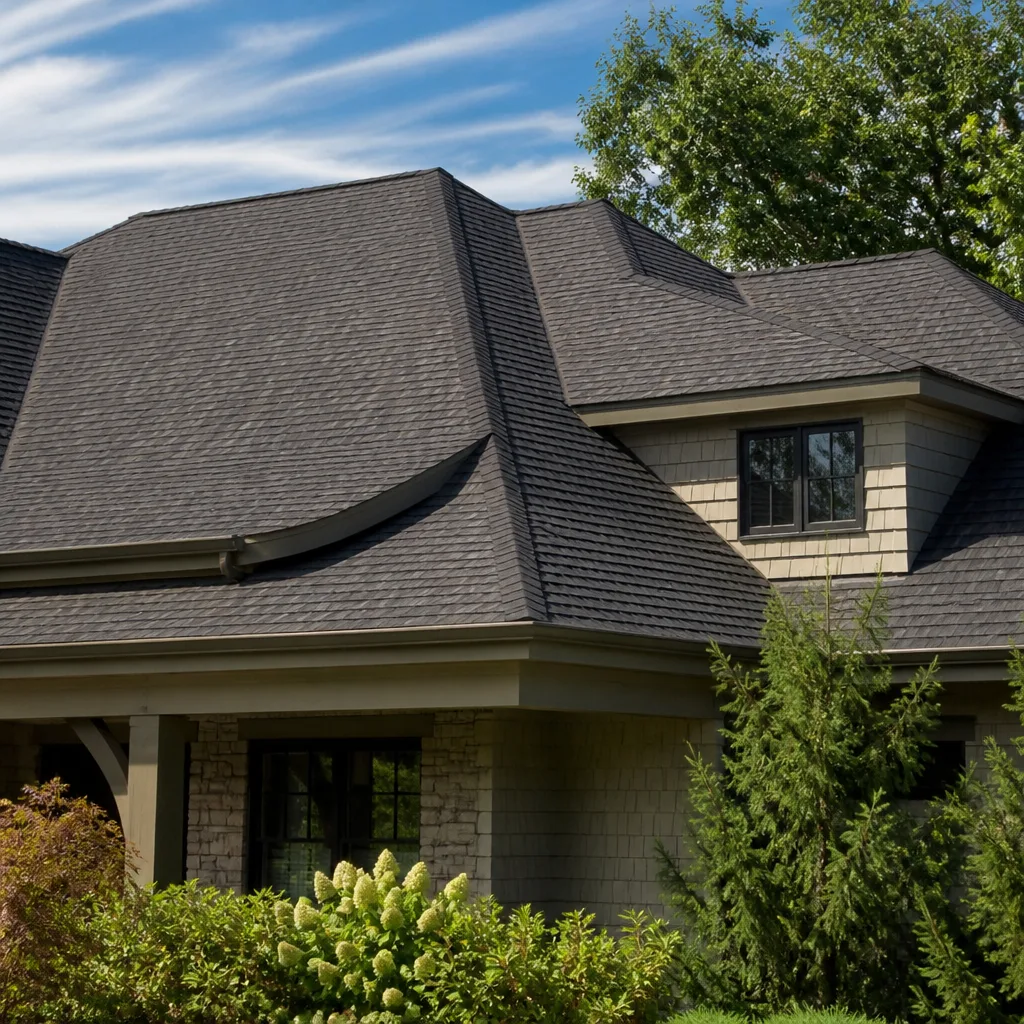 Architectural shingles
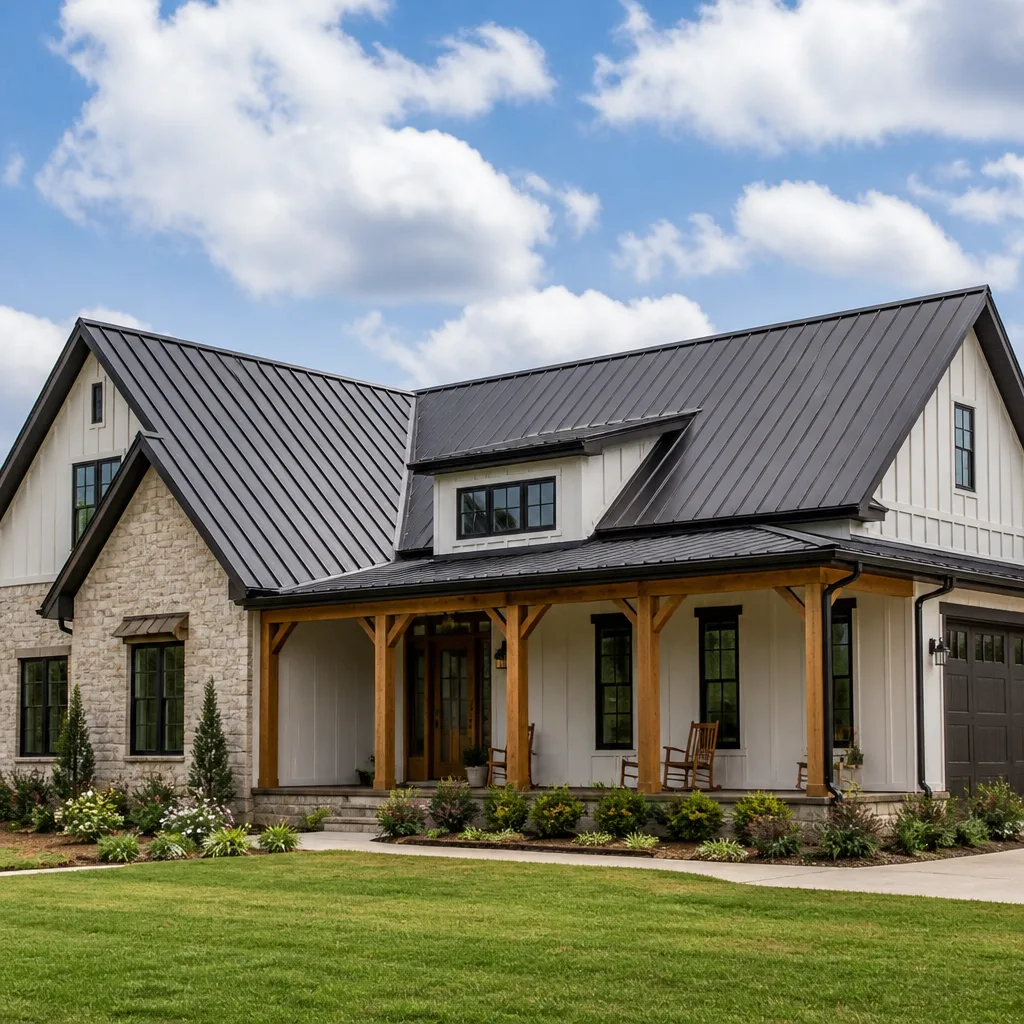 Metal roofing
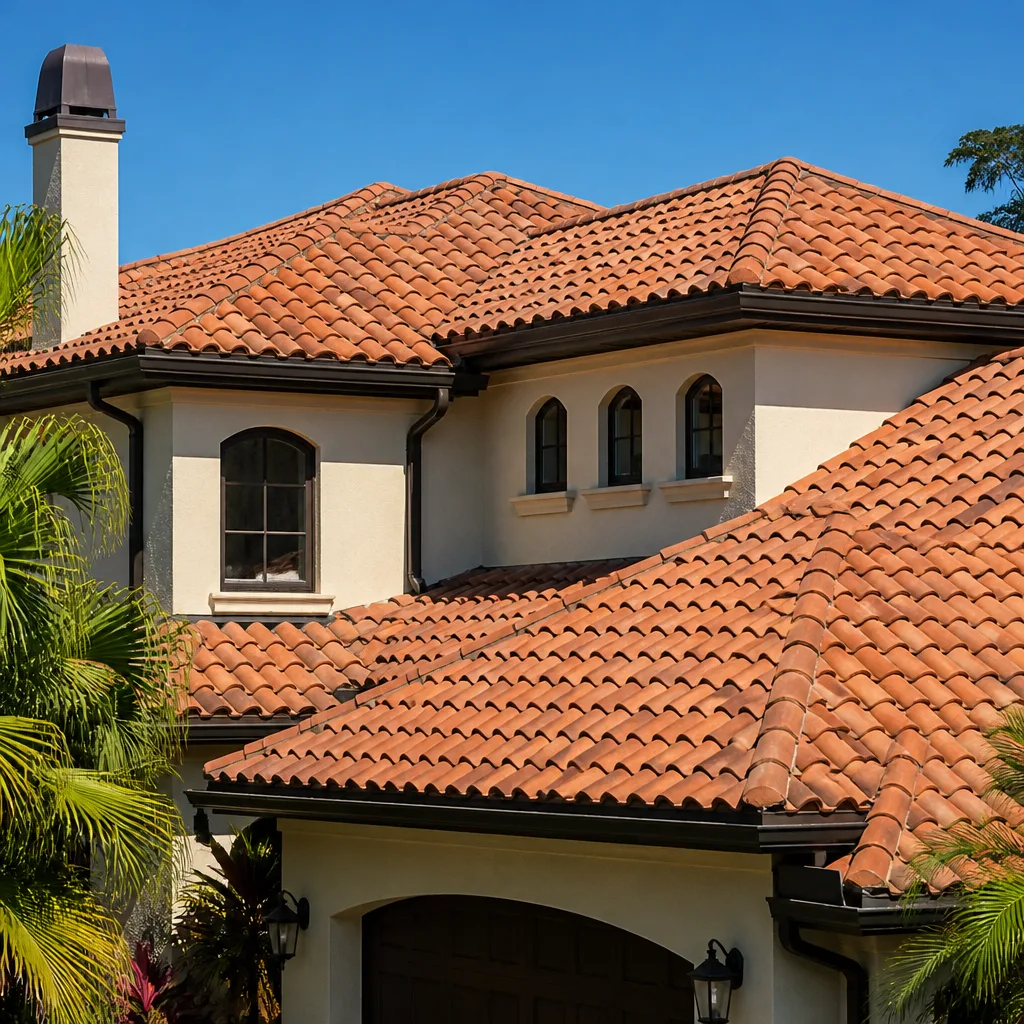 Tile roofing
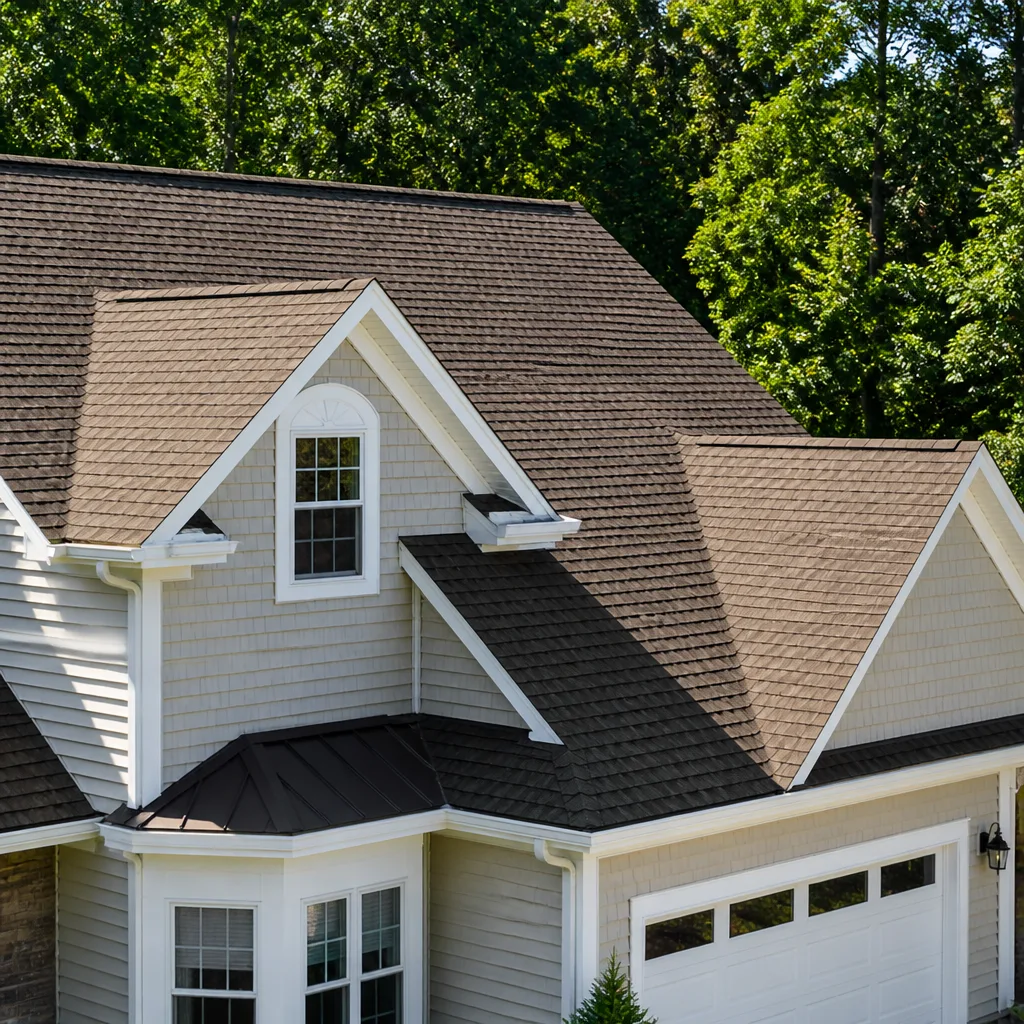 GAF
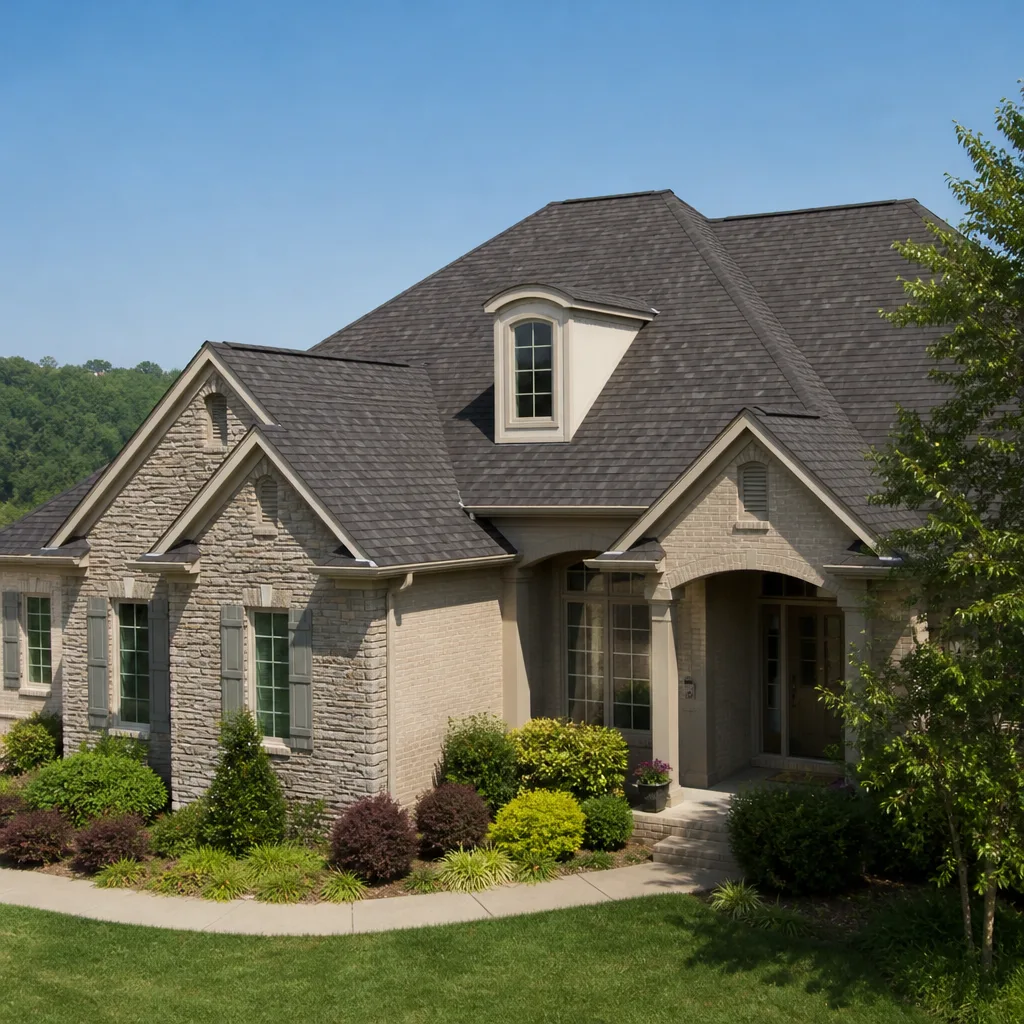 Owens Corning
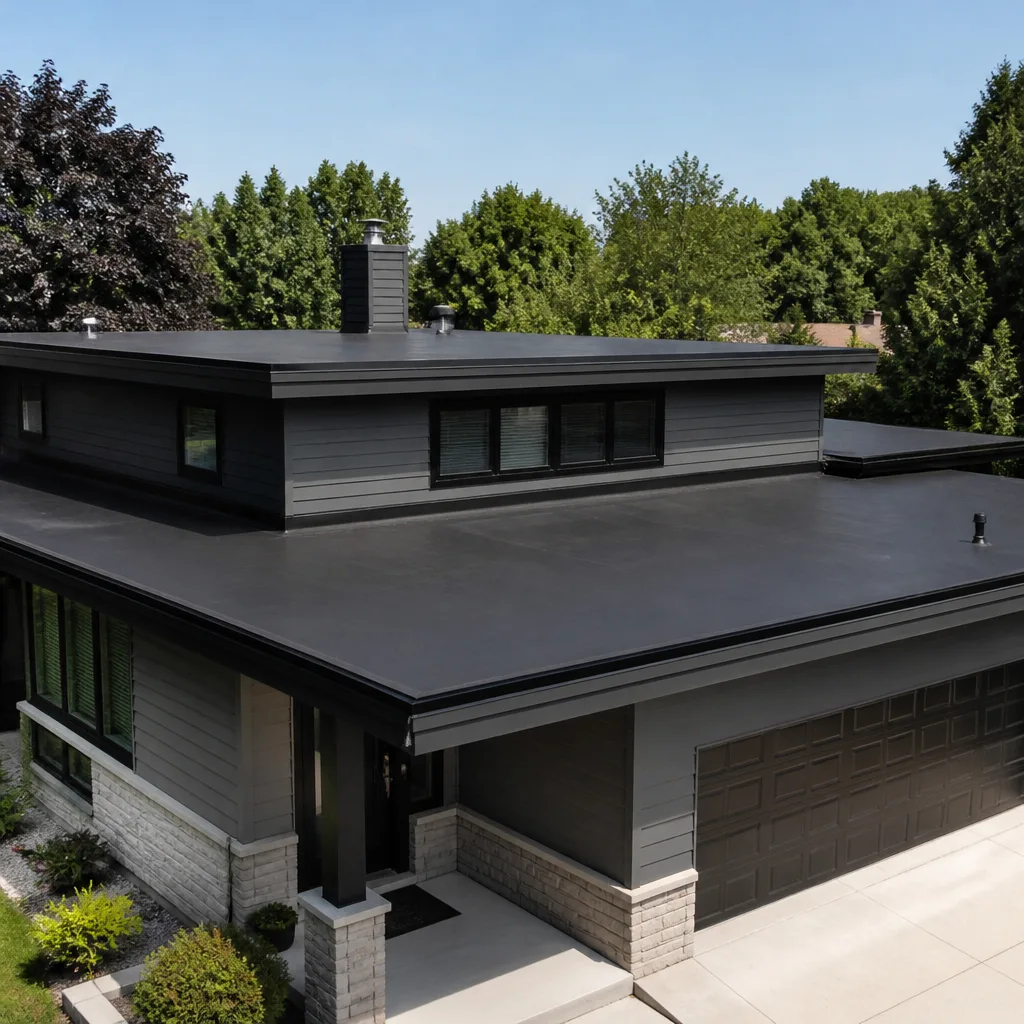 Flat & low-slope
Free roof inspection with deck photos before we talk money - GAF and Owens Corning certified installation
The Complete Roof Replacement & Installation Guide for Enterprise Homeowners
Here’s the uncomfortable truth about roof replacement in the desert: the shingle brand on the wrapper matters less than whether the attic underneath it can breathe. In Las Vegas Valley heat, every shingle sits between two merciless forces – sun beating down at unrelenting angles and an attic that can trap that thermal energy overnight – and most replacement guides spend a page on ventilation and three on brand comparisons. That is backwards. For an Enterprise homeowner planning to stay put another twenty years, what you’ll learn in this guide is how to spec a roof for this climate, how to read a scope of work, and how to tell the difference between a contractor who knows Enterprise weather and one who knows Phoenix weather.
Quick Answer
A roof replacement in Enterprise is a 1-2 day tear-off-and-install project that should include a full deck inspection, a properly sized intake-and-exhaust ventilation system (typically 1 square foot of net free area per 150 square feet of attic floor, or 1:300 with a vapor barrier), synthetic underlayment rated for high heat, and a written scope of work before you sign. Expect to request a written line-item quote, confirm permits are pulled, and verify the workmanship warranty covers installation – not just material defects.
Styles & brands we work with
- Architectural shingles
- Metal roofing
- Tile roofing
- GAF
- Owens Corning
- Flat & low-slope
Table of Contents
- Why Enterprise Roofs Are Built Differently
- Ventilation: The Single Factor That Decides Shingle Life
- Tear-Off vs. Overlay: Why the Shortcut Fails Here
- What a Legitimate Scope of Work Must Contain
- How to Read a Contractor Bid Line by Line
- What Your Warranty Covers and What It Doesn’t
- What a Correct Installation Day Looks Like
- The 90-Day Window That Reveals Installation Quality
Why Enterprise Roofs Are Built Differently
Enterprise sits in the Mojave’s thermal crosshairs. Summer afternoon sun pushes asphalt shingle surface temperatures past 160 degrees – and then the desert drops to the 70s by 3 a.m. That daily swing is thermal cycling, and it is what fatigues sealant strips, opens nail holes, and turns a benign install error into a leak by year eight. Phoenix shares the heat but not the same wind pattern. Denver has swings but a fraction of the UV load. Enterprise gets both, and a replacement spec that ignores this is a replacement spec built for somewhere else.
What that means in practice:
- Solar gain: A roof facing south or west in Enterprise absorbs far more annual solar radiation than one facing north. That orientation detail should change your underlayment and shingle choice, not just your color preference.
- Thermal cycling: The material’s flexibility under 100-degree daily swings is more important than its wind rating on paper.
- UV load: Regardless of brand – GAF, CertainTeed, Owens Corning, Tamko – you want a product line rated for high solar exposure, not the entry-tier product in the family.
- Monsoon season: Enterprise’s summer storms don’t forgive a poorly sealed flashing detail, and they test every valley, penetration, and wall transition on the roof.
Our technicians have up to 10 years of experience inspecting roofs across Enterprise, and the pattern is consistent: roof failures here almost never trace to the shingle itself. They trace to what sat under it or above it.
Ventilation: The Single Factor That Decides Shingle Life
Improper attic ventilation is the number one cause of premature shingle failure in hot desert climates. When hot air can’t escape a shingled attic, it bakes the underside of the deck from below while the sun bakes it from above. The shingles curl, the sealant strips release, and the deck itself can delaminate faster than the manufacturer’s warranty assumes.
A correct ventilation plan in Enterprise pairs intake at the soffits with exhaust at the ridge, sized together. Without both, one is useless. The rough math: 1 square foot of net free ventilation area for every 150 square feet of attic floor space, split between intake and exhaust. If your existing attic has a moisture barrier or vapor retarder, that ratio shifts to 1:300.
Before signing any replacement contract, confirm the scope explicitly addresses:
- Existing net free ventilation area calculation, written on the bid.
- Soffit intake capacity (many homes in Enterprise have undersized or blocked soffit ventilation).
- Ridge vent linear footage or an approved exhaust alternative (power vent, solar vent).
- Balanced intake-to-exhaust proportion (roughly 50/50).
- Any correction of blocked baffles or insulation obstructing airflow at the eaves.
If a contractor hands you a bid with a shingle sheet and no ventilation pages, that bid is incomplete. And on a home in Enterprise where the attic runs 140 degrees in July, incomplete ventilation is not a minor detail – it is the reason the roof needs replacing again in ten years.
Tear-Off vs. Overlay: Why the Shortcut Fails Here
An overlay (also called a “layover” or “re-cover”) means installing new shingles on top of the existing ones without removing the old roof. It saves labor and disposal cost. It also, in Enterprise’s climate, accelerates every failure mode the existing roof already had.
Three reasons overlays fail faster here:
- Trapped heat. A second layer traps more heat against the deck, raising attic temperatures and shortening shingle life on both layers.
- Hidden deck damage. Overlays make it impossible to inspect the sheathing for rot, soft spots, or water damage – which, in a home that’s weathered a monsoon season or two, is often present and needs replacing.
- Code and manufacturer limits. Most manufacturer warranties void on third layers and prorate on second layers. Building departments in the Las Vegas Valley commonly restrict multiple layer installs, and the details matter to your permit approval.
A tear-off costs more upfront – usually in the range of $1,500-$3,500 more than an overlay depending on square footage and layer count – and it is the right call almost every time on an Enterprise home that’s already spent 20-plus years under this sun. You get to see the deck. You get a new, warrantable roof from the sheathing up. Our Roof Replacement & Installation in Enterprise work is tear-off only for exactly this reason.
What a Legitimate Scope of Work Must Contain
A scope of work is the legal document that says what gets installed. If a contractor’s scope is a paragraph long, walk away. A legitimate replacement scope for an Enterprise home should read like this:
- Demolition and disposal: Number of existing layers removed, dumpster included, cleanup standard.
- Deck inspection and replacement allowance: A stated per-sheet cost for replacing damaged sheathing, not a blank check.
- Underlayment specification: Brand, product name, and high-temperature rating (synthetic, not felt, in this climate).
- Ice and water shield: Required at valleys, eaves, and penetrations.
- Ventilation plan: Ridge vent linear footage, soffit intake calculation, and any baffle corrections.
- Flashing and penetration schedule: Step flashing at walls, pipe boots, skylight collars, chimney flashing – itemized.
- Shingle specification: Brand and product line by name (not “30-year architectural”).
- Ridge cap, starter strip, and hip treatment.
- Permit pulling: Explicitly included, with the contractor responsible.
- Warranty terms: Manufacturer and workmanship, with durations and exclusions stated.
- Payment schedule: Typically deposit, materials delivery, and final after inspection – never all upfront.
Each line item is an anchor. If it’s absent, someone is planning to substitute, shortcut, or bill you for it later. Our technicians photograph each stage of the roof so you see what was installed, not just what was promised.
How to Read a Contractor Bid Line by Line
Two bids for the “same” replacement in Enterprise can differ by 40% and still both be legal. What separates them is what’s missing, not what’s written. Compare bids on these five points:
- Line-item pricing vs. lump sum. A lump-sum bid cannot be compared. Insist on line items.
- Deck allowance. A bid that omits a sheathing replacement allowance will hit you with a change order mid-job.
- Ventilation math. No calculation on the bid = the ventilation wasn’t planned.
- Permit inclusion. “Permit by owner” on a replacement bid is a red flag; you don’t own the install.
- Warranty terms in writing. A verbal warranty is nothing.
Our bids are written with every line item above, and the price on the estimate is the price on the invoice. If you already have a written bid from another company and want a second set of eyes, we offer a free second opinion – call (844) 228-4119 and we’ll review it with you.
What Your Warranty Covers and What It Doesn’t
Two warranties ride on every roof, and they cover different things:
- Manufacturer material warranty. Covers defects in the shingle product itself. Ranges from 25 to 50 years depending on the line. Excludes damage from installation error, ventilation failure, wind above rated speed, hail, or foot traffic.
- Workmanship warranty. Covers how the roof was installed. This is the one that matters when a nail missed a rafter or a flashing was sealed instead of stepped. Durations vary wildly from contract to contract.
Read your workmanship warranty with three questions in mind:
- Does it require the manufacturer to determine fault before the contractor will return?
- Does it exclude “acts of nature” broadly enough to exclude monsoon rain and normal summer heat?
- Does it require you to submit paperwork to trigger a callback?
Our 90-Day Done Right Promise is a written workmanship guarantee with no paperwork and no arguing. If it’s not right in that window, we come back and make it right. No conditions, no forms.
What a Correct Installation Day Looks Like
Most single-story replacements in Enterprise finish in a single day, sometimes two depending on square footage and complexity. Here’s the sequence a properly run install follows:
- Tear-off with tarps on landscaping and a magnetic sweep of the grounds for nails.
- Deck inspection with photo documentation of any damaged sheathing and a call before any deck replacement is billed.
- Ice and water shield installed at valleys, eaves, and penetrations.
- Synthetic underlayment rolled and fastened to spec across the deck.
- Starter strip and first course at the eaves with proper overhang.
- Field shingles laid with correct nailing pattern and spacing.
- Flashing installed at all walls, valleys, and penetrations – stepped where it should be stepped, not smeared with sealant.
- Ridge vent and ridge cap installed as a matched system.
- Final inspection with a magnet sweep, cleanup, and photo record.
We install GAF, CertainTeed, Owens Corning, IKO, Atlas, Tamko, and Boral – proper materials, no substitutions. If your bid names one brand and the crew shows up with another, that is the conversation you want to have before the boxes are opened. Our technicians arrive in uniform and background-checked, and a supervisor handles the final inspection.
The 90-Day Window That Reveals Installation Quality
Installing a roof and installing it correctly can look identical on day one. The difference appears in the following months, when thermal cycling and the first monsoon test every flashing, nail placement, and sealant strip. In Enterprise, that 90-day window is where you find out whether the roof was installed right or installed fast.
What to watch for in the first 90 days:
- Granule loss beyond the initial shedding on day one (a bucket of granules in the gutter after a storm is not normal).
- Any interior staining at ceilings, drywall corners, or wall tops after a rain – even a small one.
- Visible shingle lifting at ridges, hips, or the first course after wind.
- Attic temperature trend – if attic heat noticeably increased, ventilation is not working as planned.
- Loose fascia or gutter separation from a poorly integrated drip edge.
If any of this surfaces, call. A roofing company that stands behind its work will want to know in this window, not after the warranty clock has run. A 90-day workmanship guarantee can only work if the homeowner actually calls, so do not wait for the next leak to test it.
When the roof does need work, our Roof Repair in Enterprise team can often resolve an issue without a full replacement. For homes needing specialized systems – tile, metal, or flat roof assemblies – our Specialty Roofing in Enterprise page covers the specs. And if you’re just beginning the research, our Ridgeline Roofing Co. Enterprise home page has the full picture of how we work.
Common Mistakes to Avoid
- Choosing the bid with the cleanest cover page. A polished proposal is not the same as a complete scope. Compare line items, not fonts – the shortcuts hide in the parts that aren’t written down.
- Skipping the ventilation calculation. In Enterprise, this is the mistake that costs you a second replacement a decade early. If the bid doesn’t show the math, the math wasn’t done.
- Accepting an overlay to save a few thousand dollars. The short-term savings disappear the first time a monsoon season reveals what was hidden under the old layer. Tear-off lets you see the deck.
- Not asking about the deck allowance. A bid with no per-sheet sheathing allowance will hit you with a change order once the tear-off reveals what’s underneath. In a 20-plus-year-old home, assume some sheathing needs replacement.
- Trusting a verbal warranty. If it isn’t in the contract in writing, it doesn’t exist. Get the workmanship duration and the exclusion list on paper before you sign.
- Letting a contractor pull the permit “later.” Permits must be pulled before the work starts, by the contractor, on the contract. “We’ll get to it” means you own the problem with the building department.
- Missing the 90-day check-in. The first 90 days are when installation defects show. If your contractor doesn’t want to hear from you in that window, that tells you something.
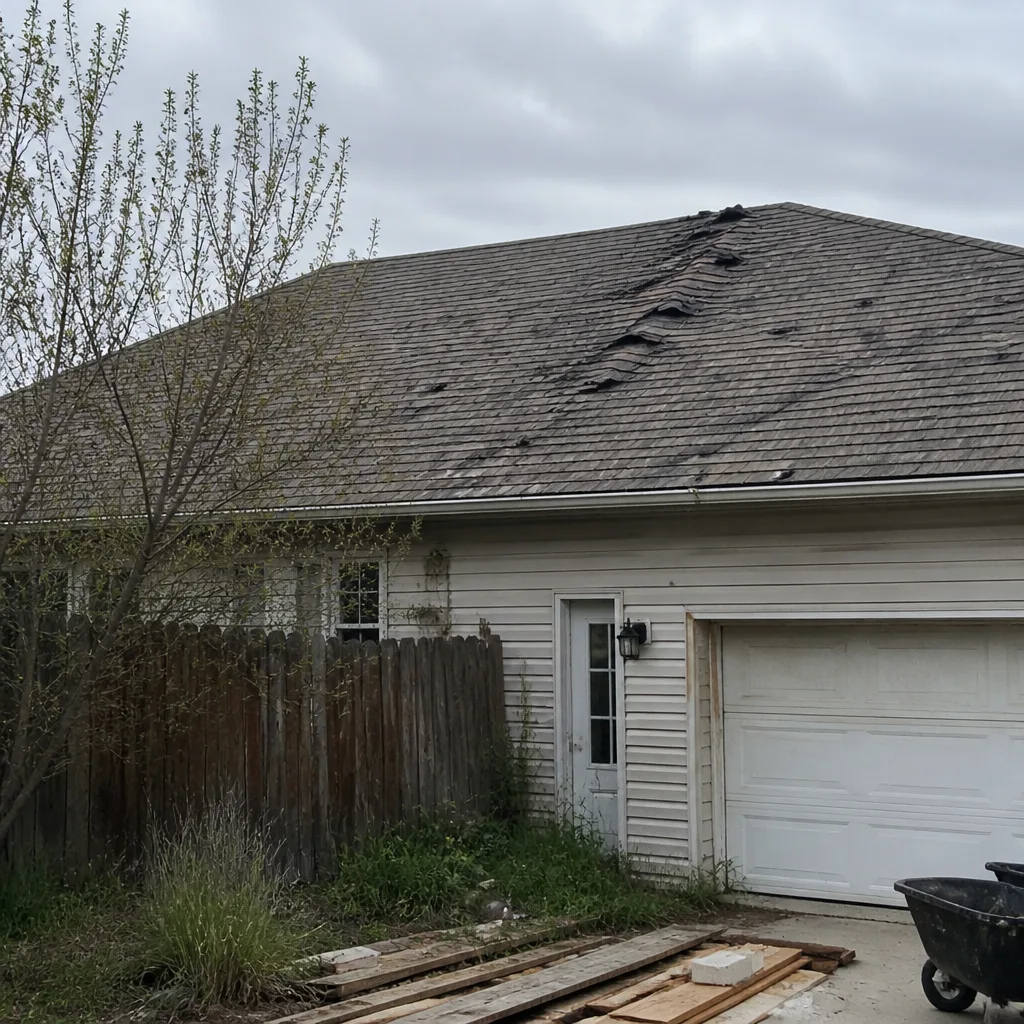
See the difference
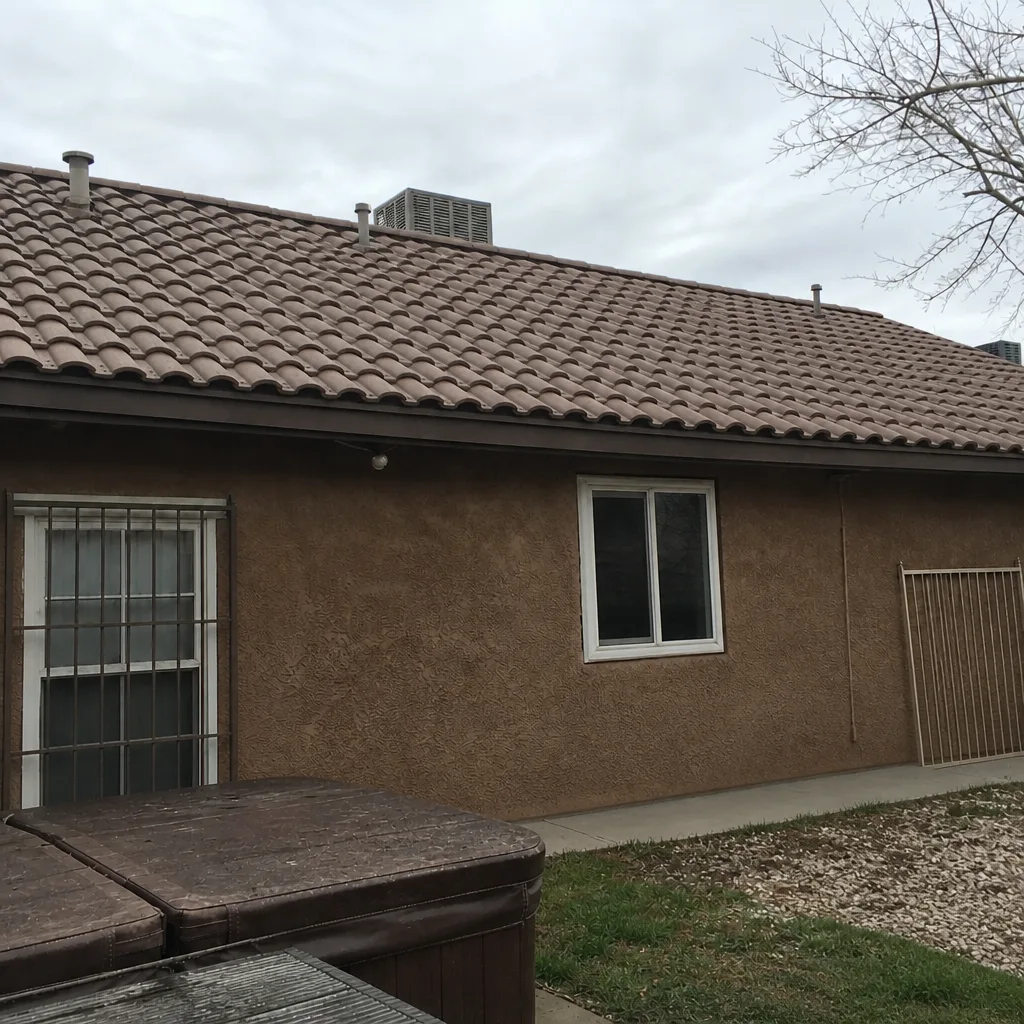
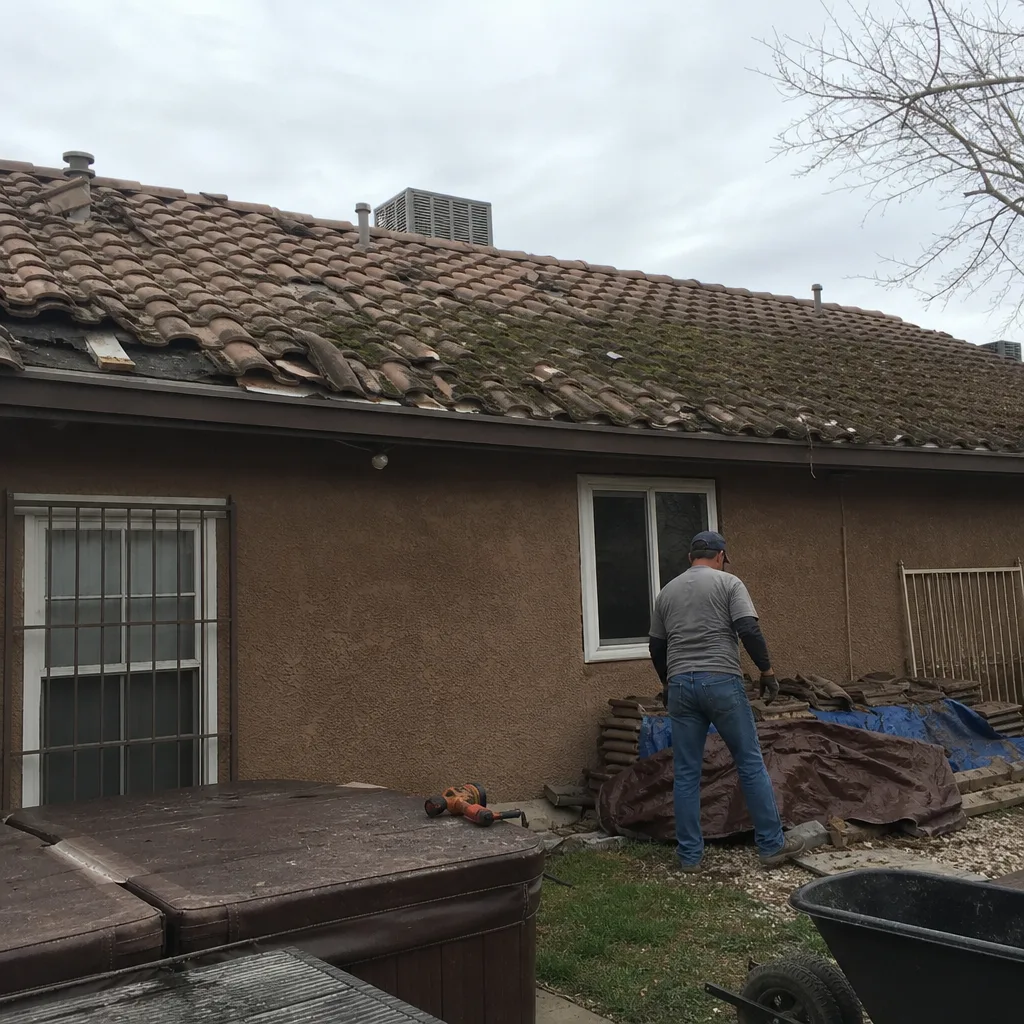 Before
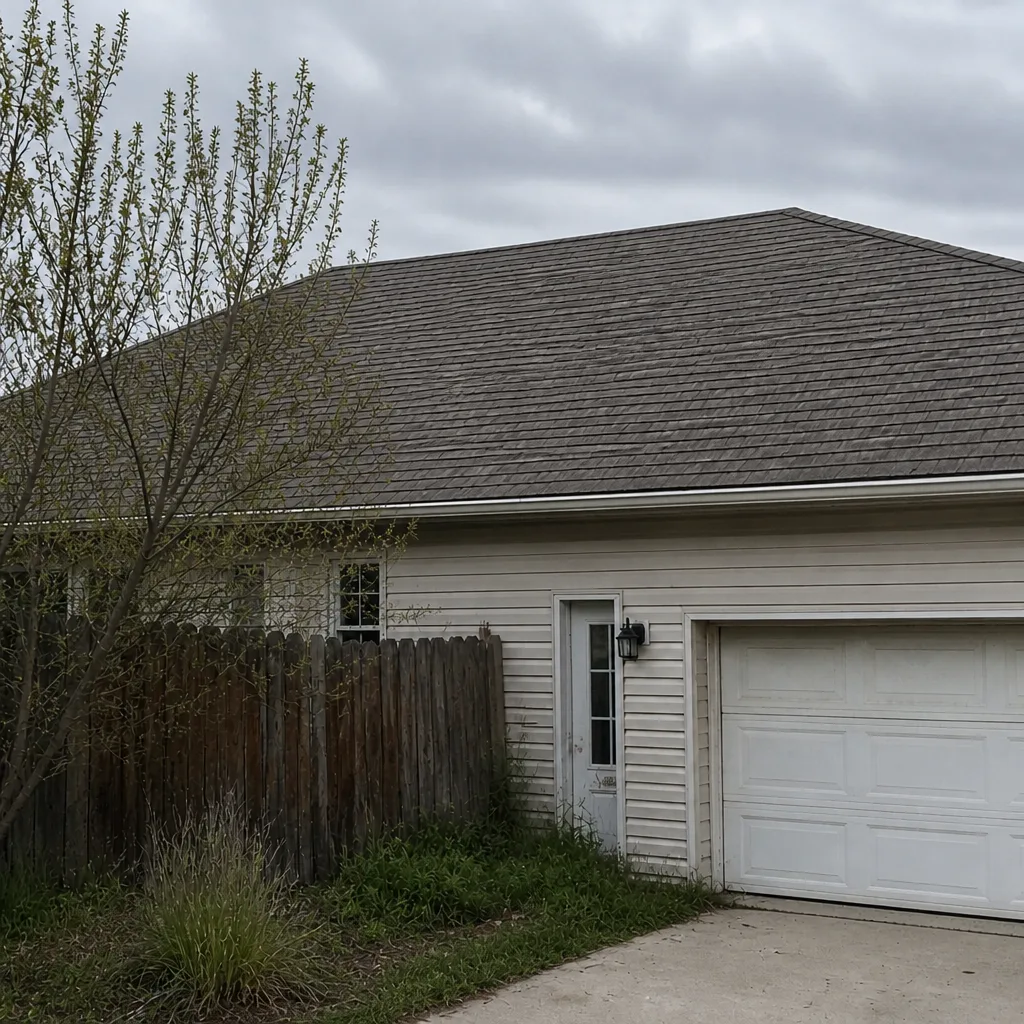
 After
 Before
 After
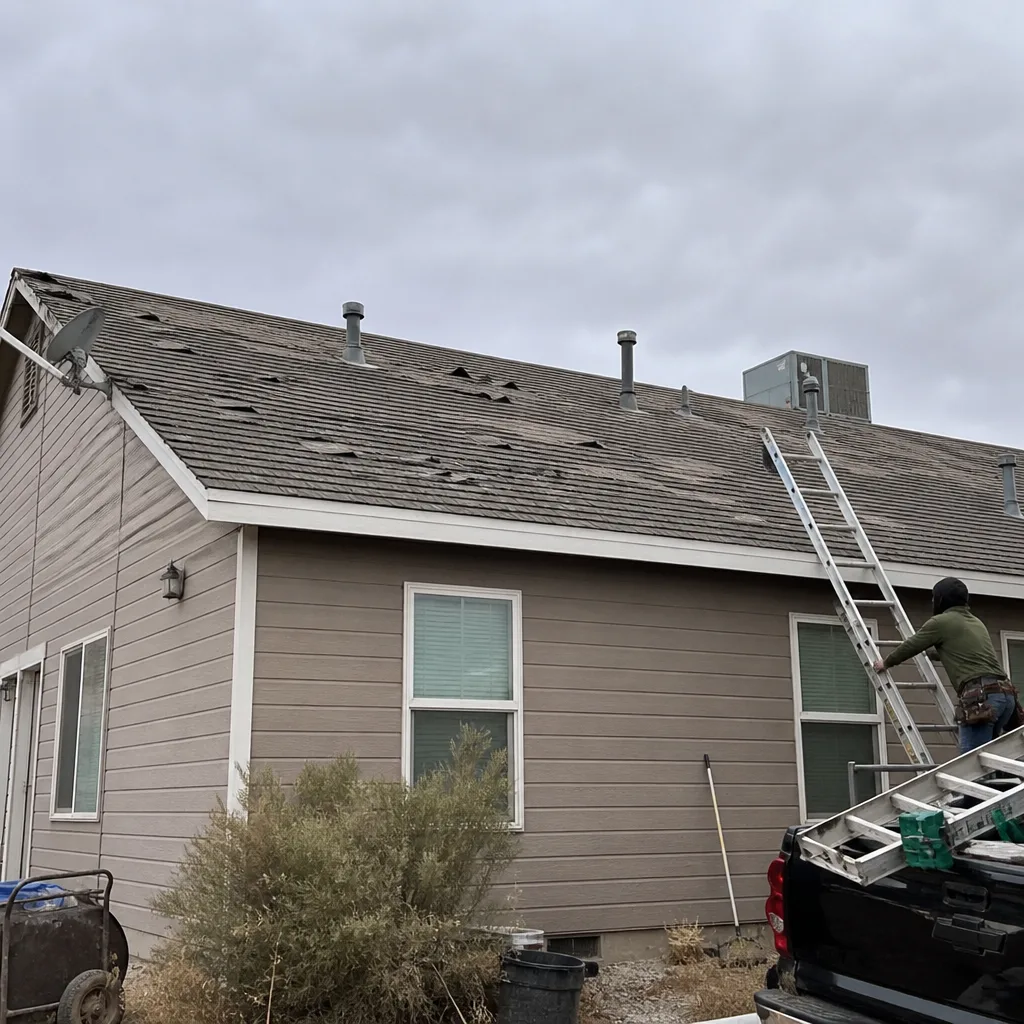 Before
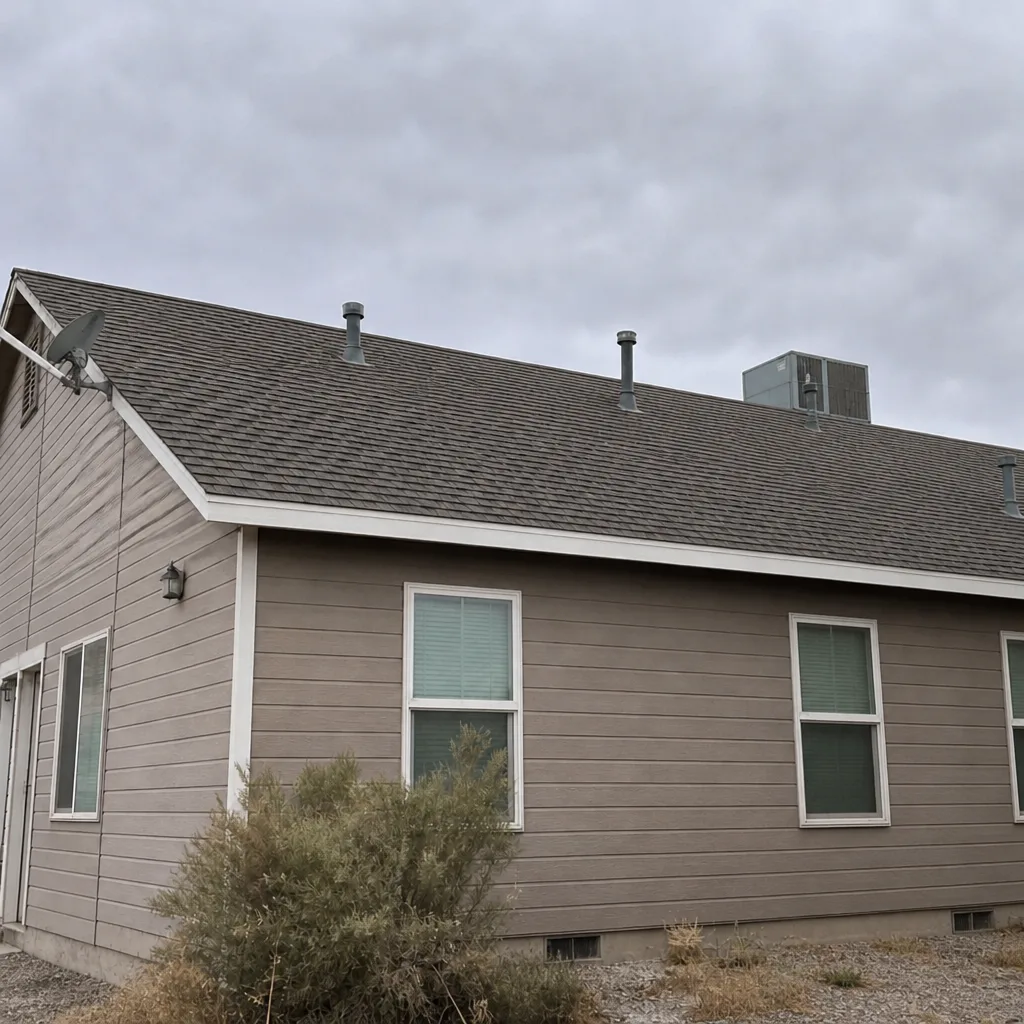 After
When to Call a Professional
Some roof issues are cosmetic. Others are not, and the difference matters to a homeowner planning to stay in the house. Call a professional if you see any of the following: sagging or soft spots visible from the ground or the attic; granule accumulation in gutters after a storm; water stains on ceiling or wall drywall; missing or lifted shingles after wind; daylight visible through the roof deck from inside the attic; a roof past 20 years old in an Enterprise home; or a written estimate from another contractor you’d like a second opinion on. Roof work involves heights, structural judgment, and permit-level code compliance – it is not a do-it-yourself project, and a small flashing failure can become an interior damage claim in one monsoon season. Ridgeline Roofing Co. Enterprise offers free estimates in Enterprise – call (844) 228-4119 to schedule yours.
Frequently Asked Questions
Most single-story asphalt shingle replacements in Enterprise run in the range of $9,000-$18,000 depending on square footage, tear-off layers, deck damage, and ventilation scope; two-story and complex roofs, tile, and metal systems run higher. The only way to know your number is a written line-item estimate, and we offer those free – call (844) 228-4119 for an exact quote.
Most single-story asphalt replacements in Enterprise finish in one to two days; larger homes, tile, or jobs with significant deck replacement can run three to five. Schedule is confirmed in writing before work begins, weather permitting – and monsoon season can push a day if a storm rolls through mid-install.
Yes. The permit is pulled by Ridgeline Roofing Co. Enterprise and included in the scope of work before any tear-off begins. If a bid you’re comparing says “permit by owner,” that’s a scope item missing, not a cost savings – call (844) 228-4119 and we’ll walk you through what your replacement scope should include.
The number on our estimate is the number on the invoice. The only exception is a written per-sheet sheathing allowance disclosed in the original scope – if the tear-off uncovers damaged deck, we call you for approval on the per-sheet price before it’s billed. No surprise change orders otherwise.
Enterprise’s summer heat pushes attic temperatures far higher than most U.S. climates, and proper intake-plus-exhaust ventilation is the single largest factor in how long a shingle roof lasts here. Undersized or blocked ventilation bakes the shingles from below, accelerates granule loss, and shortens shingle life by years. It’s the first thing we look at on every inspection – call (844) 228-4119 to schedule one.
It covers installation workmanship: any defect in how the roof was installed – flashing, fastening, sealing, ventilation – is corrected by Ridgeline at no charge within 90 days of completion. There’s no paperwork, no arguing, and no runaround. Manufacturer material warranties carry separately on top of that, and our technicians document each stage so any callback starts with a clear record.
The Bottom Line
A roof replacement in Enterprise is a spec-driven project, not a shingle-brand decision. Ventilation calculations, high-heat underlayment, a tear-off (not overlay), a line-item scope of work, permits pulled upfront, and a written workmanship warranty are the pieces that determine whether the roof lasts the 20-plus years you intend to stay in the house. The shingle brand matters, but only after the roof system around it is correct. Get a written estimate, read it line by line, and second-opinion it if anything looks thin. A square deal on a well-spec’d roof is what you’re after – not the fastest bid off a truck that won’t be back next spring.
Ridgeline Roofing Co. Enterprise is an authorized installer of GAF, CertainTeed, and Owens Corning, and we back every job with the 90-Day Done Right Promise. For a free written estimate in Enterprise, call (844) 228-4119. A live person answers every call, day or night, and our phones don’t route to a voicemail tree.
Written by the team at Ridgeline Roofing Co. Enterprise.