
Last updated November 18, 2026
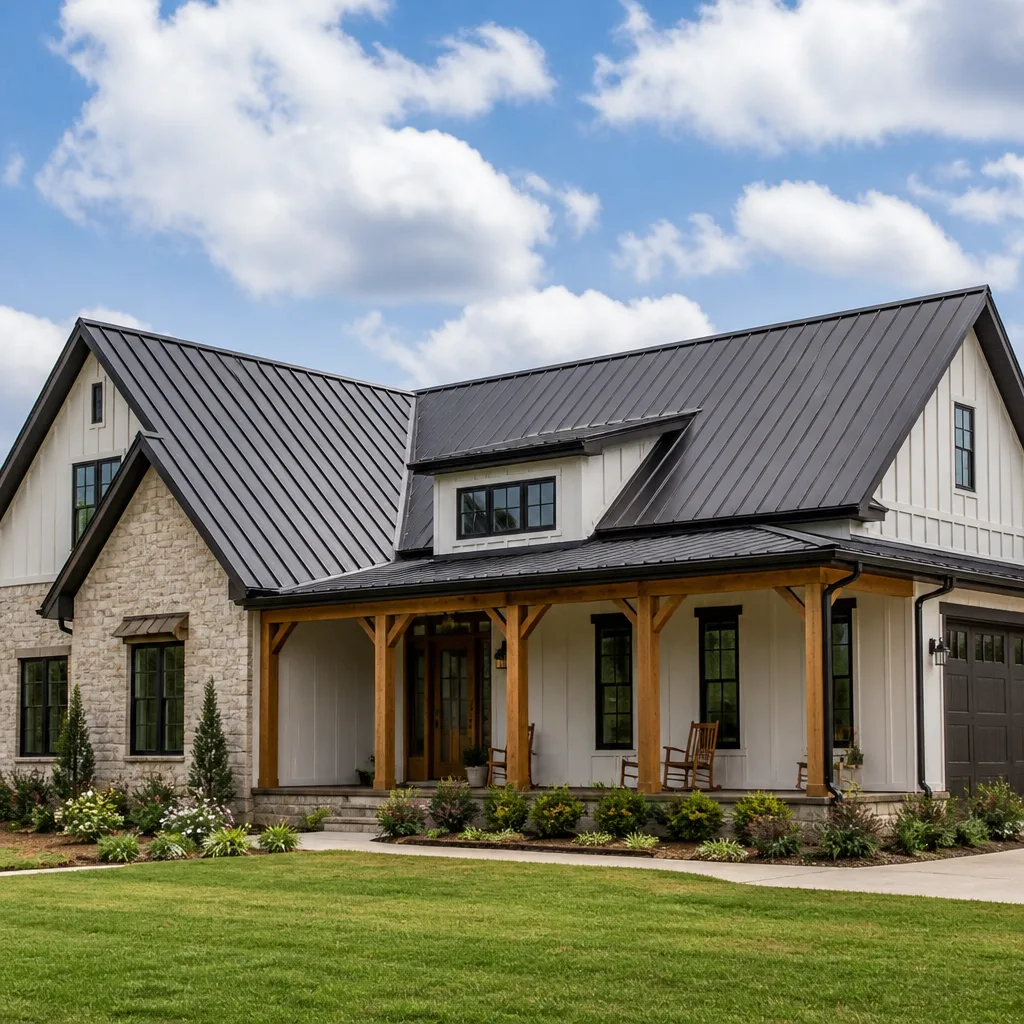 Metal roofing
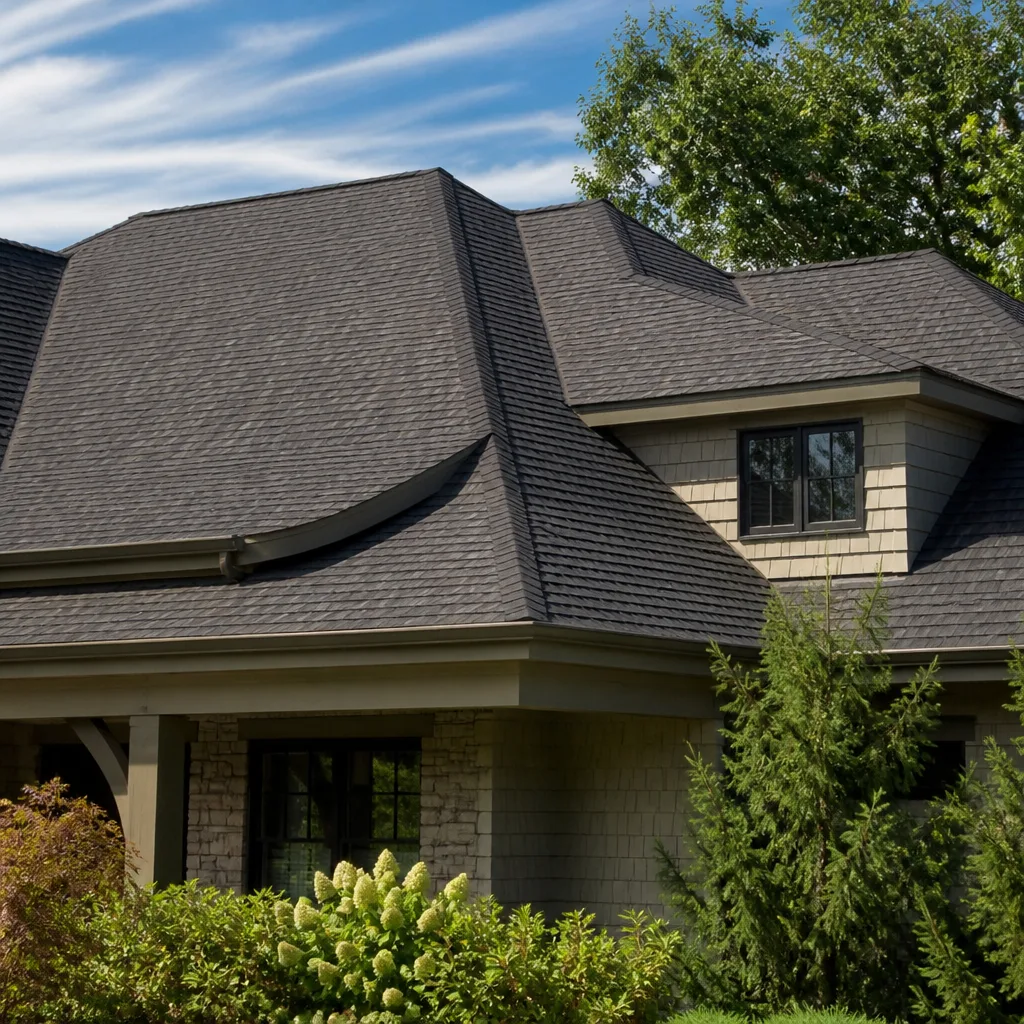 Architectural shingles
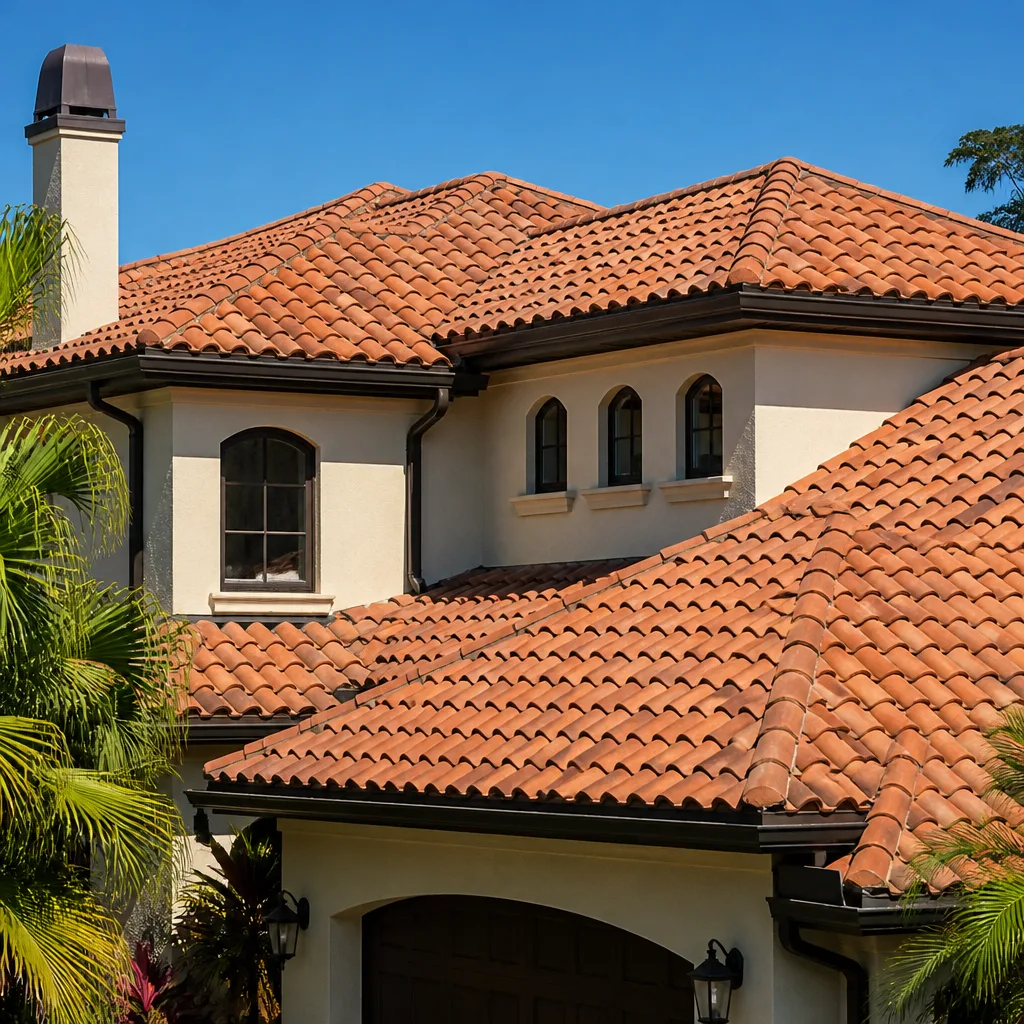 Tile roofing
 GAF
 Owens Corning
 Flat & low-slope
Free roof inspection with deck photos before we talk money - GAF and Owens Corning certified installation
The Complete Guide to Roofing in Enterprise
Enterprise averages more than 294 sunny days a year. But it’s the 71 days that aren’t sunny that take the most roofs down in this part of the valley. That gap between what the sky usually does and what it occasionally does is where most roofing decisions get made wrong. A guide written for Las Vegas or Reno doesn’t fit here. Enterprise sits in its own climate corridor: hard UV, monsoon wind-driven rain, and just enough winter cold at the higher edges to work a roof differently than the rest of Nevada. This guide covers what our technicians have learned on Enterprise roofs, from what materials actually hold up to what the county inspects and what it assumes.
Quick Answer
A roof in Enterprise needs to be built for UV first, wind-driven rain second, and thermal movement third. Flat and low-slope assemblies dominate the local housing stock, which means drainage design and flashing quality matter more than the shingle color or brand name. Get the decking, underlayment, and flashing right and the roof will hit its expected service life. Skip those steps and even premium materials fail early. Every decision below comes back to that order of priorities.
Styles & brands we work with
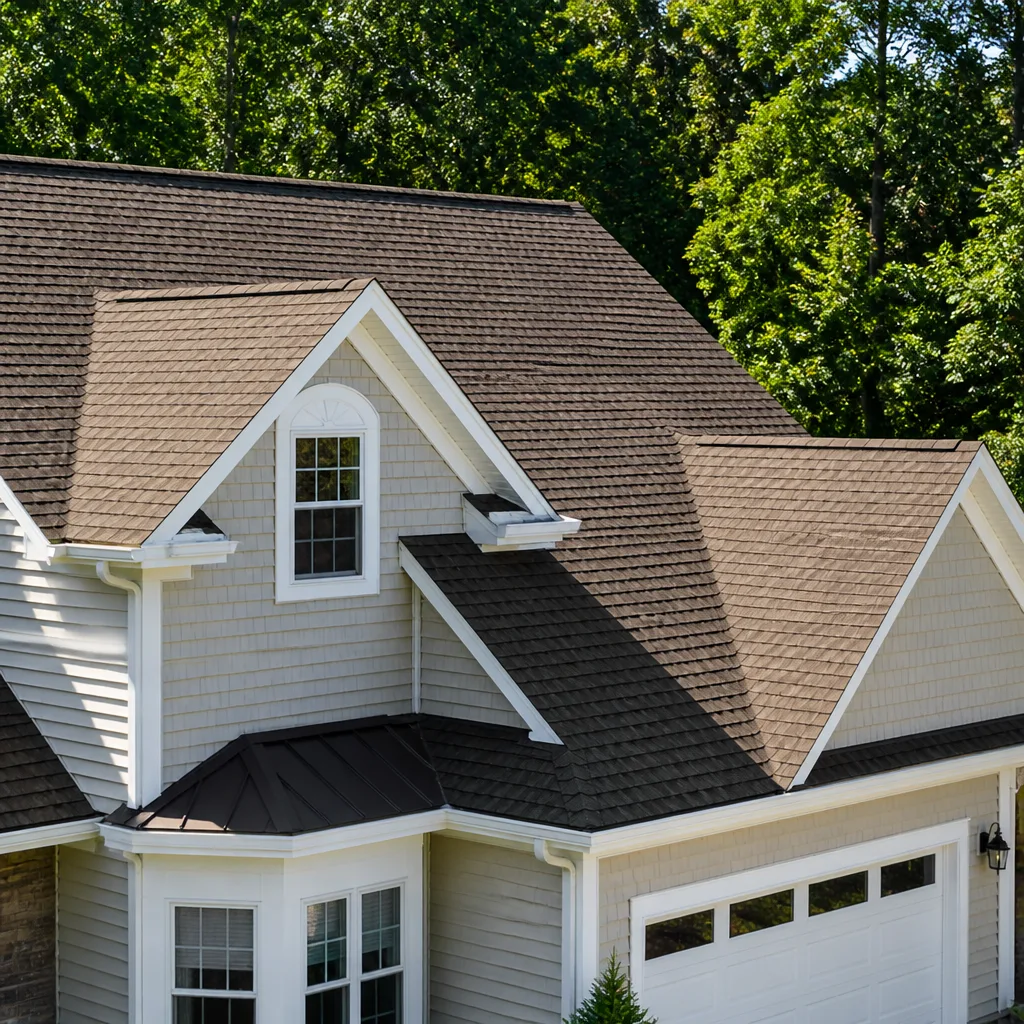
- Architectural shingles
- Metal roofing
- Tile roofing
- GAF
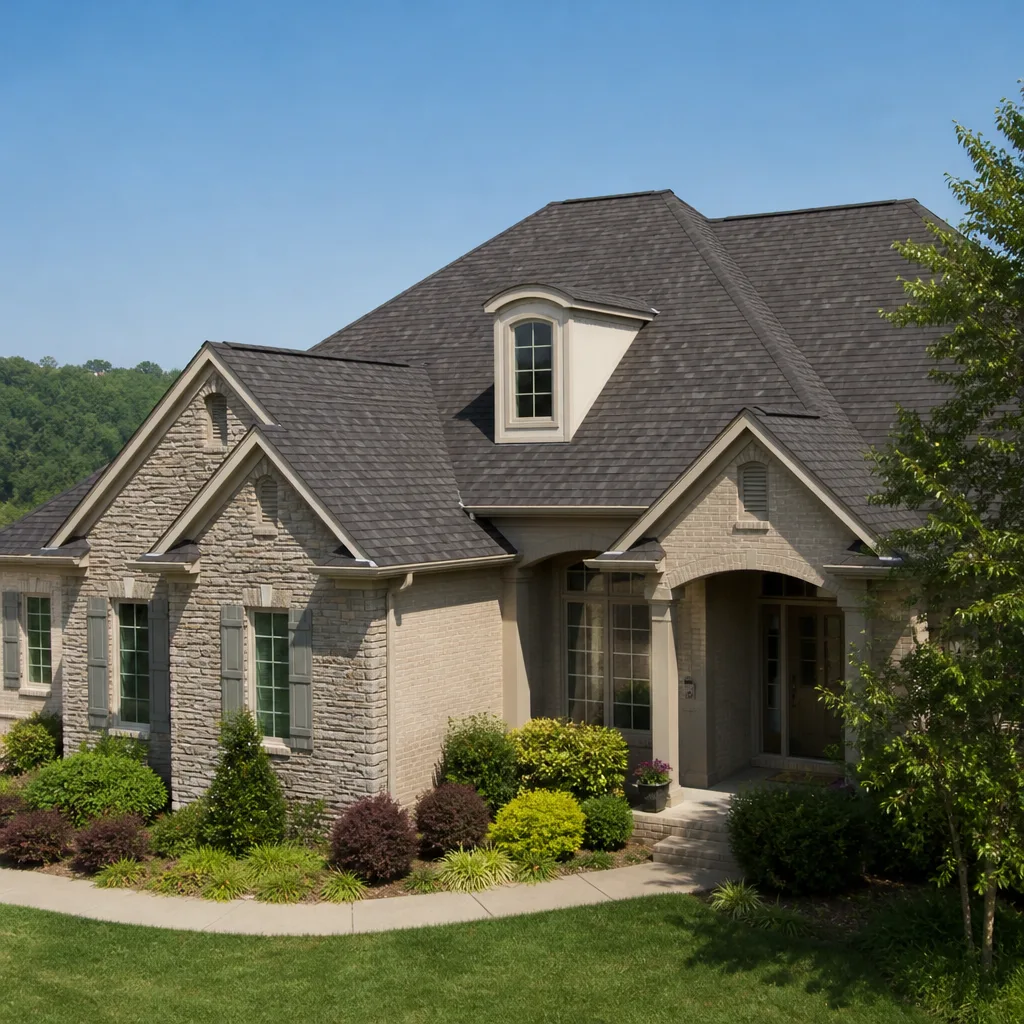
- Owens Corning
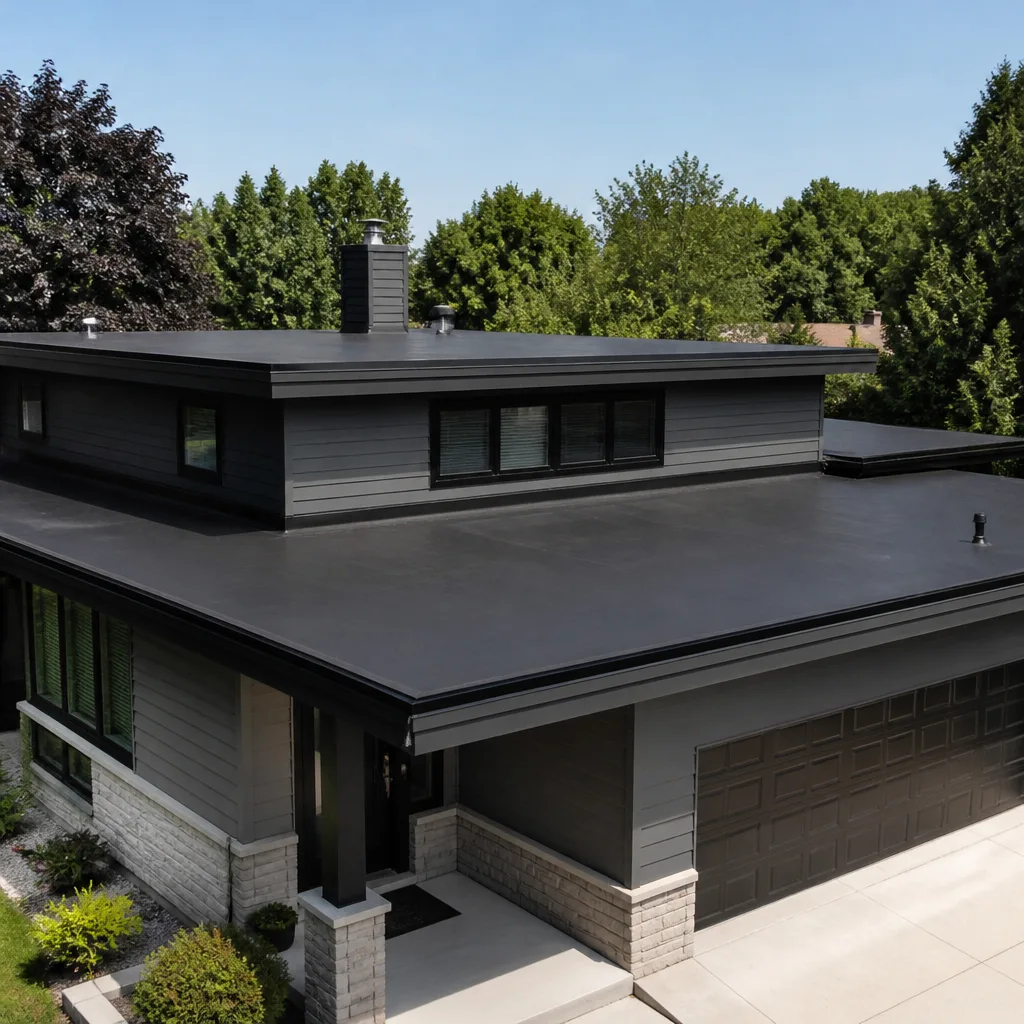
- Flat & low-slope
Table of Contents
- What Enterprise’s Climate Actually Does to a Roof
- Why Flat and Low-Slope Roofs Dominate Enterprise
- Matching Materials to Enterprise’s Real Climate Data
- Clark County Permits: What Gets Inspected vs. What Gets Assumed
- The Unseen Work: Decking, Underlayment, and Flashing
- A Year-Round Maintenance Schedule for Enterprise Homeowners
- How to Choose a Roofer in Enterprise
What Enterprise’s Climate Actually Does to a Roof
Three forces shape every roof in Enterprise, and each one fails materials in a different way.
UV exposure. At this elevation, the sun does more than bleach shingles. It degrades the asphalt binder in standard shingles, dries out sealant, and makes membrane roofing brittle from the top down. A three-tab shingle rated for a 25-year life in a cooler climate often shows its first cracks here in year 12 or 13. That isn’t a defect. It’s a climate mismatch.
Monsoon wind-driven rain. From roughly July through September, storms arrive with wind that drives rain sideways and upward under flashings and into seams that shed vertical rain just fine. Roofs in Enterprise fail at the edges first: around chimneys, along valleys, at skylight curbs, and where the roof meets a wall. Flat roofs pond water when the drainage is undersized for a 20-minute downpour, and ponding is where membranes blister and seam.
Freeze-thaw at elevation. The colder pockets on the higher edges of the valley see occasional overnight freezes. Water that sits in a flashing joint, a low spot, or a clogged scupper expands when it freezes and works the joint loose. A handful of freeze events per winter is enough to open a seam that held for a decade.
In our experience, the roofs that last here are the ones designed for all three forces, not just the sunny one. That starts with the roof type itself.
Why Flat and Low-Slope Roofs Dominate Enterprise
Drive through most Enterprise neighborhoods and you’ll see far more flat and low-slope rooflines than steep pitched roofs. That’s partly a design tradition that spread out from Southern California, partly a practical reaction to the heat, and partly the way lots were built to maximize usable living space. The consequence for homeowners is that standard shingle-and-underlayment thinking doesn’t always apply.
On a flat or low-slope roof, water doesn’t shed fast. It lingers, and where it lingers is where the roof will fail. Drainage design, not material brand, is the deciding factor.
What matters most:
- Slope. Even a small positive slope toward drains or scuppers moves water off the roof. Positive slope is designed in, not added later.
- Drain sizing. A monsoon downpour can drop more rain in twenty minutes than a scupper designed for average rainfall can handle. Undersized drains pond water and shorten membrane life.
- Seam placement. Seams on membrane roofing should run with the slope, not across it. Cross-slope seams trap water.
- Ponding tolerance. Some membrane systems handle ponding better than others. Ask what happens to your roof in a 30-minute storm, not an average day.
On a low-slope or flat roof, a free estimate should include a drainage walkthrough, not just a material quote. If a roofer skips that conversation, that’s a signal. For a closer look at what repair or full replacement looks like on Enterprise roofs, see our pages on Roof Repair in Enterprise and Roof Replacement & Installation in Enterprise.
Matching Materials to Enterprise’s Real Climate Data
Manufacturer spec sheets quote service life based on a national average. No roof in Enterprise lives in a national average. Read the spec against what the roof will actually face here.
Three things to look for:
- UV rating, not just lifespan. Ask how the product performs under sustained high-UV exposure, not under mixed conditions. Some products carry an explicit high-UV performance note; some don’t.
- Wind uplift rating. This matters most on flat and low-slope assemblies where a monsoon gust can lift the edge. A product rated for straight-line wind at one speed may perform differently under the swirling gusts a monsoon storm produces.
- Thermal expansion tolerance. The daily swing in Enterprise runs wide, from cool mornings to intense afternoons. Materials that flex with heat fare better than materials that don’t.
The brand names that carry real weight for this climate tend to be the ones with decades of field testing in the desert Southwest. GAF, CertainTeed, and Owens Corning all make products in this category. The right product depends on your roof type, slope, and exposure, not a general recommendation. What matters more than the label on the package is whether the installer installed it to the manufacturer’s spec. A premium product installed to a shortcut spec will fail on the same timeline as a low-cost one.
Clark County Permits: What Gets Inspected vs. What Gets Assumed
Roofing work in Enterprise falls under Clark County jurisdiction. What that means in practice is that certain parts of the job get an inspector’s eyes and certain parts don’t. Knowing the difference is where homeowners lose value.
What typically gets a physical inspection:
- Decking attachment after the old roof is stripped
- Underlayment installation before the top layer goes on
- Certain flashing details at penetrations and roof-to-wall intersections
What often gets taken on the contractor’s word:
- Whether every flashing joint was sealed correctly
- Whether underlayment laps were installed in the right direction for the slope
- Whether the drip edge was fastened at the right spacing
- Whether the attic ventilation was matched to the roof area
That second list is where most early failures come from. A permit doesn’t guarantee the work was done right; it guarantees the work was scheduled for inspection. What closes the gap is a contractor who documents the installation with photos from your actual roof, not a verbal walkthrough. Ask for that. In our experience, photo-documented inspections separate contractors who know their work is sound from contractors who hope the inspector doesn’t look too hard.
For specialty assemblies like flat membrane systems, tile, or metal, the inspection standard differs by product. Our Specialty Roofing in Enterprise page covers those specific systems.
The Unseen Work: Decking, Underlayment, and Flashing
Almost every bad roof we’ve looked at failed in the parts a homeowner never sees. Decking, underlayment, and flashing are the unglamorous work that decides how long the visible layer lasts.
Decking. Rot, sag, or loose panels get covered up by finished roofing. If the deck isn’t checked and repaired, the new roof rests on a foundation that will fail. That’s the first thing to inspect when the old roof comes off, not the last.
Underlayment. Underlayment is the second layer of defense when the top layer fails. It also sheds water that gets under the top layer during a wind-driven storm. On a flat or low-slope roof, underlayment must be installed with the right laps and the right spacing to actually do that job. Installed wrong, it traps water instead of shedding it. UV exposure doesn’t degrade underlayment the way it degrades the top layer, but heat does. Underlayment in an attic that runs hot through the summer ages faster than a manufacturer’s spec assumes.
Flashing. Flashing is the metal that seals every place the roof meets something else: a chimney, a wall, a vent, a skylight curb. In Enterprise, flashing takes a beating from wind-driven rain that pushes water uphill. Flashing that sheds vertical rain just fine can leak in a monsoon. The right flashing for this climate is sized and angled for wind-driven rain, not just gravity. It’s also the detail most often missed in rush installs.
Standing behind this work is what the 90-Day Done Right Promise is built around. If any part of the installation turns out wrong in the first three months, we come back and fix it. The unglamorous work stays guaranteed because it’s the work that matters most.
A Year-Round Maintenance Schedule for Enterprise Homeowners
Seasonal attention prevents the failures that get expensive. Here’s a schedule that holds up in Enterprise’s climate.
- Spring (before monsoon season). Check flat roof drains, scuppers, and valleys for debris. A clogged scupper turns a 20-minute storm into a ponding problem. Check flashing around chimneys and skylights.
- Early summer. Inspect for UV cracking on shingles and membrane surfaces. Reseal raised flashing collars and check sealant on roof penetrations before the heavy sun months.
- Late summer through fall (monsoon season). Check for lifted edges after each major storm. Look at the gutters and downspouts. This is when most wind damage shows up in Enterprise.
- Winter (freeze-prone weeks). Walk the perimeter of the roof edges and check for water pooling that could freeze overnight. Confirm ice is shedding off properly around valleys and gutters.
- Anytime. A photo-documented inspection from a trained technician catches what a homeowner will miss from the ground. The $89 Seasonal Tune-Up covers the inspection, the cleaning, and a written report on what needs attention.
For a home we’ve inspected on the ridge above the Enterprise foothills, the biggest recurring issue wasn’t the shingles. It was that nobody had checked the valley flashing in years. The valley is where two roof slopes meet and where wind-driven rain gets pushed first. A five-minute check every fall for five years is worth more than a full roof replacement done three years early.
How to Choose a Roofer in Enterprise
Choosing a contractor matters more than choosing a material. A premium product on a rushed installation is worth less than a mid-price product on a careful installation. That’s true anywhere, but it’s critical here where the climate is unforgiving.
What to look for:
- Local presence that’s been tested. Ask how long the contractor has actually worked in Enterprise, not just their service area. Storm chasers show up after a monsoon event and leave before the next one.
- Written pricing that doesn’t move. The number on the estimate should be the number on the invoice. No change orders that appear after the roof is stripped.
- Documented inspection. Photos from the actual roof, not a verbal opinion in the driveway.
- Written workmanship guarantee. A verbal guarantee isn’t a guarantee. Look for a written document that spells out what the contractor will do if the work isn’t right.
- Authorized manufacturer installation. A contractor authorized to install GAF, CertainTeed, Owens Corning, IKO, Atlas, Tamko, or Boral has met training standards that protect the homeowner’s warranty coverage.
For more about how we work in Enterprise, see our Ridgeline Roofing Co. Enterprise home page.
Common Mistakes to Avoid
- Choosing a material by lifespan number alone. A 25-year shingle that fails in year 13 because it wasn’t built for this UV exposure costs more than a 20-year product that actually reaches year 20. Read the product spec against Enterprise’s actual conditions, not the manufacturer’s national average.
- Skipping the drainage walkthrough on flat roofs. The number one mistake we see on Enterprise low-slope roofs is accepting a material quote that never addressed scupper sizing and ponding tolerance. The material choice is secondary to the drainage design.
- Hiring on price alone after a storm. The lowest bid after a monsoon event often comes from a crew that won’t be in town when the first problem appears. Ask for a written guarantee from anyone who gives you a quote.
- Assuming a permit means the work was inspected. Permits schedule inspections, but many critical details are installed by contractor judgment. Ask for installation photos whether or not the inspector will see the detail.
- Waiting for a leak to call. By the time water shows up on the ceiling, the decking has often been compromised for months. An annual inspection catches problems at the top of the roof before they reach the living room.
- Ignoring the valley flashing. Valley flashing is the most common failure point on Enterprise roofs during monsoon season. If your fall check doesn’t include it, you’re skipping the detail most likely to fail.
- Accepting a verbal workmanship guarantee. If the contractor won’t put a guarantee in writing, that’s a sign. Nobody who actually stands behind the work avoids signing their name to it.
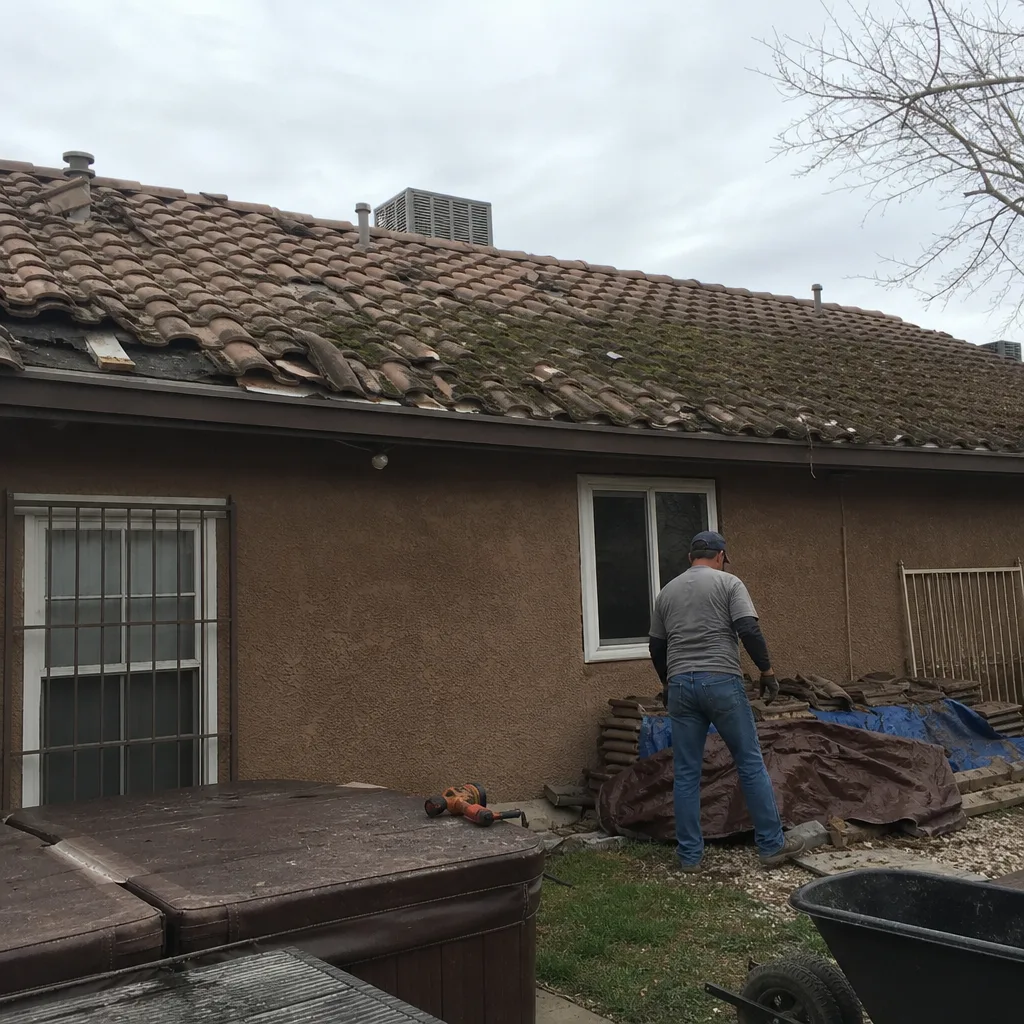
See the difference
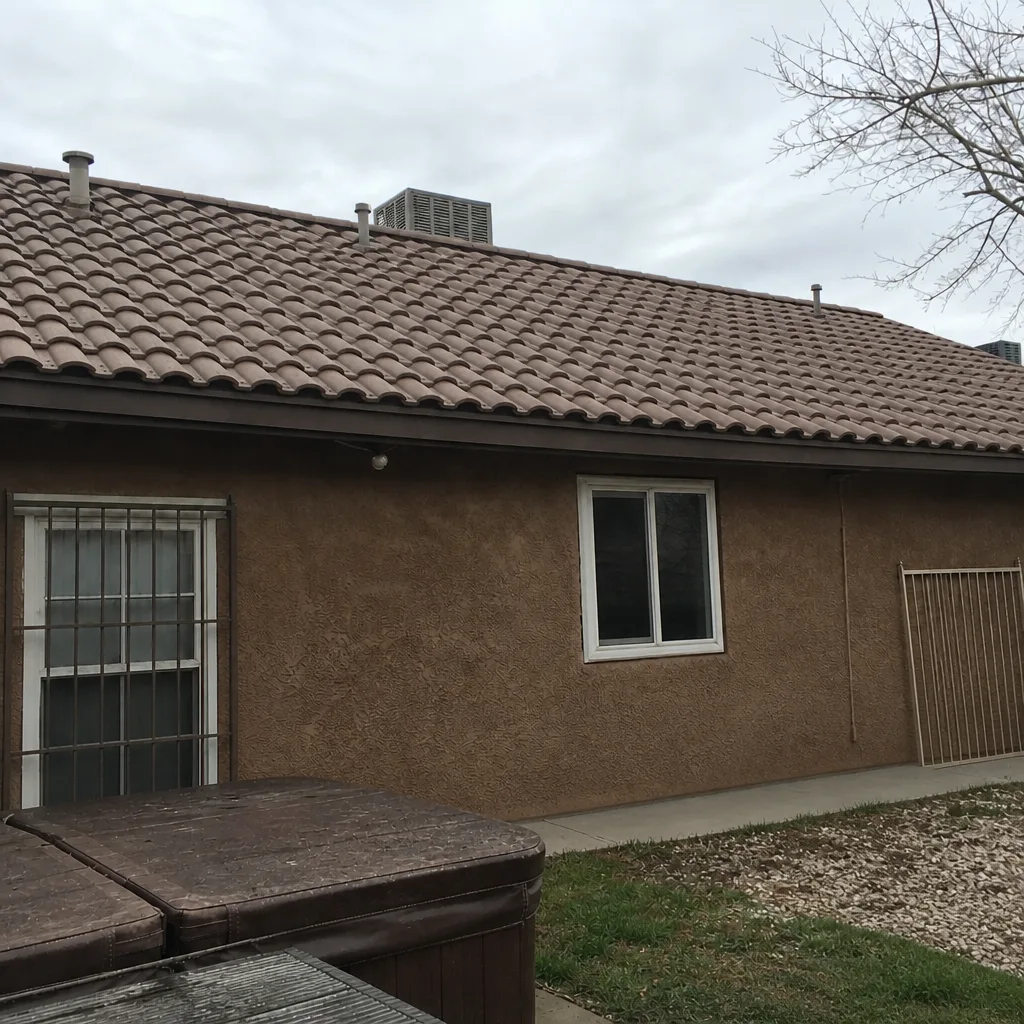
 Before
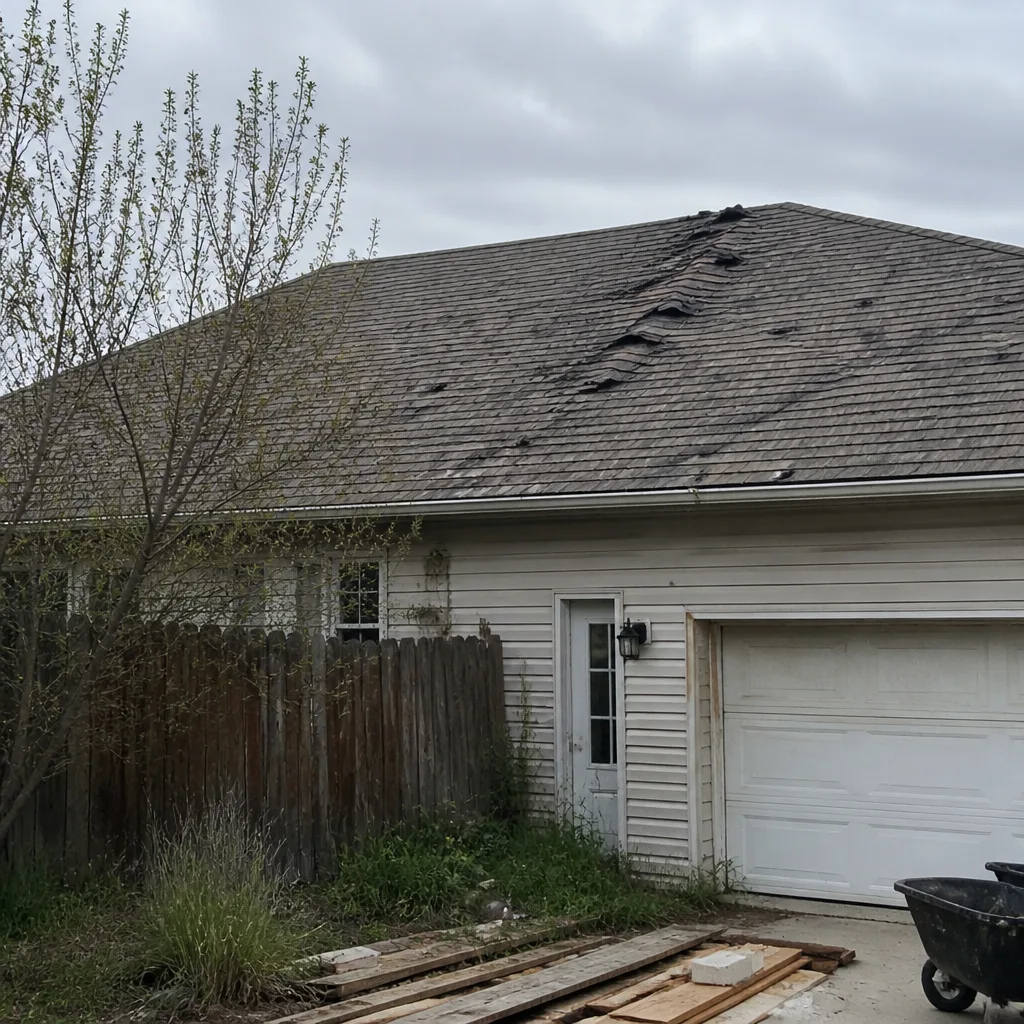
 After
 Before
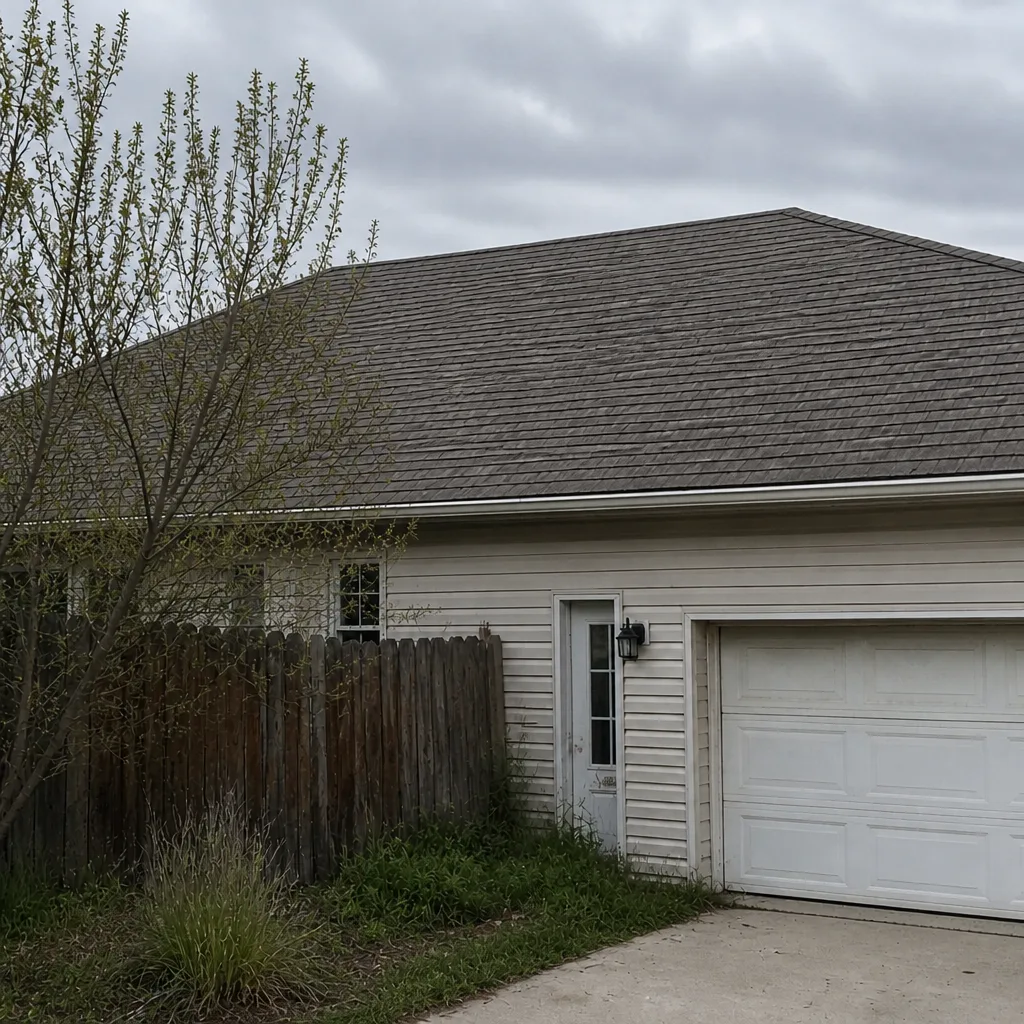 After
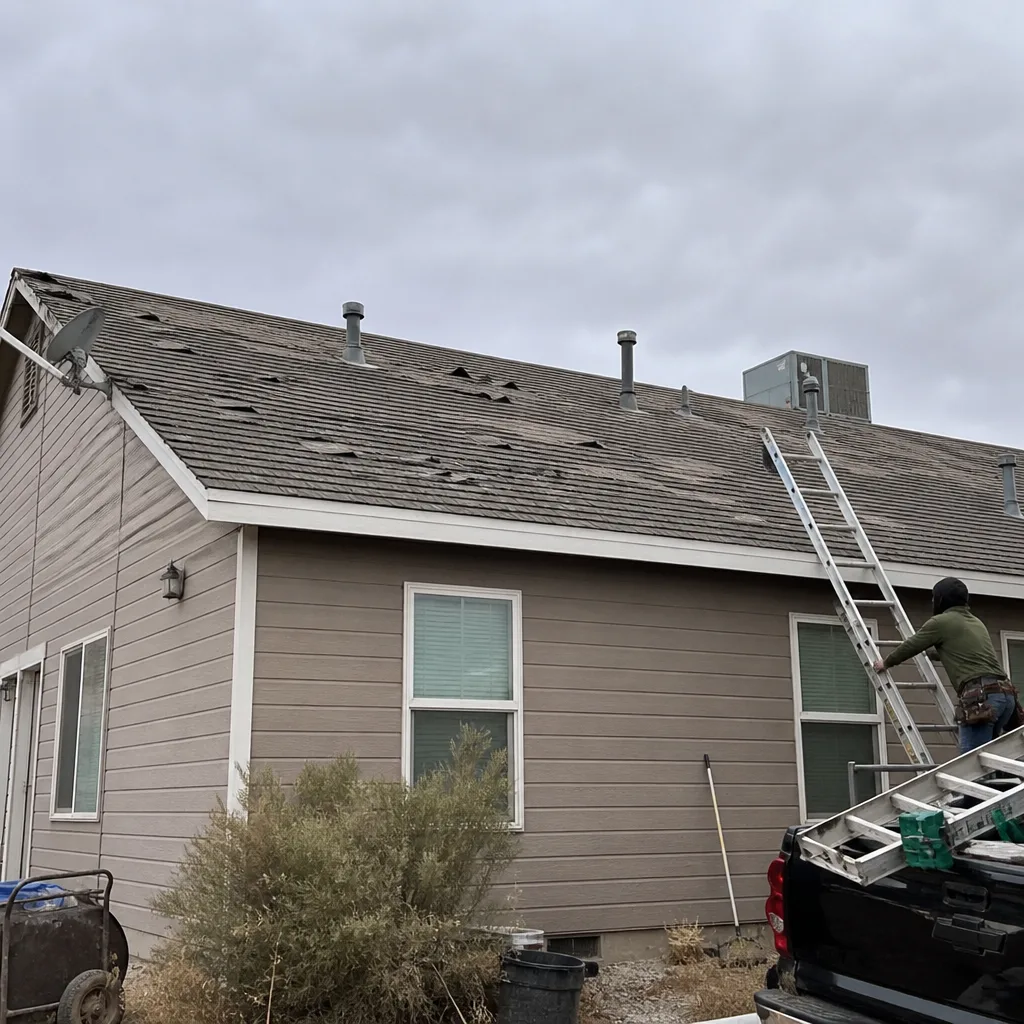 Before
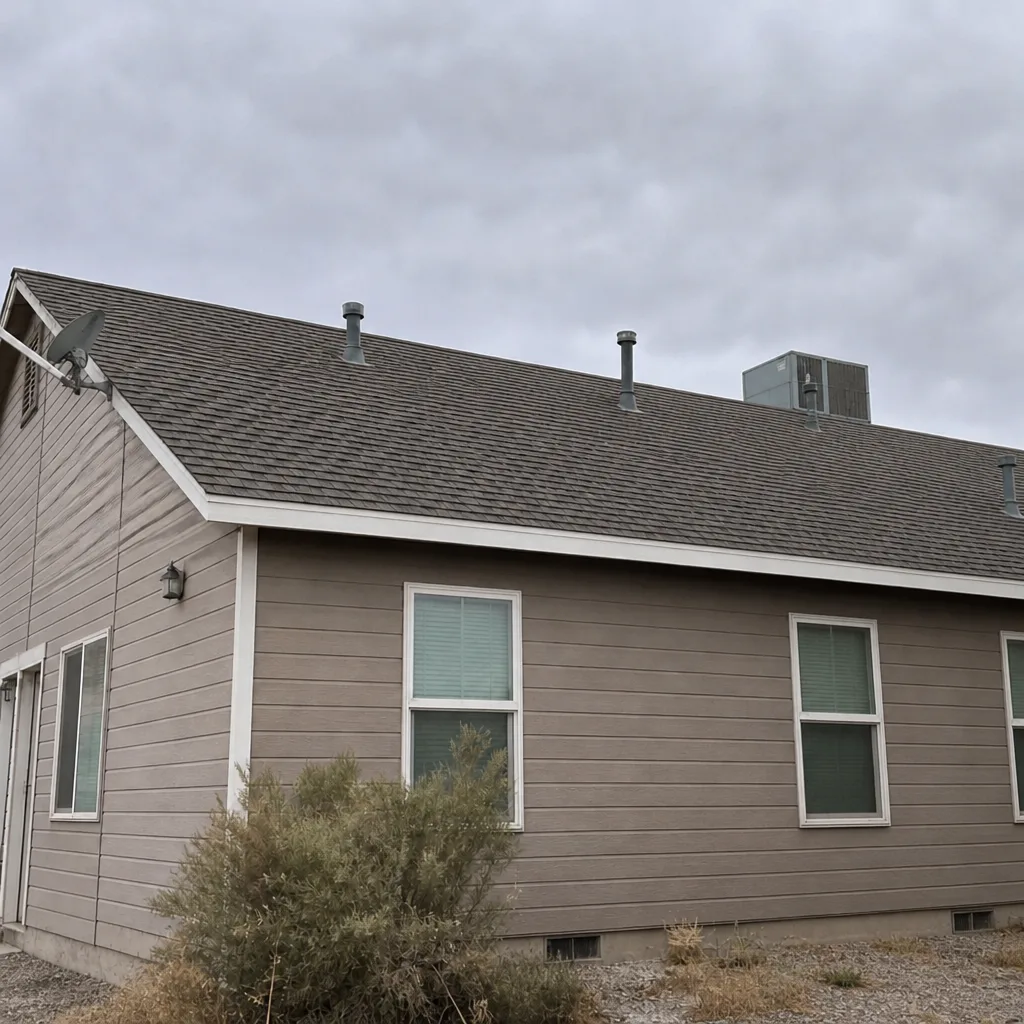 After
When to Call a Professional
Some roof problems are safe to check from the ground. Others need a trained technician on the roof with the right equipment and the right safety setup. A few signs that it’s time to call:
Water stains on a ceiling or wall, especially after a storm. Missing, lifted, or curled shingles visible from the ground. Granules in the gutter that weren’t there last year, indicating shingle wear. Flashing that looks loose or cracked around any penetration. A flat roof that’s holding water more than 24 hours after rain. Any change in the shape of a roof surface, however small. And any storm strong enough to bring down a neighbor’s tree limb warrants an inspection even if you don’t see damage.
Ridgeline Roofing Co. Enterprise offers free estimates in Enterprise – call (844) 228-4119. Inspections are documented with photos from the actual roof, and a live person answers every call, day or night.
Frequently Asked Questions
A well-installed asphalt shingle roof typically lasts 15 to 22 years in Enterprise, and a properly built flat membrane roof can reach 20 years or more. That’s shorter than national averages because of the UV intensity. The material spec and the installation quality both matter, but the installation is the bigger variable.
Most repair work in Enterprise runs from a few hundred dollars for a flashing reseal or a small shingle patch to several thousand for a section replacement on a flat roof with membrane damage. The final number depends on the roof type and access. Call (844) 228-4119 for an exact quote – estimates are free.
Not on a written estimate from a contractor who quotes in writing and stands behind the number. The estimate should break out materials, labor, and any permit fees as separate line items, and the invoice should match. Any roofer who won’t put that in writing is telling you something.
Yes. Roofing work in Enterprise falls under Clark County jurisdiction, and the permit process is part of the job. A written quote should include the permit cost as a line item so there’s no surprise later.
We schedule inspections with the homeowner present so we can walk through findings together. A photo-documented report from the actual roof means you see what we see, rather than getting a summary in the driveway.
A repair addresses isolated damage (a flashing joint, a section of membrane, a group of shingles) and keeps the existing roof in service. A replacement is right when the damage is widespread, the roof is past its expected lifespan, or multiple areas are failing in the same season. On flat roofs in Enterprise, the drain design and the age of the entire assembly usually decide which path makes sense.
The Bottom Line
Enterprise roofs live in a specific climate. UV does the long-term damage, wind-driven rain finds the flashing, and occasional freeze-thaw events open joints that held for years. The winning approach is a roof built for all three. That means flat and low-slope assemblies designed for real monsoon drainage, materials chosen against this actual climate rather than a national average, and decking, underlayment, and flashing installed with care because they decide the roof’s lifespan. Read every estimate against that standard. Get it done right the first time – and if it isn’t, the contractor should be there to make it right.
Call (844) 228-4119 to schedule your free estimate. A written quote, a photo-documented inspection, and a live person on the phone – day, night, or after a storm.
Contact
Ridgeline Roofing Co. Enterprise installs and repairs roofs across Enterprise backed by the 90-Day Done Right Promise and a current $50 Off Any Repair Over $250 offer. If a repair or replacement is on your mind, call (844) 228-4119 for a free estimate. The price on the estimate is the price on the invoice, and we’ll be there when we say.
Written by the team at Ridgeline Roofing Co. Enterprise.