
Last updated November 18, 2026
 Architectural shingles
 Metal roofing
 Tile roofing
 GAF
 Owens Corning
 Flat & low-slope
Free roof inspection with deck photos before we talk money - GAF and Owens Corning certified installation
DIY vs Professional Emergency & Storm Damage: What’s Safe to Do Yourself
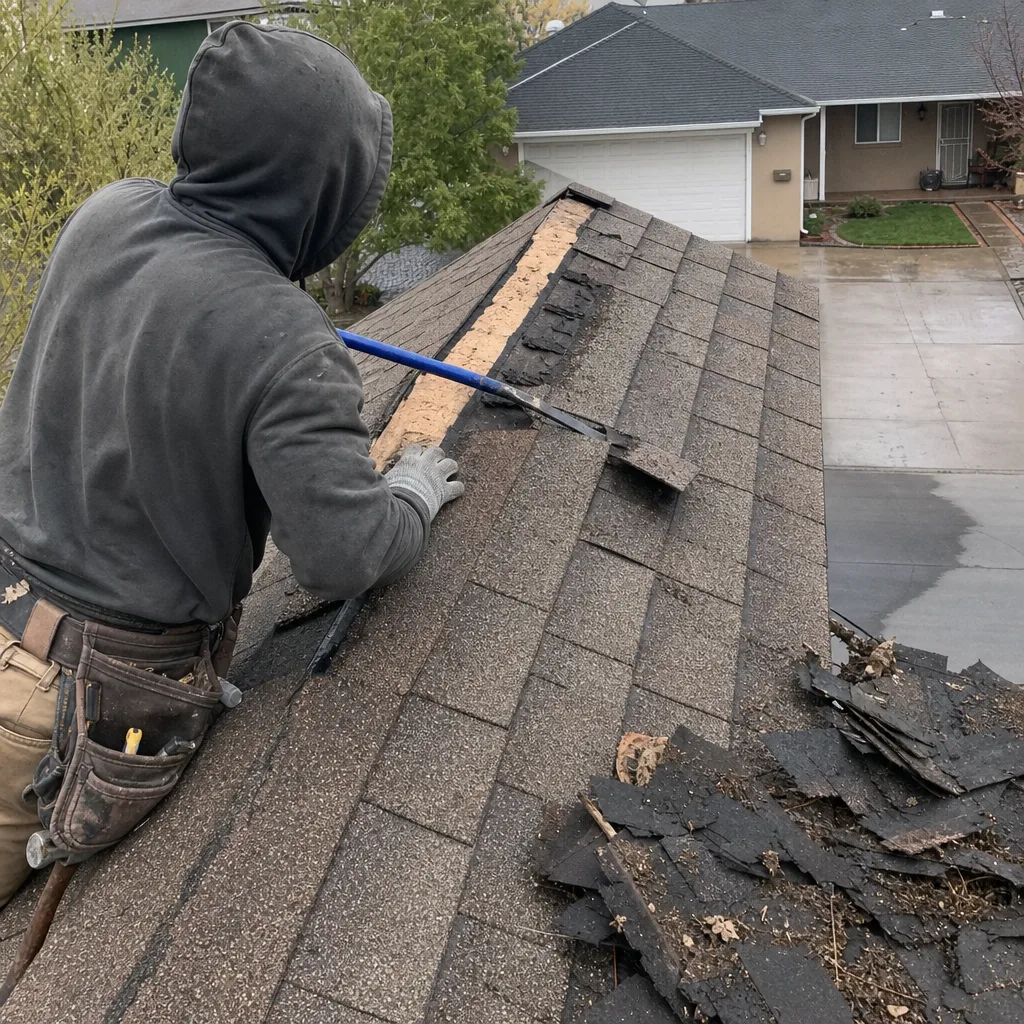
More homeowners are hurt falling from roofs in the week after a major storm than in any other stretch of the year. The shingles are wet. The adrenaline is high. And the footing up there is nothing like it looks from the ground. We’ve watched this pattern play out across Enterprise for a long time, and it almost always starts the same way: a homeowner stands in the driveway, sees a lifted shingle or a dark stain on the ceiling, and thinks, “I can handle that myself.” This guide draws a clear line between what you can safely check and what needs someone with training and proper equipment. You’ll learn what to assess from the ground, how to inspect your attic and ceilings without climbing, when a tarp helps and when it backfires, and what to say when you call for help in Enterprise.
Quick Answer
It is not safe to walk your own roof after a storm. Wet shingles, loose granules, and unseen soft spots make falls likely, and post-storm weeks are the most dangerous time of year for roof injuries. What is safe: ground-level inspection with binoculars, interior checks of your attic and ceilings, and documentation with photos and notes. Anything requiring you to get up on the roof, pry up shingles, or remove damaged material is professional work.
Styles & brands we work with
- Architectural shingles
- Metal roofing
- Tile roofing
- GAF
- Owens Corning
- Flat & low-slope
Table of Contents
- What You Can Safely Assess From the Ground
- Safe Interior Inspection: Attic, Ceilings, and Window Frames
- The Narrow Safe Window for DIY Tarping
- The Insurance Risk of DIY Repairs Before an Adjuster Visits
- Why Enterprise Storms Hit Roofs Differently
- What “Live Phones Around the Clock” Actually Means
- Common Mistakes to Avoid
- When to Call a Professional
What You Can Safely Assess From the Ground
You can learn a remarkable amount about storm damage without ever leaving your driveway. A pair of 10x binoculars and 15 minutes of careful looking will tell you more than a panicked scramble across wet shingles ever could. This is the first and safest step after any storm that rolls through Enterprise.
Walk the perimeter of your home and look up at each roof plane. Focus on these specific things:
- Lifted or missing shingles. Look for tabs that have curled up or torn away, especially along ridges, hips, and the edges facing the direction the wind came from.
- Granule loss. Bald patches where the sandy surface of the shingles is gone, or piles of dark granules in your gutters and at downspout outlets.
- Dented or displaced metal. Ridge vents, flashing around chimneys, and gutter aprons show impact damage clearly.
- Debris and punctures. Branches, palm fronds, and wind-blown material can leave holes that aren’t obvious from eye level.
- Gutter damage. Sagging runs, separated seams, or gutters pulled loose from the fascia.
- Chimney and skylight flashing. Torn sealant or lifted metal at the joints is a common leak point.
Write down what you see and note the date. Take photos from the ground with your phone zoomed in. If you spot anything that worries you, that’s your signal to get a professional opinion rather than a ladder. Our team at Roof Repair in Enterprise handles this kind of inspection routinely and can document what’s happening from the actual roof surface.
Safe Interior Inspection: Attic, Ceilings, and Window Frames
Your house tells you a lot about roof damage from the inside, and this is where you can do the most useful detective work without any risk of a fall. Plan to check three areas: the attic, the ceilings below the roof, and the frames around upper-floor windows.
Attic check
- Put on a mask and gloves, and carry a flashlight. Don’t step on anything but the joists and stay on the boards or walkway.
- Look for daylight coming through the roof deck. Any visible gap is a direct opening for water.
- Check for dark stains, drip marks, or wet insulation. Insulation that’s clumped, compressed, or discolored is a sign water got in.
- Inspect the underside of the roof sheathing for dark spots, mold, or sagging.
- Sniff the air. A sharp, musty smell after a storm often means moisture that hasn’t shown up as a stain yet.
Ceiling and window monitoring
Walk each room on the top floor and look up. Discolored rings, bubbling paint, or hairline cracks in the drywall are warning signs. Watch for these over the next week or two, because water damage often takes days to show. Around windows and doors on upper floors, check the frames for gaps, sticking, or moisture on the sill. If a window suddenly stops closing cleanly after a storm, the roof or wall assembly may have shifted.
Water doesn’t need a visible hole to get in. It travels along rafters and can surface 10 feet from the actual entry point. That’s why a professional inspection looks at the whole roof system, not just the spot where the stain appears.
The Narrow Safe Window for DIY Tarping
Tarping is where the desire to help yourself does real damage. It sounds simple: cover the hole, stop the water, call someone later. But in practice, tarping a roof is a skilled job, and doing it wrong can cost more than doing nothing.
There is a narrow set of conditions where a homeowner can handle tarping safely:
- You stay on the ground or on a stable interior surface. No roof access.
- The damage is over a porch, garage, or lower roof edge that’s reachable safely with a ladder held by another adult.
- There’s no active lightning, no standing water, no visible electrical exposure, and no gaping structural damage.
- You have proper tarp, heavy-duty cap nails or furring strips, and you know how to fasten without creating new nail holes through the shingles below.
Outside those conditions, do not go up. Here’s the key danger: a poorly secured tarp that flaps in the wind acts like sandpaper. It scours the shingles, wears away the granules, and can lift a bad roof edge into a worse one. And any tarp nailed down wrong leaves holes that become the next leak. In Enterprise’s high winds, a loose tarp is often worse than an open hole. If water is actively leaking in, call (844) 228-4119 and we can talk you through a safer holding pattern.
When the damage is significant or the weather is still active, leave it alone and get a trained crew on the roof. This is one of the most important judgment calls after a storm, and it’s where the calm voice of a professional matters most.
The Insurance Risk of DIY Repairs Before an Adjuster Visits
This is the part almost no one talks about: DIY repairs before an insurance adjuster sees your property can cost you the claim. Almost every policy covers storm damage, but your claim is only as strong as the evidence that exists when the adjuster arrives. If you’ve already removed damaged shingles, patched a leak with caulk, or hauled off debris, the adjuster sees a roof that’s mostly fine. The story of what the storm did is gone.
Here’s what to do instead:
- Photograph and video everything from the ground before you touch anything. Date-stamp where possible.
- Keep a written log of what you noticed and when, including water entering the house.
- Save any damaged material your contractor removes for the adjuster to see.
- Call your insurer to open a claim and get the adjuster scheduled before repairs begin.
- Have a professional inspection done early so there’s an independent record of the damage.
We’ve seen good people lose reimbursements over a well-intentioned Saturday morning patch job. The claim process works best when the damage is left in place and documented. A professional inspection with photos taken from the actual roof is the strongest evidence you can bring to an adjuster. That’s a big part of why document-driven work serves homeowners so well, especially when you’re dealing with a big decision like Roof Replacement & Installation in Enterprise down the road.
Why Enterprise Storms Hit Roofs Differently
In our experience, storms in the desert don’t behave like storms people read about in coastal guides. Out here, the threat isn’t steady soaking rain. It’s a monsoon burst that can drop an inch or two of rain in an hour, driven sideways by 50 mph gusts and peppered with hail and wind-blown sand. That combination stresses roofs in specific ways any Enterprise homeowner should recognize.
Wind-driven rain finds weak points the rain never reaches on a calm day. Flashing around chimneys, roof-to-wall joints, and vents are the first to fail. Water gets forced up under shingles and into the attic, and it can appear inside the house far from the actual entry. The dry desert air can also make shingles brittle, so storm impacts cause cracking and granule loss more easily than in damper climates. Sand and grit driven by high winds scour roof surfaces and wear down the protective coating.
Summers bring intense heat that can bake sealant and thermal-cycle roof components, then a monsoon hits a roof that’s already aged. That’s why we tell homeowners that the condition of the roof the day before the storm is just as important as the storm itself. A seasonal tune-up in spring, before monsoon season, catches small problems before they become leaks. Our seasonal tune-up service exists for exactly that reason.
Enterprise homes built in the 1990s and 2000s, especially in neighborhoods where the original roofs are nearing the end of their expected life, are the ones that suffer most after a big storm. If your roof is that age, plan on a checkup rather than waiting for a leak.
What “Live Phones Around the Clock” Actually Means
During a storm, you may hear that we answer the phone 24 hours a day, seven days a week. That’s true of Ridgeline Roofing Co. Enterprise home, and we don’t use it as a slogan. It means a person picks up the phone when you call, even in the middle of a storm. No voicemail tree, no callback window, no leaving a homeowner stranded at 2 a.m. with water coming through the ceiling.
When you call (844) 228-4119 after storm damage, have these things ready so the call is fast and useful:
- Your address and the best phone number to reach you.
- A one-sentence description of what happened: when the storm hit, and what you noticed.
- Whether water is actively coming into the house, and where.
- Whether the damage is on a lower roof, garage, or main roof.
- Whether anyone in the home has mobility or medical concerns.
- Photos if you have them. Ground-level shots are fine.
From there, you’ll get a real conversation about next steps rather than a promise someone will call you back. In a genuine emergency, the calm, unhurried voice on the other end of the line is often the most useful thing we provide.
Common Mistakes to Avoid
- Climbing the roof while it’s wet. The single biggest danger after a storm is the roof itself. Shingles are slick, and loose granules act like ball bearings. Stay off.
- Nailing a tarp down with the wrong fasteners. Every nail you add is a new hole in your shingles. A poorly fastened tarp in high wind scours the roof surface and often does more harm than a small hole.
- Tearing out damaged material before the adjuster comes. Once the evidence is gone, the claim gets harder. Leave the damage in place and photograph it.
- Hiring the first truck that shows up. Storm-chasers follow big weather. They want the quick check before they leave town. Verify a contractor’s standing and ask for a written workmanship guarantee.
- Waiting through repeated leaks. A small ceiling stain that reappears every storm means the entry point was never fixed. Small water intrusion turns into rotted sheathing and interior mold quickly in Enterprise’s heat.
- Treating visible ceiling damage as the whole problem. Water travels. The stain is often far from the leak, so a spot patch up top without a full inspection almost always leaves the leak active.
- Skipping the pre-monsoon check. In Enterprise, the cheapest insurance is a spring inspection before the summer storms arrive, not a scramble after they hit.
When to Call a Professional
Call a professional the moment you see any of the following: water coming into the house, daylight in the attic, missing or lifted shingles, dented flashing, wet insulation, a ceiling stain or bubbling paint, or any damage you can’t safely assess from the ground. Also call if your roof is old and you’ve just had a significant storm, even if nothing is showing yet. Wind damage often hides until the next rain finds it. Our technicians have up to 10 years of experience, are background-checked, and arrive in uniform to document every inspection with photos taken from your actual roof. You’ll get a clear, photograph-supported picture of what’s happening, not a scary speech in the driveway.
Ridgeline Roofing Co. Enterprise offers free estimates in Enterprise, and every job is backed by the 90-Day Done Right Promise. Call (844) 228-4119 for a free estimate.
See the difference
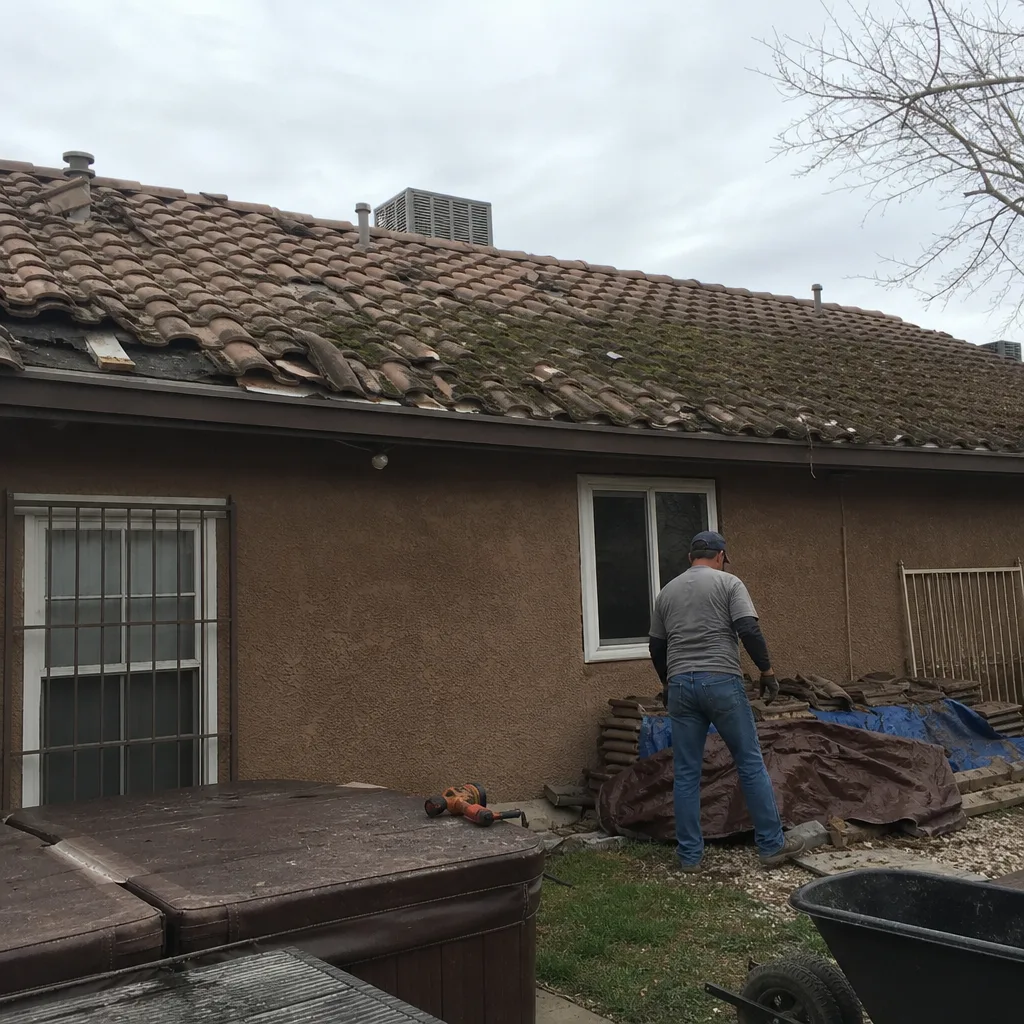 Before
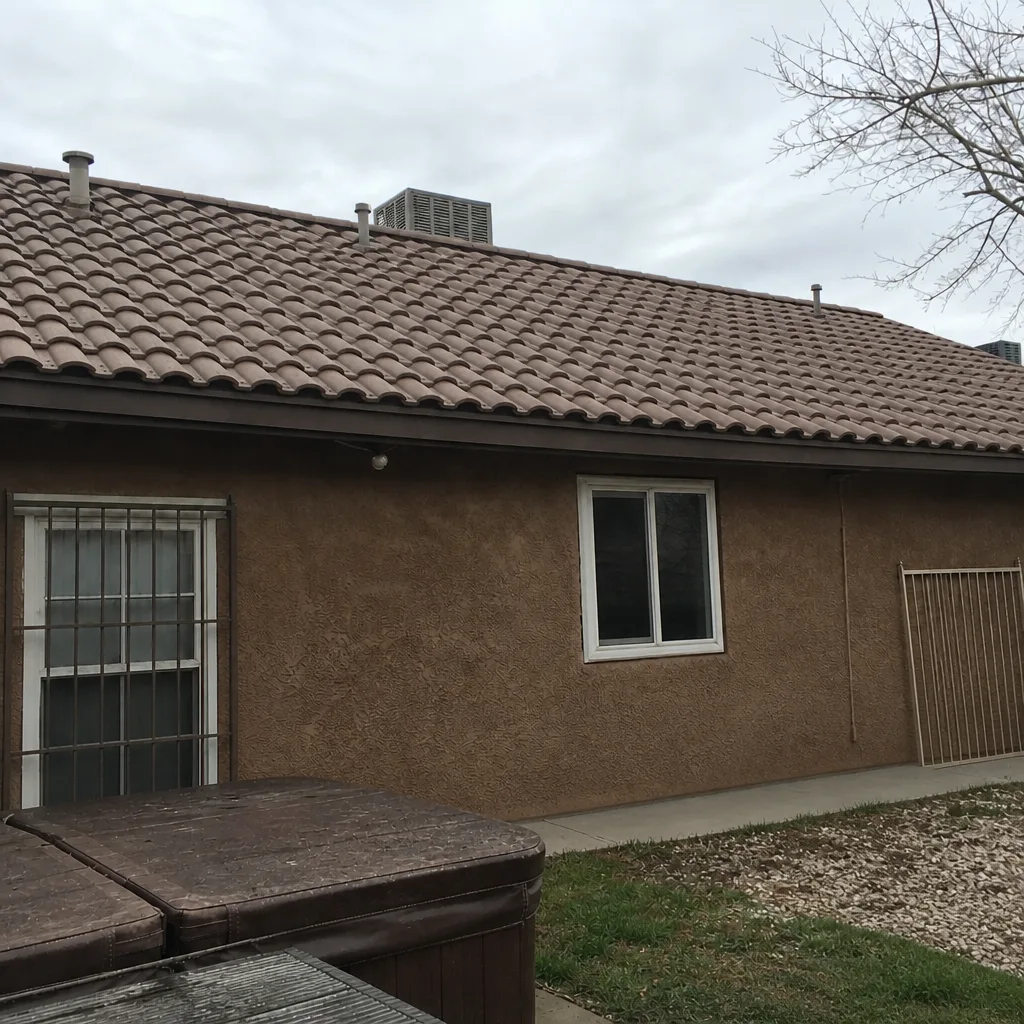 After
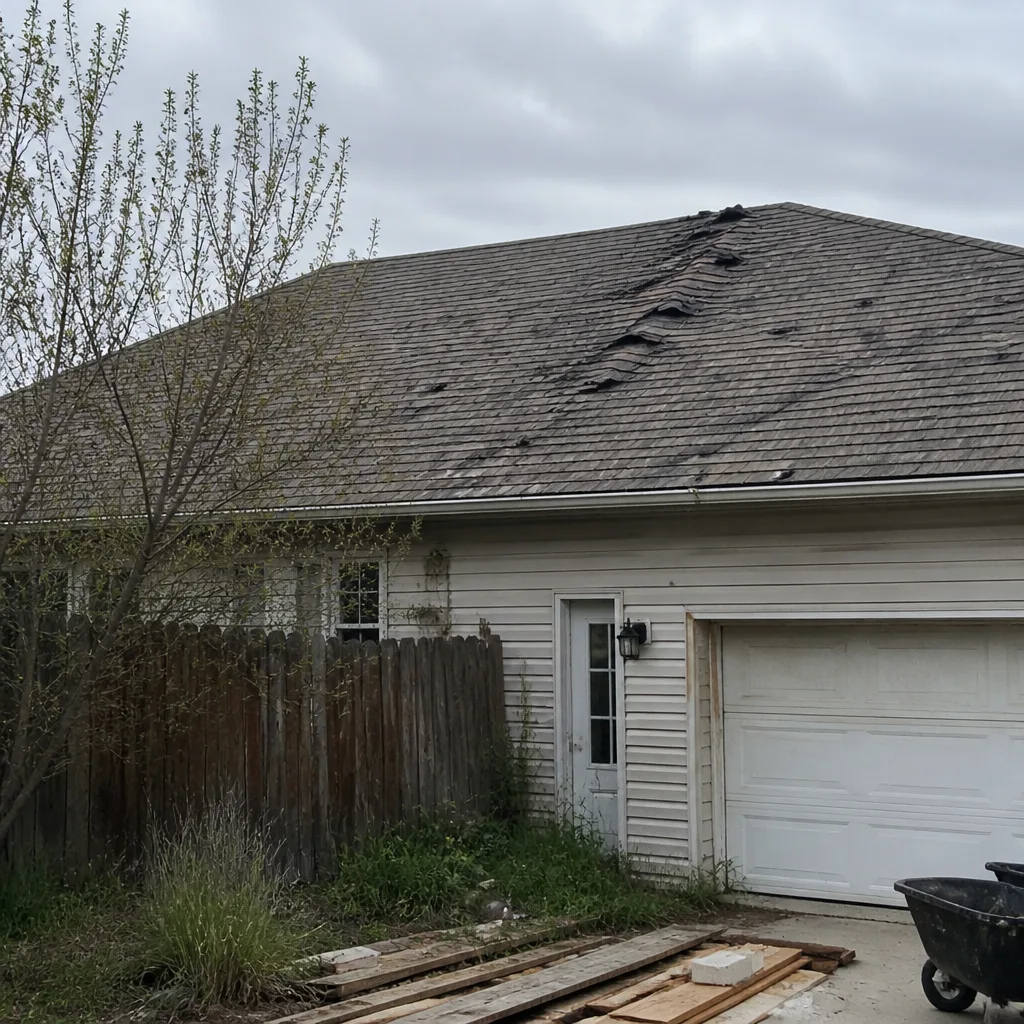 Before
 After
 Before
 After
Frequently Asked Questions
No. Walking a wet roof after a storm is one of the most dangerous things a homeowner can do, and post-storm weeks are the peak time for roof-related falls. You can safely inspect from the ground with binoculars and check your attic and ceilings inside. Anything that requires being on the roof should be done by a trained professional. Call (844) 228-4119 for a free estimate and a documented inspection.
Only in a narrow case: on a low, safely reachable roof, in calm weather, with proper materials and no structural damage, and ideally with another adult present. In most cases a bad tarp job causes more damage than it prevents, especially in Enterprise’s high winds. If you’re unsure, call us before you climb.
Yes, it can. If you repair or remove damaged material before an adjuster sees the property, the evidence that supports your claim is gone. Photograph everything, keep a written log, and leave the damage in place until the adjuster has documented it. Call (844) 228-4119 if you want a professional inspection on record first.
Not long. A small leak can turn into soaked insulation, rotted sheathing, and interior mold within weeks in Enterprise’s heat. Water keeps traveling long after the storm passes. Schedule an inspection as soon as the storm clears rather than waiting for a stain to appear.
Your address, best phone number, what happened and when, whether water is actively coming in, where the damage is (lower roof or main roof), and any ground-level photos. We answer the phone around the clock, including nights, weekends, and during the storm itself, so you’re talking to a person, not a voicemail system.
Yes. Alongside storm response, we handle roof repair, full roof replacement and installation, gutter work, and Specialty Roofing in Enterprise. We’re an authorized installer of products from seven manufacturer brands, including Owens Corning, IKO, and Atlas, so you get the right materials for your roof rather than whatever’s on hand. Call (844) 228-4119 for a free estimate.
The Bottom Line
The line between DIY and professional after a storm is simpler than it seems. Anything you can do from the ground and from inside your house is fair game: photographing damage, checking the attic, watching ceilings, keeping a log. Anything that puts you on the roof is professional work, and that includes tarping in most cases. Your job after a storm is to document carefully, call your insurer, and get an inspection on record before repairs begin. That’s the sequence that protects your safety, your claim, and your roof. When you call (844) 228-4119, a live person answers, any hour, and will help you decide what comes next. Ridgeline Roofing Co. Enterprise has stood behind local roofs since 1984, and we plan to be here for a long time. A square deal, done right, and if it’s not right, we make it right.
Written by the team at Ridgeline Roofing Co. Enterprise.