
Last updated November 18, 2026
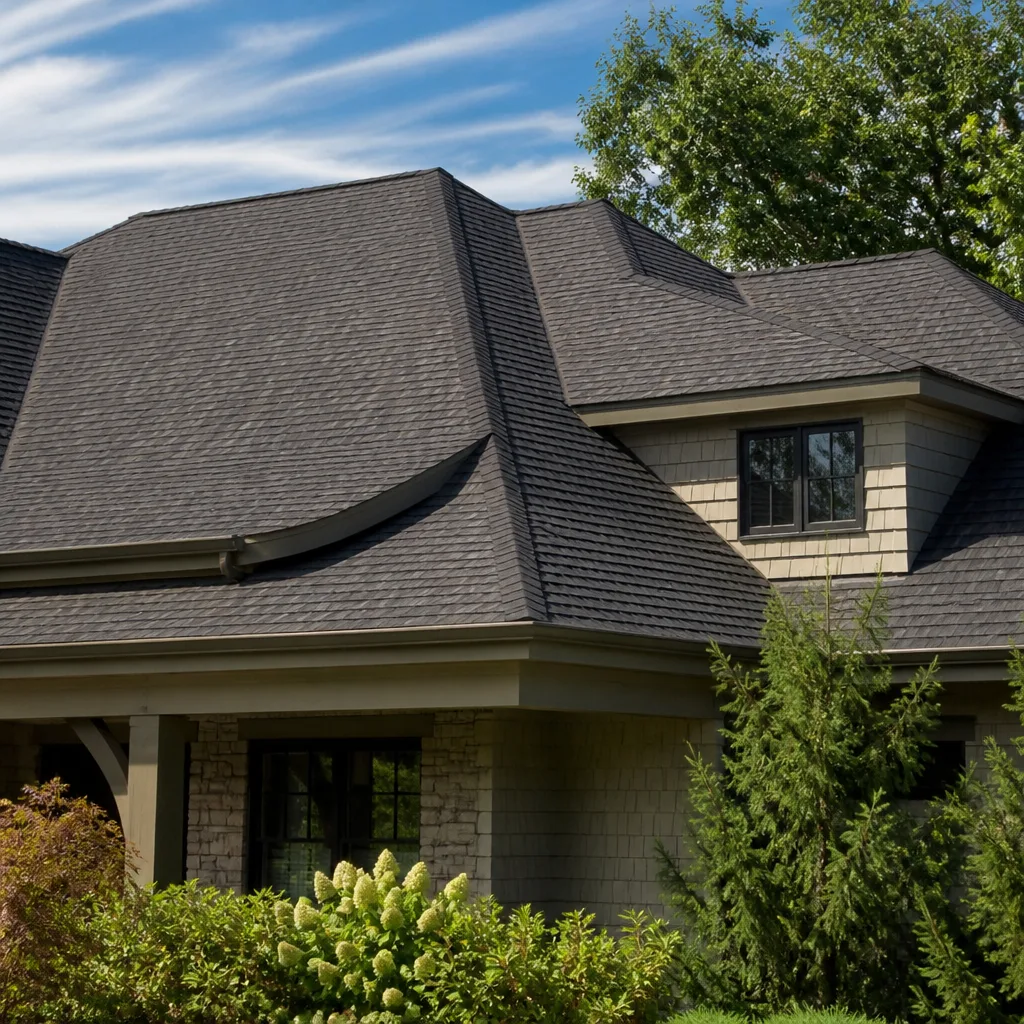 Architectural shingles
 Metal roofing
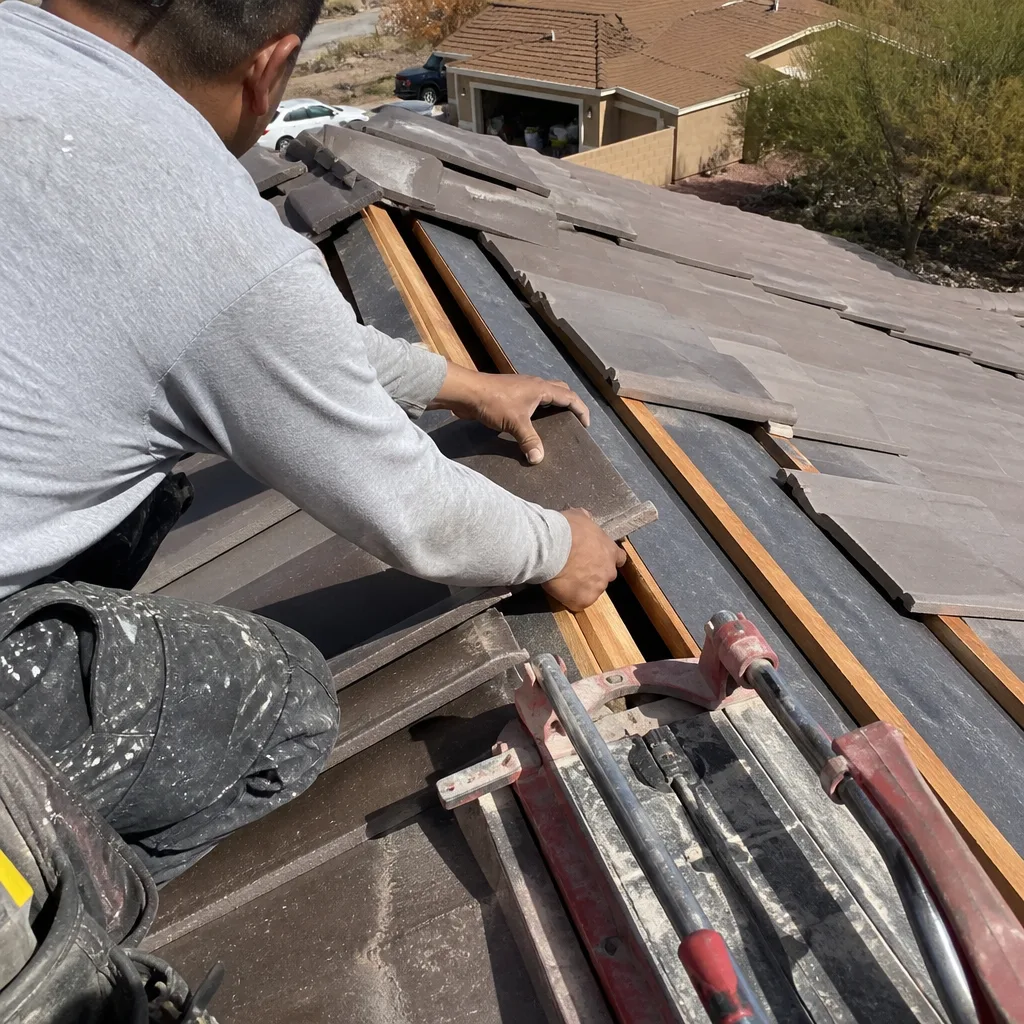
 Tile roofing
 GAF
 Owens Corning
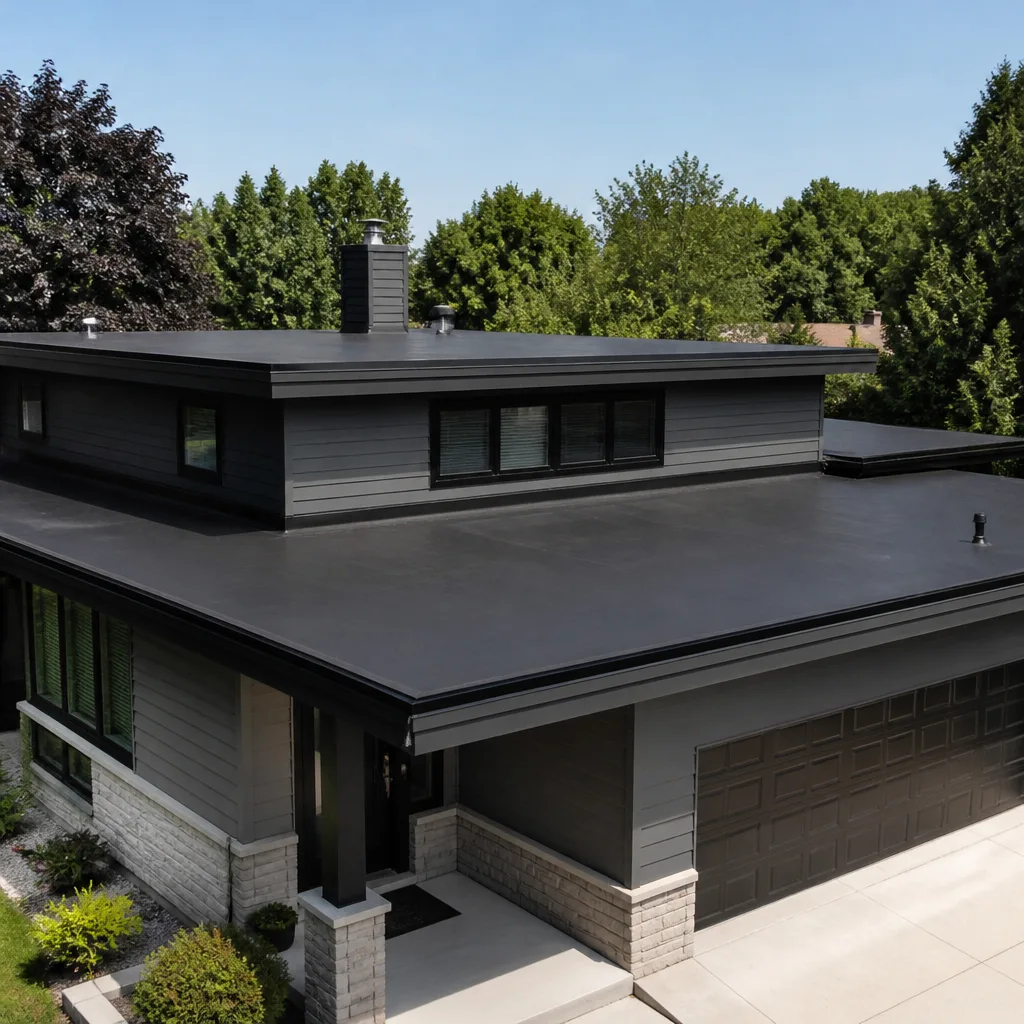 Flat & low-slope
Free roof inspection with deck photos before we talk money - GAF and Owens Corning certified installation
The Complete Emergency & Storm Damage Guide for Enterprise Homeowners
Enterprise sits in a geographic bowl that channels monsoon outflow winds in ways that surprise even long-time residents. A storm that drops half an inch of rain at the airport can deliver a 70 mph microburst two miles away, and your roof is what stands between that wind and your ceiling. In our experience across Southern Nevada, the damage we’re called out to inspect after a monsoon cell rarely matches what the homeowner expected, because the storm that did the work was a different storm than the one they heard. This guide covers the storm types that actually hit Enterprise, what each one does to different roofing materials, the correct order of steps after a storm passes, and how to tell storm damage from ordinary wear when an adjuster asks.
Quick Answer
Storm damage roof repair in Enterprise, NV most often involves granule loss and shingle blow-off from monsoon microbursts, impact bruising from fast-moving hail cells, and lifted or creased flashing from haboob winds. Homeowners should document the roof with dated photos before any cleanup, file a claim promptly, and get a written inspection from a local contractor before signing anything from a storm chaser. Most legitimate storm repairs in Enterprise are completed within one to three weeks of the loss.
Styles & brands we work with
- Architectural shingles
- Metal roofing
- Tile roofing
- GAF
- Owens Corning
- Flat & low-slope
Table of Contents
- The Storm Types That Actually Hit Enterprise
- What Each Storm Type Does to Different Roofing Materials
- Immediate Post-Storm Steps, in the Right Order
- Storm Damage vs. Pre-Existing Wear: How to Tell the Difference
- The Storm Chaser Problem in Southern Nevada
- Working With Your Insurance Adjuster
- The 90-Day Done Right Promise in Storm Repair
- What Enterprise Homeowners Can Do Before the Next Monsoon
The Storm Types That Actually Hit Enterprise
Enterprise doesn’t have a snow load problem. What it has is a wind and hail problem that arrives fast, hits unevenly, and leaves neighborhoods blocks apart with very different outcomes. There are three storm profiles Enterprise homeowners need to understand, because each one damages a roof in a different way.
Monsoon microbursts
A microburst is a column of cooled air that slams into the ground and spreads outward, sometimes producing 60 to 80 mph winds in a burst that lasts less than ten minutes. In neighborhoods along the southern and eastern edges of Enterprise, where the terrain channels outflow, we’ve seen entire slopes stripped of shingles while the opposite face of the same roof was untouched. The tell is damage that runs in a directional pattern, or a clean horizontal line where shingles lifted and tore.
Isolated hail cells
Hail in the Las Vegas Valley is small in diameter but moves fast and arrives with little warning. A cell that produces quarter-inch hail over a few blocks of Enterprise is enough to knock granules off aging asphalt shingles and bruise the mat underneath. Bruising is the damage homeowners can’t see from the ground, and it’s the reason a professional inspection matters after any hail event in Enterprise.
Haboob wind damage
Haboobs, the dust walls that roll through during monsoon season, carry fine sand at high velocity. The sand itself abrades surfaces over time, but the real damage is the wind pressure that lifts ridge caps, loosens flashing around vents and chimneys, and creases the metal valleys that channel water off the roof. If you’ve had a haboob pass over your part of Enterprise, the place to look first is the ridge line and every transition point, not the field of the roof.
What Each Storm Type Does to Different Roofing Materials
Not every roof fails the same way, and knowing your material helps you describe the damage accurately to an adjuster and a contractor. Here’s how the three storm types play out across the materials we see most often in Enterprise.
- Asphalt shingles: Microbursts tear shingles at the seal strip and can peel whole courses. Hail knocks granules loose, exposing the asphalt below and shortening the roof’s life. Haboob wind lifts ridge caps first. Modern laminated shingles from manufacturers like GAF and CertainTeetd hold up better than older three-tab products, but no shingle is immune to a direct microburst hit.
- Tiles: Clay and concrete tiles crack under hail and shift out of alignment under wind. A cracked tile is easy to spot; a lifted tile that lets water underneath is not. Tile roofs in Enterprise often show damage at the field and not the ridge, which is why a ground-level look is never enough.
- Metal: Standing-seam metal handles wind well but dents under larger hail and can loosen at fasteners. The real risk with metal is that a fast wind event opens a seam you won’t notice until the next rain.
- Flat and low-slope systems: Wind gets under membrane edges and lifts them; hail punctures and dents. Flat roofs on patios and additions in Enterprise are especially vulnerable to ponding after a storm, which amplifies any small breach.
If you’re not sure what’s on your roof or how old it is, a professional inspection is the fastest way to get an honest answer. Our Roof Repair in Enterprise service is where most storm damage gets resolved. When the damage is extensive enough that repair no longer makes sense, Roof Replacement & Installation in Enterprise covers the full scope.
Immediate Post-Storm Steps, in the Right Order
After a storm passes, adrenaline pushes people toward cleanup, and cleanup is usually the wrong first move. The order below protects your claim, your safety, and your options.
- Stay off the roof. Wet shingles, loose tiles, and compromised flashing are a fall hazard. We’ve seen too many homeowners try to take a look themselves and end up in the emergency room instead of the ROOF. Your safety comes first.
- Document before you touch anything. Take photos of the roof from the ground, the interior ceilings, the gutters, and any debris in the yard. Date-stamp everything. If water is coming in, photograph that too, along with anything it damaged inside. Insurers can and do ask when damage was first observed.
- Make temporary, minimal mitigation only. A tarp over an active leak is fine. Moving shingles back into place or sweeping up debris from the roof is not, because it changes the scene an adjuster needs to see.
- Call your insurer and open a claim. Report the date and time of the storm, the damage you observed, and the fact that you have dated photos. Ask what their adjuster timeline looks like.
- Get a professional inspection with photos. An inspection that documents what’s actually on the roof, from the roof, gives you and your insurer a shared factual record. This is where a written report matters far more than a verbal opinion in the driveway.
- Get written estimates before authorizing work. Get more than one for anything beyond a small repair. Compare line items, not bottom lines.
Storm Damage vs. Pre-Existing Wear: How to Tell the Difference
This is the question adjusters ask, and it’s the one homeowners are least prepared to answer. The distinction matters because most policies cover sudden storm damage but exclude wear and tear, and an honest contractor will tell you which one you’re looking at.
Storm damage usually shows up as directional or clustered. Shingles torn in a straight line along a wind path. Granules missing in a pattern consistent with hail impact. Flashing creased or lifted at a specific point. Dents on metal and gutters that weren’t there last season. Damage that appeared after a specific event, with no gradual history.
Pre-existing wear usually shows up as uniform or regional. Granules missing evenly across the whole roof. Curling and cracking shingles across multiple slopes, not one. Moss, algae streaks, and aging seal strips that have been failing gradually. A roof that was already at the end of its service life when the storm hit.
Both can be true on the same roof, and when they are, the honest conversation is about what’s storm-caused, what’s age, and what the best path forward actually is. A photo-documented inspection gives you evidence, not an opinion. If you want a second opinion on a written estimate, we offer one at no charge, and it’s worth having before you sign.
The Storm Chaser Problem in Southern Nevada
Every major storm in Southern Nevada brings out-of-state trucks with out-of-state plates. They knock on doors the day after a microburst, offer to “handle everything with your insurance,” and quote prices that look too good in the driveway. Some of them do decent work. Most are gone before the fall.
The problem isn’t just quality. It’s accountability. When a storm chaser installs a roof and the flashing fails six months later, there’s no local number to call and no local crew to send back. The homeowner is left holding a warranty from a company that no longer exists in this state.
Ridgeline Roofing Co. was founded in 1984, and we’ve been standing behind local roofs ever since. That’s over 42 years of being here when the next storm comes, not the last one. We hire local crews, we train apprentices into journeymen, and we plan to be in Enterprise in thirty years. The difference isn’t a slogan; it’s structural. A contractor who intends to stay has different incentives than one who doesn’t. You can read more about who we are on our Ridgeline Roofing Co. Enterprise home page.
What to watch for with storm chasers:
- Out-of-state plates and an out-of-state business address
- Pressure to sign anything the same day
- An offer to waive or cover your deductible (this is often illegal and always a red flag)
- No local physical address and no local references you can verify
- A price that’s dramatically lower than every other written estimate
Working With Your Insurance Adjuster
Adjusters want documentation. Give them documentation, and the process moves faster and more fairly for everyone.
- Keep a dated photo record from before your claim and update it after your contractor’s inspection.
- Ask your contractor to write the estimate in line-item form, matching the adjuster’s scope where possible.
- Don’t sign a scope of work you don’t understand. Ask questions until you do.
- Keep all receipts for temporary mitigation, like tarps and emergency interior cleanup.
- If your insurer’s estimate and your contractor’s estimate don’t match, ask both sides to explain the gap line by line. This is normal and resolvable.
Our Specialty Roofing in Enterprise service often covers the metal, tile, and flat-roof repairs that adjusters see less often and need more detail on. For a homeowner working a claim, specificity helps.
The 90-Day Done Right Promise in Storm Repair
Storm repair has a way of testing a contractor’s follow-through, because weather damage often hides in more than one place. The first leak stops, and the second one shows up three weeks later. That’s why every job we do is backed by our 90-Day Done Right Promise, a written workmanship guarantee with no arguing and no paperwork runaround. If it’s not right, we come back and make it right.
For storm work, that means a few things in practice:
- You get a written workmanship guarantee at the start of the job, not after.
- Every inspection is documented with photos taken from your actual roof, not a description of what we think is up there.
- The price on the estimate is the price on the invoice, with no surprises.
- Most repairs are completed in a single visit.
- You get a live person when you call, including nights, weekends, and the middle of a storm.
What Enterprise Homeowners Can Do Before the Next Monsoon
Monsoon season in Southern Nevada runs roughly from July into September, but the wind events that do the damage don’t always wait for the calendar. A small amount of prevention goes a long way in Enterprise.
- Schedule a pre-season inspection in late spring. Catching a loose ridge cap or a deteriorating seal strip before the first microburst is far cheaper than catching it after.
- Clear the roof and gutters of debris. Sand and dust accumulate in valleys and gutters after haboobs, and standing debris is where water finds its way in.
- Trim back tree limbs that overhang the roof. Wind-driven limbs damage shingles and gutters in a single storm.
- Photograph your roof from the ground annually. It gives you a baseline for future claims and lets you spot real changes.
- Get a second opinion on any written estimate. We offer one free, and it’s worth having before you commit.
Common Mistakes to Avoid
- Climbing on the roof to check the damage yourself. Wet shingles and compromised tiles are a serious fall hazard. Let a professional inspect from the roof, and stay on the ground.
- Cleaning up before documenting. Once you move shingles or sweep debris, you’ve erased the evidence your claim depends on. Photograph first, always.
- Signing a storm chaser’s contract the same day. If they need an answer before you’ve seen a second estimate, they don’t need your business.
- Accepting a verbal “it’s probably just age” diagnosis. Ask for the photo-documented inspection and read it. A real opinion is written.
- Assuming a small leak is a small problem. In Enterprise, water from a microburst gets into the decking fast, and a small interior stain can sit above a much larger attic problem.
- Paying in full before the final inspection. Hold the last payment until you’ve walked the job and the work is verified.
- Ignoring the gutters and ridge line because the field of the roof looks fine. Haboob damage often hides at the transitions, not the middle.
See the difference
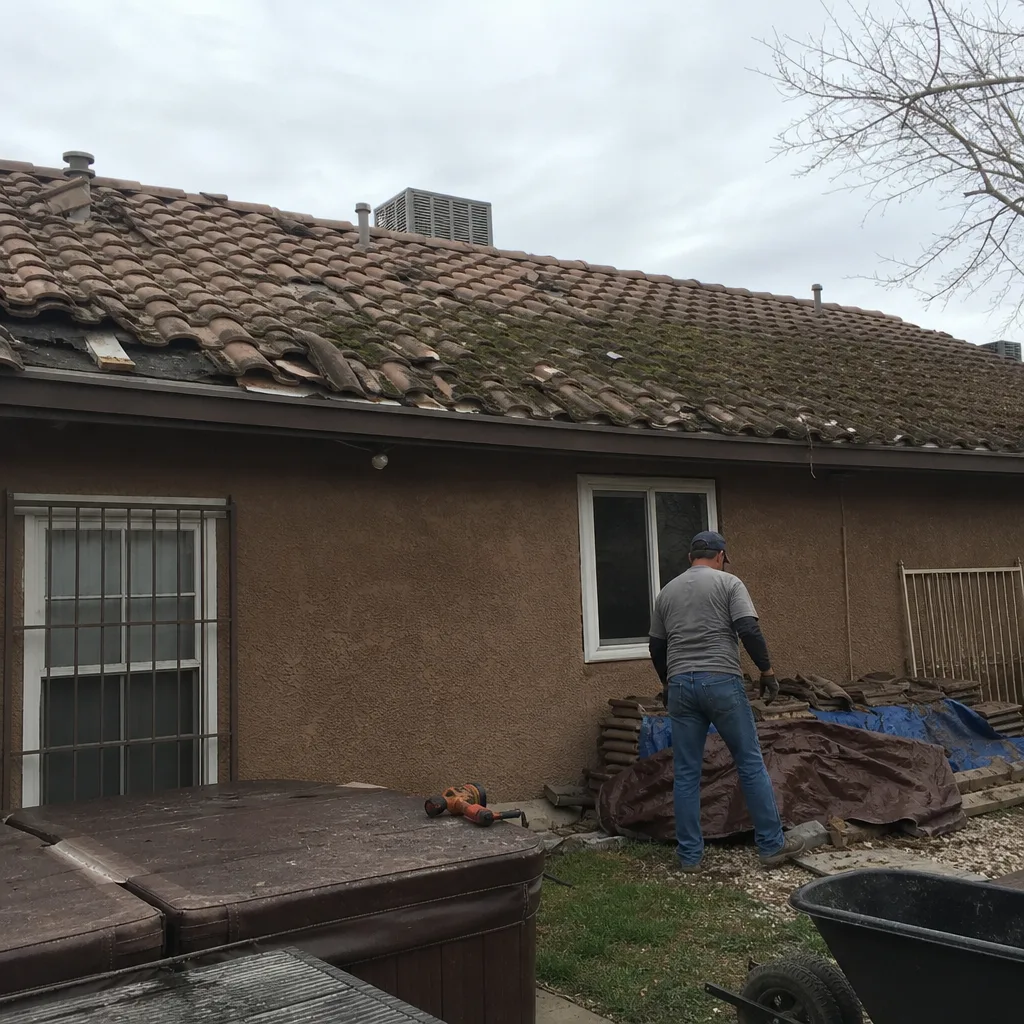 Before
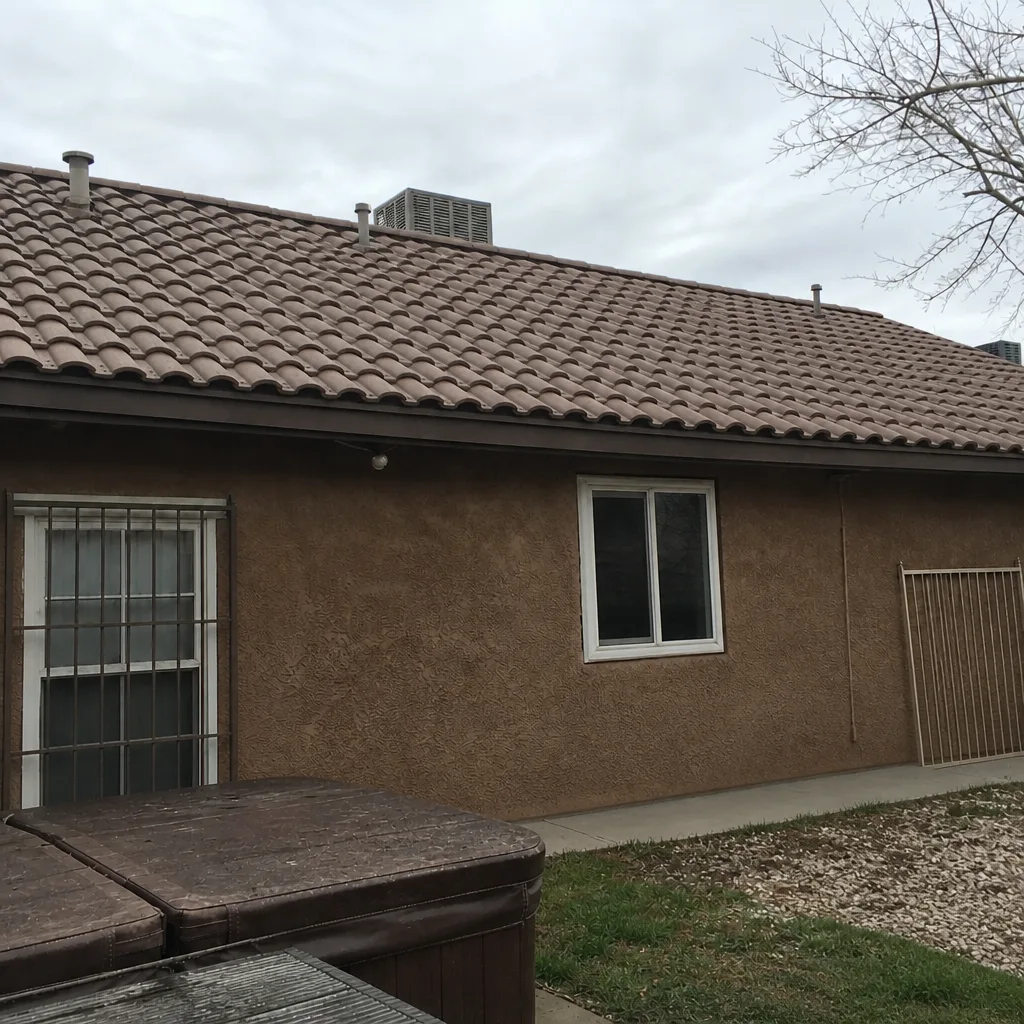 After
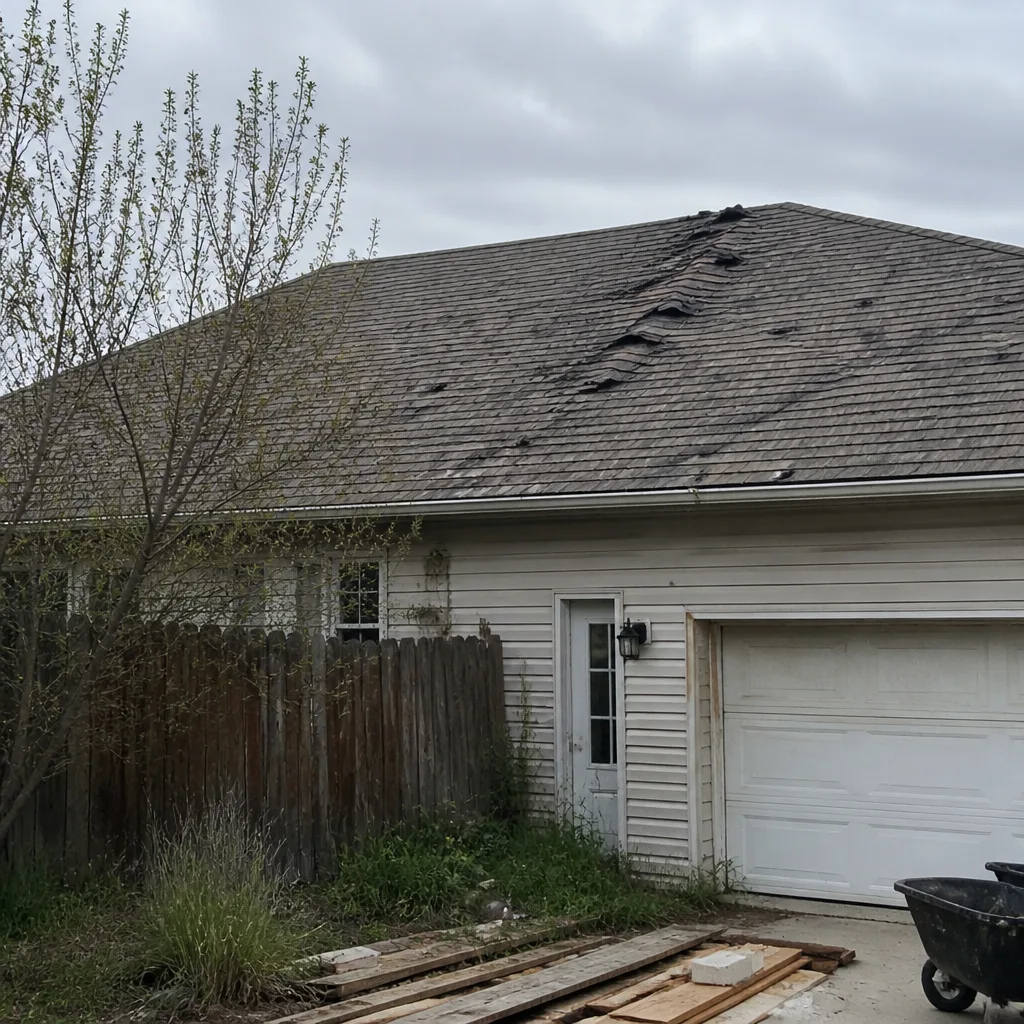 Before
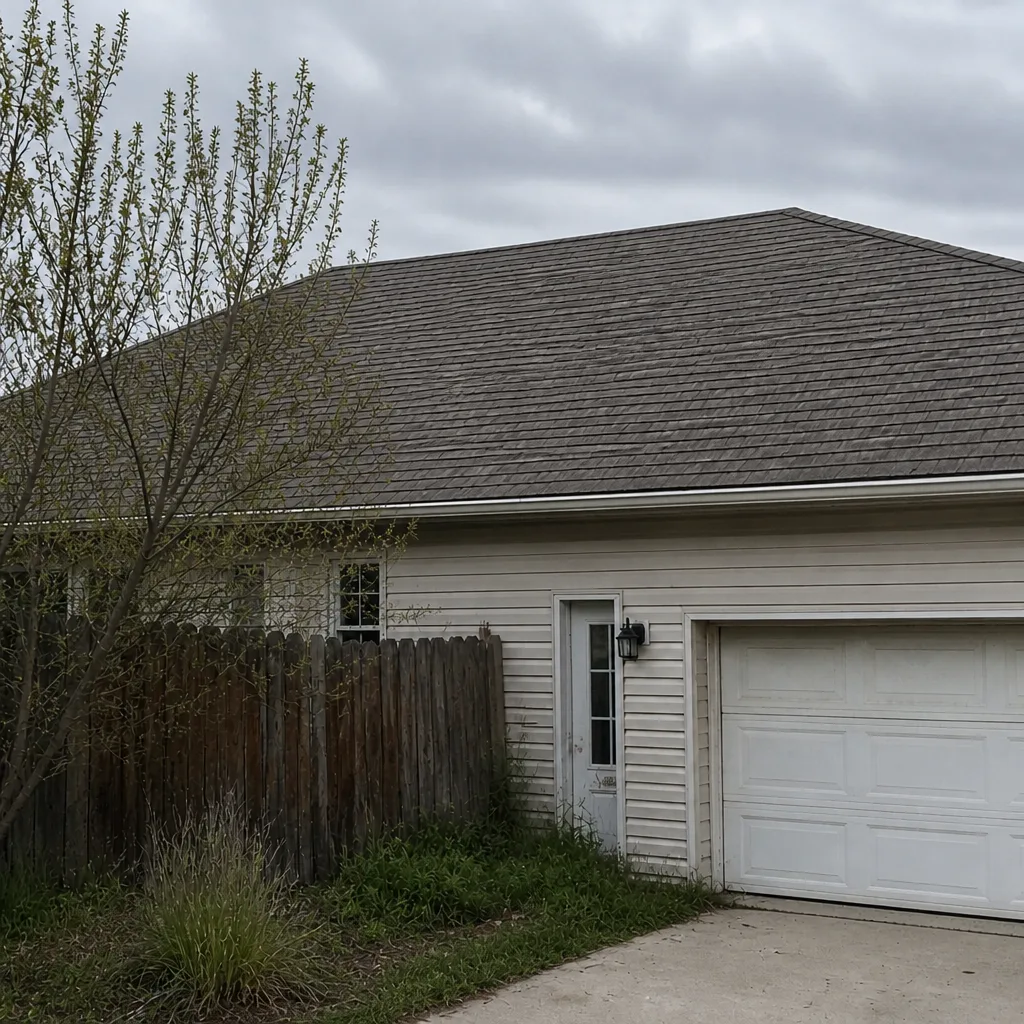 After
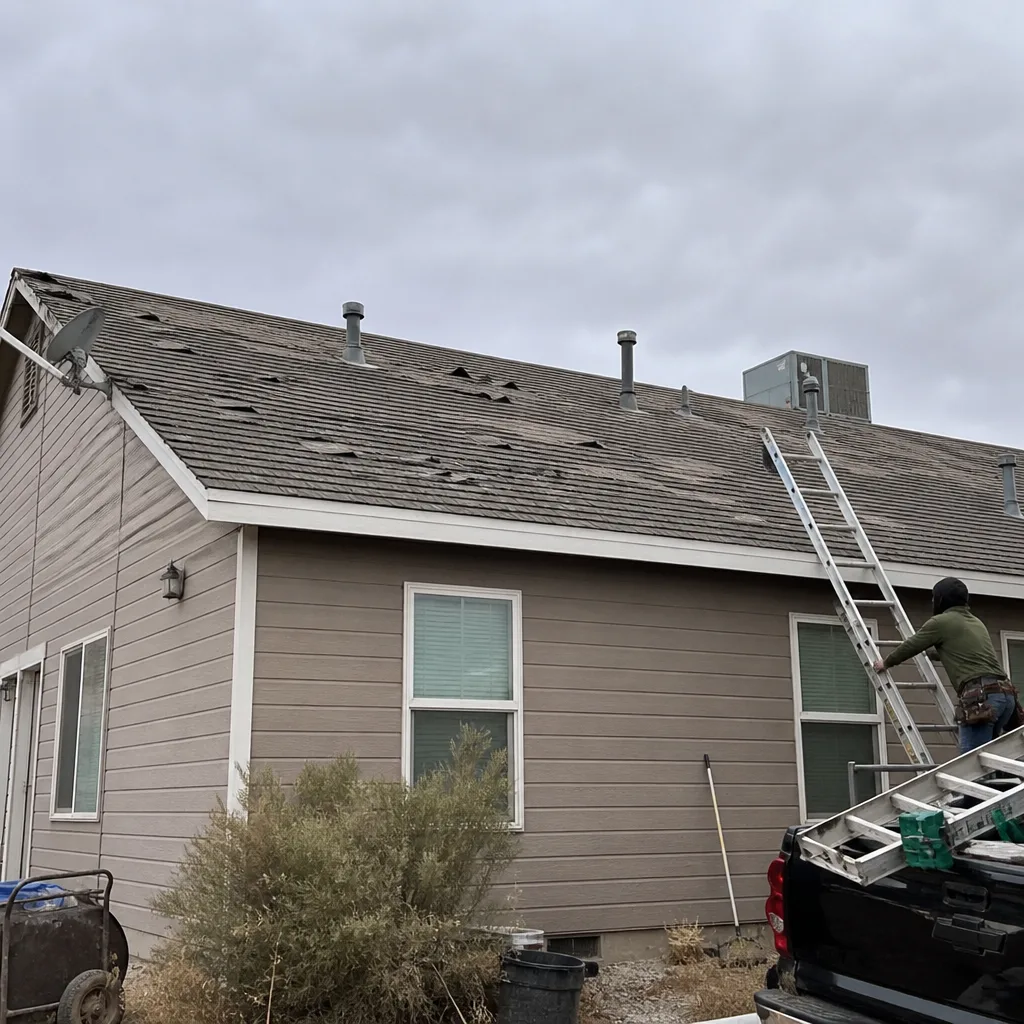 Before
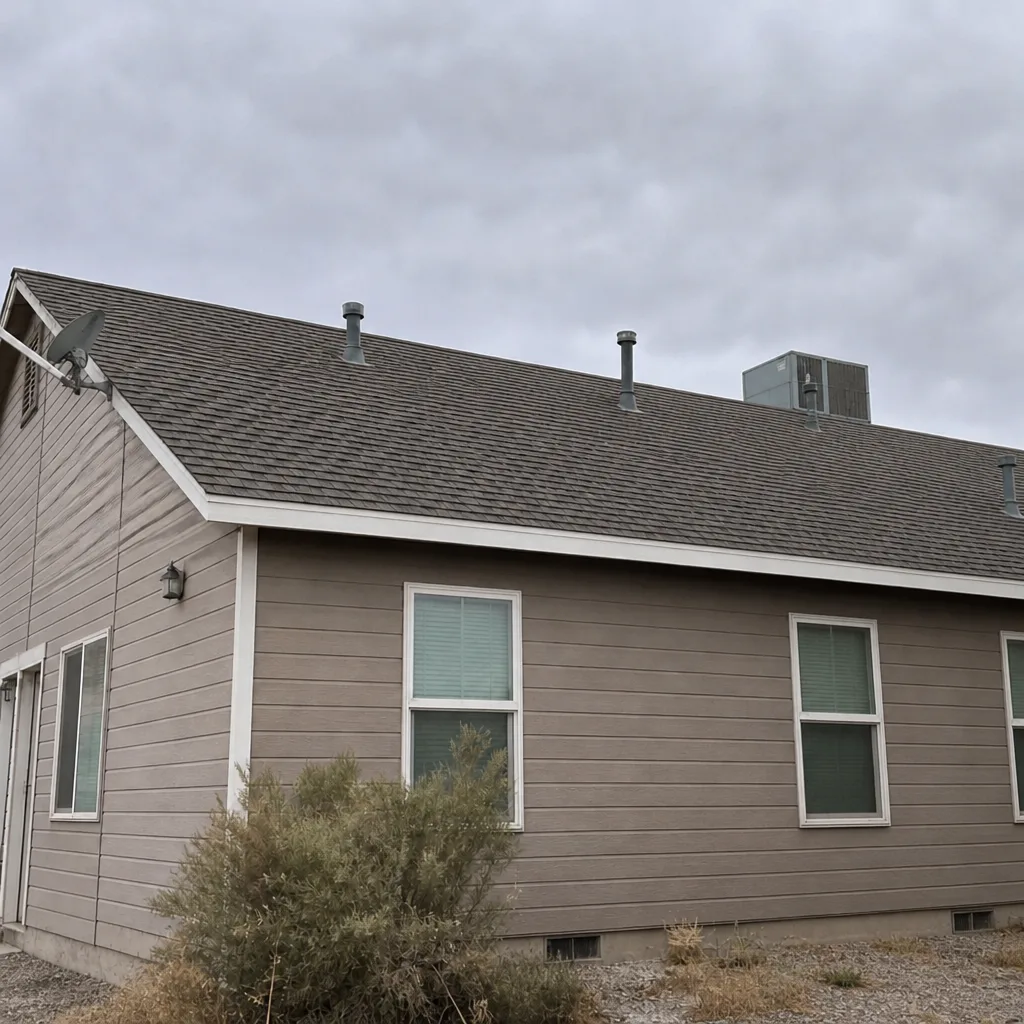 After
When to Call a Professional
Call a professional roofer in Enterprise if you’ve seen interior ceiling stains, missing or lifted shingles, granules in your gutters after a storm, or damage to ridge caps and flashing. If your home is older than fifteen years and has been through a microburst or hail event in Enterprise, a professional inspection is worth doing even if nothing looks wrong from the ground. Get a pro involved if you don’t know the age of your roof, if your insurer’s estimate and your contractor’s don’t match, or if you’ve had any damage you’d describe as “probably fine.” The ground-level look is not enough in Enterprise, because wind damage often doesn’t announce itself. Ridgeline Roofing Co. offers free estimates in Enterprise. Call (844) 228-4119 to schedule yours.
A note on safety: roof work at height, especially on wet or compromised surfaces, is genuinely dangerous. Please don’t attempt to inspect or repair a storm-damaged roof yourself. A trained, insured professional with the right equipment should be the one on the roof, every time.
Frequently Asked Questions
Storm damage roof repair in Enterprise typically runs from a few hundred dollars for a small shingle or flashing repair up to several thousand for a partial slope replacement. The exact number depends on the material, the extent of damage, and whether decking was affected. Call (844) 228-4119 for an exact quote. Estimates are free.
No. The number on the estimate is the number on the invoice, and if we discover something underneath the shingles that wasn’t visible from the roof surface, we stop and talk to you before doing anything that changes the price. Call (844) 228-4119 to schedule a written estimate.
Yes. Any storm repair in Enterprise that requires a permit gets pulled before work begins, and the work is inspected when the job is done. Call (844) 228-4119 to ask what your specific repair will need.
Most storm repairs in Enterprise are completed in a single visit, though partial slope replacements and larger jobs can take several days once permits are pulled. The inspection and estimate happen first, and the timeline is written into the estimate. Call (844) 228-4119 to get an honest schedule for your job.
Yes, in most cases. Storm damage tends to be directional and clustered, while wear is uniform and gradual, and a photo-documented inspection from the roof gives you evidence rather than a guess. Call (844) 228-4119 to schedule one.
Politely decline, document their business name and license plate if visible, and get a second opinion before signing anything. We offer a free second opinion on any written estimate in Enterprise. Call (844) 228-4119 to schedule yours.
The Bottom Line
Enterprise roofing is a wind and hail discipline, not a snow-load one, and the storms that do real damage here arrive fast and hit unevenly. Document before you clean up. Get written inspections with photos from the roof. Be wary of out-of-state trucks and same-day contracts. When the repair is right, it holds, and our 90-Day Done Right Promise is a written guarantee behind every job we do. If a storm has passed over your part of Enterprise, get a second opinion before you commit to anything. The number on the estimate is the number on the invoice, and the work is done right, and if it isn’t, we make it right. Call (844) 228-4119 to schedule your free estimate.
Written by the team at Ridgeline Roofing Co. Enterprise.