
Last updated November 18, 2026
 Architectural shingles
 Metal roofing
 Tile roofing
 GAF
 Owens Corning
 Flat & low-slope
Free roof inspection with deck photos before we talk money - GAF and Owens Corning certified installation
Gutters & Accessories Warning Signs Every Homeowner Should Know
The gutter itself is usually the last thing to show obvious damage. By the time you see a sag or a separation, the fascia behind it has often been soft for a full monsoon season. That is the part most homeowners miss. The front of the gutter can look straight, hold paint, and run water on a calm day while the wood and stucco behind it are quietly absorbing moisture every time it rains. What follows is a walk through the warning signs that actually matter, where to find them, and how they read on an Enterprise house in particular. We have climbed enough roofs here to know which signals are noise and which are the real thing.
Quick Answer
The clearest signs your gutters need to be replaced are not on the gutter face. They show up as peeling paint on fascia boards, dark staining on stucco and block walls, foundation erosion channels in the caliche soil, and ceiling stains near exterior walls that only appear after heavy rain. A gutter that looks clean but has lost its slope is also failed, even though it looks fine. If you find two or more of these signs on one side of the house, it is time for a professional inspection rather than a cleaning.
Styles & brands we work with
- Architectural shingles
- Metal roofing
- Tile roofing
- GAF
- Owens Corning
- Flat & low-slope
Table of Contents
- Where to Look First: The Surfaces Most Homeowners Skip
- Peeling Paint on Fascia Boards: The Earliest Warning
- Staining Patterns on Stucco and Block Walls
- Foundation Erosion Channels in Desert Caliche
- Interior Signs: Ceiling Stains Near the Eaves
- Why a Clean Gutter Can Still Be a Failed Gutter
- Accessories That Give Out Before the Gutter Does
- Common Mistakes to Avoid
- When to Call a Professional
- Frequently Asked Questions
Where to Look First: The Surfaces Most Homeowners Skip
Most gutter checks are aimed at the wrong place. People stand in the driveway and look up at the front of the gutter, the hangers, and the downspout mouth. Those are the last components to fail. Water is a patient worker. It finds the seam, the loose hanger, the undersized downspout, and it works on the wood and masonry behind the gutter long before the aluminum gives out.
Redirect your inspection to four surfaces instead:
- The fascia board – the flat wood strip the gutter is nailed to. This is the first thing to soften after a failed seal or overflow.
- The soffit – the underside panel under the eaves. Look for staining, sagging, or bubbling paint.
- The wall below the gutter – stucco and block both stain differently when water is tracking down them.
- The ground within three feet of the foundation – this tells you where downspout water actually lands after a storm.
On an Enterprise house, add the ceiling of any room that sits under a long eave. The desert sun cooks the roof, the summer monsoon delivers an inch of rain in an hour, and the interior drywall near the exterior wall is where we most often find the first real evidence. None of these surfaces require a ladder. All of them are visible from standing height.
Peeling Paint on Fascia Boards: The Earliest Warning
Paint peeling on the fascia is the sign most often misread. Homeowners here in Enterprise chalk it up to sun damage, which is fair: the desert sun does a number on exterior paint. But sun damage peels from the top and the flat faces. Moisture damage peels from the bottom edge of the board, from around the hanger nails, and in concentrated patches behind the gutter where you cannot easily see.
Here is the difference in plain terms:
- Sun damage – paint fades, chalks, and peels evenly across exposed faces, usually toward the top.
- Moisture damage – paint bubbles, flakes, or lifts in irregular patches directly behind or below the gutter line, often with a dark edge.
Run a thumbnail across the wood where the paint has lifted. On healthy, dry fascia, your nail leaves a shallow mark and the wood feels firm. On a board that has been wet repeatedly, your thumbnail sinks in and the wood feels spongy. If it sinks, the gutter has been overflowing or leaking for a season or more, and the wood behind it is the actual problem, not the paint.
The other thing to watch for is that a fascia board can look intact from the front and be rotted a half inch back. If the gutter hangers are pulling loose and the board behind them crumbles when you push on the gutter, that is not a re-hang job. That is a replacement job, and it is one of the cases where a roof repair in Enterprise inspection is the right next step, because fascia rot usually starts at the roof edge where water entered.
Staining Patterns on Stucco and Block Walls
Stucco and block walls stain in patterns. Learn to read them and you will know exactly where a gutter is failing without ever getting on a ladder.
Vertical streaks below a seam. A dark or rust-colored streak running straight down from one point on the gutter line means water is escaping at that seam or at a joint between two gutter sections. On an Enterprise house these streaks often look like faint rust or dirt rather than a dramatic stain, because our walls dry fast. Look for them right after a storm, before the next windy day fills the pits back in.
Horizontal tide lines under the gutter. A series of faint horizontal bands running along the base of the wall is the signature of a gutter that overflows every time it fills. The bands mark where water reached and then stopped. Two or three parallel lines is the tell.
Dark staining at the top of the wall. A muddy-looking band directly under the gutter line usually means the gutter is separated from the wall and back-spilling against the stucco. This is the one that most often gets missed because the wall looks evenly shaded from the driveway.
Block walls stain differently than stucco. On painted block, the water pushes through the mortar joints first, and you will see darker patches tracing the joint lines like a grid. Unpainted block shows the same pattern in a lighter, dustier tone. Either way, staining that follows the joints rather than the faces is water coming from above consistently, not from weather hitting the wall.
Foundation Erosion Channels in Desert Caliche
This is the one that costs the most when it goes unread. Enterprise homes sit on caliche, the hard, calcium-cemented soil common to the Las Vegas Valley. Caliche is dense, but it fractures in channels and it turns surprisingly soft when it takes on water. When a downspout dumps a season of rain in a concentrated spot, that spot erodes like a small canyon, and the erosion moves the water toward your foundation instead of away from it.
Here is what to look for, and how to check without digging:
- Walk the perimeter of the house after a heavy rain and look for a clear, curved trench running away from a downspout.
- Look for a dark, damp patch roughly two to four feet wide near the foundation, at the lowest point of the yard.
- Check whether the trench bends toward the house at any point rather than straight out toward the street or drain.
- Look for cracks in the driveways or walkways that line up with the downspout outlet.
A downspout that dumps water straight down at the foundation is the most common offender. The fix is a splash block, a longer downspout, or a short buried extension, and any of those is cheap compared to foundation repair. If you are seeing caliche erosion channels near your foundation, the gutters themselves may be fine and simply dumping in the wrong place. That is a job an inspection will sort out in minutes.
Interior Signs: Ceiling Stains Near the Eaves
Interior ceiling stains are the most alarming sign on this list and often the most misunderstood. A stain that appears on the ceiling of a room that sits under a long eave and shows up only after heavy rain is almost always a gutter problem in disguise. The water is not necessarily coming through the roof surface. It is often entering at the gutter line, running back under the first course of shingles, tracking along the roof deck, and dripping on the back of the drywall.
How to read an interior stain:
- The stain is at the outer edge of the room, within a foot or so of the exterior wall, right under the eave. This points up the wall, not to the middle of the roof.
- It shows up only after a heavy rain and looks dry within a day. That points to a localized entry point, not a saturated roof deck.
- It has a brown or tan ring with a lighter center, typical of drywall that has taken on water once and dried.
- It appears in the same spot after each storm and grows slowly larger. That is confirmation, not coincidence.
Do not simply repaint a ceiling stain and call it done. Drywall that has taken water may eventually bubble or sag, and a stain with a visible ring indicates an active entry point that will return the next heavy rain. This is a case where a roof and gutter inspection is worth doing, and it is also where the 90-Day Done Right Promise on our work means something concrete: if the repair does not stop the water, we come back and make it right.
Why a Clean Gutter Can Still Be a Failed Gutter
A gutter can be perfectly clean, straight, and firmly attached and still be functionally failed because of improper slope. We see this every week in Enterprise. Water needs about a quarter inch of fall per ten feet of gutter to flow toward the downspout. When hangers stretch, the fascia softens, or the original installer got it slightly wrong, the gutter settles or bows. It holds a shallow puddle and never drains.
You cannot see slope from the ground, but you can test it. Here is the water test method, safe from a ladder on flat ground:
- On a dry day, run a garden hose into the high end of the gutter, or have someone run it while you watch the downspout.
- Watch how fast the water reaches the downspout. On a well-sloped gutter, it moves in a steady sheet.
- Look for water pooling at any point along the run rather than draining. A visible standing puddle after the hose goes off is a slope problem.
- Check whether the downspout is running at full volume or dribbling. A dribble when the gutter is full points to a slope or debris issue upstream.
- Check the ground at the outlet. If the water is reaching the downspout but not coming out of the bottom fast enough, the downspout itself may be partly clogged.
If the gutter drains but sounds slow or the downspout dribbles after heavy rain, that is a slope or blockage issue, not a reason to replace. But if the gutter is clean, well-sealed, and still holding water at one end every rain, the slope has gone wrong and the hangers need resetting or the section needs to be re-pitched. A gutter that holds standing water will eventually corrode at the seams, and the corrosion is what leads to the rust streaks that turn into replacement.
Accessories That Give Out Before the Gutter Does
The gutter trough is the durable part. The accessories around it are what fail first, and each failure gives you an early signal if you know what to look for.
Downspouts. A downspout that has dented, come loose from the wall, or is missing its hanger is running water out of position. Look for dents, sag, and a loose bottom end. If the downspout is clogged near the bottom with leaves, the water backs up into the gutter and overflows at the corners, which then stains the walls.
Gutter guards. If the guards on the front of the house look firmly seated but you find debris in the gutter behind them, the guard has shifted or was never installed properly. That is a quick fix on a well-built guard system, and a lost cause on a poorly fitted one.
Hangers and hidden hangers. Look for hangers that are pulling free, nails backing out, or a slight downward bulge along a run. A bulging run means hangers are spaced too far apart or the fascia behind them is soft. That last one is the important bit: re-hanging a gutter onto a soft fascia board just moves the problem.
Seams and end caps. Water stains on the wall directly under a seam, plus a thin line of water tracking down from it in light rain, is a failed seal. Seams are the simplest accessory to fix, and the easiest to ignore until the wood behind them is ruined.
Common Mistakes to Avoid
- Judging the gutter by the front face only. A clean gutter with a straight face can still have a rotted fascia, a failed slope, or a leaking seam behind it. Check the fascia, the wall, and the ground every time.
- Repainting a peeling fascia board without checking for rot. Paint is a symptom, not the cause. Painting over soaked wood traps moisture and speeds up the rot. Probe the board before you paint it.
- Adding a splash block without fixing a caliche erosion channel. A splash block sits on top of the channel and diverts water to the same spot. The caliche around your foundation in Enterprise needs the water moved further out, not just caught at the wall.
- Assuming a new roof will fix a gutter problem. A gutter failure can be caused by the roof edge and a gutter failure can cause roof edge damage, but replacing the roof without addressing the gutter leaves the same overflow pattern in place. Coordinate the two.
- Treating a ceiling stain as a paint job. A ceiling stain that returns after every storm is an active leak, and repainting it hides the evidence that would tell a technician exactly where water is entering.
- Hiring whoever knocks on the door after a storm. The contractor who appears the day after a monsoon and offers a cash-only gutter replacement will not be here when the next monsoon finds the same problem. Choose a company that answers the phone in the off-season.
- Skipping the seasonal tune-up. A spring and fall check on an Enterprise home catches slope, hanger, and seal problems in minutes, before the monsoon rains do the expensive damage.
When to Call a Professional
Call a professional when you find any of the following: fascia paint peeling with soft wood underneath, dark staining patterns on stucco or block walls under the gutter line, erosion channels in the caliche near your foundation, ceiling stains near the eaves that return after heavy rain, or a gutter that holds water after the hose test. Those five signals do not resolve themselves with a cleaning or a coat of paint, and two or more on the same side of the house is a clear replacement conversation. When the roof edge and the fascia are both involved, it is worth looking at our roof replacement and installation in Enterprise service alongside the gutter work, because the two are physically connected. Ridgeline Roofing Co. Enterprise offers free estimates in Enterprise, backed by the 90-Day Done Right Promise, with a written guarantee and no arguing. Call (844) 228-4119 and a live person will answer, day or night.
Frequently Asked Questions
Replace when the fascia behind the gutter is soft, when two or more seams are leaking, or when the gutter holds standing water after a hose test despite a clean trough. Repair when the problem is a clogged downspout, a single failed hanger, or one leaking seam with dry wood behind it. If the gutter itself is sound and dry and the only issue is slope, a re-pitch is often cheaper than replacement. For an exact assessment, call (844) 228-4119 and we will send someone out with a hose and a probing tool.
No. Sun exposure and ordinary paint aging peel the top faces, and a single soft board may be the original installer’s work. The pattern matters more than the paint. Peeling concentrated behind and under the gutter line, or bubbling paint with a dark edge, is moisture. On an Enterprise home especially, sun damage peels from the top and moisture peels from the bottom, so the location of the peeling tells you which problem you have.
Because the entry point is small enough that ordinary rain never reaches it, but the volume of a heavy summer storm pushes water past a failed gutter seal or under the first shingle course and allows it to track along the roof deck to the interior drywall. The stain shows up near the exterior wall, not the middle of the ceiling. It will reappear with every heavy storm until the entry point is found and sealed. A certified inspection should trace the water rather than guess.
Caliche is a cemented, calcium-rich soil layer common under Enterprise homes. It is very hard when dry but fractures under moving water and softens enough to erode quickly. A downspout pointed straight down at the wall will carve a channel in it within one or two rainy seasons. The fix is usually a longer downspout or a buried extension that carries water several feet away from the foundation, not a change to the foundation itself.
Yes, and this is the case most homeowners miss. A clean gutter can still be functionally failed if it has lost its slope, if the hangers are loose, or if the fascia behind it is rotted. None of that is visible from the driveway. A hose test tells you whether the water actually reaches the downspout, and probing the fascia tells you whether the wood is still holding. Either failure means the gutter needs work, even if it looks fine.
A technician walks the roof, photographs the gutter line, the fascia, the soffit, and the wall below, and runs a hose test to check slope and drainage. You get a written report with the photos and a line-item estimate, so the evidence is in front of you, not just described to you. We install gutters from leading manufacturer lines including GAF, CertainTeed, and Owens Corning accessories, so there are no substitutions. Call (844) 228-4119 to schedule your free estimate.
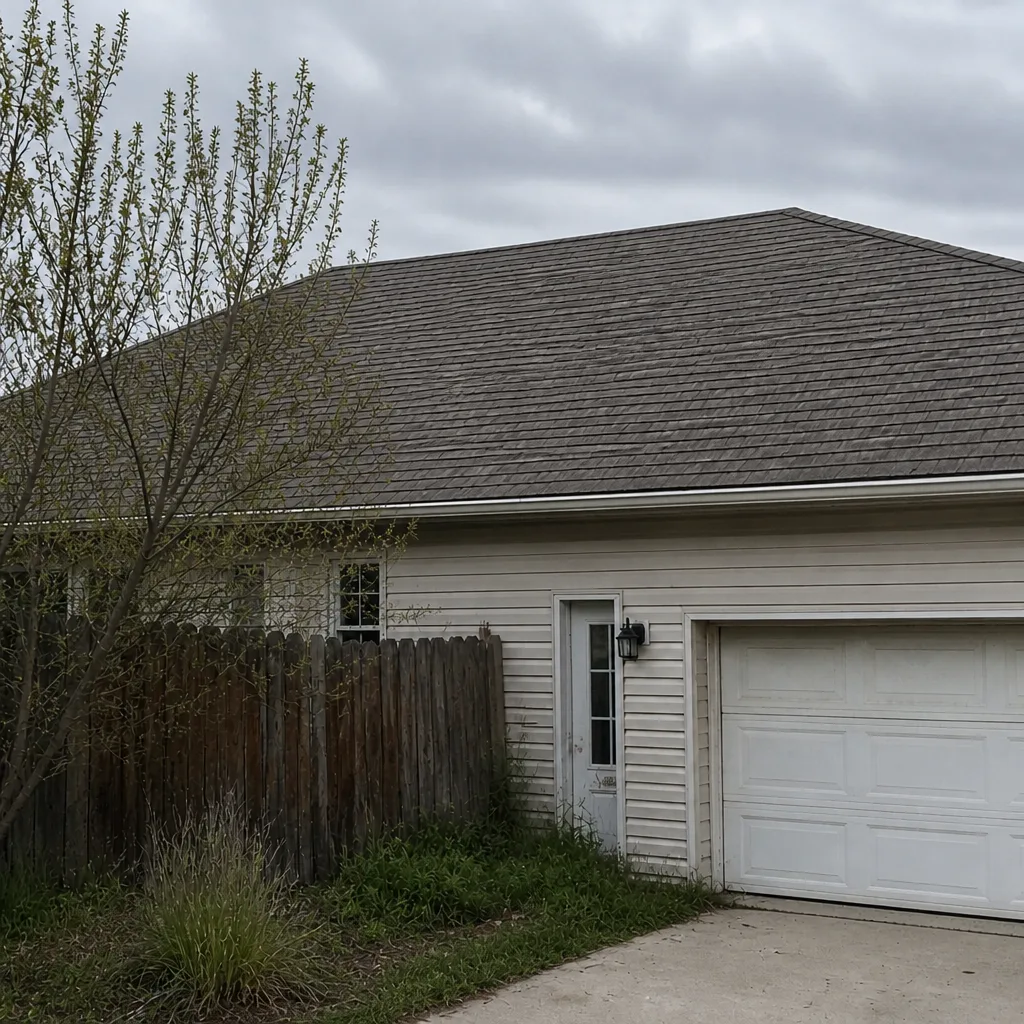
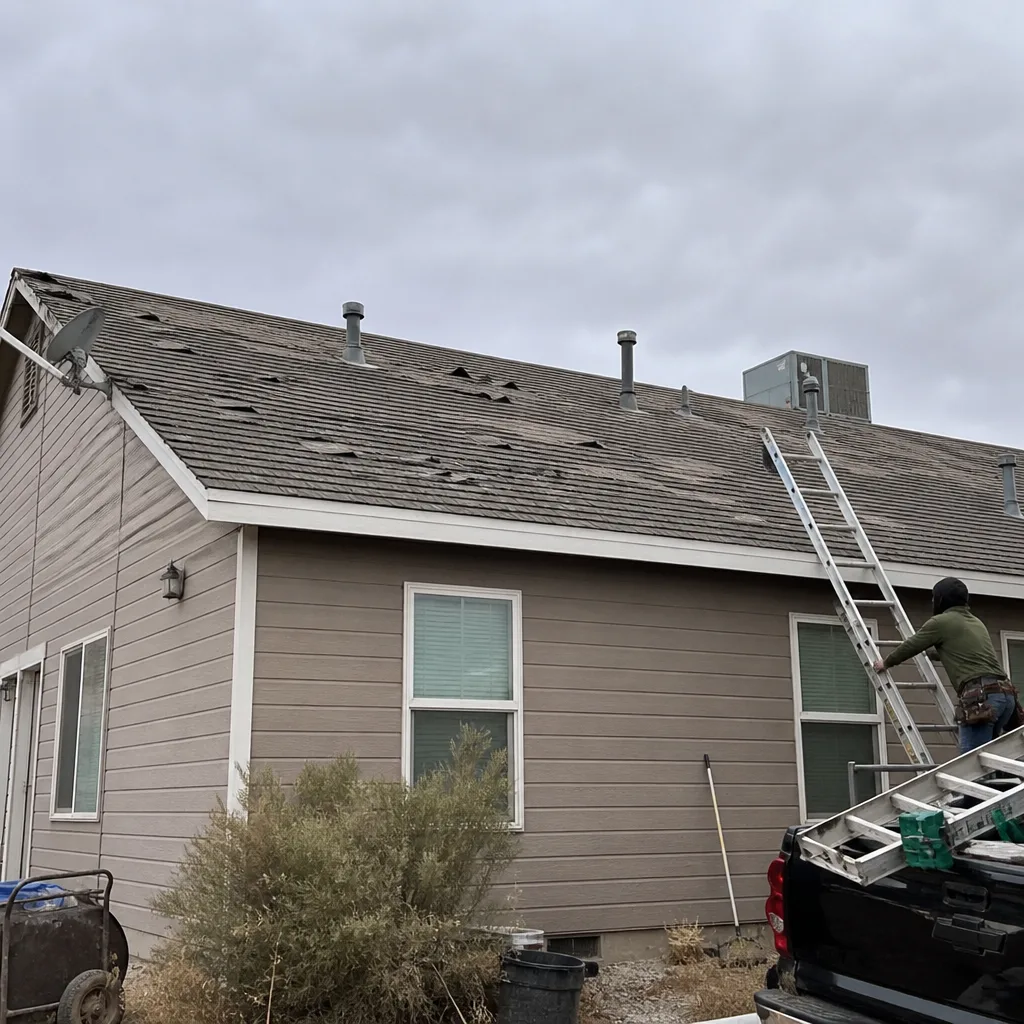
See the difference
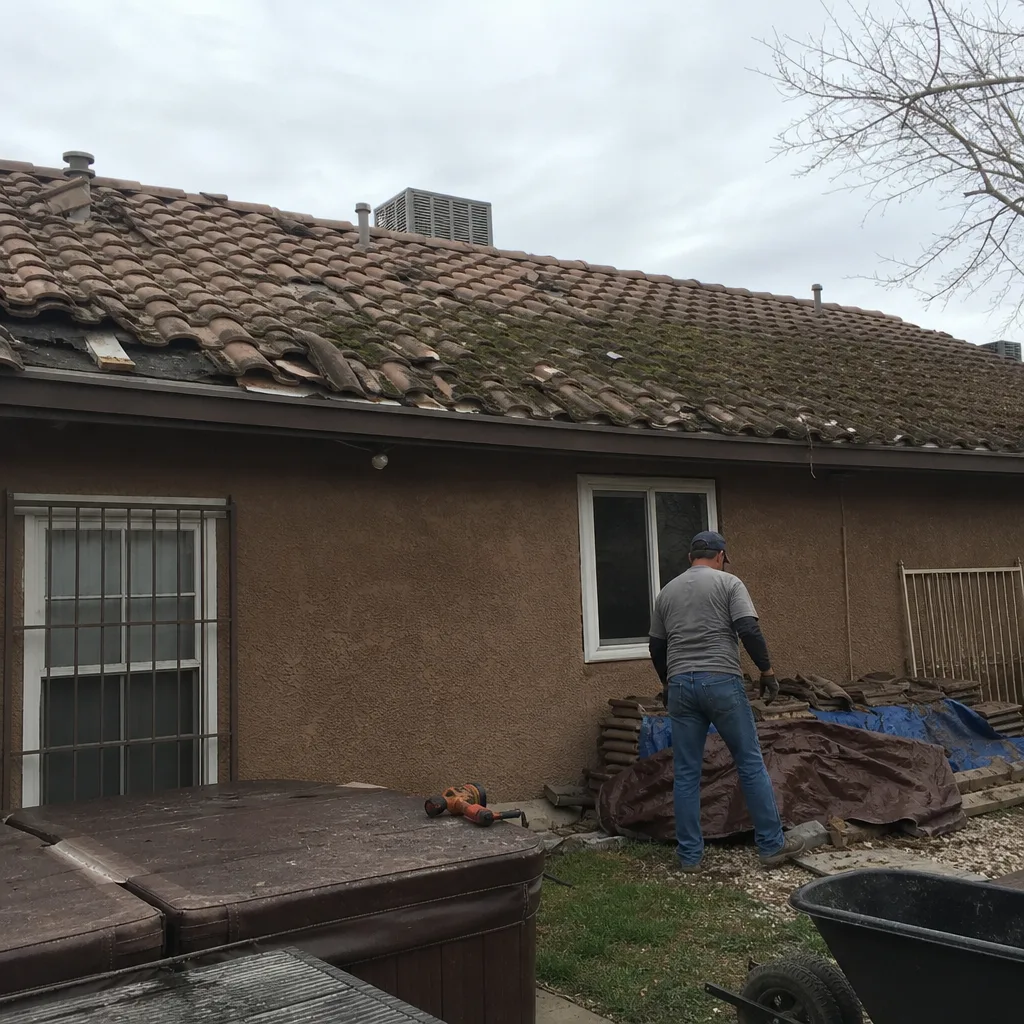 Before
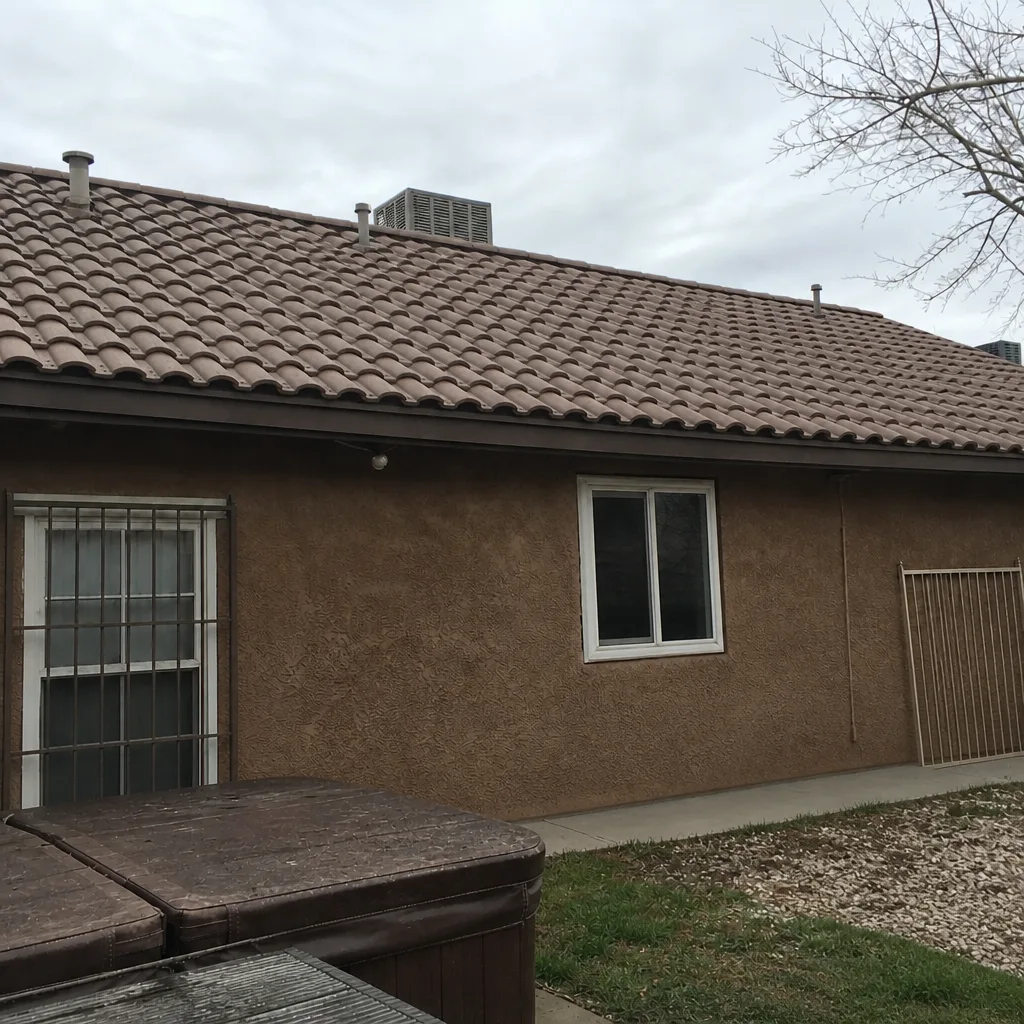 After
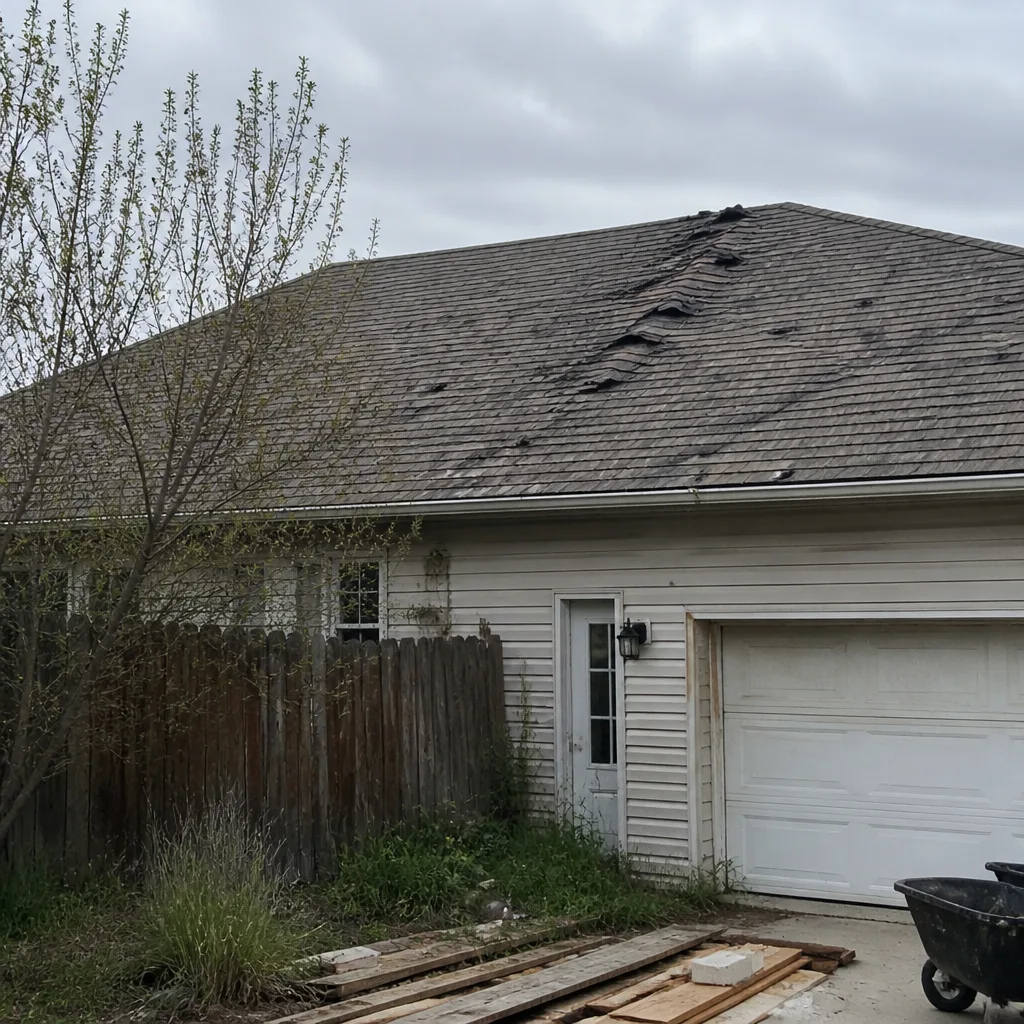 Before
 After
 Before
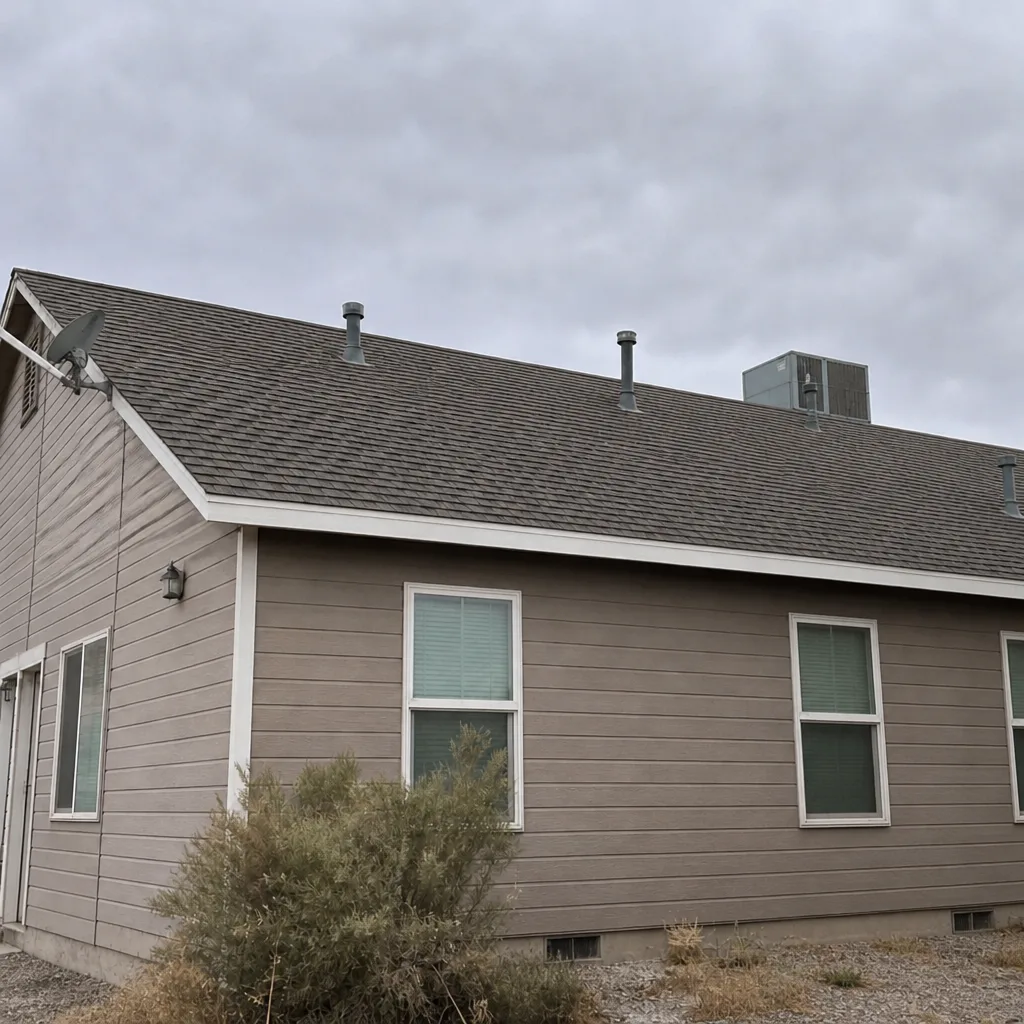 After
Accessories Worth Checking on an Enterprise Roof
One more thing about the roof edge: drip edge, flashing, and the gutter apron work as a system, and failure of any one of them shows up as a gutter problem. On a Tamko or Boral roof edge, the drip edge and the gutter hanger are close enough that bad gutter slope will eventually loosen flashing. That matters because it is one of the ways a gutter issue turns into a specialty roofing in Enterprise job. It is also why a gutters-and-accessories inspection ought to include a look at the roof edge above, and vice versa. Our Ridgeline Roofing Co. Enterprise home page lays out the full scope of what we install and inspect, if you want to see how the pieces connect before you call.
The Bottom Line
Gutters give clear signals before they fail, and the signals are almost always on surfaces other than the gutter: the fascia board, the stucco and block walls, the caliche around the foundation, and the ceiling near the exterior wall. Learn where to look and you will spot trouble a full season before it reaches your wallet. If you find two or more of these signals on the same side of the house, the right move is an inspection, not a repair. Ridgeline Roofing Co. Enterprise has served local homeowners since 1984 and stands behind every job with the 90-Day Done Right Promise. Call (844) 228-4119 for a free estimate, and a live person will answer.
Written by the team at Ridgeline Roofing Co. Enterprise.