
Last updated November 18, 2026
 Architectural shingles
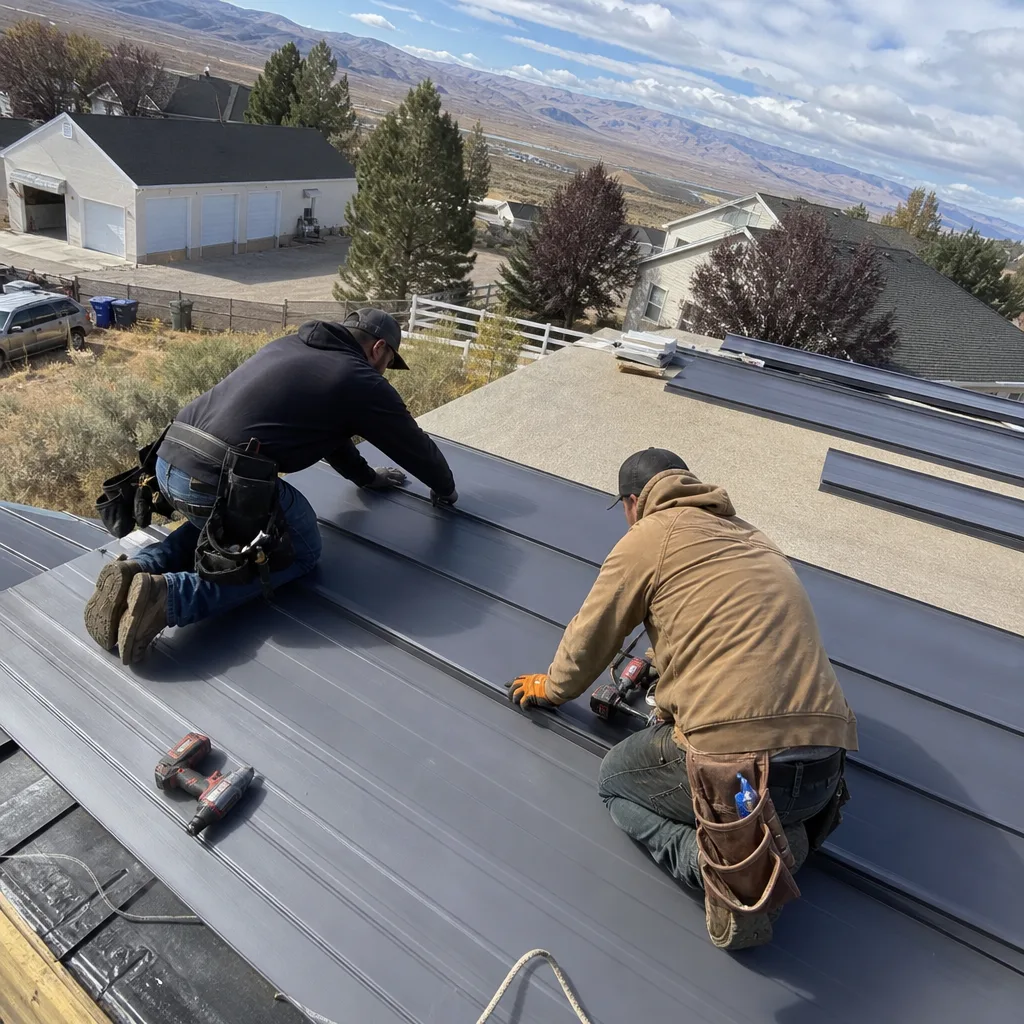
 Metal roofing
 Tile roofing
 GAF
 Owens Corning
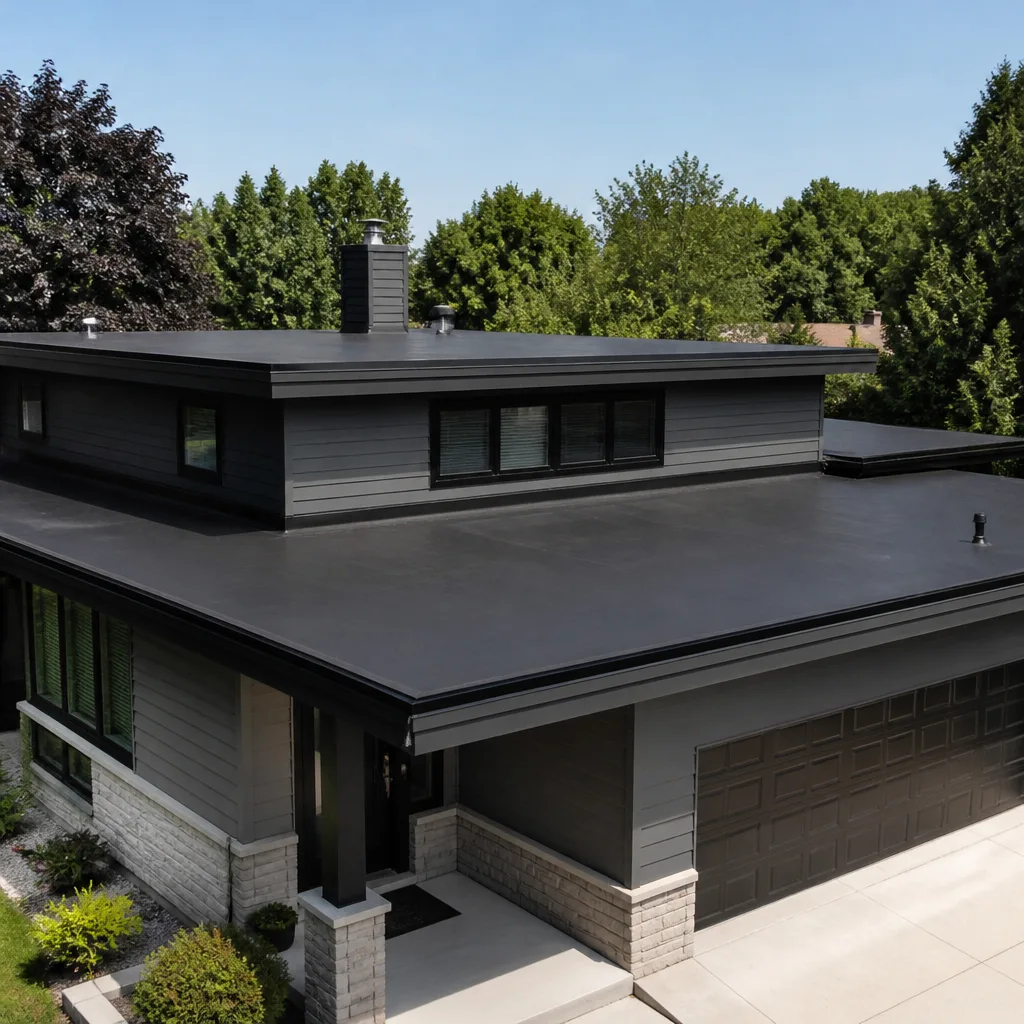 Flat & low-slope
Free roof inspection with deck photos before we talk money - GAF and Owens Corning certified installation
Roof Replacement & Installation Troubleshooting: Common Problems and How to Fix Them
Roofing warranty claims carry a number worth knowing: over 60% of installation defects are workmanship failures, and most of them are detectable within the first 90 days. That window matters because it is short. Once the calendar passes, what looked like a small leak after the first rain becomes a negotiation over whose fault it is. In Enterprise, the desert makes that timeline even tighter. UV exposure, dry heat, and the sudden violence of a summer monsoon test a new roof faster than the mild climates most installation guides assume. What follows is a homeowner’s guide to spotting installation problems early, photographing them properly, and holding a contractor to a written promise instead of a verbal one.
Quick Answer
Most new roof installation problems fall into three categories: ventilation done wrong, flashing sealed incompletely, and fasteners set at the wrong depth. They usually show up after the first monsoon, the first full summer, or six months of Enterprise UV, not at final walkthrough. The fix depends on the defect, but the first move is the same: inspect and document at day 1, day 30, and day 90 while written workmanship guarantees still apply.
Styles & brands we work with
- Architectural shingles
- Metal roofing
- Tile roofing
- GAF
- Owens Corning
- Flat & low-slope
Table of Contents
- Why Installation Defects Stay Hidden Until the First Rain
- The 90-Day Homeowner Inspection Timeline: Day 1, Day 30, Day 90
- The Four Most Common Installation Defects and What They Look Like
- Poor Ventilation Installation: What the First Summer Reveals
- How to Document a Suspected Defect Before You Call
- Escalating a Workmanship Dispute: Promises Versus Warranty Obligations
- How the Enterprise Climate Changes the Timetable
Why Installation Defects Stay Hidden Until the First Rain
A finished roof is designed to look correct even when it isn’t. Shingles sit flat, ridge caps sit straight, and gutters hang level. The defects that matter are underneath: a nail proud of the surface, a drip edge that laps the wrong way, a valley where the underlayment was sealed but the metal wasn’t. None of these are visible from the driveway. All of them are visible from the roof, from an attic, or from the first heavy rain that finds the weakness.
In our experience inspecting Enterprise roofs, the pattern repeats. A homeowner sees the new roof and feels relief. The summer goes by. Then the first monsoon in July or August pushes water sideways at a speed no shingle was installed to fail gracefully against, and a stain appears on a ceiling. By then the contractor has moved on to another job.
This is not because installers are careless by default. It is because the standard roofing inspection happens at completion, not at the 90-day mark, and a completion inspection catches cosmetic problems, not performance ones. Performance problems need weather. Performance problems need heat cycles. Performance problems need the roof to do what the homeowner paid for and prove it held.
Three things make this less of a guessing game for a homeowner in Enterprise:
- Photo documentation at install. A contractor using a camera on the roof, not a phone from the ladder, captures deck condition, ice and water shield, and flashing details before shingles cover them. Without those photos, a dispute six months later becomes one person’s word against another’s.
- Written workmanship guarantees, not verbal ones. Manufacturer warranties cover the shingles. They do not cover the labor that put them on. A written workmanship term, like the 90-Day Done Right Promise we back every job with, is what actually pays when the defect is installation, not material.
- Endurance testing by weather. A well-built roof survives its first monsoon and its first summer without drama. A roof that fails in the first 90 days was telling you something the day it was finished, and the weather just hadn’t broadcast it yet.
What we’ve learned in Enterprise is that the roof that holds is the one with a crew that hangs around to fix the small things before the homeowner notices them. That is the practical difference between a job done and a job done right. For a closer look at the installation standards we work to on new builds and full replacements, see our page on Roof Replacement & Installation in Enterprise.
The 90-Day Homeowner Inspection Timeline: Day 1, Day 30, Day 90
The best dispute is the one you don’t have to have. If you check your roof on a schedule while the install is still fresh, most small problems are corrected before they become complaints. Here is the schedule we recommend to every homeowner we work with in Enterprise.
Day 1: The Post-Installation Walkthrough
- Walk the yard and check for shingle debris and nails. A clean install means a clean yard. Nails under the grass matter to pets and tires, but they also suggest a crew that didn’t clean up after itself, which is a proxy for how carefully the roof was installed.
- Look at the ridge line from across the street. The ridge is where a roof proves itself. Ridge caps that lean, dip, or lap unevenly suggest a ventilation or nailing problem underneath.
- Check gutters and downspouts for shingle granules. A small amount is normal after install. A steady accumulation suggests premature granule loss, which may point to handling damage during installation.
- Look for any loose flashing, drip edge, or trim. From the ground, check that the perimeter of the roof looks tight against the fascia. If there’s a visible gap, flag it in writing the same day.
- Ask for the install photos. A well-run contractor documents the deck, underlayment, and flashing stages. If you weren’t given photos, ask for them now, not at the 90-day mark.
Day 30: The First Weather Check
By day 30, your roof will have seen at least one rain and one temperature swing. Walk the exterior again, and look for stains in the attic if you can safely access it. Any light-colored streak on the underside of the deck, any damp spot on insulation, any stain on the sheetrock at the ceiling corners is a signal. Write down the exact location, photograph it, and call the contractor.
Day 90: The Day the Promise Is Tested
Ninety days is roughly when a written workmanship promise expires on most contracts. That is a decision point, not a coincidence. Walk your checklist one more time. Look at the ridgeline, the valleys, the flashing around chimneys and skylights, and the attic. If everything looks clean, you’ve earned a quiet season. If something doesn’t, you’re still inside the window, and you should call immediately.
The Four Most Common Installation Defects and What They Look Like
Roofing problems that trace to installation, not materials, are usually one of four things. Our technicians routinely confirm these on Enterprise roofs, and each one has a tell you can spot without a ladder if you know what to look for.
1. Improper Nail Depth
Nails should drive through the shingle and into the deck, flush with the shingle surface. Overdriven, they cut the shingle. Underdriven, they hold nothing and back out over time. From the ground, you might see tiny raised bumps along the shingle field where an overdriven nail pushed the mat up from underneath. From the attic, you look for nail poking through the deck board. Both mean the roof is losing fasteners slowly, and wind uplift will find the gaps.
2. Insufficient Flashing Overlap
Flashing is metal that keeps water out of the joints: chimney, skylight, sidewall, valley. The rule is that the upper piece must lap over the lower piece, and the overlap must be generous enough that wind-driven rain can’t get behind it. When flashing is installed too tight, the first heavy rain pushes water sideways into the seam. You won’t always see a leak; you might see corrosion at the joint or peeling paint on the underside of the roof deck.
3. Missed Valley Sealing
Valleys carry the most water. If the valley isn’t properly sealed, or if the ice and water shield beneath it wasn’t installed to full width, a leak at the valley shows up as a stain on the ceiling well inside the room, not directly under the valley. That misdirects homeowners toward the wrong roof section for months. In our experience, valley leaks after a monsoon in Enterprise are the single most misdiagnosed installation defect.
4. Fastener Corrosion from Incompatible Metals
Mixing galvanized nails with copper flashing sets up a small electrochemical reaction. It won’t fail in year one. It fails at year seven, when the nails start to corrode. This is why Brand-authorized installers matter. Proper material pairing from a manufacturer like GAF or CertainTeed starts with the nail and flashing specification, not the shingle color.
If you suspect any of these and the roof is out of written workmanship warranty, our Roof Repair in Enterprise page walks through the diagnostic and repair side in more detail.
Poor Ventilation Installation: What the First Summer Reveals
Ventilation is the most-skipped part of a roof installation and the one most likely to bite you in Enterprise. A desert roof that can’t breathe cooks the deck, bleeds asphalt onto the shingles, and shortens the life of a roof that otherwise looked fine when the crew finished. Here’s what a ventilation problem looks like after the first full summer:
- Ridge cap lifting. When attic heat has nowhere to go, it drives up under the ridge vent. Over a summer, ridge caps start to lift at the edges. From the ground, the ridge line looks wavy instead of straight.
- Shingle oil bleed. A dark, glossy band across the shingles, usually on the hottest slopes facing south or west, is asphalt oils bleeding out from trapped heat. This is not cosmetic and it does not wash off.
- Premature granule loss. Granules are the shingle’s sunblock. When they shed in the first year, the shingle is already aging. Look for piles of green or grey grit at the bottom of the downspouts and along the base of the house.
- Attic condensation. Even in Enterprise, a poorly vented attic traps moisture at the deck. It shows up as frost on the underside of roofing nails in January or a musty smell in the attic in summer.
- Interior heat that won’t quit. If your upstairs rooms are hotter after the new roof than they were before, that can point to an exhaust vent that was eliminated or not reinstalled.
The fix is a proper ventilation calculation: intake at the soffit, exhaust at the ridge, and a balance matched to the roof area. Re-intake vents, ridge vents, and powered vents each have a role, and choosing wrong is what causes the damage above. If you’re considering a specialty system like metal or tile where ventilation details differ, our Specialty Roofing in Enterprise page covers those install standards directly.
How to Document a Suspected Defect Before You Call
A workmanship claim either holds up or falls apart based on how well the defect is documented before anyone touches the roof. This is the piece most homeowners skip and later regret. Here is the sequence we recommend, in order.
- Photograph from the same vantage point over time. Same spot, same angle, same time of day. Daylight for exterior, flash for attic. If a stain grows, the progression is your best evidence.
- Date-stamp everything. Most phone cameras do this automatically. Check that the timestamp is enabled before you start.
- Write a plain-language timeline. When did you first notice it? What was the weather before and after? Did you have any other work done? A one-page timeline carries more weight than a hundred photos without a story.
- Do not let anyone remove or alter the evidence. If a contractor offers to inspect, ask them to photograph first and touch nothing that fails. If the immediate problem is active water, do what you need to do to prevent damage, but document the condition first.
- Retain every document from the original installation. Contract, written workmanship promise, permits, and installation photos. The moment you have those assembled, your position is strong.
- Send the documentation in writing. Email or certified mail. A phone call is fine to alert the contractor, but it is not a record. Follow it in writing the same day.
What we’ve learned from disputes we’ve handled in Enterprise is that the homeowner with a clean folder of photos and a written timeline gets a quicker answer than the homeowner with the best verbal account in the world. The paper trail is the argument.
Escalating a Workmanship Dispute: Promises Versus Warranty Obligations
Here is where a lot of contractors count on confusion. Manufacturer warranties cover the shingles, not the installation. So a homeowner who is told “you’re covered under GAF warranty” may spend three months chasing a claim that the manufacturer will decline because the fault was workmanship. What actually matters is the written workmanship promise from the contractor.
Two documents exist, and they aren’t the same thing:
- Manufacturer material warranty. Covers the shingles themselves for defects in manufacturing. Often prorated after year one, and often declined when the failure is installation-related. Useful to have, but not what you reach for first.
- Contractor written workmanship promise. Covers the labor and installation standards. This is the promise with teeth in a dispute. This is the one to check first. Ours is the 90-Day Done Right Promise: a written guarantee that says if it isn’t right, we come back and make it right, no arguing and no paperwork runaround.
The timeline matters. In Enterprise, we see the same pattern play out on poorly installed roofs. A homeowner notices a defect in September, sits on it through the winter, and calls in March. By then the written promise window has closed and the contractor is legally free to decline. The remedy was there the whole time, but the calendar ran out.
If the written promise has expired and the failure is provably workmanship, ask the contractor for a second opinion, in writing, from a qualified roofing professional. If the current contractor won’t come back, a documented second opinion written by a licensed roofing professional will clarify the defect and support your position. We offer a Free Second Opinion on Any Written Estimate for homeowners in Enterprise, and that includes a fresh inspection report with photos.
How the Enterprise Climate Changes the Timetable
Most roofing guides are written for a moderate climate that doesn’t exist in Enterprise. Here, a roof is tested differently and faster. Three things to know:
- UV exposure is severe. The sun in Enterprise degrades roofing materials more aggressively than in coastal or humid climates. Granule loss, sealant failure, and color fade all happen sooner, which means installation defects show sooner too.
- Monsoon season is the real test. Rain in July and August arrives fast and sideways. That is the moment flashing overlap and valley sealing prove themselves. A roof that survives a full monsoon is telling you something true.
- Heat cycling drives ventilation failures. The interior-to-exterior temperature swing on an Enterprise roof is larger than most installers plan for. That’s why a ventilation calculation done for a moderate climate fails here in year one.
What this means for you: the 90-day window isn’t 90 calendar days in Enterprise; it’s more like one monsoon plus one August. If you’re past the first summer and the roof is holding, you’re likely through the highest-risk period for installation defects. That’s good news. It’s also the moment to note in your calendar to inspect again before the next monsoon.
For more on how we approach roofs built to survive Enterprise conditions, see our Ridgeline Roofing Co. Enterprise home page.
Common Mistakes to Avoid
- Skipping the day-30 check. Most homeowners inspect at completion and not again. That gap is exactly when flashing and valley defects begin to show. Walk the roof again at day 30, before the first hard rain.
- Accepting a verbal workmanship promise. In a dispute, what didn’t get written down didn’t happen. Ask for the promise in writing and file it with the contract.
- Removing evidence before documenting. If water is actively coming in, protect the interior first, but photograph the condition at the roof before anyone touches it.
- Calling the original contractor before writing down what you see. A pre-call timeline protects you if the answer six months later is “that was always there.”
- Assuming manufacturer warranty covers labor. It usually doesn’t, and it doesn’t cover installation defects at all. The workmanship promise is the one that matters here.
- Waiting for the next monsoon to test the repair. In Enterprise, repairs you didn’t test in the same season are untested when the next season starts.
- Paying the full balance before the final inspection. Never release the last payment until you’ve walked the roof yourself, from the ground, and confirmed nothing is loose, missing, or out of place.
See the difference
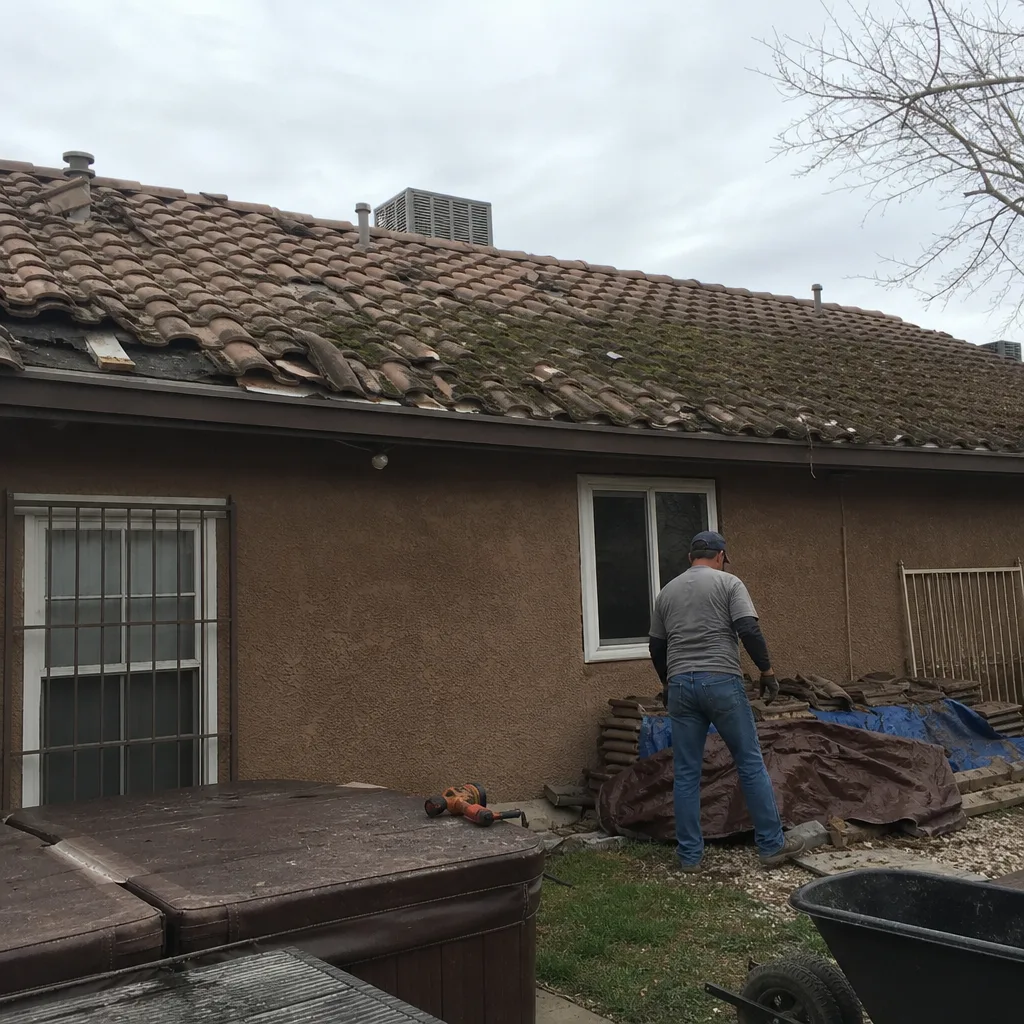 Before
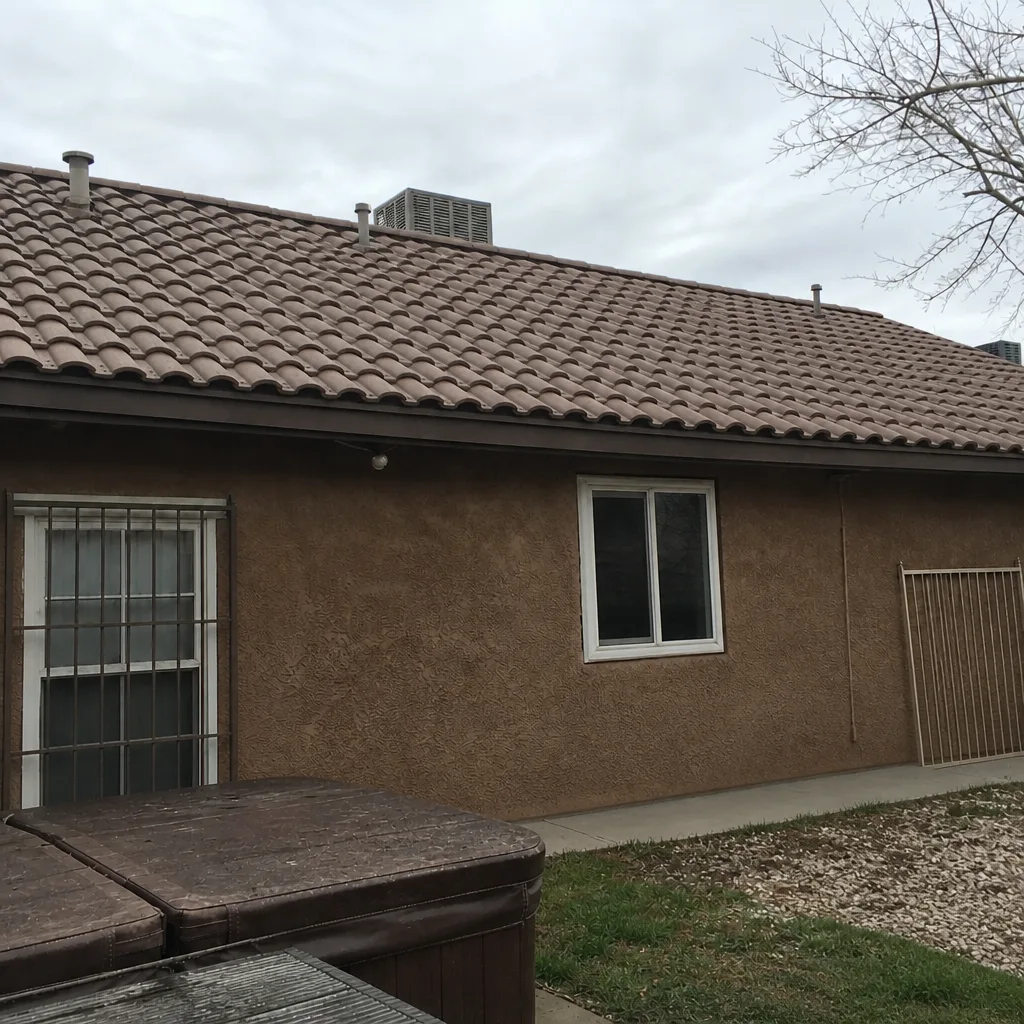 After
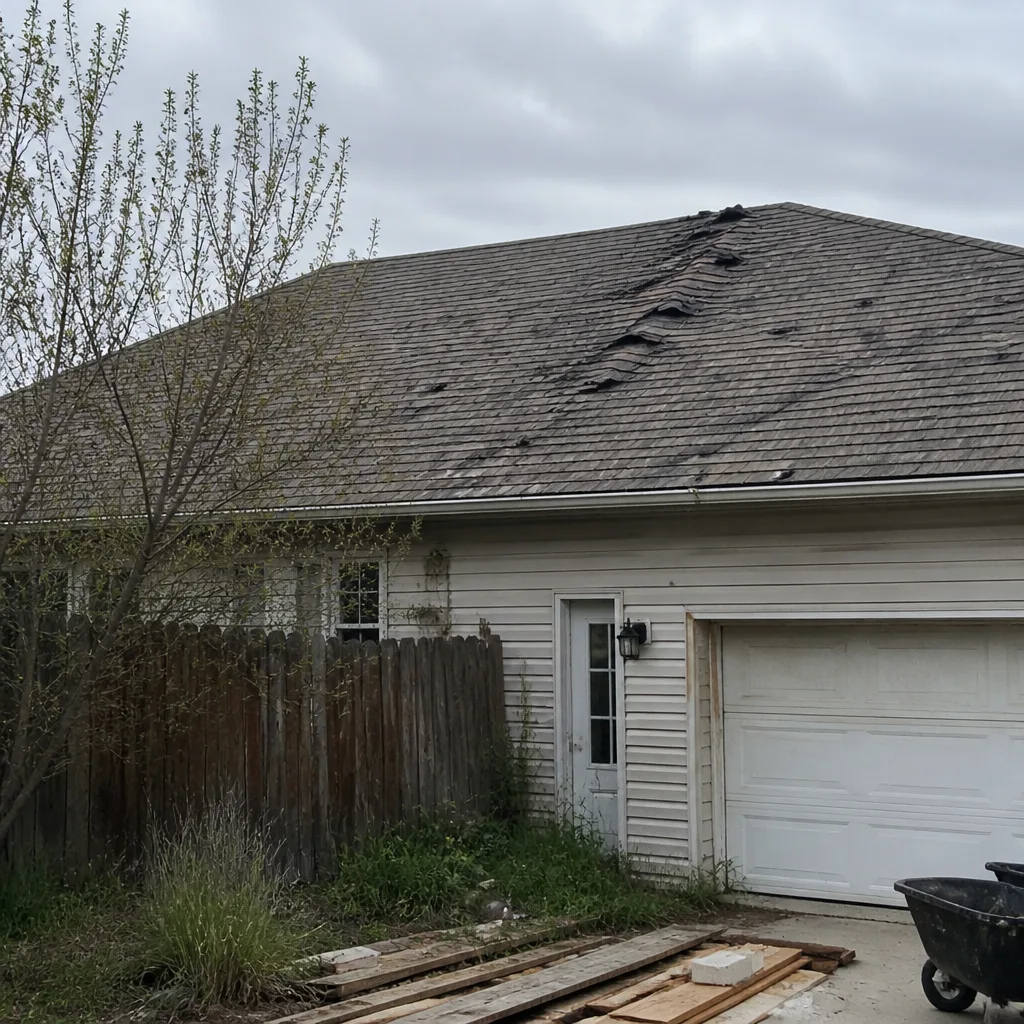 Before
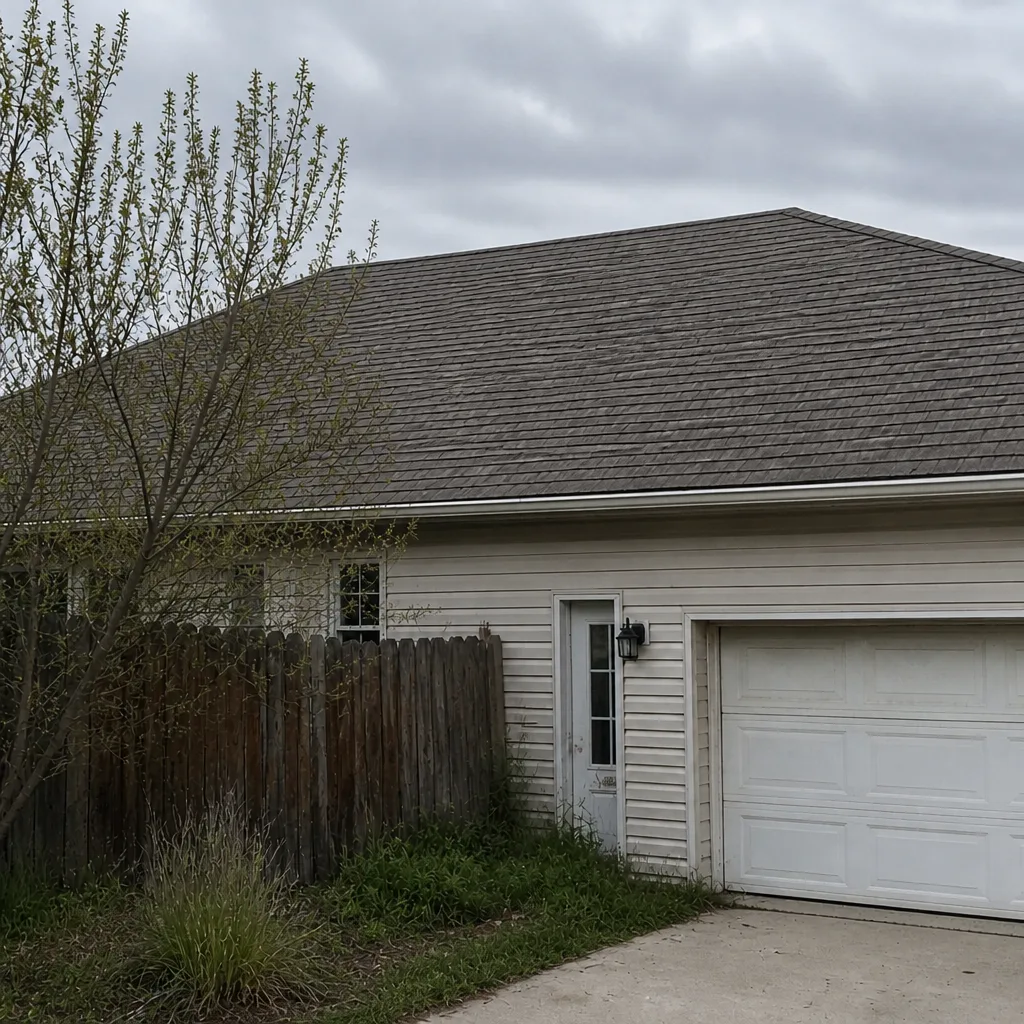 After
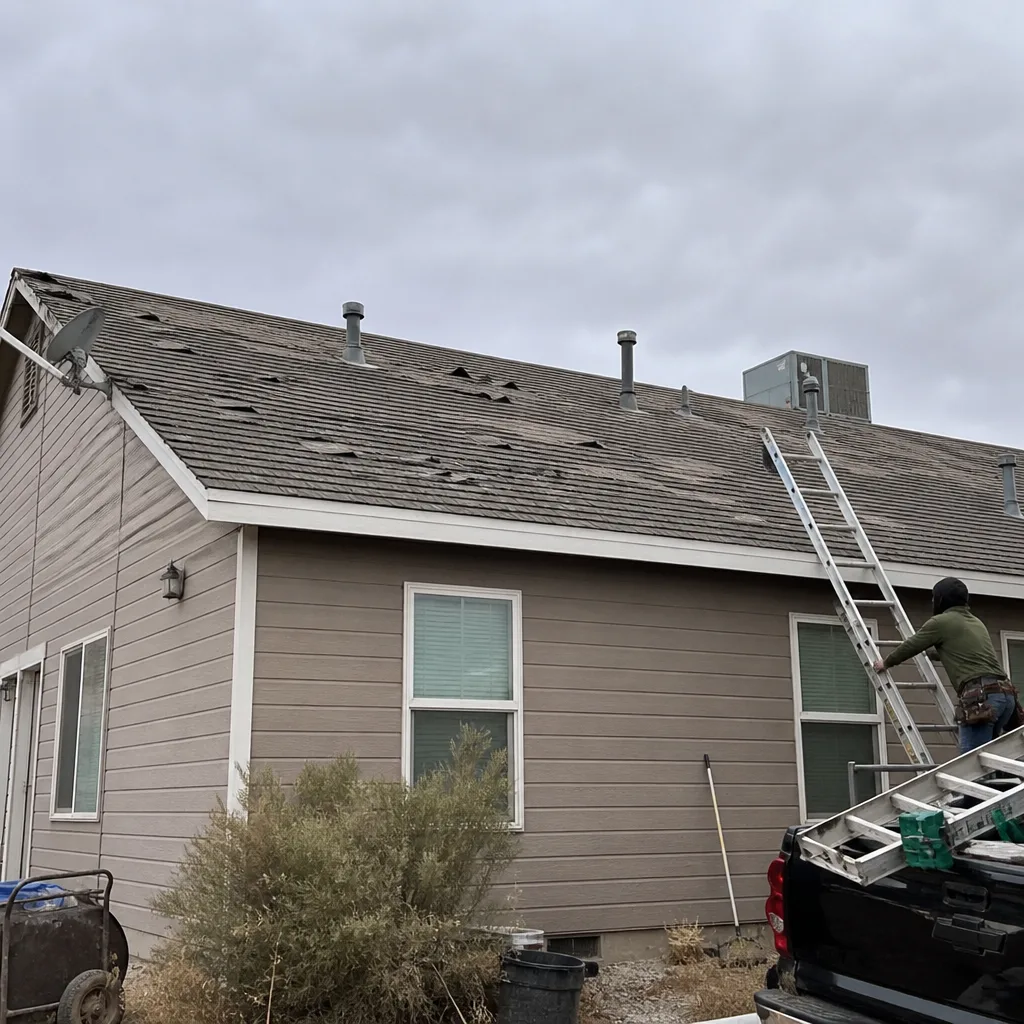 Before
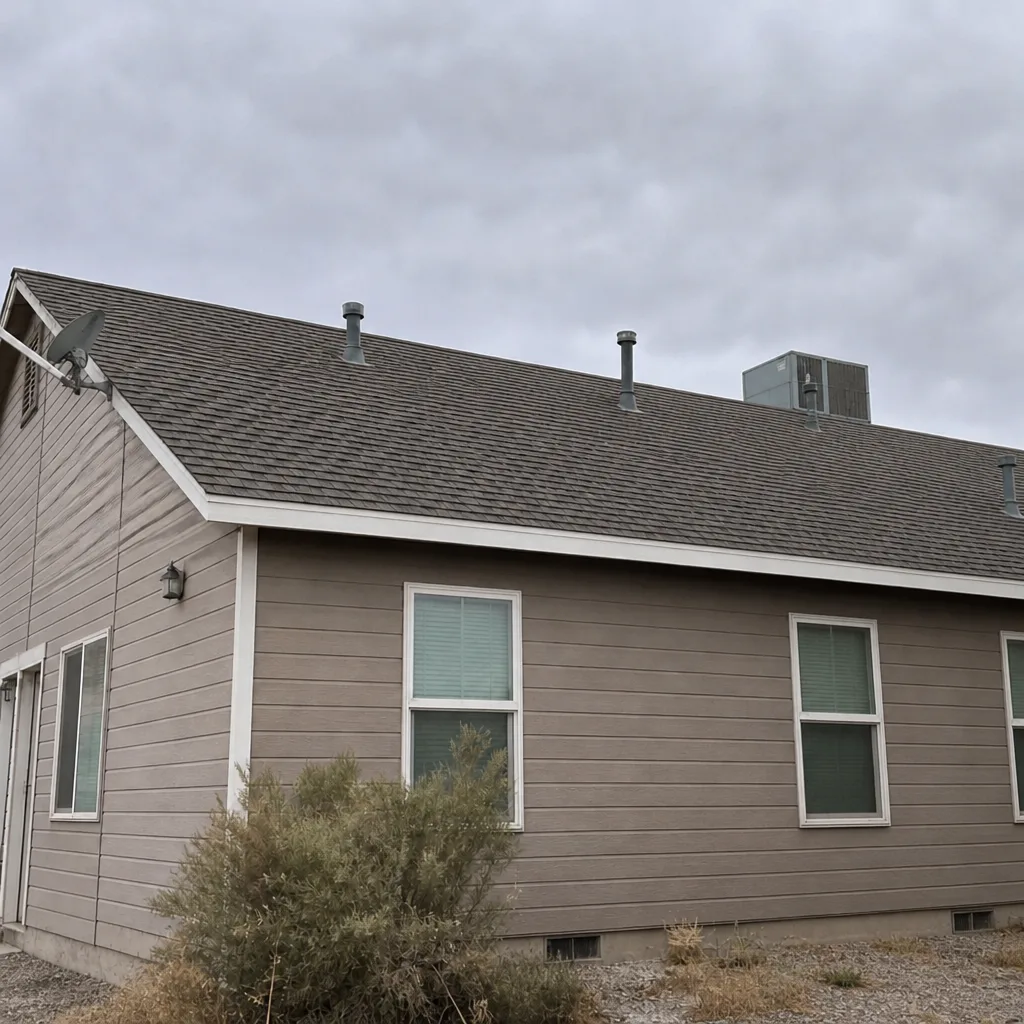 After
When to Call a Professional
Some things you check. Some things you call about. Call us when any of the following apply: water is staining a ceiling or running down an interior wall during a storm; the ridge line has visibly changed shape since installation; you’re within 90 days of a roof replacement and you’re not sure the contractor will come back; or your original installer is unreachable and the defect is workmanship-related. Ridgeline Roofing Co. Enterprise offers free estimates in Enterprise and a free second opinion on any written estimate, whether or not we did the original work. Call (844) 228-4119 and a live person answers, day or night. Estimates are free, photos are documented, and you’ll get a straight answer from someone who has climbed enough Enterprise roofs to know what holds and what fails.
Frequently Asked Questions
You can claim within whatever window your contractor’s written workmanship promise specifies, which in our case is 90 days from completion. Manufacturer material warranties run longer, often 25 to 50 years depending on the shingle line, but those cover materials only and usually exclude installation faults. Read both documents the week the roof is finished, not the month a leak starts.
A correctly installed roof should not fail the first monsoon, and a roof that leaks during its first heavy rain is a workmanship issue, not a weather event. In Enterprise, that first test comes fast because summer storms are intense. If water shows up on the ceiling after the first downpour, photograph it the same day and call the installer while you’re still inside the workmanship window.
Photos are not required by every contractor’s wording, but they are the difference between a claim that gets handled and a claim that gets argued. Date-stamped photos showing the defect, the location, and the progression over time are the standard. If you weren’t given install photos at completion, request them now, because they may show the deck, underlayment, and flashing before the shingles went on.
A material warranty comes from the manufacturer and covers defects in the shingles themselves; it usually doesn’t pay for the labor to tear off and reinstall. A workmanship promise comes from the contractor and covers how the roof was installed. In a claim, the workmanship promise is almost always the one that matters, because most defect complaints trace to installation, not to the shingle.
Call another licensed roofing contractor for a documented second opinion while the defect is still fresh and active. A written second opinion with photos gives you a clearer position and, in some cases, is accepted by the manufacturer or by a subsequent contractor as the basis for a repair plan. We provide free second opinions on any written estimate in Enterprise.
Usually yes. Most installation defects are localized: flashings can be reset, valley seals rebuilt, overdriven nails corrected, and ventilation reconfigured to a proper calculation. A full replacement is only necessary if the defect has caused deck damage over time or covered a broad area. A documented inspection will tell you which case you’re in.
The Bottom Line
A new roof is only as good as its first test. In Enterprise, that test comes in the first summer and the first monsoon. The homeowner’s job is not to know how to fix a roof; it is to know what to check, when to check it, and how to document what you find while the written workmanship window is still open. Day 1, day 30, and day 90 are the three appointments worth keeping. Photos, dates, and a written timeline are the three things that win a dispute. After the first summer, what you have is what you’ve got, so make the first 90 days count. For a free estimate or a second opinion on an existing roof in Enterprise, call (844) 228-4119 and a live person will answer.
Written by the team at Ridgeline Roofing Co. Enterprise.