
Last updated November 18, 2026
 Architectural shingles
 Metal roofing
 Tile roofing
 GAF
 Owens Corning
 Flat & low-slope
Free roof inspection with deck photos before we talk money - GAF and Owens Corning certified installation
Gutters & Accessories Troubleshooting: Common Problems and How to Fix Them
Recaulking a leaking gutter seam is a one-hour fix that lasts about one season. The actual cause – a section pitched back toward the fascia instead of toward the downspout – takes 20 minutes to diagnose and an hour to correct permanently. That difference between treating a symptom and fixing a cause is what this guide is about. In our experience across Enterprise, the same three or four root problems sit behind almost every gutter call we get: wrong pitch, hanger spacing, thermal movement at seams, and water that never leaves the foundation. You’ll learn how to read each symptom, test it yourself with a garden hose, and know which fixes are safe on a ladder and which mean calling a roofer.
Quick Answer
Most gutter problems come down to four root causes: improper slope, hanger spacing too wide for Nevada’s temperature swings, thermal expansion opening seams in summer heat, and poor drainage at the downspout. Overflow during rain usually means a clog or blocked outlet; sagging between hangers means the spacing is too wide; water behind the gutter means the back edge isn’t tucked under the drip edge. Diagnosing the cause with a garden hose takes about 10 minutes and saves you from repeating the same repair every monsoon season.
Styles & brands we work with
- Architectural shingles
- Metal roofing
- Tile roofing
- GAF
- Owens Corning
- Flat & low-slope
Table of Contents
- Read the Symptom First: A Gutter Troubleshooting Map
- Overflow During Rain: Clogs, Blocked Outlets, and Undersized Downspouts
- Standing Water in the Gutter: Pitch and Slope Problems
- Water Behind the Gutter Against the Fascia
- Sagging Between Hangers: Spacing Built for a Milder Climate
- Thermal Expansion Gaps: The Desert Failure National Guides Miss
- Ground Erosion Below the Downspout
- Which Gutter Fixes Are DIY and Which Need a Roofer
Read the Symptom First: A Gutter Troubleshooting Map
The fastest way to solve a gutter problem is to stop guessing and start with what you can see from the ground. Each visible symptom points to a small set of causes, and the repair follows from there. Here’s the map we use on inspections in Enterprise.
- Water pouring over the front lip during rain – clogged gutter, blocked downspout outlet, or a run that’s too long for the number of downspouts.
- Water sitting in the channel days after rain – the section is pitched flat or back toward the house instead of toward the outlet.
- Water running down the fascia and staining it – the back edge of the gutter isn’t tucked under the drip edge, or the gutter has pulled away from the fascia board.
- Dips or wavy runs between hangers – hangers spaced too far apart, or fasteners pulling out of aged fascia.
- Separated seams that leak only in summer – thermal expansion opening joints as the metal heats and cools.
- A trench or bare patch of dirt below the downspout – discharge dumping straight against the foundation with no extension.
In Enterprise, we see the overflow and thermal-gap symptoms come in waves right around monsoon season, when a dry spring has left debris settled in the channel and the first hard rain pushes it into the outlet. If you’re not sure which symptom matches your roof edge, our team at Ridgeline Roofing Co. Enterprise can walk it with you.
Overflow During Rain: Clogs, Blocked Outlets, and Undersized Downspouts
When water sheeted over the front of the gutter in the last storm, the cause is almost always a restriction somewhere in the path: debris in the channel, a blocked outlet where the downspout meets the gutter, or too few downspouts for the roof area the run drains. Water that has nowhere to go fast enough backs up and spills over the nearest low point.
Here’s how to sort out which one you’re dealing with:
- Check the channel by looking down the run from the end. Granule-covered shingles shed grit into gutters, and in Enterprise we also see desert dust and palm debris pack the low spots.
- Check the outlet where the downspout drops. This is the choke point and the one most people miss. Reach in and clear it by hand if you can do so safely.
- Run water from a hose into the high end and watch where it slows or backs up. That tells you whether you have a channel clog or an outlet clog.
- Count the downspouts. As a rule, you want one downspout for roughly every 30 to 40 feet of gutter run. A long run with a single outlet will overflow on a heavy rain no matter how clean it is.
If the channel is clear and water still backs up, you may be undersized on downspouts. That’s a reason to add an outlet or increase downspout size, not to keep clearing the same clog.
Standing Water in the Gutter: Pitch and Slope Problems
Standing water days after a rain is the signature of a pitch problem. Gutters need to slope toward the downspout – roughly a quarter inch of drop for every 10 feet of run is the working standard – and when a section is flat or pitched slightly back toward the fascia, water pools and eventually finds its way behind the gutter or into the fascia board.
You can confirm or rule out a slope problem yourself before any contractor visit, and it takes about 10 minutes:
- Pick a dry day and run a garden hose into the highest end of the run.
- Watch where the water travels. It should move steadily toward the downspout without pooling.
- Look for pools that sit in the same spot. Standing water in the middle of a run means a dip; water that runs the wrong direction means the whole section is pitched back.
- Note the location. A short dip between two hangers is a different fix than an entire run pitched wrong.
Pitch problems are common in Enterprise because heat and settling both work against the original installation over the years. A gutter that was perfectly sloped at install can drift once fascia boards dry, crack, or pull loose. If the fascia itself is soft or splitting, the pitch problem traces back to the wood – and that’s a roofer conversation, not a gutter repair. Our Roof Repair in Enterprise service covers the drip edge and fascia work that gutter repairs often turn into.
Water Behind the Gutter Against the Fascia
Water running behind the gutter and staining the fascia board is a specific failure with two common causes: the drip edge isn’t overlapping the back lip of the gutter, or the gutter has pulled away from the fascia far enough to let water slip in behind. In both cases the visible leak is at the back of the gutter, not the front, and it usually shows up as a dark streak on the fascia or paint peeling on the trim.
What to check:
- Drip edge overlap. The metal flashing at the roof edge should hang over the back lip of the gutter. If the gutter sits below the flashing with a visible gap, wind-driven rain will find that gap.
- Fastener integrity. Hangers that have pulled out of the fascia leave the gutter sagging away from the house – and a gap at the back edge.
- Fascia condition. Soft or rotted fascia means the hangers have nothing solid to bite into. New gutter on bad fascia will fail in the same spot.
- Kick-out flashing at side walls. Where a roof edge meets a side wall, a kick-out should push water into the gutter instead of behind it.
This is the symptom that most often turns a gutter call into roof-edge work. If the drip edge or fascia needs repair, that’s a good time to talk through options, including a proper Roof Replacement & Installation in Enterprise if the edge detail is failing across the whole roof.
Sagging Between Hangers: Spacing Built for a Milder Climate
Sagging between hangers is one of the most misdiagnosed gutter problems. Homeowners assume the gutter is old, but the cause is usually hanger spacing. In milder climates, hangers spaced 24 to 36 inches apart often hold fine. In Nevada’s temperature range – where a run can swing from a cold winter morning to a summer afternoon that heats the metal to the point of expansion – that spacing is too wide.
For our desert temperature swing, hangers should be 18 inches apart on center, with hangers at each seam and at the ends of every run. A gutter with hangers at 30 inches will sag between them as the metal expands and contracts, and once a section sags you get standing water, then overflow, then a leak at the seam. Here’s how to spot under-hung sections from the ground:
- Look down the run from one end – dips are easy to see against the skyline.
- Check whether hangers are visible at regular intervals along the back of the gutter. If they look 2 to 3 feet apart, they’re likely under-spaced for our climate.
- Press up on the bottom of a sagging section. If it moves easily, the hangers are either too far apart or the fascia is soft.
Re-hanging a run to 18-inch spacing is a same-day job for a crew and a common part of our gutter work. When the fascia is sound, new hangers on proper spacing corrects the sag permanently. When the fascia is failing, that comes first.
Thermal Expansion Gaps: The Desert Failure National Guides Miss
National gutter guides are written for a climate with modest temperature swings. They miss the failure we see most in Enterprise: thermal expansion gaps at seams. Metal expands as it heats, and in our summer heat a long gutter run can grow enough to open joints, pull fasteners, and slide the seam open by a fraction of an inch. Those gaps barely leak in a straight-down rain. They leak badly when wind drives rain at an angle the seam isn’t designed to face.
The symptoms of thermal gaps:
- Seams that leak in summer and seem fine in winter.
- Water streaks below a seam but no visible hole.
- A seam that visibly opens when the sun is on it and closes when it’s cool.
- Downspouts that seem to shift slightly or pull away from the outlet over the season.
Caulking a thermal gap is the one-season fix we mentioned at the top. The permanent correction is to re-seam the joint with a proper slip joint or expansion fitting that lets the metal move without opening the seal, and to check spacing on the hangers so the run has room to move. When the downspout itself has shifted, we sometimes find the seam failure is carrying a wider problem – it’s often worth a look at the whole roof edge, and if you’re considering broader edge work, our Specialty Roofing in Enterprise service covers it. Proper flashing and edge detail matter here, and we install to GAF, Owens Corning, and Tamko standards so edge metal matches the roof system.
Ground Erosion Below the Downspout
A bare patch, a trench, or a shallow pit below the downspout is the simplest of the gutter problems to see and the most expensive to ignore. Water discharged straight against the foundation will find cracks in the slab, undermine the footing over time, and in our soils can wash out a surprising amount of dirt in a single monsoon storm. The fix isn’t on the roof at all – it’s at the ground.
The right correction has three parts:
- Extend the discharge at least 4 to 6 feet away from the foundation with a splash block or buried extension. A flexible extension or a downspout that tips to grade is the inexpensive version.
- Aim away from the slope. In homes on any grade, discharge on the low side can run right back to the house. Point it downhill.
- Check for a blocked outlet that’s spilling at the base. If water is coming over the bottom of the downspout rather than out the end, the downspout is blocked and needs to be cleared.
Ground erosion is the one gutter problem that shows up as a basement or slab issue later, so it’s worth fixing even when the gutter itself is in good shape.
Which Gutter Fixes Are DIY and Which Need a Roofer
Not every gutter fix is a ladder job, and some shouldn’t be attempted at any height. Here’s the decision guide we give homeowners:
Safe on a single ladder with a helper spotting:
- Clearing debris from the channel by hand (short ladder, single story).
- Clearing a blocked downspout outlet with a hose from the ground.
- Adding a splash block or flexible extension to a downspout.
Requires a second person for safety, or a professional:
- Re-securing a hanger, especially on a two-story home or near a steep pitch.
- Re-caulking a seam, which puts you at the edge of the roof.
- Checking pitch with a hose on a high run – you need eyes on the whole run at once.
Call a roofer, not a gutter repair:
- Soft or rotted fascia, or hangers that won’t hold in the wood.
- Missing, loose, or improperly overlapped drip edge.
- Water behind the gutter that traces back to the roof edge or side-wall flashing.
- Sagging that runs the length of the roof rather than at one hanger.
If your gutters are telling you the roof edge is failing, that’s the point where a gutter repair alone will come back next season.
Common Mistakes to Avoid
- Re-caulking a thermal gap. Caulk on a moving seam lasts one season and hides the real cause. Re-seam the joint with a slip fitting that allows the metal to expand.
- Re-hanging at 24- to 36-inch spacing. That’s fine in milder climates and too wide for our Nevada temperature swing. Insist on 18 inches on center, with hangers at every seam.
- Adding downspouts instead of fixing pitch. A flat run with extra downspouts still holds standing water. Correct the slope first.
- Ignoring the fascia. New gutter on soft or rotted fascia will sag or pull loose within a season. Fix the wood before you hang the metal.
- Clearing debris with a power washer from the ground. It drives grit into the outlet and can bend the gutter back edge away from the fascia. Clear by hand or with a hose.
- Skipping the drip edge overlap. New gutter hung below the flashing with a gap at the back lets wind-driven rain pour behind it every summer storm.
- Sending downspout water straight to the foundation. A splash block or buried extension costs little and saves the slab. In our soils, one monsoon can move a lot of dirt.
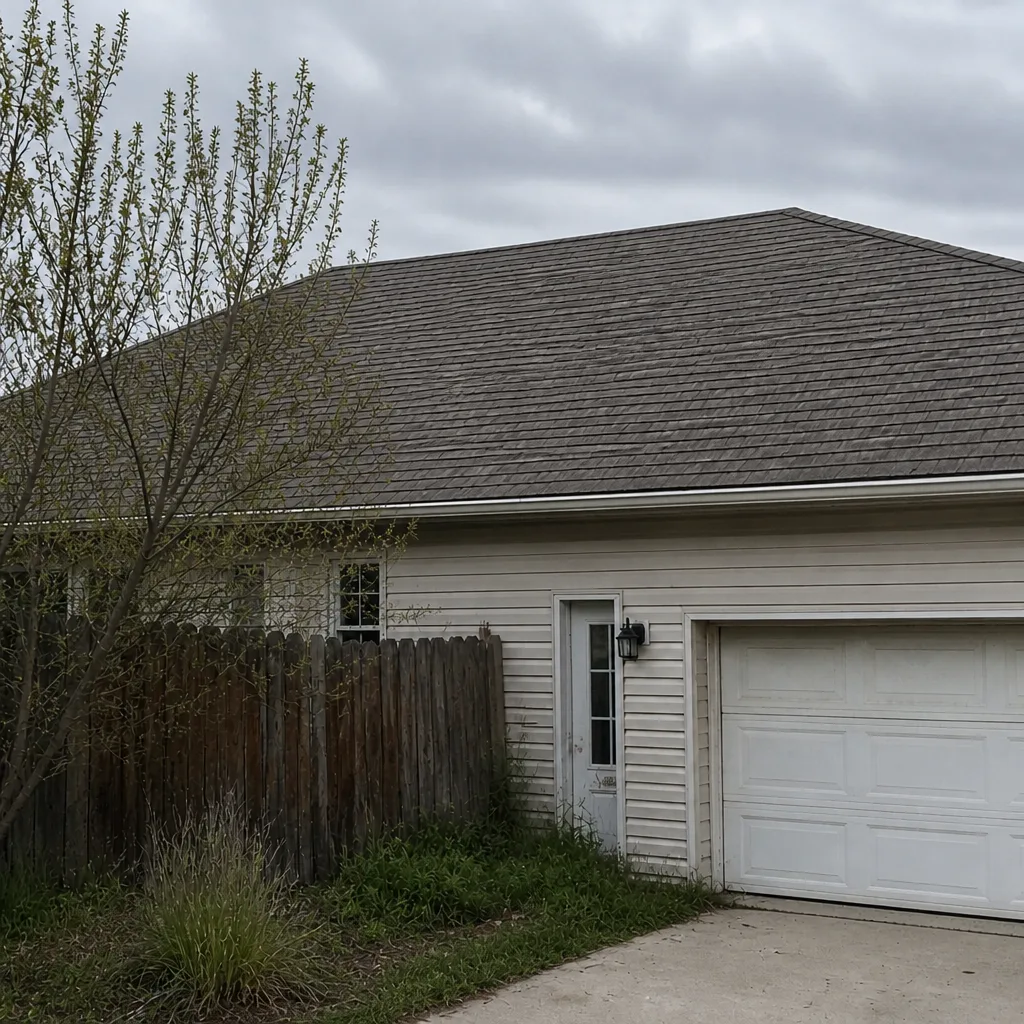
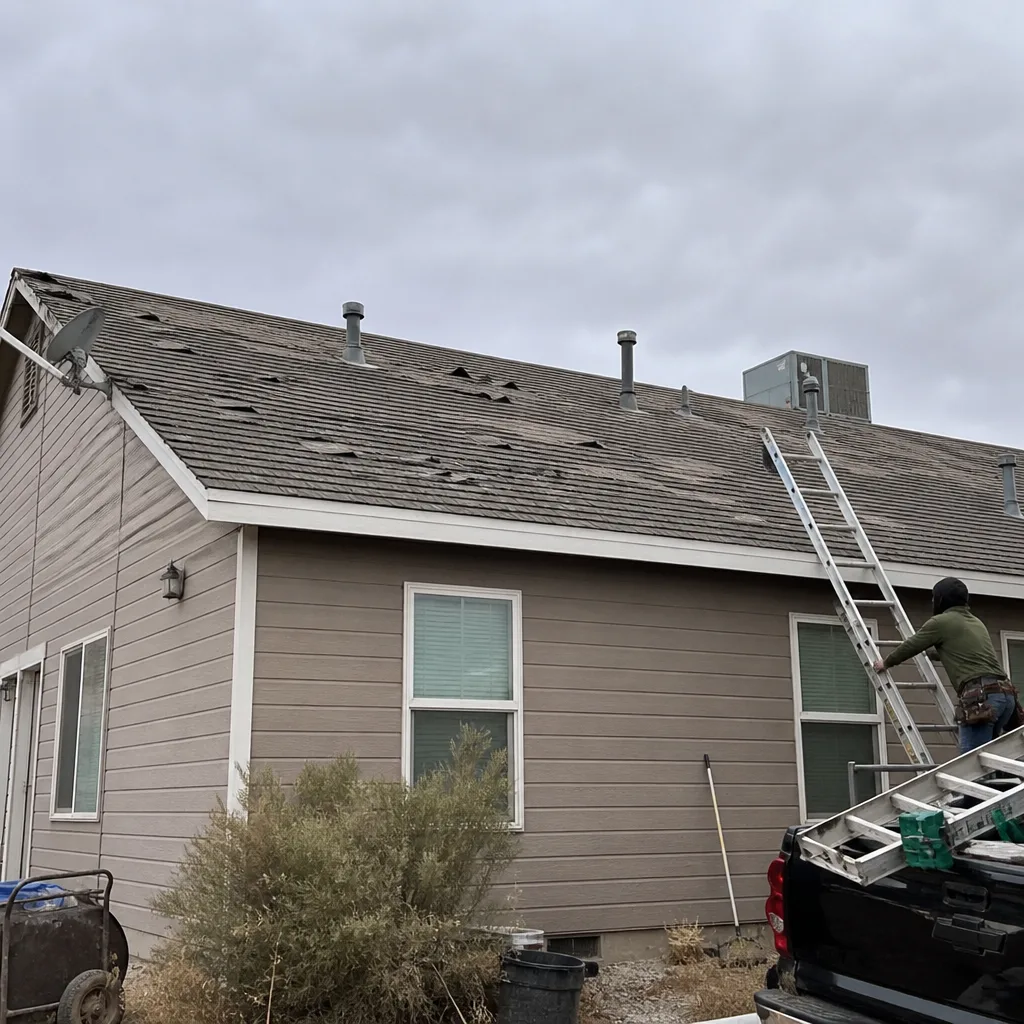
See the difference
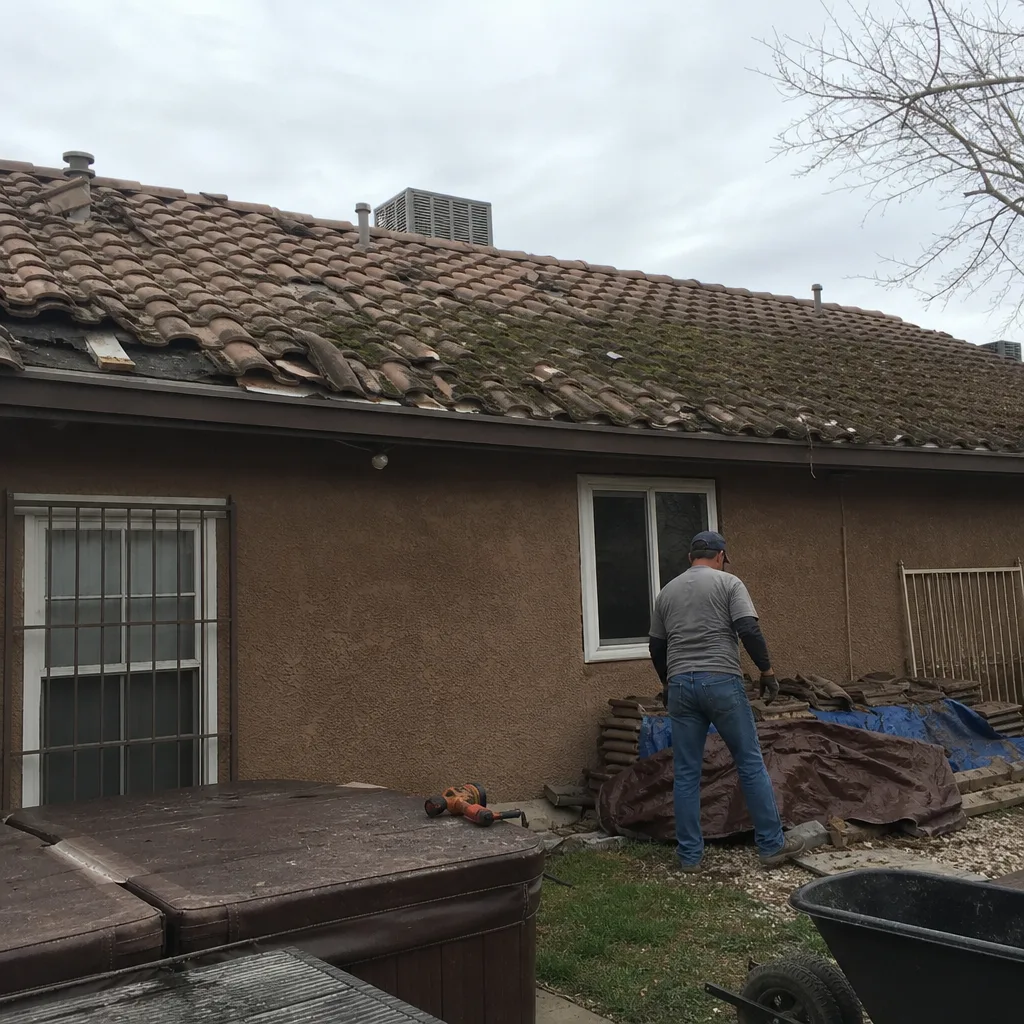 Before
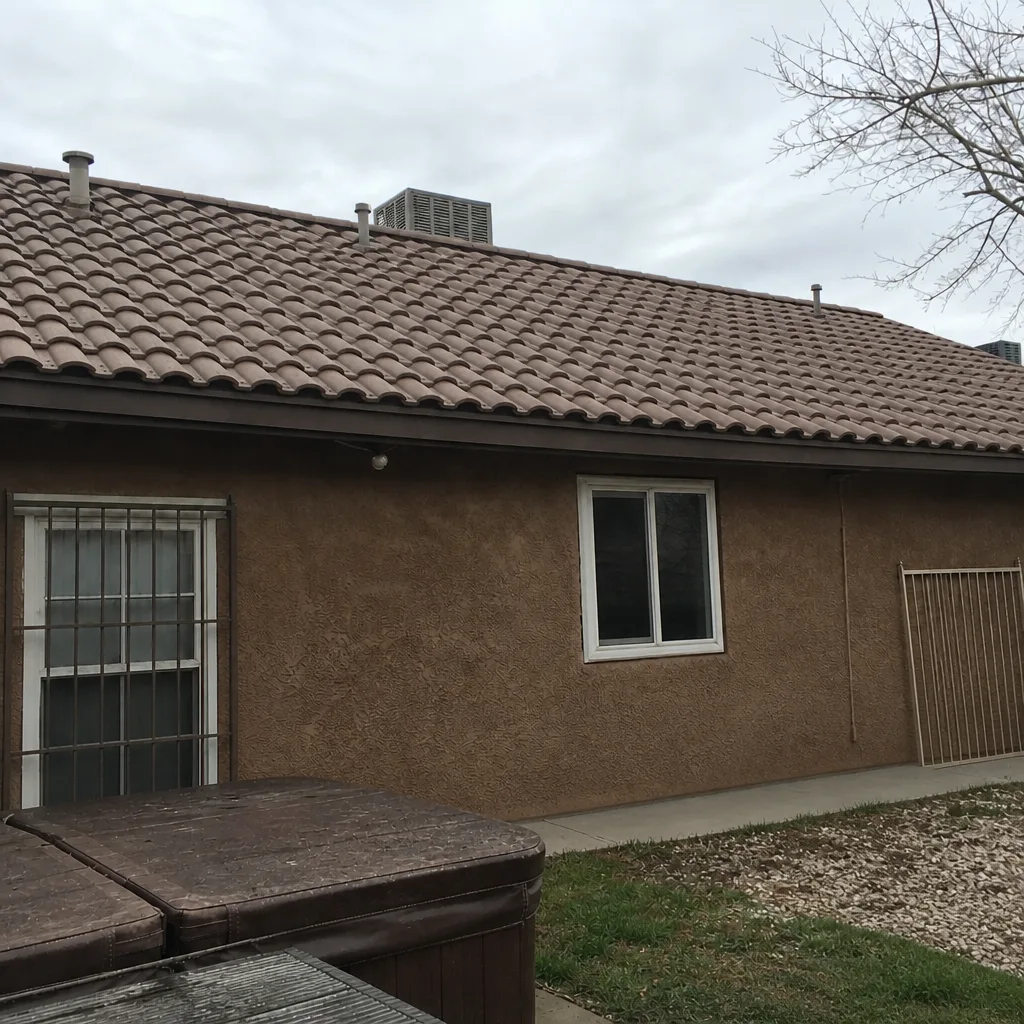 After
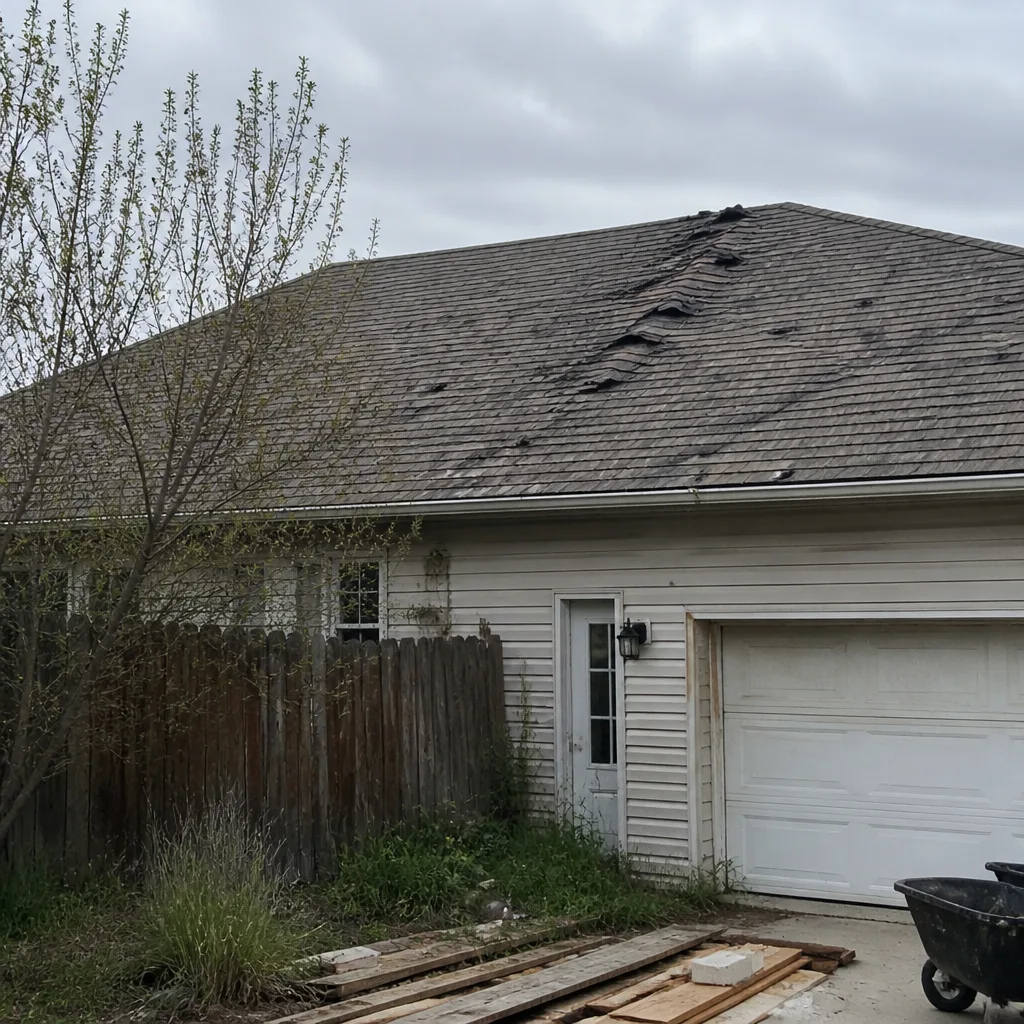 Before
 After
 Before
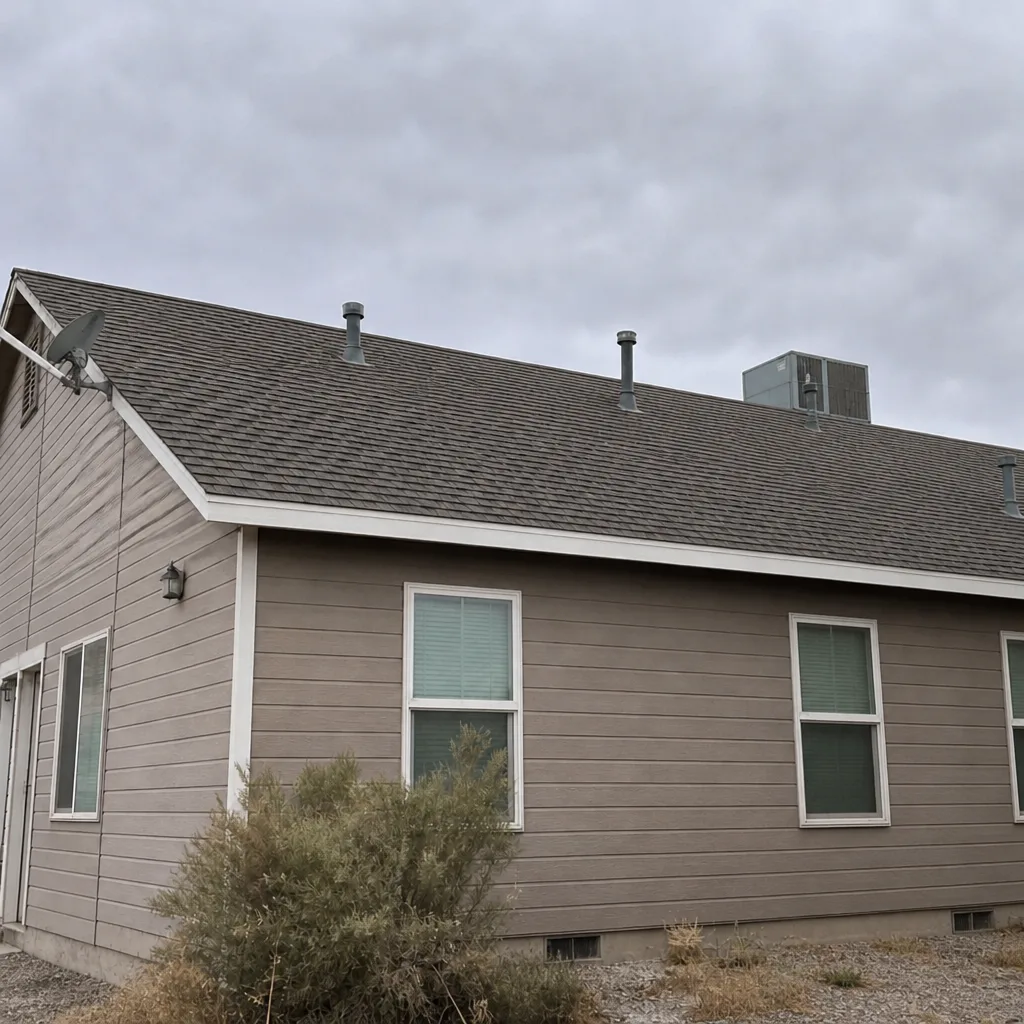 After
When to Call a Professional
Call a professional when the problem traces to the roof edge rather than the gutter channel: soft fascia, sagging along an entire run, missing or loose drip edge, or water that comes in behind the gutter no matter how often you recaulk. These indicate the roof’s edge detail is failing and a gutter repair will not hold. Call us sooner if any part of the roof is steep, if the gutter is more than one story up, or if the fix demands a second person to hold a ladder safely. Ridgeline Roofing Co. Enterprise offers free estimates in Enterprise – call (844) 228-4119. Our technicians have up to 10 years of experience, arrive in uniform, and photograph every inspection from the actual roof so you can see what we see.
Frequently Asked Questions
Most single-point gutter repairs – resecuring a hanger, re-seaming a joint, clearing a blocked outlet – run in the range of a modest service call for a residential property, and a full re-hang of a long run costs more depending on length and roof height. Call (844) 228-4119 for an exact quote – estimates are free, and the number on the estimate is the number on the invoice.
No. We price a job after a photo-documented inspection and quote the whole job upfront, and that quote is what you pay. If we open the work and find condition we couldn’t see – like soft fascia under a sagging run – we stop and show you before anyone touches it.
For simple gutter repairs and replacements, permits usually aren’t required in Enterprise, but edge work that touches the roof structure or fascia often needs to match roof permit requirements. We pull what’s required, pass the inspection, and don’t hand you a job that skips the paperwork.
Diagnosing it yourself is easy: run a garden hose down the high end of the run and watch whether water travels steadily to the downspout. The correction is the part that calls for a professional on any two-story home, since re-pitching a run means moving every hanger – which is also when we check spacing at 18 inches on center.
Sagging at one point between two hangers is usually a gutter repair. Sagging along the whole run, or hangers that pull loose when you press up, means soft fascia or missing drip edge – both a roofer’s job. Our technicians photograph the fascia and edge from the roof so the answer isn’t a guess.
Thermal expansion. In Enterprise’s summer heat, a long metal run grows enough to open a caulked seam. The leak shows up when wind drives rain at an angle a closed seam wouldn’t face. Slip joints and proper hanger spacing correct it permanently; caulk buys you a season.
Yes. Every job is backed by our 90-Day Done Right Promise – a written workmanship guarantee. If something isn’t right, we come back and make it right, with no arguing and no paperwork runaround.
The Bottom Line
Gutter problems aren’t random. Overflow, standing water, water behind the fascia, sagging, and ground erosion each trace to a small set of causes, and the fix follows from the diagnosis – not from the first repair that stops the drip. Diagnose pitch with a garden hose before anyone gets on a ladder. Insist on hangers at 18 inches on center for Nevada’s temperature range, not the 24- to 36-inch spacing common in milder climates. Treat summer seam leaks as thermal expansion, not a caulk problem. And when water runs behind the gutter or the fascia is soft, know that you’re looking at roof-edge work, not a gutter repair. Done right, the same call doesn’t come back next monsoon. If it isn’t right, we make it right. Call (844) 228-4119 for a free estimate in Enterprise.
Written by the team at Ridgeline Roofing Co. Enterprise.