
Last updated November 18, 2026
 Architectural shingles
 Metal roofing
 Tile roofing
 GAF
 Owens Corning
 Flat & low-slope
Free roof inspection with deck photos before we talk money - GAF and Owens Corning certified installation
Roof Repair Warning Signs Every Homeowner Should Know
Granules in the gutter is the warning sign everyone repeats, which is exactly why so many homeowners now walk right past it. The number of granules doesn’t tell you much on its own. The quantity and the timing do. A handful after a hailstorm in Enterprise is normal wear. A steady trickle every month from a roof under ten years old is a roof shedding its protective surface faster than it should, and it usually points to a ventilation problem or a bad batch of shingles rather than simple age. Here’s how to read what your house is already telling you, months before a leak finds your ceiling.
Quick Answer
The most reliable roof repair warning signs are granule loss that continues between storms, dark staining or rust streaks that spread after rain, curling or missing shingles at the roof edges and valleys, and interior clues like attic condensation, brown rings on rafters, or matted insulation under the deck. Any one of these warrants a documented inspection, and two or more together usually mean water is already getting past the surface.
Styles & brands we work with
- Architectural shingles
- Metal roofing
- Tile roofing
- GAF
- Owens Corning
- Flat & low-slope
Table of Contents
- Cosmetic Aging or Structural Trouble? Three Tests You Can Run
- Interior Warning Signs That Show Up Before Ceiling Stains
- Why Flat and Low-Slope Roofs Here Fail Differently
- Flashing Failure vs. Shingle Failure vs. Deck Rot
- Photo Documentation as an Early Detection System
- Why Timing Matters in the Enterprise Climate
- Common Mistakes to Avoid
- When to Call a Professional
Cosmetic Aging or Structural Trouble? Three Tests You Can Run
Most roofs in Enterprise look older than they are because the desert sun bleaches and oxidizes the surface fast. That chalking and fading is cosmetic. The question that matters is whether the roof is still shedding water and whether the deck beneath it is sound. Three observations separate the two, and none of them require you to climb onto the roof.
- The granule timing test. Sweep a small section of gutter after a dry week, not after a rain. If you find a consistent deposit of loose granules in dry weather, the shingles are losing their mineral coating continuously rather than from storm abrasion. Continuous loss is the structural signal.
- The drip-edge shadow test. Stand back on the driveway and look along the fascia line. A straight shadow under the drip edge is normal. A wavy or sagging line means the decking or fascia behind it has absorbed water and softened.
- The valley-gutter test. After the next rain, check whether water is pooling in the gutters under roof valleys or running down the siding nearby. Pooling at a valley means the flashing or the underlayment there is compromised. Clean runoff means the surface is still working.
If all three come back clean, you’re looking at cosmetic aging. If one or more raises a flag, it’s time for a documented inspection. Our technicians have up to 10 years of experience reading these exact signals across Enterprise, and a free second opinion on any written estimate is always available if you’ve been told the roof needs replacing.
Interior Warning Signs That Show Up Before Ceiling Stains
By the time a brown ring appears on your living room ceiling, water has usually traveled through the deck, the insulation, and the drywall. The earlier clues are all in the attic, and they show up months or years before a stain ever forms. When we perform Roof Repair in Enterprise, the attic walk-through often tells us more than the roof surface does.
- Condensation on the underside of the roof deck. Frost or beaded moisture on the sheathing in the morning is a ventilation or vapor-barrier problem, not a leak. Left alone, it rots the deck from below.
- Rafter staining patterns. A clean rafter with a dark line running down one edge means water is tracking along the wood from a specific entry point. Staining that spreads across the sheathing rather than following rafters usually points to condensation.
- Discolored insulation. Batt insulation that has turned grey, matted, or darker in patches is holding moisture. Insulation that looks compressed in one area and fluffy elsewhere is a clue to where water is landing.
- Daylight through the deck. Visible light from inside a dark attic is a direct gap, and it’s a flashing or fastener failure every time.
- Musty smell after rain. A smell that arrives and fades with the weather is active moisture. A constant smell is old, deeper rot.
If you find any of these, write down what you saw and where. A photo log of the attic before and after a rain turns a vague suspicion into something a contractor can act on immediately.
Why Flat and Low-Slope Roofs Here Fail Differently
Many homes in Enterprise have flat or low-slope sections over additions, garages, and patio covers. Those roofs follow a different failure pattern than pitched shingle roofs. On a pitched roof, water is pushed off by gravity before it can sit. On a low-slope roof, water sits by design, which means the failure signs are quieter and the consequences are larger.
What to look for on flat and low-slope sections:
- Ponding water that lingers more than 48 hours. Short-lived puddles are expected. Standing water that survives two days is a drainage or slope problem and the membrane underneath it is already aging faster than the rest of the roof.
- Bubbling, blisters, or alligator cracking in the membrane. These are trapped-moisture blisters from a failed seam or a ventilation defect. Every blister is a future pinhole.
- Seam separation and open laps. The seams are the first failure point on every flat roof. Run a hand along them after a rain and look for a raised edge lifting away from the surface.
- Soft spots underfoot. A soft spot means the deck or insulation beneath has taken on water. Do not step on it; call for a documented inspection.
- Dark streaks radiating from drains. Streaking around a drain or scupper is the tell for a failed drain collar and a sealed-in leak.
For some of these roofs, the correct answer is a proper repair. For others, the low-slope section is well past its design life. When we quote Roof Replacement & Installation in Enterprise, the conversation usually starts with the flat sections first, because they need attention sooner than pitched shingles.
Flashing Failure vs. Shingle Failure vs. Deck Rot
The word “leak” hides three different problems, and each one needs a different repair. Getting the diagnosis right is the difference between a small patch and a full re-roof that wasn’t necessary. Here’s how the signals break down.
- Flashing failure shows up as a leak around chimneys, skylights, vent pipes, or where two roof planes meet. The visible shingles look intact, but water stains the ceiling in a straight line beneath the flashing detail. In Enterprise, the heat cycling at a chimney saddle is a common failure point because the metal expands and contracts more than the shingles around it.
- Field shingle failure shows up as widespread granule loss, curling, and brittle tabs across a large area, not just near the edges. If the shingles crack when you bend a corner during inspection, the asphalt has aged out and the whole field is compromised.
- Deck rot shows up as softness underfoot, a springy feel near valleys, sagging between rafters, and dark or crumbly wood visible from the attic. Deck rot is the most serious of the three because it affects the structural base the shingles sit on.
If you find spots of each, that’s the call for a Specialty Roofing in Enterprise inspection, where we map each zone on a photographed roof diagram before recommending a scope. We install products from manufacturers like IKO and Atlas for the patched areas, so the repair matches the existing system rather than fighting it.
Photo Documentation as an Early Detection System
Most homeowners only think about roof photos after a storm, when the insurance adjuster asks for an inventory. But a photo log is more useful as a preventive tool than as a claims record. The idea is simple: photograph the same six or eight spots on your roof twice a year, in spring and fall, and compare them side by side. Change over time is a warning sign that no single photo can reveal.
Here’s a workable photo plan for a homeowner in Enterprise:
- Pick your spots. From the ground, photograph the front valley, the chimney or skylight, the garage flat-roof section, the gutters from the driveway, and any visible drip edge.
- Use the same framing every time. Same angle, same distance, same time of day. Seasonal light makes comparisons nearly useless if you change the framing.
- Photograph dry, not wet. You’re looking for shingle condition, not current leaks. Take photos at least 48 hours after rain.
- Date and label each photo. A folder named by year and season is enough. Keep the last two years on hand.
- Review side by side. The dark stain that has grown two inches in six months is easier to see when the two images sit next to each other.
When we do an inspection, we photograph the roof from on top of it and hand you the photos, so your log has a documented starting point. That record becomes useful for warranty claims and for any future contractor who needs to see what changed and when.
Why Timing Matters in the Enterprise Climate
Roof problems in Enterprise follow a seasonal clock that’s different from the rest of the country. Our sun does most of the damage in late spring and early summer, when surface temperatures on a dark shingle can climb well above the air temperature. Then our short, intense monsoon rains arrive and find the weak spots that the heat opened up. The signs that appear in May are the leaks that show up in July.
What that timing means for homeowners:
- Inspect in spring, before the rain. Curling tabs, open seams, and granule loss found in March are cheap to repair. Found in August after the ceiling stains, they’re usually a reroof or a major patch.
- Watch flat-roof seams hardest after the first storm. The first heavy rain finds every open lap on a low-slope section. If you see a puddle left behind the next morning, get it documented immediately.
- Treat hail as a specific event, not a general wear issue. Hail bruising on shingles doesn’t show up until the sun peels back the asphalt, sometimes months later. Document any hail event with a photo of the ground, the roof, and the date.
- Don’t wait for wind to fail first. In Enterprise, wind often arrives after the shingle field has already been weakened by heat. Wind-driven shingle loss is usually the second symptom, not the first.
Between our hot, dry stretches and our concentrated rain, we’ve seen that a well-timed repair in April is often worth ten times a rushed patch in July. That’s the framework behind our Ridgeline Roofing Co. Enterprise home service, and the same seasons that catch a failing roof early are the seasons where proactive repair stays affordable.
Common Mistakes to Avoid
- Waiting for a ceiling stain. On a pitched roof, a ceiling stain means water has already crossed the deck, the insulation, and the drywall. The attic sign came first. By waiting, you’re paying for the repair plus the interior damage.
- Treating granule loss as one signal instead of two. A single burst of granules after a storm is expected wear. A continuous dry-weather trickle is a manufacturing or ventilation problem. Homeowners in Enterprise regularly confuse the two, and the second one needs a trained look.
- Patching over a valley without checking the underlayment. A shingle patch at a valley hides the flashing problem instead of correcting it, and the leak returns the next rain. This is the single most common shortcut we see when we do Roof Repair in Enterprise on a recently patched roof.
- Assuming a flat roof won’t show signs. Flat and low-slope sections fail quietly. A two-day ponding puddle is a real signal. A patch of blistered membrane is a real signal. Neither shows a ceiling stain until it’s a bigger job.
- Skipping the photo log because of “not being a computer person.” A folder of dated phone photos is enough. A written log of what you saw and when is enough. The record pays off later more often than not.
- Calling the storm chaser who knocked first. The big storm-chasing outfits that sweep through Enterprise after a hail event aren’t local, aren’t here next spring, and aren’t answering the phone in July. The 90-Day Done Right Promise only means something when the company is still in town on day ninety-one.
- Ignoring the second opinion on a big quote. If you’re being told your whole roof needs replacement on the basis of a driveway inspection, get a documented roof-level inspection first. We offer a free second opinion on any written estimate for exactly this reason.
When to Call a Professional
Some signs are cosmetic and can wait for your seasonal inspection. Others are active water intrusion and shouldn’t. Call us if you find any of the following:
- A brown ceiling stain or a bulging patch of drywall below an attic area
- Daylight visible through the roof deck from inside the attic
- Ponding water on a flat or low-slope roof that lasts longer than 48 hours
- Soft or sprung decking underfoot on any roof section
- Shingle tabs that crack when bent during an inspection, or widespread curling across a field
- Rust streaks, open laps, or a separating seam near a chimney, skylight, or valley
Our technicians are background-checked, arrive in uniform, and document every inspection with photos taken from your actual roof, not a scary speech in the driveway. Ridgeline Roofing Co. Enterprise offers free estimates in Enterprise, and a live person answers every call, including nights, weekends, and after a storm. Call (844) 228-4119 to schedule your free estimate. When you’re ready to talk materials for a repair or replacement, we install products from Boral, Tamko, and the other manufacturer lines we’re authorized for, so the fix matches the roof you already have.
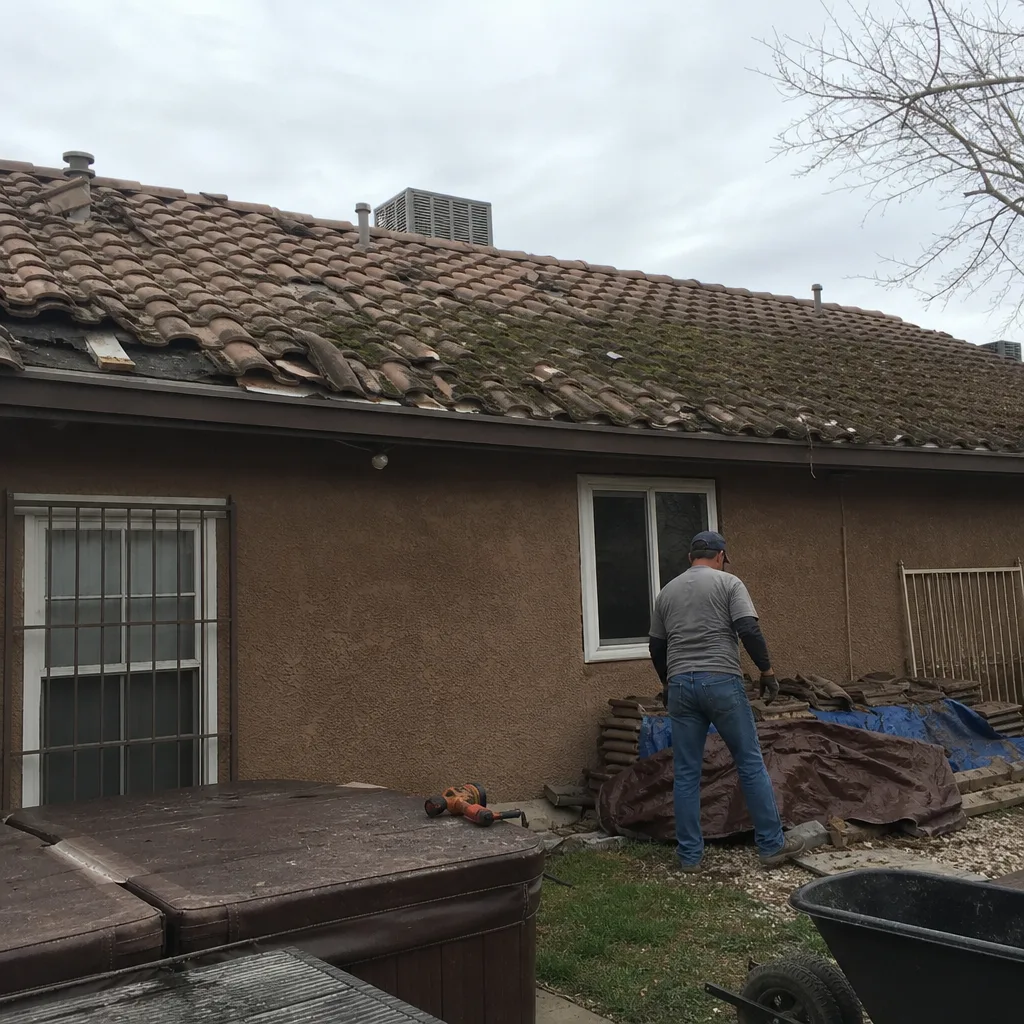
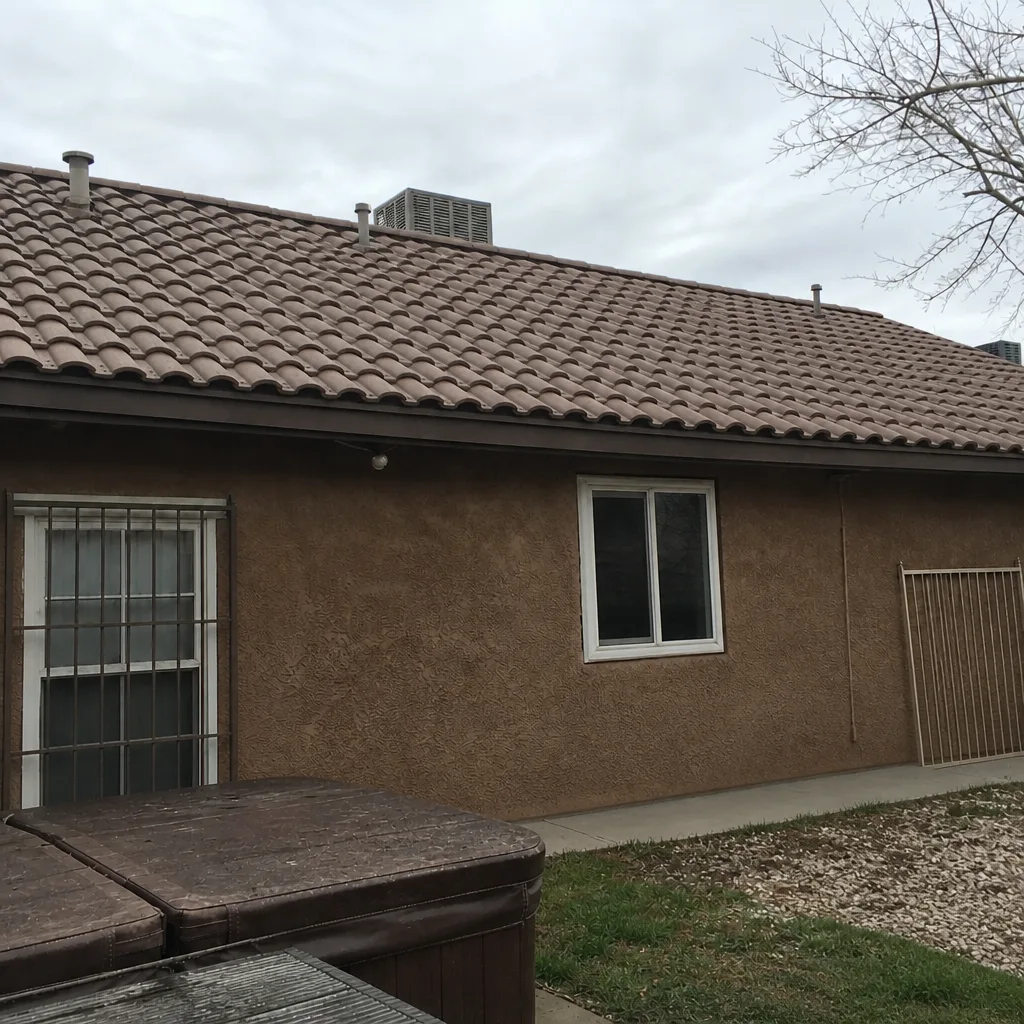
See the difference
 Before
 After
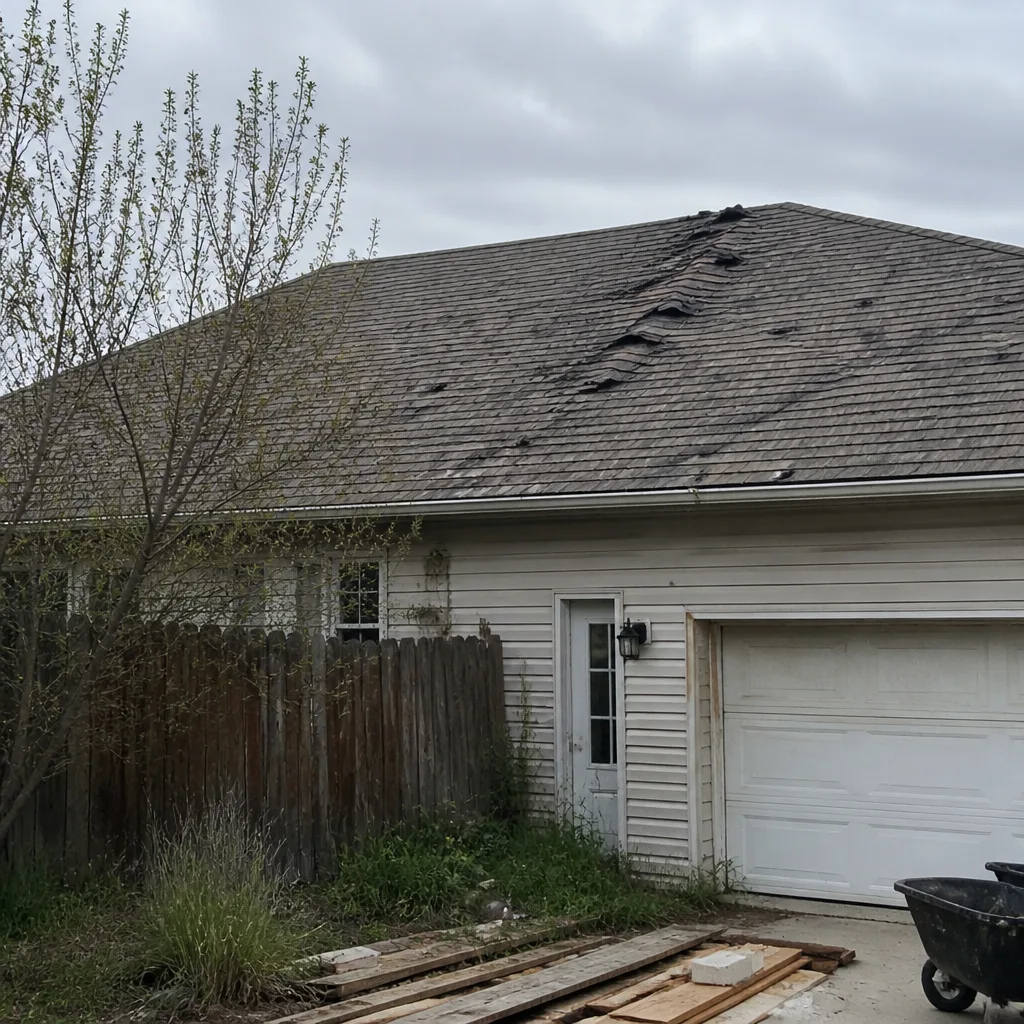 Before
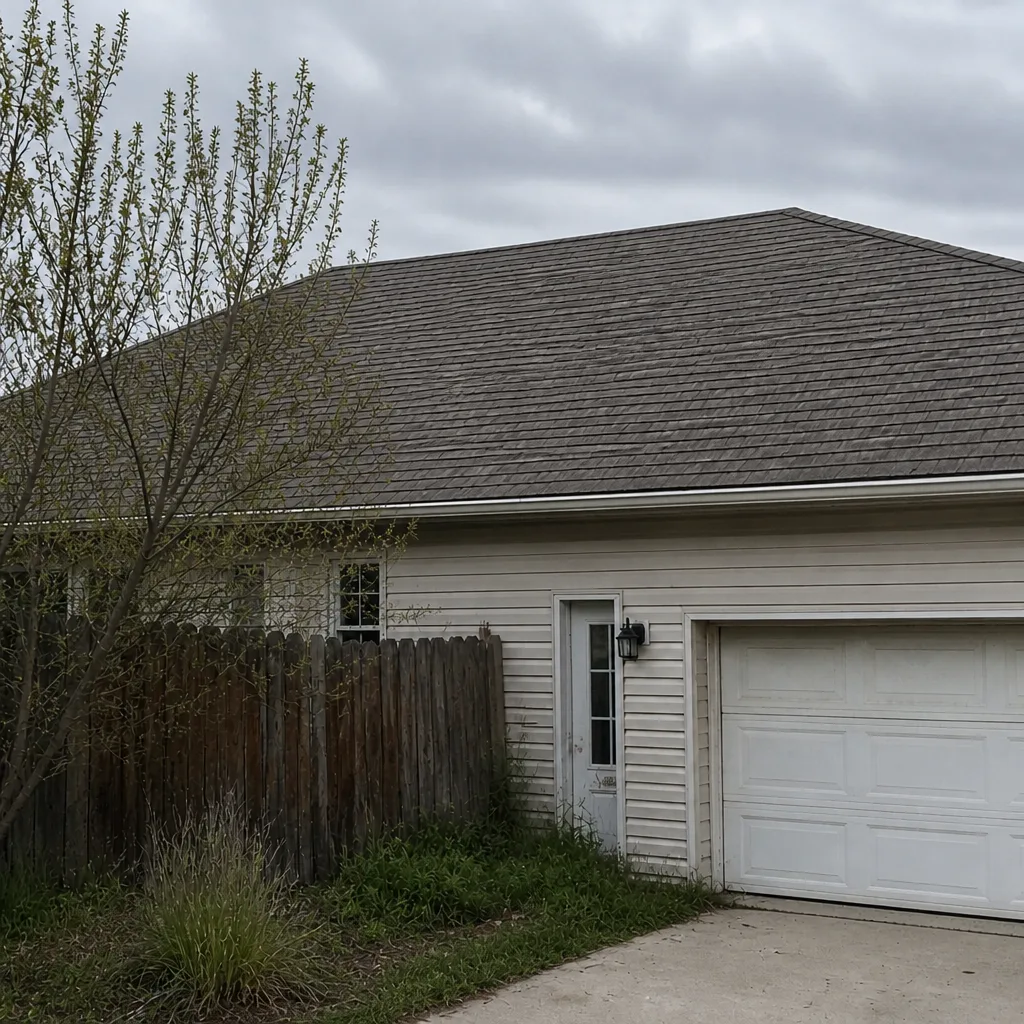 After
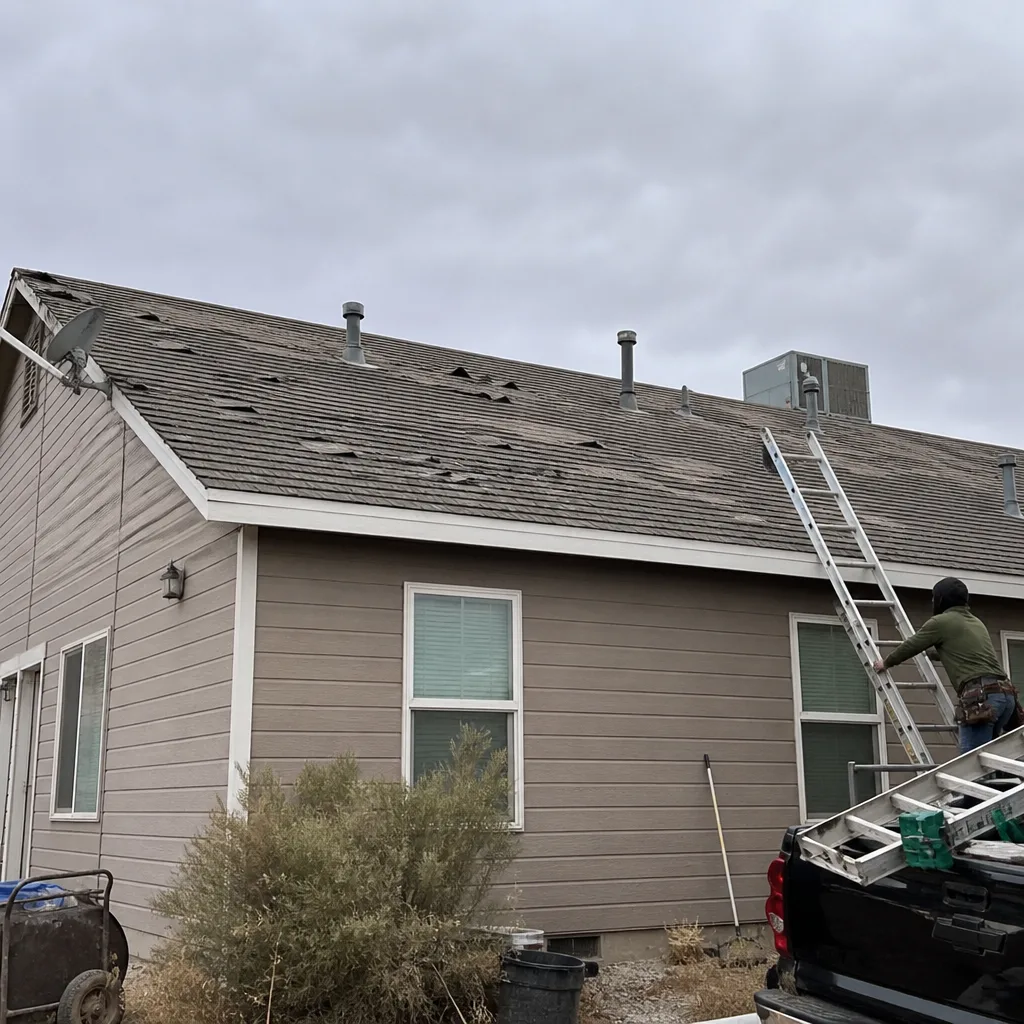 Before
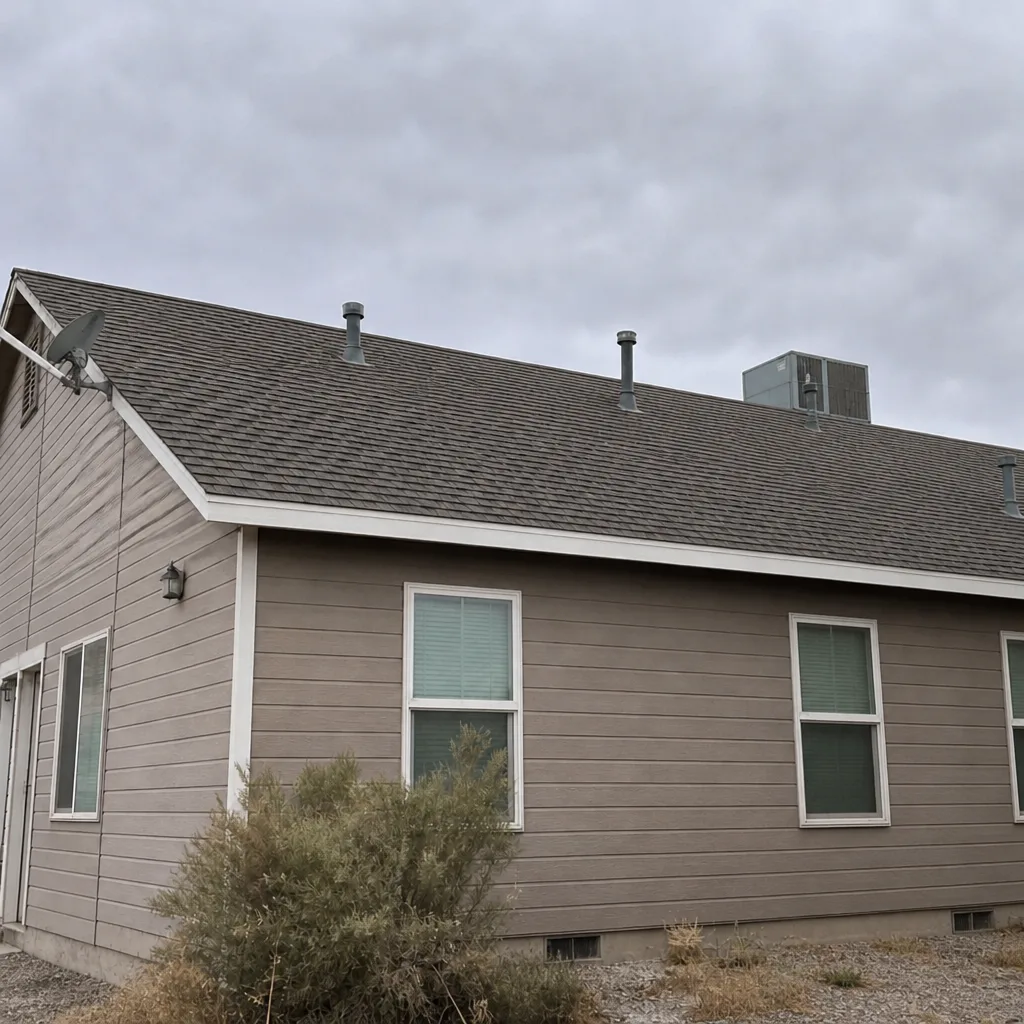 After
Frequently Asked Questions
Most single-spot roof repairs in Enterprise land in the low hundreds to a low four-figure range depending on the size of the section and whether decking is involved. Small flashing and pipe-collar fixes are the smallest jobs, while valley or flat-roof patches with deck repair move up from there. We quote each repair as a written, itemized estimate, and the number on the estimate is the number on the invoice. Call (844) 228-4119 for an exact quote; estimates are free.
Most repairs we do in Enterprise are completed in a single visit. Small flashing jobs and shingle patches are usually a few hours. Repairs involving flat or low-slope sections and decking can run into a second day if new materials have to be matched. We’ll tell you the expected timeframe in the estimate, not after we’re on the roof.
Not on a Ridgeline repair. The price on the estimate is the price on the invoice, and we don’t start a job until the scope is in writing. If our inspection finds something the surface didn’t show (deck rot, for example), we stop and quote it to you before touching it. No change orders after the fact.
For repairs that require a permit under local code, yes, we pull it. Most small repairs don’t trigger a permit, but full roof sections and any structural deck work do. We’ll tell you in the estimate whether a permit is required and include the permit cost in the quoted number, not as a surprise line later.
Water that sits for more than 48 hours means the roof slope or the drainage path has failed, not that the rain was unusually heavy. In Enterprise, the most common causes are a clogged or undersized drain, a settled deck between two supports, or a separated seam holding water inside a low spot. Left alone, standing water shortens the membrane life by years. Have it looked at promptly rather than waiting for a ceiling leak to show up.
If the failure is concentrated in a few zones (flashing, valleys, a chimney detail) and the shingles across the rest of the field still bend without cracking, repair is usually the right answer. Widespread curling, brittle tabs, continuous granule loss, and soft decking in multiple areas together point toward replacement. A photo-documented inspection on the roof itself tells you which one you’re facing. Call (844) 228-4119 for a free second opinion on any written estimate you’ve received.
The Bottom Line
Roofs don’t fail without warning. They telegraph what’s coming through the attic, through the gutters, through the flat sections, and through the same photo you take every six months. The signs you read early are cheap to fix, and the ones you miss become emergency calls. If you take one thing from this guide, take the timing: in Enterprise, the dry-season inspection is worth far more than the storm-season cleanup. Ridgeline Roofing Co. is here for both. Call (844) 228-4119 for a free estimate, and if we’ve done work for you before, the 90-Day Done Right Promise still stands. If it’s not right, we come back and make it right.
Written by the team at Ridgeline Roofing Co. Enterprise.