
Last updated November 18, 2026
 Architectural shingles
 Metal roofing
 Tile roofing
 GAF
 Owens Corning
 Flat & low-slope
Free roof inspection with deck photos before we talk money - GAF and Owens Corning certified installation
Roof Repair Troubleshooting: Common Problems and How to Fix Them
A ceiling water stain can originate from a leak point 10 to 15 feet away. That single fact explains why replacing the shingle directly above a stain fixes the problem about half the time, and why so many homeowners in Enterprise end up paying twice for the same leak. Water rarely enters where it exits. It travels along sheathing, follows rafters, and pools behind fascia before it ever shows up on your drywall. This guide teaches you to read a roof the way a roofer does: backward, from effect to cause. You’ll learn the five failure categories and their symptom signatures, how water moves under the layers, and the attic checklist that reveals what no walk around the yard can show you.
Quick Answer
Most roof problems trace to one of five failure points – flashing, field shingles, valleys, penetrations, or the ridge – and the visible symptom rarely sits at the actual failure. To troubleshoot, trace the leak backward: find the stain or damage inside, map the path water would travel under the layers, then inspect uphill and upstream of the symptom. A repair is worth doing once when the cause is isolated. It signals systemic underlayment failure when the same symptom returns across a wide area, which calls for a professional assessment rather than another patch.
Styles & brands we work with
- Architectural shingles
- Metal roofing
- Tile roofing
- GAF
- Owens Corning
- Flat & low-slope
Table of Contents
- How Water Travels Under Roofing Layers
- The Five Failure Categories and Their Symptom Signatures
- Why Flat and Low-Slope Roofs in Enterprise Leak Differently
- One-Time Fix or Systemic Underlayment Failure?
- The Attic Inspection Checklist
- What the Enterprise Climate Does to Roofs
- What You Can Check Yourself and What You Shouldn’t
How Water Travels Under Roofing Layers
Shingles are the rain screen. They’re not the waterproof layer, and that surprises most homeowners. Under the shingles sits the underlayment, and that’s what actually keeps water out of the deck. When a shingle is lifted or cracked, water gets behind it and hits the underlayment, which is designed to shed water downhill to the eave. On a slack pitch or a wind-driven rain, it can run sideways along a rafter or a batten instead, and that’s when the stain shows up somewhere that seems to make no sense.
Water finds the path of least resistance. It follows gravity until something blocks it, then it goes lateral. It wicks along wood grain, seeps through nail penetrations, and drips from the lowest point of a sagging rafter. By the time it reaches your ceiling, it may have traveled 10 to 15 feet from the entry point.
That reality drives how our roof repair in Enterprise team works a leak call. We don’t start at the stain. We start uphill and look for the failure.
Mapping the entry point in four steps
- Mark the interior stain. Note the exact spot and the direction it’s spreading. Water usually runs downhill from entry toward exit.
- Go to the attic directly above the stain. Look for water tracks on the sheathing, staining on rafters, or daylight at a penetration. The track points toward the entry, not the exit.
- Trace uphill on the roof. Follow the line past the stain toward the ridge, the nearest valley, or any penetration – vents, chimney, skylight, satellite mount.
- Test with water. On a dry day, a controlled trickle at the suspected point reveals the actual path faster than guesswork.
The Five Failure Categories and Their Symptom Signatures
Nearly every leak we see in Enterprise falls into one of five categories. Each one leaves a distinct signature. Learning to recognize the signature tells you where to look before you climb anything.
- Flashing failures. Symptom: staining near a chimney, sidewall, or skylight after wind-driven rain. Flashing is the metal that seals where the roof meets something vertical. When the sealant under it dries out or a step flashing lifts, water runs behind it. On pitched roofs, this is the single most common leak source.
- Field shingle failures. Symptom: scattered stains or damp spots mid-slope, often after a storm. Cracked, curled, or missing shingles expose the underlayment, and once the underlayment degrades, the leak follows. Look for granule loss and bald patches – a sign of an aging shingle field.
- Valley failures. Symptom: a leak that appears nowhere near the valley itself, usually downhill from it. Valleys carry the most water on any roof. If the valley lining is torn, patched badly, or clogged with debris, water backs up and finds a seam. Valleys are the highest-risk zone on a pitched roof.
- Penetration failures. Symptom: a leak that appears only in heavy rain or around a vent pipe, furnace flue, or satellite mount. The boot or collar around the penetration cracks with UV exposure and age. This is often a small, isolated fix – but only if the flashing around it is sound.
- Ridge failures. Symptom: dampness at the top of a wall or on the ceiling near the ridge line. Ridge cap shingles take the most wind and sun on the roof. When they lift, water gets under the cap and runs down either slope.
When we assess a roof, the question isn’t only “what’s broken.” It’s “which category does this symptom belong to, and is the cause isolated or widespread?” A single valley failure is a repair. Valley failure on every slope points to a deeper problem.
Why Flat and Low-Slope Roofs in Enterprise Leak Differently
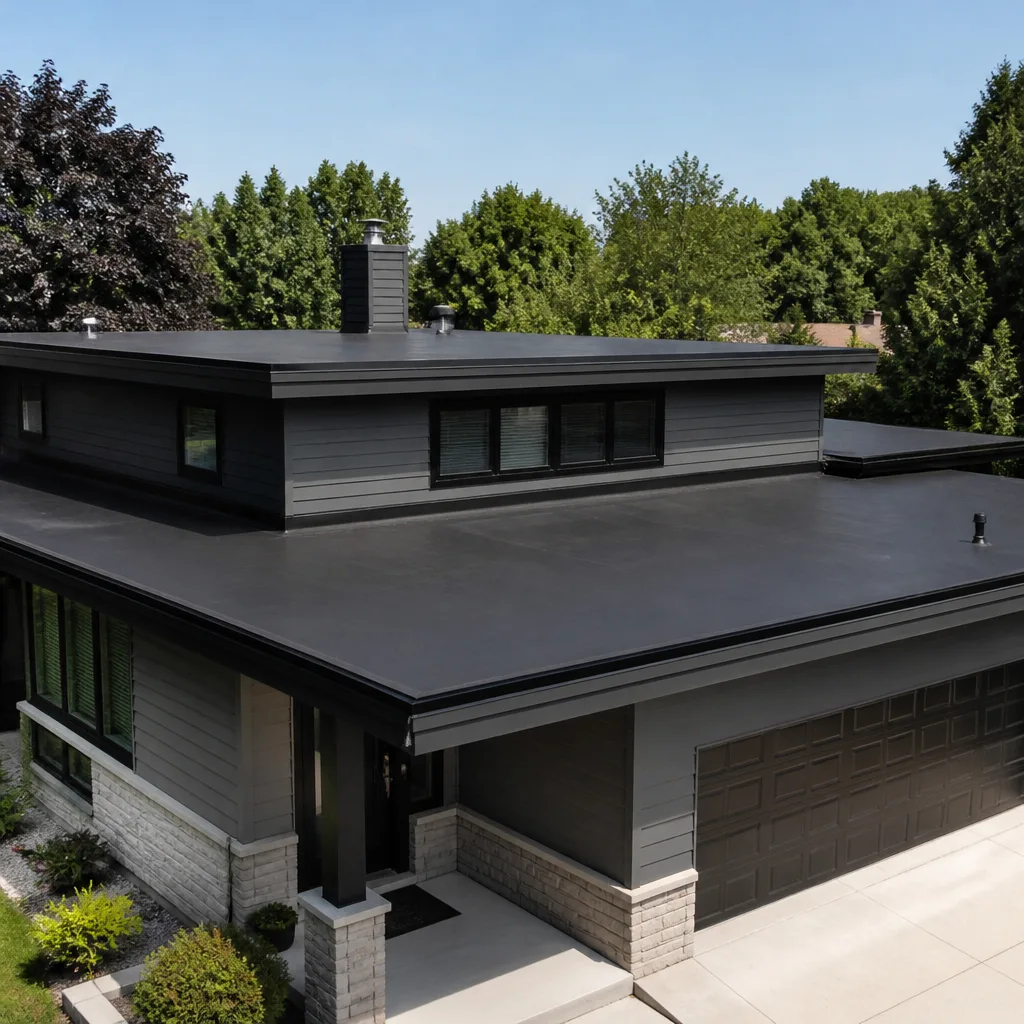
Enterprise has a lot of low-slope and flat roof sections – porch covers, additions, garages, and some modern homes with shallow sheds. These roofs fail on a different logic than pitched roofs, and homeowners often misread them because they expect the same clues.
On a flat or low-slope roof, water stands. It pools in low spots, seams, and ponding areas, and it stays there long after the rain stops. Where a pitched roof sheds water in seconds and dries, a flat roof can hold moisture against the membrane for days. That’s why flat roofs leak at seams and penetrations more than anywhere else, and why the leak often shows up at the interior wall rather than directly below the puddle.
Common flat-roof failure points:
- Seams and laps where rolled membrane overlaps – the first place to fail when adhesive ages.
- Drain and scupper clogs – debris builds up at the low point and backs water under the membrane.
- Penetration collars – HVAC curbs, vents, and pipe boots on a flat roof see constant standing water.
- Ponding – a low spot that holds water more than 48 hours after rain is a structural warning, not just a nuisance.
If you have a low-slope section and a recurring leak, the fix is rarely just re-sealing a seam. It’s finding the ponding point and correcting the drainage or the slope. A patch over a ponding area will fail again by the next rainy season. If your home has significant flat-roof area, that’s the kind of thing our specialty roofing in Enterprise team deals with often, because low-slope detail work is a craft of its own.
One-Time Fix or Systemic Underlayment Failure?
This is the question that separates a $400 repair from a $14,000 replacement, and it’s the one homeowners most often get wrong. The visible damage is a clue, not a verdict. Here’s how to tell the difference.
A one-time fix is likely if:
- The leak is isolated to a single point – one penetration, one flashing detail, one cracked shingle.
- The shingles around it are intact, pliable, and still have their granule surface.
- The attic sheathing is sound except for a small damp area near the entry point.
- The problem appeared after a specific event – a windstorm, a branch strike, a hail run.
Systemic underlayment failure is likely if:
- The same symptom shows up in multiple places or keeps coming back after patches.
- The shingles are brittle, curling, or losing granules across a wide area.
- The attic sheathing is soft, stained, or delaminating over a large span.
- The underlayment felt is brittle, torn, or degraded wherever you can see it.
- The roof is near the end of its service life and multiple details are failing at once.
Here’s the honest rule we’ve learned on thousands of roofs in Enterprise: a patch that fails twice is telling you something. If you’ve paid for the same leak twice, the cause is almost never the spot you keep patching. It’s the underlayment or the deck beneath it. A roof replacement and installation plan is the honest answer at that point – not another patch.
The Attic Inspection Checklist
The attic tells the truth the exterior can hide. You can walk the yard and see a lifted shingle, but you can’t see what’s already happened underneath. Before you call anyone, run this checklist from inside, on a dry day first, then again after rain. It takes fifteen minutes and tells you more than an hour on the roof.
- Water staining on the sheathing. Look for dark streaks, rings, or damp spots on the underside of the roof deck. Note the direction the streak runs – it points toward the entry.
- Soft or delaminated deck. Press a screwdriver handle against suspect spots. A spongy deck means rot, and rot means the leak has been active long enough to matter.
- Staining on rafters and trusses. Water wicks along wood. A water line on a rafter is a map of the leak’s path.
- Rust on nails and fasteners. Rusty nail tips through the deck usually mean moisture is active from above.
- Daylight. Look for pinholes of light at penetration boots, chimney gaps, and ridge lines. Any daylight is a direct water path.
- Mold or mildew odor. A musty smell signals moisture that’s been sitting, even if you can’t see the stain.
- Insulation condition. Compressed, dark, or damp insulation near a suspected area confirms the leak path.
Bring a flashlight and a camera. Photograph what you find. A photo-documented inspection is what a good roofer does, and the more detail you can hand us, the faster we can trace the actual failure. We always document our own inspections with photos taken from your actual roof – not a scary speech in the driveway.
What the Enterprise Climate Does to Roofs
Roofs in Enterprise live through a tough cycle that most of the country doesn’t see. Summer heat bakes the shingle surface past 150 degrees, then the desert night drops forty degrees. That daily expansion and contraction stresses sealant, flashing, and membrane seams. The UV exposure is relentless. Granules wear off faster here than in wetter climates, and the shingles that are left go brittle early.
Then the monsoon comes. A single storm in late summer can drop more rain in two hours than the roof has seen in a season. Water that’s been baked out of the sealants is tested all at once, and every small failure shows up in a hurry. That’s why the fall is the busiest time for roof repair in Enterprise – the storms find every weakness in a single week.
What we see most often:
- Flashing sealant cracks near chimneys and sidewalls after a summer of UV bake.
- Lifted or curled shingles at field and ridge, from thermal cycling.
- Valley debris from desert dust and wind-blown material, causing backup in the first hard storm.
- Penetration boot failure, since rubber boots dry and crack in the heat before the shingles do.
This is why a seasonal tune-up does real work here, and why the answer to “is this covered?” usually turns on whether the sealants and flashings were maintained, not just the shingles. The right materials matter too. We install Ridgeline Roofing Co. Enterprise home roofs using GAF, CertainTeed, Owens Corning, IKO, Atlas, Tamko, and Boral products – proper materials for the climate, no substitutions.
What You Can Check Yourself and What You Shouldn’t
Some of this work is yours to do. Some of it can hurt you. Here’s the line we’d draw for our own family.
Safe to check yourself:
- Attic inspection from the access hatch – flashlight, camera, dry day.
- Interior staining, dampness, and smell.
- A visual scan of the roof from the ground with binoculars.
- Gutter and downspout conditions at ground level.
- Any visible lifting or missing shingles on a low, accessible section.
Leave this alone:
- Walking a pitched roof, especially above one story. Falls are the leading cause of injury on roofing work, and the physics don’t care how careful you are.
- Anything on a steep pitch, a high pitch, or a wet day.
- Chasing a leak into the valley – the risk-to-reward ratio is bad.
- Replacing a shingle you can’t safely reach. A professional gets it done in one visit.
A trained eye reads the symptom and knows which category it belongs to before climbing. An inexperienced climb can turn a $400 repair into a $4,000 one – or an emergency room visit. That’s a risk we’d never ask a homeowner to take.
Common Mistakes to Avoid
- Patching the stain instead of tracing the source. The stain is where water exited, not where it entered. Replacing the shingle directly over a ceiling stain fixes nothing about half the time – and the leak returns after the next storm.
- Sealing flashing without fixing what’s under it. A tube of sealant over a failing step flashing is temporary at best. In Enterprise heat, it cracks again within a season. The flashing itself has to be sound.
- Ignoring the attic. Owners here often check the roof exterior and never go inside the attic. The attic is where the deck damage lives, and rot that’s caught early stays a repair. Caught late, it’s a replacement.
- Calling a storm-chaser after a monsoon. When your neighborhood floods, out-of-town trucks follow the storm. They’re gone before the 90-day mark. A local company with local crews is the safer call in Enterprise.
- Confusing a repair with a replacement. A single flashing repair is not the same decision as a full roof. Don’t pay replacement prices for a fix that’s one isolated failure – and don’t keep patching when the answer is a new roof.
- Skipping the free second opinion. If a contractor tells you the whole roof needs to come off, get a second written estimate. It costs nothing, and it can save you thousands.
- Treating ponding on a flat roof as normal. Water that stands on a low-slope section for more than 48 hours after rain is a structural warning. It’s not par for the course.
See the difference
 Before
 After
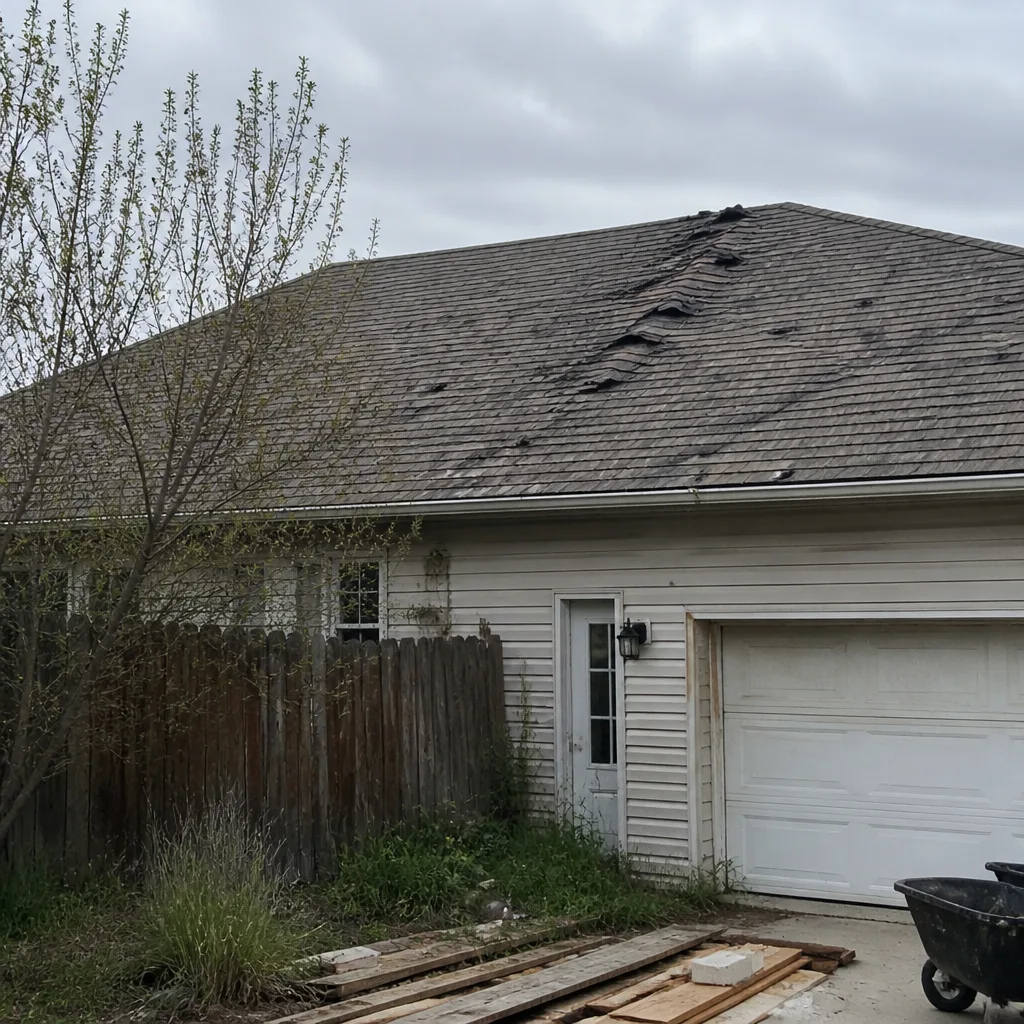 Before
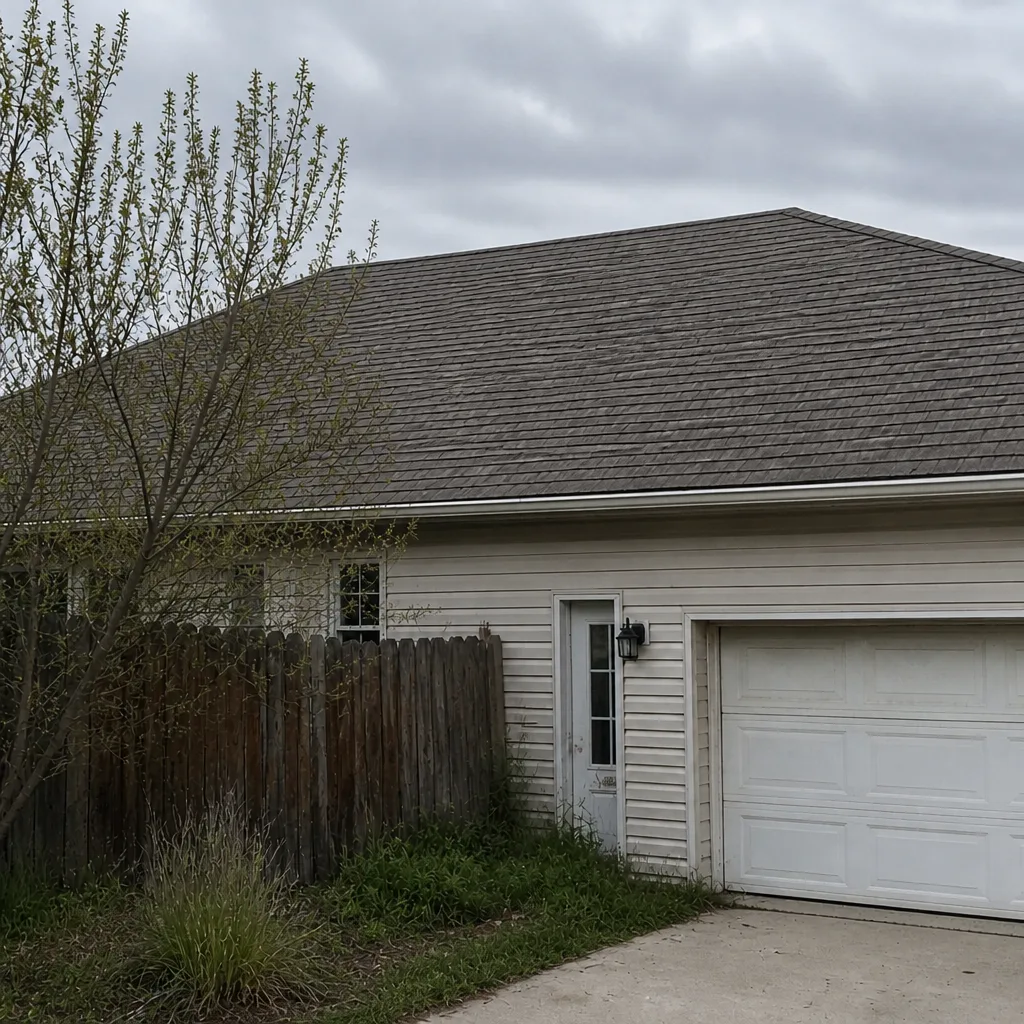 After
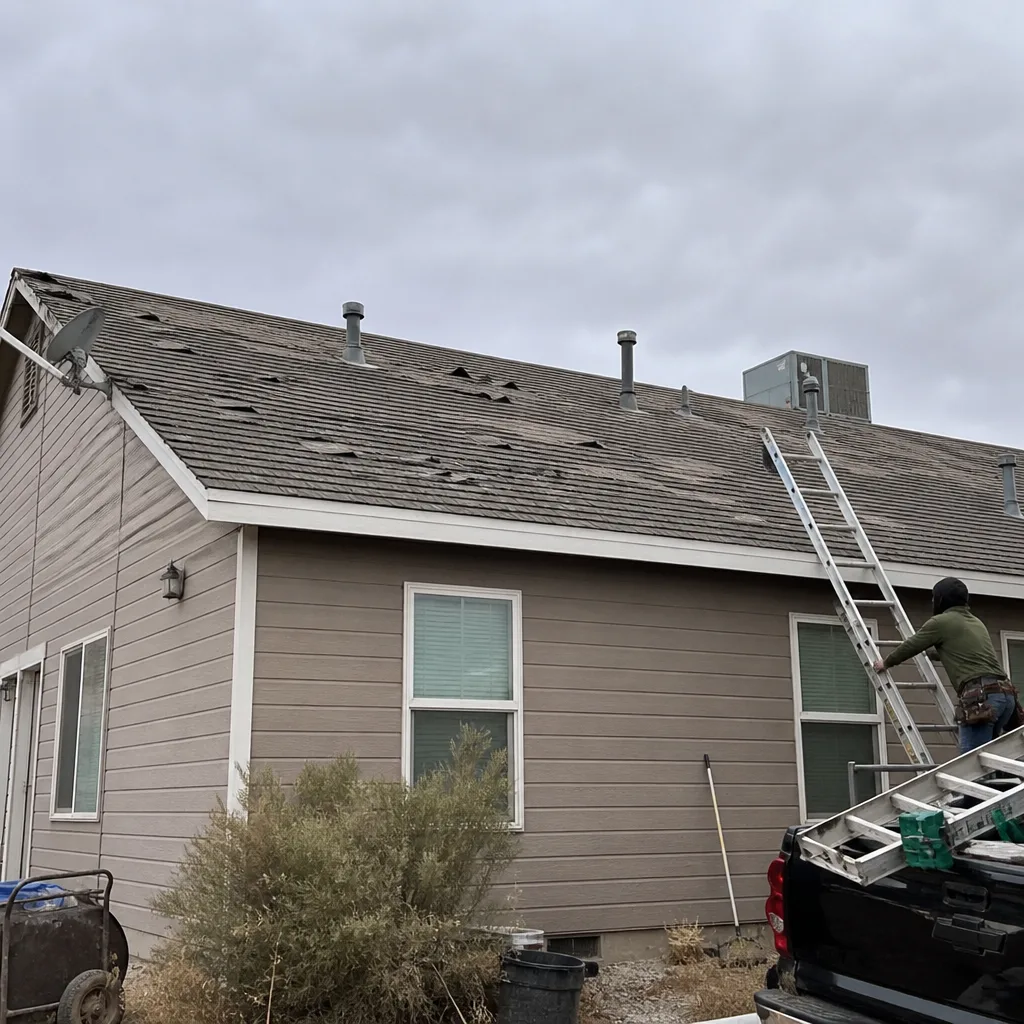 Before
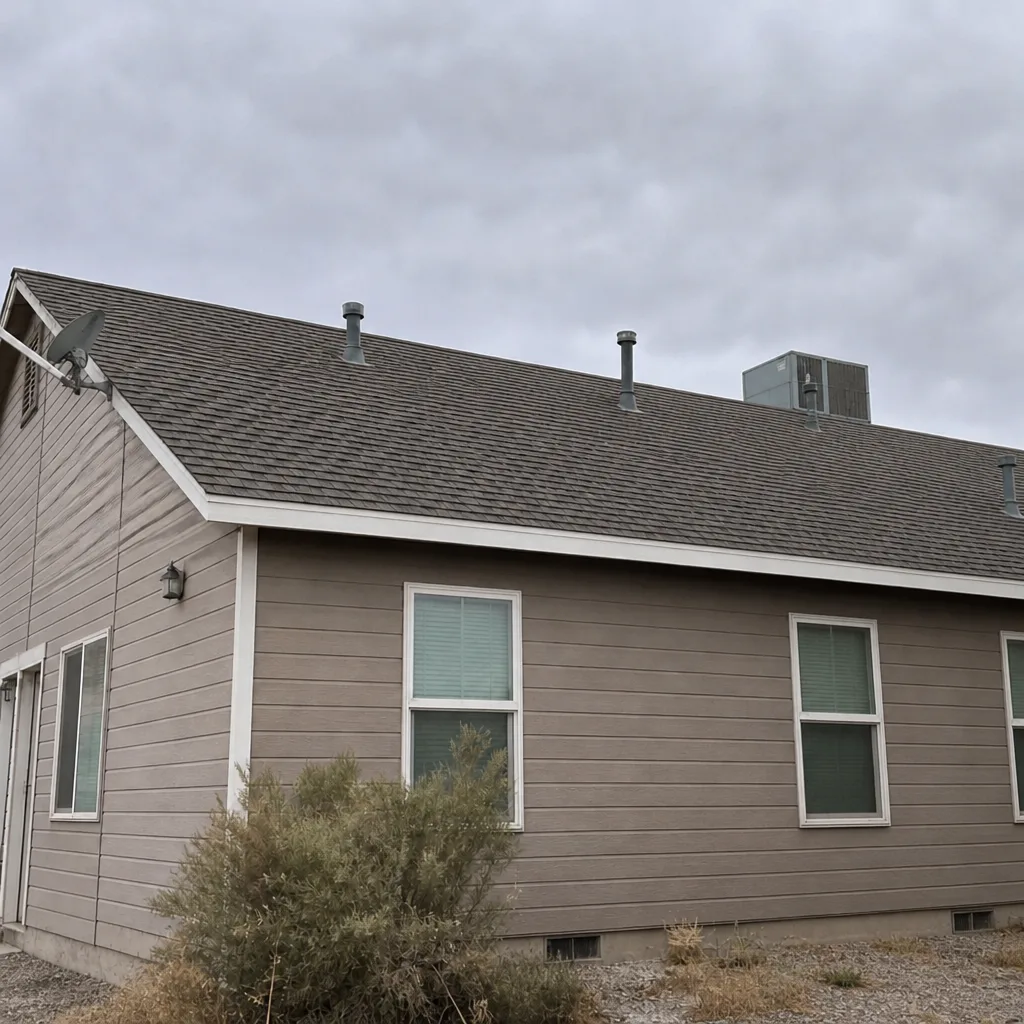 After
When to Call a Professional
Some roof problems need a trained eye and a roof-safe technique. Call a professional if you see any of the following: water staining on the ceiling or attic deck that returns after a repair, a leak you can’t trace from inside, soft or delaminating deck, daylight through a penetration or ridge gap, multiple failures at once, or any issue on a steep or high roof. Also call if your home is over twenty years old and you don’t have a photo-documented inspection on record. Ridgeline Roofing Co. Enterprise offers free estimates in Enterprise and a free second opinion on any written estimate you already hold. Call (844) 228-4119 – a live person answers, day or night.
Frequently Asked Questions
Most isolated roof repairs in Enterprise run a few hundred dollars for a single flashing or penetration fix, with larger repairs – valley work, multiple penetrations, or deck repair – landing in the low thousands. The honest answer is that cost depends entirely on what the symptom is telling us about the cause. A free estimate gives you a real number, and our 90-Day Done Right Promise backs the work. Call (844) 228-4119 for an exact quote – estimates are free.
Water travels under the roofing layers along sheathing and rafters before it finds a drip point, so the stain can sit 10 to 15 feet from the entry. That’s why tracing backward from the symptom, not patching above it, is the only reliable way to fix a leak once. If your patch keeps coming back, call (844) 228-4119 for a photo-documented inspection.
If the failure is isolated to one detail – a flashing, a boot, a small field repair – repair is usually the right call. If the same symptom returns, the shingles are brittle and losing granules across a wide area, or the attic deck is soft in more than one spot, that’s systemic underlayment failure and replacement is the honest answer. An inspection settles it. Call (844) 228-4119 to schedule a free one.
Yes. Roofing work that changes the structure or replaces a full roof typically requires a permit, and we handle it as part of the job so the finished work passes inspection. Local code enforcement in the Enterprise area is specific about what needs to be permitted on a replacement versus a repair – we confirm before we start. Call (844) 228-4119 and we’ll walk you through it.
No. The number on the written estimate is the number on the invoice. If the work reveals something we couldn’t see until we got into it, we stop and talk to you before touching anything else – no surprises, no change orders after the fact. Call (844) 228-4119 for a no-hassle upfront price.
Most single-point repairs are completed in a single visit. A flashing repair, a penetration boot, or a small valley patch is typically a few hours of work. Larger repairs that involve tearing out deck or chasing a systemic leak may run into a second day, and we tell you which before we start. Call (844) 228-4119 to schedule an estimate and get a real timeline for your roof.
The Bottom Line
Roof repair troubleshooting is really diagnosis, not patching. The symptom you see – a stain, a lifted shingle, a damp spot on the ceiling – is where the water exited, and the failure is almost always somewhere uphill of it. Learn the five failure categories – flashing, field shingles, valleys, penetrations, ridge – and their signatures, and you’ll know what kind of problem you’re looking at before you call anyone. The attic tells the rest of the story: staining, soft deck, and rust on nails point to whether this is a one-time fix or a systemic failure. A local roofer who reads symptoms and traces them to the cause will save you from paying twice for the same leak.
If you’ve been patching a leak and it keeps coming back, it’s time to stop guessing. Ridgeline Roofing Co. Enterprise has been standing behind local roofs since 1984, and every job is backed by our 90-Day Done Right Promise – if it isn’t right, we come back and make it right. Call (844) 228-4119 for a free estimate or a free second opinion on any written estimate. A live person answers every call, day or night.
Written by the team at Ridgeline Roofing Co. Enterprise.