
Last updated November 18, 2026
 Architectural shingles
 Metal roofing
 Tile roofing
 GAF
 Owens Corning
 Flat & low-slope
Free roof inspection with deck photos before we talk money - GAF and Owens Corning certified installation
Roof Repair Maintenance Checklist for Enterprise Homeowners
The most expensive roof repair we see in Enterprise every October isn’t storm damage. It’s deferred maintenance from June. A $400 flashing fix that sat through a Mojave summer turns into a $4,000 decking repair once the first hard rain finds the gap you didn’t know was there. The failure calendar out here is unforgiving: heat first, wind-driven rain second, sun again. This guide sequences your checks around that calendar so you’re inspecting the right thing at the right time of year, before small problems compound into replacement money. You’ll learn what fails first, what you can safely spot from the ground, and when it’s time to call.
Quick Answer
Enterprise homeowners should run a pre-monsoon roof check each May (flashing and sealant points fail first under wind-driven rain), a post-summer check each September (UV-driven granule loss and membrane brittleness), and a gutters-and-fascia cleanup tuned to desert landscaping debris. Document everything with dated photos to establish a baseline for any insurance claim, and leave boots-on-the-roof work to trained technicians.
Styles & brands we work with
- Architectural shingles
- Metal roofing
- Tile roofing
- GAF
- Owens Corning
- Flat & low-slope
Table of Contents
- Why Enterprise Roofs Fail on a Calendar, Not a Clock
- The May Pre-Monsoon Checklist: Five Points That Fail First
- The September Post-Summer Checklist: Catching UV Damage Early
- What You Can Check From the Ground vs. What Needs Boots on the Roof
- How to Document Roof Conditions With Dated Photos
- The Gutters-and-Fascia Sequence for Desert Landscaping Debris
- Common Mistakes to Avoid
- When to Call a Professional
Why Enterprise Roofs Fail on a Calendar, Not a Clock
Roofs don’t wear out evenly. They wear out in the order the weather hits them. In Enterprise, that order is unusually sharp. Summer afternoons push surface temperatures on dark shingles well past 150°F, then the night drops thirty or forty degrees. That daily expand-and-contract cycle dries out sealant faster than the manufacturer’s lab predicted. Then the July and August monsoon arrives and drives rain sideways into every seam the heat just loosened.
By the time a homeowner notices a stain on the ceiling in December, the failure usually started back in spring. This is why a generic “check your roof twice a year” reminder misses the point. The value isn’t in checking. It’s in checking the specific weak points at the specific season when they’re most likely to have gone bad.
We’ve watched this pattern repeat across the valley for a long time. The houses that age gracefully aren’t the ones with the most expensive shingles. They’re the ones where someone caught the dried sealant in May instead of discovering it as a leak in September. Our technicians have up to 10 years of experience, and the single most common thing that shortens a roof’s life here is missed timing, not missed quality.
Think of the year in three windows: a May pre-monsoon pass, a September post-summer pass, and a light winter check after the rain season ends. Everything below fits into that rhythm.
The May Pre-Monsoon Checklist: Five Points That Fail First
Wind-driven rain doesn’t find the middle of a shingle field. It finds the edges, the penetrations, and the transitions. Before the monsoon hits, walk these five points with binoculars and, where safe, a close look from a ladder at the eaves. These are the flashing and sealant spots that go first in Enterprise, in rough order of how often we find them compromised.
- Pipe boots and vent collars. The rubber collar around plumbing vents cracks from UV exposure within a handful of years. A split collar lets water run straight down the pipe into the attic. This is the single most frequent pre-monsoon failure point we find.
- Chimney and sidewall flashing. Where the roof plane meets a vertical wall or chimney, the metal flashing and its counter-flashing rely on sealant that dries and pulls away. Wind-driven rain from the east pushes hard against these seams.
- Valley seams. The valleys where two roof planes meet carry the most water during a storm. Look for lifted shingle edges or exposed metal at the center of the valley.
- Skylight and vent transitions. Any hole cut into the roof needs a sealed curb. Sealant around skylight frames shrinks and crazes more here than in cooler climates.
- Nail pops and lifted tabs. Heat-driven movement backs nails out and lifts shingle tabs. A backed-out nail is a future leak and a future rusted deck board underneath it.
If you find dried or cracked sealant at any of these points, that’s a repair, not a replacement. Catching them in May means the fix happens in dry, cool weather, on a schedule, instead of in a panic during the first storm. For a closer look at how these repairs are handled, our Roof Repair in Enterprise page walks through the process.
The September Post-Summer Checklist: Catching UV Damage Early
Summer doesn’t just wear out sealant. High-desert sun eats the shingle surface itself. Asphalt shingles are coated in mineral granules that shield the asphalt underneath from UV. Once those granules wear away, the asphalt cures, cracks, and stops shedding water. In Enterprise, the UV load is severe enough that a shingle rated for a 25-year life can show real granule loss a good deal sooner if the surface stays exposed to that sun all summer.
In September, once the hardest heat has passed, look for these signs. They tell you how much of the shingle’s protective surface survived the season.
- Granule loss at the downslope edge and in valleys. Granules collect in the gutters and at the base of the roof. Heavy accumulation means the shingles upslope are shedding their armor.
- Brittleness and curling. Shingle tabs that curl at the corners or feel crisp rather than flexible have lost the oils that keep them pliable. Curled tabs catch wind and tear.
- Bald or shiny patches. Where granules are gone, the asphalt underneath looks slick and dark. Those thin spots are where the next leak begins.
- Membrane checking on flat or low-slope sections. If any part of the roof is a rolled or single-ply membrane, look for fine cracks, alligatoring, and seams that have lifted. Summer heat stresses flat membranes more than any other surface.
- Interior clues. Check the attic underside and ceiling for new stains. A stain in September often means summer sun opened a spot the spring check missed.
When we install replacement shingles from GAF, CertainTeed, or Owens Corning, we match the product’s rated UV performance to the actual sun exposure on each roof plane. That’s part of quoting the job right. The same material is not the right answer on every slope.
What You Can Check From the Ground vs. What Needs Boots on the Roof
Walking a roof in Enterprise heat, on steep or brittle surfaces, is dangerous work. Falls from height are the leading cause of serious injury in residential construction, and a roof that’s been baking in the sun for twenty years can be more fragile than it looks. An honest maintenance plan keeps most of the work at ground level, where you’re safe and can actually see more.
Here’s the split, plainly stated.
Safe from the ground (use binoculars and a camera with zoom):
- Overall shingle color and any obvious bald or blotchy areas
- Curled, lifted, or missing tabs on the lower roof planes
- Visible valleys, ridges, and the flashing around the chimney, even if only partially visible
- Gutters, downspouts, fascia boards, and soffit condition
- Granule accumulation in gutters and at the roof edge
Requires a trained professional on the roof:
- Lifting a shingle tab to inspect the underlayment and deck below
- Testing whether a sealant joint has actually failed
- Checking valley metal, underlayment, and decking integrity
- Inspecting pipe boots and vent collars up close
- Any spot where a repair is needed at height
We flag this because a background-checked, uniformed technician uses real fall protection and knows how to move across a hot roof without cracking brittle shingles. If your inspection turns up something at height you can’t safely reach, that’s the moment to bring someone in, not to borrow a ladder and hope. Our Ridgeline Roofing Co. Enterprise home page lays out the full scope of what we handle.
How to Document Roof Conditions With Dated Photos
A photo with a date on it is worth more than a memory. When a monsoon leak or a wind event leads to an insurance claim, the difference between a smooth claim and a contested one is often whether you have a baseline record showing the roof’s condition before the event. Most homeowners never build one. It takes about fifteen minutes twice a year.
Here’s how to do it in a way that holds up.
- Pick the same vantage points each time. Choose three or four spots around your house and photograph from the same place every season. Consistency lets you see change instead of guessing at it.
- Get timestamps. Your phone stamps every photo. Keep them in one album or folder named by date so you can find “May 2026 pre-monsoon” in seconds.
- Photograph the bad with the good. A claim is helped by proving what was fine before the storm. Shoot healthy sections too, not just problem areas.
- Capture up-close detail where you can safely. Zoom on a lifting tab or a cracked sealant joint. Wide shots show context; close-ups show cause.
- Keep receipts for past repairs. A documented flashing repair from three years ago tells an adjuster the roof was maintained.
When a professional inspection is warranted, photo-documented work matters just as much. A proper inspection with dated photos taken from your actual roof gives you the same baseline a homeowner can’t reach from the ground. That record is why we photograph every inspection.
The Gutters-and-Fascia Sequence for Desert Landscaping Debris
Desert landscaping loads gutters differently than a lawn does. Instead of wet leaves, you get dry debris: crushed granite that migrates onto the roof and washes downhill, palm frond dust, mesquite and palo verde litter, and shrub trimmings that collect in the channel and dam the flow. After a monsoon rain, that debris turns into a saturated plug, and the water backs up under the roof edge, rots the fascia, and works its way into the wall.
The fix is a sequence, and the order matters. Clean the gutters before inspecting the fascia, because standing water and debris hide the very rot you’re looking for.
- Clear the gutters and downspouts. Remove the dry debris before the pre-monsoon rain can pack it down. Flush the downspouts to confirm they flow.
- Check the gutter slope. Gutters that sag or pull away from the fascia hold water instead of shedding it. Fasteners loosen in heat and wind.
- Inspect the fascia behind and below the gutter line. Look for soft wood, peeling paint, and staining that marks where water has been backing up. This is where granule damage and gutter failure cost real money.
- Clear the roof-to-gutter edge. Debris trapped where the roof meets the gutter holds moisture against the fascia board year round.
- Add gutter protection if the debris load is heavy. A screen or guard that suits desert litter cuts how often you’re up on a ladder. We carry gutter and accessory options tuned for this exactly.
For homes with complex rooflines, tile, or specialty profiles, our Specialty Roofing in Enterprise team can advise on gutters and drip edge that fit the material.
Common Mistakes to Avoid
- Waiting for a leak to schedule maintenance. A leak means the problem has already travelled through the deck. In Enterprise, by the time water shows on the ceiling, you’re often paying for decking, not just a repair.
- Inspecting only in spring and ignoring September. Granule loss and membrane brittleness from summer sun are invisible in May and obvious by September. Miss the fall check and you carry the damage into the next rainy season.
- Treating dried sealant as “good enough.” A cracked bead looks minor until a sideways monsoon rain finds it. Sealant is the cheapest thing on the roof to fix and one of the most expensive things to ignore.
- Piling desert debris on the roof and letting it sit. Rock landscaping moves onto the roof and holds moisture against shingles and flashing. Clearing it is part of the roof’s care, not just the yard’s.
- Climbing brittle shingles in summer heat. A roof that’s been baking all afternoon can crack underfoot, and the fall risk on a steep plane is real. Photography from the ground catches most of what matters.
- Skipping the photo baseline. Without dated photos, an insurance claim becomes a dispute over what the roof looked like before the storm. Fifteen minutes twice a year prevents that argument.
- Hiring a truck that won’t be here next spring. Storm-chasers sweep through after big weather and disappear. When their repair fails, there’s no one to call. A square deal is only a square deal if the company is still in town.
See the difference
 Before
 After
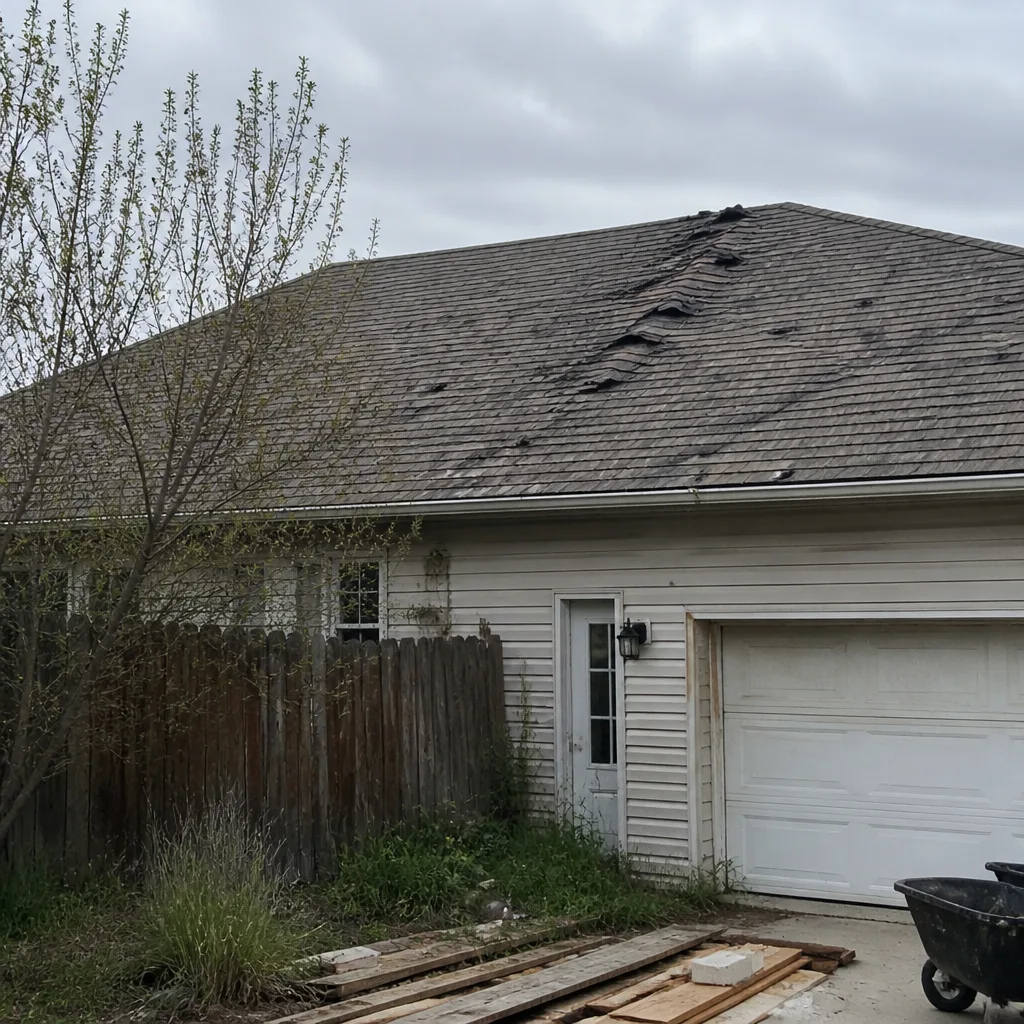 Before
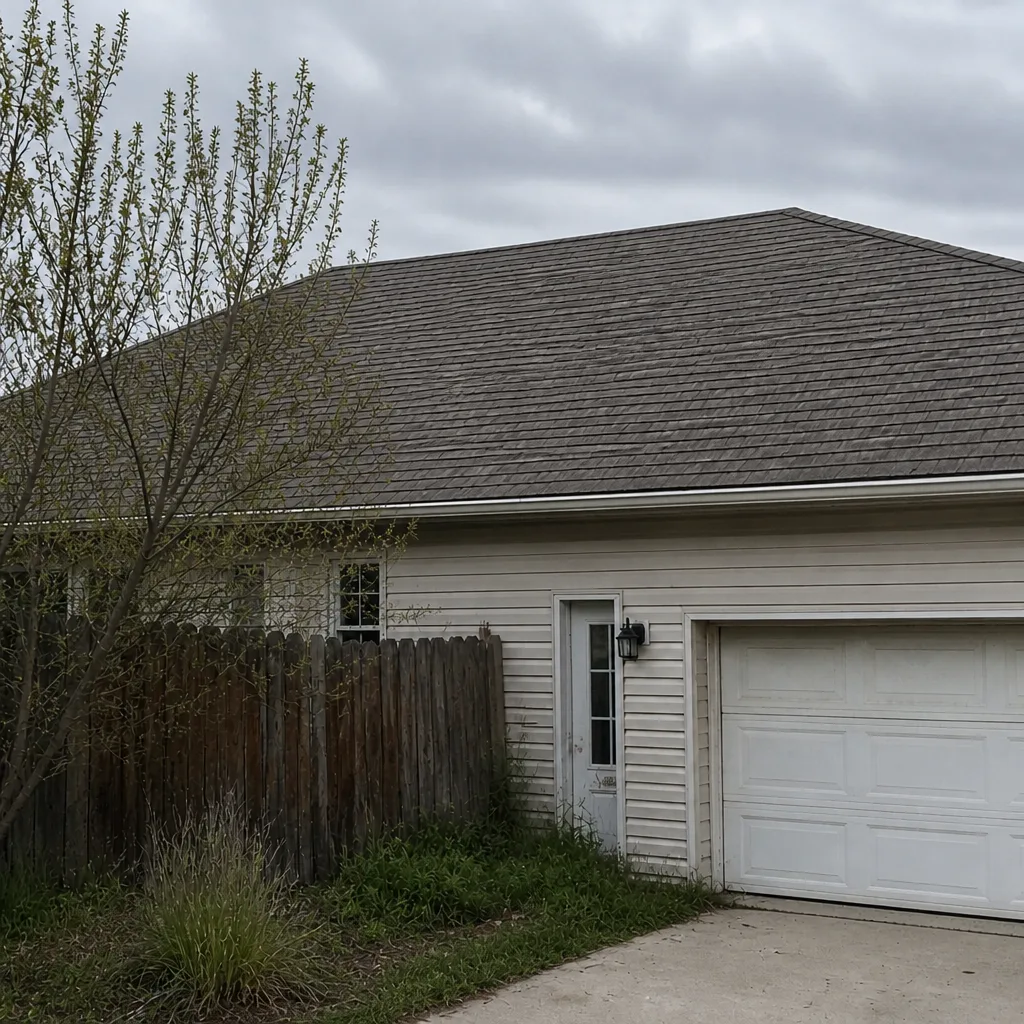 After
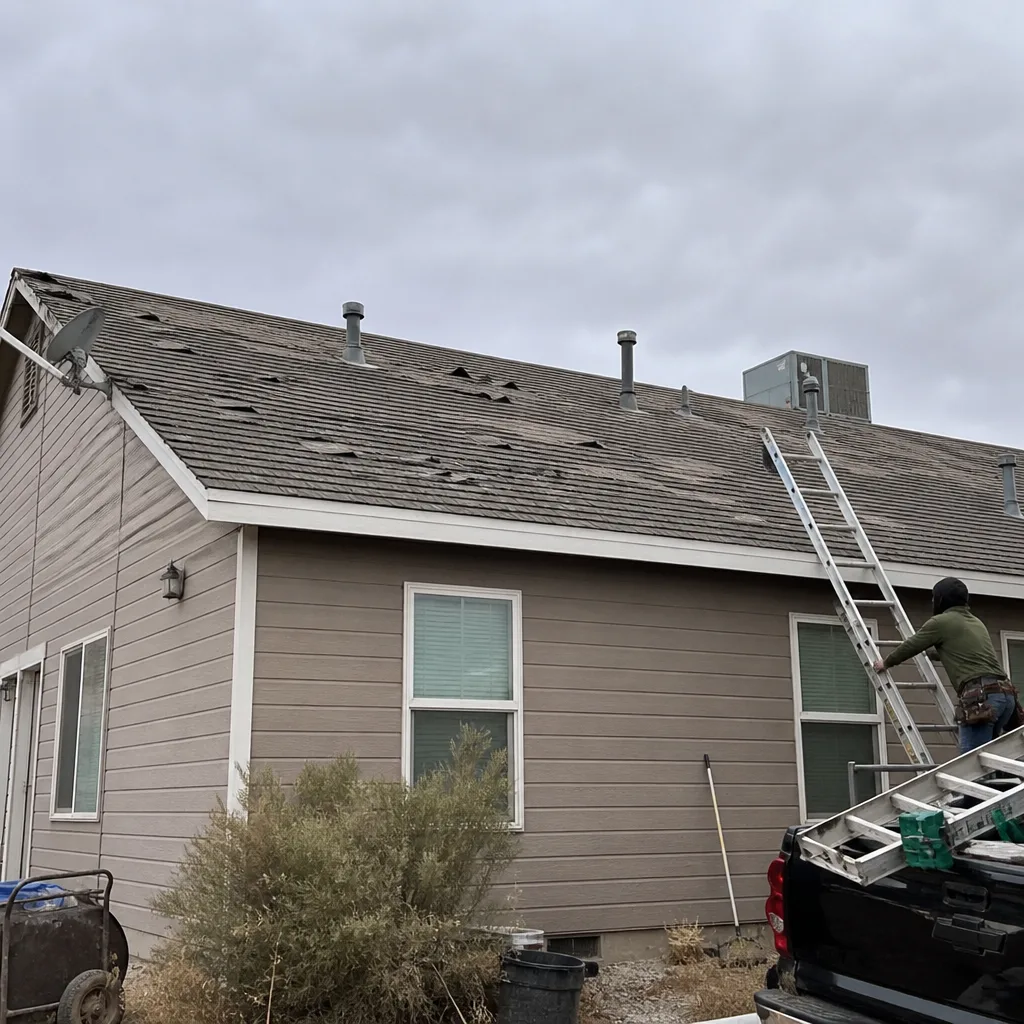 Before
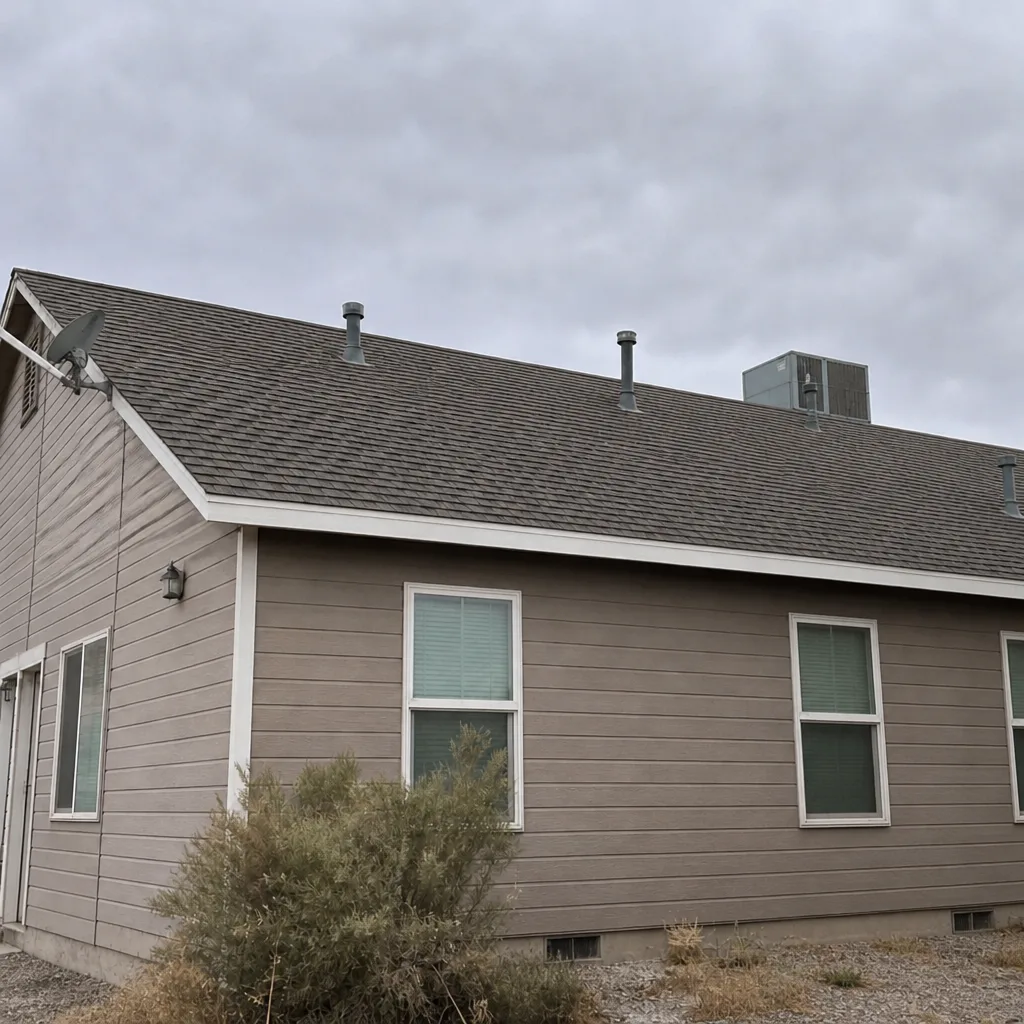 After
When to Call a Professional
Some conditions are maintenance. Others are requests for a trained professional, and the difference matters for your safety and your wallet. Call us when you find any of these: a crack you can see in the attic decking, staining or soft spots in the ceiling or walls, a missing or split pipe boot, lifted or torn shingles after wind, a valley where the metal is exposed, or a fascia board that’s soft behind the gutter. Call after any hail event or wind gust that sends debris across the roof. And call if your September check turned up bald patches, curling, or heavy granule loss, because that’s the point where repair and replacement need an honest conversation.
Ridgeline Roofing Co. Enterprise offers free estimates in Enterprise, with photo-documented inspections and no-hassle upfront pricing. Call (844) 228-4119 to schedule yours. When the estimate says one number, the invoice says the same one, and it’s backed by our written 90-Day Done Right Promise.
Frequently Asked Questions
Twice a year ideally, once in May before the monsoon and once in September after summer heat. Enterprise’s combination of high UV and wind-driven rain means roof components age on a seasonal cycle, so those two checkpoints catch most problems before they compound.
Failed pipe boots and dried flashing sealant are the most common failures we find. UV exposure cracks the rubber collars and dries the sealant joints, and the monsoon rain then finds them. Both are inexpensive to catch early and costly to ignore. Call (844) 228-4119 for a free inspection and quote.
You can safely handle the ground-level portion with binoculars, a camera, and a look at the gutters from a ladder. What you should not do is walk a steep, hot roof to inspect at height. That work belongs to a trained, insured technician with fall protection. Estimates are free.
Not with us. We give no-hassle upfront pricing, and the number on the estimate is the number on the invoice. If additional damage turns up once a repair is open, we stop and discuss it with you before doing anything that costs more.
It extends roof life by catching the small, cheap failures before they reach the deck. Replacing a split boot or resealing a flashing joint is minor. A missed one that rots decking through a summer is not. Timing is what separates the two.
Inspect from the ground for missing shingles, lifted tabs, and debris, then take dated photos. If anything looks wrong, call for a free second opinion on any written estimate. Our phones are answered by a live person around the clock, including nights, weekends, and during storms.
The Bottom Line
Enterprise roofs fail on a calendar, and the checklist that works is sequenced to it. Run a May pre-monsoon pass on the five flashing and sealant points, a September post-summer pass for granule loss and brittleness, and a gutters-and-fascia cleanup tuned to desert debris. Stay on the ground with binoculars, keep dated photos of the whole roof as a baseline, and leave the at-height work to trained people. Do the right check at the right time, and a $400 repair stays a $400 repair instead of becoming a replacement. Call (844) 228-4119 for a free estimate. Explore our Roof Replacement & Installation in Enterprise options if the September check makes that conversation worth having.
Written by the team at Ridgeline Roofing Co. Enterprise.