
 Metal roofing
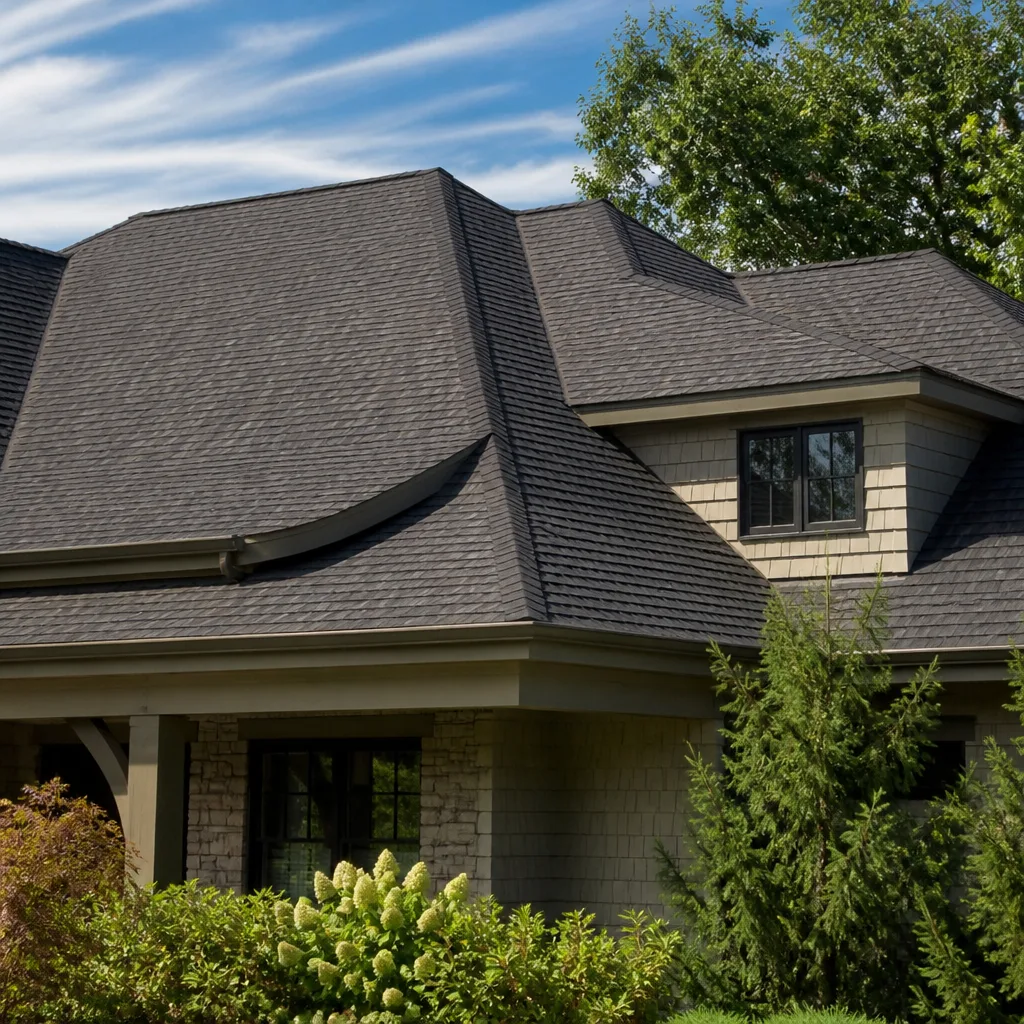 Architectural shingles
 Tile roofing
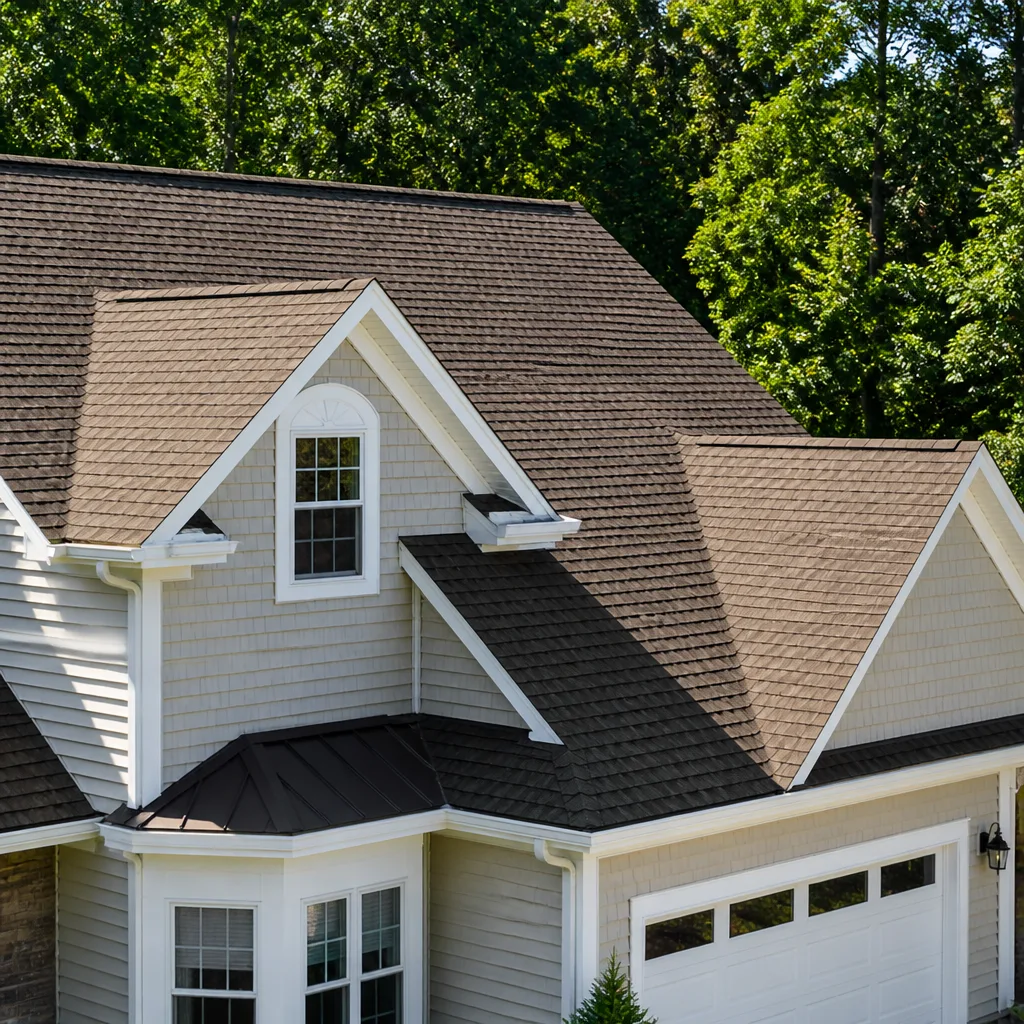 GAF
 Owens Corning
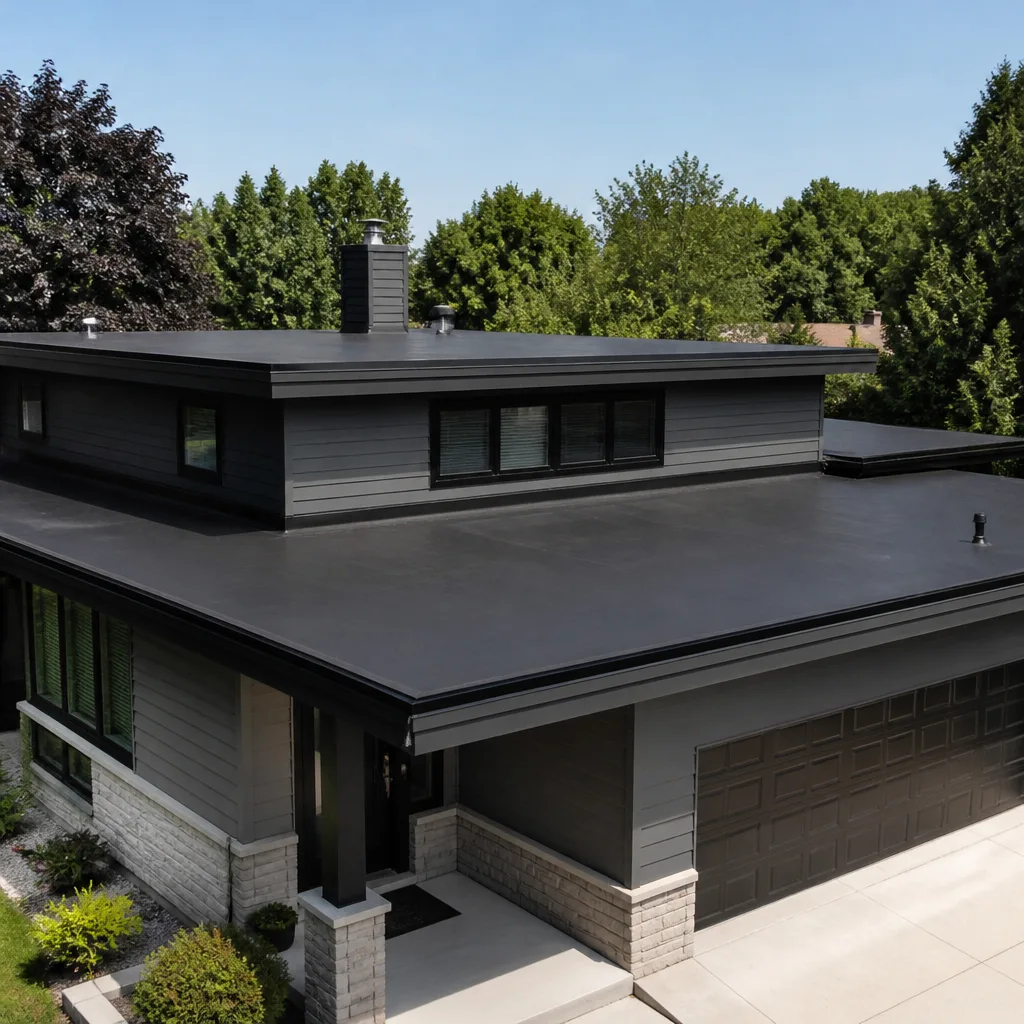 Flat & low-slope
Free roof inspection with deck photos before we talk money - GAF and Owens Corning certified installation
Styles & brands we work with
- Architectural shingles
- Metal roofing
- Tile roofing
- GAF
- Owens Corning
- Flat & low-slope
See the difference
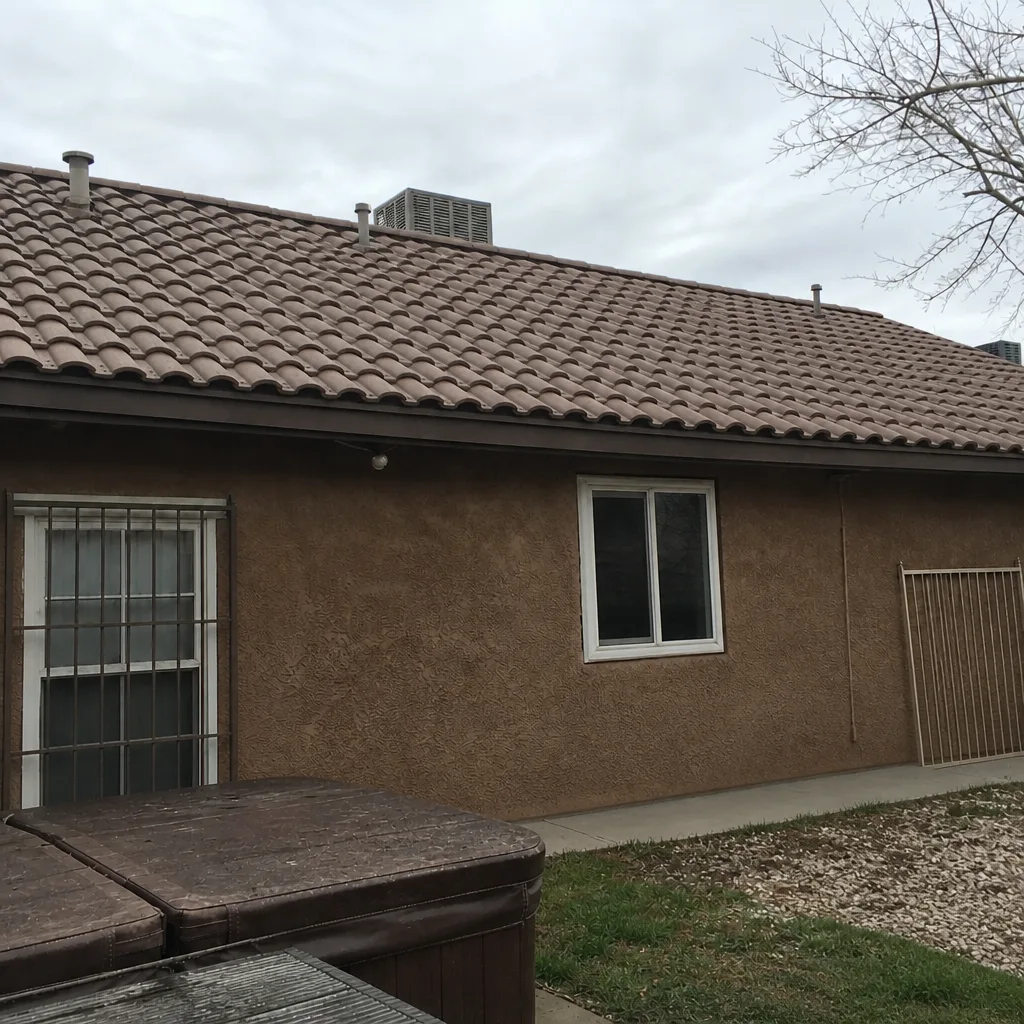
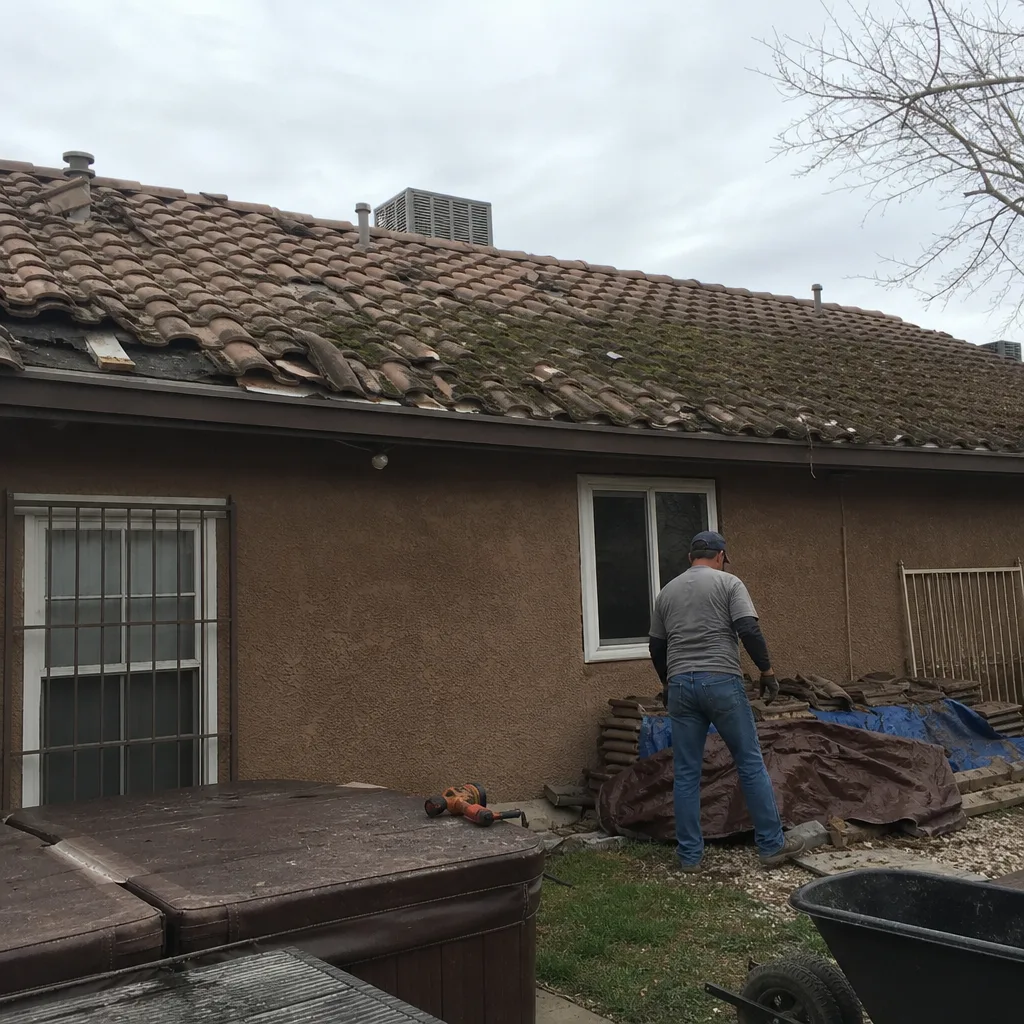 Before
 After
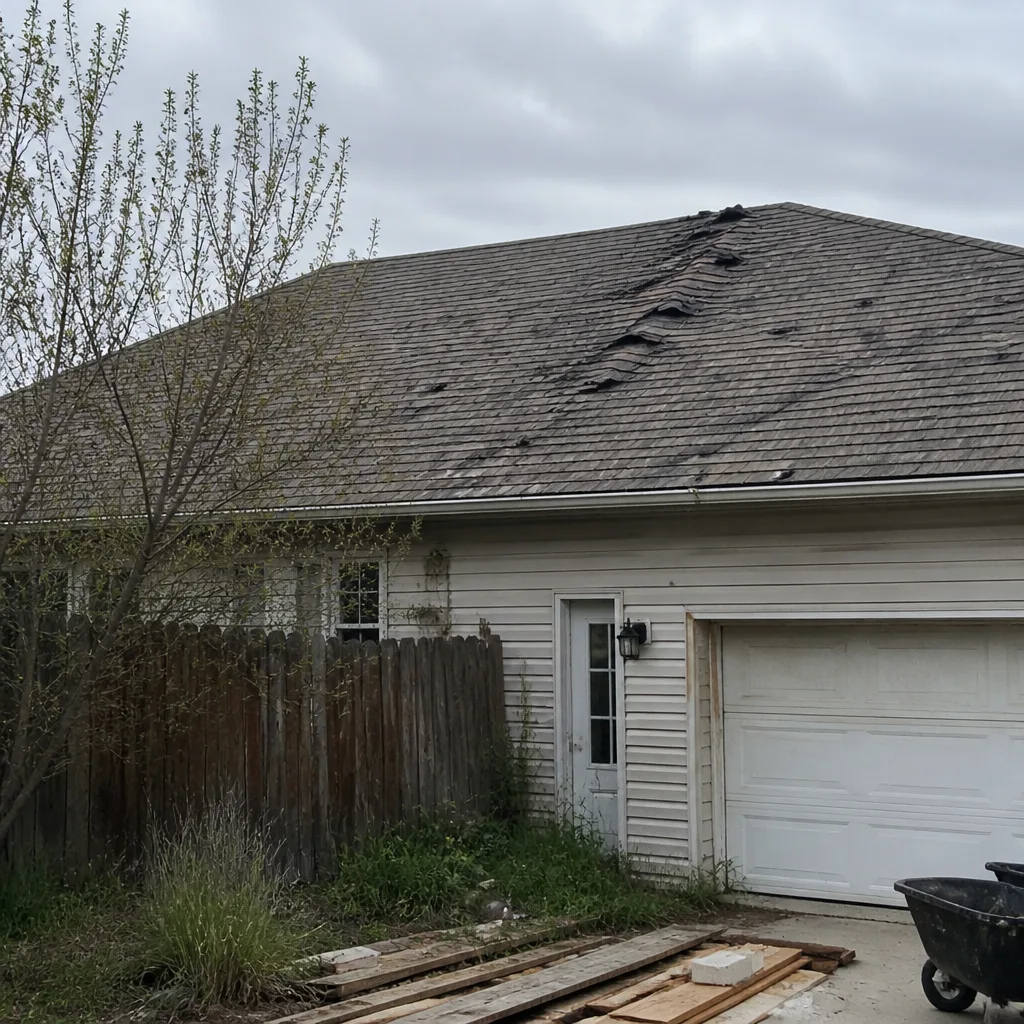 Before
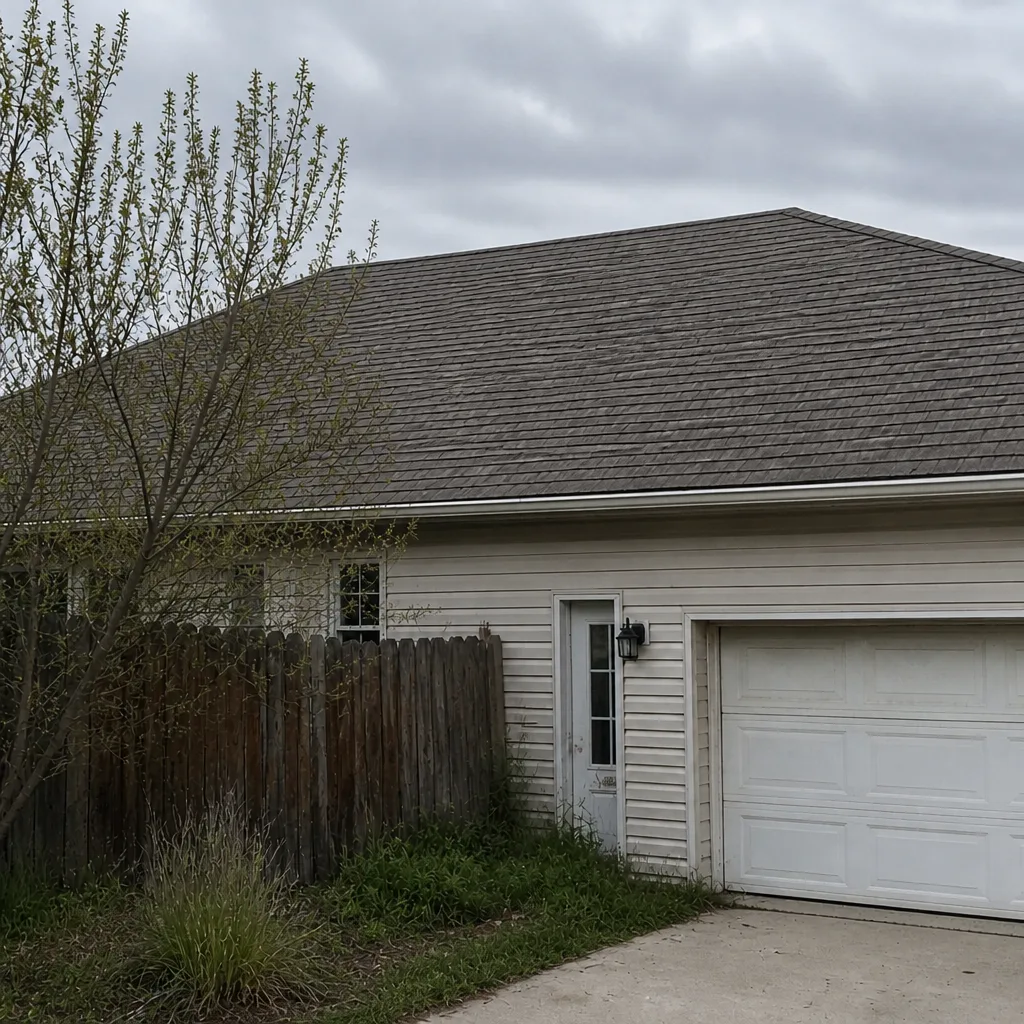 After
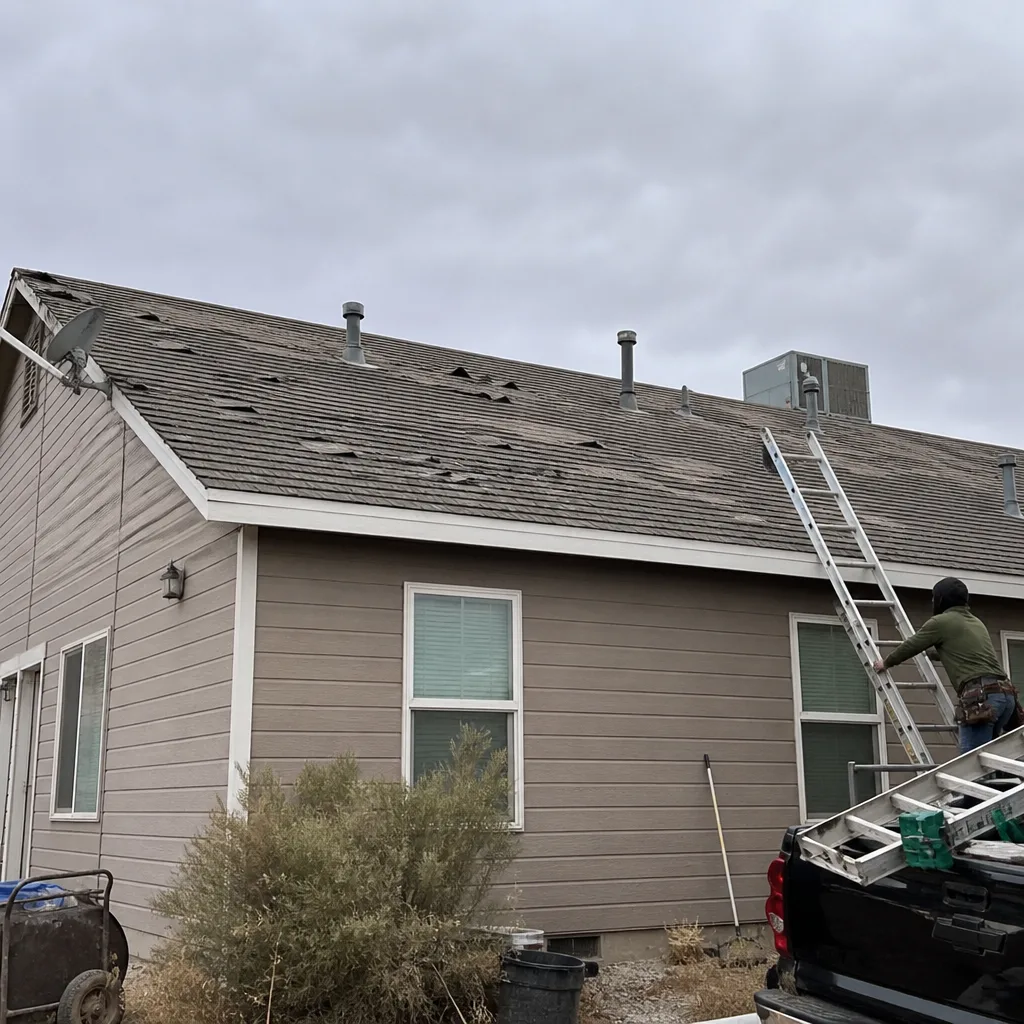 Before
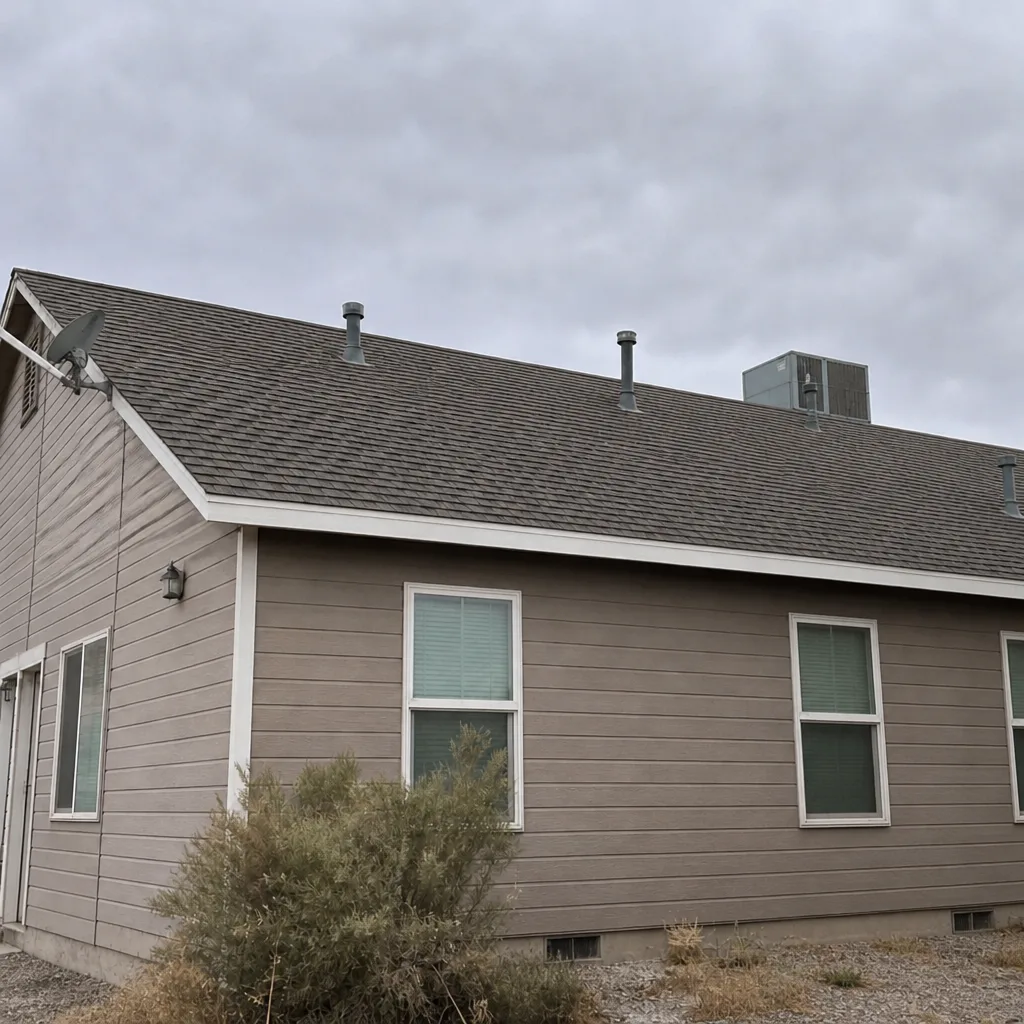 After
What Causes Roof Leaks in Enterprise, NV? The Answer Starts With Your Roof Type
The most common cause of roof leaks in Enterprise, NV depends on what’s overhead: on the community’s concrete tile roofs, failed underlayment beneath intact tile; on the newer low-slope stucco homes, an elastomeric coating that has worn through and left the foam underneath sponging up water; and on both systems, wind-driven gravel from the McCullough Range choking valleys and scuppers. If your ceiling has a stain after a storm, the roof has usually been leaking for a while. We can put eyes on it today – call Ridgeline Roofing Co. Enterprise at (844) 228-4119 and a live person will answer, even at 11 p.m.
What follows is the honest version of what we find up there, why it happens here more than in other parts of the valley, and how to tell which failure you’re likely looking at.
If Your Home Was Built After 2005, Start With the Foam
Many of Enterprise’s newer subdivisions sit at the south edge of the Las Vegas Valley, built out from the 1990s through the 2010s, and a growing share of them are low-slope spray-foam roofs under stucco cladding. On those roofs, the leak almost never starts with shingles, flashing, or gutters. It starts with a coating that was designed to be reapplied every 5 to 7 years and almost never is.
Here’s what that looks like. The foam itself is not waterproof. It relies on a topcoat, usually acrylic or silicone, to shed water. Once that coating thins enough to expose the foam cells, water goes in, not off, and the foam holds it against the deck. You can’t see it from the driveway, and you often can’t see it from the roof either until the coating has chalked and worn in patches.
Two things here speed up the schedule. First, Enterprise gets 300-plus days of hard sun a year, and manufacturer lab ratings for elastomeric coatings are tested in milder climates. Our UV load ages a coating faster than the label suggests. Second, wind-driven desert gravel off the McCullough Range scours the surface the way sandpaper works, and it does it in a predictable path, southwest to northeast across the roof plane, accelerating the thinning on the exact faces that get the most exposure. Homeowners who moved here from wetter climates are understandably surprised that a “newer” roof can leak by year eight.
On Concrete Tile Roofs, the Tile Is Rarely the Problem
Most Enterprise roofs are original or first-replacement concrete tile, with a smaller share of clay. Tile is a good roof. It also hides its own condition, because the tile is just the rain screen – the waterproofing is the underlayment underneath. When a tile roof leaks, the tile is usually fine. The underlayment has aged out under two decades of desert sun, and water has been tracking down the decking for one or more rain cycles before anyone notices a stain inside.
After a monsoon gust off the mountains, we routinely find whole ridges of concrete tile flipped, with the underlayment exposed to the sky. That’s a known pattern in Enterprise because of where the community sits at the base of the range, and it’s one you don’t see as often in older, denser parts of the valley. Rare but damaging freeze events crack tile and sealant too, which opens small entry points that only show up months later.
Key Takeaways
- Tile roofs leak through failed underlayment, not the tile itself. A visual check from the ground tells you nothing about underlayment condition.
- Foam roofs leak when the elastomeric topcoat wears through. It’s invisible at the surface and needs a physical probe to assess.
- Gravel in valley pans and scuppers backs water up under tile edges during monsoon downbursts – a repeated pattern we document with photos.
- Roof age, not roof appearance, is the best early warning. Original Enterprise roofs built in the 1990s are at or past their underlayment’s service life.
Valley Pans, Scuppers, and the Gravel Problem
Every valley on a tile roof has a pan – the metal channel where two roof planes meet – and the flashing laps there are the weakest seal on the roof. In Enterprise, wind-driven gravel collects in those pans and in the scuppers, and during a monsoon downburst the water can’t drain fast enough. It backs up over the tile edges and goes straight under the flashing lap, right where the seal is thinnest.
The failure is repeatable enough that our crews photograph it on inspection after inspection. If you’ve had a leak in the same spot three or four times, you almost certainly have gravel accumulation in a pan or a scupper that’s never been cleared, not a mystery crack.
What a leak inspection actually costs
| Service | Typical Enterprise Range |
|---|---|
| Roof inspection with photo documentation | No-charge with a scheduled repair; ask when you call |
| Clearing and resealing a valley pan or scupper | $250 – $650 |
| Spot underlayment repair under tile | $450 – $1,200 |
| Re-coating a foam roof (elastomeric) | $1,800 – $4,500 depending on square footage and coats |
| Full foam re-coat with seam and penetration sealing | $3,500 – $7,000 |
Those ranges are real for the Enterprise market, and they’re one reason a re-coat on a foam roof, done before the foam itself is saturated, is a good deal cheaper than replacing decking that’s been wet for a season. The number on the estimate is the number on the invoice. No surprises, and no upsell in the driveway.
Why It’s Worth Getting Eyes on the Roof Within Hours of a Storm
Most calls we get about a ceiling stain come at night, after the rain has already stopped. A homeowner hears a drip at 11 p.m. and doesn’t know whether it’ll be there in the morning. That’s why our phones are answered by a live person 24 hours a day, seven days a week, including through a storm. There’s no voicemail tree and no callback window.
Getting a technician on the roof within hours of a storm is the difference between a coating repair and a deck replacement. A wet foam roof or a wet underlayment has a short window before the damage spreads. Our technicians are background-checked, arrive in uniform, and document every inspection with photos taken from your actual roof, so you see what they see. Our technicians have up to 10 years of experience, and every job is backed by our written 90-Day Done Right Promise – if it’s not right, we come back and make it right, no arguing, no paperwork runaround.
We’ve also spent long enough in this community to have watched the local foam roof stock age into its first coating failures. Ridgeline Roofing Co. Enterprise was founded in 1984, and we’re still here because we treat every job like we’ll be in town next spring.
Signs You’re Looking at a Roof Leak, Not a Plumbing Problem
Before you call, a quick check of the interior helps narrow it down:
- A brown ring or stain on the ceiling, especially one that grows or darkens after rain
- Water spots that appear near a valley line, a skylight, or a chimney penetration
- Blistering or peeling paint on interior ceilings
- Damp, musty smell in an interior room with no plumbing overhead
- Sunlight visible through the roof decking in the attic
If it’s a plumbing leak, the stain usually shows up under a bathroom or kitchen even in dry weather. A roof leak, by contrast, gets measurably worse after rain. If you’ve confirmed the pattern is rain-driven, the roof is the place to look. Our team handles Roof Repair as our core service, and a photo-documented inspection is the first step in every case.
If you’d rather not climb up and guess, we don’t blame you – that’s not a job for inexperienced eyes, especially on a foam roof where a bad probe can open a hole that wasn’t there. Our Roof Repair in Enterprise team is the group that handles these calls, and they can usually be at your door within the day. Start at the home page to see everything we offer.
FAQs
UV-degraded elastomeric coating on spray-foam roofs, and aged-out underlayment on concrete tile roofs. Enterprise gets more than 300 days of hard sun a year, and that UV load wears out coatings and underlayment faster than manufacturer lab ratings predict. If you’re on a foam roof built in the last 20 years and the coating hasn’t been re-applied, that’s the first place to look. Call (844) 228-4119 for an exact assessment; inspections are documented with photos.
You almost certainly can’t tell from the ground, because the tile hides the underlayment. The tile is the rain screen; the underlayment underneath is what actually sheds water. Once underlayment has aged out, water tracks down the decking for one or more rain cycles before you see a stain inside. A photo-documented inspection that lifts sample tiles is the only way to know. Call (844) 228-4119 to schedule one.
Yes, and it’s almost always cheaper than replacement if the foam itself hasn’t absorbed water yet. A proper re-coat with an acrylic or silicone elastomeric runs roughly $1,800 to $7,000 depending on square footage and the number of coats. If the foam is saturated, re-coating alone won’t fix it, which is why getting eyes on the roof early matters. Call (844) 228-4119 for a free estimate before the next monsoon.
Yes, if water is actively coming in. A live person answers our phone 24/7, including after a monsoon, so you’re not sleeping on a spreading stain. Getting a technician on the roof within hours of a storm stops a coating or underlayment failure from becoming a deck replacement. Call (844) 228-4119 and someone will pick up.
If You’d Rather Have It Looked At
You don’t have to diagnose this yourself. Ridgeline Roofing Co. Enterprise offers a no-pressure assessment in Enterprise – a technician on your actual roof, photos to show you what’s happening, and a straight number for the fix. Call (844) 228-4119 for a free estimate.
Written by the team at Ridgeline Roofing Co. Enterprise, serving Enterprise, NV.