
 Metal roofing
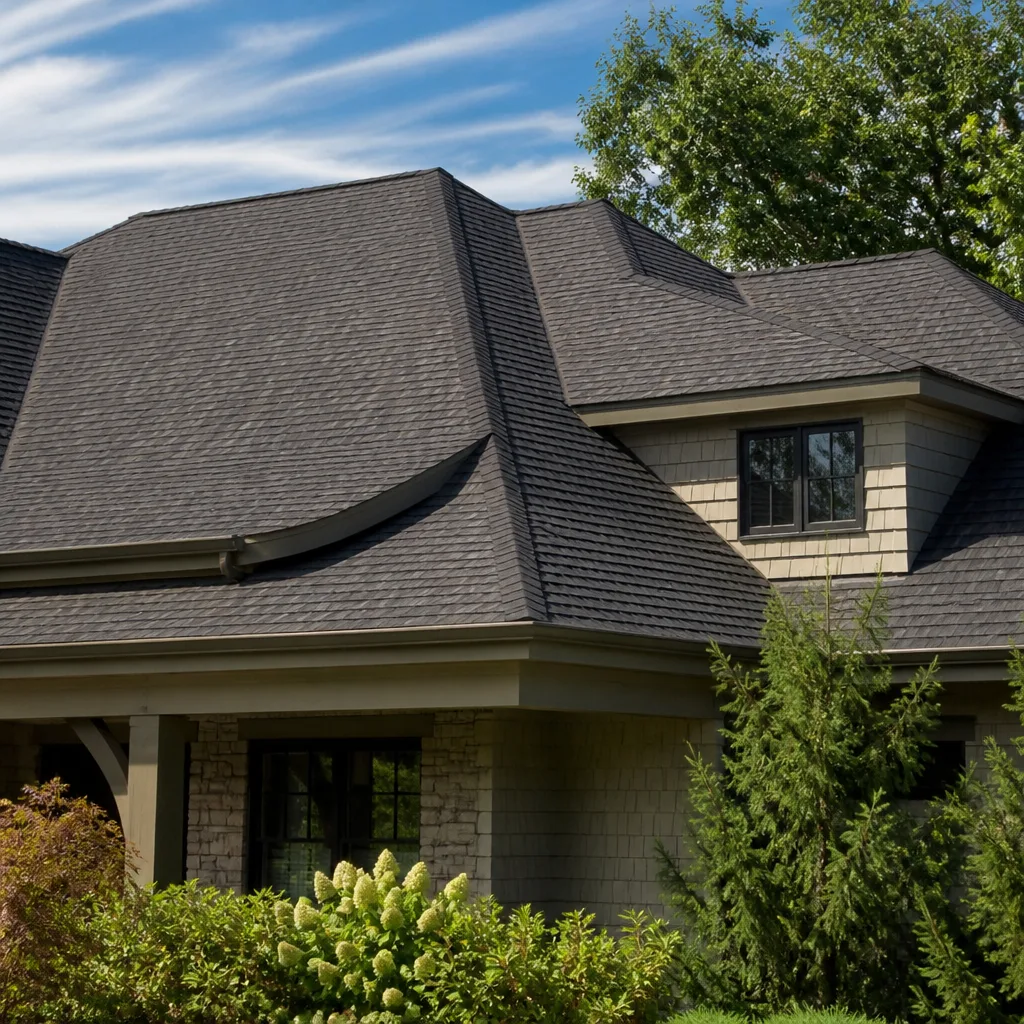 Architectural shingles
 Tile roofing
 GAF
 Owens Corning
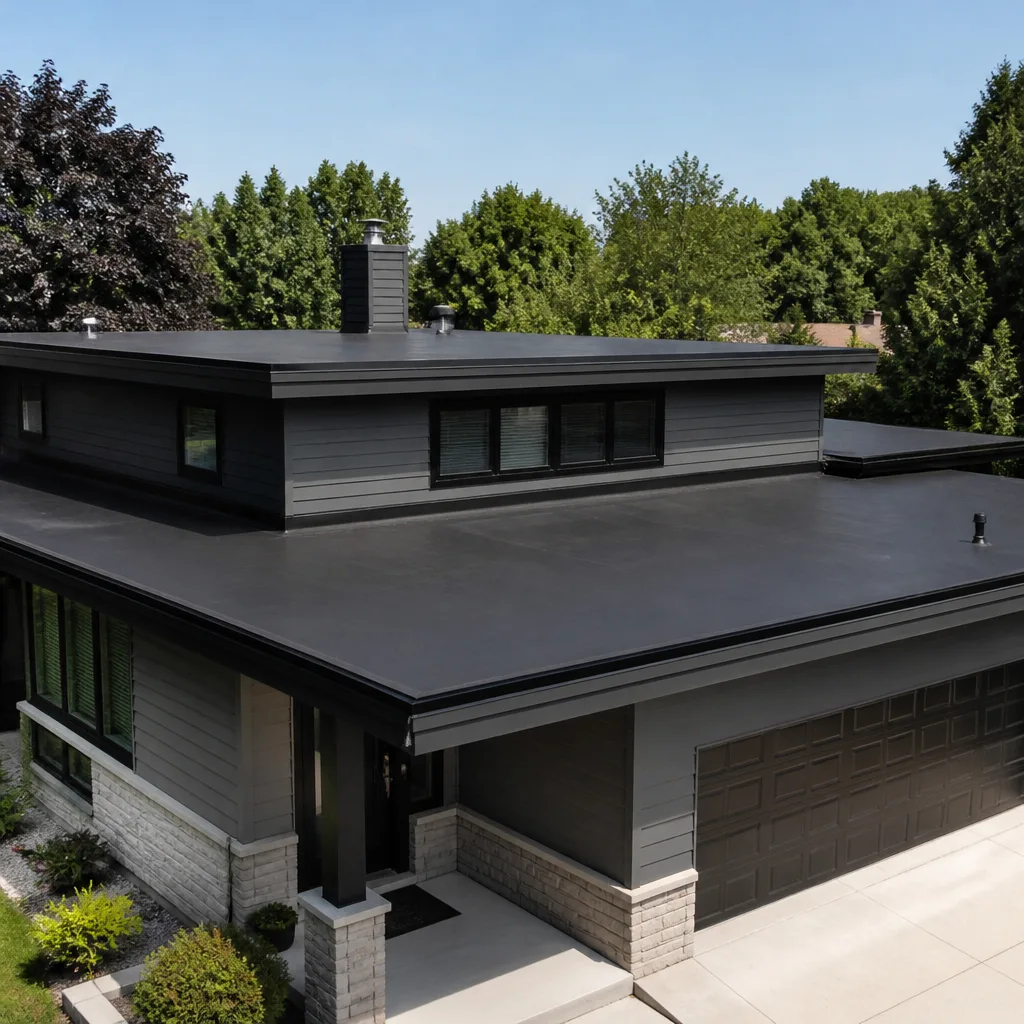 Flat & low-slope
Free roof inspection with deck photos before we talk money - GAF and Owens Corning certified installation
Styles & brands we work with
- Architectural shingles
- Metal roofing
- Tile roofing
- GAF
- Owens Corning
- Flat & low-slope
See the difference
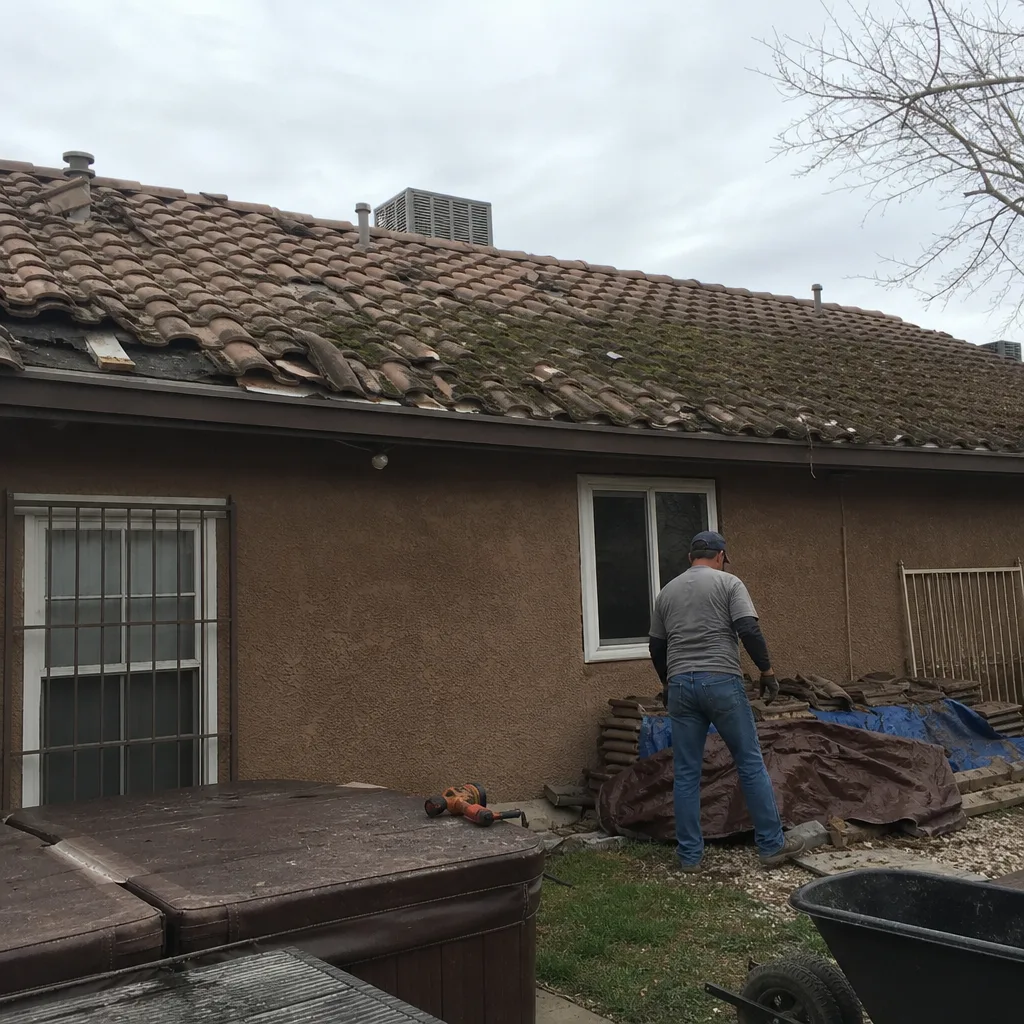 Before
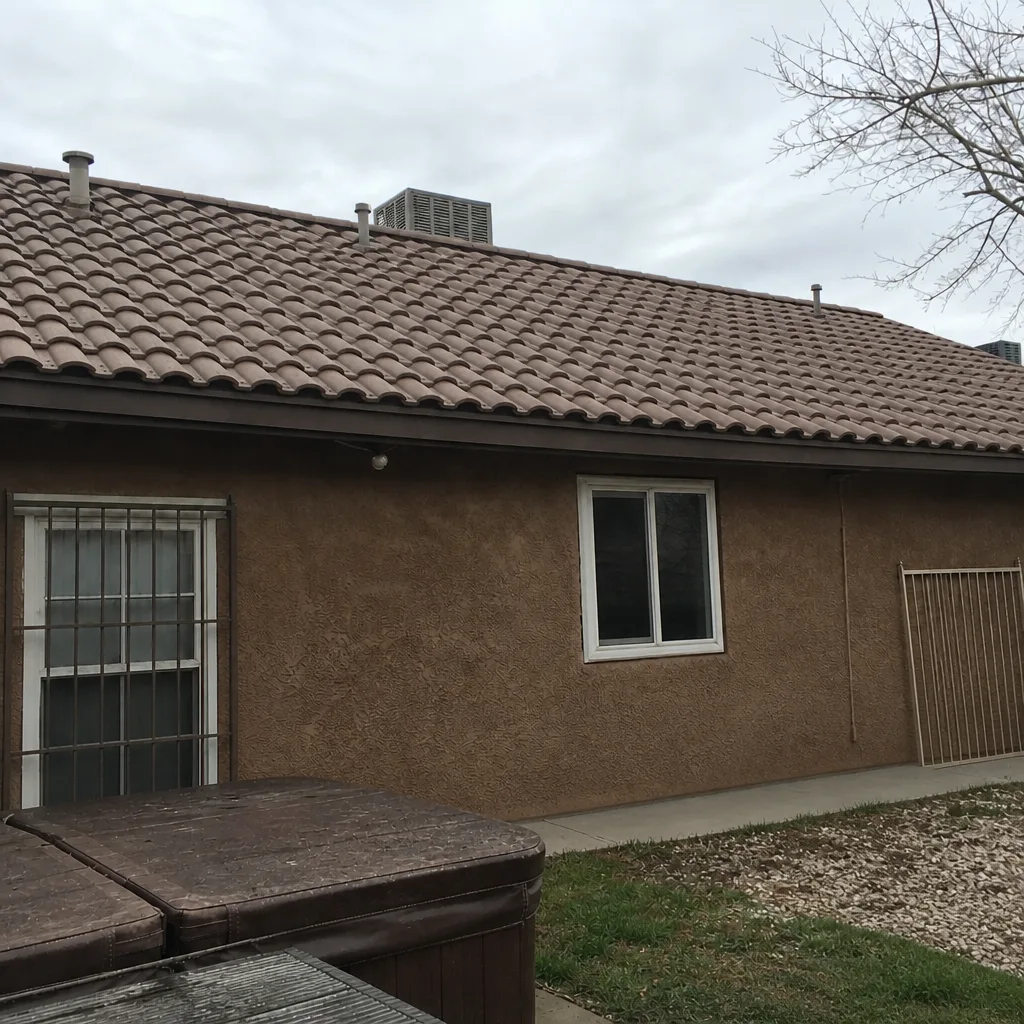 After
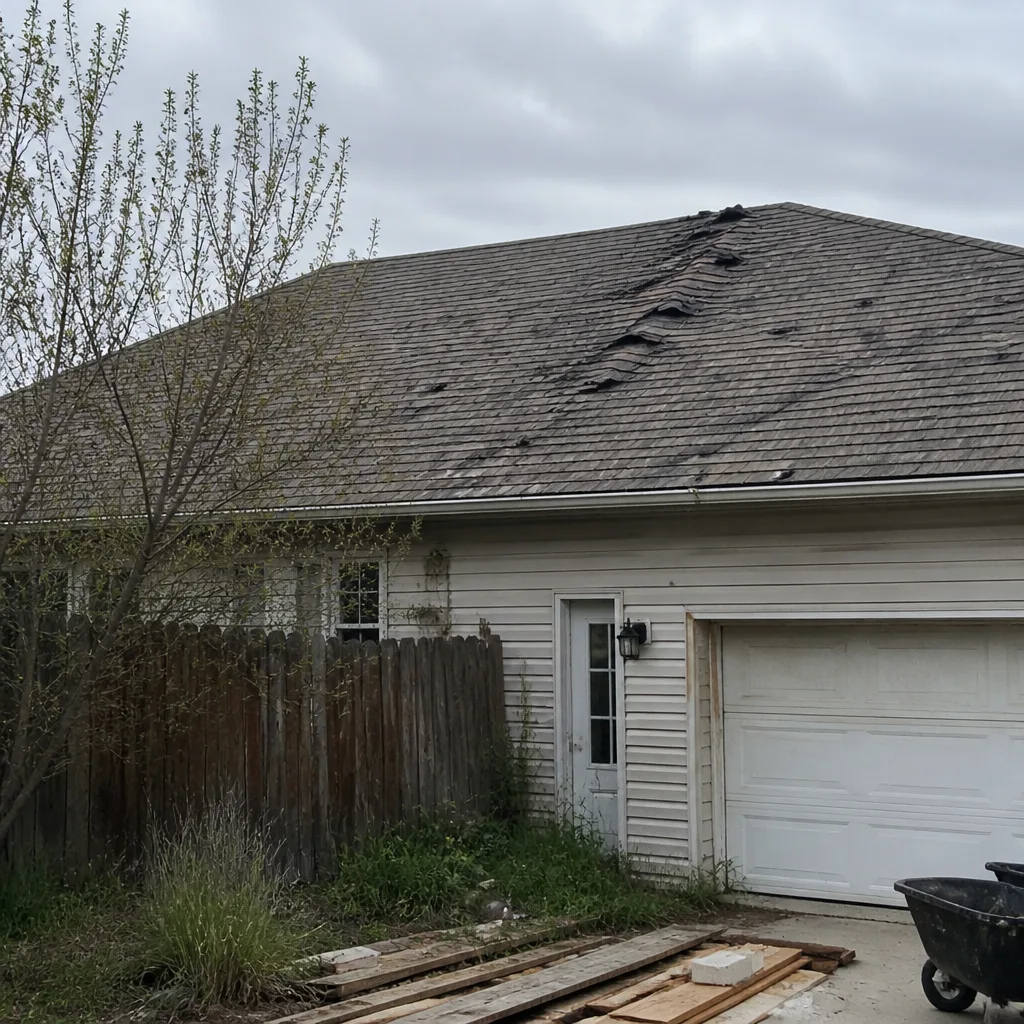 Before
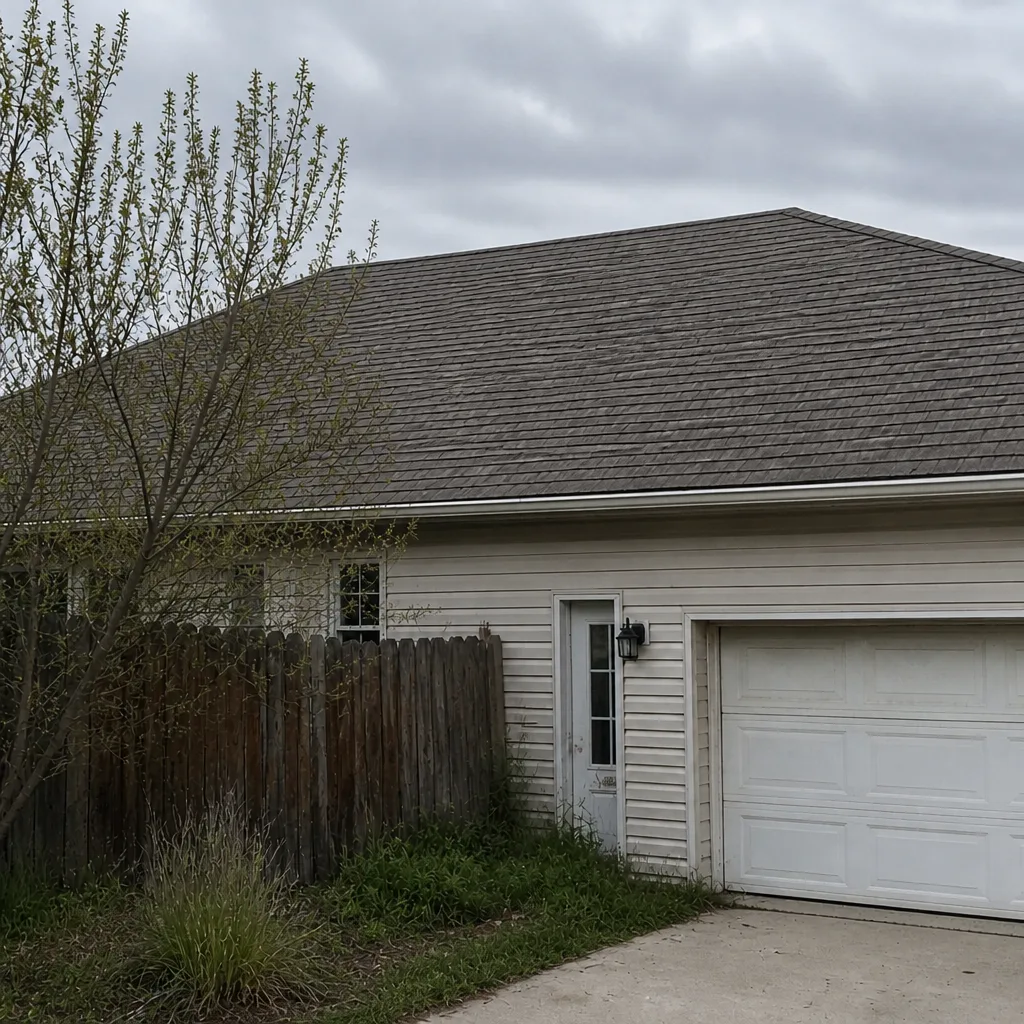 After
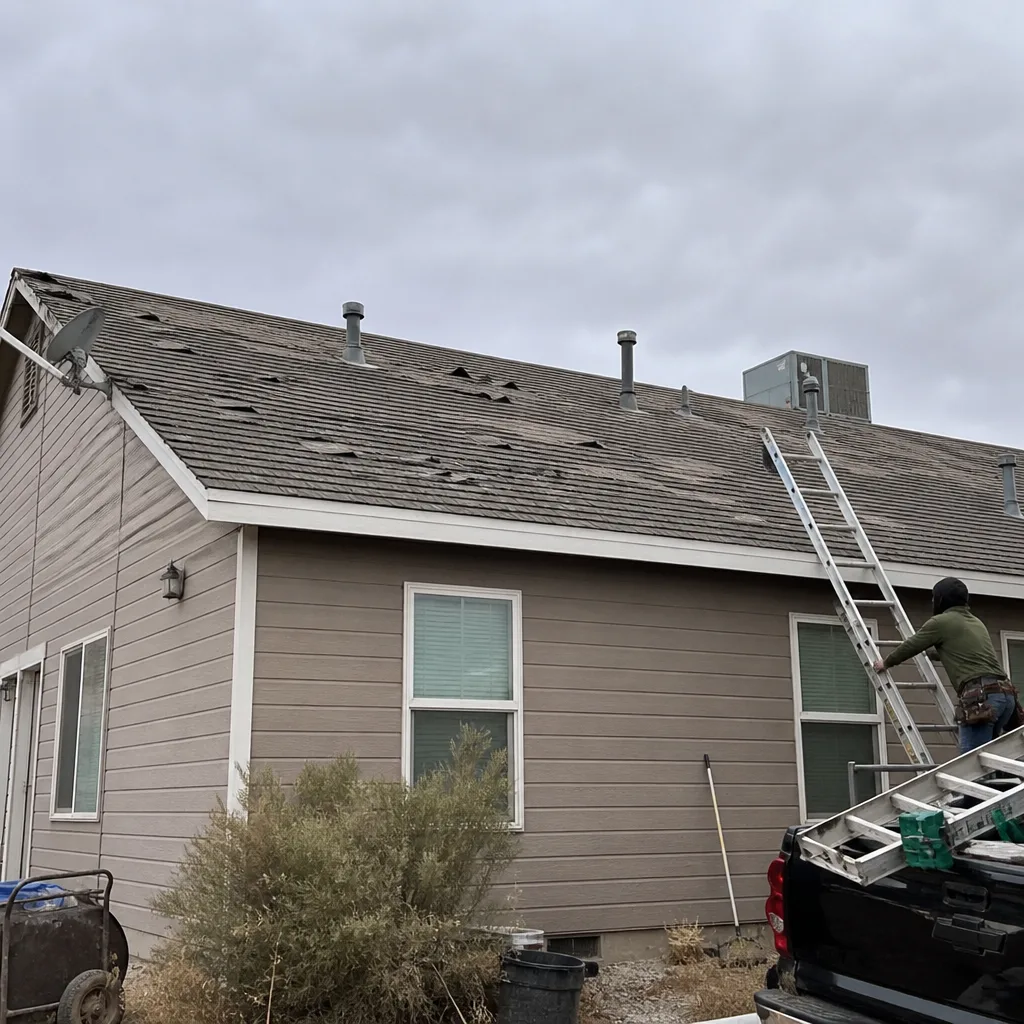 Before
 After
Roof Hail Damage Signs in Enterprise, NV: What to Actually Look For on a Tile Roof
The most reliable sign of hail damage on an Enterprise roof isn’t a dented gutter or a bare patch of shingle – it’s a hairline crack on the underside of a concrete tile, visible only under direct light from the roof deck. Surface dents and granule loss tell you almost nothing on the tile roofs that dominate this part of the valley. If you suspect your roof took a hit, a photo-documented inspection is the fastest way to know: call Ridgeline Roofing Co. Enterprise at (844) 228-4119.
Enterprise sits at the south edge of the Las Vegas Valley, tucked against the McCullough Range, where most of the housing went up between the 1990s and 2010s. That gives us a pretty specific roof profile: original or first-replacement concrete tile on most homes, some clay tile, a smaller share of asphalt shingle, and a growing number of low-slope foam roofs on the newer stucco subdivisions. Each one fails to hail in a different way, and the checklist you’ll find on most national roofing sites was written for none of them.
Key takeaways
- On concrete tile, hail causes compression fractures on the underside – not the surface bruising you see on asphalt.
- Wind-driven hail off the McCullough Range hits tiles at an angle, concentrating force on the leading edge and the ridge mortar bond.
- On the asphalt roofs here, desert UV has already weakened granule adhesion, so granules in the gutter don’t prove hail – look for exposed mat.
- A driveway walk-around or drone photo won’t catch a microfract. A roof-deck inspection with photos will.
Why the Standard Hail Checklist Fails on an Enterprise Tile Roof
Almost every article on hail damage shows you the same things: dimples in gutters and downspouts, bruised asphalt shingles, granules washed into the yard. That advice is built for the shingle roofs that make up most of the country. Enterprise isn’t most of the country. Concrete tile doesn’t bruise. It fractures, and it does it on the side you can’t see.
Here’s what actually happens. Hail lands on the tile face and the impact energy travels through the concrete. A tile that looks perfectly fine from above can carry a hairline crack underneath, right at the point of impact. That crack lets moisture into the underlayment below. The tile keeps looking fine. The underlayment wet-cycles through sun and cool-down for months. By the time a water stain shows on your ceiling, the crack has been working quietly since the storm.
That’s the core difference between hail damage on tile and hail damage on shingle, and it’s why a phone call to Emergency & Storm Damage after a storm is worth more than an hour spent studying your roof from the driveway.
What to Look For After a Hail Event: A Side-by-Side Guide
Because the right signs depend entirely on what’s over your head, it helps to split the checklist by roof type. Here’s how hail damage shows up on each system we see around Enterprise.
| Roof type | What hail actually does | Where to look (from the roof deck) |
|---|---|---|
| Concrete tile | Compression fracture on the underside; chipped leading edge; cracked ridge mortar | Underside of tiles at hips and ridges; leading edges facing the mountains |
| Clay tile | Hairline cracks and corner spalling, often at the overlap | Tile corners and the overlap seam, under direct light |
| Asphalt shingle | Exposed mat from granule loss; bruised or fractured mat; torn tabs | Mat exposure and soft spots, not granule counts in the gutter |
| Foam / low-slope | Pitting and cracked coating that lets UV in | Coating surface and seams, especially on south-facing slopes |
Notice that almost none of this is visible from the ground. On the shingle roofs in Enterprise, there’s another wrinkle: years of intense desert sun have already degraded the granule adhesion before any hail arrives. Granules end up in the gutter whether or not it hailed, which makes granule loss a poor damage indicator here. The more telling sign is exposed black mat where the granules have let go completely.
The Damage Patterns Specific to Enterprise’s Geography
Wind-driven hail from a monsoon microburst off the McCullough Range doesn’t hit straight down. It comes in at an oblique angle, and that changes where the damage concentrates. Tiles on the leading edge – the ones facing the mountains – take the strike first. The ridge and hip rows are the first to lift in a gust and the first to absorb an angled hit, which is why the mortar bond at the ridge is a failure point we check on every storm inspection. A drone floating overhead catches none of it.
Enterprise also gets more than its share of wind-blown desert dust and gravel, and after a monsoon gust it’s common to find whole ridges of concrete tile flipped with the underlayment exposed beneath, while gravel gathers in valley pans and scuppers. That’s a pattern tied to sitting at the base of the range, not something roofers in the older, denser parts of the valley run into as often. Add the rare freeze event that cracks tile and sealant, and you’ve got a roof that takes more punishment than the national average suggests – but shows it in places a driveway walk-around will never reveal.
How Ridgeline’s Photo-Documented Inspection Works
Because the real evidence lives on the underside of the tile, our inspections are done from the roof deck, not from the driveway. Technicians climb up, work the hip and ridge rows, and photograph the underside of the tile at the impact points under direct light. You get images of the actual fracture, tied to an actual location on your actual roof – not a scary speech and a clipboard.
A look at what that involves:
- Roof-deck inspection focused on hip rows, ridge caps, and leading edges
- Direct-light photography of tile undersides and mortar bonds
- Mat-exposure checks on any shingle sections
- Coating and seam review on foam and low-slope areas
- A written summary with the photos attached, ready to hand to an adjuster
That package matters. An insurance adjuster can act on an image of a microfract with the location marked. A verbal description of “looks like there might be some damage” doesn’t move a claim forward. Our technicians have up to 10 years of experience reading tile roofs, and every inspection is completed by background-checked, uniformed crew members working to one standard: the same care we’d want on our own family’s roof.
What Does Hail Damage Repair Cost in Enterprise?
Cost depends on how much the storm got under, and most hail repairs we handle land between a few hundred and a few thousand dollars. Here’s the honest breakdown of typical ranges. The price we quote is the price you pay – no surprises between the estimate and the invoice.
| Work | Typical range |
|---|---|
| Tile repair (a few cracked or displaced tiles) | $250 – $600 |
| Ridge cap re-bedding and mortar repair | $400 – $900 |
| Underlayment replacement on a damaged section | $800 – $2,000 |
| Full tile re-roof (widespread storm damage) | $12,000 – $28,000 |
Where a few microfractured tiles can be swapped and the underlayment is still sound, repair is the square deal. If the underlayment’s been wet-cycling across a large area, repairs can add up past the point of good sense, and replacement is the cheaper road over ten years. We’ll tell you which one you’re looking at. Free second opinions on any written estimate are standard, and there’s $50 off any repair over $250.
Ridgeline installs seven manufacturer lines, including GAF, CertainTeed, Owens Corning, Boral, Atlas, and Tamko, so a replacement matches what’s on the rest of your roof – no substituted materials.
The 90-Day Done Right Promise on Post-Hail Work
Hail microfracts are small and easy to miss, which is exactly why the guarantee matters here. Every job we do is backed by the 90-Day Done Right Promise: a written workmanship guarantee with no arguing and no paperwork runaround. If our post-hail inspection misses a fracture and a leak develops within 90 days of the repair, we come back and make it right – no adjuster argument, no second deductible. That’s the whole point of the promise. If it’s not right, we make it right.
We answer the phone live, 24 hours a day, including nights, weekends, and the middle of a storm – no voicemail trees. If you’re weighing a repair against a replacement and want a second set of eyes, the team at Ridgeline Roofing Co. is a call away.
FAQs About Hail Damage on Enterprise Roofs
On concrete tile, the first sign is a hairline crack on the underside of the tile at the point of impact, usually invisible from the ground and on the tile face. On asphalt shingle, the first sign is exposed black mat where granules have come loose, plus a bruised or soft spot where the mat fractured. Dented gutters and granules in the yard are unreliable here. Call (844) 228-4119 for a roof-deck inspection with photos.
Yes – on tile roofs the damage is usually invisible from the ground, because the fracture forms on the tile’s underside rather than its face. A driveway walk-around or a drone photo misses it entirely. Catching it takes a flashlight on the roof deck. If a storm just passed through, call (844) 228-4119 and we’ll put eyes on the underside.
Repair is almost always cheaper when the damage is limited to a handful of tiles and the underlayment is dry and sound – typically $250 to $900 for tile and ridge work. Replacement makes more financial sense when the underlayment has been wet-cycling across a large area. Call (844) 228-4119 for an exact quote – estimates are free.
Photos of the actual fracture, with its location on the roof marked, give an adjuster something concrete to work with, which is why our inspections are photo-documented. A verbal description of “possible damage” doesn’t. Call (844) 228-4119 to schedule an inspection and we’ll hand you the image set.
Get Your Enterprise Roof Looked At
If you’d rather have it looked at, Ridgeline Roofing Co. Enterprise offers a no-pressure assessment in Enterprise – call (844) 228-4119. We’ll get up on the roof, photograph what we find, and give you a straight answer on whether it’s a repair or a replacement. No storm-chaser games, no scare tactics. Just an honest look at your tile.
Written by the team at Ridgeline Roofing Co. Enterprise, serving Enterprise, NV.