
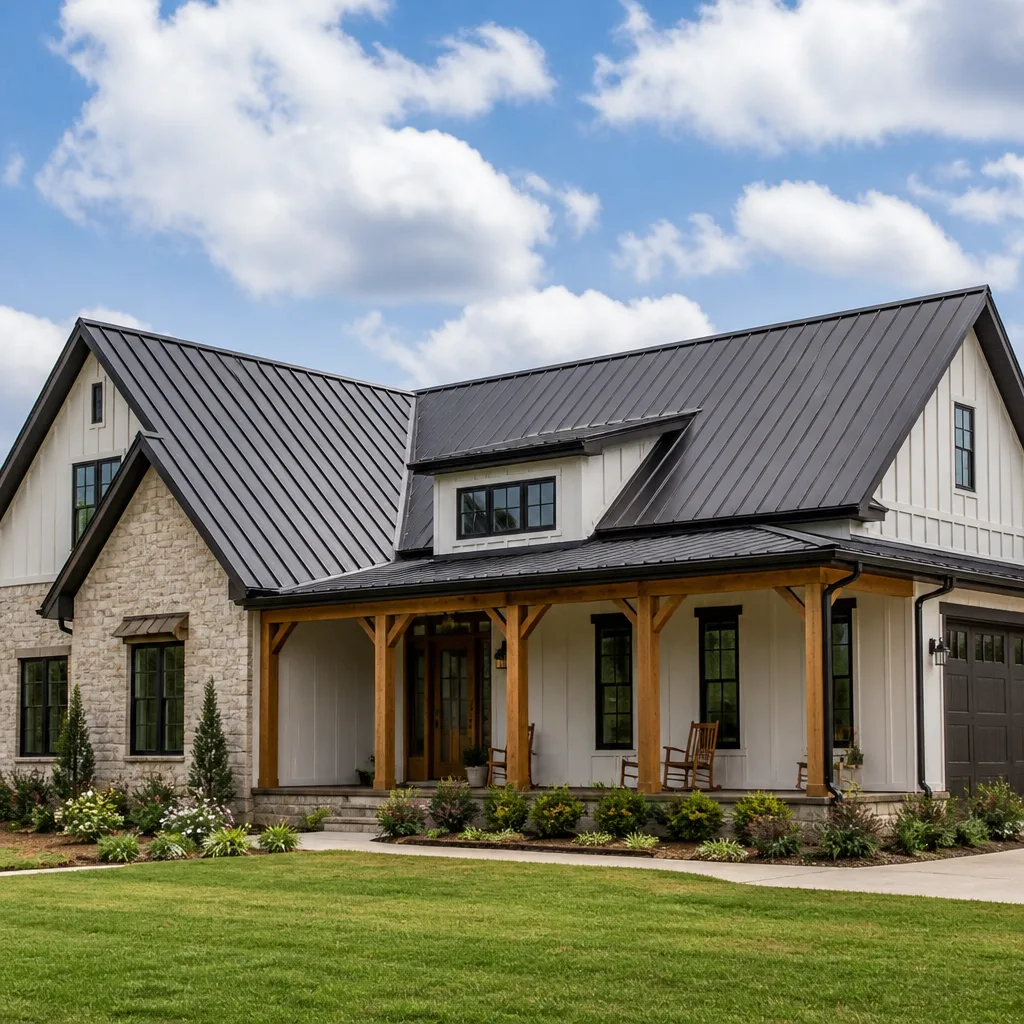
 Metal roofing
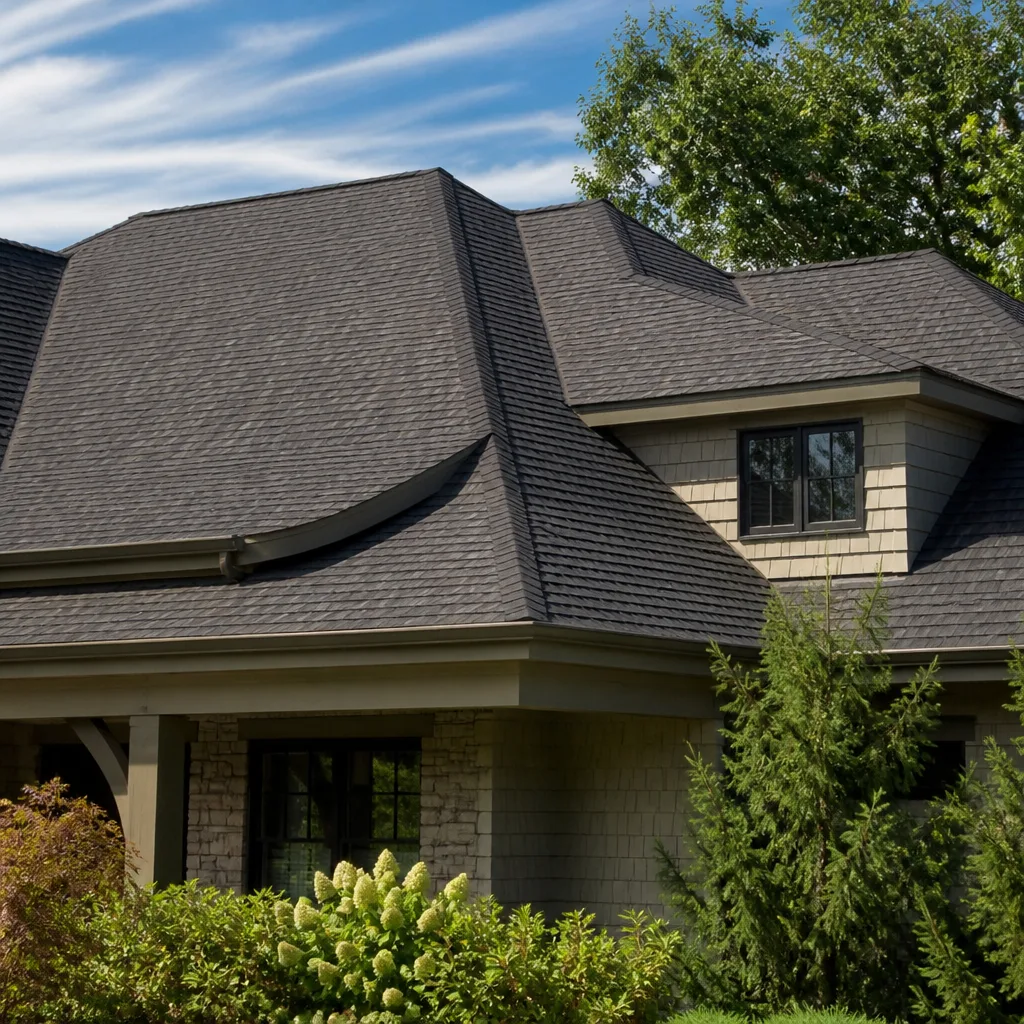 Architectural shingles
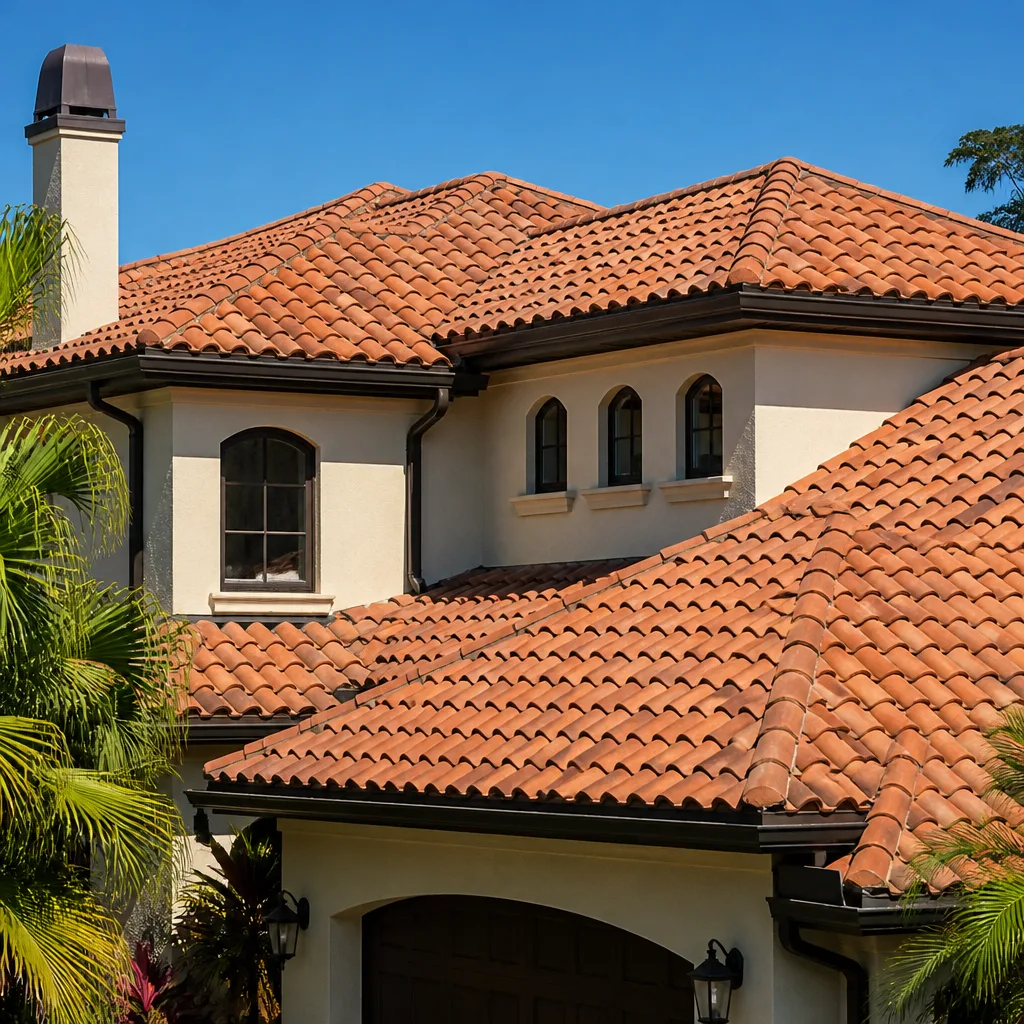 Tile roofing
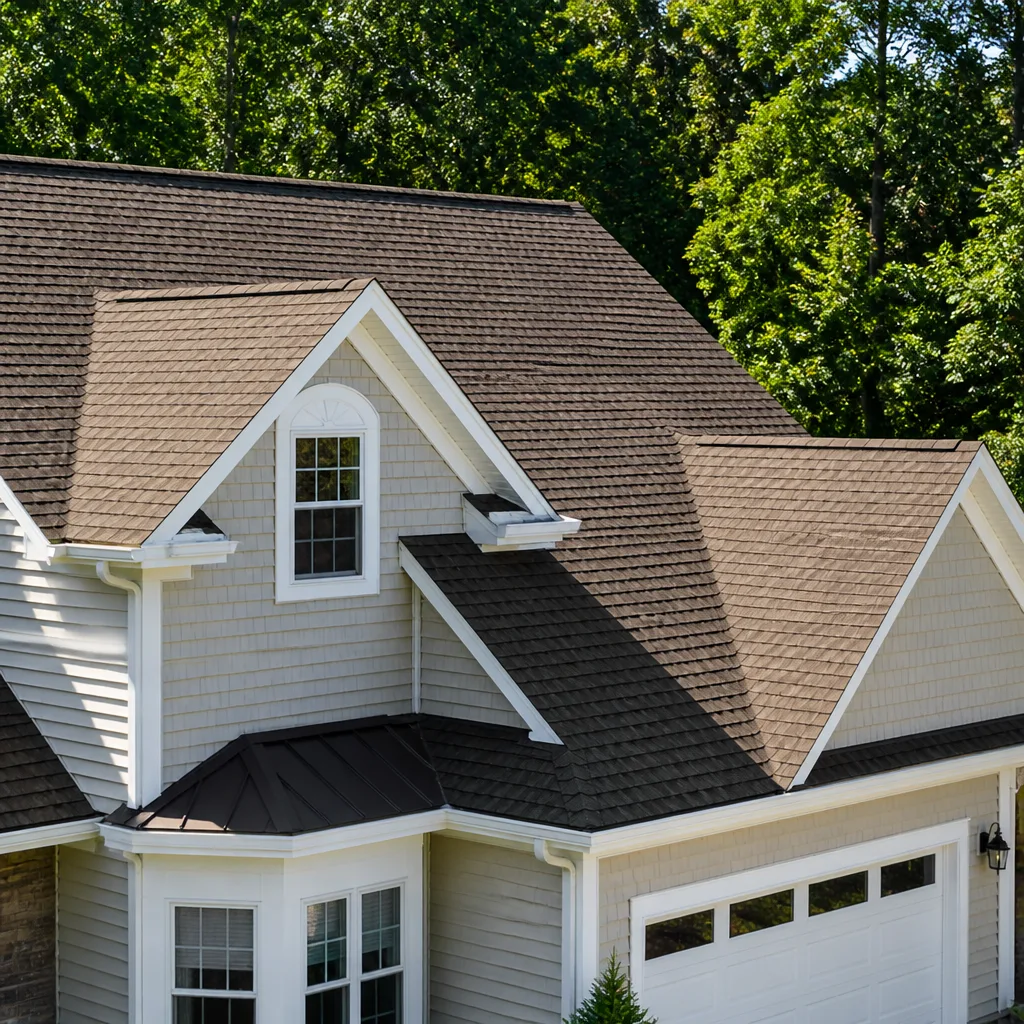 GAF
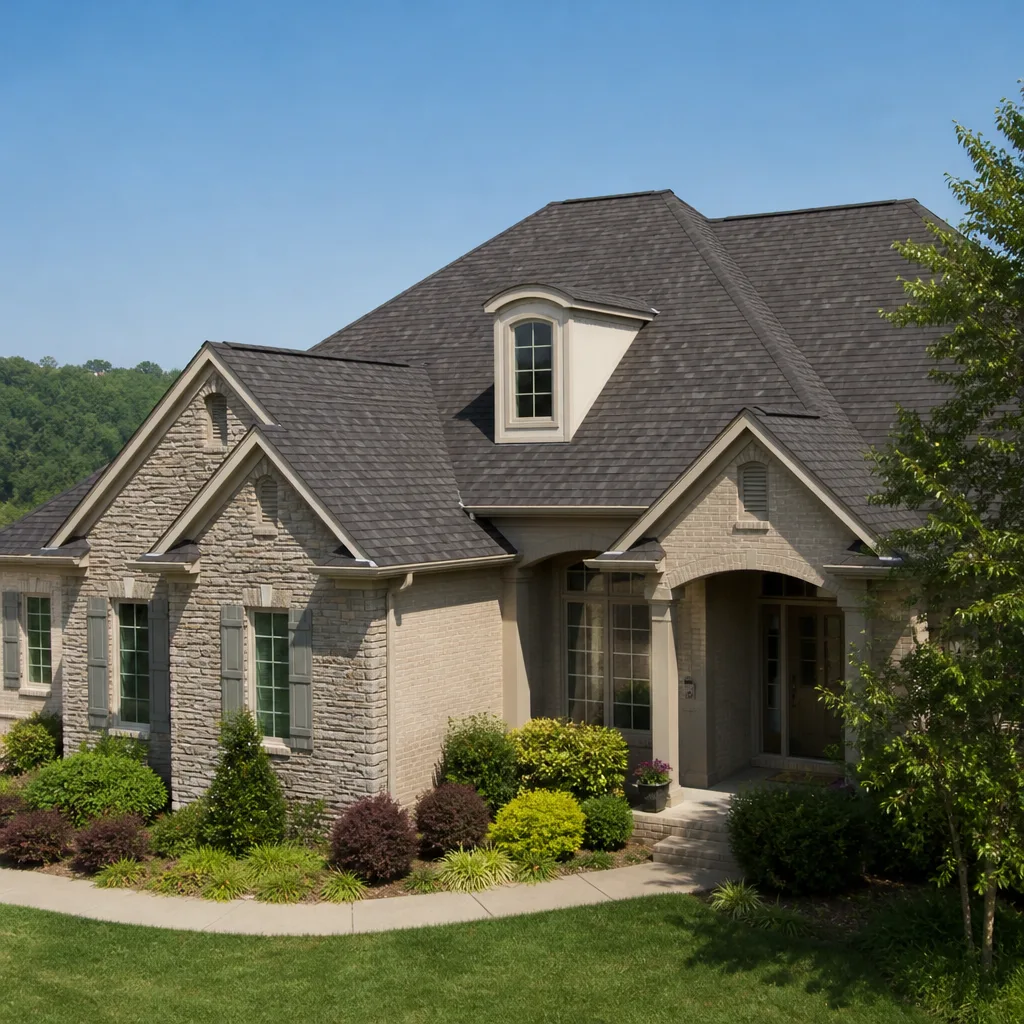 Owens Corning
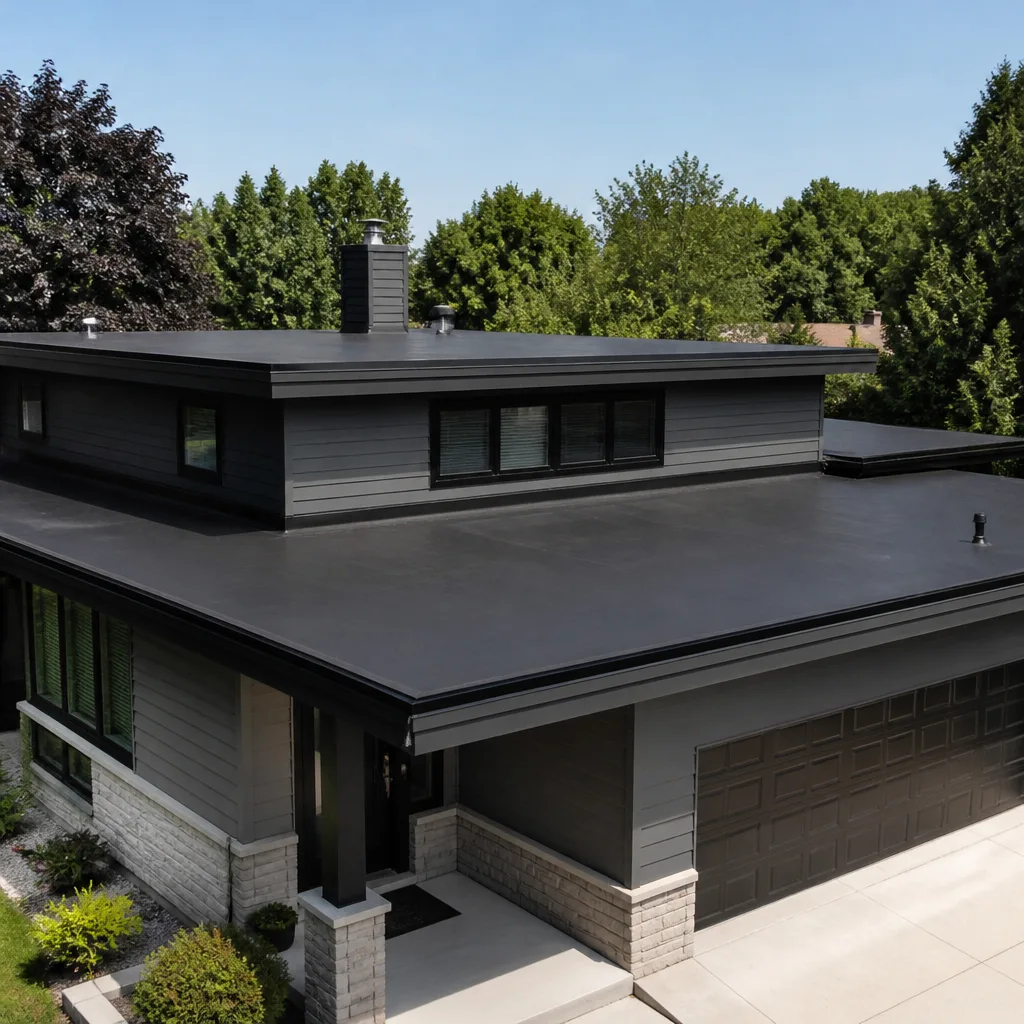 Flat & low-slope
Free roof inspection with deck photos before we talk money - GAF and Owens Corning certified installation
Styles & brands we work with
- Architectural shingles
- Metal roofing
- Tile roofing
- GAF
- Owens Corning
- Flat & low-slope
See the difference
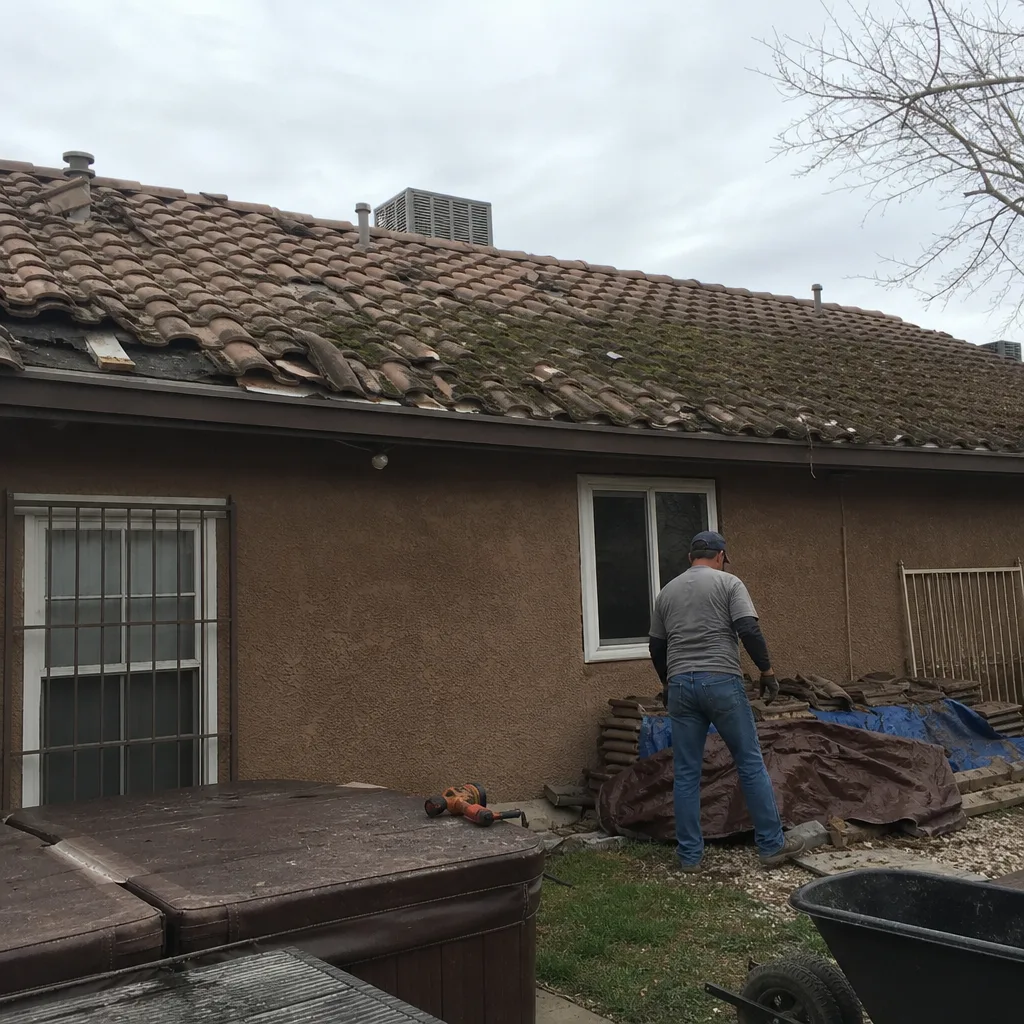 Before
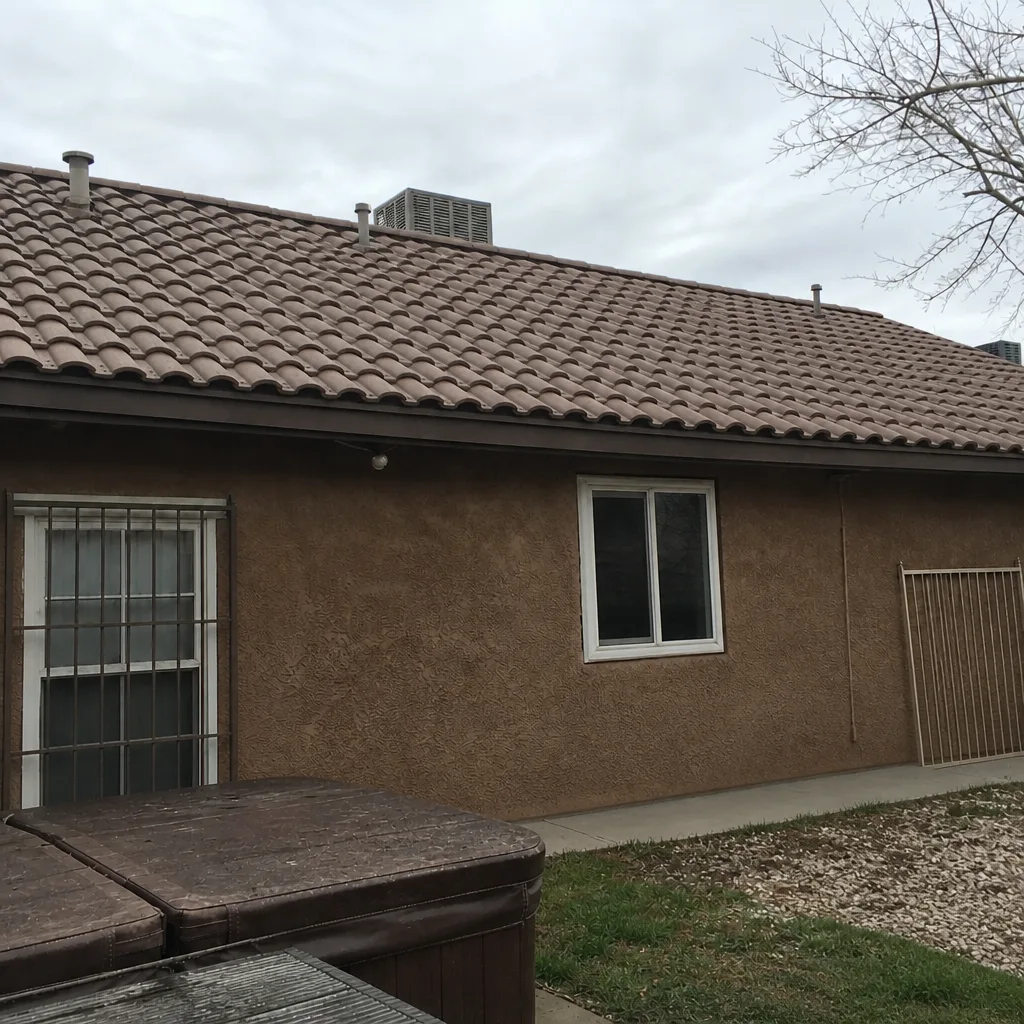 After
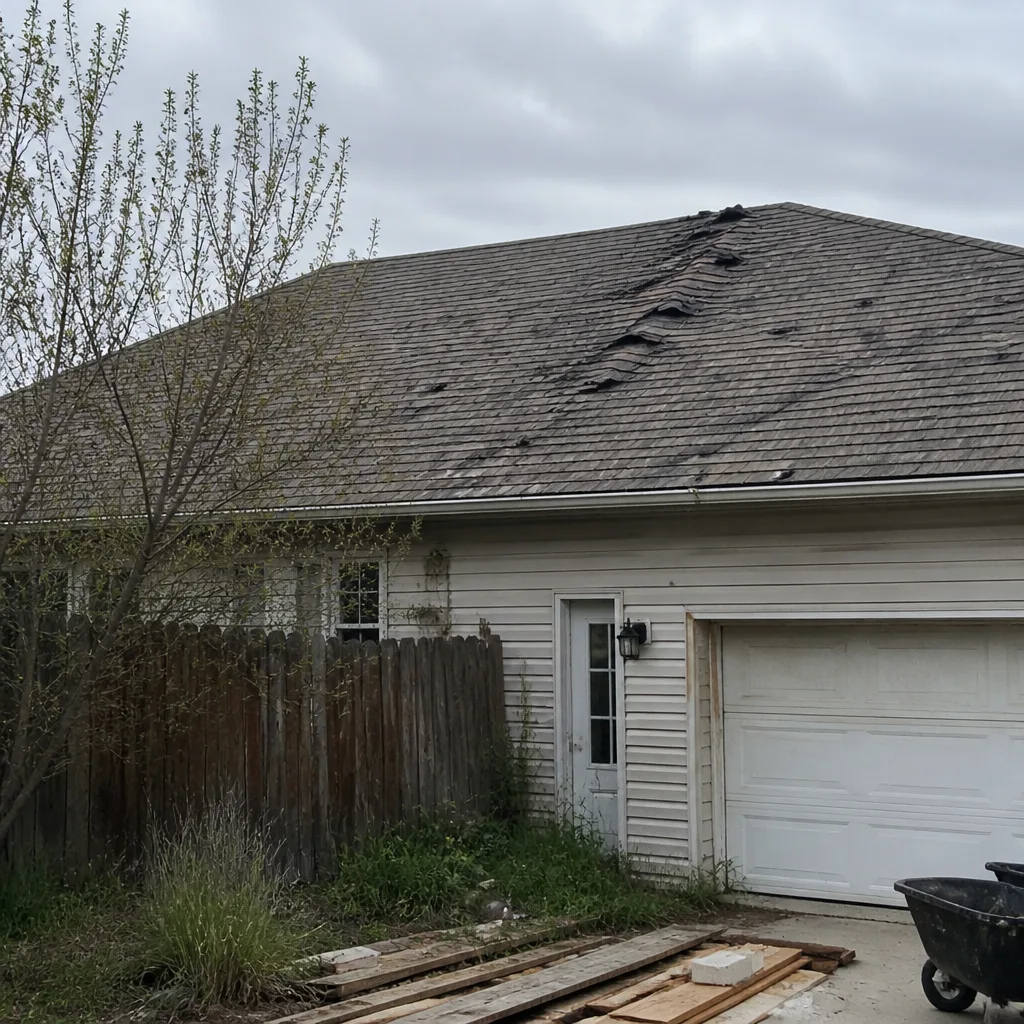 Before
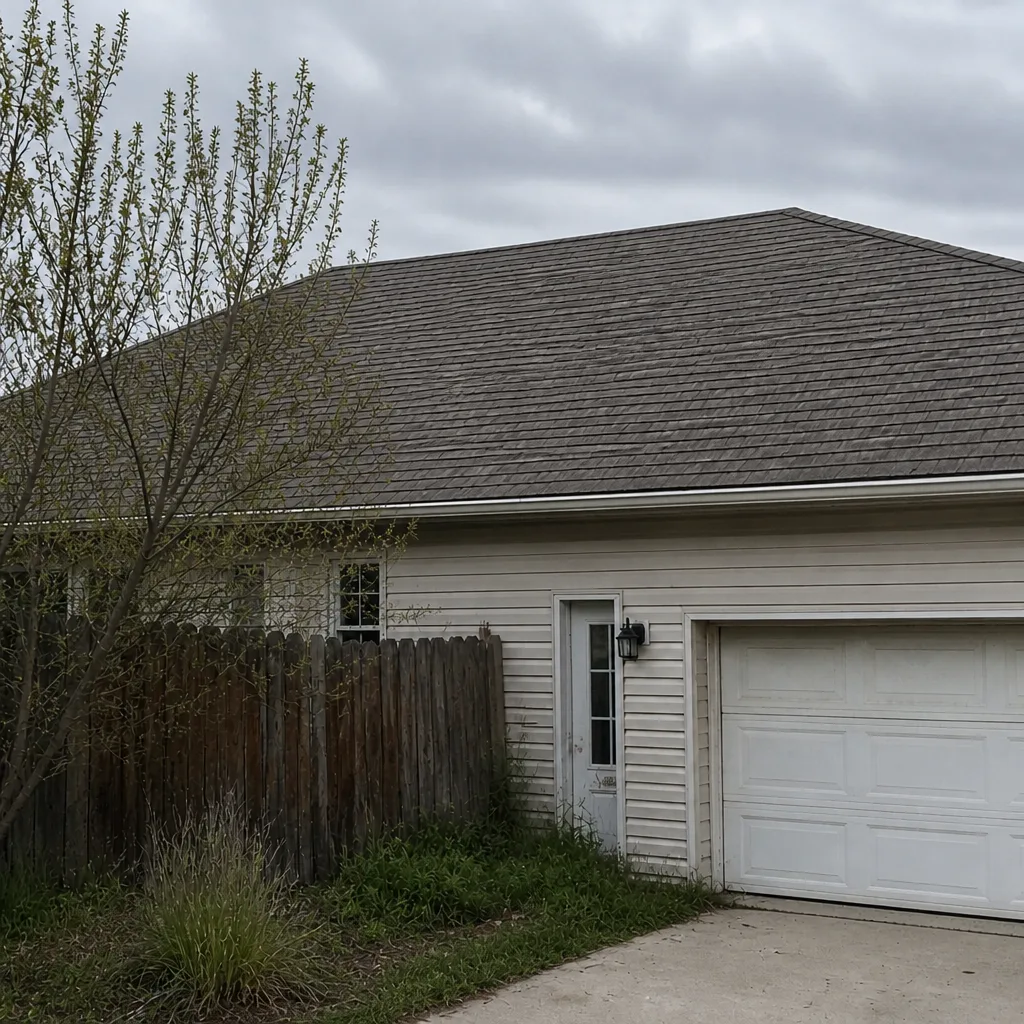 After
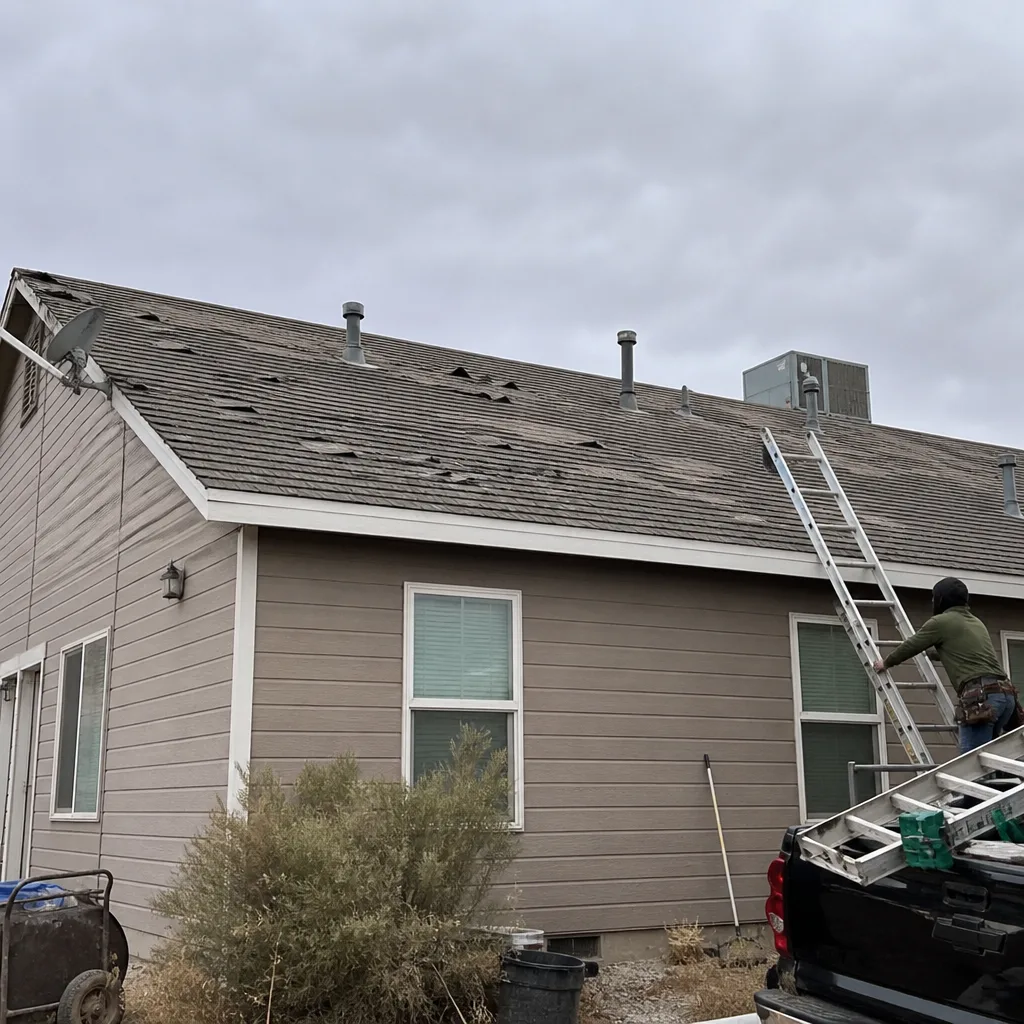 Before
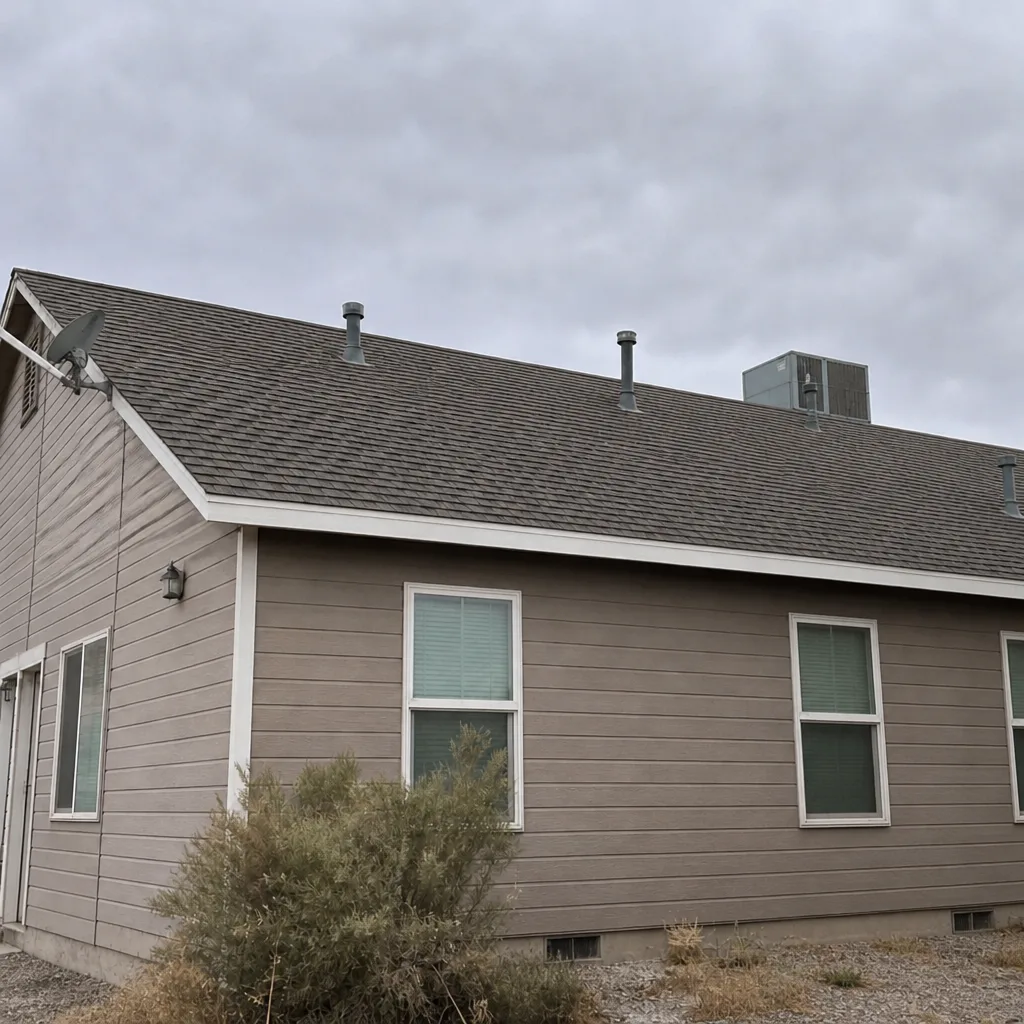 After
Repair or Replace Your Roof in Enterprise, NV? Here’s How to Decide
Choose repair, not replacement, if your Enterprise tile is sound and only the underlayment or flashing has failed. Choose full replacement only when the tile itself is breaking down or the deck has rot. For most homes here, the answer is a third option: lift the tile, replace the underlayment, and re-lay the original tile. That call saves $8,000-$15,000 versus replacing tile that still has decades left. Call (844) 228-4119 and we’ll tell you which layer is actually failing.
Most repair-or-replace decision trees online assume an asphalt shingle roof. In Enterprise, that assumption is usually wrong. The south edge of the Las Vegas Valley was built out hard from the 1990s through the 2010s, and the roofs of those years are overwhelmingly concrete tile, with some clay tile and a smaller share of shingle and foam. That single fact reshapes the whole question.
Why Concrete Tile Changes the Repair-or-Replace Math in Enterprise
Concrete tile in this climate routinely runs 40 to 50 years. The underlayment beneath it does not. That waterproofing membrane is the layer actually keeping water out, and 15 to 25 years is its typical life before the desert sun cooks the oils out of it and it starts to crack.
So do the arithmetic. A home built in Enterprise in 1998 has a roof that is roughly 25 to 28 years old today. The tile is likely fine. The underlayment is at or past the end of its service life. When that membrane fails, water doesn’t announce itself with a dramatic ceiling stain overnight. It seeps, it wicks into the decking, and by the time you see a stain you may have a soft spot forming in the sheathing.
The trap is that a failed underlayment gets sold as a full reroof. The tile gets torn off and thrown in a dumpster, and the homeowner pays for new tile they never needed. Our technicians have up to 10 years of experience on these roofs, and the honest answer on a 25-year-old Enterprise tile roof is often: your tile is good, your underlayment isn’t, and the fix is an underlayment replacement with your own tile set back in place.
What a tile system looks like, layer by layer
- Tile – the weathered surface you see. Long-lived, replaceable, and usually reusable.
- Underlayment – the waterproof membrane doing the real work. This is what fails first.
- Flashing – the metal at valleys, walls, and penetrations. Small pieces, big consequences.
- Ridge caps and hip closures – the most wind-exposed tile on the roof, and the first to go in a monsoon gust.
- Decking – the structural sheathing. Rot here is the one condition that forces a full replacement.
Find the failing layer and you have your answer. Guess at it from the driveway and you’re paying for something you may not need.
How We Actually Confirm Which Layer Is Failing
You can’t judge underlayment condition from the ground. It requires getting on the roof and lifting tiles in representative sections to look at the membrane and the deck beneath. That’s the inspection that matters, and it’s the one we document with photos taken from your actual roof.
Our crews climb in uniform and carry background checks, and they show you what they found rather than delivering a verbal summary in the driveway. When the news is a $180 valley flashing repair, that’s what the photos say. When it’s an underlayment re-lay, the photos show the membrane cracked or the decking soft.
Enterprise sits directly beneath the McCullough Range, and that position shapes what we find up there. Wind-driven desert dust and gravel gather in valley pans and scuppers after a blow off the mountains, and clogged drainage is a slow failure in its own right. After a monsoon gust, whole ridges of concrete tile can flip and leave the underlayment exposed to the next rain. If you’ve been dealing with a leak that only shows up after a storm, there’s a good chance the story is in the flashing and ridge detail, not the tile itself. Our Roof Repair page covers the storm-and-detail work in more depth.
Repair or Replace: The Honest Comparison
Here’s the side-by-side most guides skip. These are typical Enterprise ranges for the work, not quotes for your roof, but they show why the layer question matters so much.
| Option | What it covers | Typical cost range | When it’s the right call |
|---|---|---|---|
| Targeted repair | Flashing, ridge caps, a few cracked tiles, valley work | $350-$1,200 | Isolated failures, underlayment still serviceable |
| Underlayment re-lay | Lift tile, replace membrane and flashing, re-lay original tile | $9,000-$16,000 | Tile intact, membrane past 20+ years and failing |
| Full tile replacement | Tear off tile and underlayment, new membrane, new tile | $17,000-$32,000 | Tile breaking, deck rot, or storm damage across the field |
The gap between the middle and bottom rows is exactly why we start every evaluation by asking which layer failed. On a tile roof where the tile is sound, that re-lay is the sweet spot most homeowners never hear about, and it can save $8,000-$15,000 against a full replacement.
When shingle roofs pull the threshold earlier
About a third of Enterprise roofs aren’t tile. If yours is asphalt shingle, the national “replace at 20 to 25 years” rule of thumb doesn’t hold here. Intense UV ages shingle faster than a moderate climate does, so a 15-year-old shingle roof in Enterprise has often seen the equivalent aging of a 20-year-old roof somewhere milder. Check the granules. If they’re washing into your gutters and the mat is curling at the edges, the roof is closer to its end than the calendar suggests.
Where Full Replacement Really Is the Answer
We’re not in the business of talking homeowners out of needed work. Sometimes the whole system is done, and a replacement is the square deal:
- Deck rot. Soft sheathing means structural repair, and that’s a tear-off.
- Tile breaking down. Spider-cracked tile, tile that shatters when walked, or a freeze event that cracked the field and the sealant. Once the tile can’t be re-laid, the full replacement math wins.
- Widespread storm damage. If a monsoon microburst flipped tile across most of the field and exposed the membrane, piecemeal repair usually costs more than it saves.
- Aged shingle past its life. Once the mat is failing, patching is throwing money at a roof that’s already gone.
When replacement is genuinely needed, we install products from seven leading manufacturer lines, including GAF, CertainTeed, Owens Corning, and Boral, so you get the right material for your roof rather than a substitution.
Why a Company That Lives Here Recommends the Work You Actually Need
After a monsoon, Enterprise gets visitors. Out-of-town crews roll through offering full reroofs on tile roofs where only ridge caps and valley flashing need attention. That’s a recognized pattern, and it’s easy to spot once you know what layer fails first.
Ridgeline Roofing Co. Enterprise has kept our phones staffed by a live person around the clock, so you’re never funneled into a callback after a storm. But the real reason our recommendations hold up is simpler: a replacement we sell on a roof that only needed a re-lay is a job we’ll see again in glaring detail for the next thirty years. Every repair and every re-lay is backed by our written 90-Day Done Right Promise. If it’s not right, we come back and fix it, with no paperwork and no arguing. That commitment only works as a business model if we recommend the repair the roof can actually live with. If you’d like that inspection documented and priced up front, our Roof Repair in Enterprise page shows how we handle it, and it all starts from our home base.
FAQs
Lift a few tiles in representative sections and check the underlayment and deck, because that’s where the failure usually is, not in the visible tile. If the tile is intact and the membrane is past 20 years, you’re typically looking at an underlayment re-lay rather than a full replacement. We document this with photos from your roof. Call (844) 228-4119 for a free assessment.
Yes, and on a 1990s or 2000s Enterprise concrete tile roof it’s often the right and most economical answer. We lift the tile, install new underlayment and flashing, and re-lay your original tile, which commonly runs $9,000-$16,000 versus $17,000-$32,000 for a full tile replacement. Call (844) 228-4119 to find out if your tile qualifies for a re-lay.
Repair is far cheaper when the damage is isolated to flashing, ridge caps, or a few tiles, often $350-$1,200. The question is whether the underlayment has also reached the end of its life, which moves you to a re-lay or replacement. Our technicians have up to 10 years of experience reading that call. Call (844) 228-4119 for an exact quote, free and upfront.
Concrete tile itself usually runs 40 to 50 years in this climate, but the underlayment beneath it lasts only 15 to 25 years because of intense UV and monsoon exposure. That gap is why a 25-year-old tile roof often needs the membrane replaced while the tile goes back down unchanged. Call (844) 228-4119 and we’ll put real numbers on your roof.
If you’d rather have it looked at, Ridgeline Roofing Co. Enterprise offers a no-pressure assessment in Enterprise - call (844) 228-4119. We’ll get up on the roof, photograph what we find, and tell you plainly which layer is failing and what the square deal is.
Written by the team at Ridgeline Roofing Co. Enterprise, serving Enterprise, NV.