
 Metal roofing
 Architectural shingles
 Tile roofing
 GAF
 Owens Corning
 Flat & low-slope
Free roof inspection with deck photos before we talk money - GAF and Owens Corning certified installation
Styles & brands we work with
- Architectural shingles
- Metal roofing
- Tile roofing
- GAF
- Owens Corning
- Flat & low-slope
See the difference
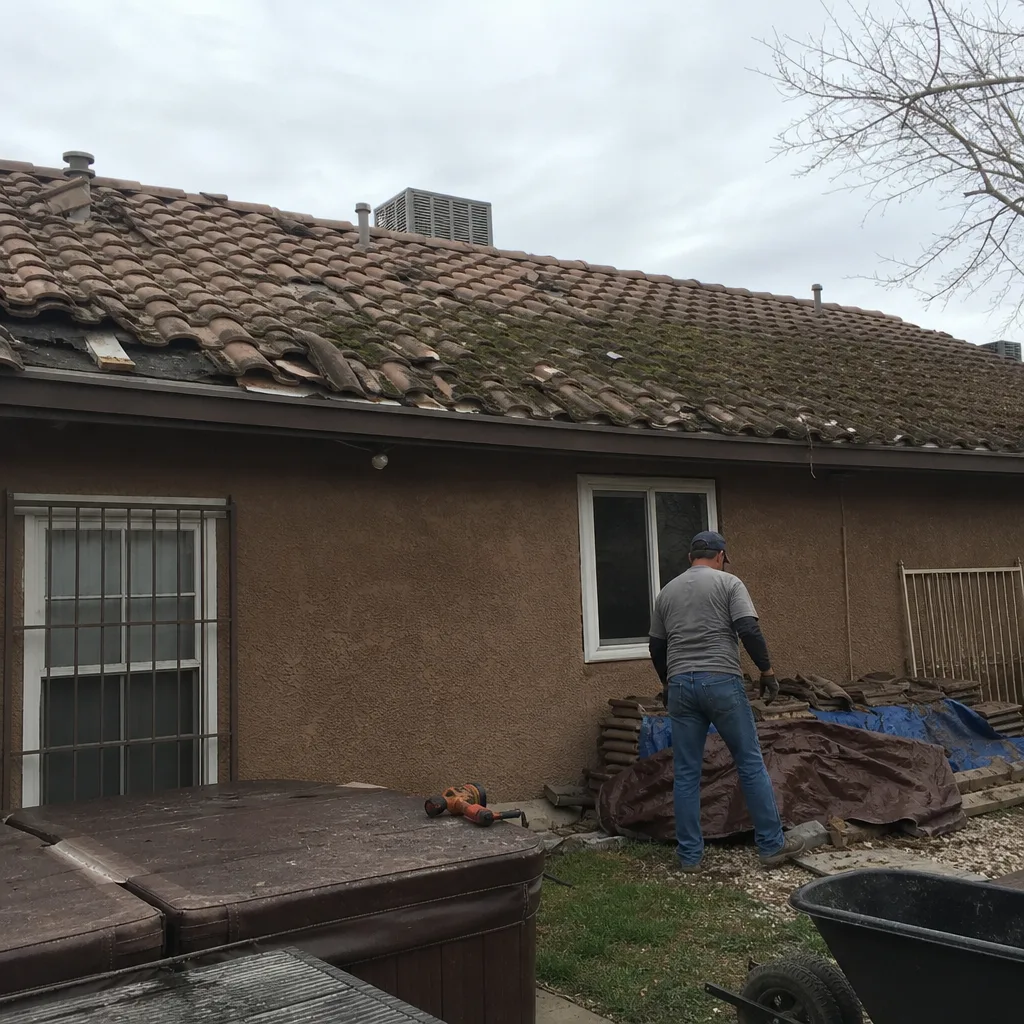 Before
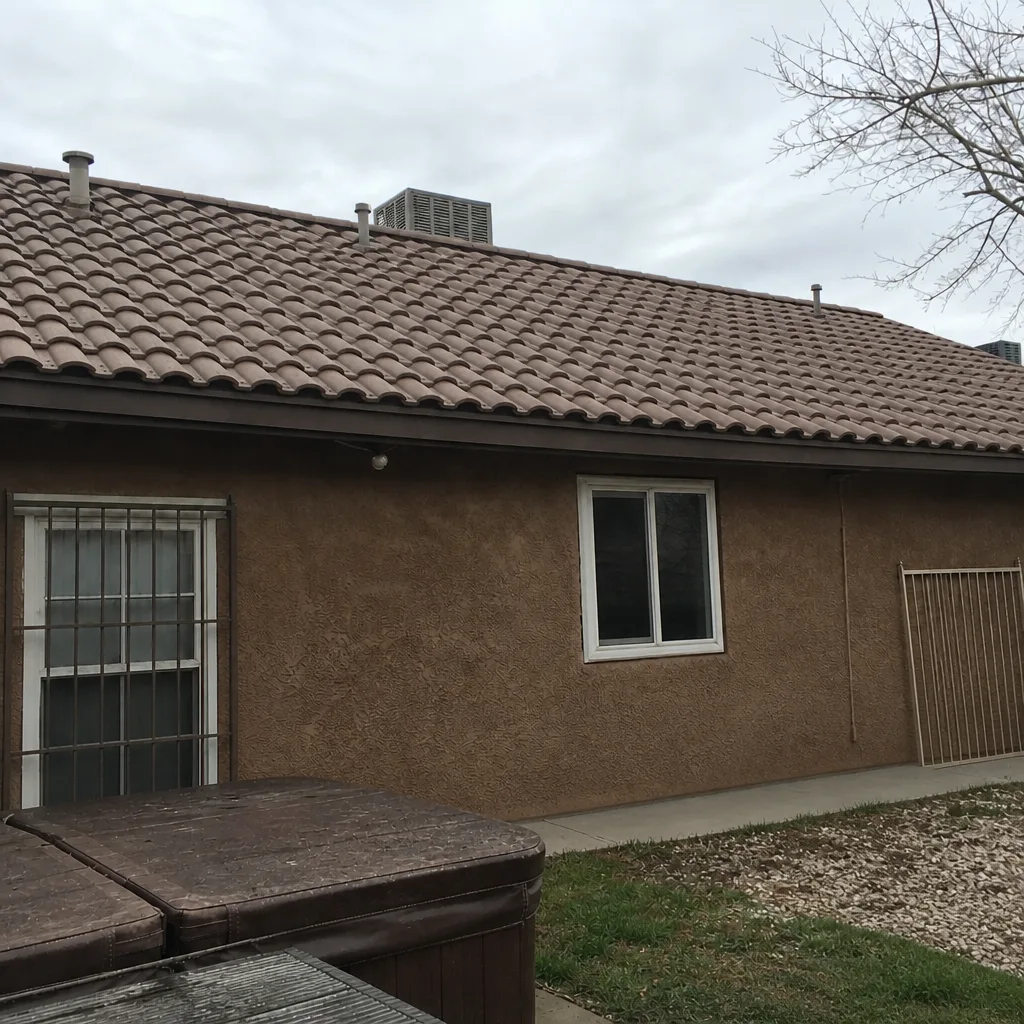 After
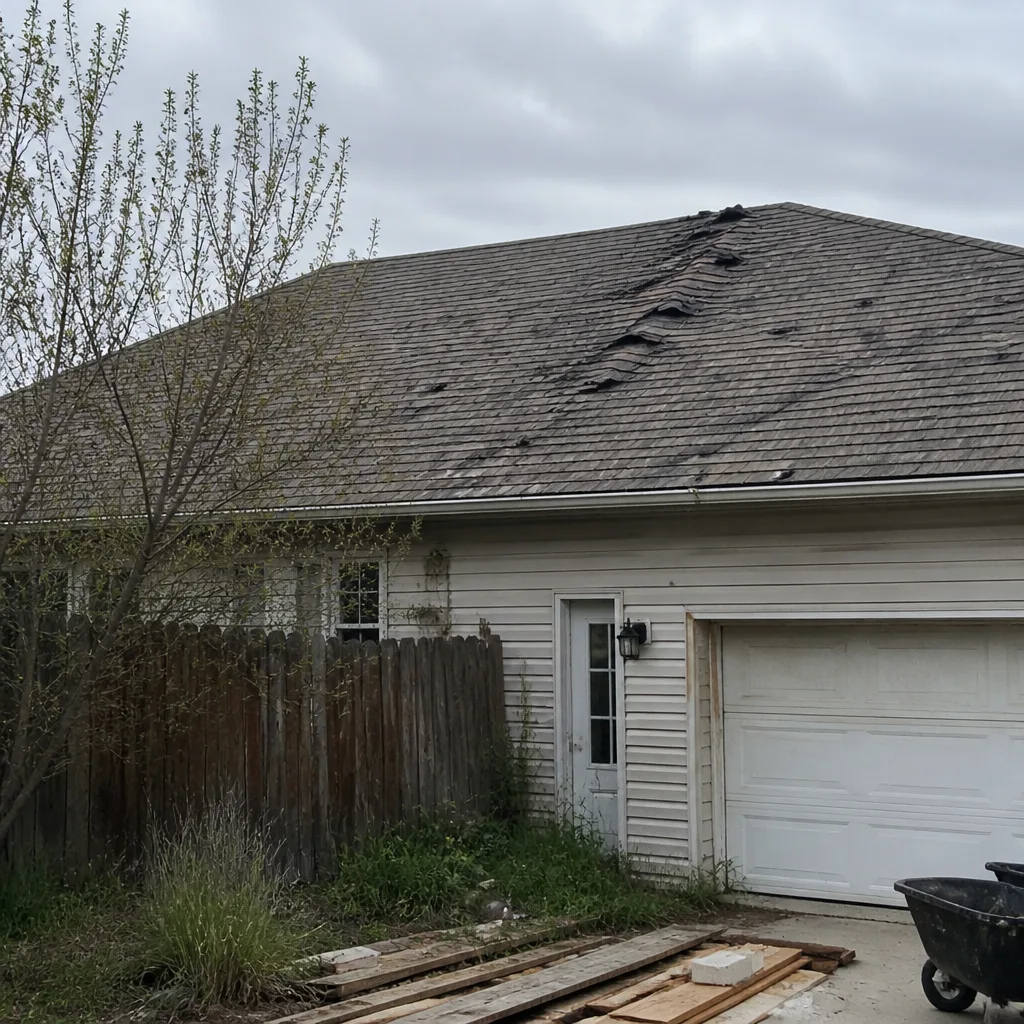 Before
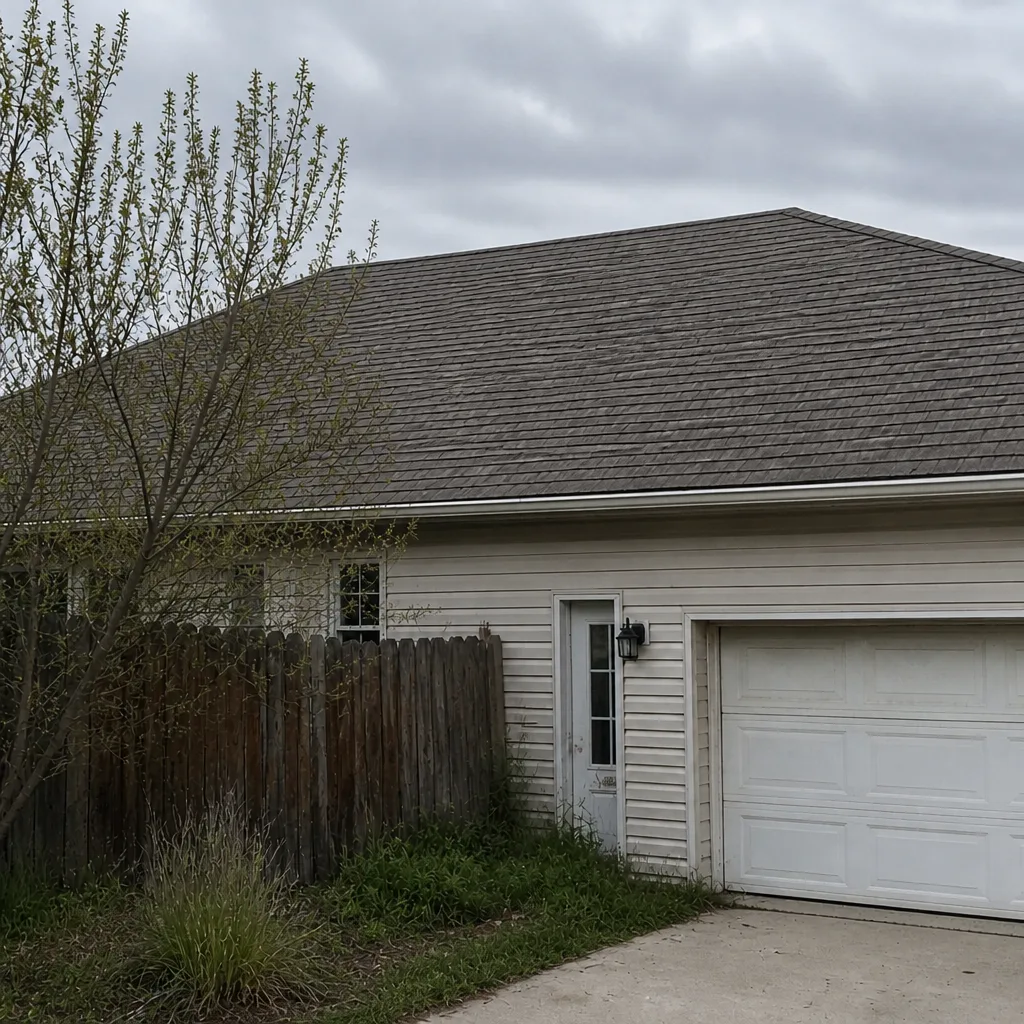 After
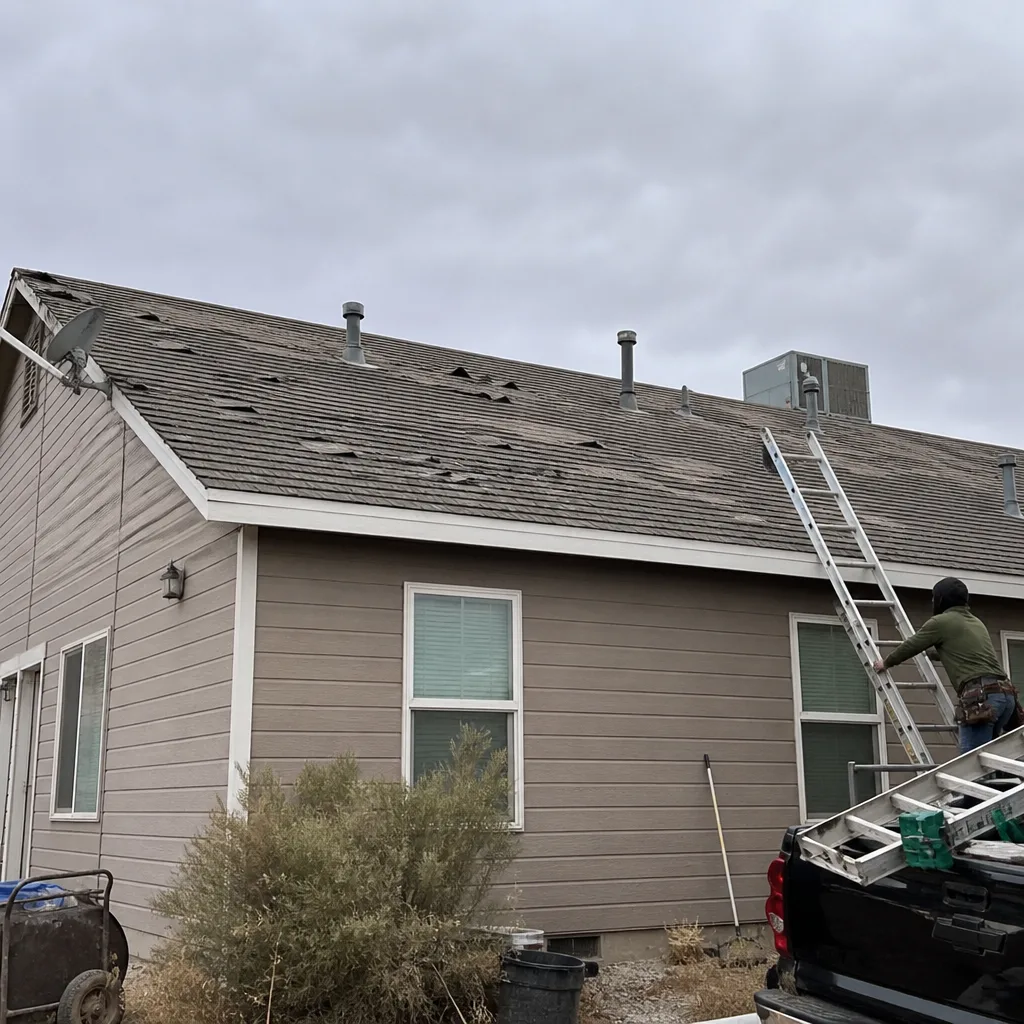 Before
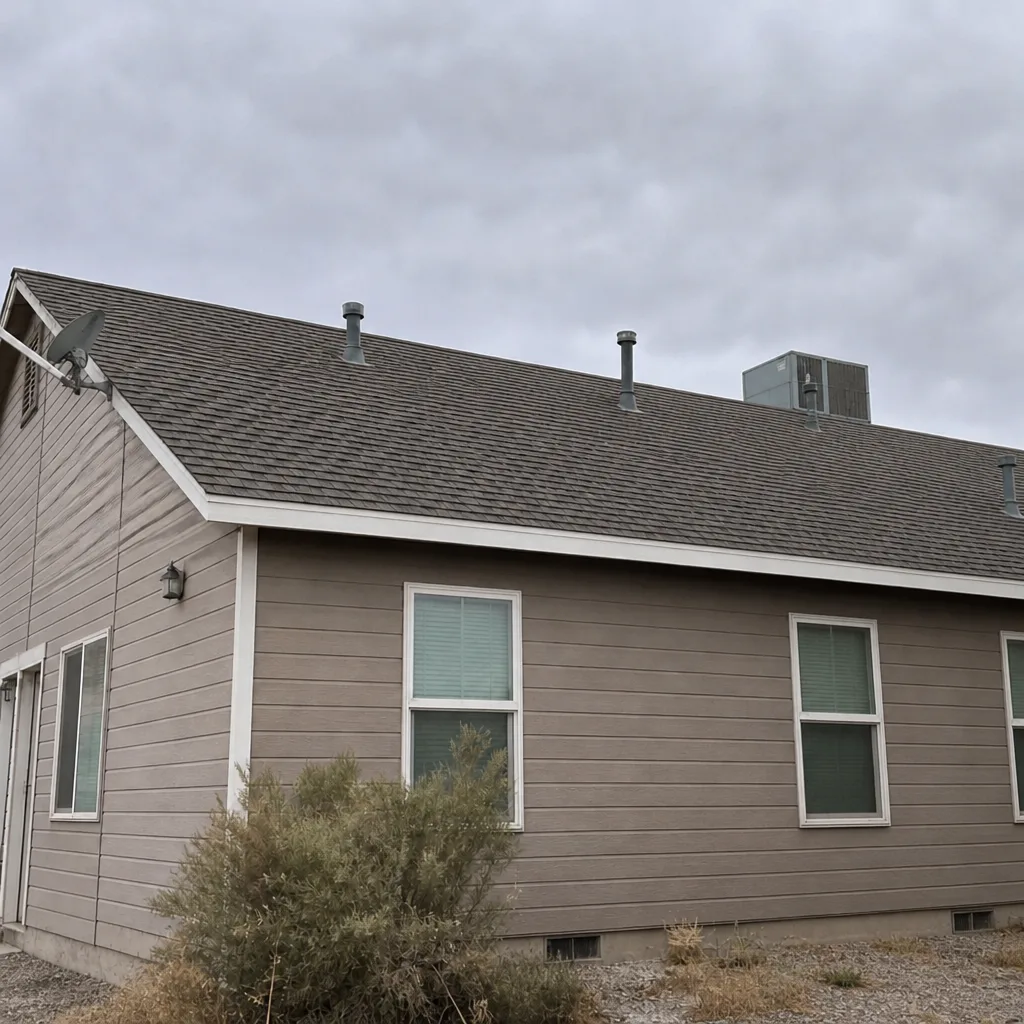 After
How to Clean Gutters in Enterprise, NV (Where the Problem Is Gravel, Not Leaves)
Cleaning gutters in Enterprise, NV means removing wind-blown desert gravel and decomposed granite from valley pans and scuppers, not raking out leaves, and the job is best done from up on the roof rather than from a ladder at the eave. A stiff brush or low-pressure wet flush breaks the compacted crust loose; a leaf blower or garden hose alone won’t touch it. The most useful cleaning window on this housing stock is late spring, before June, because the sediment that backs water under tile overlaps is what a monsoon downburst punishes. If you want it assessed rather than guessed at, call Ridgeline Roofing Co. Enterprise at (844) 228-4119 for a free estimate.
Most gutter guides tell you to clear the leaves twice a year, spring and fall. In Enterprise there are almost no trees dropping leaves. What fills your gutters, drains, and scuppers is desert gravel carried by wind off the McCullough Range, and it moves year-round rather than seasonally. The cleaning calendar and the cleaning method are both different here.
Key Takeaways
- Sediment in Enterprise gutters is mineral grit and decomposed granite, not leaf litter. It packs and hardens instead of matting.
- A leaf blower or hose won’t break compacted gravel; a stiff brush or low-pressure wet flush will.
- Pre-monsoon cleaning (before June) matters more here than any fall cleanup.
- Foam-roof scuppers need separate attention, because gravel against the flange traps water at the perimeter seal.
- The cleaning that counts happens on the roof, not beside it.
Why Enterprise Gutters Fill With Gravel Instead of Leaves
Enterprise sits at the south edge of the Las Vegas Valley directly beneath the McCullough Range, and that position explains the debris. Wind comes off the bajada, picks up loose grit and decomposed granite, and drops it into every valley pan and scupper it crosses. There’s no tree canopy here to intercept it first. The surrounding desert supplies the material, and the wind does the delivery. Roofers working in older, denser parts of the valley rarely see this failure mode, because they don’t have a mountainside shedding gravel onto their roofs.
The housing stock makes it worse. Enterprise was largely built out from the 1990s through the 2010s, so most roofs are original or first-replacement concrete tile with a smaller share of clay tile, plus some asphalt shingle and a growing number of low-slope foam roofs on newer stucco homes. Barrel-tile eaves and tile valley pans create ledges and pockets where grit settles. Once it’s there, it stays until someone gets on the roof and digs it out.
The rainfall pattern seals the deal. Monsoon downbursts off the range are short and violent. A valley pan full of gravel can’t pass that much water fast enough, so it backs up under tile overlaps. That’s not a slow leak you notice over weeks. It’s water in the house the same afternoon. Getting the sediment out before the rains arrive is the whole point of a pre-monsoon cleaning.
What to Look For: A True Gutter Cleaning vs. a Driveway Walk-By
When you hire this work or evaluate your own gutters, the question to ask is simple: does the debris actually come out, or does it just get pushed around? A crew that stands at the eave with a blower and a hose can knock down the loose surface grit, but compacted sediment stays put. Here’s what separates a real cleaning from a cosmetic pass.
- The crust gets broken, not sprayed. Decomposed granite and wind-driven gravel pack into a hard layer in valley pans. It takes a stiff brush or a controlled low-pressure wet flush to break it apart. High-pressure blasting risks driving grit under tile edges or tearing the foam coating underneath.
- The valley pans get checked, not just the gutters. The pan is where the sediment accumulates and where water backs up. If nobody’s looking in the pan, nobody’s cleaning the right thing.
- Foam-roof scuppers get their own pass. On low-slope foam roofs, once gravel packs against the scupper flange, standing water sits there and wears down the foam coating at the perimeter seal. That perimeter is the most expensive repair point on the roof. A cleaning that skips the scuppers is saving the wrong money.
- Someone is actually on the roof. On one and two-story barrel-tile homes, a six-foot ladder reaches the fascia but not the valley pans. The work that matters most on Enterprise housing stock happens up top.
- You see photos of what was found. A verbal report delivered from the driveway tells you nothing about sediment load. Photos taken from the roof let you decide whether a cleaning or a repair is the right next step.
If you’re not sure which category your roof needs, our Gutters & Accessories in Enterprise page covers the full scope of what we handle. For the broader picture of how gutters fit into the rest of a roof system, see our main Gutters & Accessories page.
How We Clean Gutters in Enterprise: Method and Timing
Our approach starts on the roof, not at the ladder. Technicians who have up to 10 years of experience climb up, photograph the sediment load in the valley pans and gutters, and then clear it with the right tool for the material underneath. On tile and gravel-packed pans that means a stiff brush or a low-pressure flush. On foam roofs it means working carefully around the scupper flanges so the coating isn’t gouged.
Then there’s the calendar. Pre-monsoon cleaning, done before June, is the single most important maintenance window on Enterprise roofs. Fall cleanup matters far less here than in a leafy climate. A light mid-season check after a big wind event makes sense when a gust has clearly moved material around, and our home page has the overview of how we work with homeowners year-round. The inspection is photo-documented, so you’ll see exactly what was in the pan before and after. That’s part of how we back every job with our 90-Day Done Right Promise: if something we cleared or touched isn’t right, we come back and make it right.
Here’s roughly what gutter and valley-pan work runs in this market, kept in line with our no-hassle upfront pricing. The number on the estimate is the number on the invoice.
| Service | Typical Range |
|---|---|
| Standard gutter cleaning (per story) | $150 – $350 |
| Valley-pan sediment clearing (compacted gravel) | $200 – $450 |
| Foam-roof scupper clearing with coating check | $150 – $400 |
| Photo-documented roof and gutter inspection | Free with service |
| Gutter repair (resealing, reattachment) | $125 – $400 |
| Downspout replacement (per run) | $100 – $250 |
Because this is desert gravel and not leaf litter, a cleaning that’s priced like a leaf job usually skips the pan work that matters. We’d rather scope it honestly up front and use the materials that hold. When a repair or replacement is the right call, we install products from GAF, CertainTeed, Owens Corning, and Boral, among others, with no substitutions.
When to Call a Pro Instead
Cleaning gutters means being on a roof, often at a height where a fall does real damage. If your home is two stories, if the roof pitch is steep, or if the gutters are packed with compacted gravel that needs a brush and a controlled flush rather than a light rake, that’s a trained professional’s job. Same goes for anything that puts you near tile edges or foam coatings that tear easily. Our phones are answered by a live person around the clock, including nights and weekends, so you’re never leaving a message after a wind event and hoping someone calls back.
FAQs
Once a year, timed before June, is the baseline for most Enterprise homes, with a light check after major wind events. Unlike a leafy climate where fall cleanup is the big one, here the pre-monsoon window carries the most weight because that’s when sediment needs to be out of the valley pans before the downbursts arrive. If your home borders open desert, it may need more frequent checks. Call (844) 228-4119 for a free estimate tailored to your roof.
Because the debris is compacted mineral grit and decomposed granite, not loose leaves, and it packs into a hard crust that air and water skim over. It takes a stiff brush or a low-pressure wet flush to break it up. Forcing it with high pressure or a blower can drive grit under tile edges. Call (844) 228-4119 and we’ll clear it correctly.
Cleaning is far cheaper, by a wide margin, than fixing water that backs under tile or a foam-roof perimeter seal worn down by standing water. A pre-monsoon cleaning typically runs $150 to $450, while perimeter repairs on a foam roof or underlayment damage from backed-up water climb into four figures. Call (844) 228-4119 for an exact quote, and we’ll tell you honestly whether you’re looking at a cleaning or a repair.
Yes, both happen on the same trip. Our technicians take photo-documented images from the roof, so you can see the actual sediment load and gutter condition rather than hearing about it from the driveway. That lets you decide with real information. Call (844) 228-4119 to schedule a free assessment.
Get Your Gutters Done Right Before the Monsoon
If you’d rather have it looked at than wrestle a ladder and a brush yourself, Ridgeline Roofing Co. Enterprise offers a no-pressure assessment in Enterprise, complete with photos from your actual roof. We’ve stood behind local roofs since 1984, and we’ll be here when the next wind event rolls off the McCullough Range. Call (844) 228-4119 for a free estimate.
Written by the team at Ridgeline Roofing Co. Enterprise, serving Enterprise, NV.