
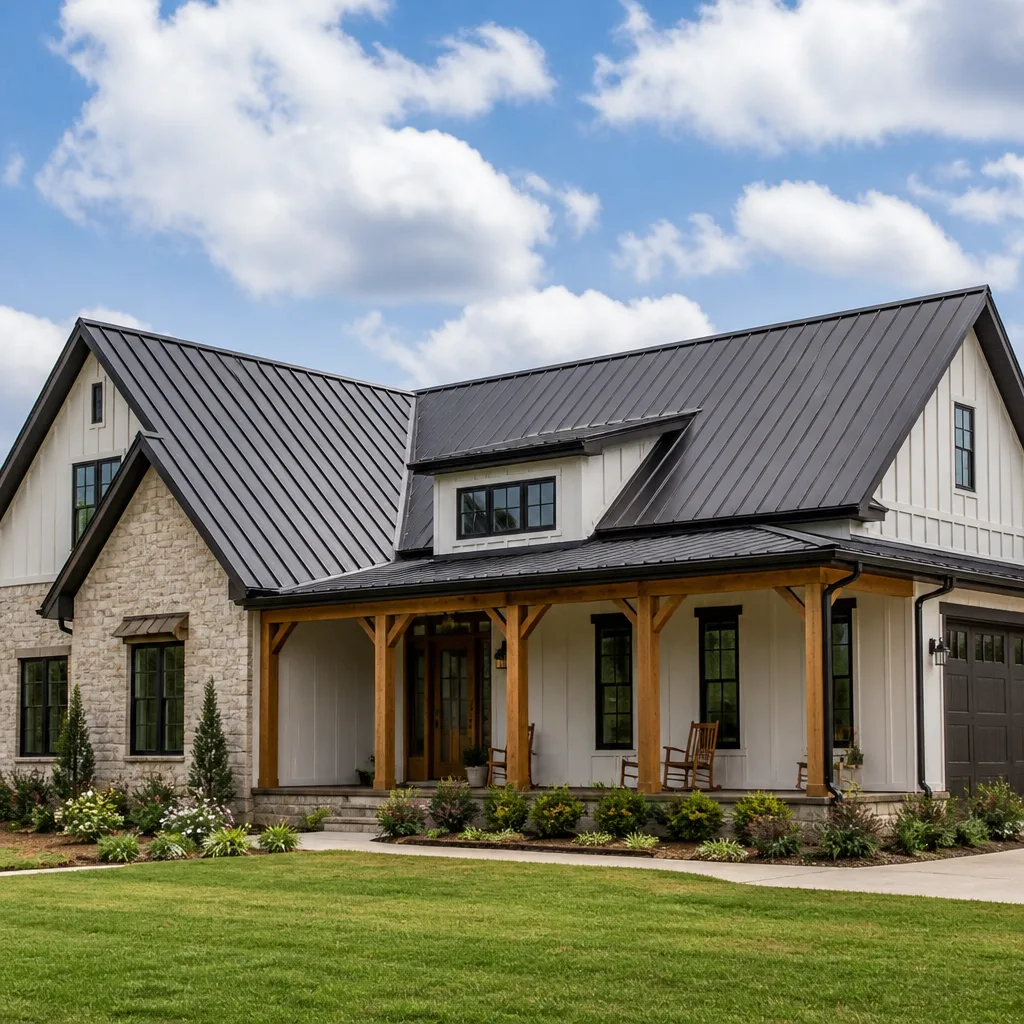
 Metal roofing
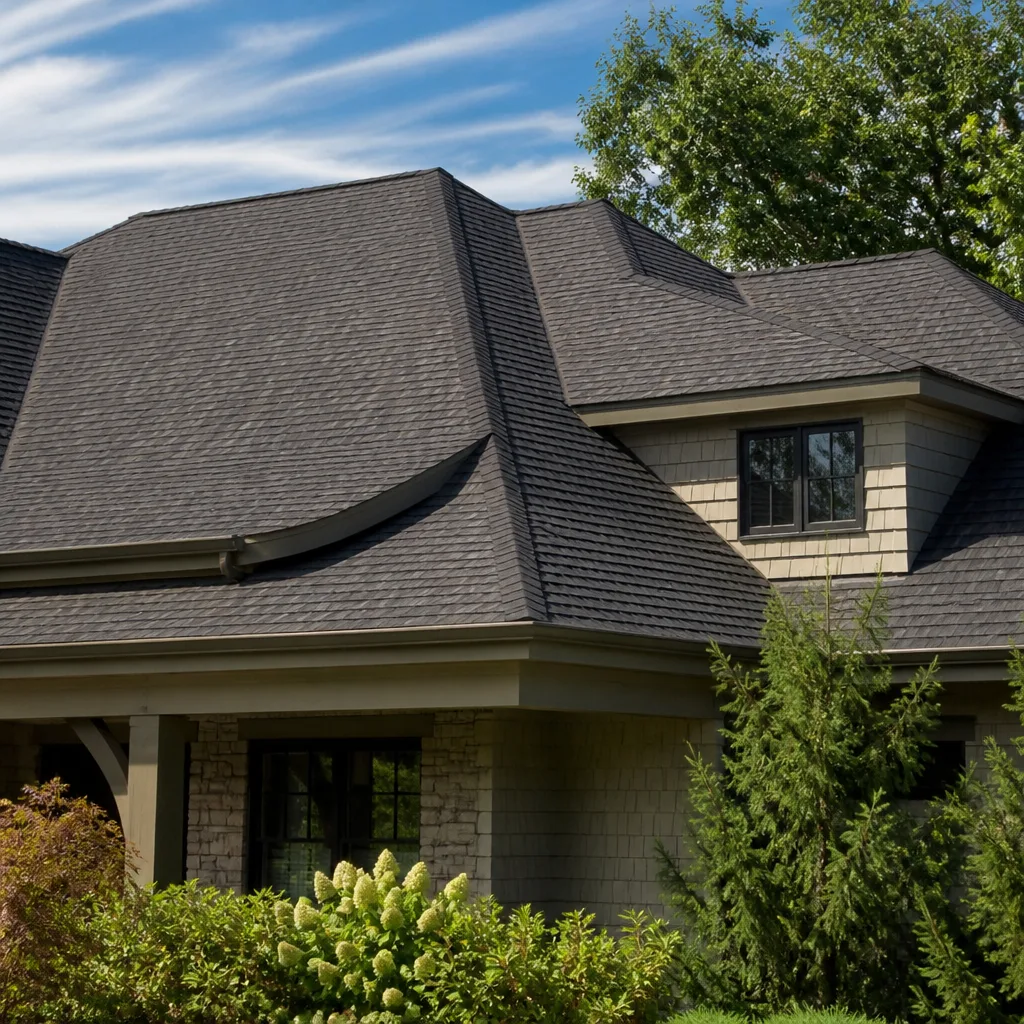 Architectural shingles
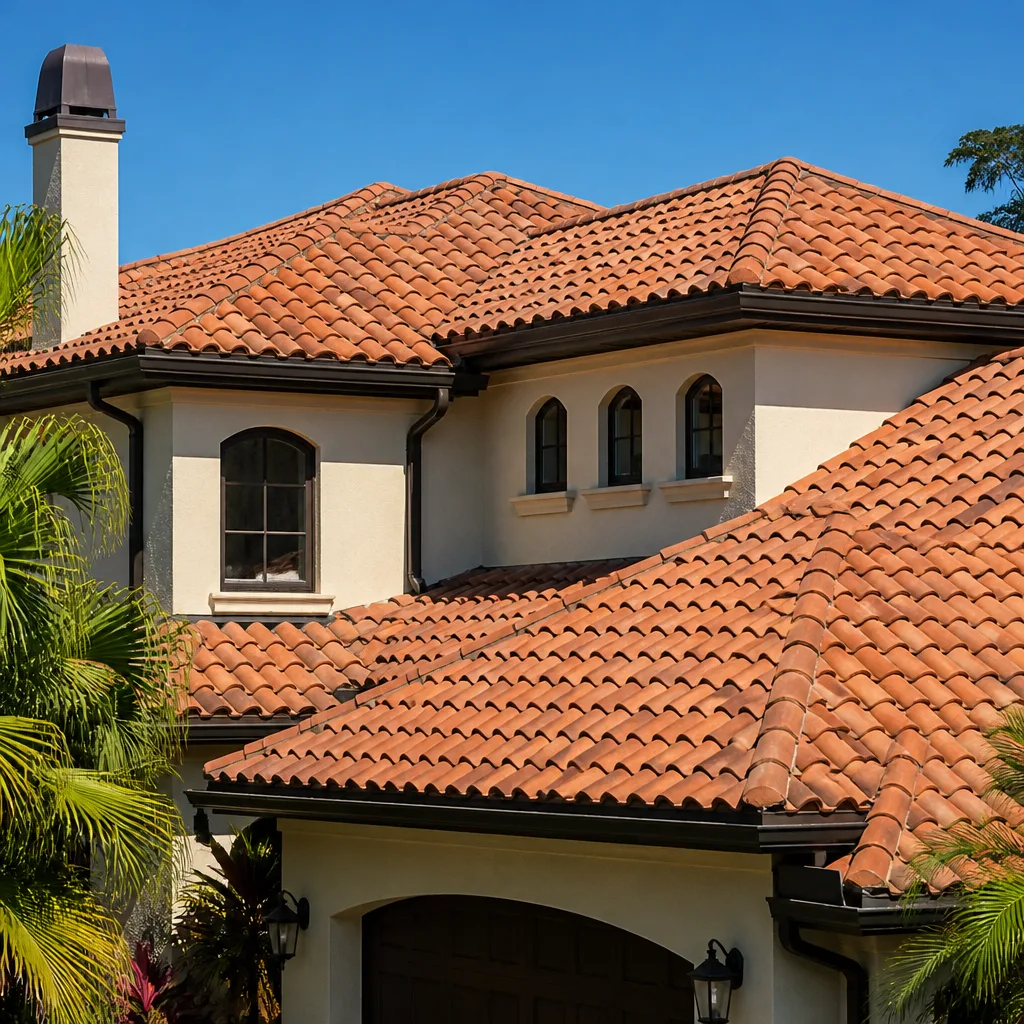 Tile roofing
 GAF
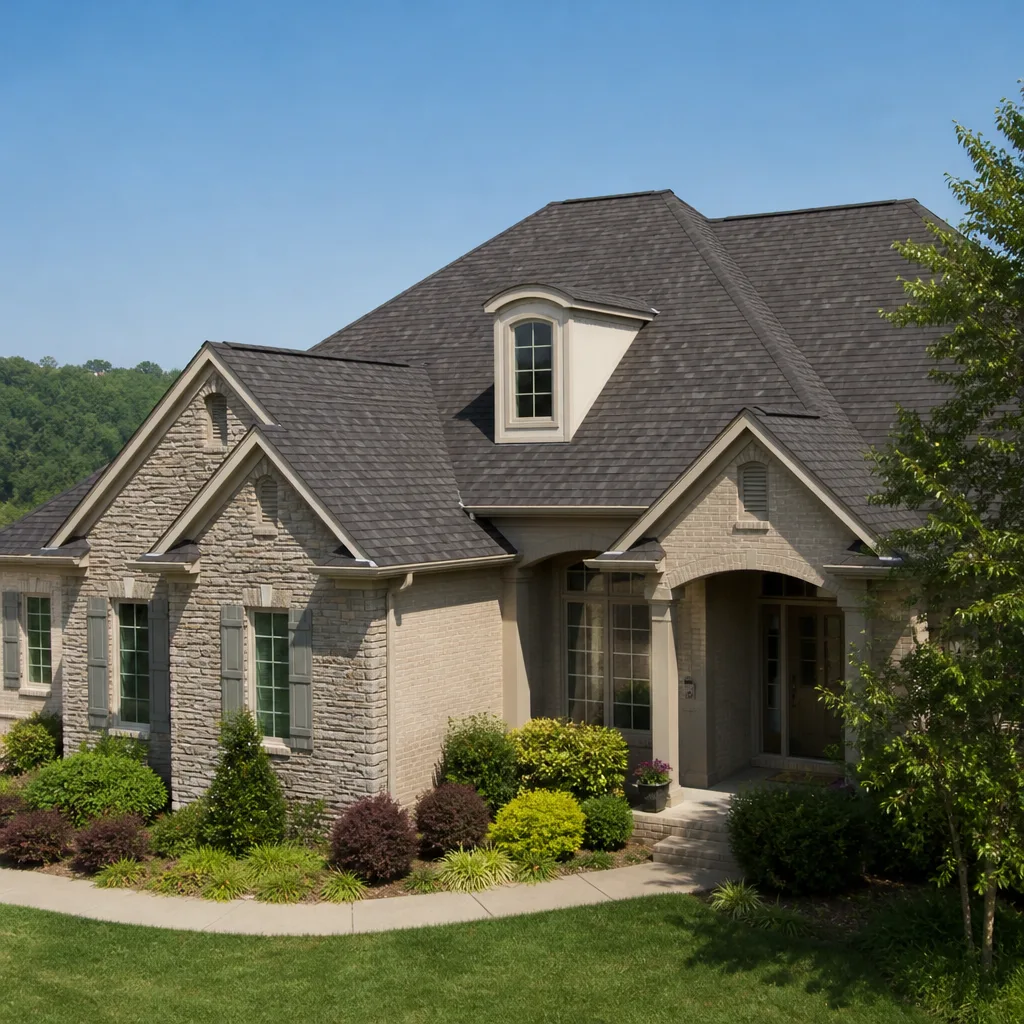 Owens Corning
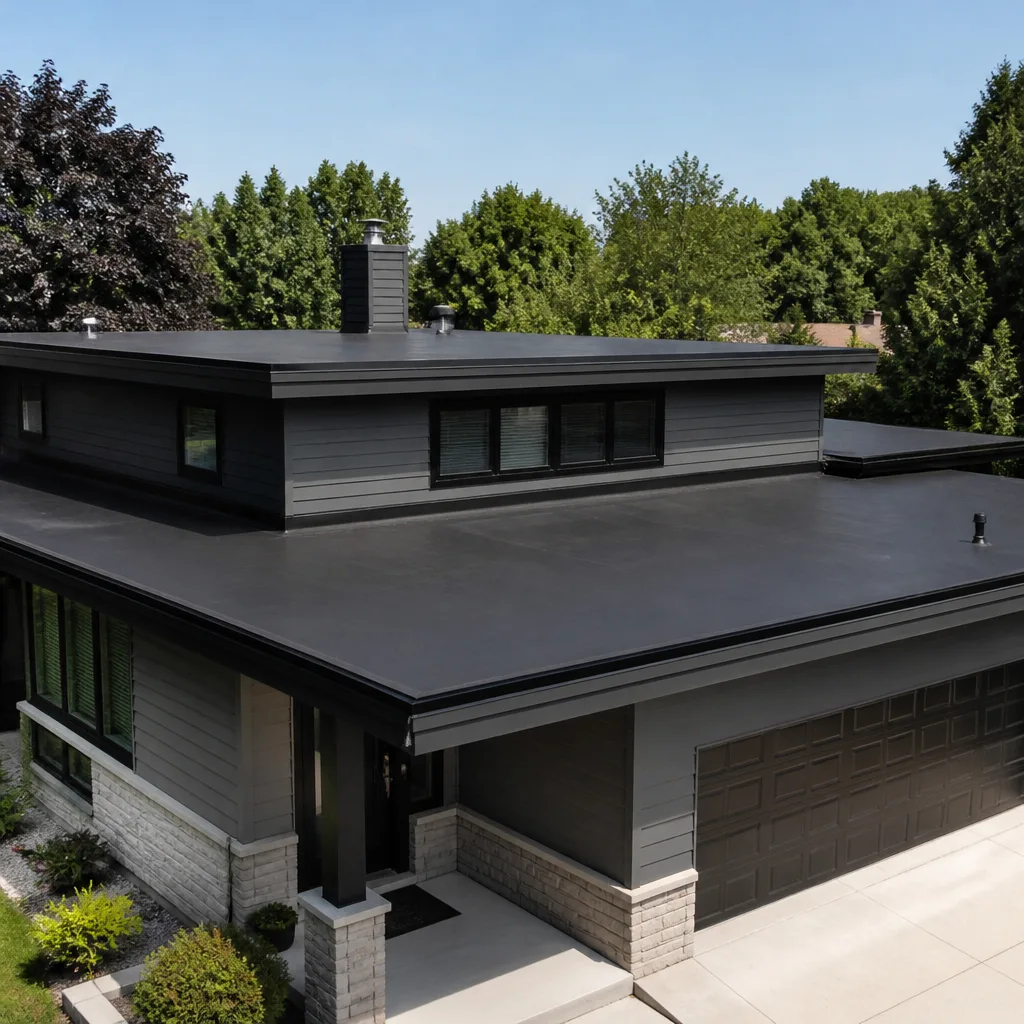 Flat & low-slope
Free roof inspection with deck photos before we talk money - GAF and Owens Corning certified installation
Styles & brands we work with
- Architectural shingles
- Metal roofing
- Tile roofing
- GAF
- Owens Corning
- Flat & low-slope
See the difference
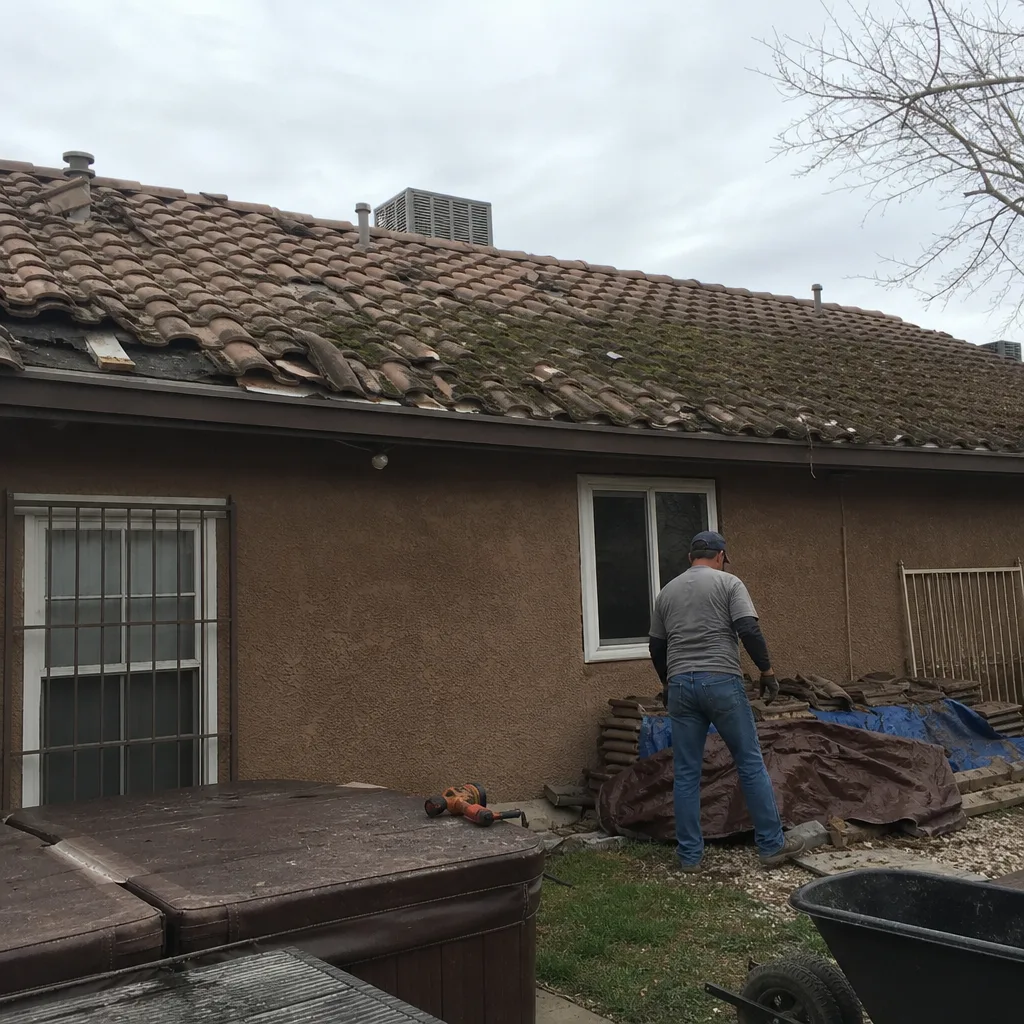 Before
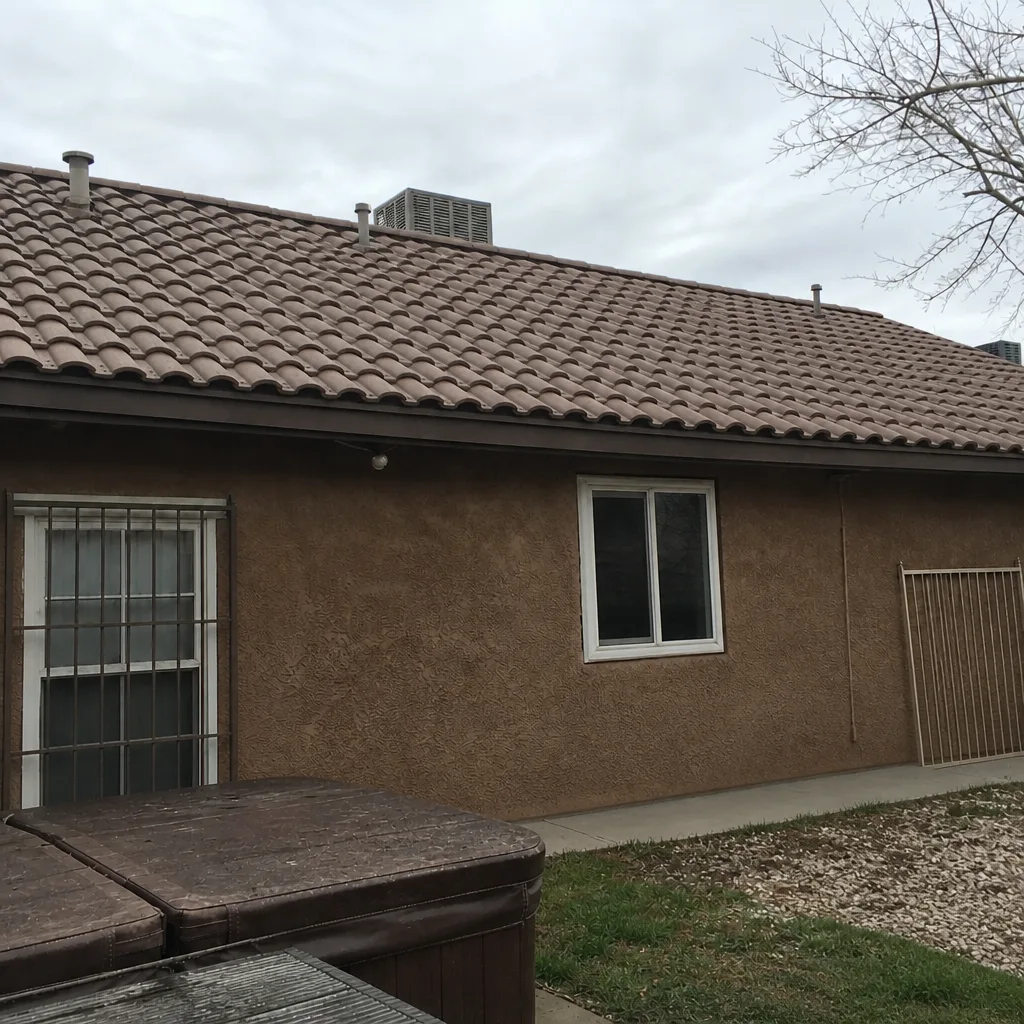 After
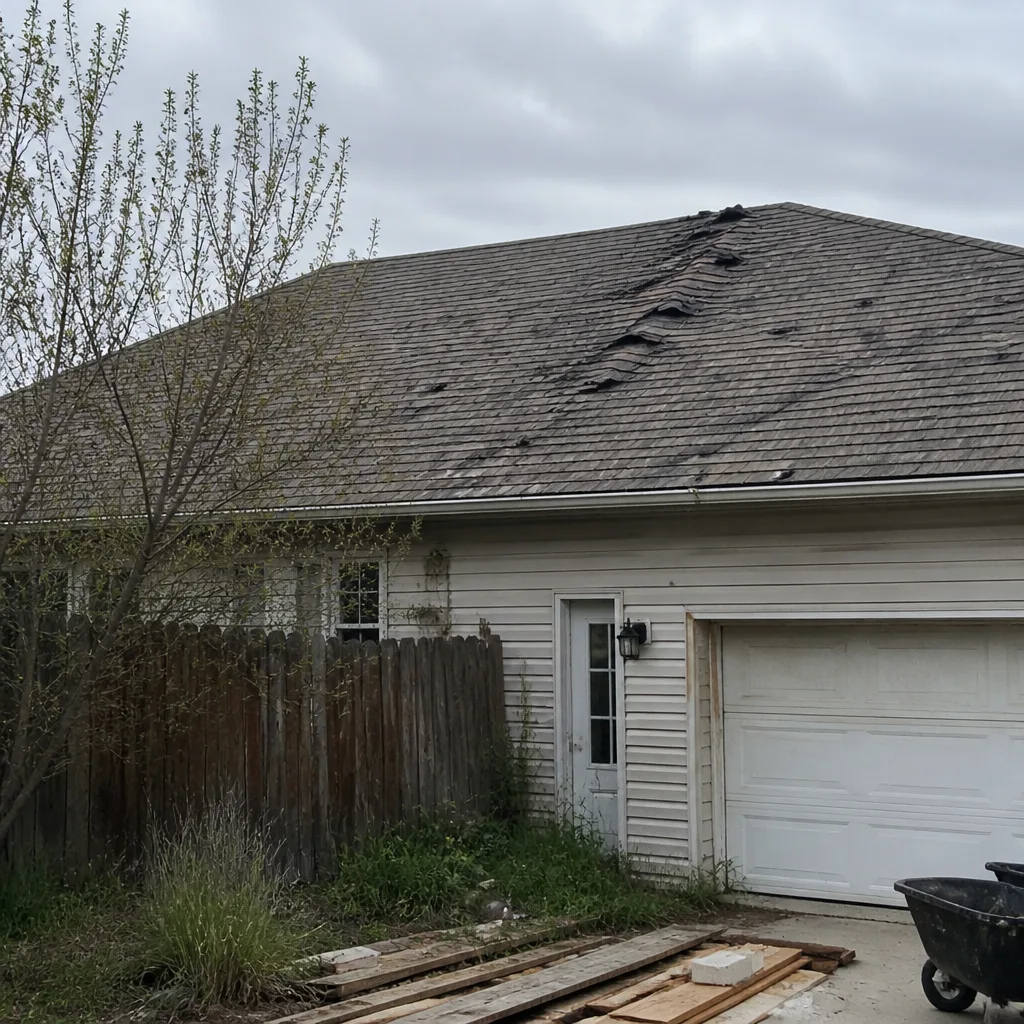 Before
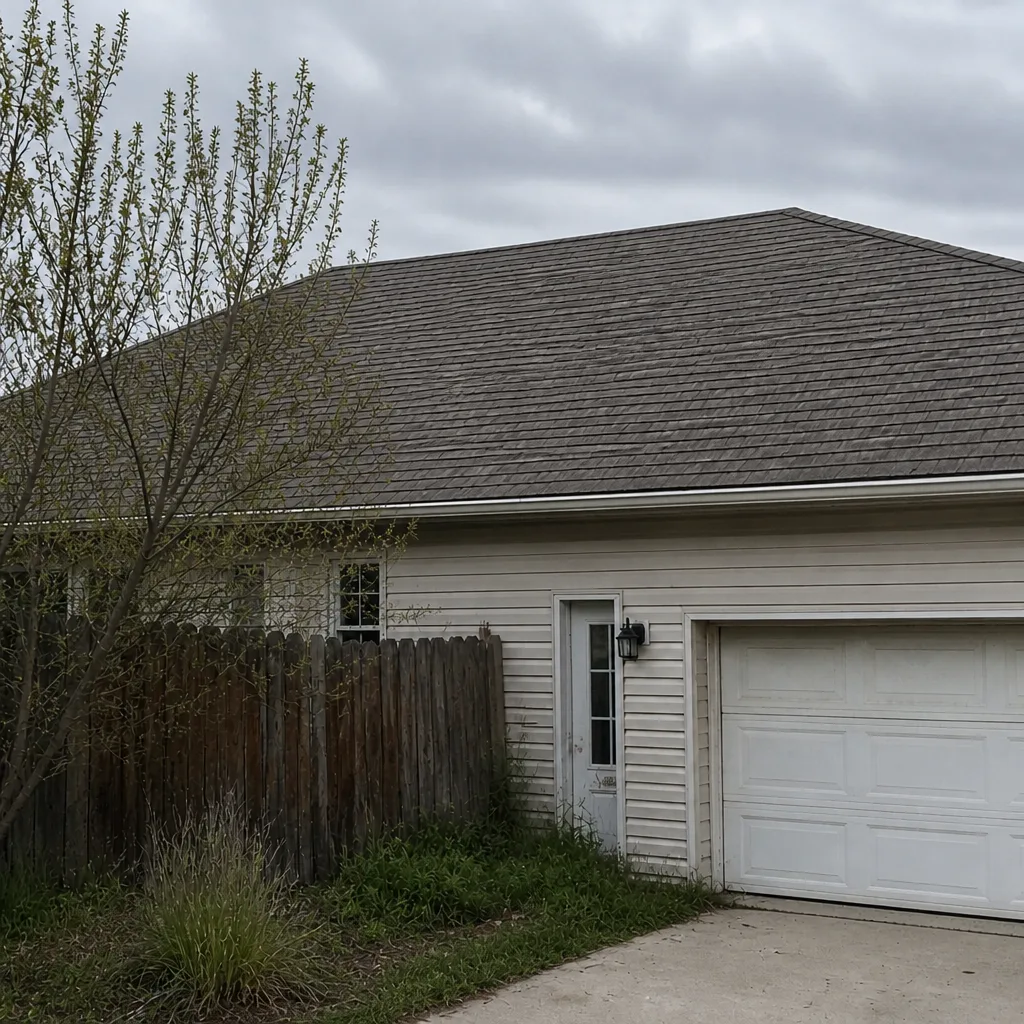 After
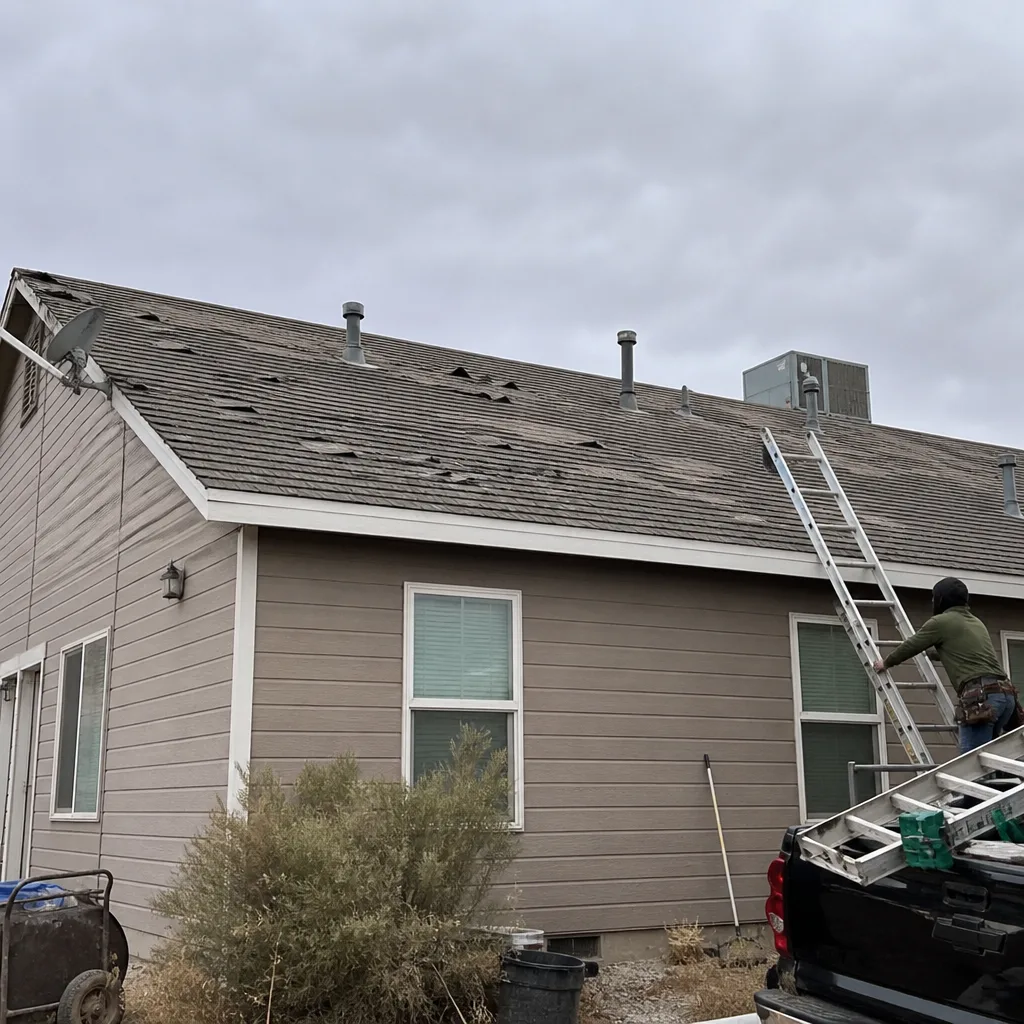 Before
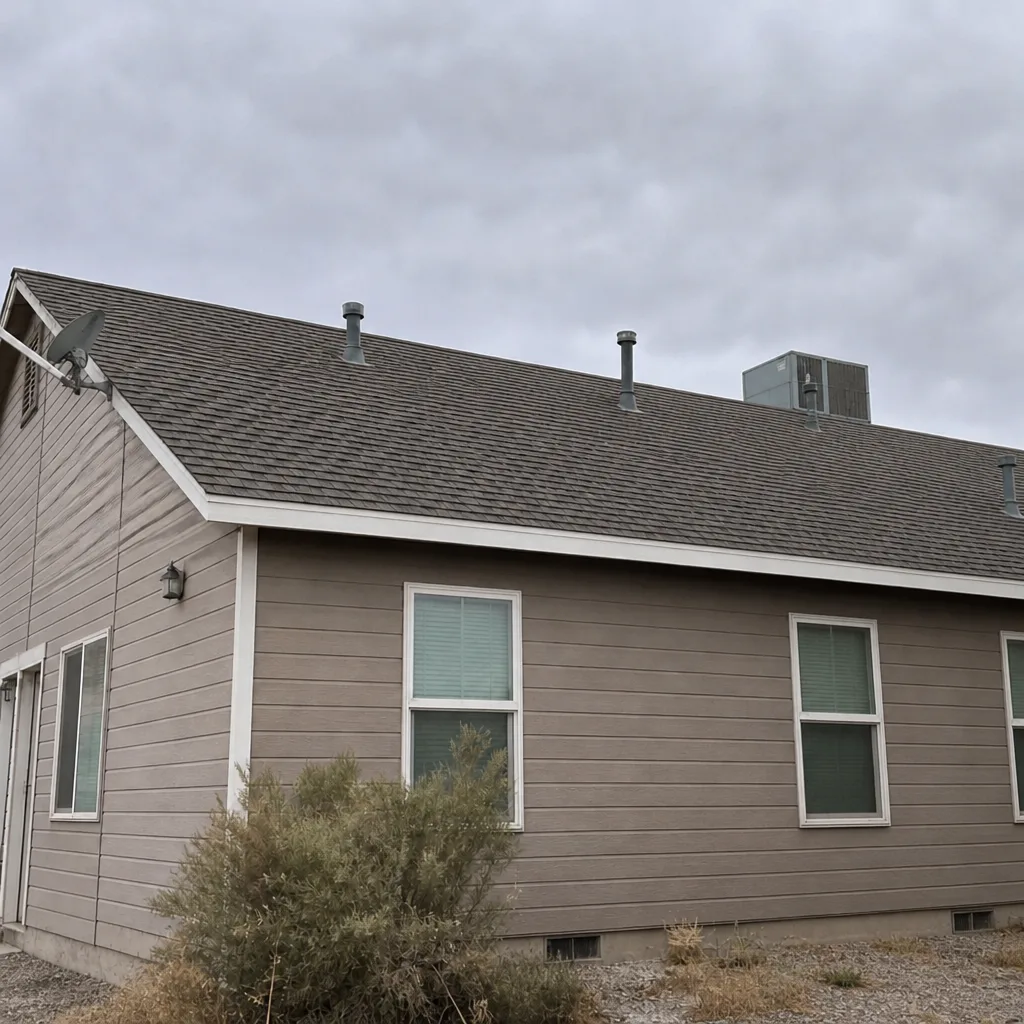 After
How Long Does a Roof Last in Enterprise, NV? The Honest Local Numbers
The short answer: in Enterprise, most roofs last less than half of what national lifespan charts promise. A concrete tile roof that “lasts 50 years” on paper is realistically a 22-30 year roof under a McCullough Range sun that pushes UV index to 10-11 from April through October. GAF and CertainTeed architectural shingles that chart at 25-30 years run closer to 18-22 here. Standing seam metal with a Kynar coating is the outlier that holds nearest its national number. Not because Enterprise roofs are built badly, but because nothing on those charts accounts for abrasive desert wind, relentless UV, and rare freeze events that crack tile the sun has already embrittled.
If your roof is past 20 years old and you’ve never had a professional inspection, call (844) 228-4119. Ridgeline Roofing Co. Enterprise answers the phone with a live person, 24/7, and a photo-documented inspection is free.
Why National Lifespan Charts Are Wrong for Enterprise
Those lifespan tables are climate-averaged. They assume a moderate sun, a moderate wind, and a fairly stable annual temperature range. Enterprise sits at the south edge of the Las Vegas Valley directly beneath the McCullough Range, and that geography rewrites the math three ways.
- UV oxidation. From April through October the UV index here regularly runs 10-11. That energy attacks underlayment and foam coatings the same way it attacks a neglected car finish, breaking them down years earlier than a chart built on an average American climate assumes.
- Abrasive desert wind. Wind blowing off the desert floor carries dust and fine gravel. On shingles it scours granules loose long before the integrity of the shingle itself gives out. On foam coatings it leaves micro-scoring that becomes the entry point for water and sun damage.
- Freeze events. They’re rare, but a single hard freeze can crack tile and sealant that UV has already dried and stiffened. The very sun that degrades the material sets up the cold-snap failure later.
After a monsoon gust, the pattern we see across Enterprise is specific: whole ridges of concrete tile flipped and the underlayment left exposed, with wind-blown gravel packed into valley pans and scuppers. That failure mode is tied to sitting at the base of the McCullough Range. Roofs in older, denser parts of the valley don’t take the same scouring.
Roof Lifespan by Material in Enterprise (Adjusted for Local Reality)
The table below is the reason this page exists. The middle column is what the manufacturer or a national chart will tell you. The right column is what we see on Enterprise roofs.
| Material | National Claim | Enterprise Reality |
|---|---|---|
| Concrete tile | 40-50 yrs | 22-30 yrs |
| Coated foam with elastomeric re-coats | 20-25 yrs | 15-20 yrs if the re-coat cycle slips |
| GAF / CertainTeed architectural shingle | 25-30 yrs | 18-22 yrs |
| Standing seam metal with Kynar coating | 40-70 yrs | 35-50 yrs |
Notice the pattern. Tile falls short by roughly 15-20 years against its marketing number. Shingle comes in meaningfully under. Metal is the one material that holds close to its promise in our climate, which is part of why it costs more up front. The material isn’t inferior; the environment simply works on it harder than the chart assumes.
The Underlayment Is the Real Clock on a Tile Roof
Here’s the piece most homeowners miss. On a tile roof, the tile is a shell. The layer that actually keeps water out is the underlayment beneath it. In Enterprise, where UV is punishing and heat cycling is constant, that underlayment can be fully degraded a decade before the tile on top shows any wear at all.
That’s the quiet reason a roof “in good shape” suddenly leaks. You’re looking at tile that still looks like tile. What’s underneath it quit years ago. A real inspection gets onto the roof and checks the underlayment, the sealant, the flashings, and the field tile, with photos taken from the actual roof rather than a speech delivered in the driveway. When we find the underlayment is done but the tile is sound, that changes the conversation from a full replacement to a re-underlayment. That’s the honest assessment you want before you commit to anything.
Enterprise’s Housing Stock Is Hitting Its Replacement Window Right Now
Enterprise was mostly built out between the 1990s and the 2010s. That means a large share of the homes in this community are now 13 to 30 years old, with original or first-replacement roofs. Concrete tile and some clay tile dominate, with a smaller share of asphalt shingle and a growing number of low-slope foam roofs on stucco-clad homes in the newer subdivisions.
Line up that build-out range against the Enterprise reality column in the table above and the picture gets clear. A 2002 house with original concrete tile is now 24 years into a roof that realistically lasts 22-30 in this climate. A 2009 house with original shingle is right at the edge of its local service life. The surprise replacement most homeowners dread isn’t random. It’s a roof that reached its real end years before the national chart said it would. If your home went up in that window, a Roof Replacement & Installation conversation may be closer than the calendar suggests.
What We’ve Actually Seen on Enterprise Roofs
Ridgeline Roofing Co. has been standing behind roofs in this valley for over 42 years. That history means we’ve seen the same roofs at installation and at end of life. We watched how a certain tile held up through twenty monsoon seasons. We’ve gone back to foam roofs after the coating cycle lapsed and know exactly what the UV did to them. A company operating here for three years can’t offer you that record, regardless of what it claims in a truck-side ad.
Our technicians have up to 10 years of experience, are background-checked, and arrive in uniform. Every inspection is documented with photos. We’re an authorized installer of GAF, CertainTeed, and Owens Corning, so the materials on your roof are the materials the spec calls for, with no substitutions. And every job carries the written 90-Day Done Right Promise: if it isn’t right, we come back and make it right, no paperwork and no arguing.
How to Judge Whether Your Enterprise Roof Is Near the End
You don’t need to climb a ladder to get a sense of it. Watch for these signals, and call a professional for anything that involves getting on the roof. Height work on a desert roof is genuinely dangerous, and a fall off a two-story tile roof is not a risk worth taking to save an inspection fee.
- Granules collecting in gutters or at the base of downspouts in visible amounts on a shingle roof.
- Tiles that have shifted, cracked, or gone missing, especially along ridges after a monsoon.
- Any interior staining on the ceiling near exterior walls.
- Foam coatings that chalk, crack, or peel, or a re-coat that slipped past its cycle.
- Gravel or dust packed heavily into valley pans and scuppers, which traps moisture and stresses the edges.
- The roof simply being original to a 1995-2012 home with no re-roof in its history.
Call (844) 228-4119 and we’ll tell you where your roof actually stands. If a repair makes sense, we’ll say so. If you’re within a year or two of a replacement, we’ll tell you that too, and you won’t be pressured either way.
FAQs
Most roofs in Enterprise last 15 to 30 years depending on material, which is notably shorter than national figures suggest. Concrete tile runs 22-30 years here, architectural shingle about 18-22, coated foam 15-20, and standing seam metal 35-50. The gap comes from high UV, abrasive desert wind off the McCullough Range, and rare freeze events. Call (844) 228-4119 for an inspection that uses local numbers, not a national chart.
Because the underlayment beneath the tile has failed, and the tile is only the shell. In Enterprise, UV degrades underlayment years before the tile shows wear, so a roof that looks intact on top can be wide open to water underneath. A photo-documented inspection checks the layer that matters. Call (844) 228-4119 to get it looked at before it finds you.
Yes, standing seam metal with a Kynar coating holds closest to its national lifespan, at roughly 35-50 years in our climate. It’s the one material that doesn’t fall far short of its claim, because metal resists the UV and wind abrasion that punish tile, foam, and shingle. It costs more up front, and it tends to be the last roof a homeowner buys. Call (844) 228-4119 for a free estimate.
A repair is cheaper when the issue is isolated, like a few shifted tiles or a flashing failure, while replacement wins when the underlayment is gone or the roof is past its local service life. On a 1990s or 2000s Enterprise home with an original roof, replacement is often the honest answer. Call (844) 228-4119 for a free second opinion on any written estimate and a straight talk on which one you need.
Get a Straight Answer on Your Roof’s Real Lifespan
If you’d rather have it looked at by someone who’s been on these roofs for over four decades, Ridgeline Roofing Co. Enterprise offers a no-pressure assessment right here in Enterprise - photos, local numbers, and a square deal: the price we quote is the price you pay. Call (844) 228-4119 for a free estimate.
Written by the team at Ridgeline Roofing Co. Enterprise, serving Enterprise, NV.