
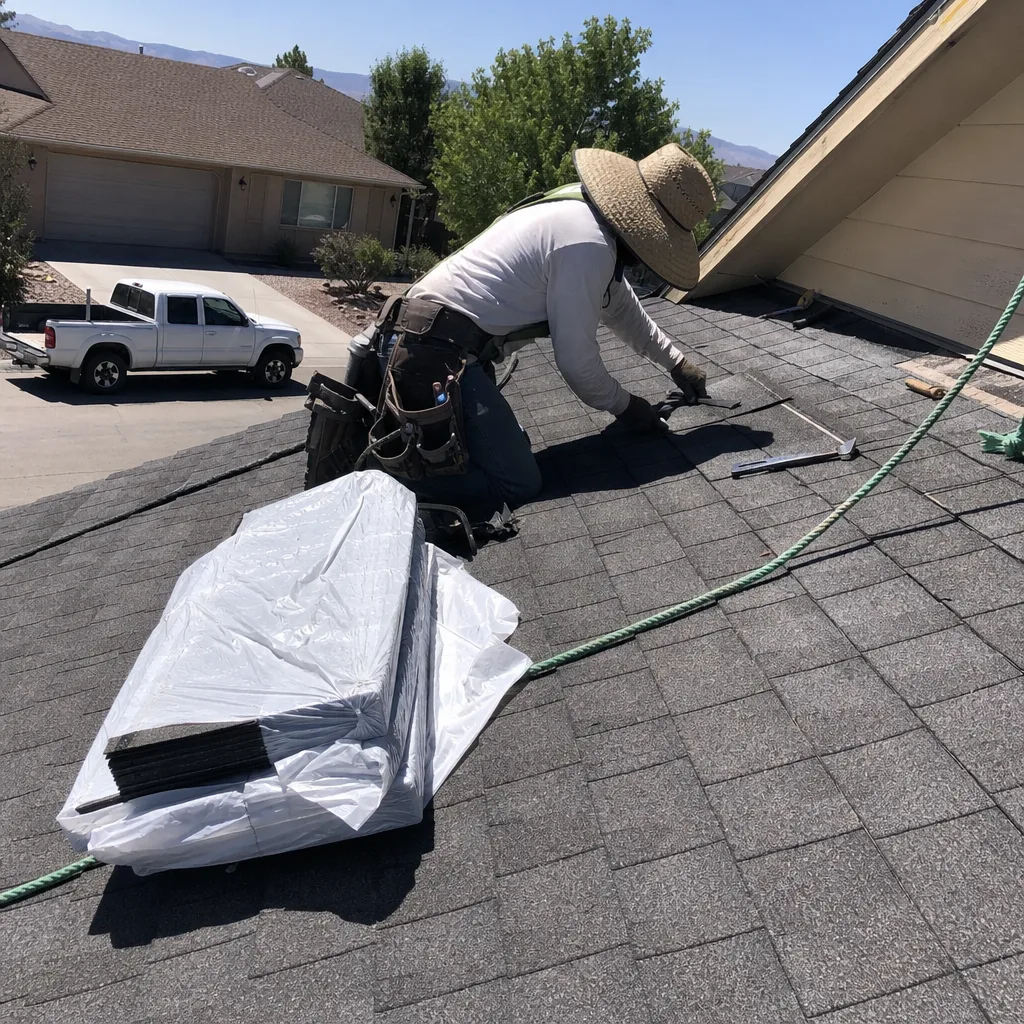
Last updated November 18, 2026
 Architectural shingles
 Metal roofing
 Tile roofing
 GAF
 Owens Corning
 Flat & low-slope
Free roof inspection with deck photos before we talk money - GAF and Owens Corning certified installation
Emergency & Storm Damage Warning Signs Every Homeowner Should Know
A roof can lose enough granules in one hail event to cut its remaining lifespan in half without a single shingle visibly missing. That is not a scare tactic; it is what we find again and again on roofs in Enterprise that looked perfectly fine from the driveway. The homeowner did not call because nothing looked wrong, and by the time we were up there, the field of the roof had been thinning for months. In 42 years of inspecting local roofs, we have learned that the damage that matters most is usually the damage you cannot see from the ground. This guide walks through the signs that actually matter, in order of what to check first and what each one means.
Quick Answer
The clearest signs of storm damage are interior-side, not street-side: granule deposits at downspout openings, daylight or water staining in the attic deck, compressed or damp insulation, and stress marks where rafters meet the deck. Wind damage shows as lifted, creased, or missing shingles on edges and ridges, while hail damage shows as granule loss, dimpling, and bruise marks that reveal themselves underfoot. If you have had a storm in the last 48 hours and see any of these, get a photo-documented inspection before you file a claim.
Styles & brands we work with
- Architectural shingles
- Metal roofing
- Tile roofing
- GAF
- Owens Corning
- Flat & low-slope
Table of Contents
- Granule Loss: The Hail Damage You Cannot See
- Attic Warning Signs After a Storm
- The 48-Hour Window: Active Water Intrusion
- How Wind Damage Presents Differently From Hail Damage
- Why “No Visible Damage” Is Not “No Damage”
- What You Can Safely Check and Document
- What a Photo-Documented Professional Inspection Looks Like
- What Insurance Adjusters Look For
Granule Loss: The Hail Damage You Cannot See
Every asphalt shingle is coated with mineral granules that shield the mat underneath from sun and weather. When hail strikes, those granules shear off. You will not see a hole, and you will not see missing shingles. You will see the evidence downstream. Walk to where your gutters discharge and look at the splash pad and the ground below. A scattering of dark grit is normal after a season. A dense pile of granules the color of your roof is not. That is the signature of a hail event that hit hard enough to matter.
In our experience, this is the single most overlooked sign after a Colorado Front Range storm. Hail in the Enterprise area typically moves through fast and small in diameter, and a 3/4-inch hail stone can scuff off most of the protective granules across an exposed slope in one pass. Check inside the gutter troughs too, especially where the downspout outlet meets the gutter. Granule deposits there are a leading indicator.
- Dark, sand-like grit concentrated at downspout outlets – the classic granule loss pattern
- Granules pooling below splash pads after a dry day – there was no rain to wash them loose
- Grit visible in the corners of the roof deck near valleys – hail shingles migrate downhill
- Darker, thinner-looking sections of shingle – the mat is exposed where granules are gone
If you have a bucket or a clear container, scoop a sample from the downspout runoff and look at the consistency. Large amounts of uniform color-matched grit are worth a phone call. Our roof repair in Enterprise team sees this pattern most often on south-facing slopes, which weather faster here in the high sun.
Attic Warning Signs After a Storm
The attic is where a roof tells the truth. A driveway view shows you the face. The attic shows you the body. If you can safely access your attic, get a good flashlight and inspect the underside of the roof deck after any significant storm. Three things to look for:
- Daylight penetration. Turn off the attic light and look for pinholes of daylight between boards or shingles. Any daylight coming through the decking is a compromised layer. One or two pinholes near a vent is normal. Daylight spread across a section is not.
- Insulation compression. Where water has blown in or leaked through a valley or vent, insulation bats flatten and darken. Look for compressed, matted, or discolored insulation near the eaves, valleys, or any point where exterior water could reach it.
- Rafter stress marks. Wind uplift can pull at the deck fastening, leaving a small brown stain or crack where the rafter meets the sheathing. You will also see water staining that runs vertically down the deck board. These are the same marks a trained adjuster looks for and the reason a professional inspection beats a driveway glance.
One note of caution: never walk the roof deck or stand on the rafters in the attic to inspect damage. Wet insulation, brittle decking, and hidden soft spots cause serious falls. If daylight is visible or you suspect water intrusion, call for an inspection and stay on the ground. Insulation is a large part of what makes an attic safe to inspect, so if it is wet, leave it alone.
The 48-Hour Window: Active Water Intrusion
Some storm damage announces itself within two days. If you see these signs in the first 48 hours after a storm, the roof is actively leaking, and the clock matters. Moisture getting into a deck for more than a few days sets up rot, and rot is the expense you do not want.
- Water-stained ceiling drywall, especially near exterior walls, under valleys, or at the top of a dormer. A coffee-colored ring, however faint, is active.
- Sagging or spongy ceiling texture in one localized spot. Do not press on it; the ceiling can give.
- Musty or earthy smell in upstairs rooms that does not go away after airing out.
- Bubbling paint or peeling wallpaper near exterior walls or the ceiling line.
- Water running down an interior wall with no plumbing fixture nearby. That is a roof leak, not a pipe.
If a ceiling bulge appears, place a bucket underneath and do not puncture it. Call for a professional inspection. In our years working roofs around Enterprise, we have seen a single 48-hour window make the difference between a repair and a full deck replacement. The interior signs are the ones homeowners miss and the ones that lead to the bigger bills.
How Wind Damage Presents Differently From Hail Damage
Wind and hail are not the same injury, and the distinction matters for how the claim is filed and what gets replaced. Wind works on the edges and the fasteners: ridges, rakes, and the shingles along the perimeter. It lifts the tab, creases the shingle, and either tears it off or leaves it standing proud of its neighbor. Hail works the whole field: it scuffs granules, dimples the shingle face, and bruises the mat under the granules, which softens the whole slope’s lifespan.
- Wind signature: uplifted or missing shingles on ridges, rakes, and edges; creased tabs; loose granules in gutters; cap shingles turned sideways.
- Hail signature: granule loss across the field of the slope; small dark dimples underfoot; a soft, bruised feel at the strike points; fine fractures in the shingle mat.
Why it matters: wind damage is usually considered an “act of God” event on the claim, while hail requires evidence of a strike. If you tell the adjuster “the wind took it” and there was actually a hail event, you have mischaracterized the loss and it could slow the claim down. We recommend that you photograph and note the storm itself: size of hail, direction the wind came from, and time. That record is the single biggest help to your adjuster and to us.
Why “No Visible Damage” Is Not “No Damage”
A shingle can be functionally compromised and still look intact from the ground. Hail damage is often “closed-cell” damage: the granule face is textured, the tab is in place, and a casual look shows nothing. In our repairs, we regularly find hail damage on a roof that passed a homeowner’s driveway inspection and failed badly under professional inspection. The difference is scale and perspective. From the driveway you see shingles. From the roof, you see the granule distribution, the dimpling pattern from every angle, and the shingle under the ridge cap. That is why the roof replacement and installation in Enterprise conversation often starts with an inspection, not a sales pitch.
The practical fix is a photo-documented inspection. The inspector should be on your actual roof, taking shots of every slope, not delivering a scary speech in the driveway. We take photos from the roof surface and hand them to you, and we stand behind that inspection with the 90-Day Done Right Promise: a written workmanship guarantee with no paperwork and no arguing.
What You Can Safely Check and Document
You should document without climbing. Here is the safe, five-minute check we suggest to homeowners after any significant storm.
- Walk the perimeter at ground level. Look up and along the roofline for missing, lifted, or creased shingles, especially at the ridge and the edges.
- Inspect gutters and downspout outlets. Collect a sample of the grit and note the color and amount.
- Check the attic from the access point with a flashlight. Look for daylight through the deck, staining, and compressed insulation.
- Photograph the storm evidence. Capture hail on a table, the direction of downed branches, the size of the stones if you have a reference.
- Note the interior rooms. Photograph any ceiling stains, bubbling paint, or musty smell, and date the photos.
None of these steps involve a ladder. If anything in the list looks wrong, stop and call. Our uniformed, background-checked technicians are trained to inspect from roof level, and we do not ask a homeowner to do the climb. If you would like a second opinion on an existing specialty roofing in Enterprise estimate, we offer that free, too.
What a Photo-Documented Professional Inspection Looks Like
A real inspection is a record, not a speech. When we inspect a roof, we start with photos from the ground and then move to the roof surface. Every slope gets photographed. We show you the granule loss in close-up, the dimpling under the granules, the creasing at the ridges, and the interior attic deck if we can access it safely. You get the photo set, and we walk you through it before we talk about a number. That is what a square deal looks like: the same standard we would hold for our own mother’s house.
If a repair is the answer, we quote it in writing. The number on the estimate is the number on the invoice. If the answer is a replacement, we install from seven manufacturer lines, including GAF, CertainTeed, Owens Corning, Atlas, and Tamko, with no substitutions. Our crews train apprentices into journeymen, our technicians are background-checked and in uniform, and our phones are answered by a live person. If it is not right, we come back and make it right; that is the 90-Day Done Right Promise in plain terms.
If you have not had a roof inspection since the last major storm in Enterprise, call us now and we will get on the books. Our crews do most jobs in a single visit, and the inspection itself is what tells you whether you have a problem.
What Insurance Adjusters Look For
An adjuster’s job is to match evidence to the claimed event. The evidence they look for is almost entirely the same list in this guide: granule loss in the gutters and on the splash pad, hail strikes on vents and soft metals, creased or creased-and-lifted shingles at the ridges, and interior water marks. They will compare the date on your photos to the storm date. They will look for a strike mark on the shingle face, not just the surface color. If you tell the adjuster “the roof is fine, we looked from the driveway,” you have just told them there is no claim. If you hand them a photo-documented inspection, the conversation changes entirely.
The 48-hour interior signs are the adjuster’s best friend, because they prove active intrusion. Granule loss is the storm’s fingerprint. That is why we suggest you save the storm evidence and let a professional document the roof. A written inspection from a local contractor carries real weight.
Common Mistakes to Avoid
- Trusting the driveway view. The view from the driveway is the least reliable view of the roof’s condition. Every roof we inspect tells us more in five minutes on the surface than it did in five passes from the street.
- Waiting a week to inspect the attic. The first 48 hours tell you whether water is getting in. By day 7 the evidence is there, but the repair is often bigger.
- Climbing up to check it yourself. Wet surfaces, hailstones, and brittle shingle decks are a bad combination. Let trained technicians own the roof walking.
- Assuming “no damage seen” means no problem. That is the most expensive assumption in this guide. A roof can lose half its remaining lifespan without a single missing shingle.
- Hiring the first truck that arrives. After a storm, out-of-town crews show up and are gone before the next spring. Ask who will be there in ten years. It matters in Enterprise where the hail cycle repeats.
- Not documenting the storm itself. Photos of hail size and wind direction can decide the claim. Take them.
- Ignoring granule deposits. Those dark granules in the downspout are the strongest physical evidence you will ever have of a hail hit, and they are free to photograph.
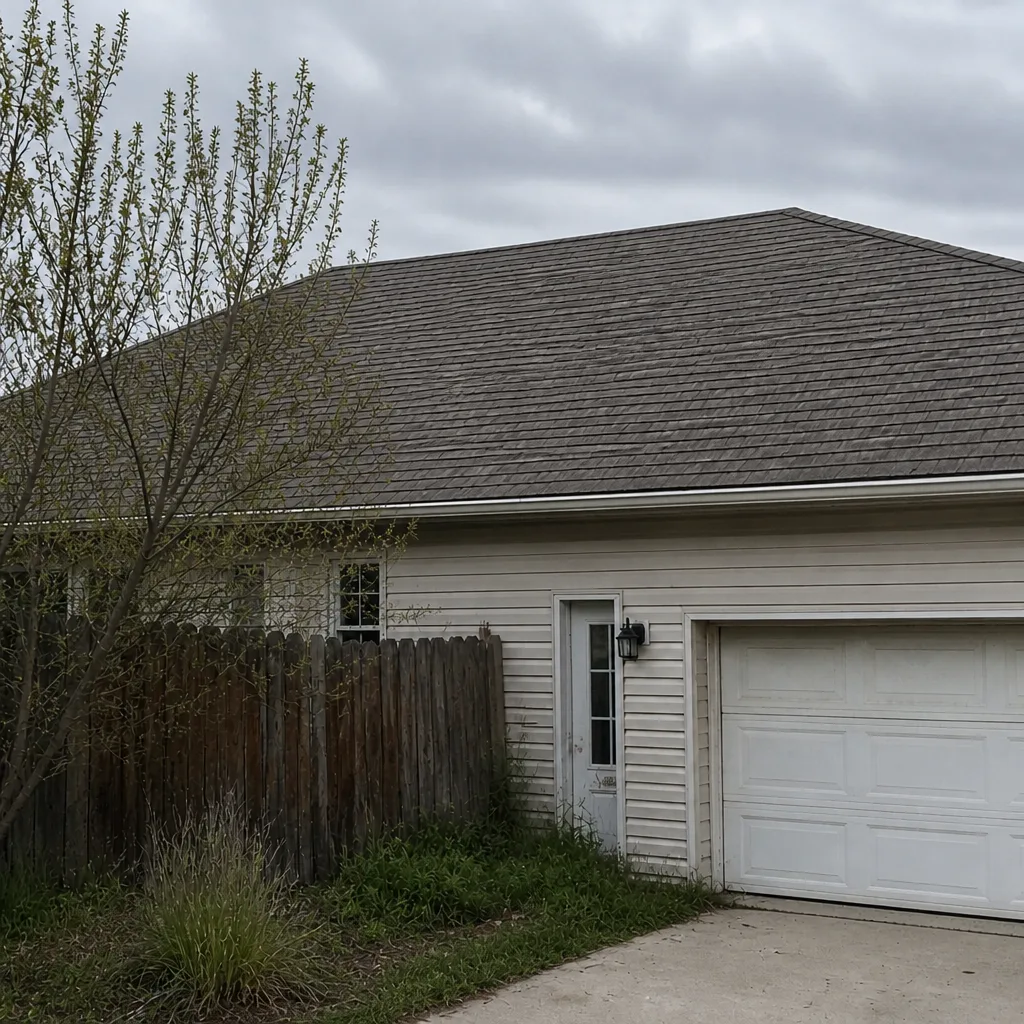
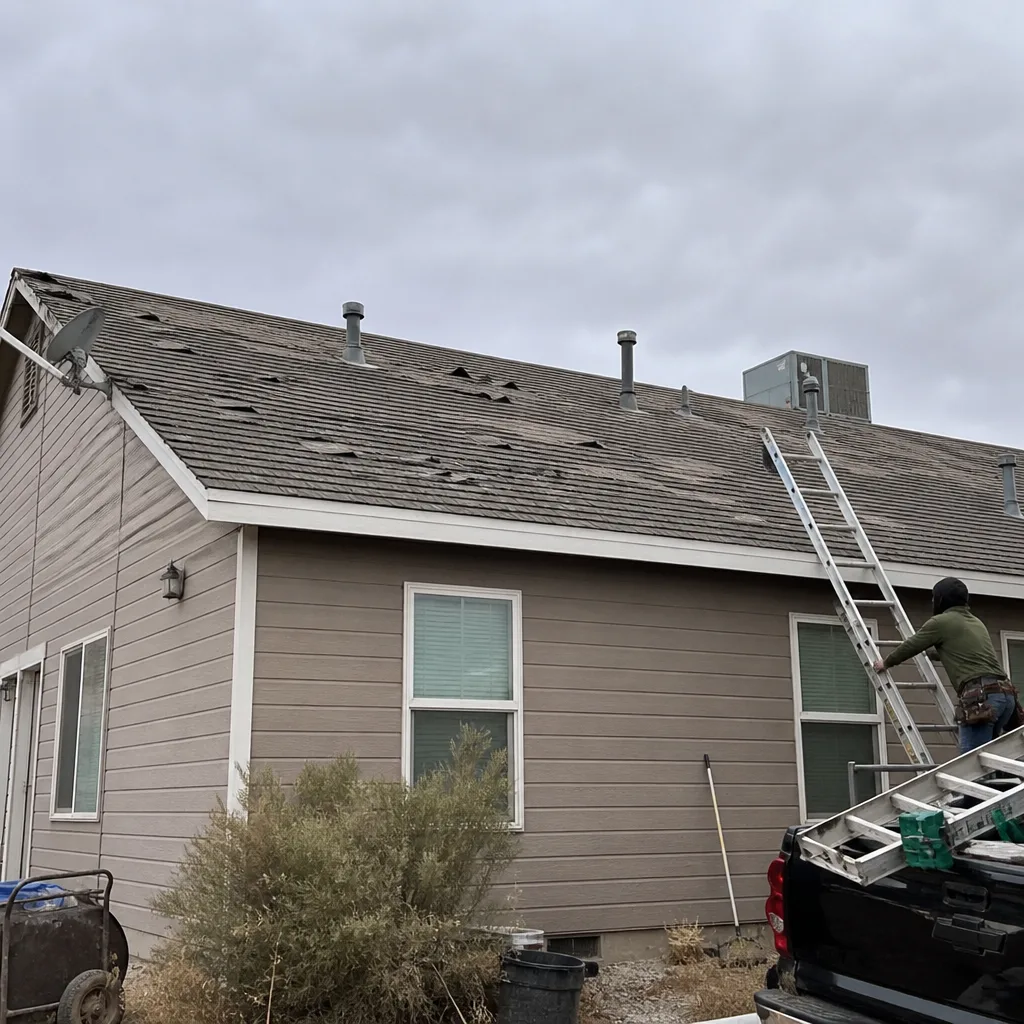
See the difference
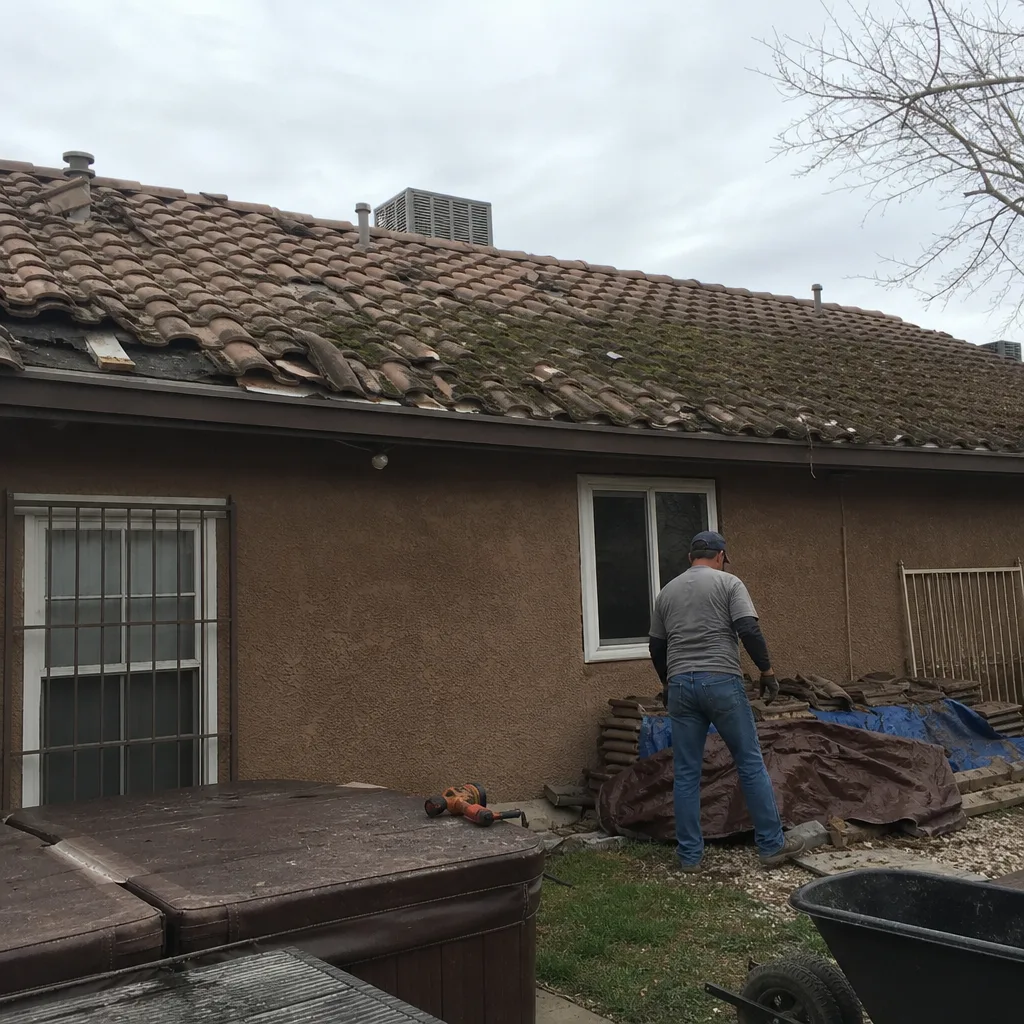 Before
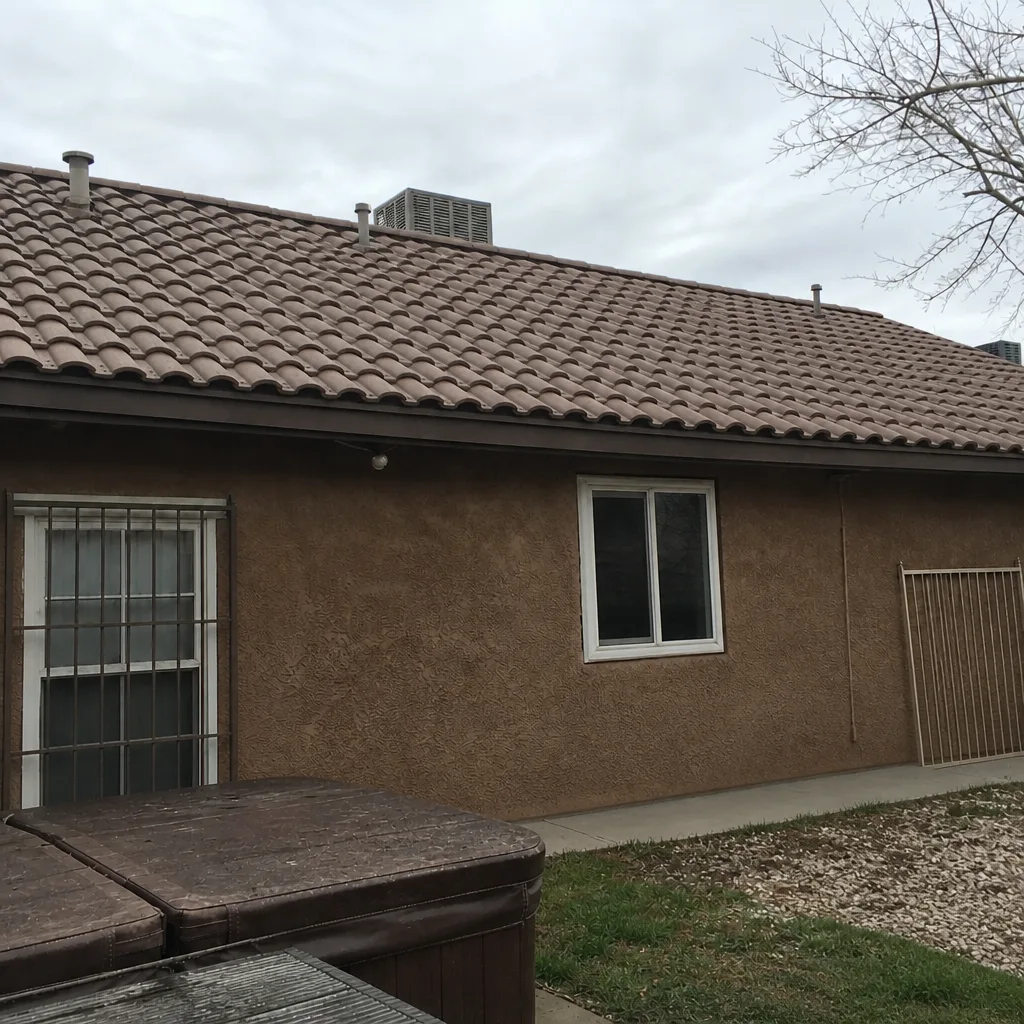 After
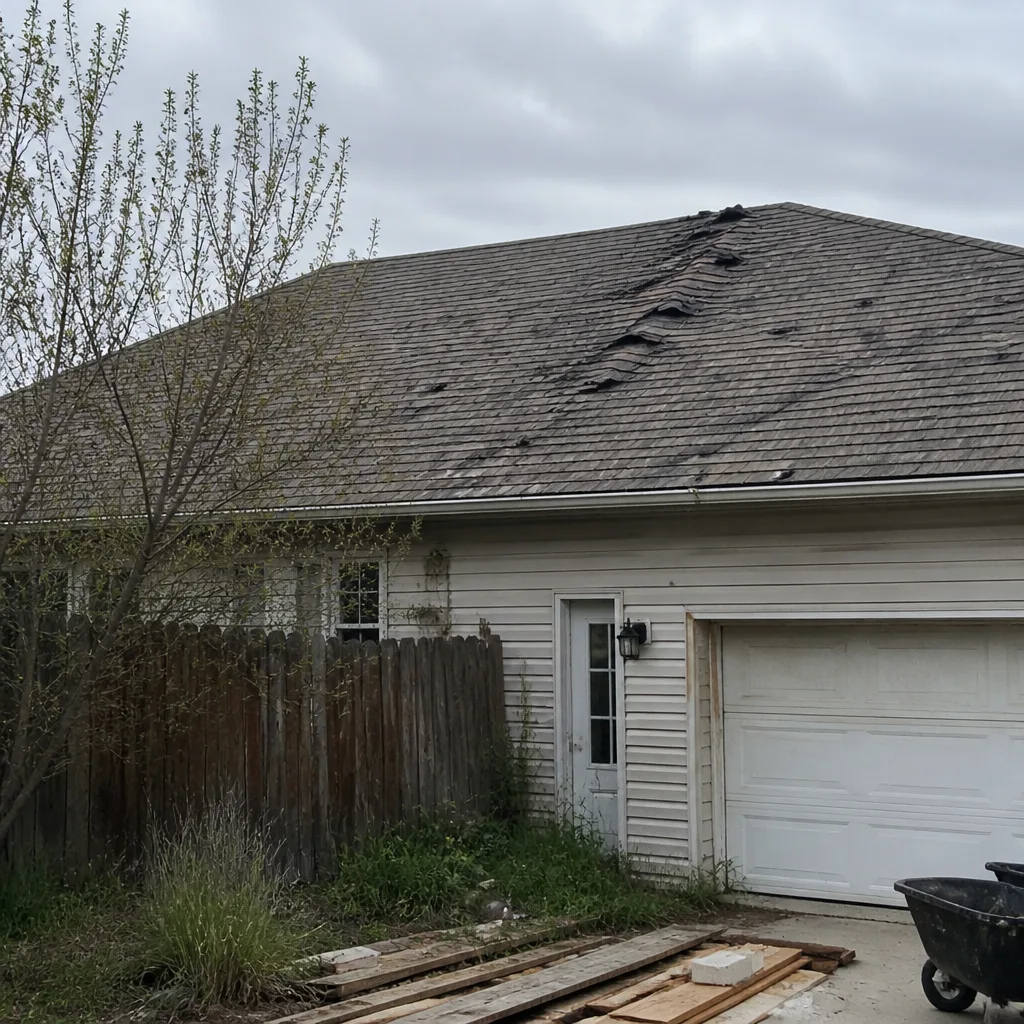 Before
 After
 Before
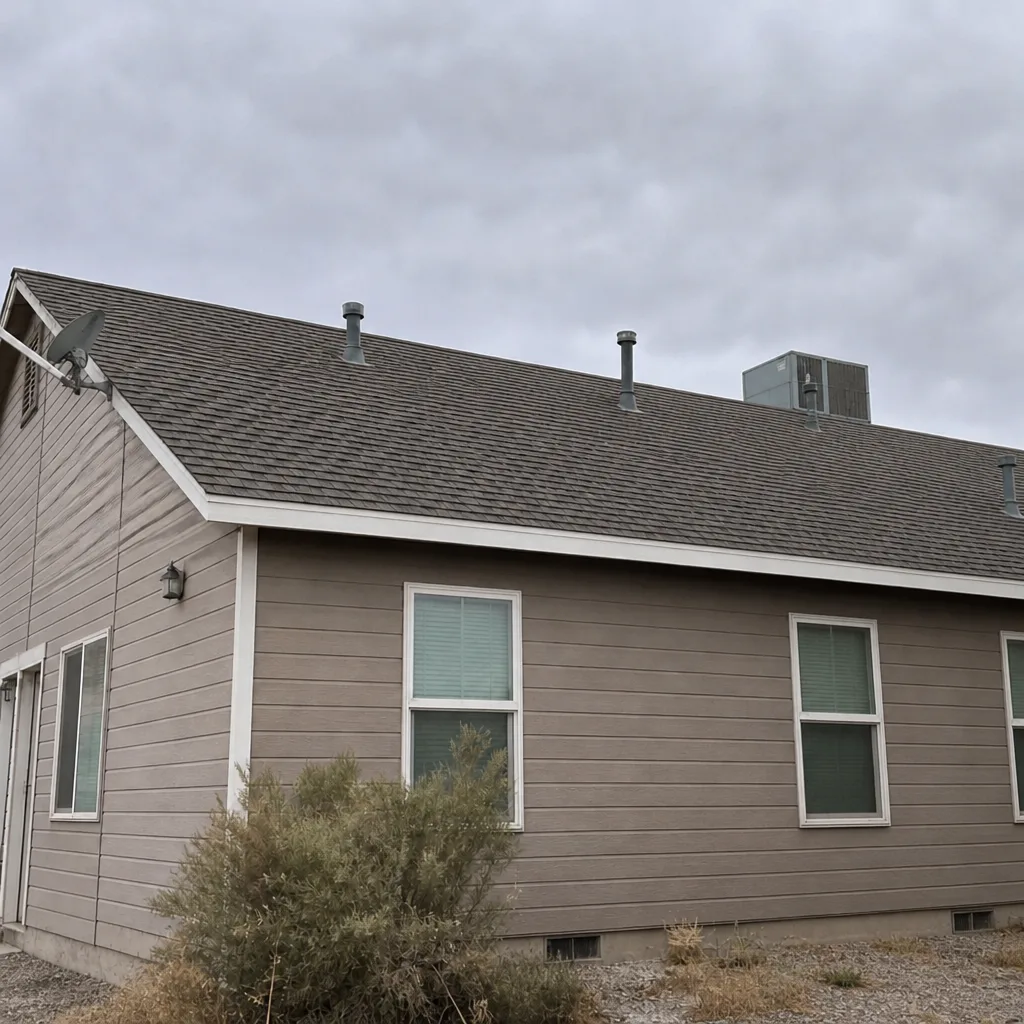 After
When to Call a Professional
Call for a professional inspection if any of the following is true: you saw hail at your address; you have granule deposits in your gutters or at the downspout outlets; you have a ceiling stain, a musty smell, or a bulge anywhere in an upstairs room; daylight is visible through the attic deck; or your roof is older than 15 years and has not been inspected since the last significant storm. In the Enterprise area, we have seen all of these after a single storm season. A photo-documented inspection is free, and it is the cheapest insurance you can buy. If you need a repair, our team can usually handle it in a single visit. If you need to know whether you are facing a repair or a replacement, that is what the inspection answers.
Ridgeline Roofing Co. Enterprise offers free estimates in Enterprise. Call (844) 228-4119 and a live person will answer. Nights, weekends, and the middle of a storm, we pick up.
Frequently Asked Questions
The strongest signs are granule deposits at the downspout outlets and in the gutters, daylight or water staining on the attic deck, compressed insulation, and creased or lifted shingles at the ridges and edges. If you saw hail at your address and find any of these, get a photo-documented inspection before you file a claim. Call (844) 228-4119 for a free estimate inspection in Enterprise.
Hail damage looks like a soft dimple or bruise on the shingle face, usually with a patch of missing granules around the strike point, sometimes with a fine crack in the mat. From the ground it often looks like nothing at all, which is why granules in the gutter and downspout are the tell. Our technicians document it from the roof surface and show you the photos.
Most policies require you to report the damage promptly, often within a set period after you discover the loss. The practical deadline is the 48 hours after a storm, because that is when interior signs show whether water is actively coming in. Document the storm, get the inspection, and call your insurer. Call us at (844) 228-4119 for the inspection; estimates are free.
Sometimes, and not always. An adjuster relies on the evidence presented, so a photo-documented inspection from a local contractor helps the claim move. Granule loss, ridge creasing, and interior marks are what they look for, and those are exactly what a professional inspection captures. Call (844) 228-4119 for a free estimate and photo documentation.
Yes. Age and visible condition from the ground are not reliable indicators of storm damage. Hail can strip granules and shorten the roof’s remaining life without any missing shingle. An inspection is the only way to know, and it is free. Call (844) 228-4119 to schedule yours.
No. We give no-hassle upfront pricing: the number on the estimate is the number on the invoice, no surprises. If we find something additional during the job, we stop and talk to you first. Our 90-Day Done Right Promise is in writing. Call (844) 228-4119 for a free estimate in Enterprise.
The Bottom Line
The storm damage that costs homeowners the most is almost never the damage they can see from the driveway. It is the granule loss that quietly ages the roof, the attic stain that shows a leak already underway, and the 48-hour window that closes before anyone checks. The remedy is simple: after every storm, walk the ground, check the downspouts, look in the attic, and get a photo-documented professional inspection if anything looks off. Ridgeline Roofing Co. Enterprise has been on local roofs since 1984, stands behind the work with the 90-Day Done Right Promise, and answers the phone with a live person 24/7. Visit the Ridgeline Roofing Co. Enterprise home to see how we work, and call (844) 228-4119 for your free estimate.
Written by the team at Ridgeline Roofing Co. Enterprise.