
Last updated November 18, 2026
 Architectural shingles
 Metal roofing
 Tile roofing
 GAF
 Owens Corning
 Flat & low-slope
Free roof inspection with deck photos before we talk money - GAF and Owens Corning certified installation
Gutters & Accessories Maintenance Schedule: What to Do and When
Most gutter guides tell you to clean in spring and fall. Enterprise doesn’t have a traditional fall. It has monsoon season, which can drop more water in twenty minutes than a Pacific Northwest drizzle manages in a week. That single fact reshapes the entire maintenance calendar. A schedule copied from a national home-care site will have you clearing gutters in October, right after the danger has already passed, and leaving them packed with desert dust and cottonwood fluff through July and August, when the real test arrives. What follows is a maintenance schedule built around the weather this valley actually delivers: pre-monsoon inspections in late May or early June, checks after every significant storm cell, and the quiet details most homeowners never look at, like fascia boards and splash-block placement on caliche soil. Here’s what to do, and exactly when to do it in Enterprise.
Quick Answer
In Enterprise, NV, gutters should be inspected and cleared in late May or early June before monsoon season, checked again after each heavy storm cell through September, and given a lighter cleaning in late winter after the dust and wind season. Downspouts, splash blocks, hangers, and fascia boards should be verified at each of those checkpoints, not once a year. The timing matters as much as the work, because desert clogs and monsoon volume punish a schedule that ignores the local calendar.
Styles & brands we work with
- Architectural shingles
- Metal roofing
- Tile roofing
- GAF
- Owens Corning
- Flat & low-slope
Table of Contents
- Why an Enterprise Gutter Calendar Beats a Generic One
- The Pre-Monsoon Inspection Window: Late May to Early June
- Desert Dust and Cottonwood Seeds: Clogs That Don’t Look Like Clogs
- What to Check After Each Significant Monsoon Cell
- Downspouts, Splash Blocks, and Caliche Soil
- Fascia Boards: The Checkpoint Most Homeowners Skip
- Winter and the Rare Freeze Event
- The Full Twelve-Month Schedule at a Glance
Why an Enterprise Gutter Calendar Beats a Generic One
A gutter system doesn’t fail because it’s old. It fails because it’s asked to handle water it wasn’t ready for. In leaf-heavy climates, that means fall. In Enterprise, the failure window is the summer monsoon, and the setup happens months earlier when dust, wind-blown grit, and cottonwood seeds settle into the channel and quietly cure into a hard, water-resistant plug.
We’ve seen this pattern repeat across neighborhoods here. A homeowner cleans the gutters in October because a magazine said to. The system performs fine all winter. Then June arrives, a storm cell dumps a season’s worth of rain in half an hour, and water sheets over the front edge because the downspout outlet clogged back in April. The gutter wasn’t neglected. It was maintained on the wrong clock.
The fix is to stop thinking in seasons and start thinking in storms. Enterprise gets two distinct weather events that matter to a gutter system: the summer monsoon, which arrives fast and heavy, and the spring wind and dust season, which loads the channel with material that later hardens. A maintenance schedule built around those two events, with post-storm checks in between, does more protective work than any twice-a-year reminder.
This same logic carries over to the rest of the roof envelope. A gutter that backs up pushes water into the fascia and soffit, and from there into the roof deck. If you’re already tracking the calendar, Roof Repair in Enterprise is the natural next step when a checkpoint turns up soft wood or lifted shingles.
The Pre-Monsoon Inspection Window: Late May to Early June
The single most important date on the Enterprise gutter calendar is the pre-monsoon inspection, and it belongs in late May or early June. Southern Nevada’s monsoon pattern typically builds through late June and peaks in July and August. That gives you a narrow window: late enough that spring winds have finished dropping their load into the channel, early enough that you’re not cleaning during the first storm of the season.
This inspection is not just a cleaning. It’s a full-system check, because a clear channel with a loose hanger still fails. Work through it in order:
- Clear the channel by hand. Scoop out accumulated grit and seed fluff before flushing. Desert debris is heavier and denser than leaves.
- Flush each downspout and confirm water exits freely at the bottom, not just at the top.
- Check hanger spacing and slope. Gutters should pitch toward downspouts. Standing water in a channel means the pitch has drifted.
- Inspect fascia and soffit for softness, staining, or peeling paint, which signal water where it shouldn’t be.
- Confirm splash blocks are in place and angled away from the foundation at every outlet.
- Look at the roof edge where gutter meets shingle, drip edge, and underlayment. This is where a small issue becomes a roof issue.
If you’re unsure what you’re looking at on the roof edge, a photo-documented inspection takes the guesswork out. Our team at Ridgeline Roofing Co. takes photos from your actual roof, not from a sales pitch in the driveway.
Desert Dust and Cottonwood Seeds: Clogs That Don’t Look Like Clogs
Homeowners who moved to Enterprise from wetter climates expect to find leaves in the gutters. What actually collects here looks different, and that difference is why so many systems fail without an obvious warning sign.
Desert dust and fine grit blow into the channel year-round and settle into a silt layer along the bottom. Cottonwood seeds arrive in late spring and catch on that silt like a net. Together they form a mat that hardens as it dries. From the ground, the gutter looks nearly empty. From the roof, it’s a solid plug holding six inches of rain behind it.
Compare that to a leaf climate, where a clog announces itself: a visible pile, a drip at the seam, water spilling over. In Enterprise, the failure is often silent until the first heavy cell. That’s the whole argument for inspecting from above rather than judging from the ground.
- Dust silt builds year-round and settles at the low points of the channel.
- Cottonwood fluff catches on the silt in late spring and binds it together.
- Wind-blown grit from open desert edges accumulates faster on south- and west-facing runs that catch the prevailing wind.
- Hardened mats look like empty gutters from the ground but block flow completely.
Gutter guards help, but they don’t eliminate the schedule. Fine desert dust passes through many guard designs and still needs periodic clearing. Budget for annual service even with guards installed.
What to Check After Each Significant Monsoon Cell
Seasonal cleaning is the foundation. Post-storm checking is the insurance. After any significant monsoon cell, a quick walk-around catches problems while they’re small. This isn’t a full inspection. It’s a five-minute visual pass, and it’s the step most homeowners skip entirely.
Do this within a day or two of a heavy cell:
- Walk the perimeter and look for water stains on the fascia or stucco below the gutter line.
- Check for overflow staining on the outside face of the gutter, which tells you water went over the top.
- Confirm every downspout discharges and that splash blocks haven’t washed out of position.
- Look at the ground for erosion or pooling near the foundation, which means water is landing in the wrong place.
- Note any sagging in the gutter run, a sign a hanger pulled loose under the weight.
One wet season of missed post-storm checks can loosen fasteners, shift hangers, and pull the gutter away from the fascia. Most of that is cheap to correct when caught early and expensive once water has reached the roof deck. When a storm has done real damage, that’s a different call, and it’s covered under Specialty Roofing in Enterprise.
Downspouts, Splash Blocks, and Caliche Soil
Here’s the detail that catches out-of-state owners every time. Enterprise sits on caliche, that dense, cement-like soil layer common across the valley. Caliche does not absorb water. It deflects it. A downspout that discharges directly onto the ground sends every gallon sideways, along the surface, until it finds the lowest point near your foundation.
That’s why splash block placement matters more here than in most of the country. The job of a splash block is to move water away from the house so it can spread and soak into ordinary soil. On caliche, you need an even longer throw.
- Aim outlets downhill and away from the foundation, never parallel to it.
- Use a splash block or extension at every downspout, and reset any that monsoon runoff has shifted.
- Check for ponding after storms. If water stands against the wall, the discharge is pointed wrong.
- Watch for caliche scour, where runoff has carved a channel through the soil and is now tracking toward the foundation.
Downspout placement is a genuine maintenance checkpoint, not a set-and-forget item. Monsoon flow moves things. Re-check it after every heavy cell and adjust.
Fascia Boards: The Checkpoint Most Homeowners Skip
Fascia is the board the gutter hangs on. It’s also the first place water damage shows up, and almost nobody looks at it. When a gutter backs up, water sits against the fascia, works behind the paint, and softens the wood. Left alone, it reaches the soffit and the roof deck. That’s a gutter problem that quietly became a roofing problem.
Two or three times a year, take a look at the fascia from the ground with binoculars, or from the roof during a professional inspection. What you’re looking for:
- Soft or spongy wood when pressed, especially near gutter seams and corners.
- Peeling or bubbling paint, a sign of trapped moisture.
- Rust stains or drip marks running down the face of the board.
- Rotted ends where gutter meets fascia near downspouts, the first spot water finds.
A soft fascia board is a sign that something upstream has been failing for a while. It’s also the reason a gutter inspection should always include a look at the roof edge. When fascia has failed, the underlying structure usually needs attention too, which is where Roof Replacement & Installation in Enterprise specialists can assess whether the damage is cosmetic or structural.
Winter and the Rare Freeze Event
Enterprise winters are mild, but they aren’t nothing. The occasional hard freeze matters here, because gutter systems and the water in them aren’t built for a deep overnight freeze. A channel holding standing water at the end of a run can split at the seam when it freezes. That split shows up as a slow leak all spring.
The winter routine is light but worth keeping:
- Clear the channel in late winter after wind and dust season, before spring seeds arrive.
- Confirm water drains completely at the end of every run so nothing stands and freezes.
- Check seams and corner joints for separation after any hard freeze.
- Look for split seams as the weather warms, and patch or reseal while the leak is still small.
None of this is heavy work. The point is to catch freeze damage before the monsoon, when a small split becomes a large problem under real flow. This is also a good time for a full gutter and roof check if you’ve noticed anything off.
The Full Twelve-Month Schedule at a Glance
Here’s the whole calendar, pulled into one place. Most years, this is all the schedule you need. In a heavy monsoon year, add an extra post-storm check in August.
- Late February to early March: Post-winter clearing, check freeze-damaged seams, clear dust build-up.
- Late May to early June: The main pre-monsoon inspection. Full clear, downspout flush, hanger and slope check, fascia check, splash-block reset.
- July through September: Post-storm walk-arounds after each significant cell. Re-check downspouts and splash blocks.
- October: Post-monsoon inspection. Clear anything the season moved in, confirm the system is set for the dry months.
- Any time a checkpoint turns up soft fascia or a lifted shingle: Call for a professional look. Our technicians have up to 10 years of experience and know what this valley does to a roof edge.
A residential gutter system is simple machinery. It works if it’s ready when the water arrives, and the timing is the maintenance. For the full picture on how gutters fit with the roof around them, see the Ridgeline Roofing Co. Enterprise home page.
Common Mistakes to Avoid
- Following a national spring-and-fall schedule. That schedule was written for leaf climates. Enterprise gutters need to be ready in June, not October, and a fall-only routine misses the entire monsoon window.
- Judging gutters from the ground. Desert silt and cottonwood clogs look like empty gutters from twelve feet below. Inspect from the roof or hire a photo-documented inspection.
- Skipping post-storm checks. A single heavy cell can pull a hanger loose or wash a splash block out of place. Catching it in a week costs far less than catching it in a year.
- Discharging downspouts onto caliche. Caliche won’t soak up water, so it tracks toward the foundation. Splash blocks need a real downhill throw here, reset after every storm.
- Ignoring fascia boards. Soft wood under the gutter is the first sign of a backed-up system. Most homeowners never look at it until the soffit stains.
- Assuming gutter guards end the work. Fine desert dust passes through most guards and still needs annual clearing. Guards reduce the load, they don’t remove the schedule.
- Letting standing water sit into a freeze. Water trapped at the end of a run splits seams when overnight temperatures drop. Confirm every run drains completely before winter.
See the difference
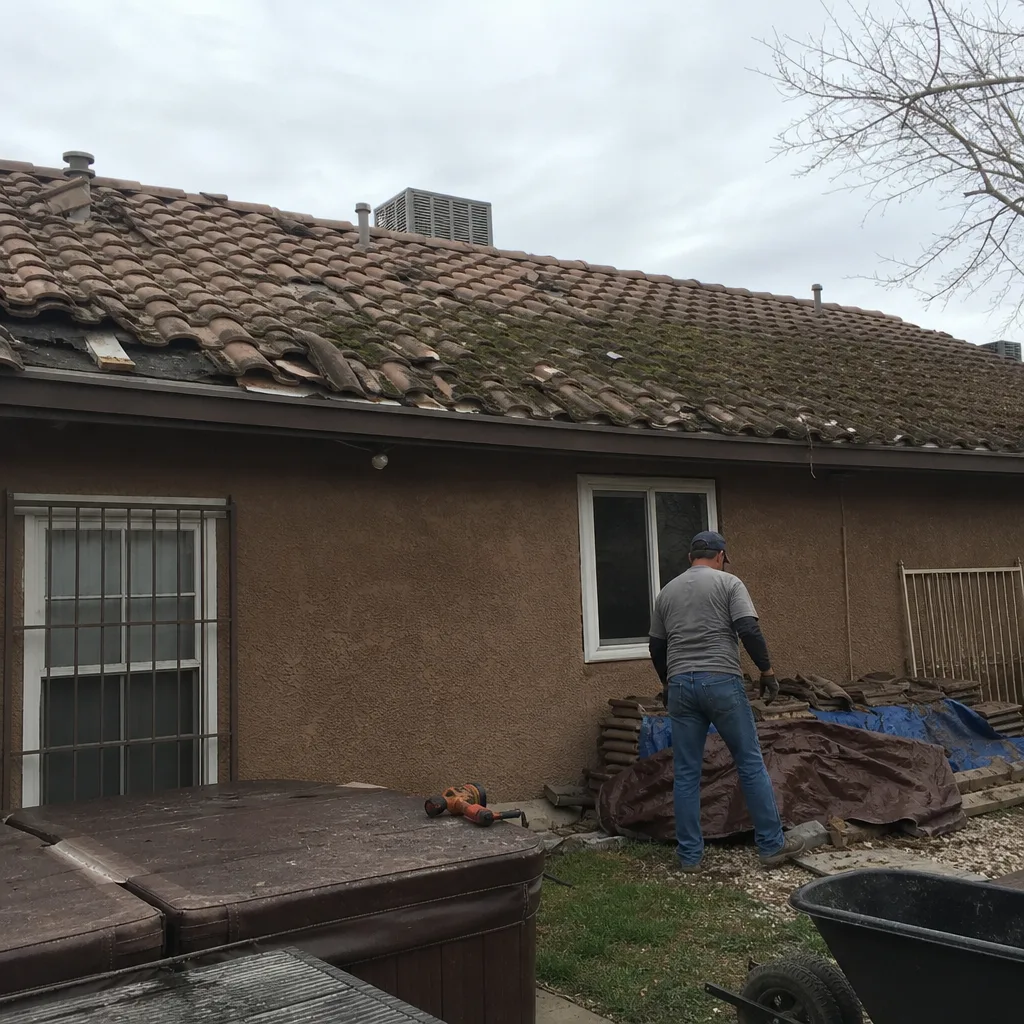 Before
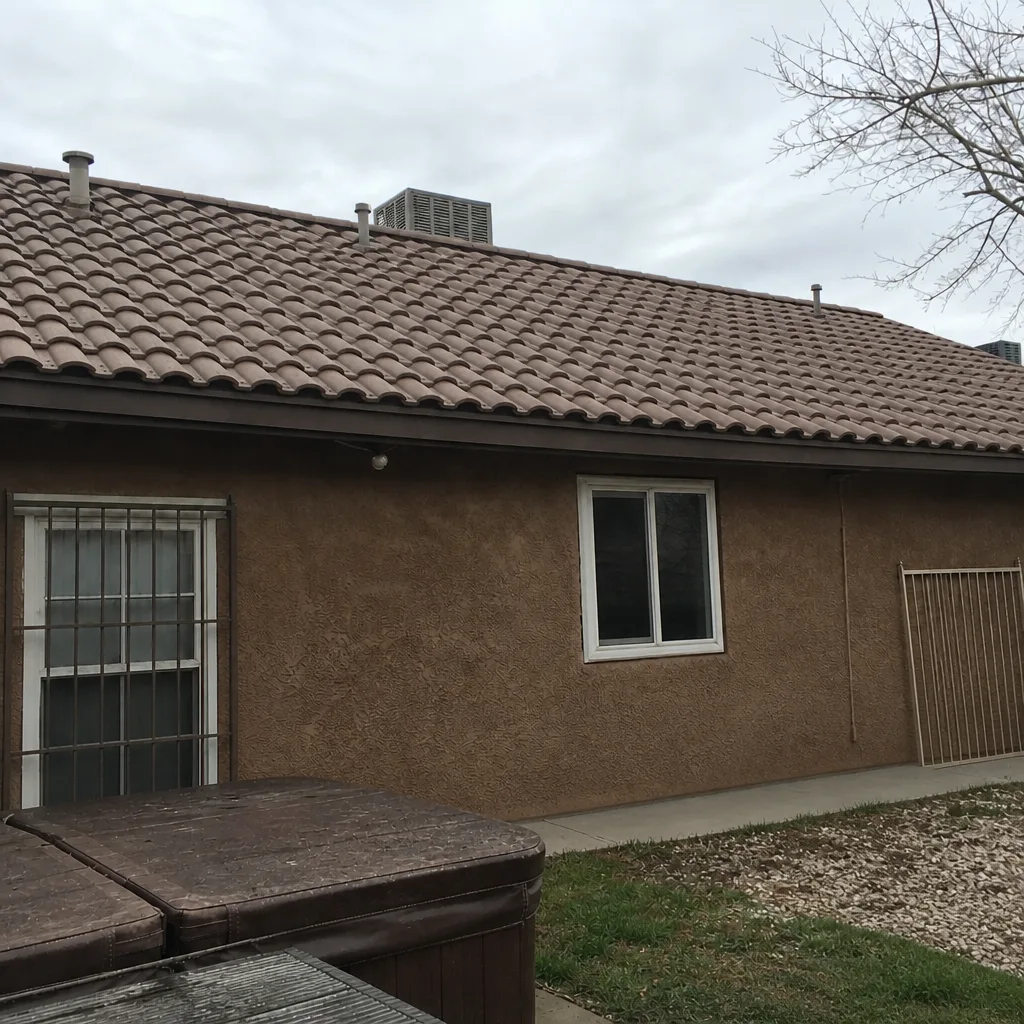 After
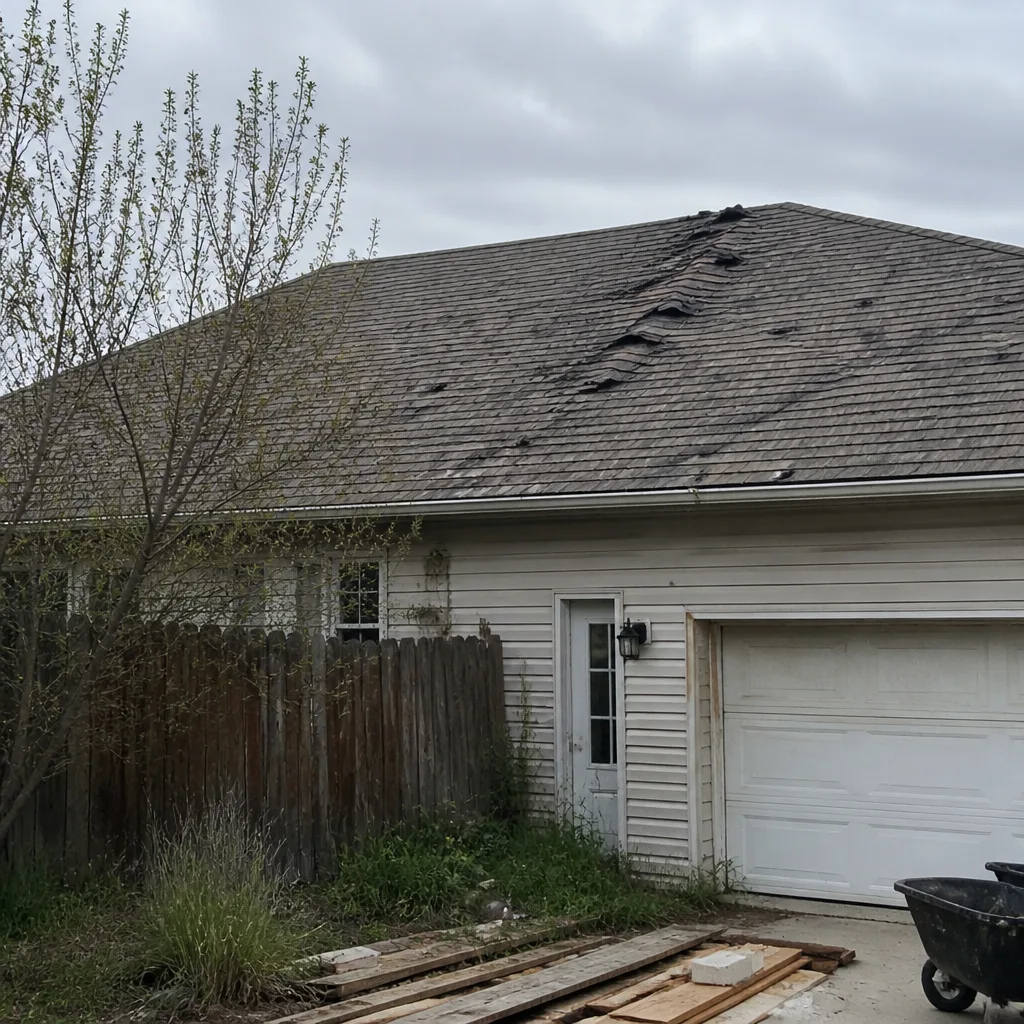 Before
 After
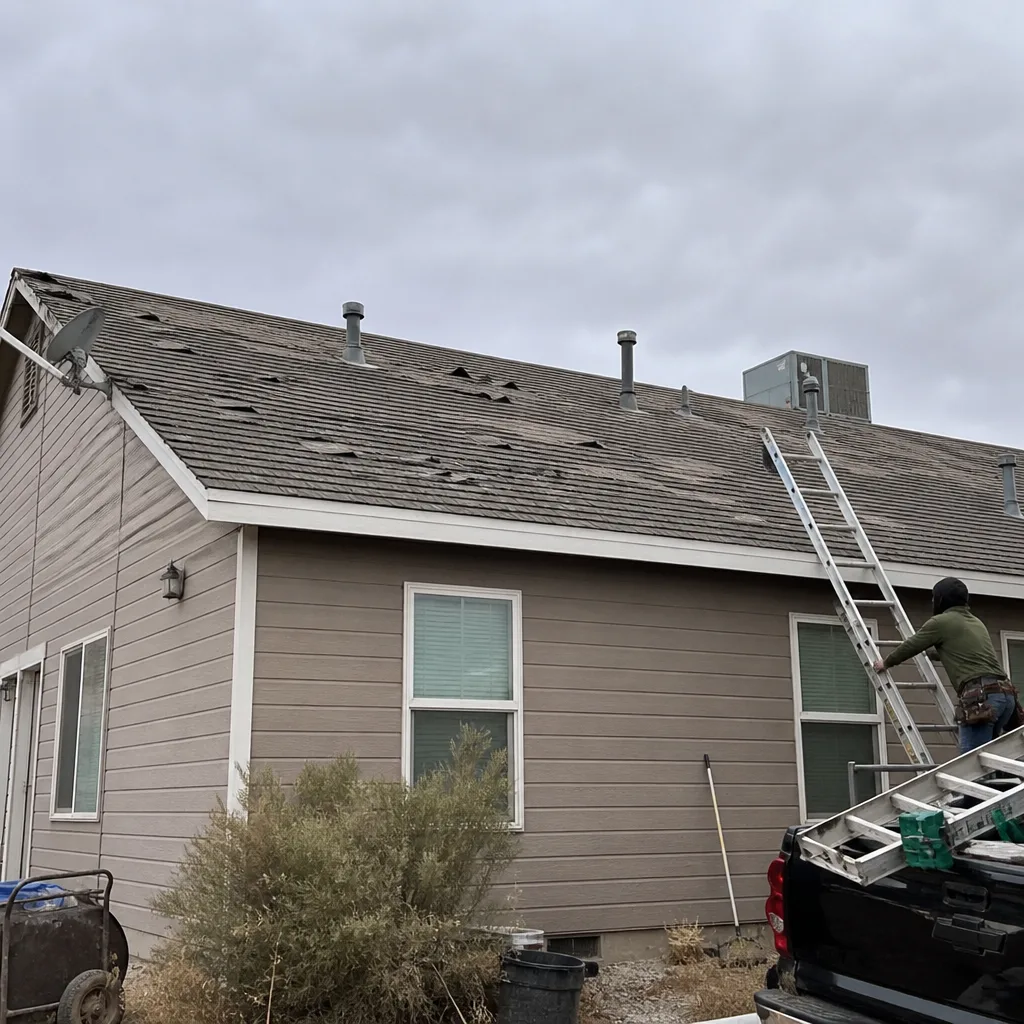 Before
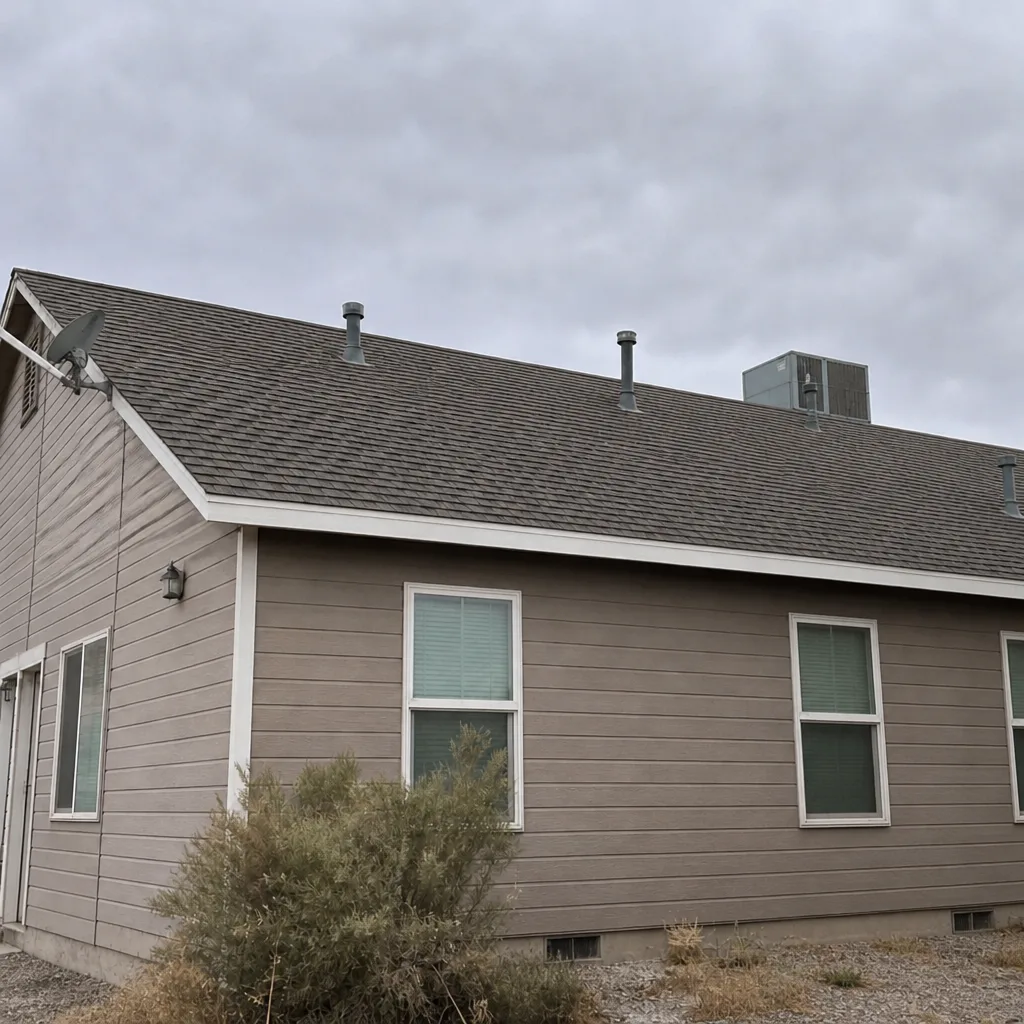 After
When to Call a Professional
Some gutter work is a weekend job. Some isn’t, and it’s worth knowing the difference. Call a professional when a fascia board feels soft or spongy, when the gutter has pulled away from the house, when water has stained the soffit or stucco below the gutter line, or when you’ve spotted lifted or missing shingles at the roof edge. Working on a roofline at this pitch, with height involved, is not a task to take on from a ladder you climbed once. A trained eye finds the cause, not just the symptom, and a photo-documented inspection shows you exactly what’s happening up there. Ridgeline Roofing Co. Enterprise offers free estimates in Enterprise, with upfront pricing and the number on the estimate matching the number on the invoice. Call (844) 228-4119.
Frequently Asked Questions
Most Enterprise homes need a full cleaning and inspection once in late May or early June before monsoon season, a lighter clearing in late winter, and a post-storm check after each significant monsoon cell. That’s more frequent than a generic twice-a-year schedule, because desert dust and cottonwood seeds create clogs that don’t show from the ground. Call (844) 228-4119 for a professional look if it’s been over a year.
Desert dust and wind-blown grit settle into the channel year-round, and cottonwood seeds catch on that silt in late spring and harden into a solid mat. In a leaf climate you can see a clog coming. Here it stays hidden until the first heavy monsoon cell pushes water over the edge. The fix is inspecting from the roof, not the ground.
Look for overflow staining on the outside face of the gutter, confirm every downspout is discharging, make sure splash blocks haven’t shifted, check the ground for erosion near the foundation, and note any sagging in the gutter run. These five checks take a few minutes and catch most storm problems while they’re still small.
No. Fine desert dust passes through most guard designs and still settles in the channel, where cottonwood fluff binds it into a plug. Guards reduce how often you clean and how much gets in, but they don’t remove the annual pre-monsoon inspection. Budget for service every year regardless.
The cost depends on the length of the gutter run, how heavy the clog is, and whether fascia or roof-edge repairs are needed. You’ll get a written estimate with the price broken out by line item before any work starts, and the number on the estimate is the number on the invoice. Call (844) 228-4119 for an exact quote, and estimates are free.
The fascia is the board the gutter hangs on. When a gutter backs up, water sits against it, softens the wood, and eventually reaches the roof deck. Check it for softness, peeling paint, and rust stains two or three times a year. A soft fascia board usually means the gutter has been failing for a while.
The Bottom Line
A gutter maintenance schedule only works if it’s built for the weather you actually get. In Enterprise, that means a late May or early June inspection before the monsoon, post-storm checks after every significant cell, a late-winter cleaning after the dust season, and a look at the details nobody bothers with: downspout placement on caliche soil and the condition of the fascia behind the gutter. The timing is the maintenance. Get the schedule right and the system holds through the heaviest cells the valley can throw at it. Get it wrong and small clogs become roof damage. For a second set of eyes on the roofline, call Ridgeline Roofing Co. Enterprise at (844) 228-4119 for a free estimate.
Written by the team at Ridgeline Roofing Co. Enterprise.